Modern Architecture in Kassel: Architectural Culture That Impresses
Modern Architecture in Kassel: Your Next Foray to Impressive Buildings
When planning your next visit to Kassel, you can experience the city as an “architecture narrative in real time”: from the Kulturbahnhof as an urban hub to repurposed existing buildings and museum and exhibition architecture that actively shapes the urban space. This guide is intended as a future route: you can visit the stops in one weekend or in several stages over the coming weeks.
Suitable for: Architecture enthusiasts, cultural travelers, students, photo walks, and anyone who wants to explore Kassel more consciously on foot in the future.
Plan for Your Next Architecture Day (Route & Rhythm)
For your upcoming tour, a clear, easily walkable schedule is recommended. You can flexibly adjust it to opening hours, weather, and your own pace.
- Start at the Main Station / KulturBahnhof: Arrive, orient yourself, gather first spatial and material impressions.
- Continue eastwards: Experience repurposed architecture (Hallenbad Ost) and pay attention to details: structure, acoustics, lighting, new pathways.
- Campus/Art Stop: Visit Kunstraum Kassel and consciously “follow” different daylight situations.
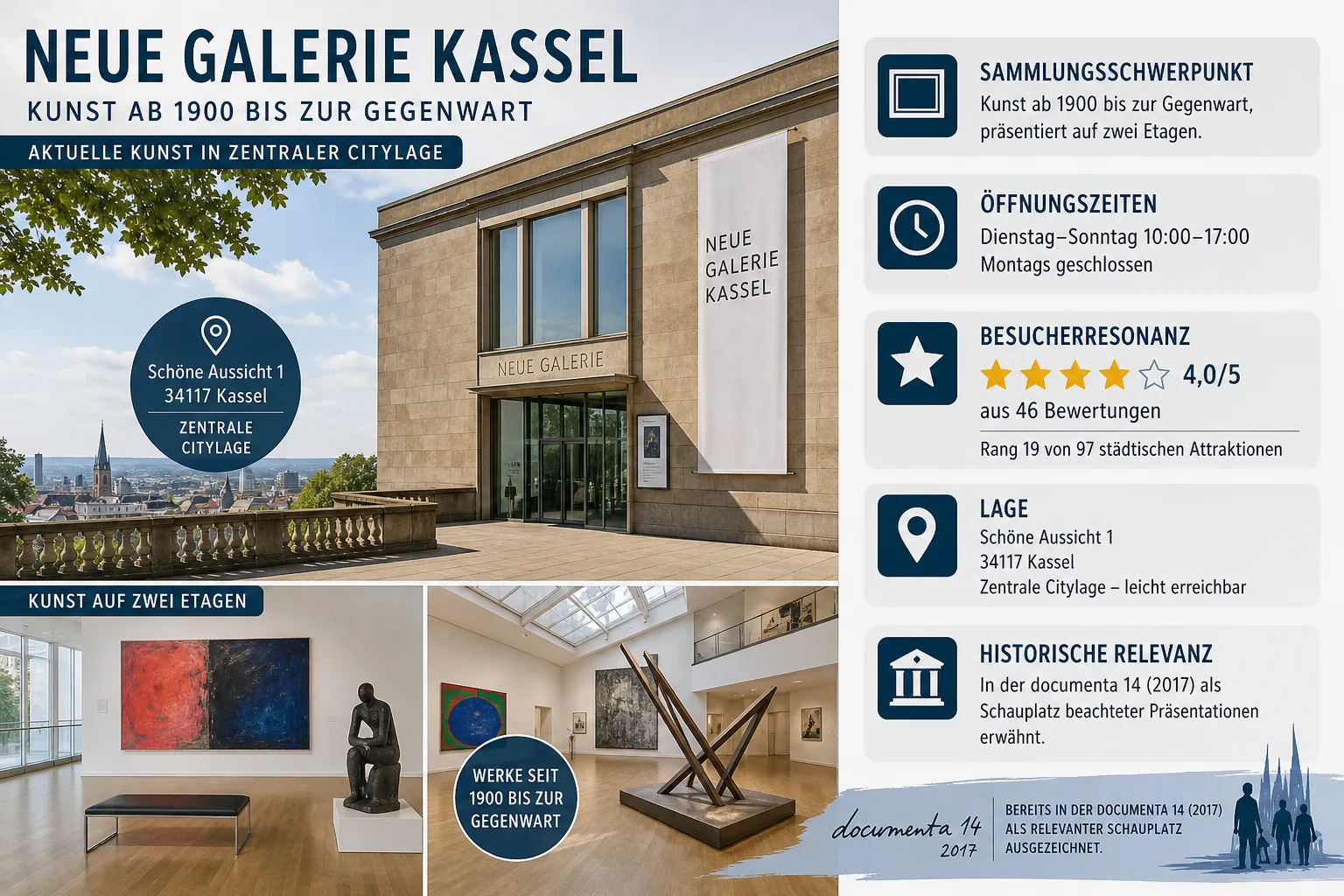
- Cultural Axis Weinberg / Friedrichsplatz: Compare museum and exhibition buildings as urban space generators (Neue Galerie, Grimmwelt, documenta Halle).
- To finish: Choose an everyday building or infrastructure project to see how design and sustainability work in daily use.
Note for your next planning: Please check tickets, admission rules, special opening hours, and current exhibitions in advance via the respective official websites.
Stop 1: KulturBahnhof Kassel (KuBa) – Arrive, Change, Rethink
On your next entry into Kassel, the KulturBahnhof can be your ideal starting point: here you will experience mobility, culture, and urban space in close proximity. Plan some time not just to “pass through,” but to look consciously.
- What you can observe on site: How pathways work (arrival, transitions, waiting areas) and how interiors are used as public “in-between spaces.”
- What is worth your attention: Material changes, sightlines, transitions between traffic areas, cultural offerings, and gastronomy.
- How it becomes an architectural experience: Walk consciously from the platform into the hall and then outside: you will feel how scale and soundscape change.
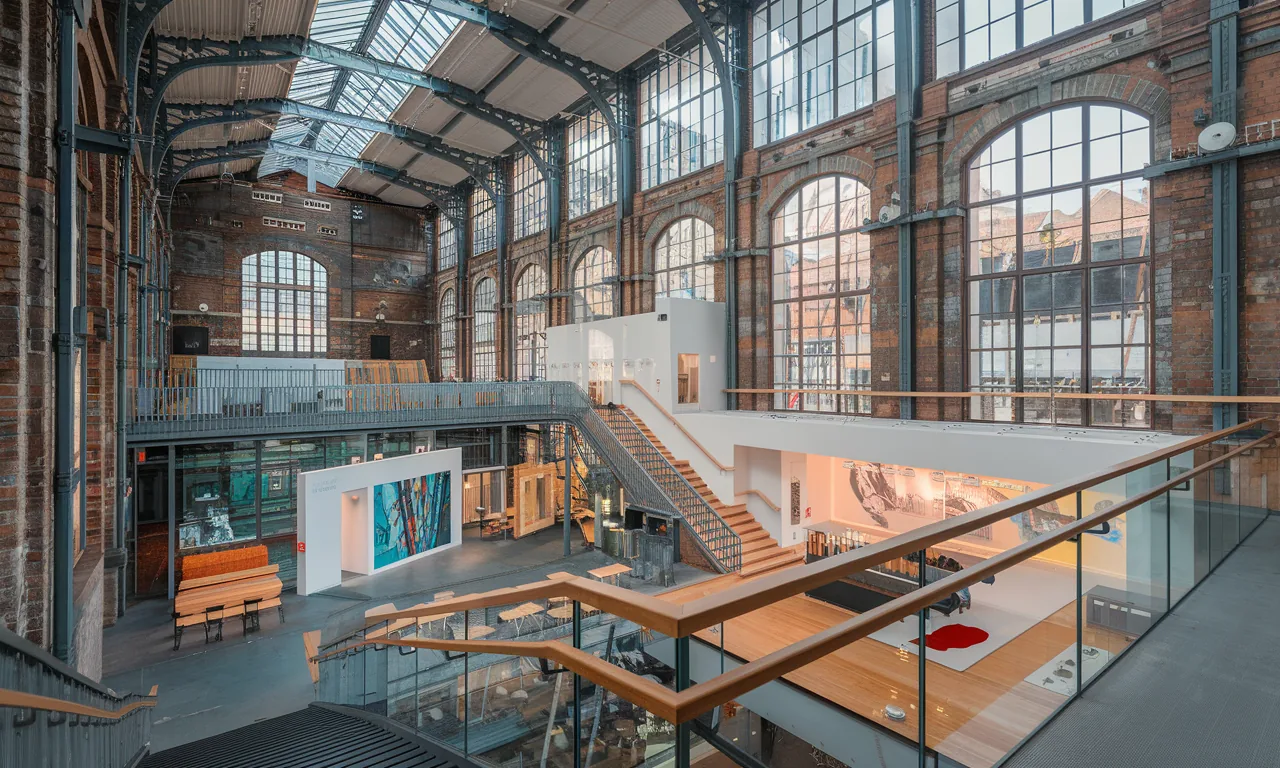
Stop 2: Hallenbad Ost – Repurposing that Recharges Spaces
For a future Kassel tour, Hallenbad Ost is a particularly exciting program point because you can experience how an existing building functions as a workplace and event venue in the future. If you choose an event or visiting appointment, the place becomes “readable”: ceiling height, acoustics, and the logic of access become especially clear.
- What you can test during your visit: How a large, open space feels when prepared for different uses (e.g., lectures, meetings, formats with an audience).
- What you can pay attention to: New installations versus original spatial effect, lighting, orientation in the building.
- Practical tip: If you have the opportunity, choose a time when the building is publicly accessible so you can experience the space in operation.
Stop 3: Kunstraum Kassel – Daylight as a Design Material
On your next detour to the Kassel Art Academy, you can plan the Kunstraum as a “light experiment” in the urban space: you will see how a building envelope filters daylight and creates an exhibition atmosphere that changes throughout the day.
- How to get more out of your visit: If possible, come at two different times of day (e.g., in the morning and late afternoon) to compare the lighting mood.
- Observation task for your tour: Note how your impression of spatial depth, surfaces, and artworks changes with the light.
- What you can capture well in photos: Transitions from light/dark, reflections, even exhibition lighting, and the effect of the facade up close.
Stop 4: Neue Galerie, Grimmwelt, documenta Halle – Culture that Builds the City
For your upcoming walk, you can connect a strong cultural axis: you can experience three very different architectural approaches, all of which respond to public space, exhibition, and the city. Plan time for both exterior and interior perception for this stage (depending on ticket and opening situation).
Neue Galerie (Weinberg): Spaces for Focused Viewing
When you visit the Neue Galerie, pay attention to how exhibition spaces guide you: through sightlines, overhead light, and the sequence of halls. For your next tour, it is worthwhile to consciously switch between quick orientation and slow spatial exploration.
- Checklist for your tour: Where is the transition between urban space and museum clearly defined? How are calm and concentration architecturally created?
GRIMMWELT Kassel: Walkable Architecture as Urban Experience
On your next visit to GRIMMWELT, you can plan the building not only as a museum but also as a path and viewpoint. If you allow time, stairs, terraces, and outdoor spaces become part of your program—like a small urban topography that you “climb” and leave again.
- How to use the place for your architecture route: Combine the interior visit with a walk around the outside and a short break at a viewpoint.
- What you can pay attention to: Transitions between inside/outside, seating and stay quality, wind and shade zones.
documenta Halle (Friedrichsplatz): Flexible Spaces for Changing Formats
For your next Kassel trip, documenta Halle can be a final or starting point, as you can experience exhibition architecture designed for change. If you visit a current exhibition or public format, you will clearly see how ceiling height, lighting, and access create “stages” for changing content.
- Your focus on site: How is openness created? Where are there clear boundaries, where are there fluid transitions?
- Comparison question for your route: Does entering the documenta Halle feel more “urban” (square-related) or “introverted” (space-related)?
Stop 5: Infrastructure & Sustainable Building – Architecture in Everyday Life
If you want to discover modern architecture in Kassel not only in museums in the future, you can consciously add an “everyday stop”: a station, a traffic space, or a research and consulting location focused on sustainable building. Especially there, you will observe design in use—with people, pathways, weather, and time pressure.
- RegioTram/Public Transport as an Architecture Experience: On your next ride, pay attention to how canopies, waiting zones, privacy screens, and orientation work.
- Making sustainability visible: If you visit a building focused on energy-efficient construction, you can pay attention to the envelope, shading, daylight use, and material honesty—and how information is explained to visitors.
Planning tip: Place this stop at the end of your route so you can directly compare the difference between “cultural space” and “utility space.”
Practical Tips for the Next Tour
- Opening hours & tickets: Always coordinate your visit in the coming days with the official websites, especially for exhibitions, special events, and campus-related locations.
- Route on foot: Plan comfortable shoes and short breaks—architecture has a stronger impact if you don’t “rush through.”
- Weather strategy: In case of rain, focus more on indoor stops (museums, exhibitions) and in sunshine on urban spaces and terraces.
- Your own documentation: Take 3 notes at each stop: (1) material/detail, (2) light, (3) use (who does what here?).
- Respectful use: House rules apply in publicly used buildings; only take photos where it is allowed on your next visit.