
Béla Tarr
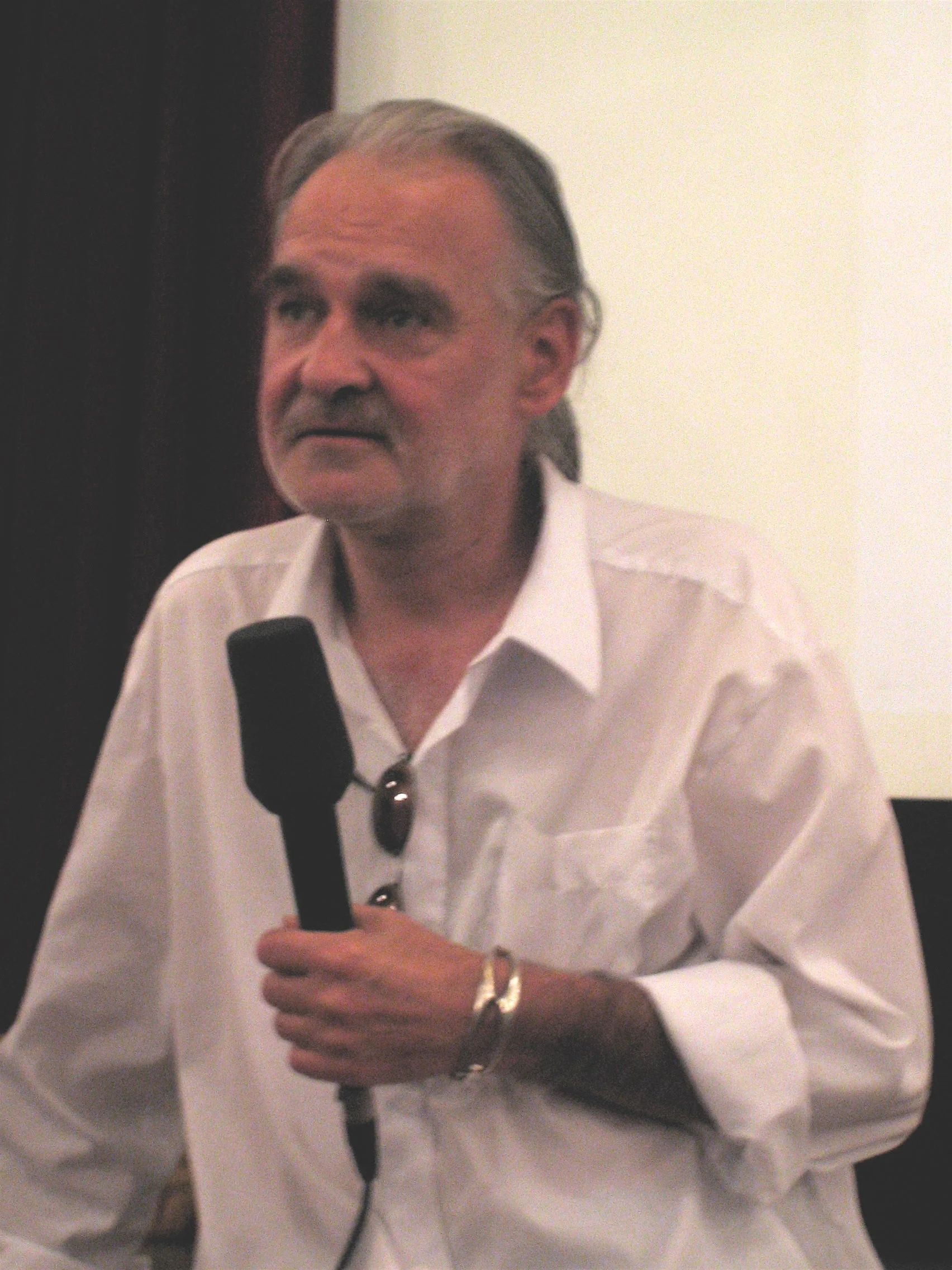
Image from Wikipedia
Image from Wikipedia
Béla Tarr – The Great Chronicler of Time, Silence, and Human Existence
Introduction: A Film Artist of Rare Radicalism
Béla Tarr shaped European author cinema with a distinctive signature that merged patience, pain, observation, and formal rigor into a unique cinematic language. The Hungarian director, born on July 21, 1955, in Pécs and passed away on January 6, 2026, in Budapest, developed works of extraordinary intensity that go far beyond classical narrative patterns. His magnum opus Sátántangó is regarded by many critics as one of the most significant works in film history.
To speak of Béla Tarr is to speak of cinema as an existential experience. His films unfold not through pace or effects, but through duration, gaze, movement, and the physical presence of spaces, bodies, and landscapes. It is precisely from this that his enduring significance arises: Tarr makes time visible and human existence palpable.
Early Years and Artistic Formation
Béla Tarr started working in film at an early age. As a teenager, he made amateur and 8mm films that revealed his attentiveness to social reality and observational image composition. These early attempts led him to the Béla Balázs Studios, which supported his feature film debut and opened the door to a professional career. His first feature film, Family Nest, was made in 1979 and set the tone for a body of work based on authenticity and social pressure.
His education at the Budapest University of Theatre and Film sharpened his perspective on staging, dramaturgy, and the relationship between camera and space. In his early years, Tarr worked within a realistic approach that did not smooth over the everyday, but rather intensified it. From this phase emerged the artistic consistency that later established his international reputation.
The Path from Social Realism to Metaphysical Imagery
Tarr's body of work can be read as a development from social observation toward metaphysical condensation. Early films like Family Nest and The Outsider display a closeness to social conflicts, family tensions, and life on the margins. With his later works, his style became increasingly concentrated, slower, and more formal—until the images themselves became the narrative.
This artistic evolution made him one of the most distinctive representatives of modern author cinema. His long takes, precise choreography, and the almost monumental use of black and white create a unique aesthetic of heaviness. For Tarr, cinema is not merely representation, but a state of perception.
Sátántangó and the International Breakthrough
With Sátántangó, Béla Tarr achieved the status of a global reference director. The film, a monumental adaptation of László Krasznahorkai's novel, was celebrated as a visually powerful study of decay, hope, and deception. The BFI describes the work as a portrait of Hungary at a historical turning point, built on light, movement, and the palpable passage of time.
In international criticism, Sátántangó is regarded as a turning point in contemporary cinema. Its extraordinary length, hypnotic staging, and uncompromising slowness made the film a touchstone for understanding cinema as an art form. This very radicality established Tarr's authority far beyond Hungary.
Werckmeister Harmonies, The Turin Horse, and the Late Masterpieces
With Werckmeister Harmonies and The Turin Horse, Tarr intensified his themes even further. Both films combine existential emptiness, cosmic order, physical exhaustion, and social insecurity into images of oppressive beauty. Critics and film historians do not see these works merely as late-style but as the culmination of an aesthetic idea developed over decades.
The Turin Horse premiered in the competition at the Berlinale in 2011 and is considered Tarr's last film. The reception emphasized the uncompromising consistency with which he focuses on the motif of decay, stagnation, and the weighty human existence. His late films demonstrate that formal rigor and emotional weight are not opposites.
Collaboration with László Krasznahorkai and the Principle of Radical Form
An essential part of Tarr's artistic identity lies in his collaboration with writer László Krasznahorkai. From this partnership emerged some of the most significant films in European author cinema, whose literary foundations transformed into an extraordinary visual composition. Tarr translated Krasznahorkai's dark, rhythmically charged prose into highly dense visual spaces.
This collaboration exemplifies Tarr's understanding of film as composition. Image, movement, duration, and sound intertwine in his work like instruments. The result is a cinema that explains less and makes experiences more tangible, thereby unfolding its lasting impact.
Cinematic Language: Black and White, Long Takes, and Choreography
Béla Tarr's style is unmistakable. His preference for black and white, extremely long takes, and controlled camera movements creates an almost musical structure where rhythm and variation take on the dramatic function. His films thrive on repetition, delay, and precise spatial arrangement.
The visual language feels both strict and sensual. Rain, wind, mud, mist, interiors, and faces become vehicles for a physical experience that does not distance the audience but rather binds them. This is where his masterful direction lies: he transforms observation into existential presence.
Critical Reception, Awards, and Cultural Influence
International critics early recognized Béla Tarr as one of the most significant directors of his generation. Sátántangó received numerous awards, including the Caligari Film Award at the Berlinale, and has been classified by critics as a key work of modern cinema. The Turin Horse was also celebrated at international festivals and awarded the Silver Bear Jury Grand Prix in Berlin.
His influence extends far beyond film criticism. Directors like Gus Van Sant, Martin Scorsese, and other prominent names in author cinema have pointed to Tarr's significance for a new slowness and a serious, unpretentious form of seeing for years. His films have inspired generations of filmmakers who discover not emptiness but knowledge in slowness.
Why Béla Tarr Continues to Fascinate Today
Béla Tarr remains fascinating because he has considered cinema to its utmost consequence. His works demand attention, patience, and emotional openness but reward the audience with images that linger long afterward. Few directors have so uncompromisingly merged social observation, philosophical depth, and formal boldness.
To discover Béla Tarr is to encounter an artist who fundamentally changes the perspective on time, humanity, and decay. His films are not quick experiences but intense encounters that stick in the memory. This is precisely why every engagement with his work—be it in theaters, on rewatch, or in a deep dive with one of the great voices of world cinema—is worthwhile.
Conclusion
Béla Tarr has created a body of work that remains unique in its rigor, depth, and visual power. His films illustrate how radical and yet touching cinema can be when an artist subordinates everything to the rhythm of time. Engaging with this work offers an experience of one of the great masters of modern film in all his aesthetic and human force.
Precisely because his films are so uncompromising, they exude a rare fascination. Béla Tarr does not force; he draws you in—into landscapes, faces, fatigue, hope, and decay. To watch him means rediscovering cinema as an art of perception.
Official Channels of Béla Tarr:
- Instagram: No official profile found
- Facebook: No official profile found
- YouTube: No official profile found
- Spotify: No official profile found
- TikTok: No official profile found
Sources:
- Wikipedia – Béla Tarr
- National Film Institute Hungary – Béla Tarr
- BFI – Sátántangó
- Criterion Collection – Béla Tarr: Lamentation and Laughter
- The Guardian – Béla Tarr, Hungarian director of Sátántangó and Werckmeister Harmonies, dies aged 70
- Associated Press – Hungarian director Béla Tarr dies at 70