
Beate Passow
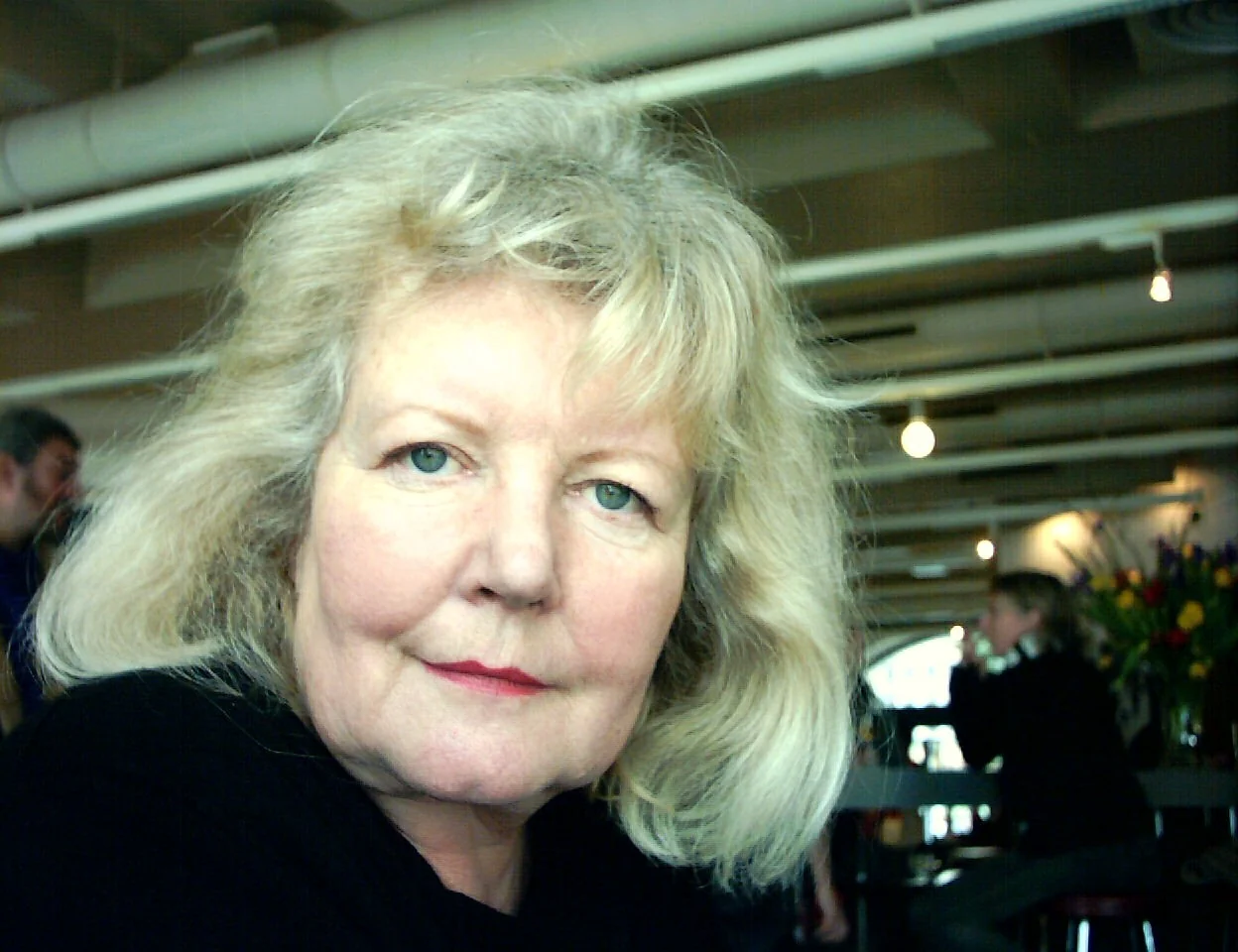
Image from Wikipedia
Image from Wikipedia
Beate Passow: Art Against Forgetting, Present Against Turning a Blind Eye
An artist who transforms memory into images, installations, and collages
Beate Passow, born in 1945 in Stadtoldendorf, is one of the most independent German artists of her generation. Her work encompasses installations, photographic art, and collages; at its center is an attitude that she understands as “work against forgetting.” She is not merely looking back but engaging in a precise confrontation with the political, social, and biographical tensions of the present. ([de.wikipedia.org](https://de.wikipedia.org/wiki/Beate_Passow?utm_source=openai))
Her art derives its impact from condensation: from series of images, spatial arrangements, and symbolically charged material combinations. Passow connects historical memory with current diagnoses of the present, shaping works that appear documentary while being poetically condensed at the same time. This tension makes her artistic signature particularly distinctive in contemporary German art. ([de.wikipedia.org](https://de.wikipedia.org/wiki/Beate_Passow?utm_source=openai))
Early Education and Artistic Influence
Beate Passow studied painting at the Academy of Fine Arts in Munich from 1969 to 1975. This classical education forms the foundation of a body of work that later evolved far beyond the easel painting, extending into space, photography, and collage. Her early career already shows the connection between formal rigor and content awareness that continues to shape her oeuvre today. ([villa-concordia.de](https://www.villa-concordia.de/kuenstler/detail/passow?utm_source=openai))
Even in her early years, Passow focused less on the purely aesthetic and more on the question of social readability. Her work operates at the intersection of image, memory, and political reflection. It is precisely from this that she derives the authority that characterizes her position within the German art scene. ([de.wikipedia.org](https://de.wikipedia.org/wiki/Beate_Passow?utm_source=openai))
Career Path: Exhibitions, Projects, and International Presence
Passow's biography is marked by a remarkable continuity of international exhibition and project activities. The stages documented on her artist website span decades and lead her to places such as Munich, Dortmund, Los Angeles, Ljubljana, Paris, and Vienna. This presence showcases an artist whose work did not remain locally rooted but resonated in various cultural contexts. ([beate-passow.de](https://www.beate-passow.de/vita/?utm_source=openai))
This character is particularly evident in her travel-based work groups, which make cultural fractures and political tensions visible. The series “Cross Culture,” for example, is continuously created during her travels and deals with differences between cultural orders and perceptions. Passow does not use traveling as an exotic motif but as a method of observation and comparison. ([beate-passow.de](https://beate-passow.de/autonomes/cross-culture/?utm_source=openai))
Even in later projects, this openness remains. The exhibition “Four Apocalyptic Riders” in 2025 indicates that Passow continues to work on body of works that consistently connect historical burdens, contemporary analysis, and visual form. Her practice thus remains vibrant, current, and thematically concentrated. ([mqw.at](https://www.mqw.at/programm/beate-passow-vier-apokalyptische-reiter?utm_source=openai))
“Wounds of Memory” and the Political Dimension of Her Work
A key project in her oeuvre is “Wounds of Memory,” which was created in 1993 in Munich and realized in collaboration with Andreas von Weizsäcker. The Haus der Kunst describes the work as an installation that deals with memory and the confrontation with the city's Nazi past. Passow is interested in the traces of historical violence in public spaces and how places store memory. ([hausderkunst.de](https://www.hausderkunst.de/en/eintauchen/wunden-der-erinnerung?utm_source=openai))
This work exemplifies her approach: not to repress, not to musealize, but to make visible what is often overlooked in everyday life. It is precisely in this attitude that the sustainable impulse of her work lies. Passow translates history not into distance but into artistic presence. ([hausderkunst.de](https://www.hausderkunst.de/en/eintauchen/wunden-der-erinnerung?utm_source=openai))
Other works also address politically and socially charged themes. Sources mention installations highlighting the role of the church in the Nazi regime, works on women's emancipation, as well as image series like “Picnic in Persia” or “Monkey Business,” which touch on cultural and political conflict zones. This results in an oeuvre that questions both historical and current power structures. ([de.wikipedia.org](https://de.wikipedia.org/wiki/Beate_Passow?utm_source=openai))
Style, Materials, and Visual Language
Beate Passow primarily works with installation, photography, and collage, often employing serial techniques. These media allow her to condense information, signs, and image fragments and place them in new contexts. Her art thrives on the tension between documentary accuracy and conceptual openness. ([adk.de](https://www.adk.de/en/programme/?we_objectID=56642&utm_source=openai))
In many works, historical motives, political symbols, and everyday scenes are not simply placed next to each other illustratively, but transformed into a conflicted visual space. This is precisely where the special quality of her arrangement lies: it does not produce a simple message but demands an active reading. Passow's visual language is analytical, precise, and simultaneously carried by a significant emotional gravity. ([de.wikipedia.org](https://de.wikipedia.org/wiki/Beate_Passow?utm_source=openai))
A look at her bodies of work also reveals a strong affinity for series. Repetition, variation, and displacement play a central role as they make cultural patterns visible. Thus, an artistic development arises that focuses less on spectacular individual works and more on coherent spaces of thought and image. ([beate-passow.de](https://beate-passow.de/autonomes/cross-culture/?utm_source=openai))
Recognition, Awards, and Art Historical Relevance
Recognition for Beate Passow's work is documented through several awards. In 2017, she received the Gabriele Münter Prize, an important accolade for female visual artists in Germany. Her vita also includes the Art Prize of the State Capital Munich in 2002, the Culture Prize of the Bavarian State Foundation in 2022, as well as further scholarships and residencies in Germany and abroad. ([adk.de](https://www.adk.de/en/programme/?we_objectID=56642&utm_source=openai))
These honors not only underline the quality of the work but also its art historical stability. Over the decades, Passow has pursued a clear thematic line while maintaining an attitude that has become rare in the art world: consistent, reflective, and socially readable. Her position is equally relevant in the culture of memory as in contemporary installation and photographic art. ([adk.de](https://www.adk.de/en/programme/?we_objectID=56642&utm_source=openai))
Current Relevance and Ongoing Presence
The recent references to exhibitions and projects indicate that Beate Passow is not a backward-looking artist, but one with a connection to the present. The work on current series and the presence in exhibition contexts up to 2025 demonstrate continued artistic activity. Her oeuvre remains adaptable because it consistently relates historical memory to today's political constellations. ([mqw.at](https://www.mqw.at/programm/beate-passow-vier-apokalyptische-reiter?utm_source=openai))
Especially at a time when social debates about memory, responsibility, and identity are being conducted with great intensity, Passow's art appears remarkably perceptive. She does not create decorative visual worlds but rather spaces for reflection. This is her special strength and ongoing relevance. ([hausderkunst.de](https://www.hausderkunst.de/en/eintauchen/wunden-der-erinnerung?utm_source=openai))
Conclusion: A Strong Artistic Voice for Memory and the Present
Beate Passow is exciting because she does not treat art merely as a question of form, but as a precise instrument of perception. Her installations, photographs, and collages connect historical depth with a social analysis of the present. Experiencing her works means encountering an artist who makes memory visible and shapes a visual language that is both demanding and moving. ([de.wikipedia.org](https://de.wikipedia.org/wiki/Beate_Passow?utm_source=openai))
This combination of intellectual clarity, political sensitivity, and formal strength makes her work so relevant. Beate Passow is among the artists whose works are not only viewed but experienced as spaces for thought. Visiting her exhibitions is worthwhile for anyone who understands art as a lively engagement with history and the present. ([mqw.at](https://www.mqw.at/programm/beate-passow-vier-apokalyptische-reiter?utm_source=openai))
Official Channels of Beate Passow:
- Instagram: No official profile found
- Facebook: No official profile found
- YouTube: No official profile found
- Spotify: No official profile found
- TikTok: No official profile found