
Daumesdick
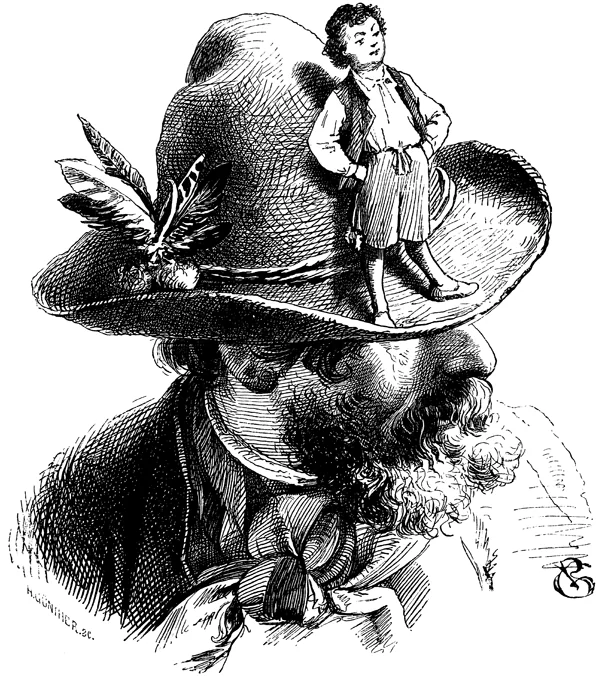
Image from Wikipedia
Image from Wikipedia
Tom Thumb: The Grim Fairy Tale of the Tiny Hero with a Huge Impact
A classic fairy tale by the Brothers Grimm that redefines greatness
Tom Thumb is one of the best-known fairy tales by the Brothers Grimm and appears as number 37 in the Children's and Household Tales from the second edition of 1819. The tale belongs to the fairy tale type ATU 700 and tells the story of a child who is hardly larger than a thumb but survives every danger through cleverness, courage, and ingenuity. It is precisely this tension between outer smallness and inner strength that makes Tom Thumb one of the most distinctive texts in the Grimm universe. ([de.wikipedia.org](https://de.wikipedia.org/wiki/Daumesdick?utm_source=openai))
Biographical origin: From folk tale to canonical Grimm version
The literary origin of Tom Thumb lies in the collection and adaptation by the Brothers Grimm, who included the tale in their second edition in 1819. This secured the fairy tale a fixed place in the canon of German-language children's and household tales and it continued to be passed down through subsequent editions. The Wikisource citations show that the fairy tale was present in several editions of the Grimm collection, thus ranking among the permanently anchored texts of the collection. ([de.wikisource.org](https://de.wikisource.org/wiki/Daumesdick?utm_source=openai))
In terms of content, Tom Thumb unfolds as a series of trials in which the tiny hero intellectually surpasses his surroundings. He directs the horse while carrying wood, travels on the hat of a stranger, escapes from robbers, ends up in the belly of a cow, and even falls into the captivity of a wolf before finally being freed through cunning. The plot thus follows a classic fairy tale logic: it is not physical strength that matters, but improvisation, language, and instinctive cleverness. ([de.wikipedia.org](https://de.wikipedia.org/wiki/Daumesdick?utm_source=openai))
The career of a fairy tale hero: Stations filled with risk, cunning, and survival skills
Tom Thumb begins his "career" as the wished-for child of a couple who longs for a child, "even if it is only as small as a thumb." This very beginning marks the central motif of the fairy tale: the seemingly insignificant as a bearer of the extraordinary. The little hero is portrayed not as a figure of weakness, but as observant, articulate, and surprisingly self-assured. Thus, the physically smallest becomes the dramatically largest in the narrative space. ([de.wikipedia.org](https://de.wikipedia.org/wiki/Daumesdick?utm_source=openai))
Particularly impressive is the scene where Tom Thumb helps his father with woodcutting by sitting in the horse's ear and giving commands. This scene functions like a miniaturized epic of heroism: the seemingly ridiculous image becomes a demonstration of control, timing, and authority. Later, he uses the same intellectual agility to outsmart thieves, survive threats, and return from within animals to the surface of life. The fairy tale thus develops a rhythm of danger, resourcefulness, and rescue that captivates the reader to this day. ([de.wikipedia.org](https://de.wikipedia.org/wiki/Daumesdick?utm_source=openai))
Musical development of the narrative: Rhythm, repetition, and dramatic intensification
Although Tom Thumb is not a musical work, the fairy tale has a striking internal composition. The plot employs repetitions, variations, and sudden turns, akin to traditional oral storytelling art. Each episode increases the tension, yet every danger transforms into a new opportunity for self-assertion in the next moment. This dramaturgy lends the text an almost musical form of tension and release. ([de.wikipedia.org](https://de.wikipedia.org/wiki/Daumesdick?utm_source=openai))
Particularly strong is the oral quality of the material: the dialogues are concise, direct, and pointed at the crucial moment. The hero does not speak much, but his sentences propel the action forward and shape the character. This way, the fairy tale gains a clear stage presence that remains immediately accessible to contemporary readers. It is this blend of simplicity and precision that makes Tom Thumb a prime example of the narrative art of the Grimm tradition. ([de.wikipedia.org](https://de.wikipedia.org/wiki/Daumesdick?utm_source=openai))
Discography of the material: Transmission, variants, and literary affinities
There is no formal discography for Tom Thumb, but the text's transmission can be read as a stable history of the work. Wikisource documents the material in several Grimm editions, including 1819, 1837, 1840, 1843, 1850, and 1857. This editorial continuity shows how firmly the text was anchored in the repertoire of the Brothers Grimm and how it maintained its form over decades. ([de.wikisource.org](https://de.wikisource.org/wiki/Daumesdick?utm_source=openai))
The reception of the fairy tale extends far beyond the Grimm collection. The English term "Thumbling" refers to the international relations with Tom Thumb stories, and English literary history features various translations and adaptations. Additionally, German research points to related figures such as Däumling and Daumerling, highlighting the broad family of "little hero" narratives. Thus, Tom Thumb is not isolated but serves as a defining focal point within a European narrative tradition. ([en.wikipedia.org](https://en.wikipedia.org/wiki/Thumbling?utm_source=openai))
Critical reception: Symbolism, motifs, and cultural-historical interpretations
Academic reception views Tom Thumb not merely as a children's fairy tale but as a multifaceted symbolic text. In the notes by the Brothers Grimm and later fairy tale studies, the motif of the little hero is associated with mythological, social, and psychological interpretations. Here, the little thumb character appears as a figure overcoming powerlessness: small in body, great in asserting one’s will. ([de.wikisource.org](https://de.wikisource.org/wiki/Anmerkungen_zu_den_Kinder-_und_Hausm%C3%A4rchen_der_Br%C3%BCder_Grimm_I?utm_source=openai))
Culturally, the fairy tale is noteworthy because it constantly shifts the boundaries between comedy and seriousness, vulnerability and sovereignty. The hero sits in the horse's ear, disappears in a mouse hole, lands in the belly of a cow, and yet is never merely a victim. Instead, a narrative model of resilience emerges that feels modern even today. This blend of wonder, wit, and survival intelligence explains the enduring fascination with the material. ([de.wikipedia.org](https://de.wikipedia.org/wiki/Daumesdick?utm_source=openai))
Cultural influence: Why Tom Thumb remains relevant today
Tom Thumb has significantly shaped the concept of the "little hero" and resonates widely in children's literature, popular culture, and modern narrative patterns. The material is adaptable because it encapsulates a universal experience in fairy tale form: those who are underestimated can develop surprising strength precisely because of that. This makes the fairy tale relevant to modern themes such as self-empowerment, marginalization, and identity. ([de.wikipedia.org](https://de.wikipedia.org/wiki/Daumesdick?utm_source=openai))
The character is particularly strong for today’s readers because it does not require heroic monumentality. Tom Thumb succeeds not through power but through perception, skill, and courage in the moment. This embodies the timeless quality of the fairy tale: it tells of greatness without exaggeration and success without pretense. This quiet yet determined form of heroism gives the text its cultural durability. ([de.wikipedia.org](https://de.wikipedia.org/wiki/Daumesdick?utm_source=openai))
Conclusion: A tiny fairy tale with monumental radiance
Tom Thumb is one of those Grimm fairy tales that, at first glance, seem simple but unfold tremendous depth upon closer inspection. The material combines folk tale poetics, dramatic narrative economy, and a surprisingly modern psychology of survival. Anyone interested in classic fairy tales, German literary history, and symbolically rich narrative figures will find a text of lasting power here. A look into the world of the Grimms is always worthwhile, but Tom Thumb shows particularly impressively how much greatness lies in a tiny hero. ([de.wikipedia.org](https://de.wikipedia.org/wiki/Daumesdick?utm_source=openai))
Official channels for Tom Thumb:
- Instagram: No official profile found
- Facebook: No official profile found
- YouTube: No official profile found
- Spotify: No official profile found
- TikTok: No official profile found