
Gert Steinbäcker
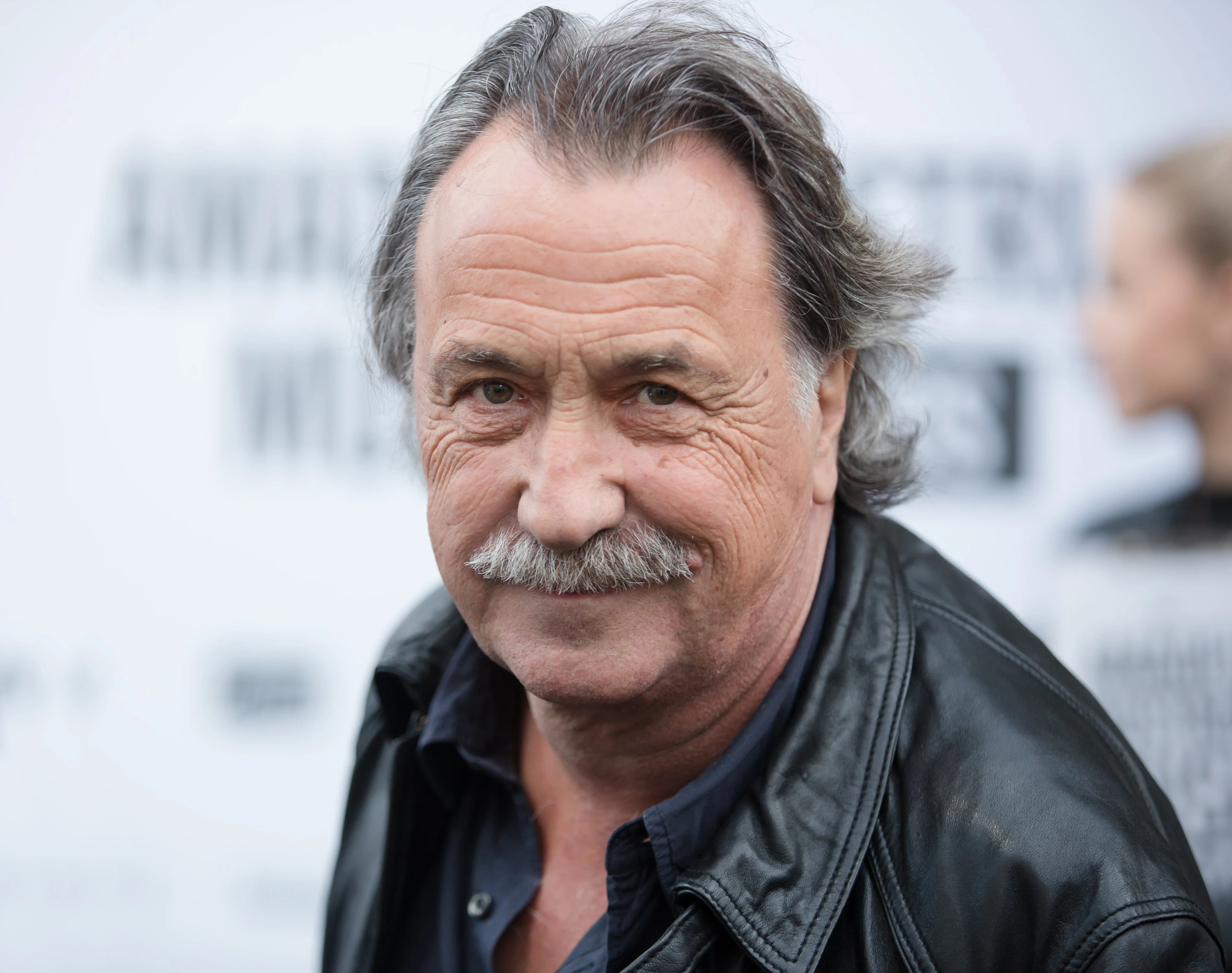
Image from Wikipedia
Image from Wikipedia
Gert Steinbäcker: The warm, clear voice of Austropop and the first S of S.T.S.
An artist portrait between Styrian grounding, songwriter artistry, and musical endurance
Gert Steinbäcker, born on November 27, 1952, in Graz-St. Peter, is one of the defining voices of Austrian Austropop. As a singer-songwriter, musician, and vocalist, he not only shaped the history of S.T.S. but also built a substantial solo career that earned him multiple Gold records. His career intertwines regional dialect, melodic sensitivity, and a distinctive view of the everyday, imbued with the laconic warmth that still characterizes great Austropop classics. ([de.wikipedia.org](https://de.wikipedia.org/wiki/Gert_Steinb%C3%A4cker))
Early Years: Graz, Guitars, Band Practice, and the Path to His Own Voice
Steinbäcker's musical upbringing began in Styria and led him early on into various band contexts. During his school days, he met Thomas Spitzer, a meeting that would later prove consequential for Austrian pop history. He gained initial experience with the band Mephisto, performed in 1971 at events like Popdorf 71, and then continued with Mashuun, a formation that stood out with its own compositions blending hard rock, electronic elements, and concert guitar pieces. ([de.wikipedia.org](https://de.wikipedia.org/wiki/Gert_Steinb%C3%A4cker))
These early stages already demonstrate the breadth of his musical development. Steinbäcker did not enter the music industry as a smoothly polished schlager performer, but as a musician with band experience, friction, and a clear sensibility for arrangement and song structure. His years in various formations laid the foundation for the tone of his later songs: close to life, direct in language, but never sober or austere. ([de.wikipedia.org](https://de.wikipedia.org/wiki/Gert_Steinb%C3%A4cker))
The Rise with S.T.S.: From Styrian Trio to Austropop Legend
The real breakthrough came with S.T.S., the trio composed of Steinbäcker, Günter Timischl, and Schiffkowitz. In 1984, the band achieved great success with "Fürstenfeld"; this initiated a career spanning decades marked by sold-out tours, along with Gold and Platinum awards. The group became known as the "Styrian Harmony" and combined sparse stage language with strong songwriting, which in live performances particularly resonated through its focus on voice, lyrics, and presence. ([steiermark.orf.at](https://steiermark.orf.at/studio/stories/3225493/))
On the album "Überdosis G’fühl," Steinbäcker left his mark with titles such as "Überdosis G’fühl," "’s hat alles auf der Welt sein Preis," "I hab di leben g’sehn," and "Das neue Vaterland." Notably, "Fürstenfeld" was initially seen as a minor track on the LP but evolved into the signature song of S.T.S. and achieved significant sales figures within a year. The combination of dialect, catchiness, and emotional precision made the piece a cultural touchstone. ([de.wikipedia.org](https://de.wikipedia.org/wiki/Gert_Steinb%C3%A4cker))
Songwriting and Attitude: The Author Behind Major Austropop Moments
Steinbäcker quickly established himself as a lyric-driven songwriter with a clear line. For the S.T.S. album "Grenzenlos," he wrote, among others, "Kalt und Kälter," "Irgendwann bleib I dann dort," "So frei, wie man sein kann," and "Großvater." That same year, he was awarded as the best Austrian lyricist, emphasizing his role not only as a frontman but also as a precise song author. His songs work with simple, often folk-sounding formulas, yet they open vast emotional spaces within them. ([de.wikipedia.org](https://de.wikipedia.org/wiki/Gert_Steinb%C3%A4cker))
It is precisely this connection of linguistic simplicity and thematic depth that characterizes his work. Steinbäcker does not write abstractly but rather about relationships, origins, the passage of time, and inner states. This gives his songs that rare blend of familiarity and resonance that keeps popular music alive over time. Critics have repeatedly highlighted the direct, often edgy quality of his songs. ([krone.at](https://www.krone.at/77285?utm_source=openai))
Between Greece and Graz: Biography as an Artistic Energy Source
A significant part of his biography is the close connection between Graz and Greece. In the late 1980s, Steinbäcker took a creative break from S.T.S. to explore new ideas and ultimately produce his first solo album, "Einmal im Leb’n." Greece, his adopted home, became not only a retreat but also a place of perspective change that influenced his lyrics and his sense of life. In interviews, he has described himself metaphorically as a commuter between both worlds. ([de.wikipedia.org](https://de.wikipedia.org/wiki/Gert_Steinb%C3%A4cker))
This biographical duality explains much of his artistic stance. Steinbäcker rarely appears as a loud star, but rather as a reflective observer who has built his own world from language, melody, and attitude over the years. His later performances often included S.T.S. titles, further strengthening the continuity between his band history and solo work. ([de.wikipedia.org](https://de.wikipedia.org/wiki/Gert_Steinb%C3%A4cker))
The Solo Career: Independence Without Break
With "Einmal im Leb’n," Steinbäcker began his solo career in 1990, which he pursued consistently. The album achieved Gold status and was produced by Christian Kolonovits, who also contributed musically to some tracks. Subsequent solo releases included "Steinbäcker" (1994), "Stationen" (1997), "Best of" (2002), "Bilder an der Wand" (2010), "Ja eh" (2016), "Alles live" (2020), and "44" (2022). His solo discography therefore reflects not a side project but a standalone chapter in Austrian pop history. ([de.wikipedia.org](https://de.wikipedia.org/wiki/Gert_Steinb%C3%A4cker))
Particularly, "Ja eh" marked a phase of reflection and consolidation. Universal Music described the album as a work that encapsulates the S.T.S. era while also representing a final great shared studio moment for the three musicians. Through the symphonic arrangements of certain songs and an emphasis on his storytelling, Steinbäcker demonstrated that his music remains viable even beyond the band format. ([universal-music.de](https://www.universal-music.de/gert-steinbaecker/biografie))
Discography, Charts, and Reception: Consistency Over Pure Nostalgia
Chart data underscores the stable resonance of his solo work: "Einmal im Leb’n" reached number 3, "Steinbäcker" also number 3, "Stationen" number 6, "Bilder an der Wand" number 5, "Ja eh" number 3, "Alles live" number 5, and "44" number 4 in the Austrian charts. Thus, Steinbäcker is among the few Austropop artists whose solo work is recognized not just as a backdrop to their band career but as an ongoing relevant release chain. ([arge-musik.at](https://www.arge-musik.at/charts/gert-steinbäcker/))
Individual songs have also developed a life of their own across generations. Although "Steiermark" was not released as a single, it is regarded in the media as the unofficial anthem of the state and has been used multiple times as a theme song for motorsport broadcasts in recent years. "Irgendwann bleib i dann dort" became a classic that remains entrenched in the collective memory of Austropop. In streaming figures and popularity lists, these titles remain central references within his work. ([de.wikipedia.org](https://de.wikipedia.org/wiki/Gert_Steinb%C3%A4cker?utm_source=openai))
Style and Artistic Signature: Dialect, Melody, and Social Observation
Gert Steinbäcker represents a songwriting style that sounds simple and unfolds its power precisely through that simplicity. His compositions work with clear harmonies, memorable choruses, and a language that remains immediately accessible without being trite. It is in the connection of Styrian dialect, narrative closeness, and melodic pressure that the very quality arises that has kept Austropop viable for decades. ([de.wikipedia.org](https://de.wikipedia.org/wiki/Gert_Steinbäcker))
The press has repeatedly described him as a reflective artist with political awareness and as a singer whose songs address social tensions, life plans, and biographical fractures. Even critical or rebellious tones appear to him not as poses but as part of a consistent stance. This blend of clarity, empathy, and linguistic precision lends his work authority and recognizability. ([krone.at](https://www.krone.at/540447?utm_source=openai))
Stage Presence and Legacy: An Artist Who Endures
Steinbäcker's live presence has been a significant aspect of his appeal for decades. ORF reports on his tours emphasize the emotional impact of his performances, especially when he shared the stage with other Austropop greats. His farewell concert in 2022 in Graz was described as an emotional highlight, bringing the history of S.T.S. back to life in a condensed form. ([steiermark.orf.at](https://steiermark.orf.at/studio/stories/3225493/))
In 2012, he was awarded the Golden Honorary Cross for Services to the Republic of Austria, a state recognition of his cultural status. Moreover, he remained active after S.T.S. concluded, introducing "44" as a work understood to reflect on four decades of music. His career thus demonstrates the rare continuity of an artist who cannot be reduced to a single hit. ([de.wikipedia.org](https://de.wikipedia.org/wiki/Gert_Steinb%C3%A4cker))
Current Projects and Later Releases
Even in his later years, Steinbäcker has remained present. In 2021, he featured on the EAV album "Ihr Sünderlein kommet" with "Roll over Bethlehem," in 2022, "44" was released as a compilation overview of his work, and concerts with his band are scheduled for 2026. These activities show that his work continues to be publicly acknowledged and that his name holds significant relevance in Austria's music landscape. ([de.wikipedia.org](https://de.wikipedia.org/wiki/Gert_Steinb%C3%A4cker))
The current perception of his oeuvre is not driven solely by nostalgia but by ongoing presence. His songs are streamed, his classics remain vibrant in radio and on stages, and his name appears regularly in concert announcements and cultural journalistic retrospectives. This marks the characteristic of an artist whose work has woven itself into the fabric of pop history. ([open.spotify.com](https://open.spotify.com/artist/02eUZzLCjVzLteitetsffB?utm_source=openai))
Conclusion: Why Gert Steinbäcker Remains Interesting Today
Gert Steinbäcker embodies Austropop in a particularly credible form: down-to-earth, textually rich, melodically distinctive, and consistently present over decades. His career combines band history, solo work, awards, chart successes, and a stage presence that has never relied on effects. Anyone wishing to understand why dialect music is so deeply rooted in Austria will find in Steinbäcker's work one of the most important reference points. ([de.wikipedia.org](https://de.wikipedia.org/wiki/Gert_Steinb%C3%A4cker))
He remains fascinating because his songs do not age, but mature. They tell of life, of origins, of loss, of hope, and of moving on with that calmness that great songwriters possess. Whoever experiences him live meets not only an Austropop stalwart but an artist whose voice and lyrics continue to resonate directly to this day. ([universal-music.de](https://www.universal-music.de/gert-steinbaecker/biografie))
Official Channels of Gert Steinbäcker:
- Instagram: no official profile found
- Facebook: no official profile found
- YouTube: no official profile found
- Spotify: https://open.spotify.com/artist/02eUZzLCjVzLteitetsffB
- TikTok: no official profile found
Sources:
- Wikipedia – Gert Steinbäcker
- Universal Music – Gert Steinbäcker | Biography
- ORF Steiermark – Gert Steinbäcker – The Last Tour
- ArGe-Musik.at – Gert Steinbäcker
- Kronen Zeitung – STS Third - Steinbäcker on Solo Paths: "Bilder an der Wand"
- Kronen Zeitung – "I project images of life"
- Die Presse – Steinbäcker, the Gentle Revolutionary
- Spotify – Gert Steinbäcker
Upcoming Events
Gert Steinbäcker and Band live in Bayreuth