
Hans-Peter Riese
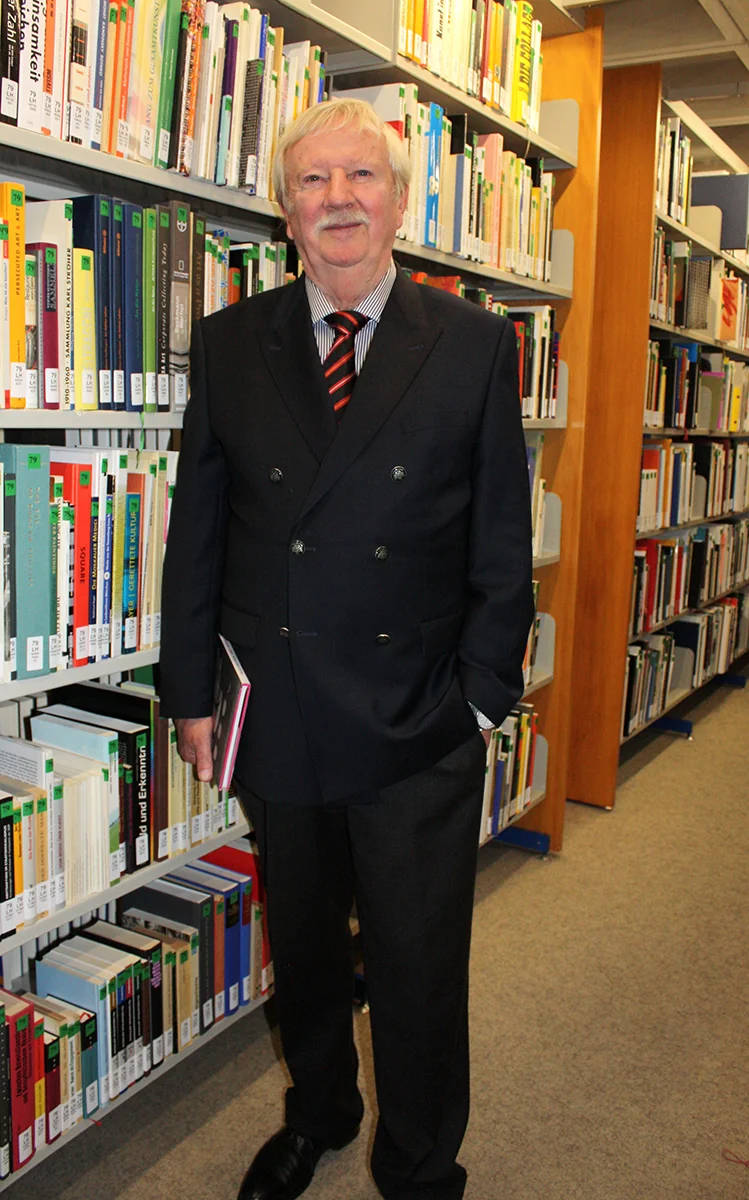
Image from Wikipedia
Image from Wikipedia
Hans-Peter Riese: The Precise Perspective of a Cultural Journalist Between East and West
A Life Devoted to Art Criticism, Cultural Commentary, and International Perspectives
Hans-Peter Riese, born on May 7, 1941, in Enger, belongs to that rare generation of cultural journalists who not only described but also shaped the feuilleton. His professional journey took him from early encounters with contemporary art in Siegen through a broad academic study in Frankfurt to the major political and cultural hotspots of Europe and the USA. For decades, he combined journalistic precision with art historical curiosity, becoming an authority on art criticism and the art of Central and Eastern Europe. ([de.wikipedia.org](https://de.wikipedia.org/wiki/Hans-Peter_Riese))
Early Influences and Academic Awakening
Riese's biographical starting point is remarkably multifaceted. After stints in Schötmar and Siegen, he obtained his Abitur through adult education and studied philosophy, sociology, history, political science, and art history at Johann Wolfgang Goethe University Frankfurt starting in 1966. This academic breadth later explains the depth of his texts: Riese never wrote solely about artworks but also about contexts, thought movements, and historical tensions. Even during his studies, he worked for Hessischer Rundfunk, primarily for the editorial team of ttt – titel, thesen, temperamente, and he engaged early on with the cultural and political situation in Czechoslovakia. ([de.wikipedia.org](https://de.wikipedia.org/wiki/Hans-Peter_Riese))
Even at this stage, his curatorial instinct was evident. In 1967, he organized the exhibition “Constructive Tendencies from Czechoslovakia” for the Studio Gallery of the University of Frankfurt, an early indication of his enduring interest in constructive and concretely constructive art. Simultaneously, he worked as a freelance author, writing texts for art catalogs and co-editing the feuilleton of the student magazine DISKUS with Detlev Claussen. From these years, a profile emerges that connects theory, editorial work, and mediation with confidence. ([de.wikipedia.org](https://de.wikipedia.org/wiki/Hans-Peter_Riese))
The Path to a Respected Cultural Journalist
From 1968, Hans-Peter Riese became a regular freelance contributor to the feuilleton of the Frankfurter Allgemeine Zeitung with specialties in art criticism and culture in Central and Eastern Europe. Prior to that, he had published for the Frankfurter Rundschau, later spending years as a correspondent in Prague for Stuttgarter Zeitung, Deutschlandfunk, and FAZ. His expulsion from Czechoslovakia in 1973 marked a sharp turning point, but also a journalistic pivot: His observations on political systems, cultural milieus, and artistic freedom gained additional sharpness and credibility as a result. ([de.wikipedia.org](https://de.wikipedia.org/wiki/Hans-Peter_Riese))
The following stations made him one of the most prominent cultural mediators in the German-speaking world. From 1974 to 1985, Riese was a correspondent for Deutschlandradio in Bonn focusing on foreign policy, then from 1985 to 1991, he headed the ARD radio studio in Moscow. Between 1991 and 2000, he worked as the editor-in-chief of radio and deputy program director at Hessischer Rundfunk; from 2001 to 2006, he served as a correspondent for HR, SR, RB, and ORB in Washington. This career represents journalistic experience at the highest level and an extraordinarily resilient international network. ([de.wikipedia.org](https://de.wikipedia.org/wiki/Hans-Peter_Riese))
Art Criticism as a Way of Life
After his retirement, Riese remained active, channeling his energy into books, catalogs, monographs, and curatorial projects. The sources show him as the author of biographies on Heijo Hangen, Kazimir Malevich, Eduard Steinberg, and Klaus Staudt as well as editor of numerous publications on constructive and concrete art. His name represents the systematic exploration of positions that have long been overlooked in the Western canon, particularly in the art of Eastern Europe and the tension between avant-garde, abstraction, and political context. ([de.wikipedia.org](https://de.wikipedia.org/wiki/Hans-Peter_Riese))
His memberships further underscore this standing: Riese is a member of the PEN Center Germany and the International Association of Art Critics (AICA). The FAZ honored him on the occasion of his 80th birthday as a “journalist and thematic jack-of-all-trades” and emphasized the wealth of knowledge he brought to conversations and texts. This recognition is more than just a birthday note; it describes the value of an author who combines education, judgment, and willingness to mediate in rarely clear form. ([de.wikipedia.org](https://de.wikipedia.org/wiki/Hans-Peter_Riese))
Writings, Monographs, and Curatorial Work
Riese’s work includes monographs and edited volumes spanning decades: on Richard P. Lohse, Eduard Steinberg, Kazimir S. Malevich, Klaus Staudt, Zdeněk Sýkora, and other artists of concrete and constructive art. In addition, there are catalogs and essays on Richard Paul Lohse, Jan Kubíček, Miloš Urbásek, Hartmut Böhm, Grisha Bruskin, and Jiří Kolár. Through this, Riese has not only written but also made art historical fields visible, shifted, and opened them to new interpretations. ([de.wikipedia.org](https://de.wikipedia.org/wiki/Hans-Peter_Riese))
His curatorial work aligns perfectly with this approach. Riese primarily collected concrete/constructive art from East and West and served as chairman of the Michaela Riese Foundation in Kunstforum Ostdeutsche Galerie. The documented career in the Kunstforum biography shows him as someone who not only describes art but also institutionally accompanies, organizes, and translates it into exhibitions. This connection between writing and curating gives his work particular authority. ([de.wikipedia.org](https://de.wikipedia.org/wiki/Hans-Peter_Riese))
Style, Attitude, and Cultural Influence
The influence of Hans-Peter Riese lies less in spectacular headlines and more in the sustainable mediation of complex artistic contexts. His texts combine historical contextualization, conceptual precision, and a clear sense of the aesthetic logic of the works. Those who look at his career recognize a cultural journalist who never considers politics, society, and art in isolation but as interconnected experiential spaces. ([de.wikipedia.org](https://de.wikipedia.org/wiki/Hans-Peter_Riese))
Particularly defining is his closeness to Central and Eastern Europe. From his studies to his correspondence in Prague to his later art historical work, a common thread runs through: the interest in artistic modernity under political conditions, in nonconformist positions, and in art as intellectual resistance. This is precisely where his cultural historical significance lies. He writes not only about art but also about spaces of freedom, ruptures, and the conditions causing their emergence. ([de.wikipedia.org](https://de.wikipedia.org/wiki/Hans-Peter_Riese))
Conclusion: Why Hans-Peter Riese Remains Relevant Today
Hans-Peter Riese stands for a journalistic stance that combines research, judgment, and cultural foresight. His biography speaks of European experience, political vigilance, and a lifelong connection to the art of the 20th and 21st centuries. He remains intriguing because he transcends boundaries: between journalism and art criticism, between East and West, between analysis and passion. Those interested in cultural history, feuilleton, and the intellectual lines of post-war modernity will find in his work a lasting point of reference. ([de.wikipedia.org](https://de.wikipedia.org/wiki/Hans-Peter_Riese))
There may not be a live experience in the true musical sense here, but the invitation remains the same: to read Riese’s texts, catalogs, and monographs, to discover his curatorial projects, and to engage with his nuanced perspective on art. It is precisely in this engagement that the full strength of this author unfolds — in the precise encounter with images, ideas, and historical tensions. ([de.wikipedia.org](https://de.wikipedia.org/wiki/Hans-Peter_Riese))
Official Channels of Hans-Peter Riese:
- Instagram: No official profile found
- Facebook: No official profile found
- YouTube: No official profile found
- Spotify: No official profile found
- TikTok: No official profile found