
Mechtild Borrmann
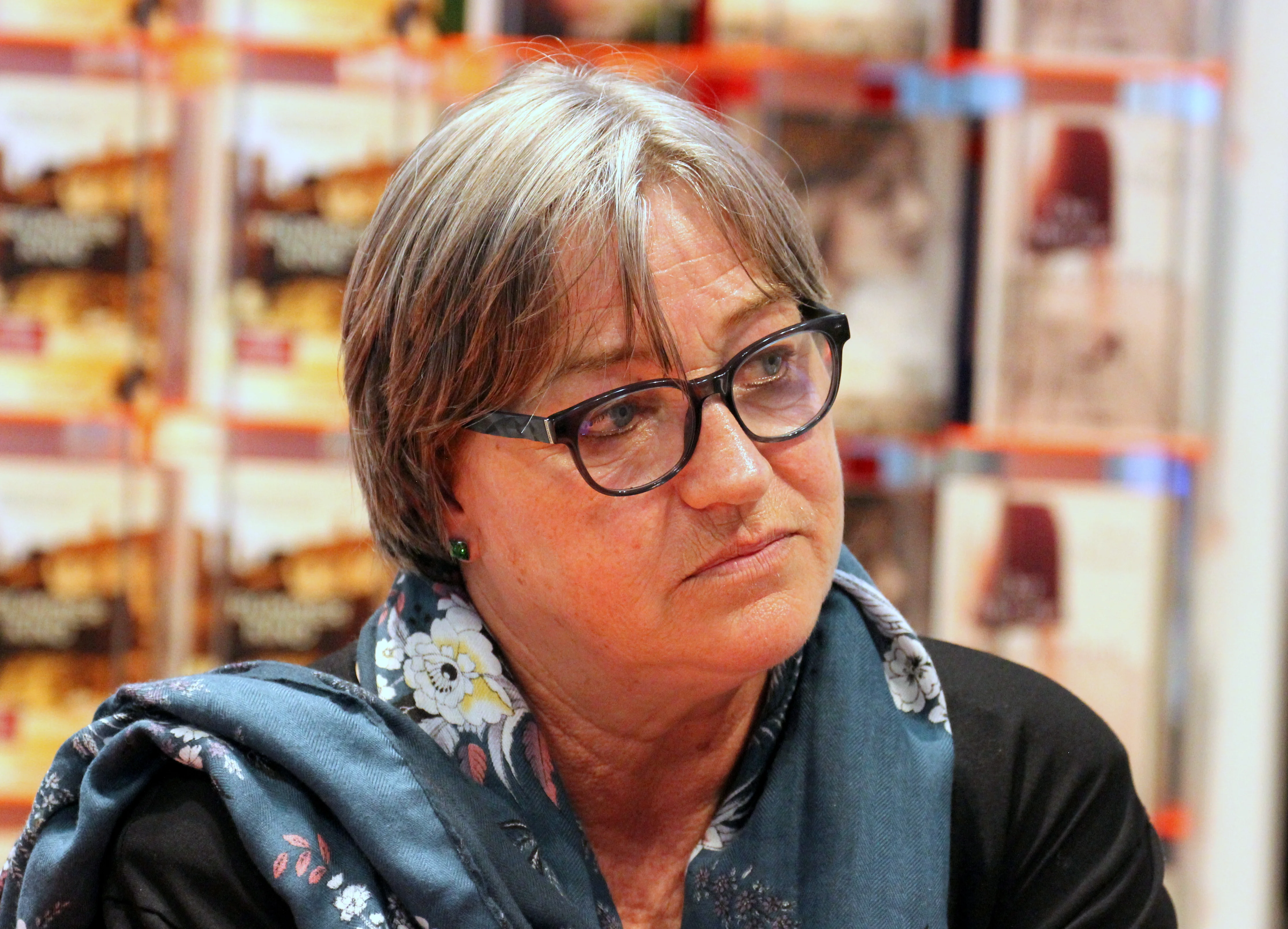
Image from Wikipedia
Image from Wikipedia
Mechtild Borrmann: The Precise Chronicler of German Present and History
Between Crime Novel, Contemporary History, and Literary Tension
Mechtild Borrmann is one of the most prominent German authors when it comes to intertwining personal destinies with the fractures of the 20th and 21st centuries. Born in 1960 in Cologne, raised in the Lower Rhine region, and now residing in Bielefeld, she has developed a literary style characterized by narrative precision, psychological depth, and profound emotional tension. Her novels combine historical research with compelling character development, turning societal conflicts into captivating literature.
Before fully dedicating herself to writing, Borrmann worked as a dance and theater educator, in social care, and as a restaurateur. This broad biographical background continues to influence her books today: she writes about people on the margins of society, exploring vulnerability, responsibility, and moral choices. This is precisely what gives her novels a unique quality that transcends genre boundaries, captivating readers of all backgrounds.
Biography: From Everyday Life to Literary Precision
Mechtild Borrmann's literary journey is closely connected to practical life experiences. Her professional stints in education, social work, and gastronomy have sharpened her awareness of social realities and given her novels a distinctly human core. Instead of detached construction, her focus is on believable characters, concrete life circumstances, and the subtle shifts that determine guilt, hope, and survival.
The author lives as a freelance writer in Bielefeld. There, she has created a body of work that enriches German crime literature with a contemporary historical and often profoundly historical dimension. Her books are not loud dramatic spectacles, but carefully crafted thrillers that draw their strength from research, empathy, and narrative discipline.
Career: Breakthrough with Historically Impactful Novels
One of the defining moments in her career was the success of Die andere Hälfte der Hoffnung, which was nominated for the prestigious Friedrich-Glauser-Preis. With Der Geiger, Borrmann solidified her position among the leading authors of German-language thrillers. The novel tells a fate intertwined with Russia, labor camps, and post-war Germany, highlighting her ability to seamlessly integrate historical themes into a dense, psychologically charged plot.
Her books Trümmerkind, Grenzgänger, and Feldpost remained on the Spiegel bestseller list's top 10 for months. This reflects not only a large readership but also the rare ability to merge literary ambition with broad accessibility. Borrmann writes thrillers based on composition, rhythm, and careful tension-building while always keeping the human aspect in view.
The Central Themes: Guilt, Memory, Justice
A common thread throughout Mechtild Borrmann's work is the question of how people act in extreme situations and what marks violence, war, and social exclusion leave behind. Her novels often take place during World War II, the post-war years, or the long shadows of political and familial traumas. Her interest lies less in spectacle and more in the quiet consequences of decisions that shape generations.
Grenzgänger centers on children in care during the 1950s and 1960s, showing how institutions, morals, and dependencies collide. Feldpost is based on true life stories, combining field post letters, historical research, and a tragic love story into a gripping thriller. In Glück hat einen langsamen Takt, Borrmann also demonstrates her ability to open vast emotional spaces with concise, clear language in a shorter form.
Discography? No – but a Canon of Novels with Bestseller Quality
Although Mechtild Borrmann does not have a musical discography, her work possesses a near-musical cohesiveness: themes, motifs, and timelines intertwine like carefully placed voices in a score. Some of her most important books include Die andere Hälfte der Hoffnung, Der Geiger, Grenzgänger, Feldpost, Glück hat einen langsamen Takt, and Lebensbande. These titles mark not only the chronology of her body of work but also the continuous refinement of her literary method.
The publisher's texts and book announcements repeatedly emphasize her precise, authoritative language as well as the connection between contemporary history and suspense. Several novels have been highlighted as bestsellers and award winners or nominees, including the German Crime Prize. The international response is also reflected in the fact that individual titles have been prepared for foreign markets.
Current Projects: Lebensbande and New Readings
With Lebensbande, Mechtild Borrmann continues her work on large historical narratives. The novel connects the lives of three women over an entire century, moving between World War II and the fall of the Berlin Wall. Publishers and the press describe the book as a moving story about friendship, courage, and self-sacrifice; readings and event announcements indicate that the work is currently in the public spotlight.
In 2026, the novel will also be presented in reading formats, such as at cultural events in Bielefeld. This underscores Borrmann's ongoing presence in the literary scene and her closeness to the audience. Her books work as well on stage as they do on the page, as they thrive on dialogue, pace, and atmospheric intensity.
Style: Clarity, Tension, and Literary Depth
Mechtild Borrmann's style is characterized by a sober, unadorned language that imparts significant emotional impact. She employs shifting perspectives, carefully constructed timelines, and a precise sense of rhythm. Her compositions never feel contrived but rather organically developed, as each character, each scene, and each historical detail serves a narrative function.
Notably, she has a talent for generating tension from moral dilemmas. For Borrmann, drama arises not from constant action but from decisions that carry weight. This makes her novels attractive to crime readers, history enthusiasts, and those with literary standards alike.
Cultural Influence: An Author Between Crime, Historical Novels, and Literature of Memory
Mechtild Borrmann has established herself as an author who expands the German crime novel with historical depth and social relevance. Her books illuminate how closely personal suffering, political systems, and family secrets are intertwined. In doing so, she stands in a tradition of literary memory culture that does not instruct but moves.
The fact that her novels appear on bestseller lists and have received numerous awards showcases the reach of her work. At the same time, she remains committed to the quiet tone that takes her characters seriously and makes their stories believable. This balance of authority, empathy, and narrative consistency defines her cultural value.
Conclusion: A Distinct Voice in German Literature
Mechtild Borrmann is compelling because she never understands tension merely as a ploy but as a form of literary truth. Her novels connect historical research, psychological accuracy, and linguistic discipline to create stories that resonate. Those who appreciate demanding contemporary literature with historical resonance will find in her an author of remarkable consistency and depth.
Her books deserve not just to be read but to be experienced – live at readings, where her strong presence and the quality of her texts become particularly evident. Mechtild Borrmann shows how literature organizes memories, makes wounds visible, and transforms history into the present.
Official Channels of Mechtild Borrmann:
- Instagram: no official profile found
- Facebook: no official profile found
- YouTube: no official profile found
- Spotify: no official profile found
- TikTok: no official profile found
Sources:
- Droemer Knaur – Mechtild Borrmann
- Mechtild Borrmann – Official Website
- Droemer Knaur – Der Geiger
- Droemer Knaur – Grenzgänger
- Droemer Knaur – Feldpost
- Droemer Knaur – Glück hat einen langsamen Takt
- Droemer Knaur – Lebensbande
- argon hörbuch – Mechtild Borrmann
- Bielefeld.JETZT – Reading for Lebensbande
- Wikipedia: Mechtild Borrmann – Image and Text Source