
Melissa Naschenweng
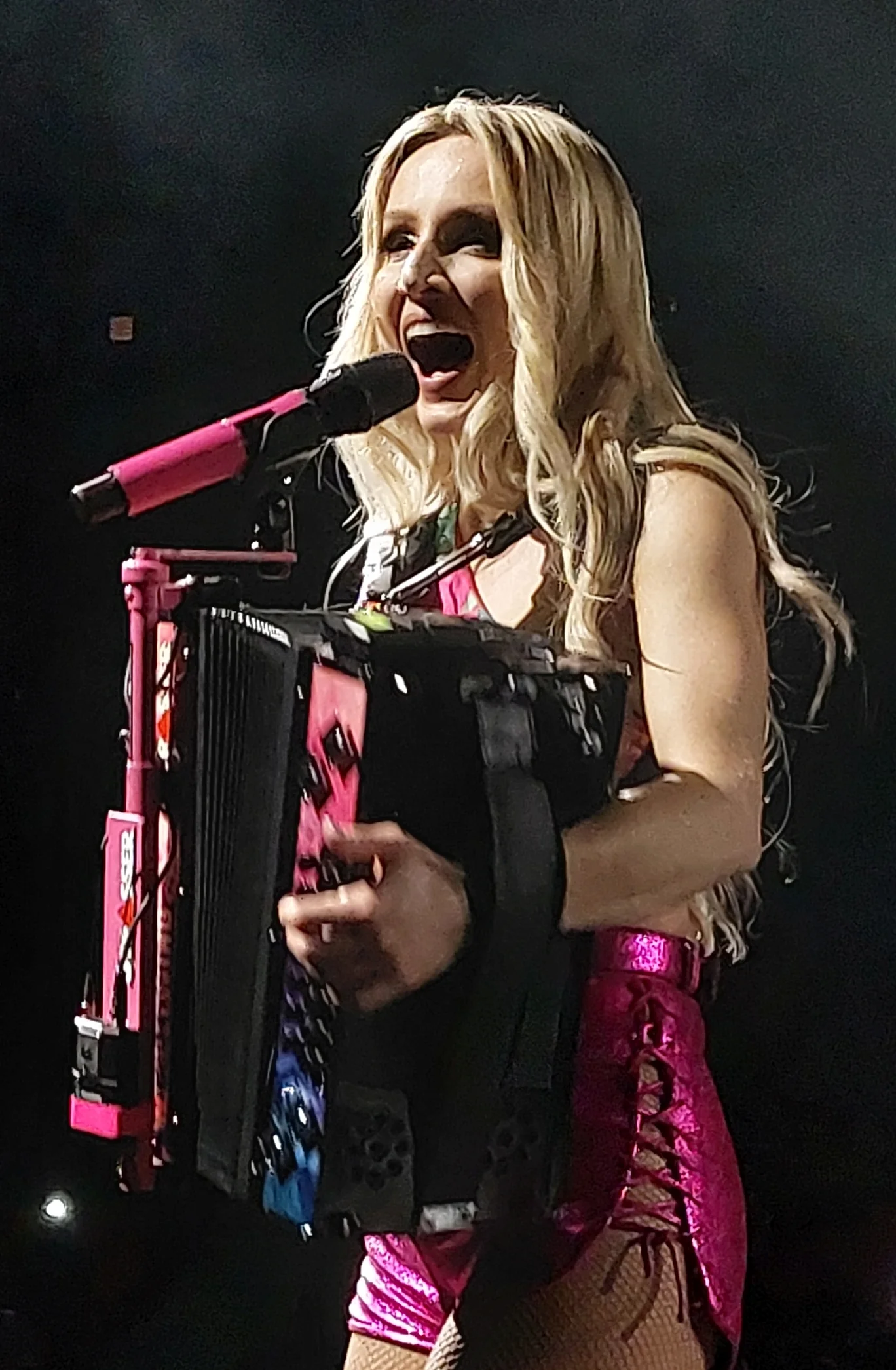
Image from Wikipedia
Image from Wikipedia
Melissa Naschenweng: The Alpine Power Woman Between Schlager, Pop, and Lederhosen Rock
An Artist Who Rethinks Folk Music
Melissa Naschenweng is one of the most distinctive voices in modern Austrian Schlager music. Born on July 11, 1990, in Villach and raised in the Lesachtal Valley in Carinthia, she early on combined musical tradition with a strikingly independent stage aesthetic. The Styrian harmonica, which she learned as a child, became her unmistakable trademark, supporting her music career to this day. ([de.wikipedia.org](https://de.wikipedia.org/wiki/Melissa_Naschenweng))
Her artistic profile thrives on contrasts: down-to-earth yet glamorous, rooted in folk music while being pop and rock-influenced. This very mix makes her appealing to a cross-generational audience. On her official website, she is described as a passionate musician who plays with clichés and combines apparent contradictions into a contemporary style. ([melissa-naschenweng.at](https://melissa-naschenweng.at/))
From Lesachtal to the Big Stage
Naschenweng grew up in Lesachtal and began taking Styrian harmonica lessons from her father, Andreas Müllmann, at the age of six. Later, she added the flute and guitar, performing her first gigs with her father’s band. After graduating high school, she started studying law in Graz but consciously chose a music career. This early decision demonstrates a clear artistic priority: music as a calling rather than a hobby. ([de.wikipedia.org](https://de.wikipedia.org/wiki/Melissa_Naschenweng))
Stylistically, she positions herself between folk music, Schlager, pop, and rock, and even coined her own term for this blend: "Lederhosen Rock." Her visual identity is closely tied to this positioning: pink hot pants leather trousers, high heels, sparkling tops, and the pink Styrian harmonica create a stage language that is instantly recognizable. This is where her authority as a modern interpreter of a tradition-heavy music form lies. ([de.wikipedia.org](https://de.wikipedia.org/wiki/Melissa_Naschenweng))
The First Steps: Competitions, Television, and Brand Building
The public breakthrough did not happen overnight but unfolded through a series of competitions and TV appearances. In 2010, she finished second at the Volksmusik Grand Prix Melodien der Alpen, and in 2012, she secured another second place at Musikantenstadl in the newcomer competition. In 2014, she appeared in the casting show Herz von Österreich, and by 2016, she was already performing at the Donauinselfest, bei Wenn die Musi spielt, at the Silvesterstadl, and in Die Schlager des Sommers. ([de.wikipedia.org](https://de.wikipedia.org/wiki/Melissa_Naschenweng))
This phase shaped her stage presence and media recognition. She did not expand her reach through a single format but through constant visibility in Schlager and folk music contexts. Gradually, an artist emerged whose name is now associated with a combination of television presence, live quality, and radio-friendly production. ([de.wikipedia.org](https://de.wikipedia.org/wiki/Melissa_Naschenweng))
The Breakthrough with Kunterbunt and Wirbelwind
With the release of her album Kunterbunt in 2017, Naschenweng made a decisive leap to the top of the Austrian music scene. The album reached number 3 in Austria and was certified gold. Two years later, she raised the bar further with Wirbelwind: the release debuted at number 1 in Austria, maintained a chart presence for 79 weeks, and was awarded platinum. ([de.wikipedia.org](https://de.wikipedia.org/wiki/Melissa_Naschenweng))
Additionally, the single I steh auf Bergbauernbuam became a central track in her career. According to discography records, it is her most successful release with over 30,000 units sold; the song garnered over one million views on YouTube within three weeks. Such numbers demonstrate how effectively Naschenweng’s blend of regional identity and catchy hooks resonates. ([de.wikipedia.org](https://de.wikipedia.org/wiki/Melissa_Naschenweng))
LederHosenRock, Awards, and Festival Appearances
With LederHosenRock, released in November 2020, Naschenweng continued her commercial evolution. The album debuted at number 1 on the Austrian album charts and attained platinum status. Additionally, she received the Amadeus Award for Songwriter of the Year 2021 for the song Traktorführerschein, underscoring her role not just as a performer but also as a contributing artist. ([de.wikipedia.org](https://de.wikipedia.org/wiki/Melissa_Naschenweng))
At the same time, her reputation as a live act grew. She repeatedly performed at Wenn die Musi spielt, the Donauinselfest, Starnacht formats, and major TV shows. In June 2022, ORF even dedicated a documentary to her titled Melissa Naschenweng – The Rising Star in Portrait. Such formats demonstrate that she is no longer seen as a fringe figure in the genre but as a central representative of a new generation of Schlager artists. ([de.wikipedia.org](https://de.wikipedia.org/wiki/Melissa_Naschenweng))
Discography: Compact, Successful, Clearly Positioned
Melissa Naschenweng's discography is remarkably focused. Currently, Wikipedia lists seven studio albums, one live album, four compilations, 29 singles, and 30 music videos. According to this overview, she has sold more than 75,000 recordings to date. This shows a remarkable market presence in the German-speaking countries, especially in the core Austrian market. ([de.wikipedia.org](https://de.wikipedia.org/wiki/Melissa_Naschenweng/Diskografie))
Among the most important albums are Oanfoch schen, oanfoch du, Gänsehautgefühl, Kunterbunt, Wirbelwind, LederHosenRock, Glück, and Alpenbarbie. Kunterbunt, Wirbelwind, and LederHosenRock each achieved gold or platinum success, while Glück and Alpenbarbie also reached strong chart positions. This consistent series proves that Naschenweng does not rely on a single success but has built a lasting album career. ([de.wikipedia.org](https://de.wikipedia.org/wiki/Melissa_Naschenweng/Diskografie))
2024 to 2026: New Projects, New Reach
In recent years, Naschenweng has remained active. In August 2024, she presented the song Der Michl mit der Sichl on the ARD show Immer wieder sonntags, and at the end of December 2024, she was a guest on the quiz show Wer weiß denn sowas XXL. Her album released in January 2025 debuted at number 1 on the Austrian album charts and was awarded the newly established Number 1 Award by the Austria Top 40. ([de.wikipedia.org](https://de.wikipedia.org/wiki/Melissa_Naschenweng))
In 2025 and 2026, she expanded her profile with film and television productions. She filmed for the romantic ORF comedy Herzklang – Zurück zu mir in 2025, released the duet Koa Bergbauernbua with Oimara in October 2025, and released the album Alpenbarbie Rosa Dynamit on January 9, 2026. Simultaneously, the film project Herzklang – Zurück zu mir premiered in Spring 2026, which achieved significant viewership during its TV airing. ([de.wikipedia.org](https://de.wikipedia.org/wiki/Melissa_Naschenweng))
Style, Identity, and Cultural Influence
Naschenweng's cultural influence lies in the renegotiation of Alpine popular music. She links images of home, traditional aesthetics, and modern production into a format that does not musealize folk music tradition but transfers it into contemporary Schlager. The official homepage emphasizes this approach: an exhilarating mix of Schlager, pop, rock, and folk influences appealing to a cross-generational audience. ([melissa-naschenweng.at](https://melissa-naschenweng.at/))
Her success also demonstrates how regionally rooted music can resonate internationally without sacrificing its identity. Awards such as the Amadeus Austrian Music Award, platinum certifications, and repeated chart-topping positions underscore an artistic position with high market relevance. At the same time, her personal touch remains visible: the harmonica as a recurring motif, the clear visual presentation, and her confident handling of folkloric symbols. ([de.wikipedia.org](https://de.wikipedia.org/wiki/Melissa_Naschenweng))
Stage Presence, Media Impact, and Live Quality
A key part of Naschenweng's success lies in her stage presence. She is not only an album artist but also a guest on TV, a festival attraction, and a live performer with high recognition. Her repeated appearances on major German-speaking formats such as Wenn die Musi spielt, Starmania, Helene Fischer Show, or Schlagerbooom firmly establish her within the entertainment cosmos of Schlager. ([de.wikipedia.org](https://de.wikipedia.org/wiki/Melissa_Naschenweng))
Moreover, she has the ability to translate media attention into substantial career development. The awards for multiple gold and platinum records, the great success of her singles, and her continuous presence in Austria's most important music formats highlight: Melissa Naschenweng is no fleeting phenomenon but a strategically grown brand with musical substance. ([de.wikipedia.org](https://de.wikipedia.org/wiki/Melissa_Naschenweng))
Melissa Naschenweng remains exciting because she translates a sense of homeland, show aesthetics, and pop appeal into a credible artistic language. Her career represents independence, recognition, and success on multiple levels: in the studio, on stage, and on television. Anyone wanting to experience how contemporary Schlager sounds today should see Melissa Naschenweng live. ([melissa-naschenweng.at](https://melissa-naschenweng.at/))
Official Channels of Melissa Naschenweng:
- Instagram: https://www.instagram.com/melissa_naschenweng/
- Facebook: https://www.facebook.com/MelissaNaschenwengMusik/
- YouTube: https://www.youtube.com/channel/UC84IK9KlPZLDj_bZqRjYCkQ
- Spotify: https://open.spotify.com/artist/00unybLgvbIqKxx0OTyYYZ?si=BwdzaYZKT4yVrjuEs_n2yw
- TikTok: https://www.tiktok.com/@melissa_naschenweng
Sources:
Upcoming Events
Melissa Naschenweng