
Michael Beutler
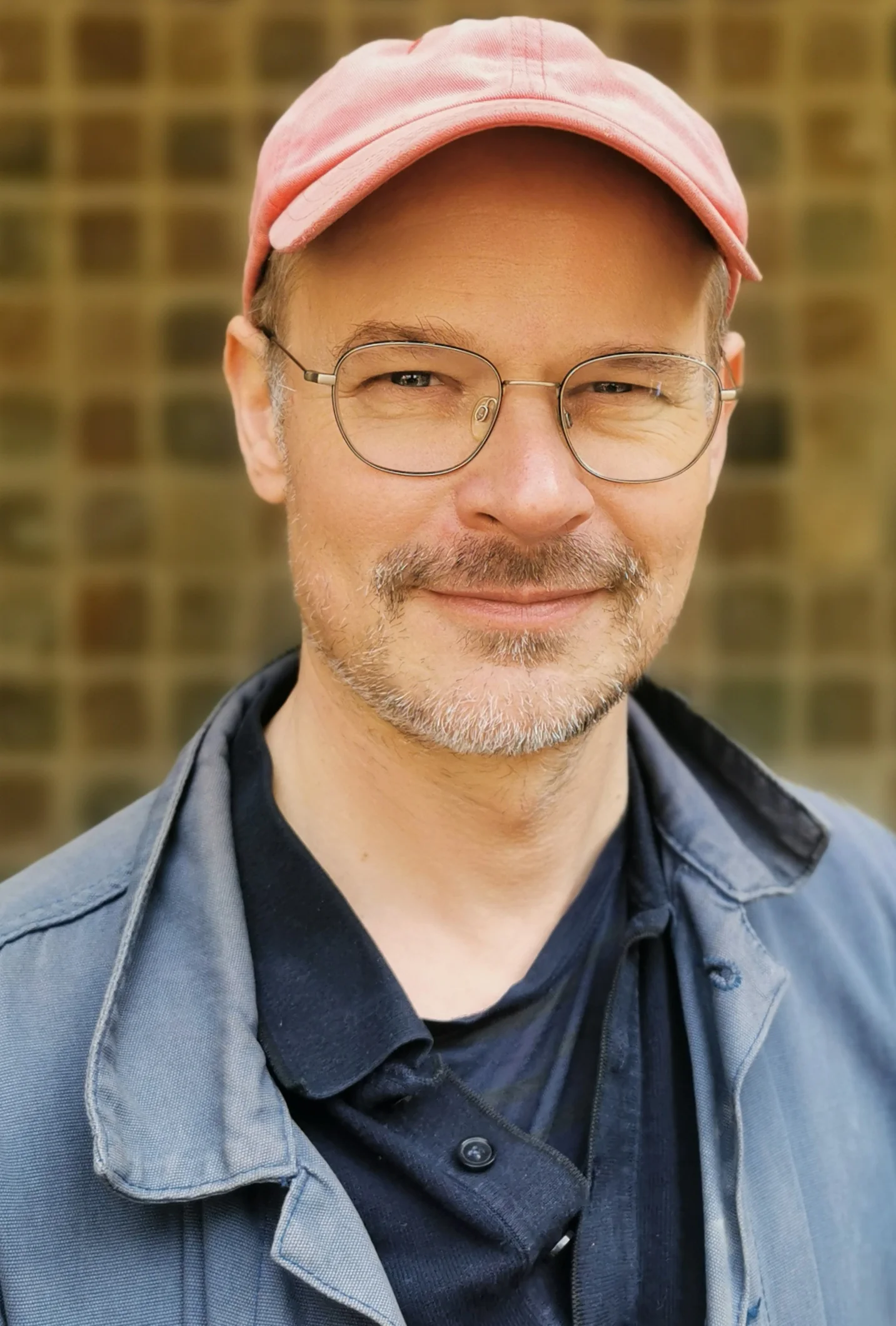
Image from Wikipedia
Image from Wikipedia
Michael Beutler – the Inventor of Spatial Installations from Material, Method, and Imagination
An Artist Who Thinks, Builds, and Transforms Spaces
Michael Beutler, born in 1976 in Oldenburg, is among the most notable German sculptors and installation artists of his generation. His work navigates between sculpture, architecture, improvisation, and process art and has gained international recognition. Early on, he demonstrated an approach that relies less on classical monumentality and more on clever, site-specific interventions. ([de.wikipedia.org](https://de.wikipedia.org/wiki/Michael_Beutler?utm_source=openai))
Beutler's artistic practice thrives on the tension between improvised materiality and precise spatial composition. He works with what a location offers, transforming simple materials into complex installations that not only engage with architecture but redefine it. This fusion of craftsmanship, processuality, and visual impact makes his art distinctly identifiable. ([modell-und-ruine.werkleitz.de](https://modell-und-ruine.werkleitz.de/en/bricoleur/?utm_source=openai))
Biography and Artistic Background
Beutler grew up in Oldenburg and was recognized early on as an independent voice in the art scene. An interview text from the magazine Artist notes that he studied law and art history in Hamburg; this dual perspective on systems, order, and image production continues to influence his work today. From a young age, the focus was not on the finished object but on the process of creation itself. ([artist-kunstmagazin.de](https://www.artist-kunstmagazin.de/de/seite/interview/91?utm_source=openai))
His artistic development is closely tied to the concept of bricolage. Rather than adopting pre-made forms, Beutler often develops tools, methods, and workflows himself, using materials directly available on-site. This attitude makes him an artist who does not merely install but makes production conditions visible and aesthetically enriching. ([modell-und-ruine.werkleitz.de](https://modell-und-ruine.werkleitz.de/en/bricoleur/?utm_source=openai))
From Studio to Spatial Practice
Beutler's work unfolds in a field between studio, construction site, and exhibition context. His installations often emerge in dialogue with the respective space, treating the location not as neutral ground but as an active participant. The resulting artworks resemble temporary architectures, drawing the audience into a walkable image world. ([zkm.de](https://zkm.de/en/exhibition/2012/03/sensor-time-for-young-approaches?utm_source=openai))
The artist has developed a language that achieves significant impact using simple materials. Paper, wood, grids, industrial found objects, and improvised constructions form the basis of works that often appear light and fragile, yet are immensely concentrated in their spatial impact. This contrast between material modesty and visual presence ranks among the strongest qualities of his oeuvre. ([nagel-draxler.de](https://nagel-draxler.de/exhibition/4804/?utm_source=openai))
International Visibility and Major Exhibitions
Beutler gained international recognition through major exhibition projects and institutional presentations. Frieze described him as an artist of large-scale sculptural installations with an analog alternative to automated production, while Werkleitz characterized his practice as that of a bricoleur, creating complex worlds from existing resources. This classification explains why his works resonate so profoundly in museum and exhibition contexts. ([frieze.com](https://www.frieze.com/article/ex-machina?utm_source=openai))
His documented projects include installations at Portikus in Frankfurt, Hamburger Bahnhof in Berlin, ZKM in Karlsruhe, as well as exhibitions in Bard, Luxembourg, and other international institutions. The works consistently establish a direct relationship with the site, transforming its perception with architectural precision. Beutler demonstrates that contemporary sculpture can be not only an object but also action, situation, and temporary structure. ([de.wikipedia.org](https://de.wikipedia.org/wiki/Michael_Beutler?utm_source=openai))
Methodology: Bricolage, Improvisation, and Production Aesthetics
Beutler's art is deeply rooted in the idea of do-it-yourself. In his works, craft processes, improvised tools, and collective production methods play a central role. Werkleitz describes how he often works with available resources, invents new tools, and transforms spaces through cooperative work processes. ([modell-und-ruine.werkleitz.de](https://modell-und-ruine.werkleitz.de/en/bricoleur/?utm_source=openai))
This methodology lends his installations a unique tension. They do not appear industrially smooth but rather open, vibrant, and understood as being in motion. Making work, material, and construction visible becomes an artistic statement that connects to the history of conceptual art as well as to contemporary, process-oriented sculpture. ([hyperallergic.com](https://hyperallergic.com/an-artists-engineering-feats-with-flimsy-materials/?utm_source=openai))
It is particularly the so-called “simple” materials that unfold considerable poetic power in his work. Paper honeycombs, curved grid structures, or temporary spatial bodies allude to a way of thinking that does not decorate space but structures it. This results in installations that are at once fragile and sovereign, experimental and controlled. ([zkm.de](https://zkm.de/en/exhibition/2012/03/sensor-time-for-young-approaches?utm_source=openai))
Significant Work Groups and Artistic Signatures
Beutler's works are especially striking when a specific spatial situation gives rise to an equally specific form. The installation "A-frame" at ZKM transformed an exhibition space into a colorful, illuminated tent made of handmade paper honeycomb. Such projects illustrate how consistently Beutler understands architecture as a malleable material. ([zkm.de](https://zkm.de/en/exhibition/2012/03/sensor-time-for-young-approaches?utm_source=openai))
Similarly, the walkthrough installation at Portikus featuring curved floor grids and colorful flower paper highlights his signature style. Here, transparent lightness, modular order, and spatial dramaturgy intersect. Beutler does not create closed sculptures but open experiential spaces that directly involve the viewer's body. ([de.wikipedia.org](https://de.wikipedia.org/wiki/Michael_Beutler?utm_source=openai))
Reception in the Art Press and Cultural Significance
Art critics have repeatedly described Beutler's work as analytical yet sensual. Frieze emphasized the alternative production logic of his works, Hyperallergic highlighted his engineering feats with fragile materials, and other exhibition texts underscore the processual nature of his practice. These reactions demonstrate that Beutler's work not only satisfies formal criteria but also remains historically relevant. ([frieze.com](https://www.frieze.com/article/ex-machina?utm_source=openai))
His cultural influence primarily lies in the reassessment of sculpture and installation as open, time-based, and collaborative formats. Beutler works against the notion of the finished art object, instead emphasizing change, use, and spatial activation. Thus, he aligns with central tendencies of contemporary art while remaining unmistakable through his material inventions and original spatial solutions. ([frieze.com](https://www.frieze.com/article/under-construction-0?utm_source=openai))
Current Projects and Recent Presence
In recent years, Beutler has maintained a presence in the international exhibition scene. A conversation format published in 2025 in Sculpture Magazine refers to new presentations and a continued engagement with processes, material, and space. This indicates that his practice is not retrogressive but remains in productive dialogue with current discourses in sculpture. ([sculpturemagazine.art](https://sculpturemagazine.art/traces-of-actions-a-conversation-with-michael-beutler/?utm_source=openai))
The continuity of his work lies precisely in its avoidance of formulas, instead reading each situation anew. Whether in a museum, art association, or fair context – Beutler develops a unique logic from the location. This ability makes him an artist whose works are not only looked at but experienced spatially. ([zkm.de](https://zkm.de/en/exhibition/2012/03/sensor-time-for-young-approaches?utm_source=openai))
Conclusion: An Artist Who Transforms Spaces into Modes of Thinking and Experience
Michael Beutler belongs to that group of artists who create significant impact with subtle means. His works combine improvisation, craftsmanship, architecture, and conceptual clarity into installations of high intensity. Those who engage with his works experience art not as a static form but as a lively spatial experience. ([modell-und-ruine.werkleitz.de](https://modell-und-ruine.werkleitz.de/en/bricoleur/?utm_source=openai))
Beutler remains intriguing primarily because he never hides the production process but brings it to the forefront. His installations invite reflection on material, space, and perception. Anyone with the opportunity to experience Michael Beutler live should seize it: His works fully reveal their power only through direct physical experience. ([hyperallergic.com](https://hyperallergic.com/an-artists-engineering-feats-with-flimsy-materials/?utm_source=openai))
Official Channels of Michael Beutler:
- Instagram: No official profile found
- Facebook: No official profile found
- YouTube: No official profile found
- Spotify: No official profile found
- TikTok: No official profile found
Sources:
- Wikipedia – Michael Beutler
- Werkleitz – bricoleur | Michael Beutler
- Frieze – Ex Machina
- CCS Bard – Personal Protocols And Other Preferences
- ZKM – Sensor. Time for Young Approaches
- Sculpture Magazine – Traces of Actions: A Conversation with Michael Beutler
- Hyperallergic – An Artist’s Engineering Feats with Flimsy Materials
- Staatliche Museen zu Berlin – Press Release
- Wikipedia: Image and text source
Upcoming Events
Public Tour: Michael Beutler – Change of Scenery
Art Prize of the Art Foundation NRW – Nam June Paik Award 2026
Hand on the Mill! – Workshop with Michael Beutler