
Modest Petrowitsch Mussorgski
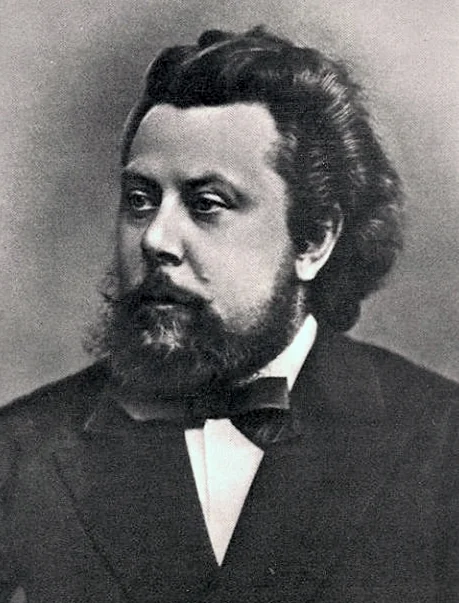
Image from Wikipedia
Image from Wikipedia
Modest Petrowitsch Mussorgski – the radical sound poet of Russian music
A composer who transformed the Russian spirit into sound
Modest Petrowitsch Mussorgski is considered one of the most distinctive voices of the 19th century. The Russian composer was born on March 21, 1839, in Karevo, in the Pskov province, and died on March 28, 1881, in Saint Petersburg at the age of just 42. He became famous primarily for his operas and the piano cycle Pictures at an Exhibition, which remains one of the most significant works of program music to this day. His artistic development combines a closeness to folk traditions, dramatic intensification, and an unmistakably rough tone that sets him apart from many of his contemporaries. ([de.wikipedia.org](https://de.wikipedia.org/wiki/Modest_Petrowitsch_Mussorgski?utm_source=openai))
Biography: From a military career to musical independence
Mussorgski grew up as the youngest son of a wealthy landowner and received early piano lessons from his mother and a German governess. His musical talent emerged at a young age, but his education was initially directed towards a military career. In Saint Petersburg, he attended the Page Corps and the Cadet School before increasingly turning to music. His early exposure to Russian fairy tales, folk songs, and everyday speech patterns significantly influenced his later compositional thinking. ([de.wikipedia.org](https://de.wikipedia.org/wiki/Modest_Petrowitsch_Mussorgski?utm_source=openai))
A crucial turning point was his encounter with Mily Balakirev, along with Dmitri Dargomyzhsky and César Cui. From Balakirev, Mussorgski received his first formal lessons in music theory, which were heavily influenced by Beethoven, Schubert, and Schumann. At the same time, he developed an aesthetic stance that did not rigidly adhere to academic rules but rather focused on speech-like declamation, direct expressiveness, and psychological precision. This independence later made him a key figure in Russian music history. ([de.wikipedia.org](https://de.wikipedia.org/wiki/Modest_Petrowitsch_Mussorgski?utm_source=openai))
Career: The years of breakthrough and creative intensification
After leaving military service, Mussorgski worked from 1863 as a civil servant in the Ministry of Transportation in Saint Petersburg. This professional uncertainty weighed on him, as did his financial troubles, which at times forced him to rely on moneylenders. Nevertheless, some of his most significant works were composed during these years. In 1866, he achieved artistic maturity with songs about ordinary people like “Darling Savishna,” “Hopak,” and “The Seminarist,” followed by further works the following year. ([britannica.com](https://www.britannica.com/biography/Modest-Mussorgsky?utm_source=openai))
Among the key compositions of this phase is the symphonic poem A Night on the Bare Mountain from 1867. Later, other composers worked on revisions or orchestrations, but even in its original form, Mussorgski's penchant for the immediate, visionary, and dramatic is evident. His operas and song cycles expanded the expressive space of Russian music by consistently placing speech rhythm, conflict, and psychological intensity at the center. His later years remained productive, though marked by health and personal crises. ([britannica.com](https://www.britannica.com/biography/Modest-Mussorgsky?utm_source=openai))
The breakthrough: Opera, song, and the new Russian musical drama
Mussorgski’s fame is not founded on a single hit, but rather on a body of work that fundamentally transformed Russian musical theater. His operas are considered the core of his oeuvre because they translated historical themes, closeness to folk traditions, and linguistic intensity into a new form of music drama. Notably, he exhibited an interest in figures on the margins of power, collective conflicts, and a language that remains audible in its uniqueness rather than being smoothed over. This approach brought him closer to a musical reality that appears less idealized and more brutally observant. ([britannica.com](https://www.britannica.com/biography/Modest-Mussorgsky?utm_source=openai))
His songs and song cycles also bear this hallmark. In addition to early pieces, later cycles such as Without Sun and Songs and Dances of Death were created. They blend dark moods, sharp character portrayal, and an almost spoken style that makes the Russian language itself a driving force in the drama. Mussorgski thus became a composer whose intelligence lies not in academic brilliance but in radical fidelity to expression. ([staatsoper.de](https://www.staatsoper.de/biographien/mussorgski-modest?utm_source=openai))
Discography and key works: From Pictures at an Exhibition to Boris Godunov
Among Mussorgski's most famous works is the piano cycle Pictures at an Exhibition, which was composed in memory of his friend Victor Hartmann. The work combines musical character pieces with the famous promenade theme and has become a classic of the international repertoire. It showcases Mussorgski as a master of musical representation: each miniature is precisely observed, sonically pointed, and dramatically embedded. In its later reception history, the work has been orchestrated and reinterpreted multiple times, underscoring its extraordinary adaptability. ([de.wikipedia.org](https://de.wikipedia.org/wiki/Modest_Petrowitsch_Mussorgski?utm_source=openai))
Equally central are the operas Boris Godunov and Chowanschtschina, which are among the great monuments of Russian opera. Both titles demonstrate Mussorgski's ability to portray historical tragedies not as decorative backdrops but as spheres of emotional and political tension. Because several works remained unfinished, his discography is closely intertwined with editorial interventions, additions, and revisions in its transmission history. This makes the reception particularly exciting: Mussorgski is not only a composer but also an open laboratory of musical possibilities. ([mukerbude.de](https://www.mukerbude.de/_MATERIAL/Wissen%20-%20Klassik-Komponisten.pdf?utm_source=openai))
Style and musical language: Directness, dissonance, and dramatic truth
Mussorgski’s style is distinctly different from the smoother idiomatic forms of many of his contemporaries. He relied on harsh harmonies, angular melodies, and a declamatory style that followed the natural rhythm of speech. His music does not seek academic beauty but rather truthfulness in expression. This makes his compositions feel modern for today's listeners: they often seem like psychological scenes expressed through musical means. ([britannica.com](https://www.britannica.com/biography/Modest-Mussorgsky?utm_source=openai))
The proximity to Russian folklore and everyday language is not merely folkloristic decoration but a structural principle. Mussorgski created sound spaces where human voices, historical figures, and collective images intertwine. Especially in his songs and operas, such music emerges that sounds like spoken drama while also possessing a high degree of compositional logic. His works demand a subtle sense of timing, tone color, and linguistic articulation from performers. ([britannica.com](https://www.britannica.com/biography/Modest-Mussorgsky?utm_source=openai))
Critical reception and cultural influence: From underestimated outsider to classic
During his lifetime, Mussorgski was not always fully appreciated; his idiosyncrasy was difficult for many to categorize. Only posthumously did the realization emerge that a radically original composer had been at work. ORF describes him as a musical revolutionary whose genius was only properly recognized long after his death, aided by arrangements and advocates from other great musicians. This late canonization is at the core of his reception history. ([oe1.orf.at](https://oe1.orf.at/artikel/204591/Ein-musikalischer-Revolutionaer-seiner-Zeit?utm_source=openai))
His influence extends far beyond Russia. In music history, Mussorgski represents a liberation of expression from standardized forms and a new closeness between words, stage, and sound. His works have become benchmarks for conductors, pianists, and singers because they demand interpretative clarity and an emotional willingness to take risks. It is precisely in this that his enduring significance lies: Mussorgski does not offer easy solutions but intensifies perception. ([britannica.com](https://www.britannica.com/biography/Modest-Mussorgsky?utm_source=openai))
Current relevance: Why Mussorgski still lives on concert stages today
Since Mussorgski died in 1881, there are naturally no new albums or current projects from the composer himself. Nevertheless, his music remains highly present: concert programs, school projects, and repertoire releases show that Pictures at an Exhibition, his operas, and song cycles have remained vibrant to this day. Recent publications and performances further demonstrate how relevant his work continues to be in the 21st century. His scores engage not only music experts but also a wide audience seeking profound emotional directness. ([strube.de](https://www.strube.de/wp-content/uploads/2024/09/Neuerscheinungen-2024-2025.pdf?utm_source=openai))
Conclusion: A composer of the century between rawness and greatness
Modest Petrowitsch Mussorgski remains intriguing because he did not embellish music but rather condensed it. His artistic development leads from a military education background through Russian realism to a tonal language that feels modern even today. Those who listen to his operas, songs, and piano works encounter a composer who strikes the nerve of history, psyche, and language with extraordinary immediacy. Experiencing Mussorgski live means rediscovering one of the boldest sound thinkers in music history. ([britannica.com](https://www.britannica.com/biography/Modest-Mussorgsky?utm_source=openai))
Official channels of Modest Petrowitsch Mussorgski:
- Instagram: No official profile found
- Facebook: No official profile found
- YouTube: No official profile found
- Spotify: No official profile found
- TikTok: No official profile found