
Rachel Salamander
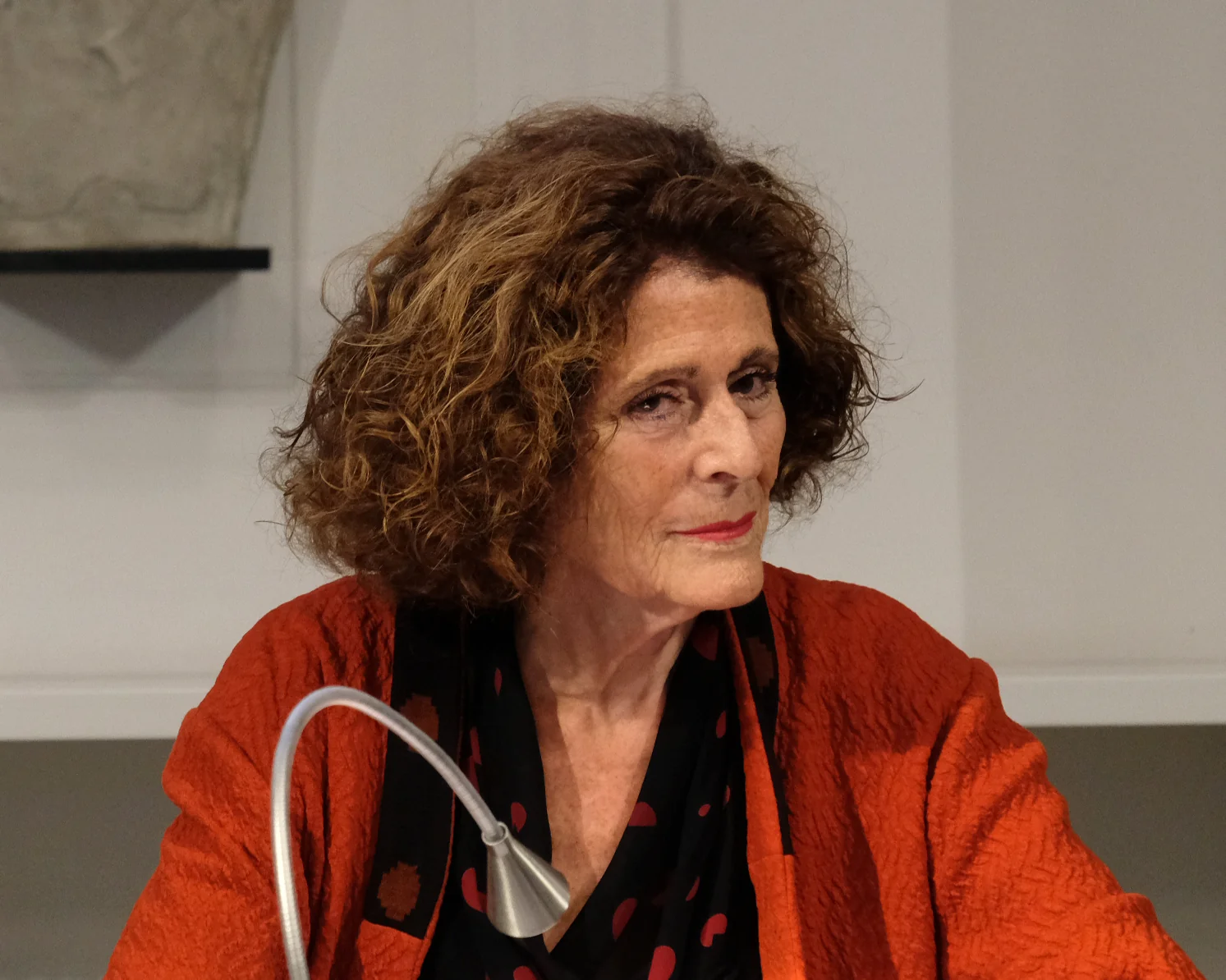
Image from Wikipedia
Image from Wikipedia
Rachel Salamander: A Pivotal Voice in Jewish Literature and Memory Culture in Germany
Between Bookstore, Journalism, and Cultural Responsibility
Rachel Salamander, born on January 30, 1949, in Deggendorf, is one of the most prominent figures in the German literary scene. As a literary scholar, bookseller, and journalist, she has created a space for dialogue between Jewish culture, German-Jewish history, and literary public life over decades. Her biography is closely linked to post-war history and serves as an example of institutional development work with a lasting impact. ([de.wikipedia.org](https://de.wikipedia.org/wiki/Rachel_Salamander?utm_source=openai))
Childhood in the Shadow of the Post-War Era
Salamander was born as the second child of Samuel and Riva Salamander in a displaced persons camp for Holocaust survivors. The family initially lived in the DP camp Föhrenwald and later in Munich; Yiddish shaped the family environment, and the experiences of loss, migration, and new beginnings became an early cultural foundation for her life. This background also explains the depth of her later commitment to Jewish literature, remembrance, and education. ([de.wikipedia.org](https://de.wikipedia.org/wiki/Rachel_Salamander?utm_source=openai))
The path to intellectual public engagement was not straightforward but rather circuitous. Salamander initially studied medicine, then transferred to the University of Munich, where she focused on philosophy, German studies, and Romance studies. She engaged early on with German-Jewish literature and history; she received her doctorate in medieval studies in 1980. This academic foundation granted her later journalistic work a unique historical and linguistic precision. ([de.wikipedia.org](https://de.wikipedia.org/wiki/Rachel_Salamander?utm_source=openai))
The Breakthrough: The Literature Store as a Cultural Space
In 1982, Rachel Salamander opened the Literature Store in Munich, which quickly became a unique institution as the city's first Jewish bookstore. In her concept, she combined inventory, communication, and cultural encounters: Jewish history, contemporary history, biographies, literature, children's and youth books, Hebrew and Yiddish materials, as well as international literature formed a profile that extended far beyond traditional book retail. The Literature Store thus developed into a space for Jewish public life in Germany. ([literaturhaus-muenchen.de](https://www.literaturhaus-muenchen.de/reihen/20-jahre-literaturhandlung/?utm_source=openai))
The bookstore became a meeting point for emigrants, students, writers, artists, and politically interested individuals. At Literaturhaus-München, Salamander is described as a publisher, bookseller, and cultural manager who is among the most distinguished personalities in Germany's literary life. This points to her true artistic and cultural achievement: she has not only sold books but has created a resonance space for Jewish and literary self-affirmation. ([literaturhaus-muenchen.de](https://www.literaturhaus-muenchen.de/reihen/20-jahre-literaturhandlung/?utm_source=openai))
Journalism, Editing, and Literary Authority
Beyond the bookstore, Salamander worked as an editor and essayist. From 2001 to 2013, she led the literary supplement "Literary World" of the newspaper Die Welt, shaping a significant platform for literary criticism and debate. Her texts and speeches revolve around memory, Jewish identity, German responsibility, and the cultural continuity after the Shoah. Her authority is derived from lived experience, academic education, and institutional work. ([de.wikipedia.org](https://de.wikipedia.org/wiki/Rachel_Salamander?utm_source=openai))
Her writings include, among others, "The Jewish World of Yesterday 1860–1938," "A New Life. The Robinson Album. DP Camp: Jews on German Soil 1945–1948," as well as discussions and editions with figures like Hans Jonas or Jutta Fleckenstein. These publications demonstrate her thematic consistency: Salamander documents, organizes, and records what has long remained marginal in German memory culture. Her work possesses the character of cultural archiving with a humanistic perspective. ([de.wikipedia.org](https://de.wikipedia.org/wiki/Rachel_Salamander?utm_source=openai))
Awards and Public Recognition
The list of her awards reflects the significance of her impact. Salamander has received, among others, the Ernst-Hoferichter Prize, the Bavarian Order of Merit, the Federal Cross of Merit 1st Class of the Federal Republic of Germany, the Schiller Prize from the City of Marbach, the Heinrich Heine Prize from the City of Düsseldorf, the Moses Mendelssohn Medal, and the Bavarian Maximilian Order for Science and Art. In 2019, she was awarded honorary citizenship of Munich. These honors recognize not only her personal contributions but also, above all, her role in the rebuilding of Jewish intellectual life in Germany. ([de.wikipedia.org](https://de.wikipedia.org/wiki/Rachel_Salamander?utm_source=openai))
Especially the Heine Prize and the Schiller Prize mark Salamander as a cultural mediator of national significance. In the justifications for the awards, her role as a bridge builder is highlighted, who does not obscure historical chasms but makes them visible through education, language, and institutional work. This is precisely where her enduring authority lies: she embodies an attitude that connects literature, history, and social responsibility. ([faz.net](https://www.faz.net/aktuell/feuilleton/schillerpreis-fuer-rachel-salamander-sie-ueberwindet-die-graeben-12096594.html?utm_source=openai))
Musical Projects, Current Publications, and Presence
Rachel Salamander is not a musician and does not have a discography in the musical sense; however, her biography shows how closely cultural work, journalism, and aesthetic practice can be interconnected. For the years 2024 and 2025, she is particularly involved in literary and memory culture projects, such as contributing to the publication "The Reichenbach – A Bauhaus Synagogue" and ongoing public discussions about the restoration of the Reichenbachstraße Synagogue in Munich. This demonstrates that her contemporary presence continues to be shaped by cultural building work. ([literaturhandlung.com](https://literaturhandlung.com/buecher/fremdsprachige-literatur/englisch/23548/english-edition-the-reichenbach-a-bauhaus-synagogue?utm_source=openai))
In 2026, Salamander will remain prominent, particularly in urban and cultural-historical contexts around Munich. Her work in memory culture, Jewish visibility, and institutional mediation is not a completed chapter but an ongoing project. This ongoing relevance of her persona reflects a cultural mission that has been refined and intensified over decades. ([ru.muenchen.de](https://ru.muenchen.de/pdf/2026/ru-2026-05-12.pdf?utm_source=openai))
Style, Stance, and Cultural Influence
Salamander's style is characterized by intellectual clarity, historical accuracy, and moral alertness. Her texts and public appearances avoid pose and instead emphasize argumentative precision, personal credibility, and cultural depth. In a German public arena where Jewish voices have often been marginalized, she has become an authority for nuanced remembrance and vibrant mediation. ([ikg-m.de](https://www.ikg-m.de/kulturzentrum/literatur-zum-judentum/literaturhandlung/?utm_source=openai))
Her cultural influence manifests not only in awards and institutions but also in networks, events, and reading archives. The Literature Store originated as a meeting place for readings, discussions, and debates, with the archive of recordings documenting this continuity. Thus, Salamander's work operates less through loud gestures than through patient structural work that has made Jewish intellectual life in Germany visible and accessible. ([literaturhaus-muenchen.de](https://www.literaturhaus-muenchen.de/reihen/20-jahre-literaturhandlung/?utm_source=openai))
Conclusion: Why Rachel Salamander Continues to Fascinate
Rachel Salamander captivates as a personality who connects biography and mission, memory and present, science and public life in a rare way. She has created a space with the Literature Store that fosters cultural identity beyond just retail, and through her publications and speeches, she has sustainably strengthened the German-Jewish perspective in the Federal Republic. Those who seek to understand how cultural authority emerges in Germany will find a profound example in her life's work. ([literaturhaus-muenchen.de](https://www.literaturhaus-muenchen.de/reihen/20-jahre-literaturhandlung/?utm_source=openai))
Experiencing Rachel Salamander live means encountering a voice that not only remembers history but translates it into a present of thought and action. This is where her unique charisma lies: she speaks not from a distance but from a lived, responsible, and culturally productive experience. ([faz.net](https://www.faz.net/aktuell/politik/inland/muenchner-synagoge-wiedereroeffnet-endlich-eine-positive-nachricht-ueber-juedisches-accg-110687902.html?utm_source=openai))
Official Channels of Rachel Salamander:
- Instagram: no official profile found
- Facebook: no official profile found
- YouTube: no official profile found
- Spotify: no official profile found
- TikTok: no official profile found
Sources:
- Wikipedia: Rachel Salamander
- Gärtnerplatztheater – Dr. Rachel Salamander
- Literaturhaus München – 20 Years of Literature Store
- Jewish Museum Frankfurt – The Literature Store
- Israelitic Cultural Community Munich and Upper Bavaria – Literature Store
- F.A.Z. – Rachel Salamander Awarded the Heine Prize of the City of Düsseldorf
- F.A.Z. – Schiller Prize for Rachel Salamander
- Literature Store – Official Website
Upcoming Events
Literature & Attitude. Rachel Salamander's Archive
Literature & Attitude. Rachel Salamander's Archive