
Russian Circles
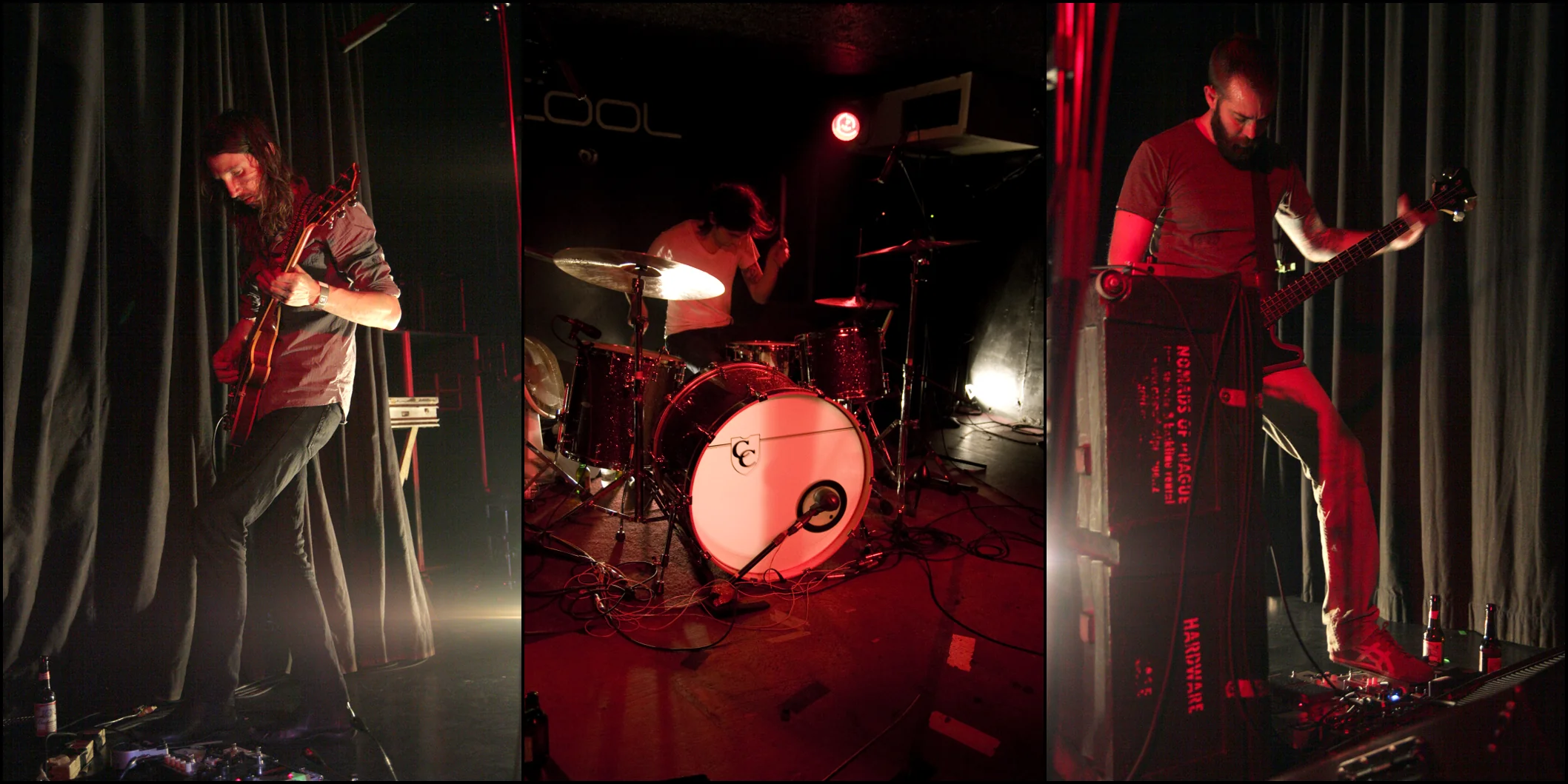
Image from Wikipedia
Image from Wikipedia
Russian Circles – Instrumental Force Between Post-Rock, Metal, and Cinematic Tension
A Band that Tells Stories Without Words and Unleashes Entire Landscapes
Russian Circles are among the most prominent instrumental bands of modern post-metal. The trio from Chicago was formed in 2004 and has carved out a solid place in the international guitar music scene with a mixture of post-rock expansiveness, metallic hardness, and carefully crafted dynamics. The band operates with minimal personnel but maximum impact: drums, bass, and guitar are sufficient to create monumental tension arcs, dark atmospheres, and eruptive sound walls. ([en.wikipedia.org](https://en.wikipedia.org/wiki/Russian_Circles))
The Artistic DNA: Chicago, Discipline, and the Will to Condense
The story of Russian Circles begins in Chicago with Mike Sullivan and Dave Turncrantz, who after the end of previous projects built a new musical collective. Initially, Colin DeKuiper played bass before Brian Cook joined in 2007, completing the lineup permanently. The band name refers to a hockey drill, which aligns well with the group's origin: precise, physical, disciplined, and always oriented towards movement. Their work is driven by extensive tours, high musical concentration, and a clear preference for compositional tension. ([en.wikipedia.org](https://en.wikipedia.org/wiki/Russian_Circles))
The Early Breakthrough: From Enter to Geneva
With the debut Enter, the band made a statement in 2006. Even then, music critics recognized the tension between math-rock precision and metallic gravity that has characterized Russian Circles from the outset. This was followed by Station and Geneva, which sharpened the band's profile and made them visible beyond their niche. Geneva reached number 24 on the Billboard Heatseekers chart, marking an early measurable success in their musical career. ([en.wikipedia.org](https://en.wikipedia.org/wiki/Russian_Circles))
Compositional Maturation: Empros, Memorial, and the Condensation of Sound
With Empros and Memorial, Russian Circles shifted their sound significantly towards a harder, more controlled, and simultaneously more ambitious form of post-metal. Critics described Empros as an album that jumps between beauty and physical force within seconds, while Memorial was perceived as larger, more polished, and at the same time more intimate. Especially on Memorial, the band opened their sound space for additional color: Chelsea Wolfe was featured as a guest vocalist on the title track, adding a floating, almost ghostly dimension to the album. ([pitchfork.com](https://pitchfork.com/reviews/albums/16009-empros/))
Collaboration with Producers like Kurt Ballou and the Aesthetic Refinement
A central factor in the band's artistic development has been the collaboration with Kurt Ballou. At the latest with Guidance, Blood Year, and Gnosis, his influence on recording, engineering, and sonic precision became unmistakable. The band condensed their material, sharpened the production, and focused more on structural clarity rather than mere expansion. The press described Guidance as organic and unpretentious, while Gnosis was characterized as recharged and electrifying. ([pitchfork.com](https://pitchfork.com/reviews/albums/22147-guidance/))
Gnosis as a Turning Point: Space, Time, and Controlled Aggression
With Gnosis, Russian Circles reached a new level of condensation in 2022. The band wrote parts of the material separately in home studios during the pandemic and only later brought the songs together, allowing the original vision to be less compromised. The result was an album that, according to the official band description, consolidates the band’s signature topography of soundscapes, pressure, and movement in particularly sharpened form. The album was released through Sargent House and engineered and mastered by Kurt Ballou; Pitchfork described it as the trio's eighth album and a renewed charge of their familiar sound. ([russiancircles.com](https://russiancircles.com/band))
Current Projects: Tours, Re-Presses, and New Music in Preparation
Even after Gnosis, the band remains highly active. The official website lists numerous tour announcements for 2025 and 2026, including European dates with Pelican, US dates, festival appearances, and re-presses of Gnosis and Memorial. Additionally, the band has announced that new material is in the works for a release in 2026. This shows that Russian Circles are not working with nostalgia, but rather with a continuous artistic condensation and towards the next stage of their music career. ([russiancircles.com](https://russiancircles.com/))
Discography: The Key Albums and Their Place in the Catalog
The discography of Russian Circles follows a clear developmental line. After the self-released EP debut and the album Enter, the band shaped a catalog with Station, Geneva, Empros, Memorial, Guidance, Blood Year, and Gnosis that stands among the most reliable references in instrumental post-metal. This is complemented by the live album Live at Dunk! Fest, the EP Audiotree Far Out, and the early single Upper Ninety. This discography not only documents endurance but also a remarkable musical evolution from the earlier, more open forms to the compact, heavy precision of their later works. ([en.wikipedia.org](https://en.wikipedia.org/wiki/Russian_Circles))
Critical Reception: Between Post-Rock, Metal, and Their Own Law
The music press has repeatedly praised Russian Circles for their compositional discipline and their ability to merge beauty and violence in a single arrangement. Early reviews highlighted the mixture of post-rock dynamics, metal-like hardness, and careful construction; later critiques emphasized maturity, focus, and increased sonic authority. Precisely because the band operates without vocals, all the weight falls on form, arrangement, rhythm, and tonal development. This is where Russian Circles have built an authority over the years that is unmatched in the genre. ([pitchfork.com](https://pitchfork.com/reviews/albums/9076-enter/))
Style and Aesthetics: Riff Architecture Instead of Mere Volume
Russian Circles construct songs like architectural spaces. A motif is introduced, rhythmically shifted, harmonically condensed, and ultimately transformed into a powerful crescendo. The band works with contrasts between emptiness and overwhelming, between drone, doom, noise rock, and post-rock expansiveness. There is no decorative virtuosity in this language; rather, it is a precise form of expression: every strike, every bass line, and every distortion serves the tension. ([russiancircles.com](https://russiancircles.com/band))
Cultural Influence: A Reference for Heavy Instrumental Music
Russian Circles have established themselves as a reference for an entire generation of listeners who experience instrumental music not as background but as a dramatic narrative form. Their pieces function both live and in the studio as kinetic dramaturgy: they build pressure, release it delayed, and leave the impression of a physical experience. In today's post-metal and post-rock landscape, the name Russian Circles stands for seriousness, craftsmanship precision, and a rare balance of hardness and atmosphere. ([en.wikipedia.org](https://en.wikipedia.org/wiki/Russian_Circles))
Russian Circles are exciting because they achieve enormous emotional depth without words and continue to gain focus and sonic authority with every release. Those who experience the band live don't just hear songs; they experience tension, pressure, and release as a physical form of music. This is where their unique greatness lies: Russian Circles are not just another post-rock band, but one of the most convincing instrumental formations of their generation. ([russiancircles.com](https://russiancircles.com/))
Official Channels of Russian Circles:
- Instagram: https://www.instagram.com/russiancircles/
- Facebook: https://www.facebook.com/russiancirclesmusic/
- YouTube: no official profile found
- Spotify: https://open.spotify.com/artist/0AZ3VR0YbFcS0Kgei7L2QF
- TikTok: no official profile found
Sources:
- Russian Circles – Official Website
- Russian Circles – Band / Press Kit
- Russian Circles – Unknown Gnosis: An Interview with Brian Cook
- Russian Circles – News / Current Announcements
- Sargent House – Catalog Numbers
- Pitchfork – Gnosis Review, 2022
- Pitchfork – Guidance Review, 2016
- Pitchfork – Empros Review, 2011
- Pitchfork – Memorial Review, 2013
- Pitchfork – Enter Review, 2006
- Wikipedia: Image and Text Source