
Bad Arolsen
Schloßstraße 10, 34454 Bad Arolsen, Deutschland
Arolsen Archives (Exhibition) | Permanent Exhibition & Database
The Arolsen Archives in Bad Arolsen are much more than a classic tourist destination: Here, exhibition, archive, research, and digital memory culture meet in a place that is internationally unique. Those who visit the Arolsen Archives not only experience the permanent exhibition A Monument of Paper but also the history of an institution that has been securing, documenting, and making accessible traces of Nazi victims since 1948. The focus is on people whose paths have been shaped by persecution, forced labor, detention, flight, and displacement. This results in a visit that is factually informative, emotionally touching, and simultaneously offers a very practical added value: free exhibition, free guided tours, an online archive with millions of digitized documents, and a reading room for in-depth research. For families, school classes, researchers, and those interested in history, this place is therefore not just an exhibition but a vibrant center of historical processing. ([arolsen-archives.org](https://arolsen-archives.org/pressemitteilungen/ueberarbeitet-und-neu-eroeffnet/))
Permanent Exhibition A Monument of Paper: History, Opening Hours, and Admission
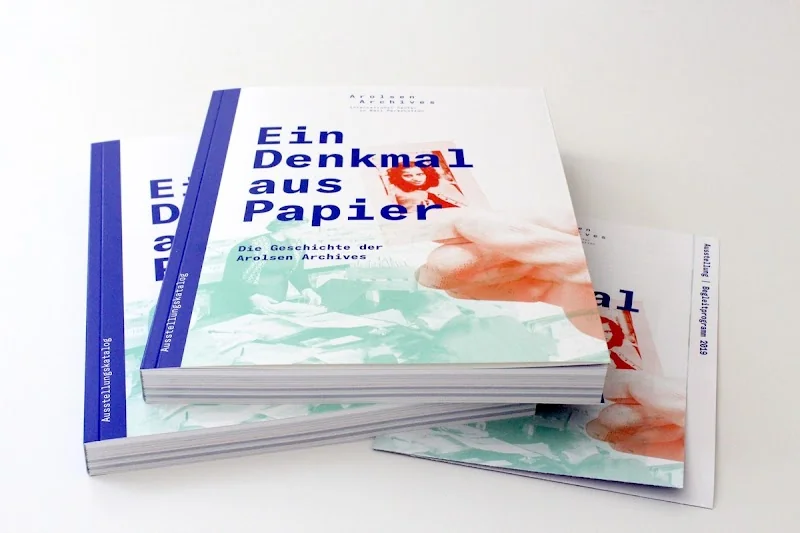
The permanent exhibition of the Arolsen Archives is titled A Monument of Paper and was completely revised in spring 2025 and newly opened in August 2025. It is located in the former department store at Schloßstraße 10 in Bad Arolsen and presents a modern, diverse, and interactive view of the world's largest archive on the victims and survivors of Nazi persecution. The exhibition content leads through the history of the institution, from the early post-war years as the International Tracing Service to its current role as a digital, internationally used archive and part of the UNESCO World Document Heritage. Visitors learn how missing persons were searched for in the post-war period, what role historical documents played, and why the work of the Arolsen Archives remains relevant even 80 years after the end of National Socialism. ([arolsen-archives.org](https://arolsen-archives.org/pressemitteilungen/ueberarbeitet-und-neu-eroeffnet/))
The exhibition is particularly strong due to its connection of original materials and mediation: An installation with original boxes from the Central Name Index shows how work was done in the analog era, while historical documents, photographs, and objects vividly illustrate the development of the institution. At the same time, interactive stations lead into the present, where digital research, crowdsourcing, and educational work come together. The exhibition is bilingual in German and English, admission is free, and guided tours are also free. Opening hours are Wednesday to Friday from 2:00 PM to 5:00 PM and on the first Saturday of each month from 2:00 PM to 5:00 PM; additional special opening hours will be announced at short notice. Important for planning: The exhibition is recommended for ages 14 and up, with adult accompaniment from age 12. This makes the visit flexible and suitable for different target groups, from spontaneous cultural breaks to planned educational trips. ([arolsen-archives.org](https://arolsen-archives.org/pressemitteilungen/ueberarbeitet-und-neu-eroeffnet/))
Those who view the place as an experiential space quickly realize: It is not about distance, but about accessibility. The exhibition is deliberately designed so that one does not just read the historical contexts but can also grasp them in a spatially tangible form. The Arolsen Archives thus create a rare mix of documentation center and exhibition space. This is exactly what makes the permanent exhibition attractive to visitors looking for an exhibition in Bad Arolsen where historical depth, clear structure, and free accessibility come together. The visit is therefore interesting for individuals as well as for groups seeking a focused but not overloaded offering. ([arolsen-archives.org](https://arolsen-archives.org/pressemitteilungen/ueberarbeitet-und-neu-eroeffnet/))
Online Archive and Database of the Arolsen Archives
A central search term around the Arolsen Archives is the database, and this is where the institution's special strength is evident. The online archive is free and available 24/7. It is the most direct way to find information about individuals or topics related to Nazi persecution. Over 40 million digitized documents are already accessible online, and the collection continues to grow. At the same time, the collection includes information on approximately 17.5 million people. This scale is extraordinary: The Arolsen Archives combine historical documents, digital availability, and research logic in a form that is relevant for relatives, science, education, and memorial work alike. ([arolsen-archives.org](https://arolsen-archives.org/en/contact/))
Digitization is not a secondary aspect but part of the self-understanding. Since 1998, the holdings have been digitized, around 90 percent of the holdings have already been scanned, and modern technologies today support the processing of the materials. At the same time, the Arolsen Archives have been working since 2019 to expand the online archive with additional relevant holdings from partner archives and museums. The result is a research environment that not only provides individual names or documents but also makes larger historical contexts visible. Those interested in search terms like arolsen archives database, online archive, or collections will find a source that can be used worldwide while remaining locally anchored in Bad Arolsen. ([arolsen-archives.org](https://arolsen-archives.org/en/about-us/what-we-do/?lang=en))
On-site, the reading room complements the digital offering. There are twelve workstations available for research in the database, as well as a reference library with specialist literature and a digital library for preparation. Particularly practical: A large part of the holdings is digitized and searchable through the database, and relevant documents can be downloaded and secured on a USB stick or via the cloud after the visit. For many visitors, this is a decisive advantage, as online research and on-site work can be meaningfully combined. The Arolsen Archives are thus not only an exhibition but also a workspace for people who have specific questions and wish to delve deeper into the sources. ([arolsen-archives.org](https://arolsen-archives.org/kontakt/besuch/))
Collections on Concentration Camps, Forced Labor, and Displaced Persons
The strength of the Arolsen Archives lies in its collections, which today consist of three major groups: documents on concentration camps, other detention facilities, and deportations; documents on forced laborers; and documents on displaced persons. This structure explains why the institution is relevant for such diverse inquiries. The holdings not only depict the persecution itself but also its consequences after 1945, such as flight, liberation, return, reorientation, and migration. It is precisely this connection that makes the Arolsen Archives a place where a larger picture emerges from many individual documents. Those searching for arolsen archives collections will find here not just a collection but a carefully structured transmission with high historical significance. ([arolsen-archives.org](https://arolsen-archives.org/en/archive/explore-the-collection/))
Historically, these collections have grown in several stages. When the International Tracing Service was founded in 1948, it initially included only a small number of documents. It was not until around 1952 that the current character of the archive took shape, as the Allied tracing services transferred their holdings to Arolsen and hundreds of thousands of lists of foreign forced laborers arrived. Additionally, at the end of 1952, over 30 tons of registration documents from displaced persons were added. This origin explains why the archive brings together so many different transmission contexts: It emerged from practical search work, post-war administration, and the permanent securing of traces of persecution. This history of origin is particularly exciting for visitors to the exhibition because it shows how a search point became an international memory archive. ([arolsen-archives.org](https://arolsen-archives.org/en/archive/explore-the-collection/))
The collection is also broad in content. Among the subtopics are detention and persecution, displaced persons, last personal memories, and files on children and adolescents during and after the Nazi era. This makes it clear that the Arolsen Archives not only show institutional administrative history but also document very concrete life paths. Wallets, photos, wedding rings, letters, or identification documents thus become testimonies of biographies that often remained incomplete for decades. For the exhibition and the database, this means: Visitors can trace history not abstractly but through individual people, individual places, and individual documents. This level of detail makes the Arolsen Archives particularly relevant for search inquiries like exhibition, history, and Nazi persecution. ([arolsen-archives.org](https://arolsen-archives.org/en/archive/explore-the-collection/))
#StolenMemory as a Traveling Exhibition and Open-Air Exhibition
Another top theme is #StolenMemory. The campaign has been running since 2016 and seeks relatives of Nazi victims whose personal belongings have been stored in the archive since the early 1960s. These so-called effects were taken from the victims in concentration camps, and the Arolsen Archives have already been able to find hundreds of families and return possessions. In front of the main building in Bad Arolsen, there is a freely accessible open-air exhibition that tells the stories of 22 Nazi victims: eleven panels about people whose belongings have already been returned and eleven more panels about people whose families are still being sought. This makes the exhibition direct, personal, and very vivid. ([arolsen-archives.org](https://arolsen-archives.org/kontakt/ausstellungen/))
The traveling exhibition #StolenMemory is also on the move far beyond Bad Arolsen. It delves deep into the stories behind personal belongings in Germany and across Europe and has been shown in five countries at more than 200 locations since 2020, according to an official statement. Thus, it is not only a mediation format but also a visible sign of the international reach of the Arolsen Archives. Those searching for arolsen archives traveling exhibition will find not a static museum experience but a project that brings memory work into urban spaces, schools, cultural sites, and public places. The combination of original objects, biographies, and the return of historical traces makes the format particularly accessible. ([arolsen-archives.org](https://arolsen-archives.org/pressemitteilungen/ueberarbeitet-und-neu-eroeffnet/))
That #StolenMemory is now also part of the renewed permanent exhibition strengthens the thematic connection between archival work and public mediation. Visitors thus recognize how individual archival finds can lead to a long-term memory project. The Arolsen Archives not only show what is stored in archives but also why the return of personal items can be of high emotional significance for families. This human dimension makes #StolenMemory one of the strongest search terms around the exhibition because here history does not appear as a closed chapter but as ongoing work on memory and justice. ([arolsen-archives.org](https://arolsen-archives.org/pressemitteilungen/ueberarbeitet-und-neu-eroeffnet/))
Directions, Parking, and On-Site Visit in Bad Arolsen
For practical planning, the location of the Arolsen Archives is very clearly described. The site is located in Bad Arolsen, a town in North Hesse near Kassel. By car, the journey from Kassel takes about 45 minutes. Directly behind the building, there is a parking lot with designated visitor spaces, making the on-site visit convenient. Those arriving by train first take the ICE to Kassel and then continue by regional train to Bad Arolsen. From the train station, it is about a 25-minute walk on a flat route or approximately five minutes by taxi. International airports are also mentioned, including Frankfurt am Main and Dortmund. These indications make it clear that the location is not only locally but also regionally well accessible. ([arolsen-archives.org](https://arolsen-archives.org/kontakt/besuch/))
The visit itself is deliberately organized in a service-oriented manner. Those wishing to research on-site should register their visit at least a week in advance via the online form and wait for a confirmation. For relatives of Nazi victims, the institution even recommends four weeks in advance so that original documents can be prepared and discussions can be well organized. The reading room is on the ground floor of the main building and is accessible, although there are three steps to overcome at the entrance; a ramp is to be added, and assistance is offered. This combination of structure, personal consultation, and clear visiting rules makes the place trustworthy and usable, especially when it comes to sensitive family research or academic work. ([arolsen-archives.org](https://arolsen-archives.org/kontakt/besuch/))
Exhibition visits are also organized in a pleasantly pragmatic manner. The free opening hours in the afternoon, free admission, and the possibility of guided visits make the exhibition an uncomplicated destination for day trips and educational journeys. Especially because the themes weigh heavily historically, practical accessibility is important: no admission fee, clear directions, parking options, and a compact visiting framework lower the barrier and invite deeper engagement with history. So those searching for parking, directions, or opening hours will find not only answers at the Arolsen Archives but also a thoughtful visitor logic that supports both the exhibition and the archive. ([arolsen-archives.org](https://arolsen-archives.org/kontakt/ausstellungen/))
Research On-Site, Reading Room, and Digital Library
The Arolsen Archives are not only interesting for exhibitions but also for research and in-depth inquiries. On-site, there are twelve workstations available in the reading room where one can work in the database. This is complemented by a reference library with about 10,000 publications and 450 journals, as well as a digital library where selected books and magazines, especially from the early post-war period, are accessible. Thus, those wishing to delve deeper into topics such as Nazi persecution, forced labor, displaced persons, or the post-history of the documents have a very robust working environment here. This makes the Arolsen Archives particularly relevant for schools, students, journalists, and historical researchers. ([arolsen-archives.org](https://arolsen-archives.org/en/archive/))
Another advantage is the connection between digital and analog research. The online archive is the fastest way for an initial search, but if documents are not available online or if a search requires more context, the reading room is the right complement. The institution explicitly emphasizes that not all holdings are fully available online yet and that an individual inquiry can be sensible in some cases. At the same time, the processing is continuously increasing, so the archive becomes better usable with each passing year. This dynamism distinguishes the Arolsen Archives from many classic exhibitions: Here, the holdings visibly continue to grow, both digitally and in public mediation. ([arolsen-archives.org](https://arolsen-archives.org/en/contact/))
For visitors, this means a rare combination. Those who only want to see an exhibition receive a free, interactive, and clearly curated introduction with A Monument of Paper. Those who want to know more can delve into the online archive, explore the collection, or continue working on-site in the reading room. And those with a personal connection to the topic may even find documents related to relatives or discover new clues for their family history. Thus, the place is not just a sight but a workspace and memory space with international reach and local ties to Bad Arolsen. ([arolsen-archives.org](https://arolsen-archives.org/en/contact/))
Sources:
Mehr anzeigenWeniger anzeigen
Arolsen Archives (Exhibition) | Permanent Exhibition & Database
The Arolsen Archives in Bad Arolsen are much more than a classic tourist destination: Here, exhibition, archive, research, and digital memory culture meet in a place that is internationally unique. Those who visit the Arolsen Archives not only experience the permanent exhibition A Monument of Paper but also the history of an institution that has been securing, documenting, and making accessible traces of Nazi victims since 1948. The focus is on people whose paths have been shaped by persecution, forced labor, detention, flight, and displacement. This results in a visit that is factually informative, emotionally touching, and simultaneously offers a very practical added value: free exhibition, free guided tours, an online archive with millions of digitized documents, and a reading room for in-depth research. For families, school classes, researchers, and those interested in history, this place is therefore not just an exhibition but a vibrant center of historical processing. ([arolsen-archives.org](https://arolsen-archives.org/pressemitteilungen/ueberarbeitet-und-neu-eroeffnet/))
Permanent Exhibition A Monument of Paper: History, Opening Hours, and Admission
The permanent exhibition of the Arolsen Archives is titled A Monument of Paper and was completely revised in spring 2025 and newly opened in August 2025. It is located in the former department store at Schloßstraße 10 in Bad Arolsen and presents a modern, diverse, and interactive view of the world's largest archive on the victims and survivors of Nazi persecution. The exhibition content leads through the history of the institution, from the early post-war years as the International Tracing Service to its current role as a digital, internationally used archive and part of the UNESCO World Document Heritage. Visitors learn how missing persons were searched for in the post-war period, what role historical documents played, and why the work of the Arolsen Archives remains relevant even 80 years after the end of National Socialism. ([arolsen-archives.org](https://arolsen-archives.org/pressemitteilungen/ueberarbeitet-und-neu-eroeffnet/))
The exhibition is particularly strong due to its connection of original materials and mediation: An installation with original boxes from the Central Name Index shows how work was done in the analog era, while historical documents, photographs, and objects vividly illustrate the development of the institution. At the same time, interactive stations lead into the present, where digital research, crowdsourcing, and educational work come together. The exhibition is bilingual in German and English, admission is free, and guided tours are also free. Opening hours are Wednesday to Friday from 2:00 PM to 5:00 PM and on the first Saturday of each month from 2:00 PM to 5:00 PM; additional special opening hours will be announced at short notice. Important for planning: The exhibition is recommended for ages 14 and up, with adult accompaniment from age 12. This makes the visit flexible and suitable for different target groups, from spontaneous cultural breaks to planned educational trips. ([arolsen-archives.org](https://arolsen-archives.org/pressemitteilungen/ueberarbeitet-und-neu-eroeffnet/))
Those who view the place as an experiential space quickly realize: It is not about distance, but about accessibility. The exhibition is deliberately designed so that one does not just read the historical contexts but can also grasp them in a spatially tangible form. The Arolsen Archives thus create a rare mix of documentation center and exhibition space. This is exactly what makes the permanent exhibition attractive to visitors looking for an exhibition in Bad Arolsen where historical depth, clear structure, and free accessibility come together. The visit is therefore interesting for individuals as well as for groups seeking a focused but not overloaded offering. ([arolsen-archives.org](https://arolsen-archives.org/pressemitteilungen/ueberarbeitet-und-neu-eroeffnet/))
Online Archive and Database of the Arolsen Archives
A central search term around the Arolsen Archives is the database, and this is where the institution's special strength is evident. The online archive is free and available 24/7. It is the most direct way to find information about individuals or topics related to Nazi persecution. Over 40 million digitized documents are already accessible online, and the collection continues to grow. At the same time, the collection includes information on approximately 17.5 million people. This scale is extraordinary: The Arolsen Archives combine historical documents, digital availability, and research logic in a form that is relevant for relatives, science, education, and memorial work alike. ([arolsen-archives.org](https://arolsen-archives.org/en/contact/))
Digitization is not a secondary aspect but part of the self-understanding. Since 1998, the holdings have been digitized, around 90 percent of the holdings have already been scanned, and modern technologies today support the processing of the materials. At the same time, the Arolsen Archives have been working since 2019 to expand the online archive with additional relevant holdings from partner archives and museums. The result is a research environment that not only provides individual names or documents but also makes larger historical contexts visible. Those interested in search terms like arolsen archives database, online archive, or collections will find a source that can be used worldwide while remaining locally anchored in Bad Arolsen. ([arolsen-archives.org](https://arolsen-archives.org/en/about-us/what-we-do/?lang=en))
On-site, the reading room complements the digital offering. There are twelve workstations available for research in the database, as well as a reference library with specialist literature and a digital library for preparation. Particularly practical: A large part of the holdings is digitized and searchable through the database, and relevant documents can be downloaded and secured on a USB stick or via the cloud after the visit. For many visitors, this is a decisive advantage, as online research and on-site work can be meaningfully combined. The Arolsen Archives are thus not only an exhibition but also a workspace for people who have specific questions and wish to delve deeper into the sources. ([arolsen-archives.org](https://arolsen-archives.org/kontakt/besuch/))
Collections on Concentration Camps, Forced Labor, and Displaced Persons
The strength of the Arolsen Archives lies in its collections, which today consist of three major groups: documents on concentration camps, other detention facilities, and deportations; documents on forced laborers; and documents on displaced persons. This structure explains why the institution is relevant for such diverse inquiries. The holdings not only depict the persecution itself but also its consequences after 1945, such as flight, liberation, return, reorientation, and migration. It is precisely this connection that makes the Arolsen Archives a place where a larger picture emerges from many individual documents. Those searching for arolsen archives collections will find here not just a collection but a carefully structured transmission with high historical significance. ([arolsen-archives.org](https://arolsen-archives.org/en/archive/explore-the-collection/))
Historically, these collections have grown in several stages. When the International Tracing Service was founded in 1948, it initially included only a small number of documents. It was not until around 1952 that the current character of the archive took shape, as the Allied tracing services transferred their holdings to Arolsen and hundreds of thousands of lists of foreign forced laborers arrived. Additionally, at the end of 1952, over 30 tons of registration documents from displaced persons were added. This origin explains why the archive brings together so many different transmission contexts: It emerged from practical search work, post-war administration, and the permanent securing of traces of persecution. This history of origin is particularly exciting for visitors to the exhibition because it shows how a search point became an international memory archive. ([arolsen-archives.org](https://arolsen-archives.org/en/archive/explore-the-collection/))
The collection is also broad in content. Among the subtopics are detention and persecution, displaced persons, last personal memories, and files on children and adolescents during and after the Nazi era. This makes it clear that the Arolsen Archives not only show institutional administrative history but also document very concrete life paths. Wallets, photos, wedding rings, letters, or identification documents thus become testimonies of biographies that often remained incomplete for decades. For the exhibition and the database, this means: Visitors can trace history not abstractly but through individual people, individual places, and individual documents. This level of detail makes the Arolsen Archives particularly relevant for search inquiries like exhibition, history, and Nazi persecution. ([arolsen-archives.org](https://arolsen-archives.org/en/archive/explore-the-collection/))
#StolenMemory as a Traveling Exhibition and Open-Air Exhibition
Another top theme is #StolenMemory. The campaign has been running since 2016 and seeks relatives of Nazi victims whose personal belongings have been stored in the archive since the early 1960s. These so-called effects were taken from the victims in concentration camps, and the Arolsen Archives have already been able to find hundreds of families and return possessions. In front of the main building in Bad Arolsen, there is a freely accessible open-air exhibition that tells the stories of 22 Nazi victims: eleven panels about people whose belongings have already been returned and eleven more panels about people whose families are still being sought. This makes the exhibition direct, personal, and very vivid. ([arolsen-archives.org](https://arolsen-archives.org/kontakt/ausstellungen/))
The traveling exhibition #StolenMemory is also on the move far beyond Bad Arolsen. It delves deep into the stories behind personal belongings in Germany and across Europe and has been shown in five countries at more than 200 locations since 2020, according to an official statement. Thus, it is not only a mediation format but also a visible sign of the international reach of the Arolsen Archives. Those searching for arolsen archives traveling exhibition will find not a static museum experience but a project that brings memory work into urban spaces, schools, cultural sites, and public places. The combination of original objects, biographies, and the return of historical traces makes the format particularly accessible. ([arolsen-archives.org](https://arolsen-archives.org/pressemitteilungen/ueberarbeitet-und-neu-eroeffnet/))
That #StolenMemory is now also part of the renewed permanent exhibition strengthens the thematic connection between archival work and public mediation. Visitors thus recognize how individual archival finds can lead to a long-term memory project. The Arolsen Archives not only show what is stored in archives but also why the return of personal items can be of high emotional significance for families. This human dimension makes #StolenMemory one of the strongest search terms around the exhibition because here history does not appear as a closed chapter but as ongoing work on memory and justice. ([arolsen-archives.org](https://arolsen-archives.org/pressemitteilungen/ueberarbeitet-und-neu-eroeffnet/))
Directions, Parking, and On-Site Visit in Bad Arolsen
For practical planning, the location of the Arolsen Archives is very clearly described. The site is located in Bad Arolsen, a town in North Hesse near Kassel. By car, the journey from Kassel takes about 45 minutes. Directly behind the building, there is a parking lot with designated visitor spaces, making the on-site visit convenient. Those arriving by train first take the ICE to Kassel and then continue by regional train to Bad Arolsen. From the train station, it is about a 25-minute walk on a flat route or approximately five minutes by taxi. International airports are also mentioned, including Frankfurt am Main and Dortmund. These indications make it clear that the location is not only locally but also regionally well accessible. ([arolsen-archives.org](https://arolsen-archives.org/kontakt/besuch/))
The visit itself is deliberately organized in a service-oriented manner. Those wishing to research on-site should register their visit at least a week in advance via the online form and wait for a confirmation. For relatives of Nazi victims, the institution even recommends four weeks in advance so that original documents can be prepared and discussions can be well organized. The reading room is on the ground floor of the main building and is accessible, although there are three steps to overcome at the entrance; a ramp is to be added, and assistance is offered. This combination of structure, personal consultation, and clear visiting rules makes the place trustworthy and usable, especially when it comes to sensitive family research or academic work. ([arolsen-archives.org](https://arolsen-archives.org/kontakt/besuch/))
Exhibition visits are also organized in a pleasantly pragmatic manner. The free opening hours in the afternoon, free admission, and the possibility of guided visits make the exhibition an uncomplicated destination for day trips and educational journeys. Especially because the themes weigh heavily historically, practical accessibility is important: no admission fee, clear directions, parking options, and a compact visiting framework lower the barrier and invite deeper engagement with history. So those searching for parking, directions, or opening hours will find not only answers at the Arolsen Archives but also a thoughtful visitor logic that supports both the exhibition and the archive. ([arolsen-archives.org](https://arolsen-archives.org/kontakt/ausstellungen/))
Research On-Site, Reading Room, and Digital Library
The Arolsen Archives are not only interesting for exhibitions but also for research and in-depth inquiries. On-site, there are twelve workstations available in the reading room where one can work in the database. This is complemented by a reference library with about 10,000 publications and 450 journals, as well as a digital library where selected books and magazines, especially from the early post-war period, are accessible. Thus, those wishing to delve deeper into topics such as Nazi persecution, forced labor, displaced persons, or the post-history of the documents have a very robust working environment here. This makes the Arolsen Archives particularly relevant for schools, students, journalists, and historical researchers. ([arolsen-archives.org](https://arolsen-archives.org/en/archive/))
Another advantage is the connection between digital and analog research. The online archive is the fastest way for an initial search, but if documents are not available online or if a search requires more context, the reading room is the right complement. The institution explicitly emphasizes that not all holdings are fully available online yet and that an individual inquiry can be sensible in some cases. At the same time, the processing is continuously increasing, so the archive becomes better usable with each passing year. This dynamism distinguishes the Arolsen Archives from many classic exhibitions: Here, the holdings visibly continue to grow, both digitally and in public mediation. ([arolsen-archives.org](https://arolsen-archives.org/en/contact/))
For visitors, this means a rare combination. Those who only want to see an exhibition receive a free, interactive, and clearly curated introduction with A Monument of Paper. Those who want to know more can delve into the online archive, explore the collection, or continue working on-site in the reading room. And those with a personal connection to the topic may even find documents related to relatives or discover new clues for their family history. Thus, the place is not just a sight but a workspace and memory space with international reach and local ties to Bad Arolsen. ([arolsen-archives.org](https://arolsen-archives.org/en/contact/))
Sources:
Arolsen Archives (Exhibition) | Permanent Exhibition & Database
The Arolsen Archives in Bad Arolsen are much more than a classic tourist destination: Here, exhibition, archive, research, and digital memory culture meet in a place that is internationally unique. Those who visit the Arolsen Archives not only experience the permanent exhibition A Monument of Paper but also the history of an institution that has been securing, documenting, and making accessible traces of Nazi victims since 1948. The focus is on people whose paths have been shaped by persecution, forced labor, detention, flight, and displacement. This results in a visit that is factually informative, emotionally touching, and simultaneously offers a very practical added value: free exhibition, free guided tours, an online archive with millions of digitized documents, and a reading room for in-depth research. For families, school classes, researchers, and those interested in history, this place is therefore not just an exhibition but a vibrant center of historical processing. ([arolsen-archives.org](https://arolsen-archives.org/pressemitteilungen/ueberarbeitet-und-neu-eroeffnet/))
Permanent Exhibition A Monument of Paper: History, Opening Hours, and Admission
The permanent exhibition of the Arolsen Archives is titled A Monument of Paper and was completely revised in spring 2025 and newly opened in August 2025. It is located in the former department store at Schloßstraße 10 in Bad Arolsen and presents a modern, diverse, and interactive view of the world's largest archive on the victims and survivors of Nazi persecution. The exhibition content leads through the history of the institution, from the early post-war years as the International Tracing Service to its current role as a digital, internationally used archive and part of the UNESCO World Document Heritage. Visitors learn how missing persons were searched for in the post-war period, what role historical documents played, and why the work of the Arolsen Archives remains relevant even 80 years after the end of National Socialism. ([arolsen-archives.org](https://arolsen-archives.org/pressemitteilungen/ueberarbeitet-und-neu-eroeffnet/))
The exhibition is particularly strong due to its connection of original materials and mediation: An installation with original boxes from the Central Name Index shows how work was done in the analog era, while historical documents, photographs, and objects vividly illustrate the development of the institution. At the same time, interactive stations lead into the present, where digital research, crowdsourcing, and educational work come together. The exhibition is bilingual in German and English, admission is free, and guided tours are also free. Opening hours are Wednesday to Friday from 2:00 PM to 5:00 PM and on the first Saturday of each month from 2:00 PM to 5:00 PM; additional special opening hours will be announced at short notice. Important for planning: The exhibition is recommended for ages 14 and up, with adult accompaniment from age 12. This makes the visit flexible and suitable for different target groups, from spontaneous cultural breaks to planned educational trips. ([arolsen-archives.org](https://arolsen-archives.org/pressemitteilungen/ueberarbeitet-und-neu-eroeffnet/))
Those who view the place as an experiential space quickly realize: It is not about distance, but about accessibility. The exhibition is deliberately designed so that one does not just read the historical contexts but can also grasp them in a spatially tangible form. The Arolsen Archives thus create a rare mix of documentation center and exhibition space. This is exactly what makes the permanent exhibition attractive to visitors looking for an exhibition in Bad Arolsen where historical depth, clear structure, and free accessibility come together. The visit is therefore interesting for individuals as well as for groups seeking a focused but not overloaded offering. ([arolsen-archives.org](https://arolsen-archives.org/pressemitteilungen/ueberarbeitet-und-neu-eroeffnet/))
Online Archive and Database of the Arolsen Archives
A central search term around the Arolsen Archives is the database, and this is where the institution's special strength is evident. The online archive is free and available 24/7. It is the most direct way to find information about individuals or topics related to Nazi persecution. Over 40 million digitized documents are already accessible online, and the collection continues to grow. At the same time, the collection includes information on approximately 17.5 million people. This scale is extraordinary: The Arolsen Archives combine historical documents, digital availability, and research logic in a form that is relevant for relatives, science, education, and memorial work alike. ([arolsen-archives.org](https://arolsen-archives.org/en/contact/))
Digitization is not a secondary aspect but part of the self-understanding. Since 1998, the holdings have been digitized, around 90 percent of the holdings have already been scanned, and modern technologies today support the processing of the materials. At the same time, the Arolsen Archives have been working since 2019 to expand the online archive with additional relevant holdings from partner archives and museums. The result is a research environment that not only provides individual names or documents but also makes larger historical contexts visible. Those interested in search terms like arolsen archives database, online archive, or collections will find a source that can be used worldwide while remaining locally anchored in Bad Arolsen. ([arolsen-archives.org](https://arolsen-archives.org/en/about-us/what-we-do/?lang=en))
On-site, the reading room complements the digital offering. There are twelve workstations available for research in the database, as well as a reference library with specialist literature and a digital library for preparation. Particularly practical: A large part of the holdings is digitized and searchable through the database, and relevant documents can be downloaded and secured on a USB stick or via the cloud after the visit. For many visitors, this is a decisive advantage, as online research and on-site work can be meaningfully combined. The Arolsen Archives are thus not only an exhibition but also a workspace for people who have specific questions and wish to delve deeper into the sources. ([arolsen-archives.org](https://arolsen-archives.org/kontakt/besuch/))
Collections on Concentration Camps, Forced Labor, and Displaced Persons
The strength of the Arolsen Archives lies in its collections, which today consist of three major groups: documents on concentration camps, other detention facilities, and deportations; documents on forced laborers; and documents on displaced persons. This structure explains why the institution is relevant for such diverse inquiries. The holdings not only depict the persecution itself but also its consequences after 1945, such as flight, liberation, return, reorientation, and migration. It is precisely this connection that makes the Arolsen Archives a place where a larger picture emerges from many individual documents. Those searching for arolsen archives collections will find here not just a collection but a carefully structured transmission with high historical significance. ([arolsen-archives.org](https://arolsen-archives.org/en/archive/explore-the-collection/))
Historically, these collections have grown in several stages. When the International Tracing Service was founded in 1948, it initially included only a small number of documents. It was not until around 1952 that the current character of the archive took shape, as the Allied tracing services transferred their holdings to Arolsen and hundreds of thousands of lists of foreign forced laborers arrived. Additionally, at the end of 1952, over 30 tons of registration documents from displaced persons were added. This origin explains why the archive brings together so many different transmission contexts: It emerged from practical search work, post-war administration, and the permanent securing of traces of persecution. This history of origin is particularly exciting for visitors to the exhibition because it shows how a search point became an international memory archive. ([arolsen-archives.org](https://arolsen-archives.org/en/archive/explore-the-collection/))
The collection is also broad in content. Among the subtopics are detention and persecution, displaced persons, last personal memories, and files on children and adolescents during and after the Nazi era. This makes it clear that the Arolsen Archives not only show institutional administrative history but also document very concrete life paths. Wallets, photos, wedding rings, letters, or identification documents thus become testimonies of biographies that often remained incomplete for decades. For the exhibition and the database, this means: Visitors can trace history not abstractly but through individual people, individual places, and individual documents. This level of detail makes the Arolsen Archives particularly relevant for search inquiries like exhibition, history, and Nazi persecution. ([arolsen-archives.org](https://arolsen-archives.org/en/archive/explore-the-collection/))
#StolenMemory as a Traveling Exhibition and Open-Air Exhibition
Another top theme is #StolenMemory. The campaign has been running since 2016 and seeks relatives of Nazi victims whose personal belongings have been stored in the archive since the early 1960s. These so-called effects were taken from the victims in concentration camps, and the Arolsen Archives have already been able to find hundreds of families and return possessions. In front of the main building in Bad Arolsen, there is a freely accessible open-air exhibition that tells the stories of 22 Nazi victims: eleven panels about people whose belongings have already been returned and eleven more panels about people whose families are still being sought. This makes the exhibition direct, personal, and very vivid. ([arolsen-archives.org](https://arolsen-archives.org/kontakt/ausstellungen/))
The traveling exhibition #StolenMemory is also on the move far beyond Bad Arolsen. It delves deep into the stories behind personal belongings in Germany and across Europe and has been shown in five countries at more than 200 locations since 2020, according to an official statement. Thus, it is not only a mediation format but also a visible sign of the international reach of the Arolsen Archives. Those searching for arolsen archives traveling exhibition will find not a static museum experience but a project that brings memory work into urban spaces, schools, cultural sites, and public places. The combination of original objects, biographies, and the return of historical traces makes the format particularly accessible. ([arolsen-archives.org](https://arolsen-archives.org/pressemitteilungen/ueberarbeitet-und-neu-eroeffnet/))
That #StolenMemory is now also part of the renewed permanent exhibition strengthens the thematic connection between archival work and public mediation. Visitors thus recognize how individual archival finds can lead to a long-term memory project. The Arolsen Archives not only show what is stored in archives but also why the return of personal items can be of high emotional significance for families. This human dimension makes #StolenMemory one of the strongest search terms around the exhibition because here history does not appear as a closed chapter but as ongoing work on memory and justice. ([arolsen-archives.org](https://arolsen-archives.org/pressemitteilungen/ueberarbeitet-und-neu-eroeffnet/))
Directions, Parking, and On-Site Visit in Bad Arolsen
For practical planning, the location of the Arolsen Archives is very clearly described. The site is located in Bad Arolsen, a town in North Hesse near Kassel. By car, the journey from Kassel takes about 45 minutes. Directly behind the building, there is a parking lot with designated visitor spaces, making the on-site visit convenient. Those arriving by train first take the ICE to Kassel and then continue by regional train to Bad Arolsen. From the train station, it is about a 25-minute walk on a flat route or approximately five minutes by taxi. International airports are also mentioned, including Frankfurt am Main and Dortmund. These indications make it clear that the location is not only locally but also regionally well accessible. ([arolsen-archives.org](https://arolsen-archives.org/kontakt/besuch/))
The visit itself is deliberately organized in a service-oriented manner. Those wishing to research on-site should register their visit at least a week in advance via the online form and wait for a confirmation. For relatives of Nazi victims, the institution even recommends four weeks in advance so that original documents can be prepared and discussions can be well organized. The reading room is on the ground floor of the main building and is accessible, although there are three steps to overcome at the entrance; a ramp is to be added, and assistance is offered. This combination of structure, personal consultation, and clear visiting rules makes the place trustworthy and usable, especially when it comes to sensitive family research or academic work. ([arolsen-archives.org](https://arolsen-archives.org/kontakt/besuch/))
Exhibition visits are also organized in a pleasantly pragmatic manner. The free opening hours in the afternoon, free admission, and the possibility of guided visits make the exhibition an uncomplicated destination for day trips and educational journeys. Especially because the themes weigh heavily historically, practical accessibility is important: no admission fee, clear directions, parking options, and a compact visiting framework lower the barrier and invite deeper engagement with history. So those searching for parking, directions, or opening hours will find not only answers at the Arolsen Archives but also a thoughtful visitor logic that supports both the exhibition and the archive. ([arolsen-archives.org](https://arolsen-archives.org/kontakt/ausstellungen/))
Research On-Site, Reading Room, and Digital Library
The Arolsen Archives are not only interesting for exhibitions but also for research and in-depth inquiries. On-site, there are twelve workstations available in the reading room where one can work in the database. This is complemented by a reference library with about 10,000 publications and 450 journals, as well as a digital library where selected books and magazines, especially from the early post-war period, are accessible. Thus, those wishing to delve deeper into topics such as Nazi persecution, forced labor, displaced persons, or the post-history of the documents have a very robust working environment here. This makes the Arolsen Archives particularly relevant for schools, students, journalists, and historical researchers. ([arolsen-archives.org](https://arolsen-archives.org/en/archive/))
Another advantage is the connection between digital and analog research. The online archive is the fastest way for an initial search, but if documents are not available online or if a search requires more context, the reading room is the right complement. The institution explicitly emphasizes that not all holdings are fully available online yet and that an individual inquiry can be sensible in some cases. At the same time, the processing is continuously increasing, so the archive becomes better usable with each passing year. This dynamism distinguishes the Arolsen Archives from many classic exhibitions: Here, the holdings visibly continue to grow, both digitally and in public mediation. ([arolsen-archives.org](https://arolsen-archives.org/en/contact/))
For visitors, this means a rare combination. Those who only want to see an exhibition receive a free, interactive, and clearly curated introduction with A Monument of Paper. Those who want to know more can delve into the online archive, explore the collection, or continue working on-site in the reading room. And those with a personal connection to the topic may even find documents related to relatives or discover new clues for their family history. Thus, the place is not just a sight but a workspace and memory space with international reach and local ties to Bad Arolsen. ([arolsen-archives.org](https://arolsen-archives.org/en/contact/))
Sources:
Upcoming Events
No events found
Frequently Asked Questions
Reviews
No reviews found