
Bad Arolsen
Schloßstraße 30, 34454 Bad Arolsen, Deutschland
Christian Daniel Rauch Museum | Works & Sculptures
The Christian Daniel Rauch Museum in Bad Arolsen is a place where art history, city history, and the name of one of the most important German sculptors of the 19th century are closely intertwined. The museum is located in the baroque Marstall at Schloßstraße 30, right in the historic center of the residence city and in close proximity to the castle. The sponsors and partners are the Museum Bad Arolsen, the Prussian Cultural Heritage Foundation, the Hessian Ministry of Science and Art, and the State Museums in Berlin, National Gallery. Thus, the house stands not only for regional memory but also for a supra-regional art-historical classification. The focus of the collection is on works by Christian Daniel Rauch, who was born in 1777 in Arolsen and is considered the main master of German classicism. The museum is accessible and caters to visitors who want to experience sculpture not just as an exhibition object but as a living art form. ([museum-bad-arolsen.de](https://www.museum-bad-arolsen.de/Museum/Christian-Daniel-Rauch-Museum/?utm_source=openai))
Christian Daniel Rauch and the Most Important Works
Christian Daniel Rauch is one of the great names in German sculpture because his work combines classical form language with an unusually strong portrait art. The museum texts emphasize that he was born in 1777 in Arolsen and was later appreciated as the main master of German classicism. This dual perspective defines his rank: on the one hand, he stands in the tradition of antiquity and the Goethe era, while on the other hand, he shapes the image of significant personalities of the 19th century to this day with his portraits. The museum highlights that Rauch portrayed, among others, Goethe, Alexander von Humboldt, and Queen Louise. These names not only represent prominent patrons but also an era in which art, science, and political self-understanding were closely intertwined. Therefore, visitors to the museum encounter not only individual sculptures but also the cultural networks in which Rauch operated. His works show how finely tuned classicist calm, idealized form, and individual characterization can go hand in hand. Especially for visitors looking for the themes Christian Daniel Rauch works or Christian Daniel Rauch sculptures, the museum offers a very clear answer: Here, not only an artist is presented, but a crucial chapter of German art development. ([museum-bad-arolsen.de](https://www.museum-bad-arolsen.de/Museum/Christian-Daniel-Rauch-Museum/?utm_source=openai))
The charm of the house also lies in the fact that Rauch's biography begins in Bad Arolsen itself. The city and the museum connect the birthplace of the sculptor with his later fame in Berlin and beyond. The museum's page about the birthplace station explains that Rauch was born on January 2, 1777, in the Lakaienhaus and received his first artistic training from Johann Friedrich Valentin in Helsen and later from Johann Christian Ruhl in Kassel. This origin story helps to better understand his development: from a small Waldeck environment, he managed to rise to the forefront of European sculpture. The museum makes this path visible and shows that a great artist should not be read in isolation from his origins. This is precisely why the Christian Daniel Rauch Museum is so interesting for culture-interested visitors: it connects local history with an international perspective on classicism. The collection is therefore not only a memorial site but also a place of learning where one can trace the path from Arolsen's beginnings to the significant sculptor in Prussia. ([museum-bad-arolsen.de](https://www.museum-bad-arolsen.de/Museum/C.-D.-Rauch-Geburtshaus/?cookieconsent=true&utm_source=openai))
Sculptures, Goethe Era, and the Collection in the Marstall
The holdings of the museum are based on the rich sculpture collections of the Old National Gallery in Berlin, from which a carefully curated selection was made for Bad Arolsen. This creates not an arbitrary overview museum but a curated house with a clear art-historical focus. The presentation not only displays the works of Christian Daniel Rauch but also complements them with works that make visible the development of German and international sculpture. The result is a vivid picture of the art scene of the Goethe era with its references to antiquity. This is precisely where the value of the museum lies: it shows how form, theme, and ideal image influenced each other in an era. Visitors thus see not only individual pieces but a network of relationships between classical tradition, portrait art, and modern art-historical development. Those interested in Christian Daniel Rauch works therefore receive not just a collection of beautiful objects in the museum but a comprehensible narrative about sculpture as an expression of cultural identity. The museum institution in Bad Arolsen makes clear why Rauch is considered one of the most important names in German sculpture in research and public perception. ([museum-bad-arolsen.de](https://www.museum-bad-arolsen.de/Museum/Christian-Daniel-Rauch-Museum/?utm_source=openai))
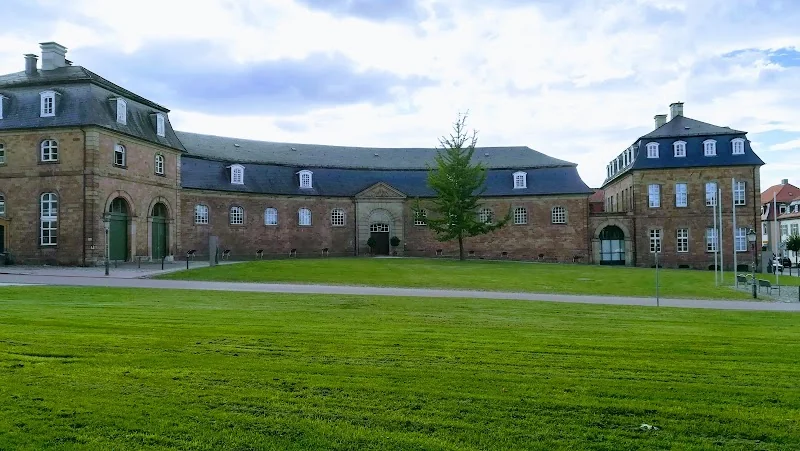
The location itself also significantly contributes to the impact of the collection. The museum is located in the baroque building of the Marstall, which the architect Franz Friedrich Rothweil planned at a central location opposite the castle of the Waldeck princes. On the facade, three moving horses can be seen in a high relief, which makes the original function of the house as a representative stable visible. The building was completed in 1755 and is one of the important buildings under Prince Friedrich August Carl of Waldeck and Pyrmont. This architecture is not just a mere environment but part of the museum experience: the classicist sculptures meet a baroque building that tells its own story of courtly representation. According to the museum's presentation, a mirror-image form of the building was originally planned but could not be realized due to lack of funds. This has allowed the Marstall to retain its own historical tension. Those interested in the interplay of space and work experience here a house where the architecture does not overshadow the collection but supports it. This connection between art and architectural history is particularly attractive for visitors interested in Christian Daniel Rauch sculptures. ([museum-bad-arolsen.de](https://www.museum-bad-arolsen.de/Museum/Christian-Daniel-Rauch-Museum/?utm_source=openai))
Opening Hours, Admission Prices, and Barrier-Free Visit
For practical planning of a visit, the official information from the museum is very clear. The Christian Daniel Rauch Museum is open from Wednesday to Saturday from 2 PM to 5 PM, and on Sundays from 11 AM to 5 PM. Monday and Tuesday are rest days, and on December 24 and 31, the house remains closed. These times make the museum easily integrable into a weekend trip or a cultural afternoon in Bad Arolsen. Additionally, the museum offers group tours by arrangement, which is particularly interesting for travel groups, clubs, or school classes. The current program also includes Sunday tours, described as approximately 45-minute introductions to the life and work of the sculptor. Particularly attractive is the note on free admission on the first Wednesday of the month, which makes visiting even easier. For a museum of this size, the admission prices are moderate: adults pay 4 euros, reduced 3 euros, and a day ticket for two days costs 7 euros or 5 euros reduced. This keeps access to art relatively low-threshold and family-friendly. ([museum-bad-arolsen.de](https://www.museum-bad-arolsen.de/Museum/Oeffnungszeiten/?utm_source=openai))
Additionally, the museum is barrier-free accessible. For many visitors, this is a crucial point because art education is then not only theoretically open but also practically accessible for various target groups. The official page explicitly mentions this barrier-free access, making the museum attractive for older guests, people with mobility impairments, and groups with different needs. Especially in combination with the relatively short opening hours and the compact location in the city center, this is a clear advantage. Those planning a visit can easily combine it with a walk through the historic surroundings, creating a relaxed yet content-rich museum stay. The mix of regular opening hours, discounts, group offers, and barrier-free access shows that the house is not only a content-rich but also a very accessible cultural destination. For queries such as Christian Daniel Rauch opening hours or Christian Daniel Rauch admission prices, the museum thus provides reliable and easily understandable answers. ([museum-bad-arolsen.de](https://www.museum-bad-arolsen.de/Museum/Oeffnungszeiten/?utm_source=openai))
Directions, Location, and Tour through Bad Arolsen
The Christian Daniel Rauch Museum is located on one of the central historical axes of Bad Arolsen. The address Schloßstraße 30 leads directly into the baroque-influenced city center, where the castle, castle park, and other museum houses are in close proximity. The city describes a route that begins at the castle, passes left by the castle pond, continues to the princely riding arena, to the Rauch Museum, and finally to the tree park. This makes it clear that the museum does not stand in isolation but is part of a culturally and scenically coherent tour. Therefore, those searching for Christian Daniel Rauch directions find not just a house number but a location that is very well embedded in the city structure. This is particularly practical for guests who want to explore Bad Arolsen on foot. Between the residence castle, green spaces, and museums, a harmonious cultural walk emerges, where the Rauch Museum forms a central section. The proximity to the castle also makes the historical significance of the building immediately tangible. ([bad-arolsen.de](https://www.bad-arolsen.de/de/tourismus/kultur-und-unterhaltung/museen-und-ausstellungen/christian-daniel-rauch-museum.php?utm_source=openai))
Bad Arolsen itself sees itself as a baroque residence city with a rich history, and this framework enhances the impact of the museum. The city emphasizes that the museum landscape in the city center includes several houses, including the Christian Daniel Rauch Museum, the C. D. Rauch Birthplace, exhibitions in the castle, the Kaulbach House, and the Schreibersche House. Those interested in cultural history can spend an entire day in this network of exhibition venues. Particularly interesting is that the birthplace of the sculptor is also located in Bad Arolsen, thus establishing a direct biographical connection to the museum. The museum's page describes the Lakaienhaus, where Rauch was born, as an important place for understanding his origins and later rise. This density of places makes the visit so worthwhile: one not only sees works but moves through the space from which this art has emerged. The query Christian Daniel Rauch Bad Arolsen thus becomes an invitation to get to know a historical urban space and its artist history at the same time. ([bad-arolsen.de](https://www.bad-arolsen.de/leben-wohnen/unsere-stadt/geschichte/?utm_source=openai))
Guided Tours, Special Dates, and the Museum Network in Bad Arolsen
Another plus point of the house is the guided tours and the program surrounding the museum. The current program of the Museum Bad Arolsen mentions Sunday tours in the Christian Daniel Rauch Museum, which explain how the son of a lackey from Arolsen rose to become the most significant sculptor in the German-speaking world. Such tours last about 45 minutes and are a good introduction for those who want to understand not only individual works but also the biographical and art-historical background. Furthermore, the museum points out free admission on the first Wednesday of the month. This is a nice signal for low-threshold cultural education and shows that the house is also open for spontaneous visits. For people specifically looking for Christian Daniel Rauch Sunday tours, this is very practical and valuable information. ([museum-bad-arolsen.de](https://www.museum-bad-arolsen.de/Programm-1/?utm_source=openai))
The museum is also part of a larger cultural system in Bad Arolsen. The museum's page mentions other houses including the C. D. Rauch Birthplace, the exhibitions in the castle, the Kaulbach House, and the Schreibersche House. This creates a network of places where art, culture, and urban history are interconnected. Additionally, the museum's program reports on changing accents, such as the sculpture group Faith, Love, Hope, which is temporarily hosted from the Protestant city church of Bad Arolsen. Such loans and special presentations make it clear that the museum is not just a fixed permanent exhibition but also responds to current developments and local references. For visitors, this means: a visit to the Christian Daniel Rauch Museum is worthwhile not only because of the collection itself but also because of its embedding in a lively museum quarter. Those who want to discover Bad Arolsen culturally get here a particularly coherent starting point between classicist sculpture, baroque architecture, and regional memory culture. ([museum-bad-arolsen.de](https://www.museum-bad-arolsen.de/Programm-1/?utm_source=openai))
Sources:
Mehr anzeigenWeniger anzeigen
Christian Daniel Rauch Museum | Works & Sculptures
The Christian Daniel Rauch Museum in Bad Arolsen is a place where art history, city history, and the name of one of the most important German sculptors of the 19th century are closely intertwined. The museum is located in the baroque Marstall at Schloßstraße 30, right in the historic center of the residence city and in close proximity to the castle. The sponsors and partners are the Museum Bad Arolsen, the Prussian Cultural Heritage Foundation, the Hessian Ministry of Science and Art, and the State Museums in Berlin, National Gallery. Thus, the house stands not only for regional memory but also for a supra-regional art-historical classification. The focus of the collection is on works by Christian Daniel Rauch, who was born in 1777 in Arolsen and is considered the main master of German classicism. The museum is accessible and caters to visitors who want to experience sculpture not just as an exhibition object but as a living art form. ([museum-bad-arolsen.de](https://www.museum-bad-arolsen.de/Museum/Christian-Daniel-Rauch-Museum/?utm_source=openai))
Christian Daniel Rauch and the Most Important Works
Christian Daniel Rauch is one of the great names in German sculpture because his work combines classical form language with an unusually strong portrait art. The museum texts emphasize that he was born in 1777 in Arolsen and was later appreciated as the main master of German classicism. This dual perspective defines his rank: on the one hand, he stands in the tradition of antiquity and the Goethe era, while on the other hand, he shapes the image of significant personalities of the 19th century to this day with his portraits. The museum highlights that Rauch portrayed, among others, Goethe, Alexander von Humboldt, and Queen Louise. These names not only represent prominent patrons but also an era in which art, science, and political self-understanding were closely intertwined. Therefore, visitors to the museum encounter not only individual sculptures but also the cultural networks in which Rauch operated. His works show how finely tuned classicist calm, idealized form, and individual characterization can go hand in hand. Especially for visitors looking for the themes Christian Daniel Rauch works or Christian Daniel Rauch sculptures, the museum offers a very clear answer: Here, not only an artist is presented, but a crucial chapter of German art development. ([museum-bad-arolsen.de](https://www.museum-bad-arolsen.de/Museum/Christian-Daniel-Rauch-Museum/?utm_source=openai))
The charm of the house also lies in the fact that Rauch's biography begins in Bad Arolsen itself. The city and the museum connect the birthplace of the sculptor with his later fame in Berlin and beyond. The museum's page about the birthplace station explains that Rauch was born on January 2, 1777, in the Lakaienhaus and received his first artistic training from Johann Friedrich Valentin in Helsen and later from Johann Christian Ruhl in Kassel. This origin story helps to better understand his development: from a small Waldeck environment, he managed to rise to the forefront of European sculpture. The museum makes this path visible and shows that a great artist should not be read in isolation from his origins. This is precisely why the Christian Daniel Rauch Museum is so interesting for culture-interested visitors: it connects local history with an international perspective on classicism. The collection is therefore not only a memorial site but also a place of learning where one can trace the path from Arolsen's beginnings to the significant sculptor in Prussia. ([museum-bad-arolsen.de](https://www.museum-bad-arolsen.de/Museum/C.-D.-Rauch-Geburtshaus/?cookieconsent=true&utm_source=openai))
Sculptures, Goethe Era, and the Collection in the Marstall
The holdings of the museum are based on the rich sculpture collections of the Old National Gallery in Berlin, from which a carefully curated selection was made for Bad Arolsen. This creates not an arbitrary overview museum but a curated house with a clear art-historical focus. The presentation not only displays the works of Christian Daniel Rauch but also complements them with works that make visible the development of German and international sculpture. The result is a vivid picture of the art scene of the Goethe era with its references to antiquity. This is precisely where the value of the museum lies: it shows how form, theme, and ideal image influenced each other in an era. Visitors thus see not only individual pieces but a network of relationships between classical tradition, portrait art, and modern art-historical development. Those interested in Christian Daniel Rauch works therefore receive not just a collection of beautiful objects in the museum but a comprehensible narrative about sculpture as an expression of cultural identity. The museum institution in Bad Arolsen makes clear why Rauch is considered one of the most important names in German sculpture in research and public perception. ([museum-bad-arolsen.de](https://www.museum-bad-arolsen.de/Museum/Christian-Daniel-Rauch-Museum/?utm_source=openai))
The location itself also significantly contributes to the impact of the collection. The museum is located in the baroque building of the Marstall, which the architect Franz Friedrich Rothweil planned at a central location opposite the castle of the Waldeck princes. On the facade, three moving horses can be seen in a high relief, which makes the original function of the house as a representative stable visible. The building was completed in 1755 and is one of the important buildings under Prince Friedrich August Carl of Waldeck and Pyrmont. This architecture is not just a mere environment but part of the museum experience: the classicist sculptures meet a baroque building that tells its own story of courtly representation. According to the museum's presentation, a mirror-image form of the building was originally planned but could not be realized due to lack of funds. This has allowed the Marstall to retain its own historical tension. Those interested in the interplay of space and work experience here a house where the architecture does not overshadow the collection but supports it. This connection between art and architectural history is particularly attractive for visitors interested in Christian Daniel Rauch sculptures. ([museum-bad-arolsen.de](https://www.museum-bad-arolsen.de/Museum/Christian-Daniel-Rauch-Museum/?utm_source=openai))
Opening Hours, Admission Prices, and Barrier-Free Visit
For practical planning of a visit, the official information from the museum is very clear. The Christian Daniel Rauch Museum is open from Wednesday to Saturday from 2 PM to 5 PM, and on Sundays from 11 AM to 5 PM. Monday and Tuesday are rest days, and on December 24 and 31, the house remains closed. These times make the museum easily integrable into a weekend trip or a cultural afternoon in Bad Arolsen. Additionally, the museum offers group tours by arrangement, which is particularly interesting for travel groups, clubs, or school classes. The current program also includes Sunday tours, described as approximately 45-minute introductions to the life and work of the sculptor. Particularly attractive is the note on free admission on the first Wednesday of the month, which makes visiting even easier. For a museum of this size, the admission prices are moderate: adults pay 4 euros, reduced 3 euros, and a day ticket for two days costs 7 euros or 5 euros reduced. This keeps access to art relatively low-threshold and family-friendly. ([museum-bad-arolsen.de](https://www.museum-bad-arolsen.de/Museum/Oeffnungszeiten/?utm_source=openai))
Additionally, the museum is barrier-free accessible. For many visitors, this is a crucial point because art education is then not only theoretically open but also practically accessible for various target groups. The official page explicitly mentions this barrier-free access, making the museum attractive for older guests, people with mobility impairments, and groups with different needs. Especially in combination with the relatively short opening hours and the compact location in the city center, this is a clear advantage. Those planning a visit can easily combine it with a walk through the historic surroundings, creating a relaxed yet content-rich museum stay. The mix of regular opening hours, discounts, group offers, and barrier-free access shows that the house is not only a content-rich but also a very accessible cultural destination. For queries such as Christian Daniel Rauch opening hours or Christian Daniel Rauch admission prices, the museum thus provides reliable and easily understandable answers. ([museum-bad-arolsen.de](https://www.museum-bad-arolsen.de/Museum/Oeffnungszeiten/?utm_source=openai))
Directions, Location, and Tour through Bad Arolsen
The Christian Daniel Rauch Museum is located on one of the central historical axes of Bad Arolsen. The address Schloßstraße 30 leads directly into the baroque-influenced city center, where the castle, castle park, and other museum houses are in close proximity. The city describes a route that begins at the castle, passes left by the castle pond, continues to the princely riding arena, to the Rauch Museum, and finally to the tree park. This makes it clear that the museum does not stand in isolation but is part of a culturally and scenically coherent tour. Therefore, those searching for Christian Daniel Rauch directions find not just a house number but a location that is very well embedded in the city structure. This is particularly practical for guests who want to explore Bad Arolsen on foot. Between the residence castle, green spaces, and museums, a harmonious cultural walk emerges, where the Rauch Museum forms a central section. The proximity to the castle also makes the historical significance of the building immediately tangible. ([bad-arolsen.de](https://www.bad-arolsen.de/de/tourismus/kultur-und-unterhaltung/museen-und-ausstellungen/christian-daniel-rauch-museum.php?utm_source=openai))
Bad Arolsen itself sees itself as a baroque residence city with a rich history, and this framework enhances the impact of the museum. The city emphasizes that the museum landscape in the city center includes several houses, including the Christian Daniel Rauch Museum, the C. D. Rauch Birthplace, exhibitions in the castle, the Kaulbach House, and the Schreibersche House. Those interested in cultural history can spend an entire day in this network of exhibition venues. Particularly interesting is that the birthplace of the sculptor is also located in Bad Arolsen, thus establishing a direct biographical connection to the museum. The museum's page describes the Lakaienhaus, where Rauch was born, as an important place for understanding his origins and later rise. This density of places makes the visit so worthwhile: one not only sees works but moves through the space from which this art has emerged. The query Christian Daniel Rauch Bad Arolsen thus becomes an invitation to get to know a historical urban space and its artist history at the same time. ([bad-arolsen.de](https://www.bad-arolsen.de/leben-wohnen/unsere-stadt/geschichte/?utm_source=openai))
Guided Tours, Special Dates, and the Museum Network in Bad Arolsen
Another plus point of the house is the guided tours and the program surrounding the museum. The current program of the Museum Bad Arolsen mentions Sunday tours in the Christian Daniel Rauch Museum, which explain how the son of a lackey from Arolsen rose to become the most significant sculptor in the German-speaking world. Such tours last about 45 minutes and are a good introduction for those who want to understand not only individual works but also the biographical and art-historical background. Furthermore, the museum points out free admission on the first Wednesday of the month. This is a nice signal for low-threshold cultural education and shows that the house is also open for spontaneous visits. For people specifically looking for Christian Daniel Rauch Sunday tours, this is very practical and valuable information. ([museum-bad-arolsen.de](https://www.museum-bad-arolsen.de/Programm-1/?utm_source=openai))
The museum is also part of a larger cultural system in Bad Arolsen. The museum's page mentions other houses including the C. D. Rauch Birthplace, the exhibitions in the castle, the Kaulbach House, and the Schreibersche House. This creates a network of places where art, culture, and urban history are interconnected. Additionally, the museum's program reports on changing accents, such as the sculpture group Faith, Love, Hope, which is temporarily hosted from the Protestant city church of Bad Arolsen. Such loans and special presentations make it clear that the museum is not just a fixed permanent exhibition but also responds to current developments and local references. For visitors, this means: a visit to the Christian Daniel Rauch Museum is worthwhile not only because of the collection itself but also because of its embedding in a lively museum quarter. Those who want to discover Bad Arolsen culturally get here a particularly coherent starting point between classicist sculpture, baroque architecture, and regional memory culture. ([museum-bad-arolsen.de](https://www.museum-bad-arolsen.de/Programm-1/?utm_source=openai))
Sources:
Christian Daniel Rauch Museum | Works & Sculptures
The Christian Daniel Rauch Museum in Bad Arolsen is a place where art history, city history, and the name of one of the most important German sculptors of the 19th century are closely intertwined. The museum is located in the baroque Marstall at Schloßstraße 30, right in the historic center of the residence city and in close proximity to the castle. The sponsors and partners are the Museum Bad Arolsen, the Prussian Cultural Heritage Foundation, the Hessian Ministry of Science and Art, and the State Museums in Berlin, National Gallery. Thus, the house stands not only for regional memory but also for a supra-regional art-historical classification. The focus of the collection is on works by Christian Daniel Rauch, who was born in 1777 in Arolsen and is considered the main master of German classicism. The museum is accessible and caters to visitors who want to experience sculpture not just as an exhibition object but as a living art form. ([museum-bad-arolsen.de](https://www.museum-bad-arolsen.de/Museum/Christian-Daniel-Rauch-Museum/?utm_source=openai))
Christian Daniel Rauch and the Most Important Works
Christian Daniel Rauch is one of the great names in German sculpture because his work combines classical form language with an unusually strong portrait art. The museum texts emphasize that he was born in 1777 in Arolsen and was later appreciated as the main master of German classicism. This dual perspective defines his rank: on the one hand, he stands in the tradition of antiquity and the Goethe era, while on the other hand, he shapes the image of significant personalities of the 19th century to this day with his portraits. The museum highlights that Rauch portrayed, among others, Goethe, Alexander von Humboldt, and Queen Louise. These names not only represent prominent patrons but also an era in which art, science, and political self-understanding were closely intertwined. Therefore, visitors to the museum encounter not only individual sculptures but also the cultural networks in which Rauch operated. His works show how finely tuned classicist calm, idealized form, and individual characterization can go hand in hand. Especially for visitors looking for the themes Christian Daniel Rauch works or Christian Daniel Rauch sculptures, the museum offers a very clear answer: Here, not only an artist is presented, but a crucial chapter of German art development. ([museum-bad-arolsen.de](https://www.museum-bad-arolsen.de/Museum/Christian-Daniel-Rauch-Museum/?utm_source=openai))
The charm of the house also lies in the fact that Rauch's biography begins in Bad Arolsen itself. The city and the museum connect the birthplace of the sculptor with his later fame in Berlin and beyond. The museum's page about the birthplace station explains that Rauch was born on January 2, 1777, in the Lakaienhaus and received his first artistic training from Johann Friedrich Valentin in Helsen and later from Johann Christian Ruhl in Kassel. This origin story helps to better understand his development: from a small Waldeck environment, he managed to rise to the forefront of European sculpture. The museum makes this path visible and shows that a great artist should not be read in isolation from his origins. This is precisely why the Christian Daniel Rauch Museum is so interesting for culture-interested visitors: it connects local history with an international perspective on classicism. The collection is therefore not only a memorial site but also a place of learning where one can trace the path from Arolsen's beginnings to the significant sculptor in Prussia. ([museum-bad-arolsen.de](https://www.museum-bad-arolsen.de/Museum/C.-D.-Rauch-Geburtshaus/?cookieconsent=true&utm_source=openai))
Sculptures, Goethe Era, and the Collection in the Marstall
The holdings of the museum are based on the rich sculpture collections of the Old National Gallery in Berlin, from which a carefully curated selection was made for Bad Arolsen. This creates not an arbitrary overview museum but a curated house with a clear art-historical focus. The presentation not only displays the works of Christian Daniel Rauch but also complements them with works that make visible the development of German and international sculpture. The result is a vivid picture of the art scene of the Goethe era with its references to antiquity. This is precisely where the value of the museum lies: it shows how form, theme, and ideal image influenced each other in an era. Visitors thus see not only individual pieces but a network of relationships between classical tradition, portrait art, and modern art-historical development. Those interested in Christian Daniel Rauch works therefore receive not just a collection of beautiful objects in the museum but a comprehensible narrative about sculpture as an expression of cultural identity. The museum institution in Bad Arolsen makes clear why Rauch is considered one of the most important names in German sculpture in research and public perception. ([museum-bad-arolsen.de](https://www.museum-bad-arolsen.de/Museum/Christian-Daniel-Rauch-Museum/?utm_source=openai))
The location itself also significantly contributes to the impact of the collection. The museum is located in the baroque building of the Marstall, which the architect Franz Friedrich Rothweil planned at a central location opposite the castle of the Waldeck princes. On the facade, three moving horses can be seen in a high relief, which makes the original function of the house as a representative stable visible. The building was completed in 1755 and is one of the important buildings under Prince Friedrich August Carl of Waldeck and Pyrmont. This architecture is not just a mere environment but part of the museum experience: the classicist sculptures meet a baroque building that tells its own story of courtly representation. According to the museum's presentation, a mirror-image form of the building was originally planned but could not be realized due to lack of funds. This has allowed the Marstall to retain its own historical tension. Those interested in the interplay of space and work experience here a house where the architecture does not overshadow the collection but supports it. This connection between art and architectural history is particularly attractive for visitors interested in Christian Daniel Rauch sculptures. ([museum-bad-arolsen.de](https://www.museum-bad-arolsen.de/Museum/Christian-Daniel-Rauch-Museum/?utm_source=openai))
Opening Hours, Admission Prices, and Barrier-Free Visit
For practical planning of a visit, the official information from the museum is very clear. The Christian Daniel Rauch Museum is open from Wednesday to Saturday from 2 PM to 5 PM, and on Sundays from 11 AM to 5 PM. Monday and Tuesday are rest days, and on December 24 and 31, the house remains closed. These times make the museum easily integrable into a weekend trip or a cultural afternoon in Bad Arolsen. Additionally, the museum offers group tours by arrangement, which is particularly interesting for travel groups, clubs, or school classes. The current program also includes Sunday tours, described as approximately 45-minute introductions to the life and work of the sculptor. Particularly attractive is the note on free admission on the first Wednesday of the month, which makes visiting even easier. For a museum of this size, the admission prices are moderate: adults pay 4 euros, reduced 3 euros, and a day ticket for two days costs 7 euros or 5 euros reduced. This keeps access to art relatively low-threshold and family-friendly. ([museum-bad-arolsen.de](https://www.museum-bad-arolsen.de/Museum/Oeffnungszeiten/?utm_source=openai))
Additionally, the museum is barrier-free accessible. For many visitors, this is a crucial point because art education is then not only theoretically open but also practically accessible for various target groups. The official page explicitly mentions this barrier-free access, making the museum attractive for older guests, people with mobility impairments, and groups with different needs. Especially in combination with the relatively short opening hours and the compact location in the city center, this is a clear advantage. Those planning a visit can easily combine it with a walk through the historic surroundings, creating a relaxed yet content-rich museum stay. The mix of regular opening hours, discounts, group offers, and barrier-free access shows that the house is not only a content-rich but also a very accessible cultural destination. For queries such as Christian Daniel Rauch opening hours or Christian Daniel Rauch admission prices, the museum thus provides reliable and easily understandable answers. ([museum-bad-arolsen.de](https://www.museum-bad-arolsen.de/Museum/Oeffnungszeiten/?utm_source=openai))
Directions, Location, and Tour through Bad Arolsen
The Christian Daniel Rauch Museum is located on one of the central historical axes of Bad Arolsen. The address Schloßstraße 30 leads directly into the baroque-influenced city center, where the castle, castle park, and other museum houses are in close proximity. The city describes a route that begins at the castle, passes left by the castle pond, continues to the princely riding arena, to the Rauch Museum, and finally to the tree park. This makes it clear that the museum does not stand in isolation but is part of a culturally and scenically coherent tour. Therefore, those searching for Christian Daniel Rauch directions find not just a house number but a location that is very well embedded in the city structure. This is particularly practical for guests who want to explore Bad Arolsen on foot. Between the residence castle, green spaces, and museums, a harmonious cultural walk emerges, where the Rauch Museum forms a central section. The proximity to the castle also makes the historical significance of the building immediately tangible. ([bad-arolsen.de](https://www.bad-arolsen.de/de/tourismus/kultur-und-unterhaltung/museen-und-ausstellungen/christian-daniel-rauch-museum.php?utm_source=openai))
Bad Arolsen itself sees itself as a baroque residence city with a rich history, and this framework enhances the impact of the museum. The city emphasizes that the museum landscape in the city center includes several houses, including the Christian Daniel Rauch Museum, the C. D. Rauch Birthplace, exhibitions in the castle, the Kaulbach House, and the Schreibersche House. Those interested in cultural history can spend an entire day in this network of exhibition venues. Particularly interesting is that the birthplace of the sculptor is also located in Bad Arolsen, thus establishing a direct biographical connection to the museum. The museum's page describes the Lakaienhaus, where Rauch was born, as an important place for understanding his origins and later rise. This density of places makes the visit so worthwhile: one not only sees works but moves through the space from which this art has emerged. The query Christian Daniel Rauch Bad Arolsen thus becomes an invitation to get to know a historical urban space and its artist history at the same time. ([bad-arolsen.de](https://www.bad-arolsen.de/leben-wohnen/unsere-stadt/geschichte/?utm_source=openai))
Guided Tours, Special Dates, and the Museum Network in Bad Arolsen
Another plus point of the house is the guided tours and the program surrounding the museum. The current program of the Museum Bad Arolsen mentions Sunday tours in the Christian Daniel Rauch Museum, which explain how the son of a lackey from Arolsen rose to become the most significant sculptor in the German-speaking world. Such tours last about 45 minutes and are a good introduction for those who want to understand not only individual works but also the biographical and art-historical background. Furthermore, the museum points out free admission on the first Wednesday of the month. This is a nice signal for low-threshold cultural education and shows that the house is also open for spontaneous visits. For people specifically looking for Christian Daniel Rauch Sunday tours, this is very practical and valuable information. ([museum-bad-arolsen.de](https://www.museum-bad-arolsen.de/Programm-1/?utm_source=openai))
The museum is also part of a larger cultural system in Bad Arolsen. The museum's page mentions other houses including the C. D. Rauch Birthplace, the exhibitions in the castle, the Kaulbach House, and the Schreibersche House. This creates a network of places where art, culture, and urban history are interconnected. Additionally, the museum's program reports on changing accents, such as the sculpture group Faith, Love, Hope, which is temporarily hosted from the Protestant city church of Bad Arolsen. Such loans and special presentations make it clear that the museum is not just a fixed permanent exhibition but also responds to current developments and local references. For visitors, this means: a visit to the Christian Daniel Rauch Museum is worthwhile not only because of the collection itself but also because of its embedding in a lively museum quarter. Those who want to discover Bad Arolsen culturally get here a particularly coherent starting point between classicist sculpture, baroque architecture, and regional memory culture. ([museum-bad-arolsen.de](https://www.museum-bad-arolsen.de/Programm-1/?utm_source=openai))
Sources:
Upcoming Events
No events found
Frequently Asked Questions
Reviews
jorgen74
22. February 2026
Wonderful
D. Hagin
5. November 2025
I was on vacation at the museum in the summer, and we were totally impressed by the art. I also don't want to post pictures because I think there are already enough photos on Google of the museum, and I believe it takes away the charm of actually going to the museum and seeing it in person. I want to recommend to anyone reading this to visit the place during your trip to Bad Arolsen. It's located right across from the castle and is definitely worth a visit. Seeing the artworks in person was a fantastic experience. The price is ridiculous, and if I'm not mistaken, you even get a discount if you stay overnight in a hotel nearby or ask for a visitor pass at the town hall. There are discounts for various places around Bad Arolsen. The museum offers insights into the culture of sculpture, and it's fascinating what methods and intricate work they already had back then. Also, since there weren't many visitors, we had the time and no stress to look at the artworks peacefully. I will definitely visit the museum again on my next vacation.
Jan Mende
27. June 2022
A beautiful, appealing museum with a large and very high-quality selection of artworks by the famous sculptor Christian Daniel Rauch. Originally, the exhibits belonged to the Rauch Museum in Berlin, and 20 years ago they were made accessible to the public here, at the birthplace of the artist. So, if you're interested in classical masterpieces from the 19th century or just want to see beautiful art - this is the right place for that.
Hans Dieter A.
6. January 2019
A very beautiful museum that showcases many works by the classical sculptor Christian Daniel Rauch. These are pieces from the Berlin National Gallery that are permanently displayed in Bad Arolsen. A "must-see" when visiting the city.
Carl August
7. February 2024
Few people know that here, very high-quality artworks from the Berlin National Gallery provide a fantastic insight into the sculpture art of classicism. So, it's basically a branch of this world-class museum in the baroque Arolser castle complex. Highly recommended, even if you haven't heard of Rauch before.