
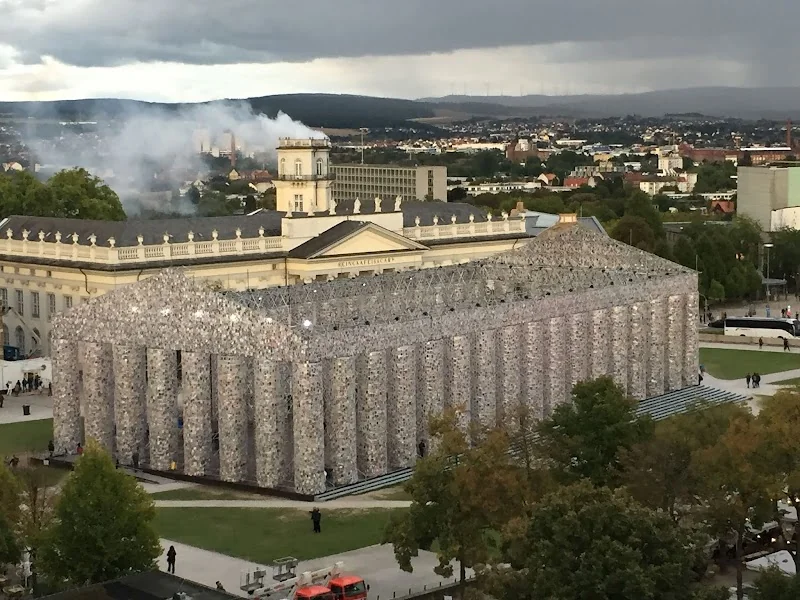
Untere Karlsstraße 4, Kassel
Untere Karlsstraße 4, 34117 Kassel, Germany
documenta Archive | Library & Goethe Fellowship
The documenta Archive in Kassel is much more than a classic archive: It is a research site for modern and contemporary art, a memory of the documenta, and a point of contact for science, art, and cultural memory. It was founded in 1961 by Arnold Bode. Since then, the institution has dedicated itself to the archiving, documentation, and research of the documenta exhibitions since 1955, as well as curatorial practices and documentary strategies. The collection includes not only documenta materials but also an extensive press collection, image and audiovisual media, a significant art library, and numerous estates. Thus, the documenta Archive is a place where art history is not only preserved but actively rethought. ([documenta-archiv.de](https://www.documenta-archiv.de/en/information/2604/about?utm_source=openai))
Those searching for the documenta Archive in Kassel are often interested in research, library, reading room, fellowship, and practical visitor information. These topics shape the work of the institution: international guest researchers, a scientific special library, structured research opportunities, and a reading room with clear opening hours. At the same time, the archive is organizationally closely linked to the documenta and Museum Fridericianum gGmbH and operates in an institutional environment that connects art education, research, and archival practice. The official address at Untere Karlsstraße 4 in Kassel makes the archive easily accessible; however, targeted preparation is usually advisable for using the collections. ([documenta-archiv.de](https://www.documenta-archiv.de/?utm_source=openai))
Goethe Fellowship at the documenta Archive
The Goethe Fellowship is one of the most important topics related to the documenta Archive because it particularly highlights the research character of the institution. According to the official announcements, the Goethe-Institut regularly awards fellowships to international scholars, artists, and curators in collaboration with the documenta Archive. These scholarships are designed to open new perspectives on the documenta and its transnational connections. The fellows work in Kassel, utilize the rich collections of the archive, and receive professional and organizational support on site. This makes the archive not only a storage place but also a productive site for new knowledge. ([documenta-archiv.de](https://www.documenta-archiv.de/en/aktuell/neuigkeiten/3980/goethe-fellowship-at-the-documenta-archiv-2025-call-for-applications?utm_source=openai))
Particularly interesting is that the fellowship explicitly promotes transdisciplinary research. In the 2025 announcement, topics from aesthetics, art, and contemporary history were mentioned, as well as questions regarding individual actors, groups, curatorial and artistic practices, and mechanisms of art production, presentation, and reception. This is precisely the appeal of the documenta Archive: It not only provides sources but also opens an intellectual space where art historical, societal, and media-related questions connect. Therefore, terms like documenta archive fellowship, art fellowship documenta archive, and goethe fellowship documenta archive are particularly relevant from an SEO perspective. ([documenta-archiv.de](https://www.documenta-archiv.de/en/aktuell/neuigkeiten/3980/goethe-fellowship-at-the-documenta-archiv-2025-call-for-applications?utm_source=openai))
The international orientation is also a central point. The fellowship is aimed at researchers from various countries and promotes perspectives that are less represented in the local art and science scene. For the location in Kassel, this means strong visibility beyond the city and region. Those who understand the archive as a research site quickly realize: It is not only about documenta history but about global art contexts, knowledge production, and the question of how archives enable new interpretations. This combination of access to sources, discursive openness, and institutional expertise makes the fellowship a key topic of the location. ([documenta-archiv.de](https://www.documenta-archiv.de/en/aktuell/neuigkeiten/3980/goethe-fellowship-at-the-documenta-archiv-2025-call-for-applications?utm_source=openai))
Art Library and Library Catalog
The art library is one of the strongest anchor points of the documenta Archive and for many users the actual reason for their visit. Officially, the archive describes its library as one of the most comprehensive scientific special libraries in Germany for Classical Modernism and contemporary art with an international focus. The collection's emphasis is on documenta exhibitions, publications related to the participating artists, research and reception literature, exhibition documentation, grey literature, and journals. Thus, the library serves a dual function: it is used for scientific research and simultaneously for the long-term preservation of art-historically relevant publications. ([documenta-archiv.de](https://www.documenta-archiv.de/de/archiv/40/kunstbibliothek?utm_source=openai))
The scale is impressive. The library currently comprises around 100,000 volumes and about 80 ongoing journals. Additionally, it accepts university theses and qualification works if they deal with the documenta topic. This makes the collection not only historically significant but also attractive for current research. Those searching for documenta archive library or art library documenta archive often seek this mix of specialization, depth, and academic connectivity. It is also relevant for users that the catalog is accessible online and that the institution works with finding aids and a system that structures access to the collections. ([documenta-archiv.de](https://www.documenta-archiv.de/de/archiv/40/kunstbibliothek?utm_source=openai))
In the SEO context, the library is also important because it precisely describes the institutional core of the house. The documenta Archive is not only a place for files and documents but a scientific workspace with an art historical orientation. The library connects documenta research, exhibition history, and reception history. Those dealing with the documenta exhibitions, with modern artists, or with curatorial developments will find here a collection that ranks among the relevant special collections in Germany. This combination of reach, specialization, and research proximity makes the term library one of the strongest keywords for the location. ([documenta-archiv.de](https://www.documenta-archiv.de/de/archiv/40/kunstbibliothek?utm_source=openai))
Reading Room, Opening Hours, and Registration
A particularly practical topic is the reading room, as it determines how the documenta Archive is experienced in everyday life. Since January 2018, a reading room has been available for all departments of the archive. There, archival materials, collection items, publications, and library holdings can be viewed. The official use is clearly regulated: appointments should be arranged in advance via email at lesesaal@documenta.de, and a written, detailed request is recommended for file and media materials. This structure shows that the archive is not designed for spontaneous foot traffic but for concentrated scientific work. ([documenta-archiv.de](https://www.documenta-archiv.de/de/archiv/46/benutzungshinweise?utm_source=openai))
The opening hours of the reading room are Tuesday to Friday from 9:00 AM to 4:00 PM. Those planning research should therefore work in advance and formulate questions as precisely as possible. This is especially true for researchers who want to use files, images, or audiovisual sources. In the service area, the archive also points out that assistance with research on site can be provided upon request. This is a helpful aspect for students, curators, and external researchers who are not yet familiar with the collection. For many search queries related to documenta archive opening hours, reading room documenta archive, and documenta archive directions, this information is crucial. ([documenta-archiv.de](https://www.documenta-archiv.de/de/archiv/46/benutzungshinweise?utm_source=openai))
Additionally, it is important that a group room for up to 25 participants is also available in the reading room, provided it is reserved in advance. This makes the location interesting not only for individual research but also for working groups, seminars, and supervised research formats. Furthermore, publications from the art library can be ordered on site. The reading room thus combines service, science, and practical usability. For visitor communication, this is a strong advantage: the institution appears accessible but also professionally organized. This combination of public openness and archival diligence shapes the profile of the house. ([documenta-archiv.de](https://www.documenta-archiv.de/de/archiv/46/benutzungshinweise?utm_source=openai))
Collections on documenta and art history
Content-wise, the documenta Archive is one of the most important places for researching the history of the documenta. A core collection consists of the original documents created during the preparation and execution of the documenta. They are supplemented by an extensive press documentation, images, audiovisual media, and estates. The official description of the collections emphasizes that the archive not only documents but also enables research work on modern and contemporary art. It focuses on the art system of the 20th and 21st centuries, on object- and material-related questions, on exhibition practices, and on media forms of presentation. ([documenta.de](https://documenta.de/en/about/documenta-archiv?utm_source=openai))
Particularly relevant for users are the numbers related to the press archive: around 45,000 press folders, 660 files on individual artists, and about 250,000 systematically collected newspaper clippings. Additionally, there is a focus on the early documenta exhibitions, their organizational structures, and their interconnections with the art scene. This is precisely where the archive positions itself as a research partner: it not only documents what was shown but also how canonization processes, curatorial decisions, and reception histories have developed. This makes the place equally valuable for art historians, curators, and media researchers. ([documenta.de](https://documenta.de/en/about/documenta-archiv?utm_source=openai))
Digital and networked research also plays a role. For the file collections, the archive refers to the archive information system Arcinsys of the Hessian State Archives; furthermore, finding aids for the files of documenta 1 to 12 are available, and the library holdings are accessible in the search space of the library catalog. The archive is also involved in research and network projects, for example in the field of Media Art and in international collaborations. Therefore, those searching for document archive or documenta archive library will find here not only a place for storage but an actively researching and networking knowledge repository. ([documenta-archiv.de](https://www.documenta-archiv.de/de/archiv/6/recherche?utm_source=openai))
History and Significance since 1961
The documenta Archive was founded in 1961 by Arnold Bode, just a few years after the first documenta. This early establishment is a decisive reason why the institution plays such a central role today: it has accompanied the history of the exhibition almost from the beginning and systematically preserves the traces of its development. The focus is on the documenta exhibitions since 1955, on curatorial practices, and on documentary strategies. This long-term perspective makes the archive an indispensable source for the art history of the post-war period and the present. ([documenta-archiv.de](https://www.documenta-archiv.de/en/information/2604/about?utm_source=openai))
Organizationally, the archive is part of the documenta and Museum Fridericianum gGmbH, in which the city of Kassel and the state of Hesse are involved. In the official self-descriptions, it is also described as an active science and art institution that initiates exhibition and research projects with national and international partners and enables artistic interventions along its own collections. Thus, the documenta Archive is not only retrospectively oriented but also present in current discourses. It sees itself as a place for interdisciplinary research for students, fellows, and guest researchers from all over the world. ([documenta-archiv.de](https://www.documenta-archiv.de/en/information/2604/about?utm_source=openai))
The institutional size of the library and the depth of the archive holdings also demonstrate how strongly the institution has grown over decades. The combination of file archive, art library, image archive, and audiovisual collections creates a rare density of material. For historical classification, it is also important that the archive is anchored in Kassel and thus works directly in the geographical and cultural environment of the documenta. Therefore, those searching for documenta archive kassel or art fellowship documenta archive kassel germany are ultimately looking for a place where city history, art history, and international research converge. ([documenta-archiv.de](https://www.documenta-archiv.de/en/information/2604/about?utm_source=openai))
Address, Directions, and Practical Information in Kassel
The practical orientation at the documenta Archive is very clear: Untere Karlsstraße 4, 34117 Kassel. For telephone inquiries, the archive provides the number +49 561 70 72 73 100 and the email address archiv@documenta.de. For reading room reservations, lesesaal@documenta.de is designated, while there are separate contact addresses for file, media, and library materials. This clear structure significantly facilitates the preparation of a visit and is particularly relevant for search queries related to documenta archive directions and documenta archive opening hours. ([documenta-archiv.de](https://www.documenta-archiv.de/?utm_source=openai))
Those wishing to work on site should plan their appointment early. The use of the reading room is subject to prior registration, and a written request is recommended for certain types of materials. This is not an obstacle but part of the archival quality assurance: the collections are thus specifically accessed and made available in a professional context. A separate room is available for groups upon reservation, which facilitates seminars or supervised research formats. This makes the documenta Archive interesting for universities, project groups, and international guests. ([documenta-archiv.de](https://www.documenta-archiv.de/de/archiv/46/benutzungshinweise?utm_source=openai))
For SEO and content logic, this practical part is important because many users are not only looking for information about history but also concrete visiting details. The documenta Archive connects both: scientific depth and clear service information. This makes the location highly searchable for terms like documenta archive library, documenta archive reading room, goethe fellowship documenta archive, and documenta archive kassel. Those visiting the institution come not for a classic event atmosphere but for sources, research, and art history. This specialization is the actual uniqueness of the site. ([documenta-archiv.de](https://www.documenta-archiv.de/en/information/2604/about?utm_source=openai))
Sources:
- documenta Archive – Official homepage and service information ([documenta-archiv.de](https://www.documenta-archiv.de/?utm_source=openai))
- documenta Archive – Art Library ([documenta-archiv.de](https://www.documenta-archiv.de/de/archiv/40/kunstbibliothek?utm_source=openai))
- documenta Archive – Reading Room and Usage Information ([documenta-archiv.de](https://www.documenta-archiv.de/de/archiv/46/benutzungshinweise?utm_source=openai))
- documenta Archive / documenta – Goethe Fellowship and Research Profile ([documenta-archiv.de](https://www.documenta-archiv.de/en/aktuell/neuigkeiten/3980/goethe-fellowship-at-the-documenta-archiv-2025-call-for-applications?utm_source=openai))
- documenta Archive – Research, Finding Aids, and Library Catalog ([documenta-archiv.de](https://www.documenta-archiv.de/de/archiv/6/recherche?utm_source=openai))
Show moreShow less
documenta Archive | Library & Goethe Fellowship
The documenta Archive in Kassel is much more than a classic archive: It is a research site for modern and contemporary art, a memory of the documenta, and a point of contact for science, art, and cultural memory. It was founded in 1961 by Arnold Bode. Since then, the institution has dedicated itself to the archiving, documentation, and research of the documenta exhibitions since 1955, as well as curatorial practices and documentary strategies. The collection includes not only documenta materials but also an extensive press collection, image and audiovisual media, a significant art library, and numerous estates. Thus, the documenta Archive is a place where art history is not only preserved but actively rethought. ([documenta-archiv.de](https://www.documenta-archiv.de/en/information/2604/about?utm_source=openai))
Those searching for the documenta Archive in Kassel are often interested in research, library, reading room, fellowship, and practical visitor information. These topics shape the work of the institution: international guest researchers, a scientific special library, structured research opportunities, and a reading room with clear opening hours. At the same time, the archive is organizationally closely linked to the documenta and Museum Fridericianum gGmbH and operates in an institutional environment that connects art education, research, and archival practice. The official address at Untere Karlsstraße 4 in Kassel makes the archive easily accessible; however, targeted preparation is usually advisable for using the collections. ([documenta-archiv.de](https://www.documenta-archiv.de/?utm_source=openai))
Goethe Fellowship at the documenta Archive
The Goethe Fellowship is one of the most important topics related to the documenta Archive because it particularly highlights the research character of the institution. According to the official announcements, the Goethe-Institut regularly awards fellowships to international scholars, artists, and curators in collaboration with the documenta Archive. These scholarships are designed to open new perspectives on the documenta and its transnational connections. The fellows work in Kassel, utilize the rich collections of the archive, and receive professional and organizational support on site. This makes the archive not only a storage place but also a productive site for new knowledge. ([documenta-archiv.de](https://www.documenta-archiv.de/en/aktuell/neuigkeiten/3980/goethe-fellowship-at-the-documenta-archiv-2025-call-for-applications?utm_source=openai))
Particularly interesting is that the fellowship explicitly promotes transdisciplinary research. In the 2025 announcement, topics from aesthetics, art, and contemporary history were mentioned, as well as questions regarding individual actors, groups, curatorial and artistic practices, and mechanisms of art production, presentation, and reception. This is precisely the appeal of the documenta Archive: It not only provides sources but also opens an intellectual space where art historical, societal, and media-related questions connect. Therefore, terms like documenta archive fellowship, art fellowship documenta archive, and goethe fellowship documenta archive are particularly relevant from an SEO perspective. ([documenta-archiv.de](https://www.documenta-archiv.de/en/aktuell/neuigkeiten/3980/goethe-fellowship-at-the-documenta-archiv-2025-call-for-applications?utm_source=openai))
The international orientation is also a central point. The fellowship is aimed at researchers from various countries and promotes perspectives that are less represented in the local art and science scene. For the location in Kassel, this means strong visibility beyond the city and region. Those who understand the archive as a research site quickly realize: It is not only about documenta history but about global art contexts, knowledge production, and the question of how archives enable new interpretations. This combination of access to sources, discursive openness, and institutional expertise makes the fellowship a key topic of the location. ([documenta-archiv.de](https://www.documenta-archiv.de/en/aktuell/neuigkeiten/3980/goethe-fellowship-at-the-documenta-archiv-2025-call-for-applications?utm_source=openai))
Art Library and Library Catalog
The art library is one of the strongest anchor points of the documenta Archive and for many users the actual reason for their visit. Officially, the archive describes its library as one of the most comprehensive scientific special libraries in Germany for Classical Modernism and contemporary art with an international focus. The collection's emphasis is on documenta exhibitions, publications related to the participating artists, research and reception literature, exhibition documentation, grey literature, and journals. Thus, the library serves a dual function: it is used for scientific research and simultaneously for the long-term preservation of art-historically relevant publications. ([documenta-archiv.de](https://www.documenta-archiv.de/de/archiv/40/kunstbibliothek?utm_source=openai))
The scale is impressive. The library currently comprises around 100,000 volumes and about 80 ongoing journals. Additionally, it accepts university theses and qualification works if they deal with the documenta topic. This makes the collection not only historically significant but also attractive for current research. Those searching for documenta archive library or art library documenta archive often seek this mix of specialization, depth, and academic connectivity. It is also relevant for users that the catalog is accessible online and that the institution works with finding aids and a system that structures access to the collections. ([documenta-archiv.de](https://www.documenta-archiv.de/de/archiv/40/kunstbibliothek?utm_source=openai))
In the SEO context, the library is also important because it precisely describes the institutional core of the house. The documenta Archive is not only a place for files and documents but a scientific workspace with an art historical orientation. The library connects documenta research, exhibition history, and reception history. Those dealing with the documenta exhibitions, with modern artists, or with curatorial developments will find here a collection that ranks among the relevant special collections in Germany. This combination of reach, specialization, and research proximity makes the term library one of the strongest keywords for the location. ([documenta-archiv.de](https://www.documenta-archiv.de/de/archiv/40/kunstbibliothek?utm_source=openai))
Reading Room, Opening Hours, and Registration
A particularly practical topic is the reading room, as it determines how the documenta Archive is experienced in everyday life. Since January 2018, a reading room has been available for all departments of the archive. There, archival materials, collection items, publications, and library holdings can be viewed. The official use is clearly regulated: appointments should be arranged in advance via email at lesesaal@documenta.de, and a written, detailed request is recommended for file and media materials. This structure shows that the archive is not designed for spontaneous foot traffic but for concentrated scientific work. ([documenta-archiv.de](https://www.documenta-archiv.de/de/archiv/46/benutzungshinweise?utm_source=openai))
The opening hours of the reading room are Tuesday to Friday from 9:00 AM to 4:00 PM. Those planning research should therefore work in advance and formulate questions as precisely as possible. This is especially true for researchers who want to use files, images, or audiovisual sources. In the service area, the archive also points out that assistance with research on site can be provided upon request. This is a helpful aspect for students, curators, and external researchers who are not yet familiar with the collection. For many search queries related to documenta archive opening hours, reading room documenta archive, and documenta archive directions, this information is crucial. ([documenta-archiv.de](https://www.documenta-archiv.de/de/archiv/46/benutzungshinweise?utm_source=openai))
Additionally, it is important that a group room for up to 25 participants is also available in the reading room, provided it is reserved in advance. This makes the location interesting not only for individual research but also for working groups, seminars, and supervised research formats. Furthermore, publications from the art library can be ordered on site. The reading room thus combines service, science, and practical usability. For visitor communication, this is a strong advantage: the institution appears accessible but also professionally organized. This combination of public openness and archival diligence shapes the profile of the house. ([documenta-archiv.de](https://www.documenta-archiv.de/de/archiv/46/benutzungshinweise?utm_source=openai))
Collections on documenta and art history
Content-wise, the documenta Archive is one of the most important places for researching the history of the documenta. A core collection consists of the original documents created during the preparation and execution of the documenta. They are supplemented by an extensive press documentation, images, audiovisual media, and estates. The official description of the collections emphasizes that the archive not only documents but also enables research work on modern and contemporary art. It focuses on the art system of the 20th and 21st centuries, on object- and material-related questions, on exhibition practices, and on media forms of presentation. ([documenta.de](https://documenta.de/en/about/documenta-archiv?utm_source=openai))
Particularly relevant for users are the numbers related to the press archive: around 45,000 press folders, 660 files on individual artists, and about 250,000 systematically collected newspaper clippings. Additionally, there is a focus on the early documenta exhibitions, their organizational structures, and their interconnections with the art scene. This is precisely where the archive positions itself as a research partner: it not only documents what was shown but also how canonization processes, curatorial decisions, and reception histories have developed. This makes the place equally valuable for art historians, curators, and media researchers. ([documenta.de](https://documenta.de/en/about/documenta-archiv?utm_source=openai))
Digital and networked research also plays a role. For the file collections, the archive refers to the archive information system Arcinsys of the Hessian State Archives; furthermore, finding aids for the files of documenta 1 to 12 are available, and the library holdings are accessible in the search space of the library catalog. The archive is also involved in research and network projects, for example in the field of Media Art and in international collaborations. Therefore, those searching for document archive or documenta archive library will find here not only a place for storage but an actively researching and networking knowledge repository. ([documenta-archiv.de](https://www.documenta-archiv.de/de/archiv/6/recherche?utm_source=openai))
History and Significance since 1961
The documenta Archive was founded in 1961 by Arnold Bode, just a few years after the first documenta. This early establishment is a decisive reason why the institution plays such a central role today: it has accompanied the history of the exhibition almost from the beginning and systematically preserves the traces of its development. The focus is on the documenta exhibitions since 1955, on curatorial practices, and on documentary strategies. This long-term perspective makes the archive an indispensable source for the art history of the post-war period and the present. ([documenta-archiv.de](https://www.documenta-archiv.de/en/information/2604/about?utm_source=openai))
Organizationally, the archive is part of the documenta and Museum Fridericianum gGmbH, in which the city of Kassel and the state of Hesse are involved. In the official self-descriptions, it is also described as an active science and art institution that initiates exhibition and research projects with national and international partners and enables artistic interventions along its own collections. Thus, the documenta Archive is not only retrospectively oriented but also present in current discourses. It sees itself as a place for interdisciplinary research for students, fellows, and guest researchers from all over the world. ([documenta-archiv.de](https://www.documenta-archiv.de/en/information/2604/about?utm_source=openai))
The institutional size of the library and the depth of the archive holdings also demonstrate how strongly the institution has grown over decades. The combination of file archive, art library, image archive, and audiovisual collections creates a rare density of material. For historical classification, it is also important that the archive is anchored in Kassel and thus works directly in the geographical and cultural environment of the documenta. Therefore, those searching for documenta archive kassel or art fellowship documenta archive kassel germany are ultimately looking for a place where city history, art history, and international research converge. ([documenta-archiv.de](https://www.documenta-archiv.de/en/information/2604/about?utm_source=openai))
Address, Directions, and Practical Information in Kassel
The practical orientation at the documenta Archive is very clear: Untere Karlsstraße 4, 34117 Kassel. For telephone inquiries, the archive provides the number +49 561 70 72 73 100 and the email address archiv@documenta.de. For reading room reservations, lesesaal@documenta.de is designated, while there are separate contact addresses for file, media, and library materials. This clear structure significantly facilitates the preparation of a visit and is particularly relevant for search queries related to documenta archive directions and documenta archive opening hours. ([documenta-archiv.de](https://www.documenta-archiv.de/?utm_source=openai))
Those wishing to work on site should plan their appointment early. The use of the reading room is subject to prior registration, and a written request is recommended for certain types of materials. This is not an obstacle but part of the archival quality assurance: the collections are thus specifically accessed and made available in a professional context. A separate room is available for groups upon reservation, which facilitates seminars or supervised research formats. This makes the documenta Archive interesting for universities, project groups, and international guests. ([documenta-archiv.de](https://www.documenta-archiv.de/de/archiv/46/benutzungshinweise?utm_source=openai))
For SEO and content logic, this practical part is important because many users are not only looking for information about history but also concrete visiting details. The documenta Archive connects both: scientific depth and clear service information. This makes the location highly searchable for terms like documenta archive library, documenta archive reading room, goethe fellowship documenta archive, and documenta archive kassel. Those visiting the institution come not for a classic event atmosphere but for sources, research, and art history. This specialization is the actual uniqueness of the site. ([documenta-archiv.de](https://www.documenta-archiv.de/en/information/2604/about?utm_source=openai))
Sources:
- documenta Archive – Official homepage and service information ([documenta-archiv.de](https://www.documenta-archiv.de/?utm_source=openai))
- documenta Archive – Art Library ([documenta-archiv.de](https://www.documenta-archiv.de/de/archiv/40/kunstbibliothek?utm_source=openai))
- documenta Archive – Reading Room and Usage Information ([documenta-archiv.de](https://www.documenta-archiv.de/de/archiv/46/benutzungshinweise?utm_source=openai))
- documenta Archive / documenta – Goethe Fellowship and Research Profile ([documenta-archiv.de](https://www.documenta-archiv.de/en/aktuell/neuigkeiten/3980/goethe-fellowship-at-the-documenta-archiv-2025-call-for-applications?utm_source=openai))
- documenta Archive – Research, Finding Aids, and Library Catalog ([documenta-archiv.de](https://www.documenta-archiv.de/de/archiv/6/recherche?utm_source=openai))
documenta Archive | Library & Goethe Fellowship
The documenta Archive in Kassel is much more than a classic archive: It is a research site for modern and contemporary art, a memory of the documenta, and a point of contact for science, art, and cultural memory. It was founded in 1961 by Arnold Bode. Since then, the institution has dedicated itself to the archiving, documentation, and research of the documenta exhibitions since 1955, as well as curatorial practices and documentary strategies. The collection includes not only documenta materials but also an extensive press collection, image and audiovisual media, a significant art library, and numerous estates. Thus, the documenta Archive is a place where art history is not only preserved but actively rethought. ([documenta-archiv.de](https://www.documenta-archiv.de/en/information/2604/about?utm_source=openai))
Those searching for the documenta Archive in Kassel are often interested in research, library, reading room, fellowship, and practical visitor information. These topics shape the work of the institution: international guest researchers, a scientific special library, structured research opportunities, and a reading room with clear opening hours. At the same time, the archive is organizationally closely linked to the documenta and Museum Fridericianum gGmbH and operates in an institutional environment that connects art education, research, and archival practice. The official address at Untere Karlsstraße 4 in Kassel makes the archive easily accessible; however, targeted preparation is usually advisable for using the collections. ([documenta-archiv.de](https://www.documenta-archiv.de/?utm_source=openai))
Goethe Fellowship at the documenta Archive
The Goethe Fellowship is one of the most important topics related to the documenta Archive because it particularly highlights the research character of the institution. According to the official announcements, the Goethe-Institut regularly awards fellowships to international scholars, artists, and curators in collaboration with the documenta Archive. These scholarships are designed to open new perspectives on the documenta and its transnational connections. The fellows work in Kassel, utilize the rich collections of the archive, and receive professional and organizational support on site. This makes the archive not only a storage place but also a productive site for new knowledge. ([documenta-archiv.de](https://www.documenta-archiv.de/en/aktuell/neuigkeiten/3980/goethe-fellowship-at-the-documenta-archiv-2025-call-for-applications?utm_source=openai))
Particularly interesting is that the fellowship explicitly promotes transdisciplinary research. In the 2025 announcement, topics from aesthetics, art, and contemporary history were mentioned, as well as questions regarding individual actors, groups, curatorial and artistic practices, and mechanisms of art production, presentation, and reception. This is precisely the appeal of the documenta Archive: It not only provides sources but also opens an intellectual space where art historical, societal, and media-related questions connect. Therefore, terms like documenta archive fellowship, art fellowship documenta archive, and goethe fellowship documenta archive are particularly relevant from an SEO perspective. ([documenta-archiv.de](https://www.documenta-archiv.de/en/aktuell/neuigkeiten/3980/goethe-fellowship-at-the-documenta-archiv-2025-call-for-applications?utm_source=openai))
The international orientation is also a central point. The fellowship is aimed at researchers from various countries and promotes perspectives that are less represented in the local art and science scene. For the location in Kassel, this means strong visibility beyond the city and region. Those who understand the archive as a research site quickly realize: It is not only about documenta history but about global art contexts, knowledge production, and the question of how archives enable new interpretations. This combination of access to sources, discursive openness, and institutional expertise makes the fellowship a key topic of the location. ([documenta-archiv.de](https://www.documenta-archiv.de/en/aktuell/neuigkeiten/3980/goethe-fellowship-at-the-documenta-archiv-2025-call-for-applications?utm_source=openai))
Art Library and Library Catalog
The art library is one of the strongest anchor points of the documenta Archive and for many users the actual reason for their visit. Officially, the archive describes its library as one of the most comprehensive scientific special libraries in Germany for Classical Modernism and contemporary art with an international focus. The collection's emphasis is on documenta exhibitions, publications related to the participating artists, research and reception literature, exhibition documentation, grey literature, and journals. Thus, the library serves a dual function: it is used for scientific research and simultaneously for the long-term preservation of art-historically relevant publications. ([documenta-archiv.de](https://www.documenta-archiv.de/de/archiv/40/kunstbibliothek?utm_source=openai))
The scale is impressive. The library currently comprises around 100,000 volumes and about 80 ongoing journals. Additionally, it accepts university theses and qualification works if they deal with the documenta topic. This makes the collection not only historically significant but also attractive for current research. Those searching for documenta archive library or art library documenta archive often seek this mix of specialization, depth, and academic connectivity. It is also relevant for users that the catalog is accessible online and that the institution works with finding aids and a system that structures access to the collections. ([documenta-archiv.de](https://www.documenta-archiv.de/de/archiv/40/kunstbibliothek?utm_source=openai))
In the SEO context, the library is also important because it precisely describes the institutional core of the house. The documenta Archive is not only a place for files and documents but a scientific workspace with an art historical orientation. The library connects documenta research, exhibition history, and reception history. Those dealing with the documenta exhibitions, with modern artists, or with curatorial developments will find here a collection that ranks among the relevant special collections in Germany. This combination of reach, specialization, and research proximity makes the term library one of the strongest keywords for the location. ([documenta-archiv.de](https://www.documenta-archiv.de/de/archiv/40/kunstbibliothek?utm_source=openai))
Reading Room, Opening Hours, and Registration
A particularly practical topic is the reading room, as it determines how the documenta Archive is experienced in everyday life. Since January 2018, a reading room has been available for all departments of the archive. There, archival materials, collection items, publications, and library holdings can be viewed. The official use is clearly regulated: appointments should be arranged in advance via email at lesesaal@documenta.de, and a written, detailed request is recommended for file and media materials. This structure shows that the archive is not designed for spontaneous foot traffic but for concentrated scientific work. ([documenta-archiv.de](https://www.documenta-archiv.de/de/archiv/46/benutzungshinweise?utm_source=openai))
The opening hours of the reading room are Tuesday to Friday from 9:00 AM to 4:00 PM. Those planning research should therefore work in advance and formulate questions as precisely as possible. This is especially true for researchers who want to use files, images, or audiovisual sources. In the service area, the archive also points out that assistance with research on site can be provided upon request. This is a helpful aspect for students, curators, and external researchers who are not yet familiar with the collection. For many search queries related to documenta archive opening hours, reading room documenta archive, and documenta archive directions, this information is crucial. ([documenta-archiv.de](https://www.documenta-archiv.de/de/archiv/46/benutzungshinweise?utm_source=openai))
Additionally, it is important that a group room for up to 25 participants is also available in the reading room, provided it is reserved in advance. This makes the location interesting not only for individual research but also for working groups, seminars, and supervised research formats. Furthermore, publications from the art library can be ordered on site. The reading room thus combines service, science, and practical usability. For visitor communication, this is a strong advantage: the institution appears accessible but also professionally organized. This combination of public openness and archival diligence shapes the profile of the house. ([documenta-archiv.de](https://www.documenta-archiv.de/de/archiv/46/benutzungshinweise?utm_source=openai))
Collections on documenta and art history
Content-wise, the documenta Archive is one of the most important places for researching the history of the documenta. A core collection consists of the original documents created during the preparation and execution of the documenta. They are supplemented by an extensive press documentation, images, audiovisual media, and estates. The official description of the collections emphasizes that the archive not only documents but also enables research work on modern and contemporary art. It focuses on the art system of the 20th and 21st centuries, on object- and material-related questions, on exhibition practices, and on media forms of presentation. ([documenta.de](https://documenta.de/en/about/documenta-archiv?utm_source=openai))
Particularly relevant for users are the numbers related to the press archive: around 45,000 press folders, 660 files on individual artists, and about 250,000 systematically collected newspaper clippings. Additionally, there is a focus on the early documenta exhibitions, their organizational structures, and their interconnections with the art scene. This is precisely where the archive positions itself as a research partner: it not only documents what was shown but also how canonization processes, curatorial decisions, and reception histories have developed. This makes the place equally valuable for art historians, curators, and media researchers. ([documenta.de](https://documenta.de/en/about/documenta-archiv?utm_source=openai))
Digital and networked research also plays a role. For the file collections, the archive refers to the archive information system Arcinsys of the Hessian State Archives; furthermore, finding aids for the files of documenta 1 to 12 are available, and the library holdings are accessible in the search space of the library catalog. The archive is also involved in research and network projects, for example in the field of Media Art and in international collaborations. Therefore, those searching for document archive or documenta archive library will find here not only a place for storage but an actively researching and networking knowledge repository. ([documenta-archiv.de](https://www.documenta-archiv.de/de/archiv/6/recherche?utm_source=openai))
History and Significance since 1961
The documenta Archive was founded in 1961 by Arnold Bode, just a few years after the first documenta. This early establishment is a decisive reason why the institution plays such a central role today: it has accompanied the history of the exhibition almost from the beginning and systematically preserves the traces of its development. The focus is on the documenta exhibitions since 1955, on curatorial practices, and on documentary strategies. This long-term perspective makes the archive an indispensable source for the art history of the post-war period and the present. ([documenta-archiv.de](https://www.documenta-archiv.de/en/information/2604/about?utm_source=openai))
Organizationally, the archive is part of the documenta and Museum Fridericianum gGmbH, in which the city of Kassel and the state of Hesse are involved. In the official self-descriptions, it is also described as an active science and art institution that initiates exhibition and research projects with national and international partners and enables artistic interventions along its own collections. Thus, the documenta Archive is not only retrospectively oriented but also present in current discourses. It sees itself as a place for interdisciplinary research for students, fellows, and guest researchers from all over the world. ([documenta-archiv.de](https://www.documenta-archiv.de/en/information/2604/about?utm_source=openai))
The institutional size of the library and the depth of the archive holdings also demonstrate how strongly the institution has grown over decades. The combination of file archive, art library, image archive, and audiovisual collections creates a rare density of material. For historical classification, it is also important that the archive is anchored in Kassel and thus works directly in the geographical and cultural environment of the documenta. Therefore, those searching for documenta archive kassel or art fellowship documenta archive kassel germany are ultimately looking for a place where city history, art history, and international research converge. ([documenta-archiv.de](https://www.documenta-archiv.de/en/information/2604/about?utm_source=openai))
Address, Directions, and Practical Information in Kassel
The practical orientation at the documenta Archive is very clear: Untere Karlsstraße 4, 34117 Kassel. For telephone inquiries, the archive provides the number +49 561 70 72 73 100 and the email address archiv@documenta.de. For reading room reservations, lesesaal@documenta.de is designated, while there are separate contact addresses for file, media, and library materials. This clear structure significantly facilitates the preparation of a visit and is particularly relevant for search queries related to documenta archive directions and documenta archive opening hours. ([documenta-archiv.de](https://www.documenta-archiv.de/?utm_source=openai))
Those wishing to work on site should plan their appointment early. The use of the reading room is subject to prior registration, and a written request is recommended for certain types of materials. This is not an obstacle but part of the archival quality assurance: the collections are thus specifically accessed and made available in a professional context. A separate room is available for groups upon reservation, which facilitates seminars or supervised research formats. This makes the documenta Archive interesting for universities, project groups, and international guests. ([documenta-archiv.de](https://www.documenta-archiv.de/de/archiv/46/benutzungshinweise?utm_source=openai))
For SEO and content logic, this practical part is important because many users are not only looking for information about history but also concrete visiting details. The documenta Archive connects both: scientific depth and clear service information. This makes the location highly searchable for terms like documenta archive library, documenta archive reading room, goethe fellowship documenta archive, and documenta archive kassel. Those visiting the institution come not for a classic event atmosphere but for sources, research, and art history. This specialization is the actual uniqueness of the site. ([documenta-archiv.de](https://www.documenta-archiv.de/en/information/2604/about?utm_source=openai))
Sources:
- documenta Archive – Official homepage and service information ([documenta-archiv.de](https://www.documenta-archiv.de/?utm_source=openai))
- documenta Archive – Art Library ([documenta-archiv.de](https://www.documenta-archiv.de/de/archiv/40/kunstbibliothek?utm_source=openai))
- documenta Archive – Reading Room and Usage Information ([documenta-archiv.de](https://www.documenta-archiv.de/de/archiv/46/benutzungshinweise?utm_source=openai))
- documenta Archive / documenta – Goethe Fellowship and Research Profile ([documenta-archiv.de](https://www.documenta-archiv.de/en/aktuell/neuigkeiten/3980/goethe-fellowship-at-the-documenta-archiv-2025-call-for-applications?utm_source=openai))
- documenta Archive – Research, Finding Aids, and Library Catalog ([documenta-archiv.de](https://www.documenta-archiv.de/de/archiv/6/recherche?utm_source=openai))
Upcoming Events
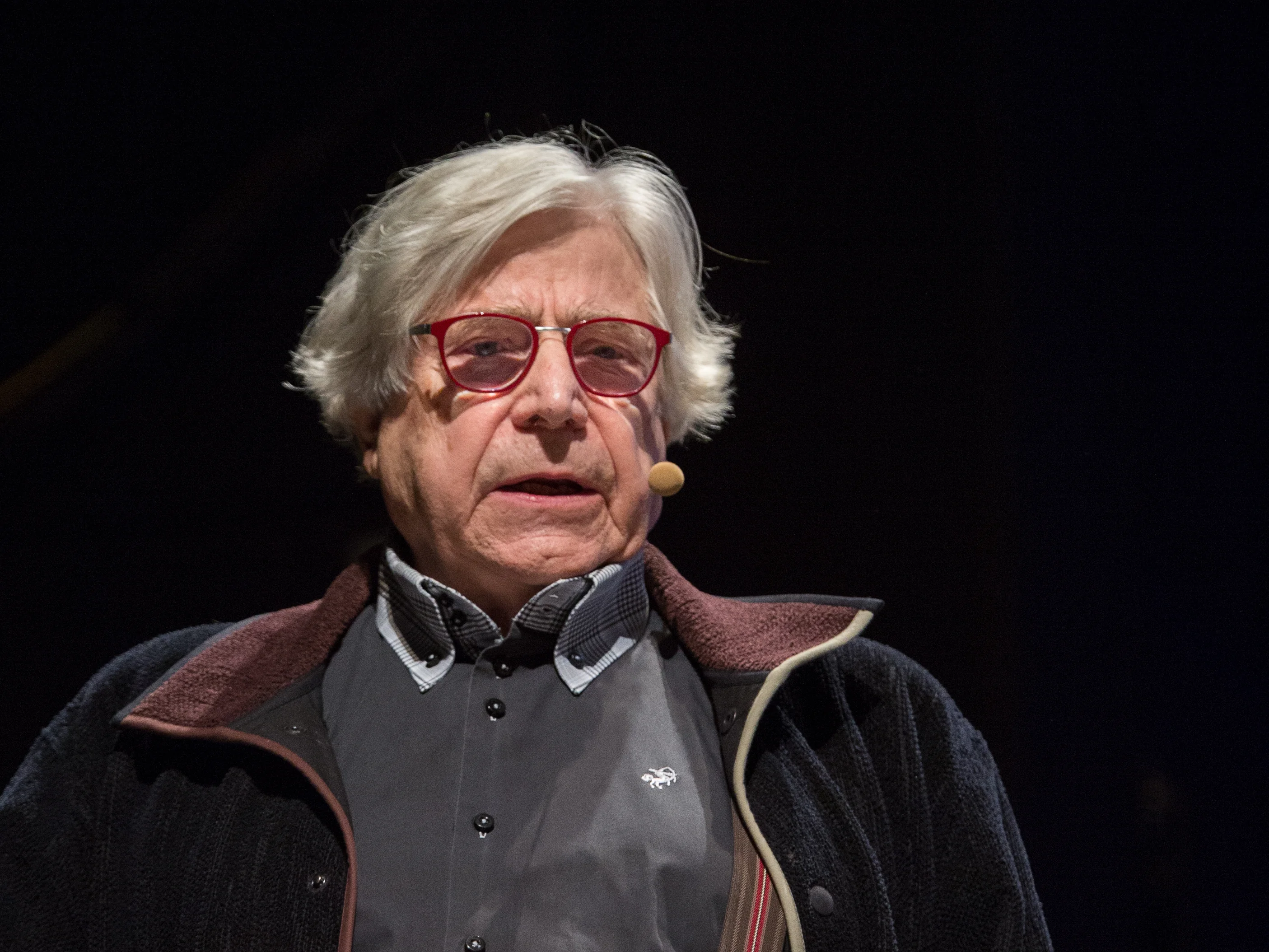
Brock Days in Kassel: Bazon Brock – 90 Years in Action
Discover 90 years of Bazon Brock in a special studio exhibition at the documenta archive Kassel.
Old Homeland - New Homeland
Dea Tcholokava spent a six-month Goethe-Institut scholarship at the documenta archive in Kassel in 2025. There she researched traces of Georgian artists in the history of documenta and connected this search with her own observations on migration. The core of the studio exhibition is her 18-minute film essay From Countless Sleepless Nights, a poetic film diary about foreignness, belonging, and identity - interwoven with city walks, archival finds, and unexpected protagonists like the Kassel raccoons. The film is complemented by selected archival materials from the history of documenta, such as those related to Jonas Mekas, Olu Oguibe, Georgij Schengelaia, Pavel Braila, or Hans Haacke, creating a dialogue between personal research and institutional memory. Tcholokava lives in Berlin and Tbilisi, works as a filmmaker and editor, and has been represented internationally at festivals with her documentaries. Her latest short film What Does the Mud Whisper premiered in Krakow in 2025 and has received multiple awards.
Frequently Asked Questions
Reviews
Michael Trenkler
29. February 2020
The documenta archive is fantastic! You should visit Kassel sometime 👍☺
Seltsam MitHut
26. August 2022
Everything is full of archives, a dream.
Nele Art
29. August 2022
Karl
25. November 2017
BYUNGTAEK CHO
23. July 2017