
Kassel
Königstor, 34117 Kassel, Deutschland
Former Police Headquarters Kassel | Photos & History
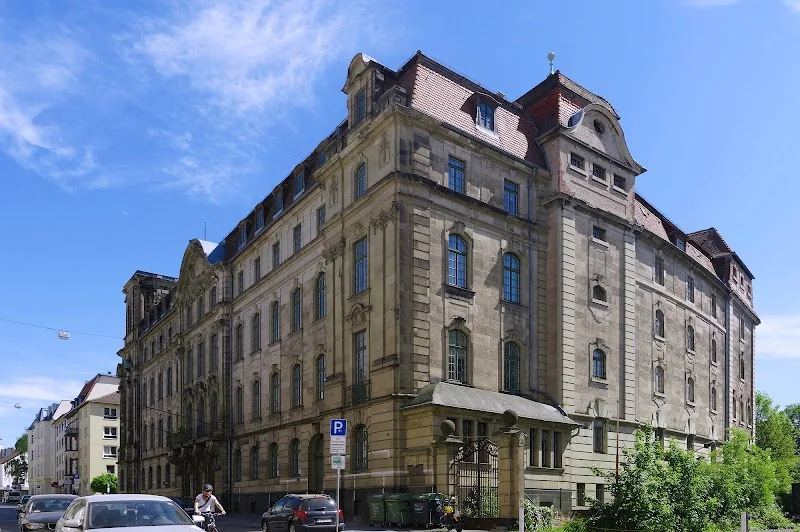
The former police headquarters Kassel at Königstor 31 is a place where city history, architecture, and memory overlap in a unique way. Those looking for photos, background information, or a tour will find one of the most distinctive historical buildings in the city center of Kassel here. The building is a protected monument, dates back to around 1900, and was closely associated with the city's security authorities for many decades. At the same time, it serves as a reminder of the Nazi era, when the building was the seat of the Kassel Gestapo. This tension makes the place so significant: it is not just an old government building, but also an authentic place of learning where the history of administration, repression, and memory can be traced very concretely. For many visitors, it is precisely the combination of impressive facade, original interiors, and heavy past that motivates them to engage more deeply with the building. Tours, exhibition texts, and memorial initiatives open the house to an interested public and make it clear why the former police headquarters still deserves attention today. ([gedenkort-koenigstor.de](https://gedenkort-koenigstor.de/startseite-2-mehr-zum-gebaeude/geschichte-des-gebaudes/?utm_source=openai))
History of the Building at Königstor
The building at Königstor 31 was constructed from 1904 to 1907 according to the plans of chief building advisor Oskar Launer and building advisor Emil Seligmann as a police headquarters. The construction period already shows that Kassel needed a representative administrative building for the security authorities at that time. After its completion, the house became the central address for the police in the city and remained so for many decades. The time of National Socialism is particularly formative: from 1933, the Kassel Gestapo used the building as the seat of its state police station before moving in 1938 to a new building at Wilhelmshöher Allee 32. Thus, the former police headquarters is not only a place of urban administrative history but also a site of persecution and intimidation. The city of Kassel explicitly reminds us in its memorial plaques that the state police station for the administrative district of Kassel was located in this building and that the Gestapo played a central role in arrests, interrogations, mistreatment, and deportations in the Nazi state. The fact that the building continued to be used as a police headquarters until 1999 further deepens the historical significance of the place, as various chapters of security history have condensed here over nearly a century. Today, this long usage background helps to understand the building not only as a monument but as a historically complex site. Those interested in Kassel's city history gain a rare insight into a house that has witnessed almost every political turning point of the 20th century. ([gedenkort-koenigstor.de](https://gedenkort-koenigstor.de/startseite-2-mehr-zum-gebaeude/geschichte-des-gebaudes/?utm_source=openai))
Visiting, Photos, and Accessibility
A special appeal of the former police headquarters lies in the fact that it is not simply freely accessible today, but can primarily be experienced through guided tours. The initiative Memorial Site Police Headquarters Königstor e.V. offers tours lasting about one to one and a half hours, expertly conveying the history of the building as a police headquarters and as the seat of the Gestapo. On the way through the building, the main entrance and the main staircase are visited, along with representative rooms on the first floor, including the meeting room, the office of the police president, his apartment, and the office corridors. The prison wing is also part of the tour: visitors see the interrogation room, individual cells, and group cells for arrested women and men, as well as the prison yard. This is complemented by the basement with Nazi-era air raid shelters. Those looking for photos will not only get exterior views but also a much stronger sense of the interior and spatial structure of the house. Practically important is also: the tours are not barrier-free, children can participate when accompanied by adults, and photography is allowed. The cost contribution is 8 euros regular and 5 euros reduced. For many guests, this is precisely the decisive point: the building cannot only be viewed from a distance but can actually be entered, experienced, and documented during an appointment. This makes the visit both a historical and visual approach to a place that otherwise remains closed. ([gedenkort-koenigstor.de](https://gedenkort-koenigstor.de/aktuell/besichtigung-des-polizeipraesidiums/?utm_source=openai))
Architecture, Monument Protection, and Building Quality
The former police headquarters Kassel is interesting not only because of its history but also because of its architectural and heritage significance. The building is listed as a monument and is owned by the state. This formal classification already shows that it is not considered an ordinary administrative building but a valuable testimony to urban development. It was built as a police service building between 1904 and 1907, during a phase when many government buildings were planned to be both representative and functional. The later interiors, such as the staircase, meeting room, government corridors, and prison wing, make the historical use spatially comprehensible to this day. This combination of representation and control is architecturally revealing: the house was meant to radiate authority while functioning as a precisely organized workplace. The initiative and the University of Kassel have repeatedly shown in recent years that the building is not only preserved but also discussed scientifically and creatively. Architecture students developed scenarios for a possible further development of the building and tested usage mixes of memorial site, student housing, daycare, or creative industry center. The associated exhibitions work with plans, photos, and models, making visible how strongly the building is perceived as an architectural object. This is important for those interested because the quality of the place arises not only from its history but also from its physical presence in the urban space. The building is a rare example of how administrative architecture, memory culture, and future debate come together in a single structure. ([gedenkort-koenigstor.de](https://gedenkort-koenigstor.de/startseite-2-mehr-zum-gebaeude/geschichte-des-gebaudes/?utm_source=openai))
Location at Königstor and Access in Kassel
The former police headquarters is centrally located in Kassel at Königstor 31, in the area of Königstor or at the corner of Weigelstraße. This places the site in an urban environment that can easily be integrated into the daily life of the city center while still possessing a special historical aura. Those visiting the building as part of a tour can arrive by car as well as by public transport, according to the official visitor information. This is helpful for practical planning, as the site does not function as an isolated special address but lies in the middle of the urban fabric. The location also contributes to the fact that the visit can be easily combined with other appointments in Kassel, such as a city walk, a museum route, or a historical tour through the city center. For people specifically looking for the location, the address Königstor 31 is the most important orientation, as it is used in maps, the event calendar, and the information pages of the initiative. Especially for a building with such a long usage history, the central location plays a role: here, administrative logic, police operations, and urban life intersect directly. Today, the good accessibility also facilitates visit organization, as interested parties do not have to search long for access routes but can focus on the actual content. When visiting the site for the first time, it is worth planning some time, as the view of the house gains significantly from its context: the former police headquarters is not an abstract archive object but a place located in the middle of the city and thus in the heart of Kassel's urban memory. ([kassel.aufstadtplan.de](https://kassel.aufstadtplan.de/konigstor/31?utm_source=openai))
Memorial Site, Exhibition, and Historical Context
Today, the former police headquarters is primarily understood as a memorial site and place of learning. The initiative Memorial Site Police Headquarters Königstor e.V. is committed to making the history of the building publicly accessible and visibly remembering the victims of Nazi persecution. Therefore, the initiative's website not only contains historical information about the building but also biographies of detainees and exhibition texts that focus on specific fates. Particularly impressive is the exhibition I have to expect daily to be transferred to a concentration camp, whose contents were shown at the adult education center Region Kassel and in ORBIT. It emerged from the work of the history working group of the initiative and gives faces to the women and men who passed through the detention cells of the Kassel Gestapo headquarters. This transforms a building that was long characterized by power and isolation into a space for learning and reflection. In the immediate vicinity, ORBIT has also developed into another place for participation, exchange, information, and culture. The former gas station next to the building has been transformed into an open space, which makes the transformation of the entire area particularly visible. This development is interesting for visitors because it shows that memory culture does not have to be static. It can be revitalized through exhibitions, tours, collaborations, and urban planning ideas. So, anyone looking for the former police headquarters Kassel will find much more than an old administrative building: they encounter a place where the city reveals its history, names its dark sides, and simultaneously works towards an understandable, accessible future of remembrance. ([gedenkort-koenigstor.de](https://gedenkort-koenigstor.de/wissen/nationalsozialismus-in-nordhesse/ich-muss-taeglich-mit-der-ueberfuehrung-in-ein-kz-rechnen-schicksale-von-inhaftierten-1933-1938/?utm_source=openai))
Practical Information for Visitors
For a visit to the former police headquarters Kassel, it is especially important to check the tour dates in advance, as the building is not opened daily like an ordinary museum. The dates are published by the initiative and also in the event calendar of the city of Kassel, so a short preliminary research is worthwhile. Those participating in a tour should be aware that the visit is not barrier-free and includes several areas of the building that have developed historically and are not designed for modern visitor flows. However, one gains an authentic insight into the original state of the building and into rooms that otherwise remain closed. The tour is therefore particularly suitable for people interested in city history, Nazi history, architecture, or photographic documentation. Especially those looking for photos of the former police headquarters benefit from the combination of allowed photography and the opportunity to perceive the rooms on-site in peace. The site is therefore a strong attraction for school classes, study groups, or history-interested individual visitors. The official announcement of the tours emphasizes that alongside basic information about the usage history, both perpetrator and victim perspectives are presented. This makes the tour academically valuable and content-wise demanding. Therefore, those planning a visit should bring enough time, note questions, and understand the tour not just as a visit but as an educational offer. This way, the appointment at Königstor becomes a visit that goes beyond mere architectural observation and truly makes the character of the house as a historically charged memorial site experienceable. ([kassel.de](https://www.kassel.de/?utm_source=openai))
Sources:
Mehr anzeigenWeniger anzeigen
Former Police Headquarters Kassel | Photos & History
The former police headquarters Kassel at Königstor 31 is a place where city history, architecture, and memory overlap in a unique way. Those looking for photos, background information, or a tour will find one of the most distinctive historical buildings in the city center of Kassel here. The building is a protected monument, dates back to around 1900, and was closely associated with the city's security authorities for many decades. At the same time, it serves as a reminder of the Nazi era, when the building was the seat of the Kassel Gestapo. This tension makes the place so significant: it is not just an old government building, but also an authentic place of learning where the history of administration, repression, and memory can be traced very concretely. For many visitors, it is precisely the combination of impressive facade, original interiors, and heavy past that motivates them to engage more deeply with the building. Tours, exhibition texts, and memorial initiatives open the house to an interested public and make it clear why the former police headquarters still deserves attention today. ([gedenkort-koenigstor.de](https://gedenkort-koenigstor.de/startseite-2-mehr-zum-gebaeude/geschichte-des-gebaudes/?utm_source=openai))
History of the Building at Königstor
The building at Königstor 31 was constructed from 1904 to 1907 according to the plans of chief building advisor Oskar Launer and building advisor Emil Seligmann as a police headquarters. The construction period already shows that Kassel needed a representative administrative building for the security authorities at that time. After its completion, the house became the central address for the police in the city and remained so for many decades. The time of National Socialism is particularly formative: from 1933, the Kassel Gestapo used the building as the seat of its state police station before moving in 1938 to a new building at Wilhelmshöher Allee 32. Thus, the former police headquarters is not only a place of urban administrative history but also a site of persecution and intimidation. The city of Kassel explicitly reminds us in its memorial plaques that the state police station for the administrative district of Kassel was located in this building and that the Gestapo played a central role in arrests, interrogations, mistreatment, and deportations in the Nazi state. The fact that the building continued to be used as a police headquarters until 1999 further deepens the historical significance of the place, as various chapters of security history have condensed here over nearly a century. Today, this long usage background helps to understand the building not only as a monument but as a historically complex site. Those interested in Kassel's city history gain a rare insight into a house that has witnessed almost every political turning point of the 20th century. ([gedenkort-koenigstor.de](https://gedenkort-koenigstor.de/startseite-2-mehr-zum-gebaeude/geschichte-des-gebaudes/?utm_source=openai))
Visiting, Photos, and Accessibility
A special appeal of the former police headquarters lies in the fact that it is not simply freely accessible today, but can primarily be experienced through guided tours. The initiative Memorial Site Police Headquarters Königstor e.V. offers tours lasting about one to one and a half hours, expertly conveying the history of the building as a police headquarters and as the seat of the Gestapo. On the way through the building, the main entrance and the main staircase are visited, along with representative rooms on the first floor, including the meeting room, the office of the police president, his apartment, and the office corridors. The prison wing is also part of the tour: visitors see the interrogation room, individual cells, and group cells for arrested women and men, as well as the prison yard. This is complemented by the basement with Nazi-era air raid shelters. Those looking for photos will not only get exterior views but also a much stronger sense of the interior and spatial structure of the house. Practically important is also: the tours are not barrier-free, children can participate when accompanied by adults, and photography is allowed. The cost contribution is 8 euros regular and 5 euros reduced. For many guests, this is precisely the decisive point: the building cannot only be viewed from a distance but can actually be entered, experienced, and documented during an appointment. This makes the visit both a historical and visual approach to a place that otherwise remains closed. ([gedenkort-koenigstor.de](https://gedenkort-koenigstor.de/aktuell/besichtigung-des-polizeipraesidiums/?utm_source=openai))
Architecture, Monument Protection, and Building Quality
The former police headquarters Kassel is interesting not only because of its history but also because of its architectural and heritage significance. The building is listed as a monument and is owned by the state. This formal classification already shows that it is not considered an ordinary administrative building but a valuable testimony to urban development. It was built as a police service building between 1904 and 1907, during a phase when many government buildings were planned to be both representative and functional. The later interiors, such as the staircase, meeting room, government corridors, and prison wing, make the historical use spatially comprehensible to this day. This combination of representation and control is architecturally revealing: the house was meant to radiate authority while functioning as a precisely organized workplace. The initiative and the University of Kassel have repeatedly shown in recent years that the building is not only preserved but also discussed scientifically and creatively. Architecture students developed scenarios for a possible further development of the building and tested usage mixes of memorial site, student housing, daycare, or creative industry center. The associated exhibitions work with plans, photos, and models, making visible how strongly the building is perceived as an architectural object. This is important for those interested because the quality of the place arises not only from its history but also from its physical presence in the urban space. The building is a rare example of how administrative architecture, memory culture, and future debate come together in a single structure. ([gedenkort-koenigstor.de](https://gedenkort-koenigstor.de/startseite-2-mehr-zum-gebaeude/geschichte-des-gebaudes/?utm_source=openai))
Location at Königstor and Access in Kassel
The former police headquarters is centrally located in Kassel at Königstor 31, in the area of Königstor or at the corner of Weigelstraße. This places the site in an urban environment that can easily be integrated into the daily life of the city center while still possessing a special historical aura. Those visiting the building as part of a tour can arrive by car as well as by public transport, according to the official visitor information. This is helpful for practical planning, as the site does not function as an isolated special address but lies in the middle of the urban fabric. The location also contributes to the fact that the visit can be easily combined with other appointments in Kassel, such as a city walk, a museum route, or a historical tour through the city center. For people specifically looking for the location, the address Königstor 31 is the most important orientation, as it is used in maps, the event calendar, and the information pages of the initiative. Especially for a building with such a long usage history, the central location plays a role: here, administrative logic, police operations, and urban life intersect directly. Today, the good accessibility also facilitates visit organization, as interested parties do not have to search long for access routes but can focus on the actual content. When visiting the site for the first time, it is worth planning some time, as the view of the house gains significantly from its context: the former police headquarters is not an abstract archive object but a place located in the middle of the city and thus in the heart of Kassel's urban memory. ([kassel.aufstadtplan.de](https://kassel.aufstadtplan.de/konigstor/31?utm_source=openai))
Memorial Site, Exhibition, and Historical Context
Today, the former police headquarters is primarily understood as a memorial site and place of learning. The initiative Memorial Site Police Headquarters Königstor e.V. is committed to making the history of the building publicly accessible and visibly remembering the victims of Nazi persecution. Therefore, the initiative's website not only contains historical information about the building but also biographies of detainees and exhibition texts that focus on specific fates. Particularly impressive is the exhibition I have to expect daily to be transferred to a concentration camp, whose contents were shown at the adult education center Region Kassel and in ORBIT. It emerged from the work of the history working group of the initiative and gives faces to the women and men who passed through the detention cells of the Kassel Gestapo headquarters. This transforms a building that was long characterized by power and isolation into a space for learning and reflection. In the immediate vicinity, ORBIT has also developed into another place for participation, exchange, information, and culture. The former gas station next to the building has been transformed into an open space, which makes the transformation of the entire area particularly visible. This development is interesting for visitors because it shows that memory culture does not have to be static. It can be revitalized through exhibitions, tours, collaborations, and urban planning ideas. So, anyone looking for the former police headquarters Kassel will find much more than an old administrative building: they encounter a place where the city reveals its history, names its dark sides, and simultaneously works towards an understandable, accessible future of remembrance. ([gedenkort-koenigstor.de](https://gedenkort-koenigstor.de/wissen/nationalsozialismus-in-nordhesse/ich-muss-taeglich-mit-der-ueberfuehrung-in-ein-kz-rechnen-schicksale-von-inhaftierten-1933-1938/?utm_source=openai))
Practical Information for Visitors
For a visit to the former police headquarters Kassel, it is especially important to check the tour dates in advance, as the building is not opened daily like an ordinary museum. The dates are published by the initiative and also in the event calendar of the city of Kassel, so a short preliminary research is worthwhile. Those participating in a tour should be aware that the visit is not barrier-free and includes several areas of the building that have developed historically and are not designed for modern visitor flows. However, one gains an authentic insight into the original state of the building and into rooms that otherwise remain closed. The tour is therefore particularly suitable for people interested in city history, Nazi history, architecture, or photographic documentation. Especially those looking for photos of the former police headquarters benefit from the combination of allowed photography and the opportunity to perceive the rooms on-site in peace. The site is therefore a strong attraction for school classes, study groups, or history-interested individual visitors. The official announcement of the tours emphasizes that alongside basic information about the usage history, both perpetrator and victim perspectives are presented. This makes the tour academically valuable and content-wise demanding. Therefore, those planning a visit should bring enough time, note questions, and understand the tour not just as a visit but as an educational offer. This way, the appointment at Königstor becomes a visit that goes beyond mere architectural observation and truly makes the character of the house as a historically charged memorial site experienceable. ([kassel.de](https://www.kassel.de/?utm_source=openai))
Sources:
Former Police Headquarters Kassel | Photos & History
The former police headquarters Kassel at Königstor 31 is a place where city history, architecture, and memory overlap in a unique way. Those looking for photos, background information, or a tour will find one of the most distinctive historical buildings in the city center of Kassel here. The building is a protected monument, dates back to around 1900, and was closely associated with the city's security authorities for many decades. At the same time, it serves as a reminder of the Nazi era, when the building was the seat of the Kassel Gestapo. This tension makes the place so significant: it is not just an old government building, but also an authentic place of learning where the history of administration, repression, and memory can be traced very concretely. For many visitors, it is precisely the combination of impressive facade, original interiors, and heavy past that motivates them to engage more deeply with the building. Tours, exhibition texts, and memorial initiatives open the house to an interested public and make it clear why the former police headquarters still deserves attention today. ([gedenkort-koenigstor.de](https://gedenkort-koenigstor.de/startseite-2-mehr-zum-gebaeude/geschichte-des-gebaudes/?utm_source=openai))
History of the Building at Königstor
The building at Königstor 31 was constructed from 1904 to 1907 according to the plans of chief building advisor Oskar Launer and building advisor Emil Seligmann as a police headquarters. The construction period already shows that Kassel needed a representative administrative building for the security authorities at that time. After its completion, the house became the central address for the police in the city and remained so for many decades. The time of National Socialism is particularly formative: from 1933, the Kassel Gestapo used the building as the seat of its state police station before moving in 1938 to a new building at Wilhelmshöher Allee 32. Thus, the former police headquarters is not only a place of urban administrative history but also a site of persecution and intimidation. The city of Kassel explicitly reminds us in its memorial plaques that the state police station for the administrative district of Kassel was located in this building and that the Gestapo played a central role in arrests, interrogations, mistreatment, and deportations in the Nazi state. The fact that the building continued to be used as a police headquarters until 1999 further deepens the historical significance of the place, as various chapters of security history have condensed here over nearly a century. Today, this long usage background helps to understand the building not only as a monument but as a historically complex site. Those interested in Kassel's city history gain a rare insight into a house that has witnessed almost every political turning point of the 20th century. ([gedenkort-koenigstor.de](https://gedenkort-koenigstor.de/startseite-2-mehr-zum-gebaeude/geschichte-des-gebaudes/?utm_source=openai))
Visiting, Photos, and Accessibility
A special appeal of the former police headquarters lies in the fact that it is not simply freely accessible today, but can primarily be experienced through guided tours. The initiative Memorial Site Police Headquarters Königstor e.V. offers tours lasting about one to one and a half hours, expertly conveying the history of the building as a police headquarters and as the seat of the Gestapo. On the way through the building, the main entrance and the main staircase are visited, along with representative rooms on the first floor, including the meeting room, the office of the police president, his apartment, and the office corridors. The prison wing is also part of the tour: visitors see the interrogation room, individual cells, and group cells for arrested women and men, as well as the prison yard. This is complemented by the basement with Nazi-era air raid shelters. Those looking for photos will not only get exterior views but also a much stronger sense of the interior and spatial structure of the house. Practically important is also: the tours are not barrier-free, children can participate when accompanied by adults, and photography is allowed. The cost contribution is 8 euros regular and 5 euros reduced. For many guests, this is precisely the decisive point: the building cannot only be viewed from a distance but can actually be entered, experienced, and documented during an appointment. This makes the visit both a historical and visual approach to a place that otherwise remains closed. ([gedenkort-koenigstor.de](https://gedenkort-koenigstor.de/aktuell/besichtigung-des-polizeipraesidiums/?utm_source=openai))
Architecture, Monument Protection, and Building Quality
The former police headquarters Kassel is interesting not only because of its history but also because of its architectural and heritage significance. The building is listed as a monument and is owned by the state. This formal classification already shows that it is not considered an ordinary administrative building but a valuable testimony to urban development. It was built as a police service building between 1904 and 1907, during a phase when many government buildings were planned to be both representative and functional. The later interiors, such as the staircase, meeting room, government corridors, and prison wing, make the historical use spatially comprehensible to this day. This combination of representation and control is architecturally revealing: the house was meant to radiate authority while functioning as a precisely organized workplace. The initiative and the University of Kassel have repeatedly shown in recent years that the building is not only preserved but also discussed scientifically and creatively. Architecture students developed scenarios for a possible further development of the building and tested usage mixes of memorial site, student housing, daycare, or creative industry center. The associated exhibitions work with plans, photos, and models, making visible how strongly the building is perceived as an architectural object. This is important for those interested because the quality of the place arises not only from its history but also from its physical presence in the urban space. The building is a rare example of how administrative architecture, memory culture, and future debate come together in a single structure. ([gedenkort-koenigstor.de](https://gedenkort-koenigstor.de/startseite-2-mehr-zum-gebaeude/geschichte-des-gebaudes/?utm_source=openai))
Location at Königstor and Access in Kassel
The former police headquarters is centrally located in Kassel at Königstor 31, in the area of Königstor or at the corner of Weigelstraße. This places the site in an urban environment that can easily be integrated into the daily life of the city center while still possessing a special historical aura. Those visiting the building as part of a tour can arrive by car as well as by public transport, according to the official visitor information. This is helpful for practical planning, as the site does not function as an isolated special address but lies in the middle of the urban fabric. The location also contributes to the fact that the visit can be easily combined with other appointments in Kassel, such as a city walk, a museum route, or a historical tour through the city center. For people specifically looking for the location, the address Königstor 31 is the most important orientation, as it is used in maps, the event calendar, and the information pages of the initiative. Especially for a building with such a long usage history, the central location plays a role: here, administrative logic, police operations, and urban life intersect directly. Today, the good accessibility also facilitates visit organization, as interested parties do not have to search long for access routes but can focus on the actual content. When visiting the site for the first time, it is worth planning some time, as the view of the house gains significantly from its context: the former police headquarters is not an abstract archive object but a place located in the middle of the city and thus in the heart of Kassel's urban memory. ([kassel.aufstadtplan.de](https://kassel.aufstadtplan.de/konigstor/31?utm_source=openai))
Memorial Site, Exhibition, and Historical Context
Today, the former police headquarters is primarily understood as a memorial site and place of learning. The initiative Memorial Site Police Headquarters Königstor e.V. is committed to making the history of the building publicly accessible and visibly remembering the victims of Nazi persecution. Therefore, the initiative's website not only contains historical information about the building but also biographies of detainees and exhibition texts that focus on specific fates. Particularly impressive is the exhibition I have to expect daily to be transferred to a concentration camp, whose contents were shown at the adult education center Region Kassel and in ORBIT. It emerged from the work of the history working group of the initiative and gives faces to the women and men who passed through the detention cells of the Kassel Gestapo headquarters. This transforms a building that was long characterized by power and isolation into a space for learning and reflection. In the immediate vicinity, ORBIT has also developed into another place for participation, exchange, information, and culture. The former gas station next to the building has been transformed into an open space, which makes the transformation of the entire area particularly visible. This development is interesting for visitors because it shows that memory culture does not have to be static. It can be revitalized through exhibitions, tours, collaborations, and urban planning ideas. So, anyone looking for the former police headquarters Kassel will find much more than an old administrative building: they encounter a place where the city reveals its history, names its dark sides, and simultaneously works towards an understandable, accessible future of remembrance. ([gedenkort-koenigstor.de](https://gedenkort-koenigstor.de/wissen/nationalsozialismus-in-nordhesse/ich-muss-taeglich-mit-der-ueberfuehrung-in-ein-kz-rechnen-schicksale-von-inhaftierten-1933-1938/?utm_source=openai))
Practical Information for Visitors
For a visit to the former police headquarters Kassel, it is especially important to check the tour dates in advance, as the building is not opened daily like an ordinary museum. The dates are published by the initiative and also in the event calendar of the city of Kassel, so a short preliminary research is worthwhile. Those participating in a tour should be aware that the visit is not barrier-free and includes several areas of the building that have developed historically and are not designed for modern visitor flows. However, one gains an authentic insight into the original state of the building and into rooms that otherwise remain closed. The tour is therefore particularly suitable for people interested in city history, Nazi history, architecture, or photographic documentation. Especially those looking for photos of the former police headquarters benefit from the combination of allowed photography and the opportunity to perceive the rooms on-site in peace. The site is therefore a strong attraction for school classes, study groups, or history-interested individual visitors. The official announcement of the tours emphasizes that alongside basic information about the usage history, both perpetrator and victim perspectives are presented. This makes the tour academically valuable and content-wise demanding. Therefore, those planning a visit should bring enough time, note questions, and understand the tour not just as a visit but as an educational offer. This way, the appointment at Königstor becomes a visit that goes beyond mere architectural observation and truly makes the character of the house as a historically charged memorial site experienceable. ([kassel.de](https://www.kassel.de/?utm_source=openai))
Sources:
Upcoming Events
No events found
Frequently Asked Questions
Reviews
No reviews found