
Kassel
Universitätspl. 9, 34127 Kassel-Nord - Holland, Deutschland
Department ASL Uni Kassel | Student Council & Directions
The Department ASL of the University of Kassel is much more than a classic study location. Here, architecture, urban planning, and landscape planning converge in a common department that understands spatial design as an interconnected task. Therefore, those looking for ASL in Kassel will not find an isolated administrative term, but a vibrant campus with teaching, research, workshops, student self-administration, and a clear commitment to sustainable development. According to its profile, 33 fields of expertise work together in three institutes, with around 150 staff members supporting about 1,000 students in bachelor's and master's programs. At the same time, the department explicitly commits to making an active contribution to the sustainable development of cities, landscapes, and buildings. This mix of interdisciplinarity, practical relevance, and academic breadth characterizes the location at Universitätsplatz 9 and makes it equally relevant for prospective students, current students, and visitors. ([uni-kassel.de](https://www.uni-kassel.de/fb06/profil))
What does ASL mean at the University of Kassel?
ASL stands for architecture, urban planning, and landscape planning. At the University of Kassel, these three disciplines are deliberately not treated separately but are brought together in a common department. This is a central difference from many other university locations: the study is designed to be interdisciplinary from the outset, so that spatial questions are not only viewed from the perspective of a single discipline. Therefore, those studying architecture do not only engage in the logic of designing and constructing but also in the interplay with urban and landscape contexts. The university describes this approach as unique in Germany and emphasizes that sustainable architecture can only emerge when competencies from all three disciplines are combined. For practice, this means: projects, teaching formats, and discussions interconnect rather than run alongside each other. ([uni-kassel.de](https://www.uni-kassel.de/uni/studium/architektur-bachelor.html))
Content-wise, ASL in Kassel is also broadly positioned. The profile of the department shows that not only is building done here, but also research, questioning, and rethinking. Research ranges from nature conservation to construction robotics, from suburbanization to the construction history of classical modernity, from gentrification to the development of new building materials, from Animal Aided Design to digital design methods, and from the history of documenta to open space planning in climate change. This is complemented by project-oriented work in small groups, direct exchange between teachers and students, and a self-understanding that connects scientific excellence with responsibility for society and the environment. This is precisely why the term ASL in Kassel is often not only understood as an abbreviation but as a hallmark of a special attitude towards the built environment. ([uni-kassel.de](https://www.uni-kassel.de/fb06/profil))
Additionally, there is the organizational framework of the department. With 33 fields of expertise in three institutes, a visible connection between study and research, and an internationally networked structure, ASL is a place where students not only acquire theoretical knowledge but are also early on involved in projects, workshops, and current debates. The profile also indicates that the department works actively in the region and responds to changing societal and professional demands with excursions, practical semesters, and empirical analyses. So, for those wondering what ASL in Kassel actually entails, the short answer is: three disciplines, a common perspective on space, and a strong connection between design, sustainability, and practice. ([uni-kassel.de](https://www.uni-kassel.de/fb06/profil))
Student Council ASL and Student Advising
If the terms FS ASL or Student Council ASL appear when searching for the Department ASL, it refers to the official student contact point of Department 06. The fachschaft.asl sees itself as a contact point for everything related to student life: it represents the interests of students, accompanies topics around study and teaching, and helps keep the department lively beyond the courses. Once a year, twelve members are elected as the student council during the university elections, and the student council is generally open to anyone who wants to get involved. Thus, the student council is not only a committee but a place where student perspectives are bundled, problems are made visible, and ideas for communal life in the department are developed. ([uni-kassel.de](https://www.uni-kassel.de/fb06/studium/fachschaft))
Especially for first-semester students, the student council is important because it facilitates the transition. The student council organizes introductory days each semester, which take place in addition to the official introductory days of the department and aim to familiarize new students with each other and with Kassel. Additionally, the student study advising provides a contact point for questions related to studies. Particularly concrete are the current details about the meeting point: the fachschaft.asl meets on Wednesdays at 4 PM in the ASL new building, room 2115. The office hours of the student council are Mondays, Wednesdays, and Thursdays from 9:30 AM to 12:30 PM and from 2 PM to 5 PM, and on Tuesdays and Fridays from 9:30 AM to 12:30 PM. Thus, the student council is not only digitally visible but also very tangible on site. ([uni-kassel.de](https://www.uni-kassel.de/fb06/studium/fachschaft))
For search queries like Study ASL, Study Advising ASL, or Department 06 ASL, it is also important: The student council works closely with the structures of the department, promotes information exchange, and creates spaces for networking. In its self-understanding, students from architecture, urban planning, and landscape planning, as well as from bachelor’s and master’s programs, mix to represent as many perspectives as possible. This creates a student culture that is not only reduced to administration but focuses on co-design, exchange, and practical support. Therefore, those new to the department will find a reliable address for questions, orientation, and participation in the student council. ([uni-kassel.de](https://www.uni-kassel.de/fb06/studium/fachschaft))
Contact, Directions, and Parking at Universitätsplatz 9
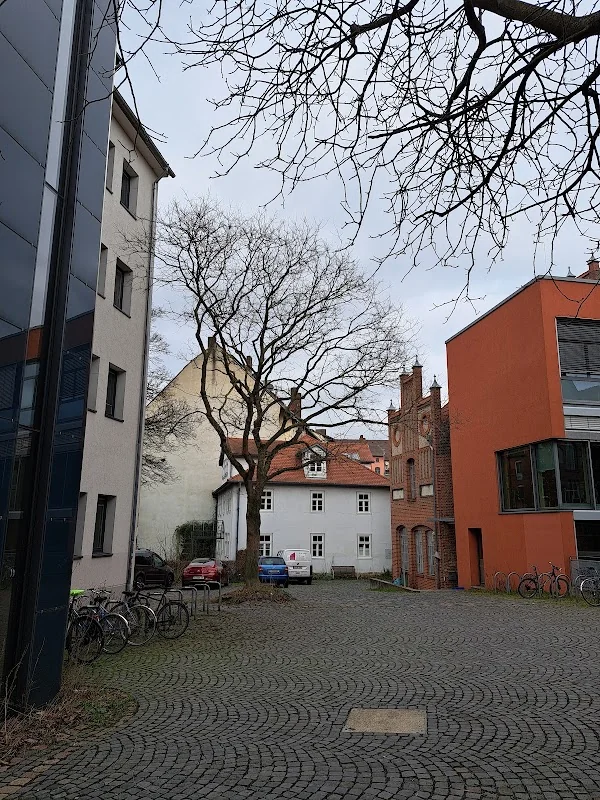
The central location of the Department ASL is at Universitätsplatz 9, D-34127 Kassel. On the Holländischer Platz campus, the department consolidates important functions and facilities, including the dean's office, the study and examination office, the BPS department, the ASL student council, doku:lab, c:lab, the international office, as well as fields of expertise and project and pool rooms. For visitors, it is clear: those visiting the department will find the central contact point at Universitätsplatz 9, even though individual institutes and fields of expertise are distributed across further buildings. The university also provides a site plan for the Holländischer Platz campus and a specific location plan for the Department ASL, which makes orientation on the premises easier. ([uni-kassel.de](https://www.uni-kassel.de/fb06/kontakt-anfahrt.html))
When arriving, the university primarily recommends the train connection to Kassel-Wilhelmshöhe. From there, further travel via regional transport is possible to reach the Kassel main station. For route planning, the university refers to Google Maps and OpenStreetMap, which simplifies navigation to the ASL locations. However, those arriving by car should be aware of the parking situation: around the Holländischer Platz campus, there are very few parking spaces in the surrounding streets, especially in Hentschelstraße and Mönchebergstraße, and these parking spaces are subject to fees. For other ASL locations, there are parking options in the surrounding streets, but here too, the arrival by public transport is usually the more relaxing solution. ([uni-kassel.de](https://www.uni-kassel.de/fb06/kontakt-anfahrt.html))
Especially for searches like ASL Parking, Directions ASL Kassel, or Holländischer Platz Campus, this information is important because it creates realistic expectations. The area is not a classic large parking area but an urban university location. Therefore, those with appointments there should factor in time for route planning and not assume that they will find a free, free parking space directly in front of the building. The university also names the nearest airports Kassel-Calden, Frankfurt, Hanover, and Paderborn; from Kassel-Calden, one can reach the city center by taxi or bus line 100. Thus, the department is well connected, but is typically organized in an urban manner: central, easily accessible, and primarily aligned with routes that consider public local and long-distance transport. ([uni-kassel.de](https://www.uni-kassel.de/fb06/kontakt-anfahrt.html))
Buildings, Workshops, and Project Locations of the ASL Campus
A special characteristic of the Department ASL is its spatial distribution across several buildings and functional locations. In the ASL new building at Universitätsplatz 9, the dean's office, the study and examination office, the student council, doku:lab, c:lab, and project and pool rooms are located. This makes the new building one of the most important hubs of the department, where organization, advising, and project work come together directly. Therefore, those interested in studying or seeking orientation on site will encounter not only administration but also student life and scientific practice in one place. ([uni-kassel.de](https://www.uni-kassel.de/fb06/kontakt-anfahrt.html))
In addition, the department is distributed across further clearly described buildings. In K10 at Henschelstraße 2, there is a lecture hall, project rooms, and fields of expertise. The gatehouses A and B at Gottschalkstraße 22 and 24 house fields of expertise as well as project and meeting rooms. The Hafeka at Gottschalkstraße 26 offers a seminar room, project rooms, and fields of expertise, while the Hafeka Hinterhaus at Gottschalkstraße 26a additionally includes a soil laboratory. The ZUB, the Center for Environmentally Conscious Building, at Gottschalkstraße 28, is designated with a lecture hall and field of expertise. The Kolbenseeger at the same address has a model building workshop, project rooms, and fields of expertise, while the half-timbered house at Gottschalkstraße 30 has fields of expertise and a seminar room. This density of learning and working locations makes it clear that ASL in Kassel is spatially and professionally oriented towards exchange and project work. ([uni-kassel.de](https://www.uni-kassel.de/fb06/kontakt-anfahrt.html))
Particularly striking is also the Brandthaus at Erzberger Straße 49. There are workshops of the Brandthaus or the fablab, as well as a model building workshop, a seminar room, and machines for laser cutting, digital cutting, 3D printing, and CNC milling. Such spaces are an important part of everyday life, especially for architecture and design processes, as ideas are translated into models, prototypes, and digital manufacturing processes. Together with the project and pool rooms, the location shows that the department does not only function through courses but through very concrete spatial work. For search queries like Building Plan ASL, Workshops ASL, or Brandthaus Kassel, one central aspect is therefore: The department thrives on a campus structure where advising, seminars, design, and production lie closely together. ([uni-kassel.de](https://www.uni-kassel.de/fb06/kontakt-anfahrt.html))
Public Events, FUSION, and Tour
The Department ASL is also very present outside of regular studies, as public events are an integral part of its profile. On the overview page for public events, the department lists among others FUSION, the Research Day, the tour as a semester exhibition, and the lecture series TRACES. This makes it clear: ASL is not only a place for courses but a public discussion space for architecture, urbanism, and landscape. Therefore, those searching for public event ASL or FUSION ASL will encounter a professionally curated program that regularly brings together professionals and interested parties. ([uni-kassel.de](https://www.uni-kassel.de/fb06/oeffentliche-veranstaltungen.html))
FUSION is the best-known lecture series of the department. It sees itself as a public lecture series on positions in architecture, urban planning, and landscape and takes place on Wednesdays from 7 to 9 PM. Scientists, planners, and designers report on their work and discuss with the audience. Particularly important for practical relevance: Within the framework of FUSION, newly appointed professors and guest lecturers hold their inaugural lectures. Participation can be associated with continuing education points; two continuing education points are credited per event, and the corresponding certificate is provided for a fee of 20 euros at the end of the semester. Registration with name and address must be sent to the mentioned department address at least a quarter of an hour before each lecture. Those who cannot be on site also benefit from the fact that the department provides recordings of the events digitally the following day. ([uni-kassel.de](https://www.uni-kassel.de/fb06/oeffentliche-veranstaltungen/fusion))
The event calendar of the department also shows that ASL works thematically very broadly. The tour as a semester exhibition bundles student works and makes projects visible, the Research Day focuses on scientific questions and formats, and TRACES opens the view into the field of exhibition studies. Thus, the department becomes a place where teaching, research, and public communication intersect. For visitors interested in the atmosphere at the location, these formats are particularly exciting because they provide a direct impression of how the department thinks, works, and discusses. Therefore, those searching for event ASL Kassel, tour ASL, or lecture series architecture urban landscape will find not only dates here but also an identity-forming program. ([uni-kassel.de](https://www.uni-kassel.de/fb06/oeffentliche-veranstaltungen.html))
Profile, History, and Sustainable Orientation
The current Department ASL is the result of a longer development that began early in Kassel. The teaching of landscape architecture in Kassel began in 1948 at the Werkakademie. In 1972, the organizational unit of architecture and landscape architecture was founded at the newly established Gesamthochschule Kassel, which is considered a precursor to the later Department of Architecture, Urban Planning, and Landscape Planning. Among the pioneers of the current study profile were Hermann Mattern, Günther Grzimek, and Peter Latz. This historical line shows that ASL in Kassel did not suddenly emerge but is based on a long development of building culture, landscape thinking, and planning engagement. An exhibition curated by Ariane Röntz, Anne Mertins, Laura Siebken, and David Rothfuss on the history of landscape architecture studies in Kassel from 1948 to 2023 has recently made this development visible again. ([uni-kassel.de](https://www.uni-kassel.de/fb06/forschung/forschungsverbuende/forschungsstelle-fgoeb/lehre-landschaftsarchitektur.html))
Today, the department sees itself as interdisciplinary connected, regionally active, and internationally networked. The profile emphasizes that spatial design in architecture, urban planning, and landscape planning is taught and researched in mutual relation. The goal is to develop space and society sustainably while continually questioning established practices. In addition, the department emphasizes that projects, workshops, empirical analyses, excursions, and practical semesters open the perspective for changed societal and professional realities. This attitude is also anchored in the sustainability guidelines, in which the department explicitly names social justice, the protection of nature and the environment, and responsible resource management as tasks. For search queries like Department 06 ASL, Uni Kassel ASL, or Architecture Urban Planning Landscape Planning, it becomes clear: it is not just a name, but an academic profile with a clear stance. ([uni-kassel.de](https://www.uni-kassel.de/fb06/profil))
Especially the connection between history and present makes the location interesting. The department works with 33 fields of expertise, supports around 1,000 students, and places direct exchange between teachers and students at the center. At the same time, the research spectrum ranges from questions of nature conservation to digital design methods, from open space planning in climate change to the history of documenta. This breadth shows that ASL in Kassel operates at the intersection of designing, planning, building, and preserving, possessing both academic depth and public relevance. Therefore, those visiting the department experience a campus where tradition, contemporary relevance, and future questions come together quite naturally. ([uni-kassel.de](https://www.uni-kassel.de/fb06/profil))
Sources:
Mehr anzeigenWeniger anzeigen
Department ASL Uni Kassel | Student Council & Directions
The Department ASL of the University of Kassel is much more than a classic study location. Here, architecture, urban planning, and landscape planning converge in a common department that understands spatial design as an interconnected task. Therefore, those looking for ASL in Kassel will not find an isolated administrative term, but a vibrant campus with teaching, research, workshops, student self-administration, and a clear commitment to sustainable development. According to its profile, 33 fields of expertise work together in three institutes, with around 150 staff members supporting about 1,000 students in bachelor's and master's programs. At the same time, the department explicitly commits to making an active contribution to the sustainable development of cities, landscapes, and buildings. This mix of interdisciplinarity, practical relevance, and academic breadth characterizes the location at Universitätsplatz 9 and makes it equally relevant for prospective students, current students, and visitors. ([uni-kassel.de](https://www.uni-kassel.de/fb06/profil))
What does ASL mean at the University of Kassel?
ASL stands for architecture, urban planning, and landscape planning. At the University of Kassel, these three disciplines are deliberately not treated separately but are brought together in a common department. This is a central difference from many other university locations: the study is designed to be interdisciplinary from the outset, so that spatial questions are not only viewed from the perspective of a single discipline. Therefore, those studying architecture do not only engage in the logic of designing and constructing but also in the interplay with urban and landscape contexts. The university describes this approach as unique in Germany and emphasizes that sustainable architecture can only emerge when competencies from all three disciplines are combined. For practice, this means: projects, teaching formats, and discussions interconnect rather than run alongside each other. ([uni-kassel.de](https://www.uni-kassel.de/uni/studium/architektur-bachelor.html))
Content-wise, ASL in Kassel is also broadly positioned. The profile of the department shows that not only is building done here, but also research, questioning, and rethinking. Research ranges from nature conservation to construction robotics, from suburbanization to the construction history of classical modernity, from gentrification to the development of new building materials, from Animal Aided Design to digital design methods, and from the history of documenta to open space planning in climate change. This is complemented by project-oriented work in small groups, direct exchange between teachers and students, and a self-understanding that connects scientific excellence with responsibility for society and the environment. This is precisely why the term ASL in Kassel is often not only understood as an abbreviation but as a hallmark of a special attitude towards the built environment. ([uni-kassel.de](https://www.uni-kassel.de/fb06/profil))
Additionally, there is the organizational framework of the department. With 33 fields of expertise in three institutes, a visible connection between study and research, and an internationally networked structure, ASL is a place where students not only acquire theoretical knowledge but are also early on involved in projects, workshops, and current debates. The profile also indicates that the department works actively in the region and responds to changing societal and professional demands with excursions, practical semesters, and empirical analyses. So, for those wondering what ASL in Kassel actually entails, the short answer is: three disciplines, a common perspective on space, and a strong connection between design, sustainability, and practice. ([uni-kassel.de](https://www.uni-kassel.de/fb06/profil))
Student Council ASL and Student Advising
If the terms FS ASL or Student Council ASL appear when searching for the Department ASL, it refers to the official student contact point of Department 06. The fachschaft.asl sees itself as a contact point for everything related to student life: it represents the interests of students, accompanies topics around study and teaching, and helps keep the department lively beyond the courses. Once a year, twelve members are elected as the student council during the university elections, and the student council is generally open to anyone who wants to get involved. Thus, the student council is not only a committee but a place where student perspectives are bundled, problems are made visible, and ideas for communal life in the department are developed. ([uni-kassel.de](https://www.uni-kassel.de/fb06/studium/fachschaft))
Especially for first-semester students, the student council is important because it facilitates the transition. The student council organizes introductory days each semester, which take place in addition to the official introductory days of the department and aim to familiarize new students with each other and with Kassel. Additionally, the student study advising provides a contact point for questions related to studies. Particularly concrete are the current details about the meeting point: the fachschaft.asl meets on Wednesdays at 4 PM in the ASL new building, room 2115. The office hours of the student council are Mondays, Wednesdays, and Thursdays from 9:30 AM to 12:30 PM and from 2 PM to 5 PM, and on Tuesdays and Fridays from 9:30 AM to 12:30 PM. Thus, the student council is not only digitally visible but also very tangible on site. ([uni-kassel.de](https://www.uni-kassel.de/fb06/studium/fachschaft))
For search queries like Study ASL, Study Advising ASL, or Department 06 ASL, it is also important: The student council works closely with the structures of the department, promotes information exchange, and creates spaces for networking. In its self-understanding, students from architecture, urban planning, and landscape planning, as well as from bachelor’s and master’s programs, mix to represent as many perspectives as possible. This creates a student culture that is not only reduced to administration but focuses on co-design, exchange, and practical support. Therefore, those new to the department will find a reliable address for questions, orientation, and participation in the student council. ([uni-kassel.de](https://www.uni-kassel.de/fb06/studium/fachschaft))
Contact, Directions, and Parking at Universitätsplatz 9
The central location of the Department ASL is at Universitätsplatz 9, D-34127 Kassel. On the Holländischer Platz campus, the department consolidates important functions and facilities, including the dean's office, the study and examination office, the BPS department, the ASL student council, doku:lab, c:lab, the international office, as well as fields of expertise and project and pool rooms. For visitors, it is clear: those visiting the department will find the central contact point at Universitätsplatz 9, even though individual institutes and fields of expertise are distributed across further buildings. The university also provides a site plan for the Holländischer Platz campus and a specific location plan for the Department ASL, which makes orientation on the premises easier. ([uni-kassel.de](https://www.uni-kassel.de/fb06/kontakt-anfahrt.html))
When arriving, the university primarily recommends the train connection to Kassel-Wilhelmshöhe. From there, further travel via regional transport is possible to reach the Kassel main station. For route planning, the university refers to Google Maps and OpenStreetMap, which simplifies navigation to the ASL locations. However, those arriving by car should be aware of the parking situation: around the Holländischer Platz campus, there are very few parking spaces in the surrounding streets, especially in Hentschelstraße and Mönchebergstraße, and these parking spaces are subject to fees. For other ASL locations, there are parking options in the surrounding streets, but here too, the arrival by public transport is usually the more relaxing solution. ([uni-kassel.de](https://www.uni-kassel.de/fb06/kontakt-anfahrt.html))
Especially for searches like ASL Parking, Directions ASL Kassel, or Holländischer Platz Campus, this information is important because it creates realistic expectations. The area is not a classic large parking area but an urban university location. Therefore, those with appointments there should factor in time for route planning and not assume that they will find a free, free parking space directly in front of the building. The university also names the nearest airports Kassel-Calden, Frankfurt, Hanover, and Paderborn; from Kassel-Calden, one can reach the city center by taxi or bus line 100. Thus, the department is well connected, but is typically organized in an urban manner: central, easily accessible, and primarily aligned with routes that consider public local and long-distance transport. ([uni-kassel.de](https://www.uni-kassel.de/fb06/kontakt-anfahrt.html))
Buildings, Workshops, and Project Locations of the ASL Campus
A special characteristic of the Department ASL is its spatial distribution across several buildings and functional locations. In the ASL new building at Universitätsplatz 9, the dean's office, the study and examination office, the student council, doku:lab, c:lab, and project and pool rooms are located. This makes the new building one of the most important hubs of the department, where organization, advising, and project work come together directly. Therefore, those interested in studying or seeking orientation on site will encounter not only administration but also student life and scientific practice in one place. ([uni-kassel.de](https://www.uni-kassel.de/fb06/kontakt-anfahrt.html))
In addition, the department is distributed across further clearly described buildings. In K10 at Henschelstraße 2, there is a lecture hall, project rooms, and fields of expertise. The gatehouses A and B at Gottschalkstraße 22 and 24 house fields of expertise as well as project and meeting rooms. The Hafeka at Gottschalkstraße 26 offers a seminar room, project rooms, and fields of expertise, while the Hafeka Hinterhaus at Gottschalkstraße 26a additionally includes a soil laboratory. The ZUB, the Center for Environmentally Conscious Building, at Gottschalkstraße 28, is designated with a lecture hall and field of expertise. The Kolbenseeger at the same address has a model building workshop, project rooms, and fields of expertise, while the half-timbered house at Gottschalkstraße 30 has fields of expertise and a seminar room. This density of learning and working locations makes it clear that ASL in Kassel is spatially and professionally oriented towards exchange and project work. ([uni-kassel.de](https://www.uni-kassel.de/fb06/kontakt-anfahrt.html))
Particularly striking is also the Brandthaus at Erzberger Straße 49. There are workshops of the Brandthaus or the fablab, as well as a model building workshop, a seminar room, and machines for laser cutting, digital cutting, 3D printing, and CNC milling. Such spaces are an important part of everyday life, especially for architecture and design processes, as ideas are translated into models, prototypes, and digital manufacturing processes. Together with the project and pool rooms, the location shows that the department does not only function through courses but through very concrete spatial work. For search queries like Building Plan ASL, Workshops ASL, or Brandthaus Kassel, one central aspect is therefore: The department thrives on a campus structure where advising, seminars, design, and production lie closely together. ([uni-kassel.de](https://www.uni-kassel.de/fb06/kontakt-anfahrt.html))
Public Events, FUSION, and Tour
The Department ASL is also very present outside of regular studies, as public events are an integral part of its profile. On the overview page for public events, the department lists among others FUSION, the Research Day, the tour as a semester exhibition, and the lecture series TRACES. This makes it clear: ASL is not only a place for courses but a public discussion space for architecture, urbanism, and landscape. Therefore, those searching for public event ASL or FUSION ASL will encounter a professionally curated program that regularly brings together professionals and interested parties. ([uni-kassel.de](https://www.uni-kassel.de/fb06/oeffentliche-veranstaltungen.html))
FUSION is the best-known lecture series of the department. It sees itself as a public lecture series on positions in architecture, urban planning, and landscape and takes place on Wednesdays from 7 to 9 PM. Scientists, planners, and designers report on their work and discuss with the audience. Particularly important for practical relevance: Within the framework of FUSION, newly appointed professors and guest lecturers hold their inaugural lectures. Participation can be associated with continuing education points; two continuing education points are credited per event, and the corresponding certificate is provided for a fee of 20 euros at the end of the semester. Registration with name and address must be sent to the mentioned department address at least a quarter of an hour before each lecture. Those who cannot be on site also benefit from the fact that the department provides recordings of the events digitally the following day. ([uni-kassel.de](https://www.uni-kassel.de/fb06/oeffentliche-veranstaltungen/fusion))
The event calendar of the department also shows that ASL works thematically very broadly. The tour as a semester exhibition bundles student works and makes projects visible, the Research Day focuses on scientific questions and formats, and TRACES opens the view into the field of exhibition studies. Thus, the department becomes a place where teaching, research, and public communication intersect. For visitors interested in the atmosphere at the location, these formats are particularly exciting because they provide a direct impression of how the department thinks, works, and discusses. Therefore, those searching for event ASL Kassel, tour ASL, or lecture series architecture urban landscape will find not only dates here but also an identity-forming program. ([uni-kassel.de](https://www.uni-kassel.de/fb06/oeffentliche-veranstaltungen.html))
Profile, History, and Sustainable Orientation
The current Department ASL is the result of a longer development that began early in Kassel. The teaching of landscape architecture in Kassel began in 1948 at the Werkakademie. In 1972, the organizational unit of architecture and landscape architecture was founded at the newly established Gesamthochschule Kassel, which is considered a precursor to the later Department of Architecture, Urban Planning, and Landscape Planning. Among the pioneers of the current study profile were Hermann Mattern, Günther Grzimek, and Peter Latz. This historical line shows that ASL in Kassel did not suddenly emerge but is based on a long development of building culture, landscape thinking, and planning engagement. An exhibition curated by Ariane Röntz, Anne Mertins, Laura Siebken, and David Rothfuss on the history of landscape architecture studies in Kassel from 1948 to 2023 has recently made this development visible again. ([uni-kassel.de](https://www.uni-kassel.de/fb06/forschung/forschungsverbuende/forschungsstelle-fgoeb/lehre-landschaftsarchitektur.html))
Today, the department sees itself as interdisciplinary connected, regionally active, and internationally networked. The profile emphasizes that spatial design in architecture, urban planning, and landscape planning is taught and researched in mutual relation. The goal is to develop space and society sustainably while continually questioning established practices. In addition, the department emphasizes that projects, workshops, empirical analyses, excursions, and practical semesters open the perspective for changed societal and professional realities. This attitude is also anchored in the sustainability guidelines, in which the department explicitly names social justice, the protection of nature and the environment, and responsible resource management as tasks. For search queries like Department 06 ASL, Uni Kassel ASL, or Architecture Urban Planning Landscape Planning, it becomes clear: it is not just a name, but an academic profile with a clear stance. ([uni-kassel.de](https://www.uni-kassel.de/fb06/profil))
Especially the connection between history and present makes the location interesting. The department works with 33 fields of expertise, supports around 1,000 students, and places direct exchange between teachers and students at the center. At the same time, the research spectrum ranges from questions of nature conservation to digital design methods, from open space planning in climate change to the history of documenta. This breadth shows that ASL in Kassel operates at the intersection of designing, planning, building, and preserving, possessing both academic depth and public relevance. Therefore, those visiting the department experience a campus where tradition, contemporary relevance, and future questions come together quite naturally. ([uni-kassel.de](https://www.uni-kassel.de/fb06/profil))
Sources:
Department ASL Uni Kassel | Student Council & Directions
The Department ASL of the University of Kassel is much more than a classic study location. Here, architecture, urban planning, and landscape planning converge in a common department that understands spatial design as an interconnected task. Therefore, those looking for ASL in Kassel will not find an isolated administrative term, but a vibrant campus with teaching, research, workshops, student self-administration, and a clear commitment to sustainable development. According to its profile, 33 fields of expertise work together in three institutes, with around 150 staff members supporting about 1,000 students in bachelor's and master's programs. At the same time, the department explicitly commits to making an active contribution to the sustainable development of cities, landscapes, and buildings. This mix of interdisciplinarity, practical relevance, and academic breadth characterizes the location at Universitätsplatz 9 and makes it equally relevant for prospective students, current students, and visitors. ([uni-kassel.de](https://www.uni-kassel.de/fb06/profil))
What does ASL mean at the University of Kassel?
ASL stands for architecture, urban planning, and landscape planning. At the University of Kassel, these three disciplines are deliberately not treated separately but are brought together in a common department. This is a central difference from many other university locations: the study is designed to be interdisciplinary from the outset, so that spatial questions are not only viewed from the perspective of a single discipline. Therefore, those studying architecture do not only engage in the logic of designing and constructing but also in the interplay with urban and landscape contexts. The university describes this approach as unique in Germany and emphasizes that sustainable architecture can only emerge when competencies from all three disciplines are combined. For practice, this means: projects, teaching formats, and discussions interconnect rather than run alongside each other. ([uni-kassel.de](https://www.uni-kassel.de/uni/studium/architektur-bachelor.html))
Content-wise, ASL in Kassel is also broadly positioned. The profile of the department shows that not only is building done here, but also research, questioning, and rethinking. Research ranges from nature conservation to construction robotics, from suburbanization to the construction history of classical modernity, from gentrification to the development of new building materials, from Animal Aided Design to digital design methods, and from the history of documenta to open space planning in climate change. This is complemented by project-oriented work in small groups, direct exchange between teachers and students, and a self-understanding that connects scientific excellence with responsibility for society and the environment. This is precisely why the term ASL in Kassel is often not only understood as an abbreviation but as a hallmark of a special attitude towards the built environment. ([uni-kassel.de](https://www.uni-kassel.de/fb06/profil))
Additionally, there is the organizational framework of the department. With 33 fields of expertise in three institutes, a visible connection between study and research, and an internationally networked structure, ASL is a place where students not only acquire theoretical knowledge but are also early on involved in projects, workshops, and current debates. The profile also indicates that the department works actively in the region and responds to changing societal and professional demands with excursions, practical semesters, and empirical analyses. So, for those wondering what ASL in Kassel actually entails, the short answer is: three disciplines, a common perspective on space, and a strong connection between design, sustainability, and practice. ([uni-kassel.de](https://www.uni-kassel.de/fb06/profil))
Student Council ASL and Student Advising
If the terms FS ASL or Student Council ASL appear when searching for the Department ASL, it refers to the official student contact point of Department 06. The fachschaft.asl sees itself as a contact point for everything related to student life: it represents the interests of students, accompanies topics around study and teaching, and helps keep the department lively beyond the courses. Once a year, twelve members are elected as the student council during the university elections, and the student council is generally open to anyone who wants to get involved. Thus, the student council is not only a committee but a place where student perspectives are bundled, problems are made visible, and ideas for communal life in the department are developed. ([uni-kassel.de](https://www.uni-kassel.de/fb06/studium/fachschaft))
Especially for first-semester students, the student council is important because it facilitates the transition. The student council organizes introductory days each semester, which take place in addition to the official introductory days of the department and aim to familiarize new students with each other and with Kassel. Additionally, the student study advising provides a contact point for questions related to studies. Particularly concrete are the current details about the meeting point: the fachschaft.asl meets on Wednesdays at 4 PM in the ASL new building, room 2115. The office hours of the student council are Mondays, Wednesdays, and Thursdays from 9:30 AM to 12:30 PM and from 2 PM to 5 PM, and on Tuesdays and Fridays from 9:30 AM to 12:30 PM. Thus, the student council is not only digitally visible but also very tangible on site. ([uni-kassel.de](https://www.uni-kassel.de/fb06/studium/fachschaft))
For search queries like Study ASL, Study Advising ASL, or Department 06 ASL, it is also important: The student council works closely with the structures of the department, promotes information exchange, and creates spaces for networking. In its self-understanding, students from architecture, urban planning, and landscape planning, as well as from bachelor’s and master’s programs, mix to represent as many perspectives as possible. This creates a student culture that is not only reduced to administration but focuses on co-design, exchange, and practical support. Therefore, those new to the department will find a reliable address for questions, orientation, and participation in the student council. ([uni-kassel.de](https://www.uni-kassel.de/fb06/studium/fachschaft))
Contact, Directions, and Parking at Universitätsplatz 9
The central location of the Department ASL is at Universitätsplatz 9, D-34127 Kassel. On the Holländischer Platz campus, the department consolidates important functions and facilities, including the dean's office, the study and examination office, the BPS department, the ASL student council, doku:lab, c:lab, the international office, as well as fields of expertise and project and pool rooms. For visitors, it is clear: those visiting the department will find the central contact point at Universitätsplatz 9, even though individual institutes and fields of expertise are distributed across further buildings. The university also provides a site plan for the Holländischer Platz campus and a specific location plan for the Department ASL, which makes orientation on the premises easier. ([uni-kassel.de](https://www.uni-kassel.de/fb06/kontakt-anfahrt.html))
When arriving, the university primarily recommends the train connection to Kassel-Wilhelmshöhe. From there, further travel via regional transport is possible to reach the Kassel main station. For route planning, the university refers to Google Maps and OpenStreetMap, which simplifies navigation to the ASL locations. However, those arriving by car should be aware of the parking situation: around the Holländischer Platz campus, there are very few parking spaces in the surrounding streets, especially in Hentschelstraße and Mönchebergstraße, and these parking spaces are subject to fees. For other ASL locations, there are parking options in the surrounding streets, but here too, the arrival by public transport is usually the more relaxing solution. ([uni-kassel.de](https://www.uni-kassel.de/fb06/kontakt-anfahrt.html))
Especially for searches like ASL Parking, Directions ASL Kassel, or Holländischer Platz Campus, this information is important because it creates realistic expectations. The area is not a classic large parking area but an urban university location. Therefore, those with appointments there should factor in time for route planning and not assume that they will find a free, free parking space directly in front of the building. The university also names the nearest airports Kassel-Calden, Frankfurt, Hanover, and Paderborn; from Kassel-Calden, one can reach the city center by taxi or bus line 100. Thus, the department is well connected, but is typically organized in an urban manner: central, easily accessible, and primarily aligned with routes that consider public local and long-distance transport. ([uni-kassel.de](https://www.uni-kassel.de/fb06/kontakt-anfahrt.html))
Buildings, Workshops, and Project Locations of the ASL Campus
A special characteristic of the Department ASL is its spatial distribution across several buildings and functional locations. In the ASL new building at Universitätsplatz 9, the dean's office, the study and examination office, the student council, doku:lab, c:lab, and project and pool rooms are located. This makes the new building one of the most important hubs of the department, where organization, advising, and project work come together directly. Therefore, those interested in studying or seeking orientation on site will encounter not only administration but also student life and scientific practice in one place. ([uni-kassel.de](https://www.uni-kassel.de/fb06/kontakt-anfahrt.html))
In addition, the department is distributed across further clearly described buildings. In K10 at Henschelstraße 2, there is a lecture hall, project rooms, and fields of expertise. The gatehouses A and B at Gottschalkstraße 22 and 24 house fields of expertise as well as project and meeting rooms. The Hafeka at Gottschalkstraße 26 offers a seminar room, project rooms, and fields of expertise, while the Hafeka Hinterhaus at Gottschalkstraße 26a additionally includes a soil laboratory. The ZUB, the Center for Environmentally Conscious Building, at Gottschalkstraße 28, is designated with a lecture hall and field of expertise. The Kolbenseeger at the same address has a model building workshop, project rooms, and fields of expertise, while the half-timbered house at Gottschalkstraße 30 has fields of expertise and a seminar room. This density of learning and working locations makes it clear that ASL in Kassel is spatially and professionally oriented towards exchange and project work. ([uni-kassel.de](https://www.uni-kassel.de/fb06/kontakt-anfahrt.html))
Particularly striking is also the Brandthaus at Erzberger Straße 49. There are workshops of the Brandthaus or the fablab, as well as a model building workshop, a seminar room, and machines for laser cutting, digital cutting, 3D printing, and CNC milling. Such spaces are an important part of everyday life, especially for architecture and design processes, as ideas are translated into models, prototypes, and digital manufacturing processes. Together with the project and pool rooms, the location shows that the department does not only function through courses but through very concrete spatial work. For search queries like Building Plan ASL, Workshops ASL, or Brandthaus Kassel, one central aspect is therefore: The department thrives on a campus structure where advising, seminars, design, and production lie closely together. ([uni-kassel.de](https://www.uni-kassel.de/fb06/kontakt-anfahrt.html))
Public Events, FUSION, and Tour
The Department ASL is also very present outside of regular studies, as public events are an integral part of its profile. On the overview page for public events, the department lists among others FUSION, the Research Day, the tour as a semester exhibition, and the lecture series TRACES. This makes it clear: ASL is not only a place for courses but a public discussion space for architecture, urbanism, and landscape. Therefore, those searching for public event ASL or FUSION ASL will encounter a professionally curated program that regularly brings together professionals and interested parties. ([uni-kassel.de](https://www.uni-kassel.de/fb06/oeffentliche-veranstaltungen.html))
FUSION is the best-known lecture series of the department. It sees itself as a public lecture series on positions in architecture, urban planning, and landscape and takes place on Wednesdays from 7 to 9 PM. Scientists, planners, and designers report on their work and discuss with the audience. Particularly important for practical relevance: Within the framework of FUSION, newly appointed professors and guest lecturers hold their inaugural lectures. Participation can be associated with continuing education points; two continuing education points are credited per event, and the corresponding certificate is provided for a fee of 20 euros at the end of the semester. Registration with name and address must be sent to the mentioned department address at least a quarter of an hour before each lecture. Those who cannot be on site also benefit from the fact that the department provides recordings of the events digitally the following day. ([uni-kassel.de](https://www.uni-kassel.de/fb06/oeffentliche-veranstaltungen/fusion))
The event calendar of the department also shows that ASL works thematically very broadly. The tour as a semester exhibition bundles student works and makes projects visible, the Research Day focuses on scientific questions and formats, and TRACES opens the view into the field of exhibition studies. Thus, the department becomes a place where teaching, research, and public communication intersect. For visitors interested in the atmosphere at the location, these formats are particularly exciting because they provide a direct impression of how the department thinks, works, and discusses. Therefore, those searching for event ASL Kassel, tour ASL, or lecture series architecture urban landscape will find not only dates here but also an identity-forming program. ([uni-kassel.de](https://www.uni-kassel.de/fb06/oeffentliche-veranstaltungen.html))
Profile, History, and Sustainable Orientation
The current Department ASL is the result of a longer development that began early in Kassel. The teaching of landscape architecture in Kassel began in 1948 at the Werkakademie. In 1972, the organizational unit of architecture and landscape architecture was founded at the newly established Gesamthochschule Kassel, which is considered a precursor to the later Department of Architecture, Urban Planning, and Landscape Planning. Among the pioneers of the current study profile were Hermann Mattern, Günther Grzimek, and Peter Latz. This historical line shows that ASL in Kassel did not suddenly emerge but is based on a long development of building culture, landscape thinking, and planning engagement. An exhibition curated by Ariane Röntz, Anne Mertins, Laura Siebken, and David Rothfuss on the history of landscape architecture studies in Kassel from 1948 to 2023 has recently made this development visible again. ([uni-kassel.de](https://www.uni-kassel.de/fb06/forschung/forschungsverbuende/forschungsstelle-fgoeb/lehre-landschaftsarchitektur.html))
Today, the department sees itself as interdisciplinary connected, regionally active, and internationally networked. The profile emphasizes that spatial design in architecture, urban planning, and landscape planning is taught and researched in mutual relation. The goal is to develop space and society sustainably while continually questioning established practices. In addition, the department emphasizes that projects, workshops, empirical analyses, excursions, and practical semesters open the perspective for changed societal and professional realities. This attitude is also anchored in the sustainability guidelines, in which the department explicitly names social justice, the protection of nature and the environment, and responsible resource management as tasks. For search queries like Department 06 ASL, Uni Kassel ASL, or Architecture Urban Planning Landscape Planning, it becomes clear: it is not just a name, but an academic profile with a clear stance. ([uni-kassel.de](https://www.uni-kassel.de/fb06/profil))
Especially the connection between history and present makes the location interesting. The department works with 33 fields of expertise, supports around 1,000 students, and places direct exchange between teachers and students at the center. At the same time, the research spectrum ranges from questions of nature conservation to digital design methods, from open space planning in climate change to the history of documenta. This breadth shows that ASL in Kassel operates at the intersection of designing, planning, building, and preserving, possessing both academic depth and public relevance. Therefore, those visiting the department experience a campus where tradition, contemporary relevance, and future questions come together quite naturally. ([uni-kassel.de](https://www.uni-kassel.de/fb06/profil))
Sources:
Frequently Asked Questions
Reviews
No reviews found