
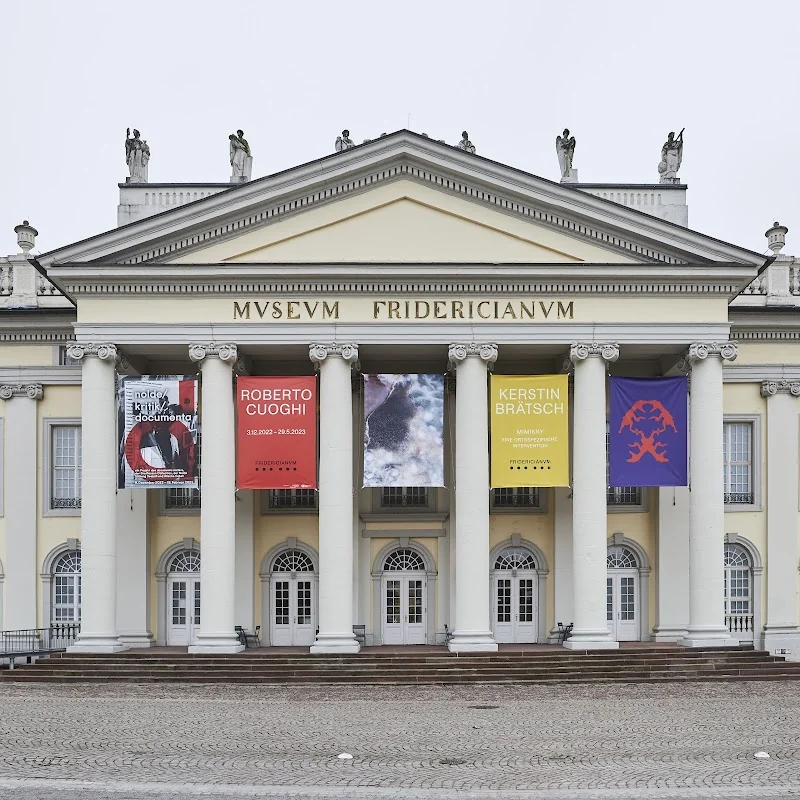
Friedrichspl. 18, Kassel
Friedrichspl. 18, 34117 Kassel, Germany
Fridericianum Kassel | Exhibitions & Events
If you want to experience contemporary art in one of the most historically significant museum architectures in Europe, Fridericianum Kassel is the right place for you. The building is prominently located at Friedrichsplatz, right in the city center, and combines contemporary art, urban life, and history into a unique overall experience. Visitors appreciate the clear layout of the exhibition spaces, the central rotunda as a lively meeting point, and the excellent accessibility by tram and train. Admission is free on Wednesdays – an ideal occasion for a spontaneous visit, which can be rounded off with a coffee in the colorfully designed café rotunda. Whether it's a large exhibition, artist talk, guided tour, or workshop: the program changes regularly, making each visit new. With the adjacent underground parking at Friedrichsplatz and the short walk from the Friedrichsplatz stop, getting there and planning your visit is very easy. This page provides you with all the important information about current exhibitions, opening hours, tickets, directions, parking, café, accessibility, and the historical significance of the building.
Current Exhibitions and Program at Fridericianum Kassel
Fridericianum presents changing exhibitions of international and local positions in contemporary art throughout the year. In addition, there are program points such as public tours, talks with artists, readings, performances, and educational offerings for families, school classes, groups, or curious individual visitors. The currently running and upcoming projects can be found online under Exhibitions (Current/Preview) and Events (Calendar). Conveniently, public tours are included in the admission price, allowing you to gain a structured introduction to themes, works, and curatorial settings at no extra cost. For groups, companies, travel groups, or children's birthday parties, there are bookable tours and workshops that can be tailored to content. School classes benefit from specially designed formats that combine aesthetic experiences with foundational knowledge. The schedule is continuously updated; thus, you can plan the appropriate slot or a complementary discussion for your exhibition visit in advance. If you like to combine your visit with music, literature, or discussion formats, keep an eye out for special series such as discussion evenings, after-work formats, and event series that take place throughout the year. Additionally, it is worth looking at the Kassel Art Association, which realizes exhibitions in the same building; a combination ticket is often offered. This proximity creates exciting thematic bridges between curated positions that can be experienced densely at Friedrichsplatz. Since the exhibitions at Fridericianum are in free rotation, it holds true: even those who come regularly will discover something new – often in direct relation to the architecture and history of the building or to the urban space of Friedrichsplatz, which can itself be part of the art experience as a public place.
Opening Hours, Admission, and Tickets: How to Plan Your Visit
Fridericianum is open from Tuesday to Sunday and on public holidays from 11 AM to 6 PM; on Thursdays, the building is open until 8 PM. It is closed on Mondays. The regular admission fee is 6 euros; reduced admission is 4 euros. Students and trainees receive a particularly cheap ticket for 2 euros, and students with a cultural ticket have free admission. Admission is also free for children and young people up to 18 years. A tip for everyone who is flexible: admission is free for all on Wednesdays – ideal for a spontaneous visit after work or during lunch break. Those who visit more frequently can opt for an annual pass; it pays off after just a few visits and is also available in a reduced variant. You can easily purchase tickets at the cash register in the entrance area. The team there also answers questions about current tours, audio and educational offerings, or provides information about family-friendly services such as museum stools, changing tables, or quiet areas in the café. Public tours are included in the admission; fixed flat rates apply for booked group tours and workshops, which you can inquire about and plan in advance. For a relaxed time planning, it is advisable to plan about 60 to 90 minutes per exhibition – depending on personal deepening, reading speed, and any discussions or tours. On Thursdays, the extended opening hours invite you to combine your visit with an evening walk over Friedrichsplatz or to end the day in the café. If you want to combine several program points, check the event calendar in advance and choose a tour, an artist talk, or a family offer in the appropriate time window.
Access by Tram and Train and Parking at Friedrichsplatz
Due to its central location at Friedrichsplatz, Fridericianum is excellently accessible by public transport. The nearest stop is Friedrichsplatz; from there, it is about 200 meters to the entrance. Tram lines 1, 3, 4, 5, 6, and 8 stop here. If you arrive by ICE at Kassel-Wilhelmshöhe, you can reach the city center in a few minutes by tram or RegioTram, alternatively by a short taxi ride. From Kassel Central Station (Cultural Station), it is a quick walk or one tram stop to Friedrichsplatz. For those arriving by car, the modernized underground parking at Friedrichsplatz is recommended. It offers 980 parking spaces and has two comfortable entrances and exits: at Steinweg/corner of Friedrichsplatz and at Du-Ry-Straße. The opening hours are user-friendly: Monday to Saturday 6 AM to 12 AM, Sunday and public holidays 9 AM to 12 AM. In addition to women’s, parent-child, and disabled parking spaces, there are elevators and E-charging stations; the paths from the garage lead directly to the pedestrian zone and the State Theatre – and thus in sight of the museum facade. Those who park regularly can use the online parking card from the parking garage company. With it, the first half hour in the underground parking at Friedrichsplatz is free; after that, low hourly rates apply, and in the evening, an attractive flat rate. For a stress-free arrival, it is advisable to plan some buffer time on busy weekends – the location in the city center is popular, but thanks to the large capacity of the garage, free spaces are usually found quickly. Bicycles can be parked at numerous racks around Friedrichsplatz; bus and RegioTram connections complement the dense tram network. If you are not familiar with the city, you can combine your visit with a walk through Königstraße and a detour to the State Theatre – both are only a few minutes away.
Café in Fridericianum: Design, Offerings, and Opening Hours
The café in Fridericianum is more than just a break zone – it is an atmospheric part of the art experience. It is located in the heart of the building, in the round rotunda, and has been independently designed as an artistic place as part of the intervention MIMIKRY by Kerstin Brätsch. Colorful tables, curtains, and wall designs with dinosaur motifs create a lively, playful environment that appeals to both children and adults. In summer, seating under the colonnade and in front of the building expands the capacity; the view of the hustle and bustle at Friedrichsplatz is one of the most pleasant moments of a museum visit in Kassel. Culinary-wise, the certified organic café focuses on quality and regionality: coffee and espresso specialties from the portafilter machine, hot and cold drinks, with plant-based milk upon request, as well as small dishes like quiches (vegetarian) and cakes (also vegan) from local bakeries are regularly on the menu. Family-friendly: In the rotunda, there is a cozy dino reading corner for the youngest; changing tables are located in the barrier-free accessible restrooms in the basement. The café's opening hours are aligned with museum hours and apply year-round, even between exhibitions: Tuesday to Sunday 11 AM to 6 PM, Thursdays until 8 PM, on public holidays 11 AM to 6 PM. If you are looking for a special souvenir, keep an eye out for the espresso cup series designed by Rosemarie Trockel, which can be used in the café and purchased on-site in the shop. Tip for the visit: Start with an overview in the rotunda, then plan your tour through the exhibition spaces, and return at the end for a short break in the café – this way, you can let what you have seen resonate in peace.
History and Significance: From the Earliest Public Museum to Documenta
Fridericianum is one of the earliest public museum buildings in Europe. It was opened in 1779 and built according to the plans of the Huguenot architect Simon Louis du Ry for Landgrave Friedrich II. From the beginning, the building combined art and knowledge collections: in addition to the art collections of the landgraves, the state library moved in; at times, collections of scientific instruments and model collections were also included. During the Napoleonic era, when Kassel became the capital of the Kingdom of Westphalia, the building served as the seat of parliament – it is often referred to as the first parliamentary building on German soil. The Brothers Grimm worked at the library during this phase. In World War II, the building was severely damaged; after the war, initially, mainly the surrounding wall and the two-tower remained. In 1955, the first documenta took place in a temporarily restored state, founded by Arnold Bode. Since then, Fridericianum has been a central venue for this world-renowned exhibition of contemporary art every five years. The building underwent extensive renovation until 1982; since 1988, the institution has continuously shown its own changing exhibitions of contemporary art. This history continues to shape the character of the building today: the neoclassical facade forms the framework in which international artistic positions enter into dialogue with architecture, the city, and the public. The Friedrichsplatz in front of the building has repeatedly served as a stage and resonance space for artistic interventions of documenta. Thus, those who visit Fridericianum encounter not only individual exhibitions but an institution that reflects the development of museum and exhibition culture since the Enlightenment – from the idea of public access to knowledge to contemporary forms of artistic research, participation, and urban space reference.
Rooms, Accessibility, and Floor Plans: How the Exhibition Areas Are Structured
Architecturally, Fridericianum is characterized by clear, well-orientable sequences of rooms and the central rotunda, which serves as a distributor and lounge area. For planning your tour, floor plans for the basement (KG), ground floor (EG), and upper floor (OG) are available; they show how smaller and larger exhibition halls, transitions, and functional rooms are distributed throughout the building. The accessibility is organized to be barrier-free: access is via an external ramp with a moderate incline; inside, two elevators connect the levels. Doors are not automated, but the staff is happy to assist with opening – a service phone number is provided. In the basement, there are two barrier-free toilets and a barrier-free washroom with a bed and lifter. Folding museum stools can be borrowed free of charge at the cash register; they are practical for longer observations or discussion formats while sitting. Family-friendly offerings such as nursing options in the café and changing tables are available. If you like to structure exhibitions chronologically or thematically, start on the ground floor with the larger rooms, then switch to the rotunda as a stopover and continue your tour on the upper floor, where intimate formats, cabinets, or media-based presentations often take place. For events such as talks or educational formats, rooms are temporarily adapted; acoustic requirements, seating arrangements, or media technology are tailored to the respective format. Information on accessibility, floor plans (KG/EG/OG), and equipment details are centrally bundled; this way, the visit can be well prepared – whether alone, with family, as a group, or with accessibility needs. Those traveling with a stroller, wheelchair, or walker benefit from the elevators, ramp, and sanitary areas that are specifically designed for accessibility. Overall, a tour emerges that feels fluid yet offers diverse sightlines, quiet points, and surprising perspectives – ideal for discovering art in peace.
Sources:
- Fridericianum – Visit (Opening Hours, Admission, Accessibility, Directions)
- Fridericianum – Café (Design MIMIKRY, Opening Hours, Offer)
- City of Kassel – Underground Parking Friedrichsplatz (Opening Hours, Facilities)
- City of Kassel – Parking Garages City Center (Capacity 980 Spaces, ParkCard)
- Wikipedia – Fridericianum (History, 1779, Simon Louis du Ry, documenta)
- Wikipedia – documenta (Cycle, Central Role of Fridericianum)
- Kassel Art Association – Visit (Combination Ticket Information)
Mehr anzeigenWeniger anzeigen
Fridericianum Kassel | Exhibitions & Events
If you want to experience contemporary art in one of the most historically significant museum architectures in Europe, Fridericianum Kassel is the right place for you. The building is prominently located at Friedrichsplatz, right in the city center, and combines contemporary art, urban life, and history into a unique overall experience. Visitors appreciate the clear layout of the exhibition spaces, the central rotunda as a lively meeting point, and the excellent accessibility by tram and train. Admission is free on Wednesdays – an ideal occasion for a spontaneous visit, which can be rounded off with a coffee in the colorfully designed café rotunda. Whether it's a large exhibition, artist talk, guided tour, or workshop: the program changes regularly, making each visit new. With the adjacent underground parking at Friedrichsplatz and the short walk from the Friedrichsplatz stop, getting there and planning your visit is very easy. This page provides you with all the important information about current exhibitions, opening hours, tickets, directions, parking, café, accessibility, and the historical significance of the building.
Current Exhibitions and Program at Fridericianum Kassel
Fridericianum presents changing exhibitions of international and local positions in contemporary art throughout the year. In addition, there are program points such as public tours, talks with artists, readings, performances, and educational offerings for families, school classes, groups, or curious individual visitors. The currently running and upcoming projects can be found online under Exhibitions (Current/Preview) and Events (Calendar). Conveniently, public tours are included in the admission price, allowing you to gain a structured introduction to themes, works, and curatorial settings at no extra cost. For groups, companies, travel groups, or children's birthday parties, there are bookable tours and workshops that can be tailored to content. School classes benefit from specially designed formats that combine aesthetic experiences with foundational knowledge. The schedule is continuously updated; thus, you can plan the appropriate slot or a complementary discussion for your exhibition visit in advance. If you like to combine your visit with music, literature, or discussion formats, keep an eye out for special series such as discussion evenings, after-work formats, and event series that take place throughout the year. Additionally, it is worth looking at the Kassel Art Association, which realizes exhibitions in the same building; a combination ticket is often offered. This proximity creates exciting thematic bridges between curated positions that can be experienced densely at Friedrichsplatz. Since the exhibitions at Fridericianum are in free rotation, it holds true: even those who come regularly will discover something new – often in direct relation to the architecture and history of the building or to the urban space of Friedrichsplatz, which can itself be part of the art experience as a public place.
Opening Hours, Admission, and Tickets: How to Plan Your Visit
Fridericianum is open from Tuesday to Sunday and on public holidays from 11 AM to 6 PM; on Thursdays, the building is open until 8 PM. It is closed on Mondays. The regular admission fee is 6 euros; reduced admission is 4 euros. Students and trainees receive a particularly cheap ticket for 2 euros, and students with a cultural ticket have free admission. Admission is also free for children and young people up to 18 years. A tip for everyone who is flexible: admission is free for all on Wednesdays – ideal for a spontaneous visit after work or during lunch break. Those who visit more frequently can opt for an annual pass; it pays off after just a few visits and is also available in a reduced variant. You can easily purchase tickets at the cash register in the entrance area. The team there also answers questions about current tours, audio and educational offerings, or provides information about family-friendly services such as museum stools, changing tables, or quiet areas in the café. Public tours are included in the admission; fixed flat rates apply for booked group tours and workshops, which you can inquire about and plan in advance. For a relaxed time planning, it is advisable to plan about 60 to 90 minutes per exhibition – depending on personal deepening, reading speed, and any discussions or tours. On Thursdays, the extended opening hours invite you to combine your visit with an evening walk over Friedrichsplatz or to end the day in the café. If you want to combine several program points, check the event calendar in advance and choose a tour, an artist talk, or a family offer in the appropriate time window.
Access by Tram and Train and Parking at Friedrichsplatz
Due to its central location at Friedrichsplatz, Fridericianum is excellently accessible by public transport. The nearest stop is Friedrichsplatz; from there, it is about 200 meters to the entrance. Tram lines 1, 3, 4, 5, 6, and 8 stop here. If you arrive by ICE at Kassel-Wilhelmshöhe, you can reach the city center in a few minutes by tram or RegioTram, alternatively by a short taxi ride. From Kassel Central Station (Cultural Station), it is a quick walk or one tram stop to Friedrichsplatz. For those arriving by car, the modernized underground parking at Friedrichsplatz is recommended. It offers 980 parking spaces and has two comfortable entrances and exits: at Steinweg/corner of Friedrichsplatz and at Du-Ry-Straße. The opening hours are user-friendly: Monday to Saturday 6 AM to 12 AM, Sunday and public holidays 9 AM to 12 AM. In addition to women’s, parent-child, and disabled parking spaces, there are elevators and E-charging stations; the paths from the garage lead directly to the pedestrian zone and the State Theatre – and thus in sight of the museum facade. Those who park regularly can use the online parking card from the parking garage company. With it, the first half hour in the underground parking at Friedrichsplatz is free; after that, low hourly rates apply, and in the evening, an attractive flat rate. For a stress-free arrival, it is advisable to plan some buffer time on busy weekends – the location in the city center is popular, but thanks to the large capacity of the garage, free spaces are usually found quickly. Bicycles can be parked at numerous racks around Friedrichsplatz; bus and RegioTram connections complement the dense tram network. If you are not familiar with the city, you can combine your visit with a walk through Königstraße and a detour to the State Theatre – both are only a few minutes away.
Café in Fridericianum: Design, Offerings, and Opening Hours
The café in Fridericianum is more than just a break zone – it is an atmospheric part of the art experience. It is located in the heart of the building, in the round rotunda, and has been independently designed as an artistic place as part of the intervention MIMIKRY by Kerstin Brätsch. Colorful tables, curtains, and wall designs with dinosaur motifs create a lively, playful environment that appeals to both children and adults. In summer, seating under the colonnade and in front of the building expands the capacity; the view of the hustle and bustle at Friedrichsplatz is one of the most pleasant moments of a museum visit in Kassel. Culinary-wise, the certified organic café focuses on quality and regionality: coffee and espresso specialties from the portafilter machine, hot and cold drinks, with plant-based milk upon request, as well as small dishes like quiches (vegetarian) and cakes (also vegan) from local bakeries are regularly on the menu. Family-friendly: In the rotunda, there is a cozy dino reading corner for the youngest; changing tables are located in the barrier-free accessible restrooms in the basement. The café's opening hours are aligned with museum hours and apply year-round, even between exhibitions: Tuesday to Sunday 11 AM to 6 PM, Thursdays until 8 PM, on public holidays 11 AM to 6 PM. If you are looking for a special souvenir, keep an eye out for the espresso cup series designed by Rosemarie Trockel, which can be used in the café and purchased on-site in the shop. Tip for the visit: Start with an overview in the rotunda, then plan your tour through the exhibition spaces, and return at the end for a short break in the café – this way, you can let what you have seen resonate in peace.
History and Significance: From the Earliest Public Museum to Documenta
Fridericianum is one of the earliest public museum buildings in Europe. It was opened in 1779 and built according to the plans of the Huguenot architect Simon Louis du Ry for Landgrave Friedrich II. From the beginning, the building combined art and knowledge collections: in addition to the art collections of the landgraves, the state library moved in; at times, collections of scientific instruments and model collections were also included. During the Napoleonic era, when Kassel became the capital of the Kingdom of Westphalia, the building served as the seat of parliament – it is often referred to as the first parliamentary building on German soil. The Brothers Grimm worked at the library during this phase. In World War II, the building was severely damaged; after the war, initially, mainly the surrounding wall and the two-tower remained. In 1955, the first documenta took place in a temporarily restored state, founded by Arnold Bode. Since then, Fridericianum has been a central venue for this world-renowned exhibition of contemporary art every five years. The building underwent extensive renovation until 1982; since 1988, the institution has continuously shown its own changing exhibitions of contemporary art. This history continues to shape the character of the building today: the neoclassical facade forms the framework in which international artistic positions enter into dialogue with architecture, the city, and the public. The Friedrichsplatz in front of the building has repeatedly served as a stage and resonance space for artistic interventions of documenta. Thus, those who visit Fridericianum encounter not only individual exhibitions but an institution that reflects the development of museum and exhibition culture since the Enlightenment – from the idea of public access to knowledge to contemporary forms of artistic research, participation, and urban space reference.
Rooms, Accessibility, and Floor Plans: How the Exhibition Areas Are Structured
Architecturally, Fridericianum is characterized by clear, well-orientable sequences of rooms and the central rotunda, which serves as a distributor and lounge area. For planning your tour, floor plans for the basement (KG), ground floor (EG), and upper floor (OG) are available; they show how smaller and larger exhibition halls, transitions, and functional rooms are distributed throughout the building. The accessibility is organized to be barrier-free: access is via an external ramp with a moderate incline; inside, two elevators connect the levels. Doors are not automated, but the staff is happy to assist with opening – a service phone number is provided. In the basement, there are two barrier-free toilets and a barrier-free washroom with a bed and lifter. Folding museum stools can be borrowed free of charge at the cash register; they are practical for longer observations or discussion formats while sitting. Family-friendly offerings such as nursing options in the café and changing tables are available. If you like to structure exhibitions chronologically or thematically, start on the ground floor with the larger rooms, then switch to the rotunda as a stopover and continue your tour on the upper floor, where intimate formats, cabinets, or media-based presentations often take place. For events such as talks or educational formats, rooms are temporarily adapted; acoustic requirements, seating arrangements, or media technology are tailored to the respective format. Information on accessibility, floor plans (KG/EG/OG), and equipment details are centrally bundled; this way, the visit can be well prepared – whether alone, with family, as a group, or with accessibility needs. Those traveling with a stroller, wheelchair, or walker benefit from the elevators, ramp, and sanitary areas that are specifically designed for accessibility. Overall, a tour emerges that feels fluid yet offers diverse sightlines, quiet points, and surprising perspectives – ideal for discovering art in peace.
Sources:
- Fridericianum – Visit (Opening Hours, Admission, Accessibility, Directions)
- Fridericianum – Café (Design MIMIKRY, Opening Hours, Offer)
- City of Kassel – Underground Parking Friedrichsplatz (Opening Hours, Facilities)
- City of Kassel – Parking Garages City Center (Capacity 980 Spaces, ParkCard)
- Wikipedia – Fridericianum (History, 1779, Simon Louis du Ry, documenta)
- Wikipedia – documenta (Cycle, Central Role of Fridericianum)
- Kassel Art Association – Visit (Combination Ticket Information)
Fridericianum Kassel | Exhibitions & Events
If you want to experience contemporary art in one of the most historically significant museum architectures in Europe, Fridericianum Kassel is the right place for you. The building is prominently located at Friedrichsplatz, right in the city center, and combines contemporary art, urban life, and history into a unique overall experience. Visitors appreciate the clear layout of the exhibition spaces, the central rotunda as a lively meeting point, and the excellent accessibility by tram and train. Admission is free on Wednesdays – an ideal occasion for a spontaneous visit, which can be rounded off with a coffee in the colorfully designed café rotunda. Whether it's a large exhibition, artist talk, guided tour, or workshop: the program changes regularly, making each visit new. With the adjacent underground parking at Friedrichsplatz and the short walk from the Friedrichsplatz stop, getting there and planning your visit is very easy. This page provides you with all the important information about current exhibitions, opening hours, tickets, directions, parking, café, accessibility, and the historical significance of the building.
Current Exhibitions and Program at Fridericianum Kassel
Fridericianum presents changing exhibitions of international and local positions in contemporary art throughout the year. In addition, there are program points such as public tours, talks with artists, readings, performances, and educational offerings for families, school classes, groups, or curious individual visitors. The currently running and upcoming projects can be found online under Exhibitions (Current/Preview) and Events (Calendar). Conveniently, public tours are included in the admission price, allowing you to gain a structured introduction to themes, works, and curatorial settings at no extra cost. For groups, companies, travel groups, or children's birthday parties, there are bookable tours and workshops that can be tailored to content. School classes benefit from specially designed formats that combine aesthetic experiences with foundational knowledge. The schedule is continuously updated; thus, you can plan the appropriate slot or a complementary discussion for your exhibition visit in advance. If you like to combine your visit with music, literature, or discussion formats, keep an eye out for special series such as discussion evenings, after-work formats, and event series that take place throughout the year. Additionally, it is worth looking at the Kassel Art Association, which realizes exhibitions in the same building; a combination ticket is often offered. This proximity creates exciting thematic bridges between curated positions that can be experienced densely at Friedrichsplatz. Since the exhibitions at Fridericianum are in free rotation, it holds true: even those who come regularly will discover something new – often in direct relation to the architecture and history of the building or to the urban space of Friedrichsplatz, which can itself be part of the art experience as a public place.
Opening Hours, Admission, and Tickets: How to Plan Your Visit
Fridericianum is open from Tuesday to Sunday and on public holidays from 11 AM to 6 PM; on Thursdays, the building is open until 8 PM. It is closed on Mondays. The regular admission fee is 6 euros; reduced admission is 4 euros. Students and trainees receive a particularly cheap ticket for 2 euros, and students with a cultural ticket have free admission. Admission is also free for children and young people up to 18 years. A tip for everyone who is flexible: admission is free for all on Wednesdays – ideal for a spontaneous visit after work or during lunch break. Those who visit more frequently can opt for an annual pass; it pays off after just a few visits and is also available in a reduced variant. You can easily purchase tickets at the cash register in the entrance area. The team there also answers questions about current tours, audio and educational offerings, or provides information about family-friendly services such as museum stools, changing tables, or quiet areas in the café. Public tours are included in the admission; fixed flat rates apply for booked group tours and workshops, which you can inquire about and plan in advance. For a relaxed time planning, it is advisable to plan about 60 to 90 minutes per exhibition – depending on personal deepening, reading speed, and any discussions or tours. On Thursdays, the extended opening hours invite you to combine your visit with an evening walk over Friedrichsplatz or to end the day in the café. If you want to combine several program points, check the event calendar in advance and choose a tour, an artist talk, or a family offer in the appropriate time window.
Access by Tram and Train and Parking at Friedrichsplatz
Due to its central location at Friedrichsplatz, Fridericianum is excellently accessible by public transport. The nearest stop is Friedrichsplatz; from there, it is about 200 meters to the entrance. Tram lines 1, 3, 4, 5, 6, and 8 stop here. If you arrive by ICE at Kassel-Wilhelmshöhe, you can reach the city center in a few minutes by tram or RegioTram, alternatively by a short taxi ride. From Kassel Central Station (Cultural Station), it is a quick walk or one tram stop to Friedrichsplatz. For those arriving by car, the modernized underground parking at Friedrichsplatz is recommended. It offers 980 parking spaces and has two comfortable entrances and exits: at Steinweg/corner of Friedrichsplatz and at Du-Ry-Straße. The opening hours are user-friendly: Monday to Saturday 6 AM to 12 AM, Sunday and public holidays 9 AM to 12 AM. In addition to women’s, parent-child, and disabled parking spaces, there are elevators and E-charging stations; the paths from the garage lead directly to the pedestrian zone and the State Theatre – and thus in sight of the museum facade. Those who park regularly can use the online parking card from the parking garage company. With it, the first half hour in the underground parking at Friedrichsplatz is free; after that, low hourly rates apply, and in the evening, an attractive flat rate. For a stress-free arrival, it is advisable to plan some buffer time on busy weekends – the location in the city center is popular, but thanks to the large capacity of the garage, free spaces are usually found quickly. Bicycles can be parked at numerous racks around Friedrichsplatz; bus and RegioTram connections complement the dense tram network. If you are not familiar with the city, you can combine your visit with a walk through Königstraße and a detour to the State Theatre – both are only a few minutes away.
Café in Fridericianum: Design, Offerings, and Opening Hours
The café in Fridericianum is more than just a break zone – it is an atmospheric part of the art experience. It is located in the heart of the building, in the round rotunda, and has been independently designed as an artistic place as part of the intervention MIMIKRY by Kerstin Brätsch. Colorful tables, curtains, and wall designs with dinosaur motifs create a lively, playful environment that appeals to both children and adults. In summer, seating under the colonnade and in front of the building expands the capacity; the view of the hustle and bustle at Friedrichsplatz is one of the most pleasant moments of a museum visit in Kassel. Culinary-wise, the certified organic café focuses on quality and regionality: coffee and espresso specialties from the portafilter machine, hot and cold drinks, with plant-based milk upon request, as well as small dishes like quiches (vegetarian) and cakes (also vegan) from local bakeries are regularly on the menu. Family-friendly: In the rotunda, there is a cozy dino reading corner for the youngest; changing tables are located in the barrier-free accessible restrooms in the basement. The café's opening hours are aligned with museum hours and apply year-round, even between exhibitions: Tuesday to Sunday 11 AM to 6 PM, Thursdays until 8 PM, on public holidays 11 AM to 6 PM. If you are looking for a special souvenir, keep an eye out for the espresso cup series designed by Rosemarie Trockel, which can be used in the café and purchased on-site in the shop. Tip for the visit: Start with an overview in the rotunda, then plan your tour through the exhibition spaces, and return at the end for a short break in the café – this way, you can let what you have seen resonate in peace.
History and Significance: From the Earliest Public Museum to Documenta
Fridericianum is one of the earliest public museum buildings in Europe. It was opened in 1779 and built according to the plans of the Huguenot architect Simon Louis du Ry for Landgrave Friedrich II. From the beginning, the building combined art and knowledge collections: in addition to the art collections of the landgraves, the state library moved in; at times, collections of scientific instruments and model collections were also included. During the Napoleonic era, when Kassel became the capital of the Kingdom of Westphalia, the building served as the seat of parliament – it is often referred to as the first parliamentary building on German soil. The Brothers Grimm worked at the library during this phase. In World War II, the building was severely damaged; after the war, initially, mainly the surrounding wall and the two-tower remained. In 1955, the first documenta took place in a temporarily restored state, founded by Arnold Bode. Since then, Fridericianum has been a central venue for this world-renowned exhibition of contemporary art every five years. The building underwent extensive renovation until 1982; since 1988, the institution has continuously shown its own changing exhibitions of contemporary art. This history continues to shape the character of the building today: the neoclassical facade forms the framework in which international artistic positions enter into dialogue with architecture, the city, and the public. The Friedrichsplatz in front of the building has repeatedly served as a stage and resonance space for artistic interventions of documenta. Thus, those who visit Fridericianum encounter not only individual exhibitions but an institution that reflects the development of museum and exhibition culture since the Enlightenment – from the idea of public access to knowledge to contemporary forms of artistic research, participation, and urban space reference.
Rooms, Accessibility, and Floor Plans: How the Exhibition Areas Are Structured
Architecturally, Fridericianum is characterized by clear, well-orientable sequences of rooms and the central rotunda, which serves as a distributor and lounge area. For planning your tour, floor plans for the basement (KG), ground floor (EG), and upper floor (OG) are available; they show how smaller and larger exhibition halls, transitions, and functional rooms are distributed throughout the building. The accessibility is organized to be barrier-free: access is via an external ramp with a moderate incline; inside, two elevators connect the levels. Doors are not automated, but the staff is happy to assist with opening – a service phone number is provided. In the basement, there are two barrier-free toilets and a barrier-free washroom with a bed and lifter. Folding museum stools can be borrowed free of charge at the cash register; they are practical for longer observations or discussion formats while sitting. Family-friendly offerings such as nursing options in the café and changing tables are available. If you like to structure exhibitions chronologically or thematically, start on the ground floor with the larger rooms, then switch to the rotunda as a stopover and continue your tour on the upper floor, where intimate formats, cabinets, or media-based presentations often take place. For events such as talks or educational formats, rooms are temporarily adapted; acoustic requirements, seating arrangements, or media technology are tailored to the respective format. Information on accessibility, floor plans (KG/EG/OG), and equipment details are centrally bundled; this way, the visit can be well prepared – whether alone, with family, as a group, or with accessibility needs. Those traveling with a stroller, wheelchair, or walker benefit from the elevators, ramp, and sanitary areas that are specifically designed for accessibility. Overall, a tour emerges that feels fluid yet offers diverse sightlines, quiet points, and surprising perspectives – ideal for discovering art in peace.
Sources:
- Fridericianum – Visit (Opening Hours, Admission, Accessibility, Directions)
- Fridericianum – Café (Design MIMIKRY, Opening Hours, Offer)
- City of Kassel – Underground Parking Friedrichsplatz (Opening Hours, Facilities)
- City of Kassel – Parking Garages City Center (Capacity 980 Spaces, ParkCard)
- Wikipedia – Fridericianum (History, 1779, Simon Louis du Ry, documenta)
- Wikipedia – documenta (Cycle, Central Role of Fridericianum)
- Kassel Art Association – Visit (Combination Ticket Information)
Upcoming Events
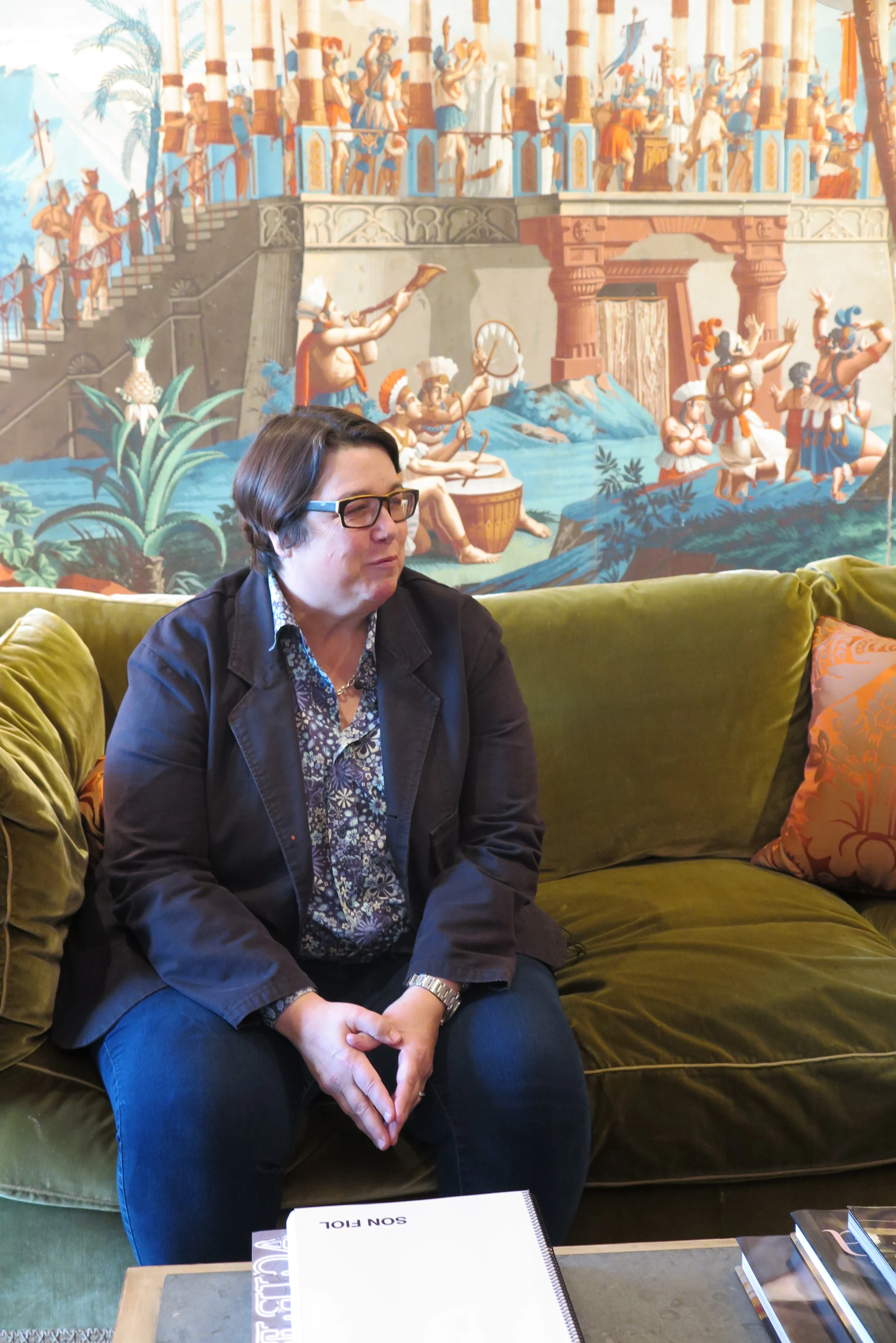
Catherine Opie: The pause that dreams against erasure
Catherine Opie transforms the Fridericianum into a space for identity, protest, and memory. Photography with great power. #Kassel #Exhibition
Catherine Opie – The Pause That Dreams Against Erasure
Catherine Opie at the Fridericianum: Photography, identity, and protest in an impressive exhibition. Discover now in Kassel! #Art

Peter Fischli at Fridericianum Kassel
Peter Fischli's sculptures transform Fridericianum into a space of light, signs, and quiet tension. #Kassel #Art
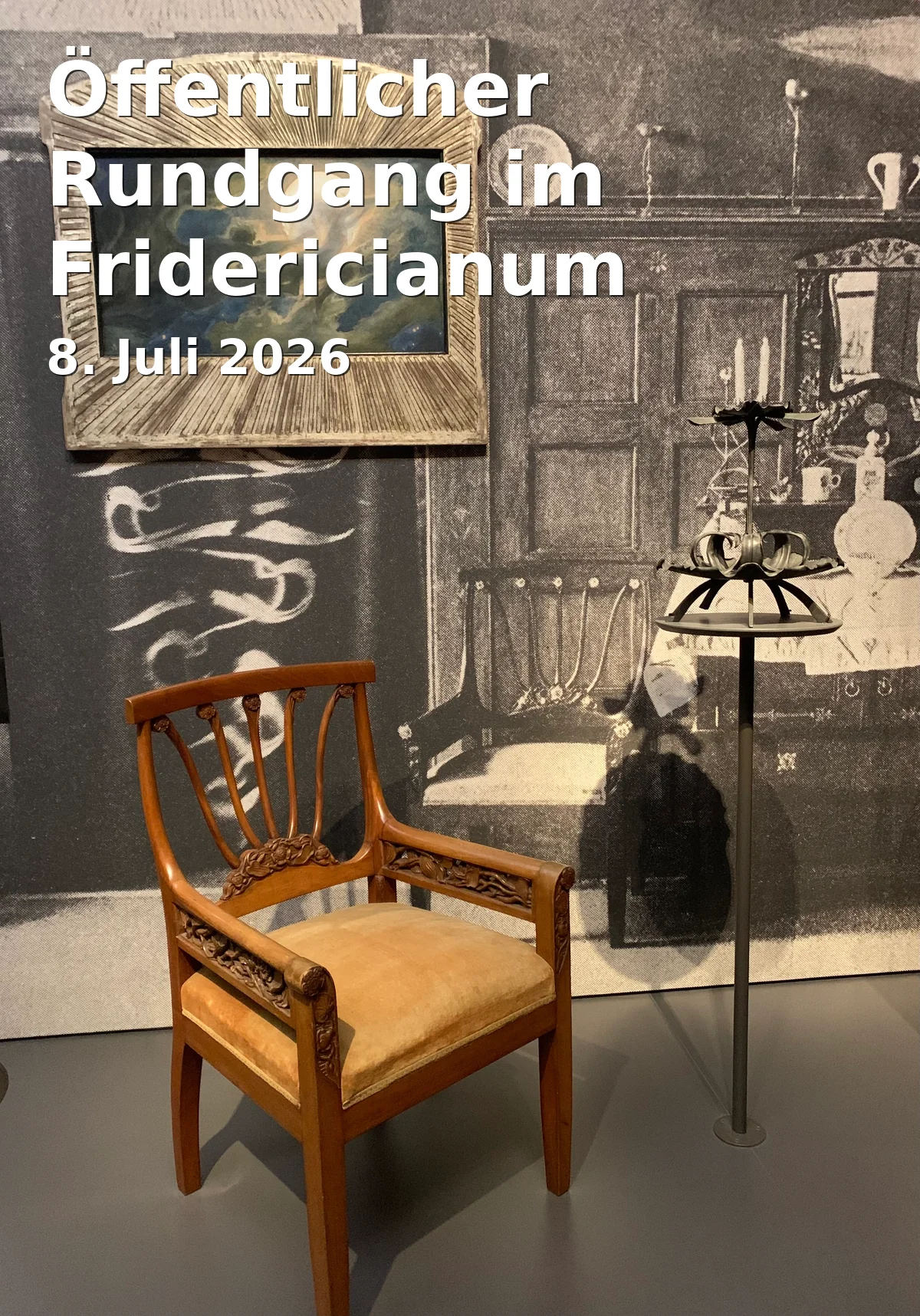
Public Tour at Fridericianum
Visit the current exhibition at Fridericianum Kassel with art educators on July 8, 2026.
Frequently Asked Questions
Reviews
Ludo Van Raemdonck
12. October 2025
Great museum. Impressive historic building. Great coffeeshop inside. Nice and spacious exposition rooms. Very friendly and helpful staff.
Madalina Petrean
29. January 2025
Even though I only had one day in Kassel and didn’t get to go inside, the Fridericianum’s stunning architecture and the peaceful vibe around it really left an impression. It gave me this calm, almost inspiring feeling, like the kind of place where ideas just start to flow. Sometimes, it’s the outside of a place that says it all.
wolf meow
5. December 2024
I absolutely loved the museum. It feels enclosed, safe, architecturally. Wednesdays are free entries. You also need to carry 2€ coins to use the locker room if you have backpacks. They have a cinema to watch the short interview films about the artist, whose work is being showcased here. Must go in Kassel.
Natalia Filvarova
23. April 2023
Lovely museum, fairly small, but the exhibition we saw was definitely worth a visit! The whole viewing took about 45 minutes. The staff are super friendly and helpful, and there is a cute cafe inside. Recommended!
Timo Habighorst
15. May 2024
It's a very small museum which is relatively pricey. When I was there, the special exhibition was called Inside/Outside and it was rather small and boring. There is basically no permanent exhibition. I'd recommend deciding whether or not to visit the museum depending on if the current exhibition sounds very interesting to you - otherwise just skip it and enjoy the nearby park.