

Kassel
Georg-Stock-Platz, 34121 Kassel, Deutschland
Georg-Stock-Platz | Wehlheiden & Kirmes
The Georg-Stock-Platz in Kassel is much more than an open space in the district of Wehlheiden. It is located in the old town center of the neighborhood, characterized by several important streets and pathways, and is at the same time the focus of an urban development process that the city of Kassel has been actively pursuing for some time. The official planning describes the square as a future multifunctional center for Wehlheiden, which aims to connect quality of stay, new uses, green spaces, and urban spatial definition. This is not just about a more beautiful square design, but about the role of the place in the daily life of the neighborhood: as a meeting point, as an event space, as a movement area for pedestrian and bicycle traffic, and as an identity-forming center for Wehlheiden. According to the city of Kassel, the competition area covers about one hectare and includes not only the square itself but also adjacent areas such as Kirchweg and spaces north of the square. The current planning documents also mention a central square area of about 700 square meters, which is intended to be usable both in everyday life and for temporary events. ([kassel.de](https://www.kassel.de/buerger/bauen_und_wohnen/projekte-und-entwicklung/inhaltsseiten/lebendige-zentren/alter-ortskern-wehlheiden.php))
Location and urban classification in the old town center of Wehlheiden
To understand the Georg-Stock-Platz, one should always see it in connection with Wehlheiden. The district has long been one of the established residential and mixed neighborhoods of Kassel and has a rural origin, which is still reflected in the urban landscape and public spaces, according to the city administration. The Georg-Stock-Platz is not located on the edge but in the middle of the old town center. In the justification for the development plan, it states that the square area rises as a free space plateau above the intersection of Kohlenstraße and Schönfelder Straße. The area is accessed via Kirchweg in the west, Kohlenstraße and Tischbeinstraße in the south, and Schönfelder Straße in the east. Between Kirchweg and Schönfelder Straße runs Buddengasse, which is open for pedestrian and bicycle traffic. This location makes the square a hub for small and larger everyday movements: those who are walking, those who come by bicycle, or those who reach the neighborhood center from the surrounding streets do not perceive the square as an isolated island but as a permeable part of the district. The surrounding buildings also shape this impression. The planning describes the environment as an urban mixed-use area, where residential uses, services, and other functions come together. Thus, the Georg-Stock-Platz is not just a geographical point but a transitional space between living, movement, and public life. This mixture is particularly important because it explains why the square is so strongly perceived in the neighborhood and why its redesign means more for Wehlheiden than just a cosmetic improvement. It is intended to receive a spatial center that consolidates existing pathways and makes the neighborhood clearer to read. ([kassel.de](https://www.kassel.de/buerger/bauen_und_wohnen/projekte-und-entwicklung/inhaltsseiten/lebendige-zentren/alter-ortskern-wehlheiden.php))
For the classification of the square, the official description of the district is also helpful. The city of Kassel points out that Wehlheiden has historically been closely intertwined with the core city while still maintaining its own identity. The lively places in the neighborhood include Wehlheider Platz, Stockplatz, and the Georg-Stock-Platz. This triad shows that the district has several public focal points that fulfill different functions. While Wehlheider Platz is perceived more as a neighborhood center with a weekly market, Georg-Stock-Platz represents the fair, spatial center, and prospective development. This functional division is urbanistically interesting because it does not reduce Wehlheiden to a single meeting point but works with several public spaces that complement each other. The Georg-Stock-Platz serves as the interface between quieter everyday use, social encounters, and significant event moments. The fact that the city itself describes the square as a future center with quality of stay for all generations emphasizes this significance. Thus, a seemingly simple open space becomes a place of high urban relevance, bringing together the location, history, and future of an entire neighborhood. ([kassel.de](https://www.kassel.de/buerger/bauen_und_wohnen/stadtteile/wehlheiden/wehlheiden.php))
History, naming, and role in the neighborhood
The name Georg-Stock-Platz refers to Georg Stock, who was mayor of Wehlheiden from 1882 to 1896. The University of Kassel explains in its audio walk about Wehlheiden that the square was named after him. This naming is more than a formal honor. It connects the present urban space with the municipal history of the district and reminds us that Wehlheiden was an independent municipality with its own administration before its incorporation. Especially in a neighborhood that still strongly lives off its local identity, such a name carries weight. It anchors the square in the memory of the neighborhood and makes it a symbol of the historical development from an independent village and community structure to the present-day Kassel district. The city of Kassel also mentions in connection with Wehlheiden that the urban landscape is shaped by different phases of construction development and includes buildings from the 20th century alongside older structures. In this context, the Georg-Stock-Platz fits as a public space that does not obscure the different temporal layers of the neighborhood but visibly brings them together. ([uni-kassel.de](https://www.uni-kassel.de/fb06/institute/urbane-entwicklungen/fachgebiete/stadterneuerung-und-planungstheorie/kassel/audiowalks/wehlheiden.html))
The square also plays a special historical role for the Wehlheider Kirmes. The city of Kassel explicitly states that the Wehlheider Kirmes regained its true character as a village festival in 1966 when it was celebrated at Georg-Stock-Platz. Since that time, the square has been the center of events. This statement is important because it shows how strongly public spaces can be charged by recurring rituals. A square can exist urbanistically, but it only gains significant emotional meaning through regular collective use. That is exactly what has happened here. The fair gives the square a clear profile every year, connects local clubs, neighborhoods, and visitors from other districts, and creates a form of community that extends beyond the neighborhood. The city also describes that the Wehlheider Kirmes was long organized by the Wehlheiden Gymnastics Club and is now supported by its own association. In this interplay of tradition and community spirit, the square becomes a place where local history is not only told but actually lived. Thus, the Georg-Stock-Platz is historically significant not as a monument but as a stage for urban everyday life and recurring neighborhood culture. ([kassel.de](https://www.kassel.de/buerger/sport_und_freizeit/wiederkehrende-veranstaltungen/wehlheider-kirmes.php))
The official neighborhood page also provides clues about how the square is anchored in local life. It states that a weekly market takes place at Wehlheider Platz on Friday mornings, a flea market at Stockplatz on Saturdays, and once a year the traditional Wehlheider Kirmes, which attracts many people from other districts and the surrounding area. Even if the wording there does not repeat the full written name every time, it clearly shows that the square is part of a network of public uses. The special thing about Georg-Stock-Platz is therefore not just its naming but its permanent integration into the local social structure. It serves as a meeting point, event venue, and identification area. That the city is rethinking the square today is therefore logical: where collective use has developed over decades, a spatial quality is needed that meets this demand. History is not preserved here but spatially further developed. ([kassel.de](https://www.kassel.de/buerger/bauen_und_wohnen/stadtteile/wehlheiden/wehlheiden.php?utm_source=openai))
Redesign and development plan: What the city of Kassel plans for Georg-Stock-Platz
The currently most important development at Georg-Stock-Platz is the planned redesign by the city of Kassel. The official project page for the old town center Wehlheiden states that the square will be upgraded; the urban planning and open space planning realization competition has already produced a result. The winning design combines construction, green space design, and the preservation of existing trees. A row of buildings with different uses and a new city square are planned. The goal is to create a real center for Wehlheiden that offers quality of stay for all generations while also allowing space for neighborhood festivals. This is important because the planning does not reduce the square to a single function. It should not only look nice but also function as usable urban space. This means: more clear edges, better spatial definition, more quality of stay, more diversity of use, and a structure that meaningfully integrates the square into everyday life. The city names Foundation 5+ landscape architects together with the office ebene 4 from Kassel as the winners of the competition. Thus, the planning is not abstract but has already been transferred into a concrete urban planning process. ([kassel.de](https://www.kassel.de/buerger/bauen_und_wohnen/projekte-und-entwicklung/inhaltsseiten/lebendige-zentren/alter-ortskern-wehlheiden.php))
The justification for the development plan complements this perspective with concrete numbers and objectives. It mentions around 50 residential units that are intended to contribute to housing supply in Kassel as an inner development measure. Additionally, areas adjacent to the square in the north are to be developed with residential, retail, and service uses. The plan speaks of an urban mix of residential and non-residential uses, which can include social, cultural, and commercial functions. Particularly relevant is that the new construction should define the square edge and strengthen the public space. The new urban Georg-Stock-Platz is to span from the facades on Kirchweg to Schönfelder Straße and receive new addresses and functions through construction on the northern square edge. In addition, a public pathway connection between the urban square and the northern green spaces with playgrounds and sports fields is planned. This makes it clear that the planning does not consider the square in isolation but as part of a larger spatial system of living, green, movement, and stay. The proportions are also defined: a contiguous area of about 700 m² is to be created in the center of the square, which should be usable for both temporary events and everyday use. ([ratsinfo.kassel.de](https://ratsinfo.kassel.de/sdnet4/sdnetrim/UGhVM0hpd2NXNFdFcExjZT76e_qlUxFJbGaQJCDfXpcksAjGoGtDXl0IOYWnJM7G/101.19.1462_Anlage_3-_Begruendung_zum_Planentwurf.pdf))
Another important aspect is the open space planning approach. The documents provide for individual greened islands that serve both as planting sites for climate-resilient trees and as retention areas. At the same time, they are to include publicly usable stay offers. The planning stipulates that at least 30 percent of the square areas are to be greened. This makes it clear that Georg-Stock-Platz is not intended as a sealed traffic junction but as a climate-adapted and spatially high-quality place to stay. Also relevant is the statement that above-ground parking spaces in the urban area are not permitted; parking should generally be organized in underground garages or parking decks. This regulation shows how strongly the planning favors pedestrian and bicycle traffic and aims to relieve the public space from stationary traffic. The square should not be dominated by cars but should receive a clear priority for stay, movement, and use. For a neighborhood center, this is a significant step because it will change the character of the place in the long term. Therefore, those searching for Georg-Stock-Platz today will find a space in transition: historically significant, functionally important, and planning-oriented towards a new urban quality. ([ratsinfo.kassel.de](https://ratsinfo.kassel.de/sdnet4/sdnetrim/UGhVM0hpd2NXNFdFcExjZT76e_qlUxFJbGaQJCDfXpcksAjGoGtDXl0IOYWnJM7G/101.19.1462_Anlage_3-_Begruendung_zum_Planentwurf.pdf?utm_source=openai))
Access, pedestrian and bicycle traffic, and parking at Georg-Stock-Platz
The accessibility of Georg-Stock-Platz is a central issue because the square is not only a destination for events but also an everyday movement space. The official planning documents name Schönfelder Straße and Kohlenstraße/Tischbeinstraße as the main access roads. Additionally, Kirchweg is designated as an important connection in the neighborhood. Buddengasse is open for pedestrian and bicycle traffic, and the planning emphasizes a public pathway connection in the north-south direction that connects Georg-Stock-Platz with Wilhelmshöher Allee. This means: the square is integrated into a network of easily understandable pathways, not in an isolated dead-end location. The city administration also emphasizes that access for pedestrian and bicycle traffic occurs via the adjacent public traffic areas of Kirchweg, Kohlenstraße, and Schönfelder Straße. For visitors, this is particularly practical because the square can be accessed from multiple directions and does not rely on a single access point. Furthermore, the planning mentions barrier-free accessibility via Kirchweg and Kohlenstraße. This makes the place better readable and usable for people with limited mobility. ([ratsinfo.kassel.de](https://ratsinfo.kassel.de/sdnet4/sdnetrim/UGhVM0hpd2NXNFdFcExjZT76e_qlUxFJbGaQJCDfXpcksAjGoGtDXl0IOYWnJM7G/101.19.1462_Anlage_3-_Begruendung_zum_Planentwurf.pdf))
For public transport, it is particularly relevant that the justification for the development plan describes the bus stop Kohlenstraße as a very good transport connection to the urban transport network. The tram and bus stop Kirchweg at Wilhelmshöher Allee is about 350 meters away, according to the planning documents. Thus, the location does not have a classic city center location but is still well connected to the bus and tram network. This makes it accessible for both everyday life and larger events. Those traveling by bicycle will find four bike racks at Georg-Stock-Platz, according to the city's bike rack overview. While this is not a large bike station, it is a clear indication that the place is considered in the urban bike network. The planning texts also explicitly mention that Buddengasse will remain as a pedestrian and bicycle path connection. Together with the planned widening of sidewalks and the review of parking options along the main traffic streets, a picture of an urban space emerges that is increasingly oriented towards the needs of pedestrians and cyclists. ([ratsinfo.kassel.de](https://ratsinfo.kassel.de/sdnet4/sdnetrim/UGhVM0hpd2NXNFdFcExjZT76e_qlUxFJbGaQJCDfXpcksAjGoGtDXl0IOYWnJM7G/101.19.1462_Anlage_3-_Begruendung_zum_Planentwurf.pdf))
When it comes to parking, caution is important because Georg-Stock-Platz is not a classic event arena with clearly designated large parking lots. For the Wehlheider Kirmes, the city of Kassel explicitly points out that there are no stopping zones within the event areas and in adjacent streets, and vehicles can be towed in case of violations. Therefore, the city recommends using public transport. For everyday life, this means primarily: those visiting the square should not rely on spontaneous parking options immediately at the edge of the square but should check the surroundings and the respective event situation. The planning even provides for extending the square area via Kirchweg and abolishing existing parking spaces in this area while maintaining traffic for Kirchweg. This direction makes it clear that the development of the square aims for less above-ground car traffic and more quality in public space in the long term. Therefore, the practical advice for visitors is simple: arrive on foot, by bike, or by bus and tram, especially for larger events. This way, the square is not only reached but also used in the form for which it is being developed. ([kassel.de](https://www.kassel.de/buerger/sport_und_freizeit/wiederkehrende-veranstaltungen/wehlheider-kirmes.php))
Wehlheider Kirmes, flea market, and other everyday uses
The Georg-Stock-Platz has a dual significance in the everyday life of the neighborhood and in the event calendar. On one hand, it is a normal public space; on the other hand, it becomes a stage for special occasions. The most important event is the Wehlheider Kirmes. The city of Kassel describes very specifically that the fair has been celebrated at Georg-Stock-Platz since 1966 and that the square has been the center of events since then. The official program includes the fair opening, stage performances, and other program points. This makes it clear that the square is not just a backdrop but an active part of the festival activities. The event character is therefore not a byproduct but part of its identity. At the same time, the neighborhood page of Kassel shows that Wehlheiden also lives from public markets and events in everyday life. It refers to the weekly market at Wehlheider Platz, the flea market at Stockplatz, and the traditional Wehlheider Kirmes. Together, these elements create a neighborhood where public space is regularly used, and social encounters play a strong role. This is particularly important for people who only know the square from the outside: Georg-Stock-Platz is not an empty residual space but a repeatedly activated neighborhood place. ([kassel.de](https://www.kassel.de/buerger/sport_und_freizeit/wiederkehrende-veranstaltungen/wehlheider-kirmes.php))
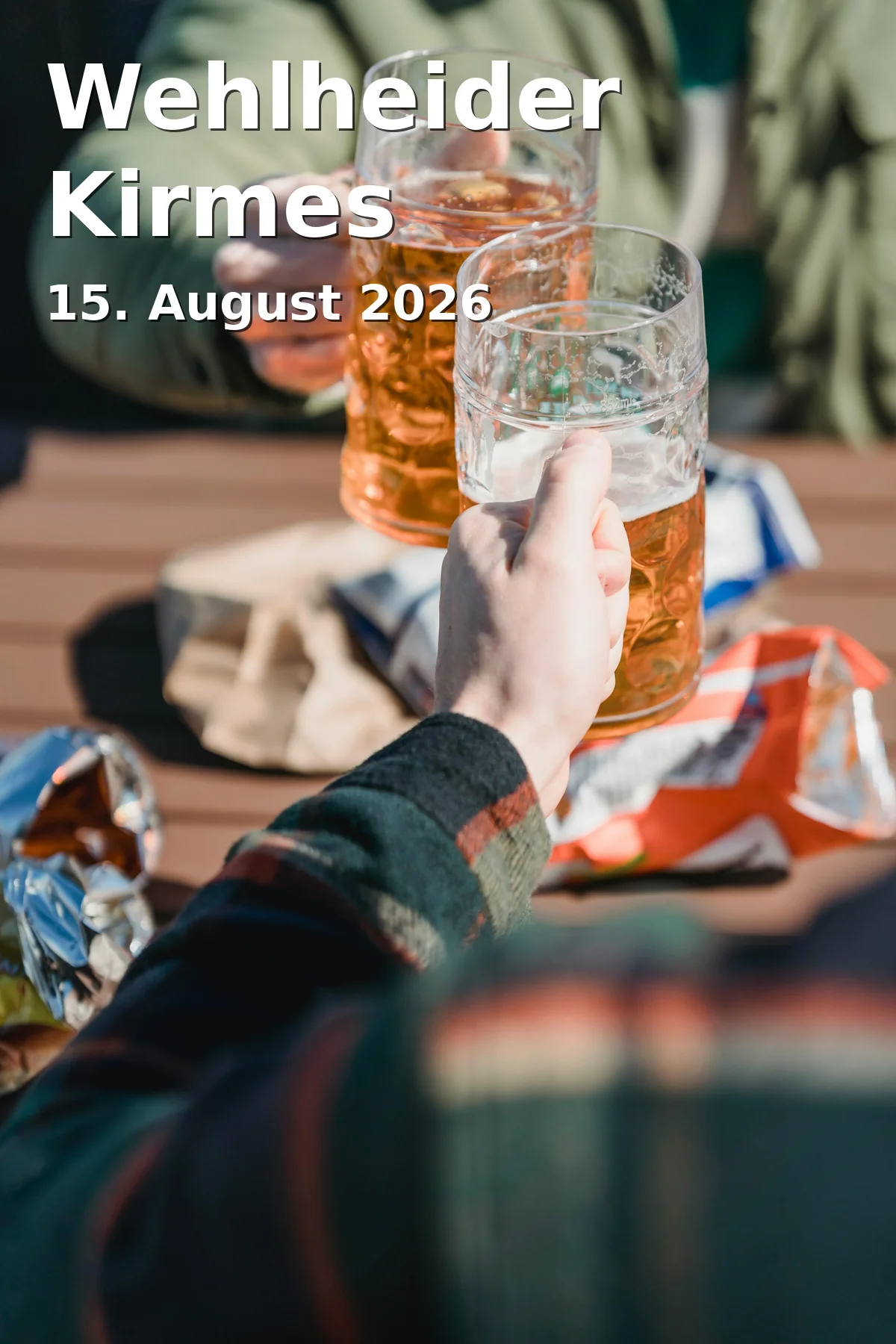
The Wehlheider Kirmes also shows how diverse the use of the square is. The program includes rides and stalls, music, the festive parade through Wehlheiden, and an ecumenical service in the beer garden at Georg-Stock-Platz. This mixture of tradition, entertainment, community, and religious framework gives the place a special social depth. The square is interesting not only for young visitors or for a purely folkloric audience but for very different groups in the neighborhood. This is precisely where its strength lies. It can accommodate the needs of a local festival while also fulfilling the function of an everyday meeting point. Therefore, the city’s explicit mention of a use for neighborhood festivals in connection with the redesign fits very well with the existing practice. The planned square center of about 700 m² should be able to accommodate both temporary events and everyday forms of stay. This is urbanistically sensible because existing uses are not displaced but spatially improved. The Georg-Stock-Platz thus remains a place where local tradition and modern urban development support each other. ([kassel.de](https://www.kassel.de/buerger/sport_und_freizeit/wiederkehrende-veranstaltungen/wehlheider-kirmes.php))
In everyday life, the square also has a quieter but no less important function. It is located in an area that the city of Kassel describes as a central supply area of the district, with service and retail structures as well as gastronomic offerings in the vicinity. This means: the square is not only a festival site but part of an everyday landscape of pathways and encounters. Those walking through Wehlheiden use it as a passage, as a point of orientation, or as an open space between residential use and neighborhood infrastructure. The planned spatial definition and the new construction on the northern edge are intended to strengthen this function. This creates a square that does not appear lost in everyday life but forms a recognizable center. The significance lies less in spectacular individual buildings than in the interplay of location, uses, pathways, festivals, and neighborhood. The Georg-Stock-Platz is therefore a good example of how a neighborhood square can become a fixed address in the collective memory over the years. Those who come here encounter not just a place but a grown local public. ([kassel.de](https://www.kassel.de/buerger/bauen_und_wohnen/projekte-und-entwicklung/inhaltsseiten/lebendige-zentren/alter-ortskern-wehlheiden.php))
Archaeology, future, and the special character of the place
An additional exciting aspect of Georg-Stock-Platz is the archaeological dimension. The city of Kassel reports that archaeological exploratory cuts were conducted between mid-October and mid-December 2025 as part of the planned development and redesign. These investigations served to verify and further clarify historical structures underground as well as the existing archaeological monument. This makes it clear that the square is not only being planned for the future but also possesses a historical depth that must be carefully examined before construction interventions. The official text states that the investigations are part of the preparatory steps for the urban enhancement of the centrally located square. Particularly relevant is the indication that it was examined whether remains of a former church, including a churchyard from the 15th century, are located in the central area under the planned city square and the construction. Such finds are significant for the perception of the place because they show that under the present urban space, there may be historical layers that expand the image of the square. Georg-Stock-Platz is therefore not only a place of the present but possibly also a place of hidden past. ([kassel.de](https://www.kassel.de/buerger/bauen_und_wohnen/projekte-und-entwicklung/inhaltsseiten/lebendige-zentren/alter-ortskern-wehlheiden.php?utm_source=openai))
For the future of the square, this connection between history and planning is crucial. The city describes the place as a future multifunctional city square with high quality of stay, which should be usable across generations and provide space for neighborhood events. The planning documents speak of an urban mix, of social, cultural, and service offerings, as well as improved connections to green spaces and movement areas. This means: the development is not just an infrastructure project but an attempt to functionally and atmospherically reorganize a central square of the neighborhood. Georg-Stock-Platz is to be more clearly defined, more usable, and more climate-resilient. The planned green islands, the greening rate, and the priority for pedestrian and bicycle traffic show that urban development is oriented towards contemporary urban planning goals. At the same time, the role as a fair and neighborhood square remains. This balance of continuity and renewal makes the place particularly interesting. Those who look at Georg-Stock-Platz today see a square in transition: with historical anchoring, strong local identity, clear usage patterns, and a concrete perspective for a new urban center in Wehlheiden. ([kassel.de](https://www.kassel.de/buerger/bauen_und_wohnen/projekte-und-entwicklung/inhaltsseiten/lebendige-zentren/alter-ortskern-wehlheiden.php))
For visitors looking for a clear image, Georg-Stock-Platz can therefore be summarized as follows: It is Wehlheiden's public meeting point with festival tradition, development dynamics, and everyday neighborhood function. It connects history and planning, local identity and urban modernization, pedestrian and bicycle paths with an important role for events. Precisely because the place can be understood not as a finished backdrop but as a living urban building block, it possesses a special character. It is neither just a traffic junction nor just a festival square. It is a square where a neighborhood organizes, remembers, celebrates, and develops further. Therefore, those interested in Kassel-Wehlheiden will find one of the most distinctive places in the district here. ([kassel.de](https://www.kassel.de/buerger/bauen_und_wohnen/projekte-und-entwicklung/inhaltsseiten/lebendige-zentren/alter-ortskern-wehlheiden.php))
Sources:
Mehr anzeigenWeniger anzeigen
Georg-Stock-Platz | Wehlheiden & Kirmes
The Georg-Stock-Platz in Kassel is much more than an open space in the district of Wehlheiden. It is located in the old town center of the neighborhood, characterized by several important streets and pathways, and is at the same time the focus of an urban development process that the city of Kassel has been actively pursuing for some time. The official planning describes the square as a future multifunctional center for Wehlheiden, which aims to connect quality of stay, new uses, green spaces, and urban spatial definition. This is not just about a more beautiful square design, but about the role of the place in the daily life of the neighborhood: as a meeting point, as an event space, as a movement area for pedestrian and bicycle traffic, and as an identity-forming center for Wehlheiden. According to the city of Kassel, the competition area covers about one hectare and includes not only the square itself but also adjacent areas such as Kirchweg and spaces north of the square. The current planning documents also mention a central square area of about 700 square meters, which is intended to be usable both in everyday life and for temporary events. ([kassel.de](https://www.kassel.de/buerger/bauen_und_wohnen/projekte-und-entwicklung/inhaltsseiten/lebendige-zentren/alter-ortskern-wehlheiden.php))
Location and urban classification in the old town center of Wehlheiden
To understand the Georg-Stock-Platz, one should always see it in connection with Wehlheiden. The district has long been one of the established residential and mixed neighborhoods of Kassel and has a rural origin, which is still reflected in the urban landscape and public spaces, according to the city administration. The Georg-Stock-Platz is not located on the edge but in the middle of the old town center. In the justification for the development plan, it states that the square area rises as a free space plateau above the intersection of Kohlenstraße and Schönfelder Straße. The area is accessed via Kirchweg in the west, Kohlenstraße and Tischbeinstraße in the south, and Schönfelder Straße in the east. Between Kirchweg and Schönfelder Straße runs Buddengasse, which is open for pedestrian and bicycle traffic. This location makes the square a hub for small and larger everyday movements: those who are walking, those who come by bicycle, or those who reach the neighborhood center from the surrounding streets do not perceive the square as an isolated island but as a permeable part of the district. The surrounding buildings also shape this impression. The planning describes the environment as an urban mixed-use area, where residential uses, services, and other functions come together. Thus, the Georg-Stock-Platz is not just a geographical point but a transitional space between living, movement, and public life. This mixture is particularly important because it explains why the square is so strongly perceived in the neighborhood and why its redesign means more for Wehlheiden than just a cosmetic improvement. It is intended to receive a spatial center that consolidates existing pathways and makes the neighborhood clearer to read. ([kassel.de](https://www.kassel.de/buerger/bauen_und_wohnen/projekte-und-entwicklung/inhaltsseiten/lebendige-zentren/alter-ortskern-wehlheiden.php))
For the classification of the square, the official description of the district is also helpful. The city of Kassel points out that Wehlheiden has historically been closely intertwined with the core city while still maintaining its own identity. The lively places in the neighborhood include Wehlheider Platz, Stockplatz, and the Georg-Stock-Platz. This triad shows that the district has several public focal points that fulfill different functions. While Wehlheider Platz is perceived more as a neighborhood center with a weekly market, Georg-Stock-Platz represents the fair, spatial center, and prospective development. This functional division is urbanistically interesting because it does not reduce Wehlheiden to a single meeting point but works with several public spaces that complement each other. The Georg-Stock-Platz serves as the interface between quieter everyday use, social encounters, and significant event moments. The fact that the city itself describes the square as a future center with quality of stay for all generations emphasizes this significance. Thus, a seemingly simple open space becomes a place of high urban relevance, bringing together the location, history, and future of an entire neighborhood. ([kassel.de](https://www.kassel.de/buerger/bauen_und_wohnen/stadtteile/wehlheiden/wehlheiden.php))
History, naming, and role in the neighborhood
The name Georg-Stock-Platz refers to Georg Stock, who was mayor of Wehlheiden from 1882 to 1896. The University of Kassel explains in its audio walk about Wehlheiden that the square was named after him. This naming is more than a formal honor. It connects the present urban space with the municipal history of the district and reminds us that Wehlheiden was an independent municipality with its own administration before its incorporation. Especially in a neighborhood that still strongly lives off its local identity, such a name carries weight. It anchors the square in the memory of the neighborhood and makes it a symbol of the historical development from an independent village and community structure to the present-day Kassel district. The city of Kassel also mentions in connection with Wehlheiden that the urban landscape is shaped by different phases of construction development and includes buildings from the 20th century alongside older structures. In this context, the Georg-Stock-Platz fits as a public space that does not obscure the different temporal layers of the neighborhood but visibly brings them together. ([uni-kassel.de](https://www.uni-kassel.de/fb06/institute/urbane-entwicklungen/fachgebiete/stadterneuerung-und-planungstheorie/kassel/audiowalks/wehlheiden.html))
The square also plays a special historical role for the Wehlheider Kirmes. The city of Kassel explicitly states that the Wehlheider Kirmes regained its true character as a village festival in 1966 when it was celebrated at Georg-Stock-Platz. Since that time, the square has been the center of events. This statement is important because it shows how strongly public spaces can be charged by recurring rituals. A square can exist urbanistically, but it only gains significant emotional meaning through regular collective use. That is exactly what has happened here. The fair gives the square a clear profile every year, connects local clubs, neighborhoods, and visitors from other districts, and creates a form of community that extends beyond the neighborhood. The city also describes that the Wehlheider Kirmes was long organized by the Wehlheiden Gymnastics Club and is now supported by its own association. In this interplay of tradition and community spirit, the square becomes a place where local history is not only told but actually lived. Thus, the Georg-Stock-Platz is historically significant not as a monument but as a stage for urban everyday life and recurring neighborhood culture. ([kassel.de](https://www.kassel.de/buerger/sport_und_freizeit/wiederkehrende-veranstaltungen/wehlheider-kirmes.php))
The official neighborhood page also provides clues about how the square is anchored in local life. It states that a weekly market takes place at Wehlheider Platz on Friday mornings, a flea market at Stockplatz on Saturdays, and once a year the traditional Wehlheider Kirmes, which attracts many people from other districts and the surrounding area. Even if the wording there does not repeat the full written name every time, it clearly shows that the square is part of a network of public uses. The special thing about Georg-Stock-Platz is therefore not just its naming but its permanent integration into the local social structure. It serves as a meeting point, event venue, and identification area. That the city is rethinking the square today is therefore logical: where collective use has developed over decades, a spatial quality is needed that meets this demand. History is not preserved here but spatially further developed. ([kassel.de](https://www.kassel.de/buerger/bauen_und_wohnen/stadtteile/wehlheiden/wehlheiden.php?utm_source=openai))
Redesign and development plan: What the city of Kassel plans for Georg-Stock-Platz
The currently most important development at Georg-Stock-Platz is the planned redesign by the city of Kassel. The official project page for the old town center Wehlheiden states that the square will be upgraded; the urban planning and open space planning realization competition has already produced a result. The winning design combines construction, green space design, and the preservation of existing trees. A row of buildings with different uses and a new city square are planned. The goal is to create a real center for Wehlheiden that offers quality of stay for all generations while also allowing space for neighborhood festivals. This is important because the planning does not reduce the square to a single function. It should not only look nice but also function as usable urban space. This means: more clear edges, better spatial definition, more quality of stay, more diversity of use, and a structure that meaningfully integrates the square into everyday life. The city names Foundation 5+ landscape architects together with the office ebene 4 from Kassel as the winners of the competition. Thus, the planning is not abstract but has already been transferred into a concrete urban planning process. ([kassel.de](https://www.kassel.de/buerger/bauen_und_wohnen/projekte-und-entwicklung/inhaltsseiten/lebendige-zentren/alter-ortskern-wehlheiden.php))
The justification for the development plan complements this perspective with concrete numbers and objectives. It mentions around 50 residential units that are intended to contribute to housing supply in Kassel as an inner development measure. Additionally, areas adjacent to the square in the north are to be developed with residential, retail, and service uses. The plan speaks of an urban mix of residential and non-residential uses, which can include social, cultural, and commercial functions. Particularly relevant is that the new construction should define the square edge and strengthen the public space. The new urban Georg-Stock-Platz is to span from the facades on Kirchweg to Schönfelder Straße and receive new addresses and functions through construction on the northern square edge. In addition, a public pathway connection between the urban square and the northern green spaces with playgrounds and sports fields is planned. This makes it clear that the planning does not consider the square in isolation but as part of a larger spatial system of living, green, movement, and stay. The proportions are also defined: a contiguous area of about 700 m² is to be created in the center of the square, which should be usable for both temporary events and everyday use. ([ratsinfo.kassel.de](https://ratsinfo.kassel.de/sdnet4/sdnetrim/UGhVM0hpd2NXNFdFcExjZT76e_qlUxFJbGaQJCDfXpcksAjGoGtDXl0IOYWnJM7G/101.19.1462_Anlage_3-_Begruendung_zum_Planentwurf.pdf))
Another important aspect is the open space planning approach. The documents provide for individual greened islands that serve both as planting sites for climate-resilient trees and as retention areas. At the same time, they are to include publicly usable stay offers. The planning stipulates that at least 30 percent of the square areas are to be greened. This makes it clear that Georg-Stock-Platz is not intended as a sealed traffic junction but as a climate-adapted and spatially high-quality place to stay. Also relevant is the statement that above-ground parking spaces in the urban area are not permitted; parking should generally be organized in underground garages or parking decks. This regulation shows how strongly the planning favors pedestrian and bicycle traffic and aims to relieve the public space from stationary traffic. The square should not be dominated by cars but should receive a clear priority for stay, movement, and use. For a neighborhood center, this is a significant step because it will change the character of the place in the long term. Therefore, those searching for Georg-Stock-Platz today will find a space in transition: historically significant, functionally important, and planning-oriented towards a new urban quality. ([ratsinfo.kassel.de](https://ratsinfo.kassel.de/sdnet4/sdnetrim/UGhVM0hpd2NXNFdFcExjZT76e_qlUxFJbGaQJCDfXpcksAjGoGtDXl0IOYWnJM7G/101.19.1462_Anlage_3-_Begruendung_zum_Planentwurf.pdf?utm_source=openai))
Access, pedestrian and bicycle traffic, and parking at Georg-Stock-Platz
The accessibility of Georg-Stock-Platz is a central issue because the square is not only a destination for events but also an everyday movement space. The official planning documents name Schönfelder Straße and Kohlenstraße/Tischbeinstraße as the main access roads. Additionally, Kirchweg is designated as an important connection in the neighborhood. Buddengasse is open for pedestrian and bicycle traffic, and the planning emphasizes a public pathway connection in the north-south direction that connects Georg-Stock-Platz with Wilhelmshöher Allee. This means: the square is integrated into a network of easily understandable pathways, not in an isolated dead-end location. The city administration also emphasizes that access for pedestrian and bicycle traffic occurs via the adjacent public traffic areas of Kirchweg, Kohlenstraße, and Schönfelder Straße. For visitors, this is particularly practical because the square can be accessed from multiple directions and does not rely on a single access point. Furthermore, the planning mentions barrier-free accessibility via Kirchweg and Kohlenstraße. This makes the place better readable and usable for people with limited mobility. ([ratsinfo.kassel.de](https://ratsinfo.kassel.de/sdnet4/sdnetrim/UGhVM0hpd2NXNFdFcExjZT76e_qlUxFJbGaQJCDfXpcksAjGoGtDXl0IOYWnJM7G/101.19.1462_Anlage_3-_Begruendung_zum_Planentwurf.pdf))
For public transport, it is particularly relevant that the justification for the development plan describes the bus stop Kohlenstraße as a very good transport connection to the urban transport network. The tram and bus stop Kirchweg at Wilhelmshöher Allee is about 350 meters away, according to the planning documents. Thus, the location does not have a classic city center location but is still well connected to the bus and tram network. This makes it accessible for both everyday life and larger events. Those traveling by bicycle will find four bike racks at Georg-Stock-Platz, according to the city's bike rack overview. While this is not a large bike station, it is a clear indication that the place is considered in the urban bike network. The planning texts also explicitly mention that Buddengasse will remain as a pedestrian and bicycle path connection. Together with the planned widening of sidewalks and the review of parking options along the main traffic streets, a picture of an urban space emerges that is increasingly oriented towards the needs of pedestrians and cyclists. ([ratsinfo.kassel.de](https://ratsinfo.kassel.de/sdnet4/sdnetrim/UGhVM0hpd2NXNFdFcExjZT76e_qlUxFJbGaQJCDfXpcksAjGoGtDXl0IOYWnJM7G/101.19.1462_Anlage_3-_Begruendung_zum_Planentwurf.pdf))
When it comes to parking, caution is important because Georg-Stock-Platz is not a classic event arena with clearly designated large parking lots. For the Wehlheider Kirmes, the city of Kassel explicitly points out that there are no stopping zones within the event areas and in adjacent streets, and vehicles can be towed in case of violations. Therefore, the city recommends using public transport. For everyday life, this means primarily: those visiting the square should not rely on spontaneous parking options immediately at the edge of the square but should check the surroundings and the respective event situation. The planning even provides for extending the square area via Kirchweg and abolishing existing parking spaces in this area while maintaining traffic for Kirchweg. This direction makes it clear that the development of the square aims for less above-ground car traffic and more quality in public space in the long term. Therefore, the practical advice for visitors is simple: arrive on foot, by bike, or by bus and tram, especially for larger events. This way, the square is not only reached but also used in the form for which it is being developed. ([kassel.de](https://www.kassel.de/buerger/sport_und_freizeit/wiederkehrende-veranstaltungen/wehlheider-kirmes.php))
Wehlheider Kirmes, flea market, and other everyday uses
The Georg-Stock-Platz has a dual significance in the everyday life of the neighborhood and in the event calendar. On one hand, it is a normal public space; on the other hand, it becomes a stage for special occasions. The most important event is the Wehlheider Kirmes. The city of Kassel describes very specifically that the fair has been celebrated at Georg-Stock-Platz since 1966 and that the square has been the center of events since then. The official program includes the fair opening, stage performances, and other program points. This makes it clear that the square is not just a backdrop but an active part of the festival activities. The event character is therefore not a byproduct but part of its identity. At the same time, the neighborhood page of Kassel shows that Wehlheiden also lives from public markets and events in everyday life. It refers to the weekly market at Wehlheider Platz, the flea market at Stockplatz, and the traditional Wehlheider Kirmes. Together, these elements create a neighborhood where public space is regularly used, and social encounters play a strong role. This is particularly important for people who only know the square from the outside: Georg-Stock-Platz is not an empty residual space but a repeatedly activated neighborhood place. ([kassel.de](https://www.kassel.de/buerger/sport_und_freizeit/wiederkehrende-veranstaltungen/wehlheider-kirmes.php))
The Wehlheider Kirmes also shows how diverse the use of the square is. The program includes rides and stalls, music, the festive parade through Wehlheiden, and an ecumenical service in the beer garden at Georg-Stock-Platz. This mixture of tradition, entertainment, community, and religious framework gives the place a special social depth. The square is interesting not only for young visitors or for a purely folkloric audience but for very different groups in the neighborhood. This is precisely where its strength lies. It can accommodate the needs of a local festival while also fulfilling the function of an everyday meeting point. Therefore, the city’s explicit mention of a use for neighborhood festivals in connection with the redesign fits very well with the existing practice. The planned square center of about 700 m² should be able to accommodate both temporary events and everyday forms of stay. This is urbanistically sensible because existing uses are not displaced but spatially improved. The Georg-Stock-Platz thus remains a place where local tradition and modern urban development support each other. ([kassel.de](https://www.kassel.de/buerger/sport_und_freizeit/wiederkehrende-veranstaltungen/wehlheider-kirmes.php))
In everyday life, the square also has a quieter but no less important function. It is located in an area that the city of Kassel describes as a central supply area of the district, with service and retail structures as well as gastronomic offerings in the vicinity. This means: the square is not only a festival site but part of an everyday landscape of pathways and encounters. Those walking through Wehlheiden use it as a passage, as a point of orientation, or as an open space between residential use and neighborhood infrastructure. The planned spatial definition and the new construction on the northern edge are intended to strengthen this function. This creates a square that does not appear lost in everyday life but forms a recognizable center. The significance lies less in spectacular individual buildings than in the interplay of location, uses, pathways, festivals, and neighborhood. The Georg-Stock-Platz is therefore a good example of how a neighborhood square can become a fixed address in the collective memory over the years. Those who come here encounter not just a place but a grown local public. ([kassel.de](https://www.kassel.de/buerger/bauen_und_wohnen/projekte-und-entwicklung/inhaltsseiten/lebendige-zentren/alter-ortskern-wehlheiden.php))
Archaeology, future, and the special character of the place
An additional exciting aspect of Georg-Stock-Platz is the archaeological dimension. The city of Kassel reports that archaeological exploratory cuts were conducted between mid-October and mid-December 2025 as part of the planned development and redesign. These investigations served to verify and further clarify historical structures underground as well as the existing archaeological monument. This makes it clear that the square is not only being planned for the future but also possesses a historical depth that must be carefully examined before construction interventions. The official text states that the investigations are part of the preparatory steps for the urban enhancement of the centrally located square. Particularly relevant is the indication that it was examined whether remains of a former church, including a churchyard from the 15th century, are located in the central area under the planned city square and the construction. Such finds are significant for the perception of the place because they show that under the present urban space, there may be historical layers that expand the image of the square. Georg-Stock-Platz is therefore not only a place of the present but possibly also a place of hidden past. ([kassel.de](https://www.kassel.de/buerger/bauen_und_wohnen/projekte-und-entwicklung/inhaltsseiten/lebendige-zentren/alter-ortskern-wehlheiden.php?utm_source=openai))
For the future of the square, this connection between history and planning is crucial. The city describes the place as a future multifunctional city square with high quality of stay, which should be usable across generations and provide space for neighborhood events. The planning documents speak of an urban mix, of social, cultural, and service offerings, as well as improved connections to green spaces and movement areas. This means: the development is not just an infrastructure project but an attempt to functionally and atmospherically reorganize a central square of the neighborhood. Georg-Stock-Platz is to be more clearly defined, more usable, and more climate-resilient. The planned green islands, the greening rate, and the priority for pedestrian and bicycle traffic show that urban development is oriented towards contemporary urban planning goals. At the same time, the role as a fair and neighborhood square remains. This balance of continuity and renewal makes the place particularly interesting. Those who look at Georg-Stock-Platz today see a square in transition: with historical anchoring, strong local identity, clear usage patterns, and a concrete perspective for a new urban center in Wehlheiden. ([kassel.de](https://www.kassel.de/buerger/bauen_und_wohnen/projekte-und-entwicklung/inhaltsseiten/lebendige-zentren/alter-ortskern-wehlheiden.php))
For visitors looking for a clear image, Georg-Stock-Platz can therefore be summarized as follows: It is Wehlheiden's public meeting point with festival tradition, development dynamics, and everyday neighborhood function. It connects history and planning, local identity and urban modernization, pedestrian and bicycle paths with an important role for events. Precisely because the place can be understood not as a finished backdrop but as a living urban building block, it possesses a special character. It is neither just a traffic junction nor just a festival square. It is a square where a neighborhood organizes, remembers, celebrates, and develops further. Therefore, those interested in Kassel-Wehlheiden will find one of the most distinctive places in the district here. ([kassel.de](https://www.kassel.de/buerger/bauen_und_wohnen/projekte-und-entwicklung/inhaltsseiten/lebendige-zentren/alter-ortskern-wehlheiden.php))
Sources:
Georg-Stock-Platz | Wehlheiden & Kirmes
The Georg-Stock-Platz in Kassel is much more than an open space in the district of Wehlheiden. It is located in the old town center of the neighborhood, characterized by several important streets and pathways, and is at the same time the focus of an urban development process that the city of Kassel has been actively pursuing for some time. The official planning describes the square as a future multifunctional center for Wehlheiden, which aims to connect quality of stay, new uses, green spaces, and urban spatial definition. This is not just about a more beautiful square design, but about the role of the place in the daily life of the neighborhood: as a meeting point, as an event space, as a movement area for pedestrian and bicycle traffic, and as an identity-forming center for Wehlheiden. According to the city of Kassel, the competition area covers about one hectare and includes not only the square itself but also adjacent areas such as Kirchweg and spaces north of the square. The current planning documents also mention a central square area of about 700 square meters, which is intended to be usable both in everyday life and for temporary events. ([kassel.de](https://www.kassel.de/buerger/bauen_und_wohnen/projekte-und-entwicklung/inhaltsseiten/lebendige-zentren/alter-ortskern-wehlheiden.php))
Location and urban classification in the old town center of Wehlheiden
To understand the Georg-Stock-Platz, one should always see it in connection with Wehlheiden. The district has long been one of the established residential and mixed neighborhoods of Kassel and has a rural origin, which is still reflected in the urban landscape and public spaces, according to the city administration. The Georg-Stock-Platz is not located on the edge but in the middle of the old town center. In the justification for the development plan, it states that the square area rises as a free space plateau above the intersection of Kohlenstraße and Schönfelder Straße. The area is accessed via Kirchweg in the west, Kohlenstraße and Tischbeinstraße in the south, and Schönfelder Straße in the east. Between Kirchweg and Schönfelder Straße runs Buddengasse, which is open for pedestrian and bicycle traffic. This location makes the square a hub for small and larger everyday movements: those who are walking, those who come by bicycle, or those who reach the neighborhood center from the surrounding streets do not perceive the square as an isolated island but as a permeable part of the district. The surrounding buildings also shape this impression. The planning describes the environment as an urban mixed-use area, where residential uses, services, and other functions come together. Thus, the Georg-Stock-Platz is not just a geographical point but a transitional space between living, movement, and public life. This mixture is particularly important because it explains why the square is so strongly perceived in the neighborhood and why its redesign means more for Wehlheiden than just a cosmetic improvement. It is intended to receive a spatial center that consolidates existing pathways and makes the neighborhood clearer to read. ([kassel.de](https://www.kassel.de/buerger/bauen_und_wohnen/projekte-und-entwicklung/inhaltsseiten/lebendige-zentren/alter-ortskern-wehlheiden.php))
For the classification of the square, the official description of the district is also helpful. The city of Kassel points out that Wehlheiden has historically been closely intertwined with the core city while still maintaining its own identity. The lively places in the neighborhood include Wehlheider Platz, Stockplatz, and the Georg-Stock-Platz. This triad shows that the district has several public focal points that fulfill different functions. While Wehlheider Platz is perceived more as a neighborhood center with a weekly market, Georg-Stock-Platz represents the fair, spatial center, and prospective development. This functional division is urbanistically interesting because it does not reduce Wehlheiden to a single meeting point but works with several public spaces that complement each other. The Georg-Stock-Platz serves as the interface between quieter everyday use, social encounters, and significant event moments. The fact that the city itself describes the square as a future center with quality of stay for all generations emphasizes this significance. Thus, a seemingly simple open space becomes a place of high urban relevance, bringing together the location, history, and future of an entire neighborhood. ([kassel.de](https://www.kassel.de/buerger/bauen_und_wohnen/stadtteile/wehlheiden/wehlheiden.php))
History, naming, and role in the neighborhood
The name Georg-Stock-Platz refers to Georg Stock, who was mayor of Wehlheiden from 1882 to 1896. The University of Kassel explains in its audio walk about Wehlheiden that the square was named after him. This naming is more than a formal honor. It connects the present urban space with the municipal history of the district and reminds us that Wehlheiden was an independent municipality with its own administration before its incorporation. Especially in a neighborhood that still strongly lives off its local identity, such a name carries weight. It anchors the square in the memory of the neighborhood and makes it a symbol of the historical development from an independent village and community structure to the present-day Kassel district. The city of Kassel also mentions in connection with Wehlheiden that the urban landscape is shaped by different phases of construction development and includes buildings from the 20th century alongside older structures. In this context, the Georg-Stock-Platz fits as a public space that does not obscure the different temporal layers of the neighborhood but visibly brings them together. ([uni-kassel.de](https://www.uni-kassel.de/fb06/institute/urbane-entwicklungen/fachgebiete/stadterneuerung-und-planungstheorie/kassel/audiowalks/wehlheiden.html))
The square also plays a special historical role for the Wehlheider Kirmes. The city of Kassel explicitly states that the Wehlheider Kirmes regained its true character as a village festival in 1966 when it was celebrated at Georg-Stock-Platz. Since that time, the square has been the center of events. This statement is important because it shows how strongly public spaces can be charged by recurring rituals. A square can exist urbanistically, but it only gains significant emotional meaning through regular collective use. That is exactly what has happened here. The fair gives the square a clear profile every year, connects local clubs, neighborhoods, and visitors from other districts, and creates a form of community that extends beyond the neighborhood. The city also describes that the Wehlheider Kirmes was long organized by the Wehlheiden Gymnastics Club and is now supported by its own association. In this interplay of tradition and community spirit, the square becomes a place where local history is not only told but actually lived. Thus, the Georg-Stock-Platz is historically significant not as a monument but as a stage for urban everyday life and recurring neighborhood culture. ([kassel.de](https://www.kassel.de/buerger/sport_und_freizeit/wiederkehrende-veranstaltungen/wehlheider-kirmes.php))
The official neighborhood page also provides clues about how the square is anchored in local life. It states that a weekly market takes place at Wehlheider Platz on Friday mornings, a flea market at Stockplatz on Saturdays, and once a year the traditional Wehlheider Kirmes, which attracts many people from other districts and the surrounding area. Even if the wording there does not repeat the full written name every time, it clearly shows that the square is part of a network of public uses. The special thing about Georg-Stock-Platz is therefore not just its naming but its permanent integration into the local social structure. It serves as a meeting point, event venue, and identification area. That the city is rethinking the square today is therefore logical: where collective use has developed over decades, a spatial quality is needed that meets this demand. History is not preserved here but spatially further developed. ([kassel.de](https://www.kassel.de/buerger/bauen_und_wohnen/stadtteile/wehlheiden/wehlheiden.php?utm_source=openai))
Redesign and development plan: What the city of Kassel plans for Georg-Stock-Platz
The currently most important development at Georg-Stock-Platz is the planned redesign by the city of Kassel. The official project page for the old town center Wehlheiden states that the square will be upgraded; the urban planning and open space planning realization competition has already produced a result. The winning design combines construction, green space design, and the preservation of existing trees. A row of buildings with different uses and a new city square are planned. The goal is to create a real center for Wehlheiden that offers quality of stay for all generations while also allowing space for neighborhood festivals. This is important because the planning does not reduce the square to a single function. It should not only look nice but also function as usable urban space. This means: more clear edges, better spatial definition, more quality of stay, more diversity of use, and a structure that meaningfully integrates the square into everyday life. The city names Foundation 5+ landscape architects together with the office ebene 4 from Kassel as the winners of the competition. Thus, the planning is not abstract but has already been transferred into a concrete urban planning process. ([kassel.de](https://www.kassel.de/buerger/bauen_und_wohnen/projekte-und-entwicklung/inhaltsseiten/lebendige-zentren/alter-ortskern-wehlheiden.php))
The justification for the development plan complements this perspective with concrete numbers and objectives. It mentions around 50 residential units that are intended to contribute to housing supply in Kassel as an inner development measure. Additionally, areas adjacent to the square in the north are to be developed with residential, retail, and service uses. The plan speaks of an urban mix of residential and non-residential uses, which can include social, cultural, and commercial functions. Particularly relevant is that the new construction should define the square edge and strengthen the public space. The new urban Georg-Stock-Platz is to span from the facades on Kirchweg to Schönfelder Straße and receive new addresses and functions through construction on the northern square edge. In addition, a public pathway connection between the urban square and the northern green spaces with playgrounds and sports fields is planned. This makes it clear that the planning does not consider the square in isolation but as part of a larger spatial system of living, green, movement, and stay. The proportions are also defined: a contiguous area of about 700 m² is to be created in the center of the square, which should be usable for both temporary events and everyday use. ([ratsinfo.kassel.de](https://ratsinfo.kassel.de/sdnet4/sdnetrim/UGhVM0hpd2NXNFdFcExjZT76e_qlUxFJbGaQJCDfXpcksAjGoGtDXl0IOYWnJM7G/101.19.1462_Anlage_3-_Begruendung_zum_Planentwurf.pdf))
Another important aspect is the open space planning approach. The documents provide for individual greened islands that serve both as planting sites for climate-resilient trees and as retention areas. At the same time, they are to include publicly usable stay offers. The planning stipulates that at least 30 percent of the square areas are to be greened. This makes it clear that Georg-Stock-Platz is not intended as a sealed traffic junction but as a climate-adapted and spatially high-quality place to stay. Also relevant is the statement that above-ground parking spaces in the urban area are not permitted; parking should generally be organized in underground garages or parking decks. This regulation shows how strongly the planning favors pedestrian and bicycle traffic and aims to relieve the public space from stationary traffic. The square should not be dominated by cars but should receive a clear priority for stay, movement, and use. For a neighborhood center, this is a significant step because it will change the character of the place in the long term. Therefore, those searching for Georg-Stock-Platz today will find a space in transition: historically significant, functionally important, and planning-oriented towards a new urban quality. ([ratsinfo.kassel.de](https://ratsinfo.kassel.de/sdnet4/sdnetrim/UGhVM0hpd2NXNFdFcExjZT76e_qlUxFJbGaQJCDfXpcksAjGoGtDXl0IOYWnJM7G/101.19.1462_Anlage_3-_Begruendung_zum_Planentwurf.pdf?utm_source=openai))
Access, pedestrian and bicycle traffic, and parking at Georg-Stock-Platz
The accessibility of Georg-Stock-Platz is a central issue because the square is not only a destination for events but also an everyday movement space. The official planning documents name Schönfelder Straße and Kohlenstraße/Tischbeinstraße as the main access roads. Additionally, Kirchweg is designated as an important connection in the neighborhood. Buddengasse is open for pedestrian and bicycle traffic, and the planning emphasizes a public pathway connection in the north-south direction that connects Georg-Stock-Platz with Wilhelmshöher Allee. This means: the square is integrated into a network of easily understandable pathways, not in an isolated dead-end location. The city administration also emphasizes that access for pedestrian and bicycle traffic occurs via the adjacent public traffic areas of Kirchweg, Kohlenstraße, and Schönfelder Straße. For visitors, this is particularly practical because the square can be accessed from multiple directions and does not rely on a single access point. Furthermore, the planning mentions barrier-free accessibility via Kirchweg and Kohlenstraße. This makes the place better readable and usable for people with limited mobility. ([ratsinfo.kassel.de](https://ratsinfo.kassel.de/sdnet4/sdnetrim/UGhVM0hpd2NXNFdFcExjZT76e_qlUxFJbGaQJCDfXpcksAjGoGtDXl0IOYWnJM7G/101.19.1462_Anlage_3-_Begruendung_zum_Planentwurf.pdf))
For public transport, it is particularly relevant that the justification for the development plan describes the bus stop Kohlenstraße as a very good transport connection to the urban transport network. The tram and bus stop Kirchweg at Wilhelmshöher Allee is about 350 meters away, according to the planning documents. Thus, the location does not have a classic city center location but is still well connected to the bus and tram network. This makes it accessible for both everyday life and larger events. Those traveling by bicycle will find four bike racks at Georg-Stock-Platz, according to the city's bike rack overview. While this is not a large bike station, it is a clear indication that the place is considered in the urban bike network. The planning texts also explicitly mention that Buddengasse will remain as a pedestrian and bicycle path connection. Together with the planned widening of sidewalks and the review of parking options along the main traffic streets, a picture of an urban space emerges that is increasingly oriented towards the needs of pedestrians and cyclists. ([ratsinfo.kassel.de](https://ratsinfo.kassel.de/sdnet4/sdnetrim/UGhVM0hpd2NXNFdFcExjZT76e_qlUxFJbGaQJCDfXpcksAjGoGtDXl0IOYWnJM7G/101.19.1462_Anlage_3-_Begruendung_zum_Planentwurf.pdf))
When it comes to parking, caution is important because Georg-Stock-Platz is not a classic event arena with clearly designated large parking lots. For the Wehlheider Kirmes, the city of Kassel explicitly points out that there are no stopping zones within the event areas and in adjacent streets, and vehicles can be towed in case of violations. Therefore, the city recommends using public transport. For everyday life, this means primarily: those visiting the square should not rely on spontaneous parking options immediately at the edge of the square but should check the surroundings and the respective event situation. The planning even provides for extending the square area via Kirchweg and abolishing existing parking spaces in this area while maintaining traffic for Kirchweg. This direction makes it clear that the development of the square aims for less above-ground car traffic and more quality in public space in the long term. Therefore, the practical advice for visitors is simple: arrive on foot, by bike, or by bus and tram, especially for larger events. This way, the square is not only reached but also used in the form for which it is being developed. ([kassel.de](https://www.kassel.de/buerger/sport_und_freizeit/wiederkehrende-veranstaltungen/wehlheider-kirmes.php))
Wehlheider Kirmes, flea market, and other everyday uses
The Georg-Stock-Platz has a dual significance in the everyday life of the neighborhood and in the event calendar. On one hand, it is a normal public space; on the other hand, it becomes a stage for special occasions. The most important event is the Wehlheider Kirmes. The city of Kassel describes very specifically that the fair has been celebrated at Georg-Stock-Platz since 1966 and that the square has been the center of events since then. The official program includes the fair opening, stage performances, and other program points. This makes it clear that the square is not just a backdrop but an active part of the festival activities. The event character is therefore not a byproduct but part of its identity. At the same time, the neighborhood page of Kassel shows that Wehlheiden also lives from public markets and events in everyday life. It refers to the weekly market at Wehlheider Platz, the flea market at Stockplatz, and the traditional Wehlheider Kirmes. Together, these elements create a neighborhood where public space is regularly used, and social encounters play a strong role. This is particularly important for people who only know the square from the outside: Georg-Stock-Platz is not an empty residual space but a repeatedly activated neighborhood place. ([kassel.de](https://www.kassel.de/buerger/sport_und_freizeit/wiederkehrende-veranstaltungen/wehlheider-kirmes.php))
The Wehlheider Kirmes also shows how diverse the use of the square is. The program includes rides and stalls, music, the festive parade through Wehlheiden, and an ecumenical service in the beer garden at Georg-Stock-Platz. This mixture of tradition, entertainment, community, and religious framework gives the place a special social depth. The square is interesting not only for young visitors or for a purely folkloric audience but for very different groups in the neighborhood. This is precisely where its strength lies. It can accommodate the needs of a local festival while also fulfilling the function of an everyday meeting point. Therefore, the city’s explicit mention of a use for neighborhood festivals in connection with the redesign fits very well with the existing practice. The planned square center of about 700 m² should be able to accommodate both temporary events and everyday forms of stay. This is urbanistically sensible because existing uses are not displaced but spatially improved. The Georg-Stock-Platz thus remains a place where local tradition and modern urban development support each other. ([kassel.de](https://www.kassel.de/buerger/sport_und_freizeit/wiederkehrende-veranstaltungen/wehlheider-kirmes.php))
In everyday life, the square also has a quieter but no less important function. It is located in an area that the city of Kassel describes as a central supply area of the district, with service and retail structures as well as gastronomic offerings in the vicinity. This means: the square is not only a festival site but part of an everyday landscape of pathways and encounters. Those walking through Wehlheiden use it as a passage, as a point of orientation, or as an open space between residential use and neighborhood infrastructure. The planned spatial definition and the new construction on the northern edge are intended to strengthen this function. This creates a square that does not appear lost in everyday life but forms a recognizable center. The significance lies less in spectacular individual buildings than in the interplay of location, uses, pathways, festivals, and neighborhood. The Georg-Stock-Platz is therefore a good example of how a neighborhood square can become a fixed address in the collective memory over the years. Those who come here encounter not just a place but a grown local public. ([kassel.de](https://www.kassel.de/buerger/bauen_und_wohnen/projekte-und-entwicklung/inhaltsseiten/lebendige-zentren/alter-ortskern-wehlheiden.php))
Archaeology, future, and the special character of the place
An additional exciting aspect of Georg-Stock-Platz is the archaeological dimension. The city of Kassel reports that archaeological exploratory cuts were conducted between mid-October and mid-December 2025 as part of the planned development and redesign. These investigations served to verify and further clarify historical structures underground as well as the existing archaeological monument. This makes it clear that the square is not only being planned for the future but also possesses a historical depth that must be carefully examined before construction interventions. The official text states that the investigations are part of the preparatory steps for the urban enhancement of the centrally located square. Particularly relevant is the indication that it was examined whether remains of a former church, including a churchyard from the 15th century, are located in the central area under the planned city square and the construction. Such finds are significant for the perception of the place because they show that under the present urban space, there may be historical layers that expand the image of the square. Georg-Stock-Platz is therefore not only a place of the present but possibly also a place of hidden past. ([kassel.de](https://www.kassel.de/buerger/bauen_und_wohnen/projekte-und-entwicklung/inhaltsseiten/lebendige-zentren/alter-ortskern-wehlheiden.php?utm_source=openai))
For the future of the square, this connection between history and planning is crucial. The city describes the place as a future multifunctional city square with high quality of stay, which should be usable across generations and provide space for neighborhood events. The planning documents speak of an urban mix, of social, cultural, and service offerings, as well as improved connections to green spaces and movement areas. This means: the development is not just an infrastructure project but an attempt to functionally and atmospherically reorganize a central square of the neighborhood. Georg-Stock-Platz is to be more clearly defined, more usable, and more climate-resilient. The planned green islands, the greening rate, and the priority for pedestrian and bicycle traffic show that urban development is oriented towards contemporary urban planning goals. At the same time, the role as a fair and neighborhood square remains. This balance of continuity and renewal makes the place particularly interesting. Those who look at Georg-Stock-Platz today see a square in transition: with historical anchoring, strong local identity, clear usage patterns, and a concrete perspective for a new urban center in Wehlheiden. ([kassel.de](https://www.kassel.de/buerger/bauen_und_wohnen/projekte-und-entwicklung/inhaltsseiten/lebendige-zentren/alter-ortskern-wehlheiden.php))
For visitors looking for a clear image, Georg-Stock-Platz can therefore be summarized as follows: It is Wehlheiden's public meeting point with festival tradition, development dynamics, and everyday neighborhood function. It connects history and planning, local identity and urban modernization, pedestrian and bicycle paths with an important role for events. Precisely because the place can be understood not as a finished backdrop but as a living urban building block, it possesses a special character. It is neither just a traffic junction nor just a festival square. It is a square where a neighborhood organizes, remembers, celebrates, and develops further. Therefore, those interested in Kassel-Wehlheiden will find one of the most distinctive places in the district here. ([kassel.de](https://www.kassel.de/buerger/bauen_und_wohnen/projekte-und-entwicklung/inhaltsseiten/lebendige-zentren/alter-ortskern-wehlheiden.php))
Sources:
Frequently Asked Questions
Reviews
No reviews found