
Kassel
Wolfhager Str. 109, 34127 Kassel, Deutschland
Henschel Museum + Sammlung e.V. | Opening Hours & Directions
The Henschel Museum + Sammlung e.V. in Kassel is not a large, loud exhibition house, but a vibrant place of remembrance for technology, industry, and urban history. Visitors to the museum enter a space where the history of the Henschel family, the Kassel production sites, and the industrial development of Northern Hesse is condensed in a small area. The association sees itself as a guardian of a special heritage and makes the achievements of six generations in economic, cultural, and social activities accessible to the public. The museum was opened in 2004, is located in building R11 on the historic factory site in Rothenditmold, and is organized on a voluntary basis. For visitors, this means a personal, committed atmosphere with a clear focus on authenticity, research, and a culture of remembrance. At the same time, the place is surprisingly practical: there are regular opening hours, free admission days, guided tours on request, free parking, and good connections to public transport. This makes the house suitable for both a spontaneous outing and targeted research into Kassel's industrial history. ([henschel-museum.net](https://www.henschel-museum.net/))
Opening Hours, Admission, and Tours at the Henschel Museum
The official visitor information is deliberately kept simple yet very concrete. The museum is open on the first Saturday and Sunday of each month from 2 PM to 5 PM; additionally, visits by appointment are possible. Guided tours are offered on request for interested parties, groups, and school classes, making the house particularly attractive for thematic excursions and educational visits. Admission is free, but donations are requested. This model fits well with the character of the association, as the museum, collection, and archives are managed exclusively by volunteers. Therefore, those arriving with a fixed schedule should check the appointment page, as it lists the monthly opening days and additional events of the year. For 2026, the official schedule mentions, among other things, International Museum Day and the Kassel Museum Night with special openings or differing notes. This keeps the house visible and connected to the cultural life in Kassel despite its lean structure. This is particularly important for inquiries about opening hours, free admission, and tours: this is not a museum open daily with ticket operations, but an association with clearly regulated visiting hours and personal appointment arrangements. This makes planning easier when one prepares for the visit consciously. ([henschel-museum.net](https://www.henschel-museum.net/pages/besucher-infos.php))
The organizational orientation is also transparent. The contact page points out that the members of the association are only temporarily personally reachable because the work is carried out on a voluntary basis. General inquiries should therefore be made via email, and specific contacts are named for individual archives. This is especially helpful for visitors when it comes to research, group inquiries, or school projects. The character of the house is thus clearly different from that of a classic day museum: The Henschel Museum is a place where operation, research, and mediation come together. Those who make an appointment not only receive a tour of the exhibition but often also an immediate insight into the work of the association. This mixture of personal support, historical depth, and free admission makes the visit very pleasant. For families, associations, technology enthusiasts, and local history friends, this is a great advantage because the house does not rely on mass operations but on exchange. This is also SEO-relevant because many users specifically search for opening hours, tours, admission, and contact. This search intention is precisely fulfilled here. ([henschel-museum.net](https://www.henschel-museum.net/pages/besucher-infos/kontakt.php))
Directions, Parking, and Location on the Historic Henschel Site
The location of the Henschel Museum is almost as important for its content impact as the exhibition itself. The house is located at Wolfhager Straße 109 in 34127 Kassel, in the Rothenditmold factory, building R11, with the entrance at the factory gate Wolfhager Straße/Mombachstraße. This address already tells the industrial origin of the place, as the museum is not located in a neutral museum quarter but directly on historically charged ground. The official description emphasizes that the museum is housed on the historic grounds of the Henschel factories in Rothenditmold. This gives the visit a special framework: one not only sees exhibits about the company's history but is also right in the middle of it. Additionally, the visitor information mentions free parking right outside, which makes the visit particularly pleasant for drivers. Those arriving by public transport can reach the museum according to NVV via the stop Kassel, Siemensstraße; from there it is about a two-minute walk, with bus line 10 being mentioned as the appropriate line. This combination of parking, short walking distance, and clear address information is a real advantage for a small, volunteer-run location. Inquiries about directions, parking, and address are thus answered directly. For the SEO context, it is also important that the official city page confirms the same location and adds the admission rules and opening hours. This makes the house not only historically interesting but also practically easy to find. ([henschel-museum.net](https://www.henschel-museum.net/pages/besucher-infos.php))
The historical embedding of the site extends far beyond the current museum building. On the factory grounds, one can trace the industrial expansion of the Henschel factories: The main plant Kassel-Möncheberg goes back to plans by Carl Anton Henschel, who, together with his father and brother, had the new foundry built in 1836/37. The Rothenditmold site was expanded from 1871 when business in locomotive construction was so successful that an expansion became necessary. The museum itself is now located in the former administrative building R11. This local history makes the journey more than just a logistical step, as it is part of the visitor experience. Those who get off the bus here or park in the visitor parking lots are moving on a site that visibly makes the development of Henschel from a foundry operation to a large industry. For visitors who want to discover industrial culture, this is particularly appealing. One does not just come to a museum but to an authentic place of production, administration, and remembrance. This real connection between past and present is a strong argument for content related to Kassel, Rothenditmold, factory grounds, parking, and directions. ([henschel-museum.net](https://www.henschel-museum.net/pages/das-museum/das-historische-gelaende.php))
Exhibition and 200 Years of Henschel History
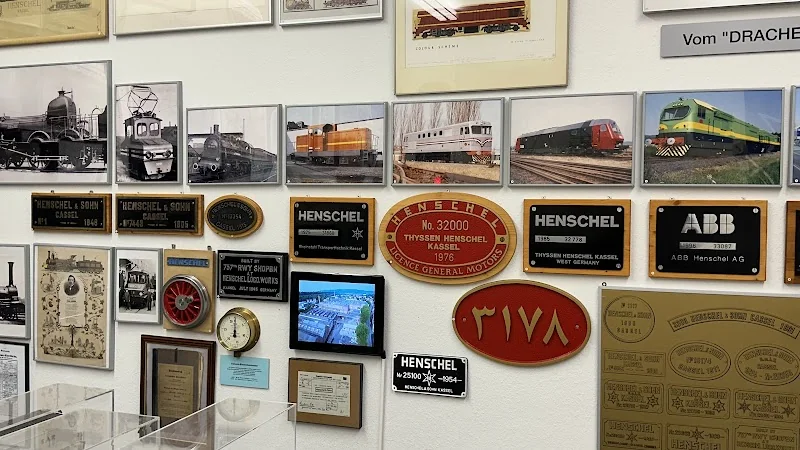
The exhibition at the Henschel Museum is clearly focused on the Henschel family and their impact on Kassel. According to the official page, the museum was opened in 2004 to preserve and strengthen the significance of the Henschel family for Kassel in public memory. On the first floor of building R11, a tour presents the approximately 200-year history of Henschel. This is not only about technical milestones but also about the people behind the company: the individual members of the six generations, their talents, their contributions to the company's development, and their social influence. This is important because Henschel was not just a machinery company but a company that shaped urban development, the world of work, and everyday life. The city of Kassel therefore describes Henschel as a company that has shaped the economic history of Kassel like no other. NVV and the museum additionally emphasize the technical focus: founded as a foundry in 1810, Henschel developed into one of the most important machine and vehicle manufacturers in Germany; in 1848, one of the first steam locomotives in Germany was built. For visitors, this creates a compact yet dense picture of a long industrial tradition. The exhibition is not overloaded but designed as a chronological tour that makes connections understandable. Those interested in locomotive construction, commercial vehicles, corporate history, or urban history will find a very concentrated approach here. The combination of family biography, product history, and local color from Kassel is the real appeal. ([henschel-museum.net](https://www.henschel-museum.net/))
The historical depth of the house itself is also remarkable. The history of the museum and archives dates back to 1935, when Oscar R. Henschel established a memorial room for the company's history in the traditional foundry on the factory grounds. During World War II, the exhibits had to be stored, but the foundry remained largely undamaged, allowing the museum to be reestablished and made publicly accessible in 1950/51. After the sale of the Henschel factories to Rheinstahl, many exhibits were secured before the Henschel Museum + Sammlung e.V. was founded in 2002 and located in R11. This development shows that the museum is not a random collection project but the result of long-term rescue and preservation work. This is exactly what makes the exhibition credible and strong. For visitors, this means: behind each object stands not only a technical value but also a story of collecting, preserving, and making accessible again. The museum is thus not just a showcase but a place of cultural continuity. Those searching for history, background, and special features will find here a very solid answer that is deeply embedded in the corporate and urban development of Kassel. ([henschel-museum.net](https://www.henschel-museum.net/pages/das-museum/geschichte-des-museums-und-der-archive.php))
Photos, Factory Photos, and Construction Drawings from the Collection
A particularly relevant search term related to the Henschel Museum is photos, and here the association offers more than just a few decorative images. The official homepage explicitly states that copies of the extensive collection of factory photos or construction drawings can be purchased. This is interesting for researchers, collectors, local historians, and technology fans alike, as it allows securing visual sources that go beyond the mere exhibition. The focus is not on a classic museum shop with souvenirs but on documentary material and professional use. Therefore, those searching for Henschel Museum photos will indeed find a genuine historical source collection here. This attitude fits excellently with the overall idea of the house: not to consume but to understand, document, and pass on. The image and drawing collections help to reconstruct technical developments, vehicle types, production lines, and design principles. At the same time, they provide material for publications, lectures, and scientific papers. That the association offers copies is a strong signal to the community: the collection is not a silent showcase but a working place for history. In the SEO context, this appeals to both people who want to see photos and those looking for reliable sources. Therefore, those who associate the term shop with the museum should not see it as a classic sales offer but as access to copies, archival material, and documents. This is where the special strength of this place lies. ([henschel-museum.net](https://www.henschel-museum.net/))
Visually, the museum is also closely linked to the company's history. Even the official website uses images such as motor rollers, locomotive rooms, and historical photos. This makes it clear that the perception of Henschel's history is strongly conveyed through visual sources. This is not only aesthetically sensible but historically necessary, as Henschel was a company whose products and factory facilities could be particularly well documented in photographs, brochures, and construction documents. The collection reflects this focus and thus makes the keyword photos a genuine content promise. For visitors expecting a rich visual insight, this is ideal. At the same time, the image collection is thematically linked to the archival holdings, such as the media archive, the brochure archive, or the locomotive archive. This creates a network of visual and technical sources that tells the company's history on multiple levels. Therefore, those who want to dive deeper will find not only individual exhibits but also the associated documents and contexts. This is particularly important for a specialized audience and explains why the Henschel Museum holds high value for history-interested visitors. At its core, it is a museum of evidence, traces, and originality. This is exactly why search queries for photos, collection, and shop work so well together here. ([henschel-museum.net](https://www.henschel-museum.net/))
Archives, Technical Library, and Research at the Henschel Museum
The research character of the Henschel Museum is one of its strongest unique selling points. The official website lists numerous archival areas: commercial vehicle archive, family and company archive, locomotive archive, military technology archive, media archive, brochure archive, blacksmith archive, employee file, technical library, engine archive, boiler construction, maglev, and recycling. This list already shows how broad the spectrum of the association is. It is not just about a general commemoration of a company but about the systematic exploration of technical, economic, and social historical holdings. According to the archive page, the versatile company archive and the technical library were handed over to the association by Bombardier in 2004; since 2009, the association has also managed the family archive left by Werner P. Henschel. Thus, the collection has not only grown historically but also institutionally. The technical library itself is particularly noteworthy: it was established a few years after the first Kassel locomotive left the factory halls in 1848, encompassed almost 15,000 works at the beginning of World War II, and today contains around 4,500 titles. Historical works and current publications from science, technology, and railway history are available there, and the library is open to interested parties upon request. For those searching for archives, libraries, or research, this is a very strong signal. The museum is a working place for source work, not just an exhibition space. ([henschel-museum.net](https://www.henschel-museum.net/pages/die-archive.php))
The archival depth can also be seen in the contact persons. Specific contacts are named for individual holdings, such as for the commercial vehicle archive, the locomotive archive, or the family archive. This is important for serious research as it structures access and allows for personal follow-up questions. Additionally, the association explicitly states that the archives serve scientific work and research. This is not a given in the local museum sector and makes the institution particularly valuable for students, local researchers, and technology journalists. The holdings help to understand the Henschel history not only as a corporate chronicle but as part of industrial, urban, and social history. In conjunction with the copies of factory photos and construction drawings, a very productive access to original sources emerges. Therefore, those who want to dive deeper have the opportunity to connect data, images, and texts here. For the external impact of the house, this means: the Henschel Museum is not only a place of remembrance but also a place of knowledge. This dual role explains why terms like archive, technical library, and research belong to the search intention of the location. ([henschel-museum.net](https://www.henschel-museum.net/pages/besucher-infos/kontakt.php))
Henschel in Kassel: Industry, Welfare, and Urban Heritage
To understand the Henschel Museum, one must also consider the history of the city of Kassel. According to the official museum page, Henschel was the largest employer in Kassel until the 1970s. This is a significant number of touchpoints between the company and the city, between the world of work and everyday life. On the page about social engagement, the association shows how deeply Henschel influenced the city: Oskar Henschel announced in 1889 the construction of about 50 family apartments, and by 1910, Oskar and Sophie Henschel built and acquired 52 residential buildings with 322 apartments in the area of Ysenburgstraße. Together with the houses in Rothenditmold, there were temporarily 77 houses with 460 apartments. In addition, there were houses for engineers, villas for senior officials, and the welfare house built in 1902, which included a nursery, household school, bathing facility, and a club room for 350 people. These facts show that Henschel not only operated industrial production but also created its own social environment. The museum thus preserves not only machinery or locomotive history but also urban development, housing construction, and social policy. This connection makes the location so significant for Kassel. Those searching for special features will find here a story of responsibility, care, and urban shaping. ([henschel-museum.net](https://www.henschel-museum.net/pages/das-museum/henschel-und-kassel-heute.php?utm_source=openai))
The current location of the museum further emphasizes this historical dimension. The main plant on Mönchebergstraße is now home to the University of Kassel, while the former administrative building R11 in Rothenditmold has been preserved and houses the museum. Thus, the house is both part of an industrial memory space and a modern urban space. The official industry page also documents how Henschel products and business areas evolved over the decades and how various locations played a role even into more recent times. For visitors, it is important: the museum not only tells the story of a company but also the story of Kassel as an industrial city, with everything that entails - technical innovation, jobs, social welfare, upheavals, closures, and repurposing. This is where the lasting appeal of the location lies. It is neither a purely nostalgic place nor a purely technical museum but a crossroads of city, work, and memory. Therefore, those searching for Henschel Museum Kassel, industrial culture Kassel, or Henschel history will find here a very precise and emotionally tangible answer. ([henschel-museum.net](https://www.henschel-museum.net/pages/das-museum/henschel-und-kassel-heute/industrie.php))
Sources:
- Henschel Museum + Sammlung e.V. - Official Website
- Henschel Museum + Sammlung e.V. - Visitor Information
- Henschel Museum + Sammlung e.V. - History of the Museum and Archives
- Henschel Museum + Sammlung e.V. - The Archives
- Henschel Museum + Sammlung e.V. - Technical Library
- City of Kassel - Henschel Museum and Collection
- NVV - Kassel: Henschel Museum + Collection
- Henschel Museum + Sammlung e.V. - Social Engagement
- Henschel Museum + Sammlung e.V. - Industry
Mehr anzeigenWeniger anzeigen
Henschel Museum + Sammlung e.V. | Opening Hours & Directions
The Henschel Museum + Sammlung e.V. in Kassel is not a large, loud exhibition house, but a vibrant place of remembrance for technology, industry, and urban history. Visitors to the museum enter a space where the history of the Henschel family, the Kassel production sites, and the industrial development of Northern Hesse is condensed in a small area. The association sees itself as a guardian of a special heritage and makes the achievements of six generations in economic, cultural, and social activities accessible to the public. The museum was opened in 2004, is located in building R11 on the historic factory site in Rothenditmold, and is organized on a voluntary basis. For visitors, this means a personal, committed atmosphere with a clear focus on authenticity, research, and a culture of remembrance. At the same time, the place is surprisingly practical: there are regular opening hours, free admission days, guided tours on request, free parking, and good connections to public transport. This makes the house suitable for both a spontaneous outing and targeted research into Kassel's industrial history. ([henschel-museum.net](https://www.henschel-museum.net/))
Opening Hours, Admission, and Tours at the Henschel Museum
The official visitor information is deliberately kept simple yet very concrete. The museum is open on the first Saturday and Sunday of each month from 2 PM to 5 PM; additionally, visits by appointment are possible. Guided tours are offered on request for interested parties, groups, and school classes, making the house particularly attractive for thematic excursions and educational visits. Admission is free, but donations are requested. This model fits well with the character of the association, as the museum, collection, and archives are managed exclusively by volunteers. Therefore, those arriving with a fixed schedule should check the appointment page, as it lists the monthly opening days and additional events of the year. For 2026, the official schedule mentions, among other things, International Museum Day and the Kassel Museum Night with special openings or differing notes. This keeps the house visible and connected to the cultural life in Kassel despite its lean structure. This is particularly important for inquiries about opening hours, free admission, and tours: this is not a museum open daily with ticket operations, but an association with clearly regulated visiting hours and personal appointment arrangements. This makes planning easier when one prepares for the visit consciously. ([henschel-museum.net](https://www.henschel-museum.net/pages/besucher-infos.php))
The organizational orientation is also transparent. The contact page points out that the members of the association are only temporarily personally reachable because the work is carried out on a voluntary basis. General inquiries should therefore be made via email, and specific contacts are named for individual archives. This is especially helpful for visitors when it comes to research, group inquiries, or school projects. The character of the house is thus clearly different from that of a classic day museum: The Henschel Museum is a place where operation, research, and mediation come together. Those who make an appointment not only receive a tour of the exhibition but often also an immediate insight into the work of the association. This mixture of personal support, historical depth, and free admission makes the visit very pleasant. For families, associations, technology enthusiasts, and local history friends, this is a great advantage because the house does not rely on mass operations but on exchange. This is also SEO-relevant because many users specifically search for opening hours, tours, admission, and contact. This search intention is precisely fulfilled here. ([henschel-museum.net](https://www.henschel-museum.net/pages/besucher-infos/kontakt.php))
Directions, Parking, and Location on the Historic Henschel Site
The location of the Henschel Museum is almost as important for its content impact as the exhibition itself. The house is located at Wolfhager Straße 109 in 34127 Kassel, in the Rothenditmold factory, building R11, with the entrance at the factory gate Wolfhager Straße/Mombachstraße. This address already tells the industrial origin of the place, as the museum is not located in a neutral museum quarter but directly on historically charged ground. The official description emphasizes that the museum is housed on the historic grounds of the Henschel factories in Rothenditmold. This gives the visit a special framework: one not only sees exhibits about the company's history but is also right in the middle of it. Additionally, the visitor information mentions free parking right outside, which makes the visit particularly pleasant for drivers. Those arriving by public transport can reach the museum according to NVV via the stop Kassel, Siemensstraße; from there it is about a two-minute walk, with bus line 10 being mentioned as the appropriate line. This combination of parking, short walking distance, and clear address information is a real advantage for a small, volunteer-run location. Inquiries about directions, parking, and address are thus answered directly. For the SEO context, it is also important that the official city page confirms the same location and adds the admission rules and opening hours. This makes the house not only historically interesting but also practically easy to find. ([henschel-museum.net](https://www.henschel-museum.net/pages/besucher-infos.php))
The historical embedding of the site extends far beyond the current museum building. On the factory grounds, one can trace the industrial expansion of the Henschel factories: The main plant Kassel-Möncheberg goes back to plans by Carl Anton Henschel, who, together with his father and brother, had the new foundry built in 1836/37. The Rothenditmold site was expanded from 1871 when business in locomotive construction was so successful that an expansion became necessary. The museum itself is now located in the former administrative building R11. This local history makes the journey more than just a logistical step, as it is part of the visitor experience. Those who get off the bus here or park in the visitor parking lots are moving on a site that visibly makes the development of Henschel from a foundry operation to a large industry. For visitors who want to discover industrial culture, this is particularly appealing. One does not just come to a museum but to an authentic place of production, administration, and remembrance. This real connection between past and present is a strong argument for content related to Kassel, Rothenditmold, factory grounds, parking, and directions. ([henschel-museum.net](https://www.henschel-museum.net/pages/das-museum/das-historische-gelaende.php))
Exhibition and 200 Years of Henschel History
The exhibition at the Henschel Museum is clearly focused on the Henschel family and their impact on Kassel. According to the official page, the museum was opened in 2004 to preserve and strengthen the significance of the Henschel family for Kassel in public memory. On the first floor of building R11, a tour presents the approximately 200-year history of Henschel. This is not only about technical milestones but also about the people behind the company: the individual members of the six generations, their talents, their contributions to the company's development, and their social influence. This is important because Henschel was not just a machinery company but a company that shaped urban development, the world of work, and everyday life. The city of Kassel therefore describes Henschel as a company that has shaped the economic history of Kassel like no other. NVV and the museum additionally emphasize the technical focus: founded as a foundry in 1810, Henschel developed into one of the most important machine and vehicle manufacturers in Germany; in 1848, one of the first steam locomotives in Germany was built. For visitors, this creates a compact yet dense picture of a long industrial tradition. The exhibition is not overloaded but designed as a chronological tour that makes connections understandable. Those interested in locomotive construction, commercial vehicles, corporate history, or urban history will find a very concentrated approach here. The combination of family biography, product history, and local color from Kassel is the real appeal. ([henschel-museum.net](https://www.henschel-museum.net/))
The historical depth of the house itself is also remarkable. The history of the museum and archives dates back to 1935, when Oscar R. Henschel established a memorial room for the company's history in the traditional foundry on the factory grounds. During World War II, the exhibits had to be stored, but the foundry remained largely undamaged, allowing the museum to be reestablished and made publicly accessible in 1950/51. After the sale of the Henschel factories to Rheinstahl, many exhibits were secured before the Henschel Museum + Sammlung e.V. was founded in 2002 and located in R11. This development shows that the museum is not a random collection project but the result of long-term rescue and preservation work. This is exactly what makes the exhibition credible and strong. For visitors, this means: behind each object stands not only a technical value but also a story of collecting, preserving, and making accessible again. The museum is thus not just a showcase but a place of cultural continuity. Those searching for history, background, and special features will find here a very solid answer that is deeply embedded in the corporate and urban development of Kassel. ([henschel-museum.net](https://www.henschel-museum.net/pages/das-museum/geschichte-des-museums-und-der-archive.php))
Photos, Factory Photos, and Construction Drawings from the Collection
A particularly relevant search term related to the Henschel Museum is photos, and here the association offers more than just a few decorative images. The official homepage explicitly states that copies of the extensive collection of factory photos or construction drawings can be purchased. This is interesting for researchers, collectors, local historians, and technology fans alike, as it allows securing visual sources that go beyond the mere exhibition. The focus is not on a classic museum shop with souvenirs but on documentary material and professional use. Therefore, those searching for Henschel Museum photos will indeed find a genuine historical source collection here. This attitude fits excellently with the overall idea of the house: not to consume but to understand, document, and pass on. The image and drawing collections help to reconstruct technical developments, vehicle types, production lines, and design principles. At the same time, they provide material for publications, lectures, and scientific papers. That the association offers copies is a strong signal to the community: the collection is not a silent showcase but a working place for history. In the SEO context, this appeals to both people who want to see photos and those looking for reliable sources. Therefore, those who associate the term shop with the museum should not see it as a classic sales offer but as access to copies, archival material, and documents. This is where the special strength of this place lies. ([henschel-museum.net](https://www.henschel-museum.net/))
Visually, the museum is also closely linked to the company's history. Even the official website uses images such as motor rollers, locomotive rooms, and historical photos. This makes it clear that the perception of Henschel's history is strongly conveyed through visual sources. This is not only aesthetically sensible but historically necessary, as Henschel was a company whose products and factory facilities could be particularly well documented in photographs, brochures, and construction documents. The collection reflects this focus and thus makes the keyword photos a genuine content promise. For visitors expecting a rich visual insight, this is ideal. At the same time, the image collection is thematically linked to the archival holdings, such as the media archive, the brochure archive, or the locomotive archive. This creates a network of visual and technical sources that tells the company's history on multiple levels. Therefore, those who want to dive deeper will find not only individual exhibits but also the associated documents and contexts. This is particularly important for a specialized audience and explains why the Henschel Museum holds high value for history-interested visitors. At its core, it is a museum of evidence, traces, and originality. This is exactly why search queries for photos, collection, and shop work so well together here. ([henschel-museum.net](https://www.henschel-museum.net/))
Archives, Technical Library, and Research at the Henschel Museum
The research character of the Henschel Museum is one of its strongest unique selling points. The official website lists numerous archival areas: commercial vehicle archive, family and company archive, locomotive archive, military technology archive, media archive, brochure archive, blacksmith archive, employee file, technical library, engine archive, boiler construction, maglev, and recycling. This list already shows how broad the spectrum of the association is. It is not just about a general commemoration of a company but about the systematic exploration of technical, economic, and social historical holdings. According to the archive page, the versatile company archive and the technical library were handed over to the association by Bombardier in 2004; since 2009, the association has also managed the family archive left by Werner P. Henschel. Thus, the collection has not only grown historically but also institutionally. The technical library itself is particularly noteworthy: it was established a few years after the first Kassel locomotive left the factory halls in 1848, encompassed almost 15,000 works at the beginning of World War II, and today contains around 4,500 titles. Historical works and current publications from science, technology, and railway history are available there, and the library is open to interested parties upon request. For those searching for archives, libraries, or research, this is a very strong signal. The museum is a working place for source work, not just an exhibition space. ([henschel-museum.net](https://www.henschel-museum.net/pages/die-archive.php))
The archival depth can also be seen in the contact persons. Specific contacts are named for individual holdings, such as for the commercial vehicle archive, the locomotive archive, or the family archive. This is important for serious research as it structures access and allows for personal follow-up questions. Additionally, the association explicitly states that the archives serve scientific work and research. This is not a given in the local museum sector and makes the institution particularly valuable for students, local researchers, and technology journalists. The holdings help to understand the Henschel history not only as a corporate chronicle but as part of industrial, urban, and social history. In conjunction with the copies of factory photos and construction drawings, a very productive access to original sources emerges. Therefore, those who want to dive deeper have the opportunity to connect data, images, and texts here. For the external impact of the house, this means: the Henschel Museum is not only a place of remembrance but also a place of knowledge. This dual role explains why terms like archive, technical library, and research belong to the search intention of the location. ([henschel-museum.net](https://www.henschel-museum.net/pages/besucher-infos/kontakt.php))
Henschel in Kassel: Industry, Welfare, and Urban Heritage
To understand the Henschel Museum, one must also consider the history of the city of Kassel. According to the official museum page, Henschel was the largest employer in Kassel until the 1970s. This is a significant number of touchpoints between the company and the city, between the world of work and everyday life. On the page about social engagement, the association shows how deeply Henschel influenced the city: Oskar Henschel announced in 1889 the construction of about 50 family apartments, and by 1910, Oskar and Sophie Henschel built and acquired 52 residential buildings with 322 apartments in the area of Ysenburgstraße. Together with the houses in Rothenditmold, there were temporarily 77 houses with 460 apartments. In addition, there were houses for engineers, villas for senior officials, and the welfare house built in 1902, which included a nursery, household school, bathing facility, and a club room for 350 people. These facts show that Henschel not only operated industrial production but also created its own social environment. The museum thus preserves not only machinery or locomotive history but also urban development, housing construction, and social policy. This connection makes the location so significant for Kassel. Those searching for special features will find here a story of responsibility, care, and urban shaping. ([henschel-museum.net](https://www.henschel-museum.net/pages/das-museum/henschel-und-kassel-heute.php?utm_source=openai))
The current location of the museum further emphasizes this historical dimension. The main plant on Mönchebergstraße is now home to the University of Kassel, while the former administrative building R11 in Rothenditmold has been preserved and houses the museum. Thus, the house is both part of an industrial memory space and a modern urban space. The official industry page also documents how Henschel products and business areas evolved over the decades and how various locations played a role even into more recent times. For visitors, it is important: the museum not only tells the story of a company but also the story of Kassel as an industrial city, with everything that entails - technical innovation, jobs, social welfare, upheavals, closures, and repurposing. This is where the lasting appeal of the location lies. It is neither a purely nostalgic place nor a purely technical museum but a crossroads of city, work, and memory. Therefore, those searching for Henschel Museum Kassel, industrial culture Kassel, or Henschel history will find here a very precise and emotionally tangible answer. ([henschel-museum.net](https://www.henschel-museum.net/pages/das-museum/henschel-und-kassel-heute/industrie.php))
Sources:
- Henschel Museum + Sammlung e.V. - Official Website
- Henschel Museum + Sammlung e.V. - Visitor Information
- Henschel Museum + Sammlung e.V. - History of the Museum and Archives
- Henschel Museum + Sammlung e.V. - The Archives
- Henschel Museum + Sammlung e.V. - Technical Library
- City of Kassel - Henschel Museum and Collection
- NVV - Kassel: Henschel Museum + Collection
- Henschel Museum + Sammlung e.V. - Social Engagement
- Henschel Museum + Sammlung e.V. - Industry
Henschel Museum + Sammlung e.V. | Opening Hours & Directions
The Henschel Museum + Sammlung e.V. in Kassel is not a large, loud exhibition house, but a vibrant place of remembrance for technology, industry, and urban history. Visitors to the museum enter a space where the history of the Henschel family, the Kassel production sites, and the industrial development of Northern Hesse is condensed in a small area. The association sees itself as a guardian of a special heritage and makes the achievements of six generations in economic, cultural, and social activities accessible to the public. The museum was opened in 2004, is located in building R11 on the historic factory site in Rothenditmold, and is organized on a voluntary basis. For visitors, this means a personal, committed atmosphere with a clear focus on authenticity, research, and a culture of remembrance. At the same time, the place is surprisingly practical: there are regular opening hours, free admission days, guided tours on request, free parking, and good connections to public transport. This makes the house suitable for both a spontaneous outing and targeted research into Kassel's industrial history. ([henschel-museum.net](https://www.henschel-museum.net/))
Opening Hours, Admission, and Tours at the Henschel Museum
The official visitor information is deliberately kept simple yet very concrete. The museum is open on the first Saturday and Sunday of each month from 2 PM to 5 PM; additionally, visits by appointment are possible. Guided tours are offered on request for interested parties, groups, and school classes, making the house particularly attractive for thematic excursions and educational visits. Admission is free, but donations are requested. This model fits well with the character of the association, as the museum, collection, and archives are managed exclusively by volunteers. Therefore, those arriving with a fixed schedule should check the appointment page, as it lists the monthly opening days and additional events of the year. For 2026, the official schedule mentions, among other things, International Museum Day and the Kassel Museum Night with special openings or differing notes. This keeps the house visible and connected to the cultural life in Kassel despite its lean structure. This is particularly important for inquiries about opening hours, free admission, and tours: this is not a museum open daily with ticket operations, but an association with clearly regulated visiting hours and personal appointment arrangements. This makes planning easier when one prepares for the visit consciously. ([henschel-museum.net](https://www.henschel-museum.net/pages/besucher-infos.php))
The organizational orientation is also transparent. The contact page points out that the members of the association are only temporarily personally reachable because the work is carried out on a voluntary basis. General inquiries should therefore be made via email, and specific contacts are named for individual archives. This is especially helpful for visitors when it comes to research, group inquiries, or school projects. The character of the house is thus clearly different from that of a classic day museum: The Henschel Museum is a place where operation, research, and mediation come together. Those who make an appointment not only receive a tour of the exhibition but often also an immediate insight into the work of the association. This mixture of personal support, historical depth, and free admission makes the visit very pleasant. For families, associations, technology enthusiasts, and local history friends, this is a great advantage because the house does not rely on mass operations but on exchange. This is also SEO-relevant because many users specifically search for opening hours, tours, admission, and contact. This search intention is precisely fulfilled here. ([henschel-museum.net](https://www.henschel-museum.net/pages/besucher-infos/kontakt.php))
Directions, Parking, and Location on the Historic Henschel Site
The location of the Henschel Museum is almost as important for its content impact as the exhibition itself. The house is located at Wolfhager Straße 109 in 34127 Kassel, in the Rothenditmold factory, building R11, with the entrance at the factory gate Wolfhager Straße/Mombachstraße. This address already tells the industrial origin of the place, as the museum is not located in a neutral museum quarter but directly on historically charged ground. The official description emphasizes that the museum is housed on the historic grounds of the Henschel factories in Rothenditmold. This gives the visit a special framework: one not only sees exhibits about the company's history but is also right in the middle of it. Additionally, the visitor information mentions free parking right outside, which makes the visit particularly pleasant for drivers. Those arriving by public transport can reach the museum according to NVV via the stop Kassel, Siemensstraße; from there it is about a two-minute walk, with bus line 10 being mentioned as the appropriate line. This combination of parking, short walking distance, and clear address information is a real advantage for a small, volunteer-run location. Inquiries about directions, parking, and address are thus answered directly. For the SEO context, it is also important that the official city page confirms the same location and adds the admission rules and opening hours. This makes the house not only historically interesting but also practically easy to find. ([henschel-museum.net](https://www.henschel-museum.net/pages/besucher-infos.php))
The historical embedding of the site extends far beyond the current museum building. On the factory grounds, one can trace the industrial expansion of the Henschel factories: The main plant Kassel-Möncheberg goes back to plans by Carl Anton Henschel, who, together with his father and brother, had the new foundry built in 1836/37. The Rothenditmold site was expanded from 1871 when business in locomotive construction was so successful that an expansion became necessary. The museum itself is now located in the former administrative building R11. This local history makes the journey more than just a logistical step, as it is part of the visitor experience. Those who get off the bus here or park in the visitor parking lots are moving on a site that visibly makes the development of Henschel from a foundry operation to a large industry. For visitors who want to discover industrial culture, this is particularly appealing. One does not just come to a museum but to an authentic place of production, administration, and remembrance. This real connection between past and present is a strong argument for content related to Kassel, Rothenditmold, factory grounds, parking, and directions. ([henschel-museum.net](https://www.henschel-museum.net/pages/das-museum/das-historische-gelaende.php))
Exhibition and 200 Years of Henschel History
The exhibition at the Henschel Museum is clearly focused on the Henschel family and their impact on Kassel. According to the official page, the museum was opened in 2004 to preserve and strengthen the significance of the Henschel family for Kassel in public memory. On the first floor of building R11, a tour presents the approximately 200-year history of Henschel. This is not only about technical milestones but also about the people behind the company: the individual members of the six generations, their talents, their contributions to the company's development, and their social influence. This is important because Henschel was not just a machinery company but a company that shaped urban development, the world of work, and everyday life. The city of Kassel therefore describes Henschel as a company that has shaped the economic history of Kassel like no other. NVV and the museum additionally emphasize the technical focus: founded as a foundry in 1810, Henschel developed into one of the most important machine and vehicle manufacturers in Germany; in 1848, one of the first steam locomotives in Germany was built. For visitors, this creates a compact yet dense picture of a long industrial tradition. The exhibition is not overloaded but designed as a chronological tour that makes connections understandable. Those interested in locomotive construction, commercial vehicles, corporate history, or urban history will find a very concentrated approach here. The combination of family biography, product history, and local color from Kassel is the real appeal. ([henschel-museum.net](https://www.henschel-museum.net/))
The historical depth of the house itself is also remarkable. The history of the museum and archives dates back to 1935, when Oscar R. Henschel established a memorial room for the company's history in the traditional foundry on the factory grounds. During World War II, the exhibits had to be stored, but the foundry remained largely undamaged, allowing the museum to be reestablished and made publicly accessible in 1950/51. After the sale of the Henschel factories to Rheinstahl, many exhibits were secured before the Henschel Museum + Sammlung e.V. was founded in 2002 and located in R11. This development shows that the museum is not a random collection project but the result of long-term rescue and preservation work. This is exactly what makes the exhibition credible and strong. For visitors, this means: behind each object stands not only a technical value but also a story of collecting, preserving, and making accessible again. The museum is thus not just a showcase but a place of cultural continuity. Those searching for history, background, and special features will find here a very solid answer that is deeply embedded in the corporate and urban development of Kassel. ([henschel-museum.net](https://www.henschel-museum.net/pages/das-museum/geschichte-des-museums-und-der-archive.php))
Photos, Factory Photos, and Construction Drawings from the Collection
A particularly relevant search term related to the Henschel Museum is photos, and here the association offers more than just a few decorative images. The official homepage explicitly states that copies of the extensive collection of factory photos or construction drawings can be purchased. This is interesting for researchers, collectors, local historians, and technology fans alike, as it allows securing visual sources that go beyond the mere exhibition. The focus is not on a classic museum shop with souvenirs but on documentary material and professional use. Therefore, those searching for Henschel Museum photos will indeed find a genuine historical source collection here. This attitude fits excellently with the overall idea of the house: not to consume but to understand, document, and pass on. The image and drawing collections help to reconstruct technical developments, vehicle types, production lines, and design principles. At the same time, they provide material for publications, lectures, and scientific papers. That the association offers copies is a strong signal to the community: the collection is not a silent showcase but a working place for history. In the SEO context, this appeals to both people who want to see photos and those looking for reliable sources. Therefore, those who associate the term shop with the museum should not see it as a classic sales offer but as access to copies, archival material, and documents. This is where the special strength of this place lies. ([henschel-museum.net](https://www.henschel-museum.net/))
Visually, the museum is also closely linked to the company's history. Even the official website uses images such as motor rollers, locomotive rooms, and historical photos. This makes it clear that the perception of Henschel's history is strongly conveyed through visual sources. This is not only aesthetically sensible but historically necessary, as Henschel was a company whose products and factory facilities could be particularly well documented in photographs, brochures, and construction documents. The collection reflects this focus and thus makes the keyword photos a genuine content promise. For visitors expecting a rich visual insight, this is ideal. At the same time, the image collection is thematically linked to the archival holdings, such as the media archive, the brochure archive, or the locomotive archive. This creates a network of visual and technical sources that tells the company's history on multiple levels. Therefore, those who want to dive deeper will find not only individual exhibits but also the associated documents and contexts. This is particularly important for a specialized audience and explains why the Henschel Museum holds high value for history-interested visitors. At its core, it is a museum of evidence, traces, and originality. This is exactly why search queries for photos, collection, and shop work so well together here. ([henschel-museum.net](https://www.henschel-museum.net/))
Archives, Technical Library, and Research at the Henschel Museum
The research character of the Henschel Museum is one of its strongest unique selling points. The official website lists numerous archival areas: commercial vehicle archive, family and company archive, locomotive archive, military technology archive, media archive, brochure archive, blacksmith archive, employee file, technical library, engine archive, boiler construction, maglev, and recycling. This list already shows how broad the spectrum of the association is. It is not just about a general commemoration of a company but about the systematic exploration of technical, economic, and social historical holdings. According to the archive page, the versatile company archive and the technical library were handed over to the association by Bombardier in 2004; since 2009, the association has also managed the family archive left by Werner P. Henschel. Thus, the collection has not only grown historically but also institutionally. The technical library itself is particularly noteworthy: it was established a few years after the first Kassel locomotive left the factory halls in 1848, encompassed almost 15,000 works at the beginning of World War II, and today contains around 4,500 titles. Historical works and current publications from science, technology, and railway history are available there, and the library is open to interested parties upon request. For those searching for archives, libraries, or research, this is a very strong signal. The museum is a working place for source work, not just an exhibition space. ([henschel-museum.net](https://www.henschel-museum.net/pages/die-archive.php))
The archival depth can also be seen in the contact persons. Specific contacts are named for individual holdings, such as for the commercial vehicle archive, the locomotive archive, or the family archive. This is important for serious research as it structures access and allows for personal follow-up questions. Additionally, the association explicitly states that the archives serve scientific work and research. This is not a given in the local museum sector and makes the institution particularly valuable for students, local researchers, and technology journalists. The holdings help to understand the Henschel history not only as a corporate chronicle but as part of industrial, urban, and social history. In conjunction with the copies of factory photos and construction drawings, a very productive access to original sources emerges. Therefore, those who want to dive deeper have the opportunity to connect data, images, and texts here. For the external impact of the house, this means: the Henschel Museum is not only a place of remembrance but also a place of knowledge. This dual role explains why terms like archive, technical library, and research belong to the search intention of the location. ([henschel-museum.net](https://www.henschel-museum.net/pages/besucher-infos/kontakt.php))
Henschel in Kassel: Industry, Welfare, and Urban Heritage
To understand the Henschel Museum, one must also consider the history of the city of Kassel. According to the official museum page, Henschel was the largest employer in Kassel until the 1970s. This is a significant number of touchpoints between the company and the city, between the world of work and everyday life. On the page about social engagement, the association shows how deeply Henschel influenced the city: Oskar Henschel announced in 1889 the construction of about 50 family apartments, and by 1910, Oskar and Sophie Henschel built and acquired 52 residential buildings with 322 apartments in the area of Ysenburgstraße. Together with the houses in Rothenditmold, there were temporarily 77 houses with 460 apartments. In addition, there were houses for engineers, villas for senior officials, and the welfare house built in 1902, which included a nursery, household school, bathing facility, and a club room for 350 people. These facts show that Henschel not only operated industrial production but also created its own social environment. The museum thus preserves not only machinery or locomotive history but also urban development, housing construction, and social policy. This connection makes the location so significant for Kassel. Those searching for special features will find here a story of responsibility, care, and urban shaping. ([henschel-museum.net](https://www.henschel-museum.net/pages/das-museum/henschel-und-kassel-heute.php?utm_source=openai))
The current location of the museum further emphasizes this historical dimension. The main plant on Mönchebergstraße is now home to the University of Kassel, while the former administrative building R11 in Rothenditmold has been preserved and houses the museum. Thus, the house is both part of an industrial memory space and a modern urban space. The official industry page also documents how Henschel products and business areas evolved over the decades and how various locations played a role even into more recent times. For visitors, it is important: the museum not only tells the story of a company but also the story of Kassel as an industrial city, with everything that entails - technical innovation, jobs, social welfare, upheavals, closures, and repurposing. This is where the lasting appeal of the location lies. It is neither a purely nostalgic place nor a purely technical museum but a crossroads of city, work, and memory. Therefore, those searching for Henschel Museum Kassel, industrial culture Kassel, or Henschel history will find here a very precise and emotionally tangible answer. ([henschel-museum.net](https://www.henschel-museum.net/pages/das-museum/henschel-und-kassel-heute/industrie.php))
Sources:
- Henschel Museum + Sammlung e.V. - Official Website
- Henschel Museum + Sammlung e.V. - Visitor Information
- Henschel Museum + Sammlung e.V. - History of the Museum and Archives
- Henschel Museum + Sammlung e.V. - The Archives
- Henschel Museum + Sammlung e.V. - Technical Library
- City of Kassel - Henschel Museum and Collection
- NVV - Kassel: Henschel Museum + Collection
- Henschel Museum + Sammlung e.V. - Social Engagement
- Henschel Museum + Sammlung e.V. - Industry
Upcoming Events
No events found
Frequently Asked Questions
Reviews
Thomas Fischer
7. December 2025
First of all, a big thank you to the club members of the Henschel Museum for their tireless volunteer work, it's amazing. As for the museum, all I can say is... it's a dream, the finest Kassel industrial culture.
Roi Danton
19. June 2025
A club-run museum about the history of the Henschel company. Lots of documents, pictures, and models. Entry is free, but donations are appreciated. The visit pairs well with the nearby Technikmuseum Kassel.
Lisa Flemming
21. May 2023
Great museum, with an exhibition created with a lot of effort and expertise. Huge respect to the volunteers who make this possible. Thank you!
Angel S. (Angel)
7. February 2023
A beautiful gem of industrial history - lovingly maintained by former Henschel employees. Small but fine! The volunteers and former employees of Henschel nurture a piece of Kassel's history here with passion and intelligence. Even though the museum only has one floor, you learn more here thanks to the staff and video presentations than in many large exhibitions. Alongside the history of the founding Henschel family, you are carefully guided through the company's history, industrialization long before the founding era, and trivia about the company culture. You can feel the love for the exhibits from the volunteers in every room - a successful kaleidoscope of Kassel's industrial history with some surprises: Barista culture from 1954 by Henschel! It's worth visiting the exhibition on the first weekend of the month. Admission is free.
Svenja Thies
21. January 2024
A great little volunteer-run museum that deals with the Henschel family and their family empire. There is a wide variety of different exhibits as well as several archives on various aspects of Henschel's history. It's incredibly interesting what was produced in Henschel's history - it goes far beyond locomotives.