
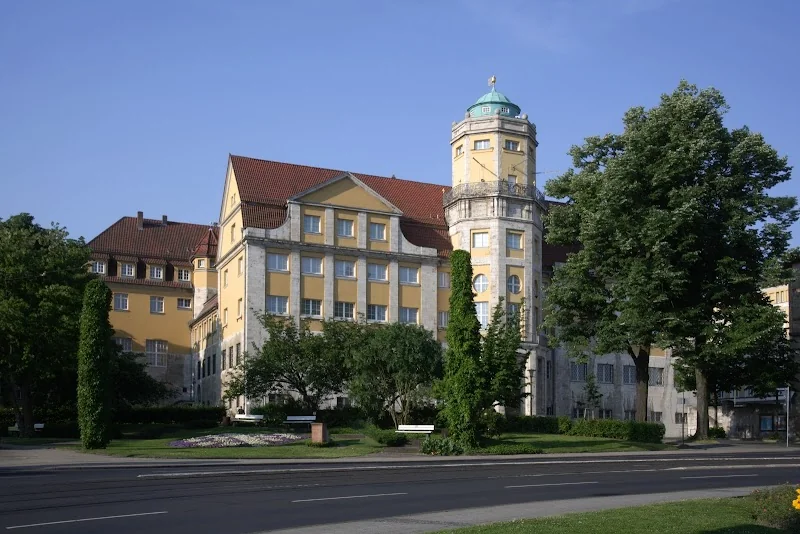
Brüder-Grimm-Platz 5, Kassel
Brüder-Grimm-Platz 5, 34117 Kassel, Germany
Hessian State Museum Kassel | Opening Hours & Exhibitions
The Hessian State Museum Kassel is one of the most important cultural addresses in the city and is much more than a classic local museum. Under a striking historical roof, a great narrative of North Hesse can be experienced here: from the traces of the first humans through the Middle Ages and the era of the Landgraves to the present. The building at Brüder-Grimm-Platz combines archaeological finds, crafts, everyday culture, and modern mediation across three levels into a tour that is equally informative, impressive, and varied. The architecture of the building, the prominent tower, the generous redesign of 2016, and the role of the museum as a place for changing special exhibitions and social remembrance are particularly defining. Anyone interested in history, design, regional identity, or a demanding museum visit in a central location will find one of the most exciting places in Kassel here. ([heritage-kassel.de](https://www.heritage-kassel.de/en/locations/hessisches-landesmuseum))
Opening Hours, Admission Prices, and Current Exhibitions
Anyone planning a visit should first know the opening hours, as the Hessian State Museum Kassel has clear and well-planned visiting times. The museum is open from Tuesday to Sunday from 10 AM to 5 PM; on every second Friday of the month, it remains open until 7 PM. Special regulations apply for holidays: the museum is closed on December 24, 25, and 31; on January 1, it is open from 12 PM to 5 PM. Admission is moderately priced at 8 euros for adults and 5 euros for reduced tickets; children and teenagers under 18 enter for free, and an annual pass is also available. This pricing structure is attractive for families, educational groups, and anyone who wants to take more time with the collections, as it makes repeated visits very uncomplicated. The museum is not a place to just check off quickly but rather an institution that invites slow discovery. ([heritage-kassel.de](https://www.heritage-kassel.de/en/locations/hessisches-landesmuseum))
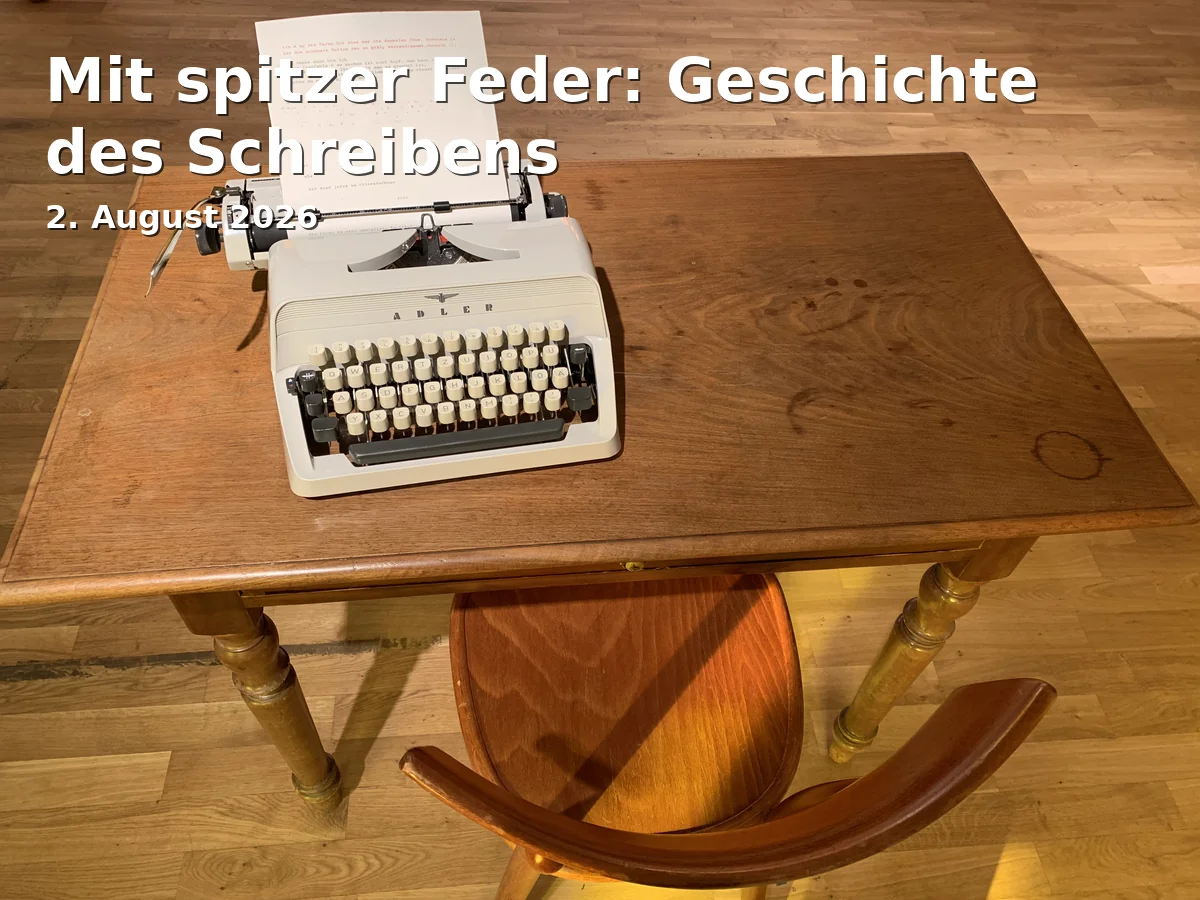
Particularly interesting is the mix of permanent exhibition and special presentations. The official museum landscape describes the tour as a path through 300,000 years of North Hesse's history, newly organized and significantly more generously presented after the modernization in 2016. The large historical periods and archaeological transitions are the focus on the lower levels, while other areas take a closer look at everyday life, art, and culture in the region. Additionally, changing cabinet exhibitions keep the museum regularly up to date. For spring 2026, the official site mentions the parallel presentations Erdmann or Fakeman? A Dachshund Coat Under Review and With a Sharp Pen - Writing Instruments and Writing Through the Ages. Such special exhibitions make it clear that the museum not only conserves the past but continually questions it anew. This ensures that the term exhibitions here is not just a search term but a genuine promise of a visit. ([kassel.de](https://www.kassel.de/buerger/kunst_und_kultur/museen/museen/hessisches-landesmuseum.php))
Those who want to time their visit well benefit from a quiet morning or a late afternoon. The regular opening hours are long enough to combine a city stroll, a walk around Brüder-Grimm-Platz, or another museum visit. For anyone specifically looking for opening hours, admission prices, or exhibitions, the official museum website is the most reliable source, as it clearly consolidates seasonal adjustments and special opening hours. This is particularly important in a cultural city like Kassel, where many guests combine several destinations in one day. The Hessian State Museum Kassel remains a place that can be visited spontaneously but shows its full strength especially when one brings a little more time to connect themes, epochs, and objects. ([heritage-kassel.de](https://www.heritage-kassel.de/en/locations/hessisches-landesmuseum))
Access, Parking, and Barrier-Free Access
The location of the Hessian State Museum Kassel is exceptionally central. The museum is located at Brüder-Grimm-Platz 5, right in the middle of Kassel and close to important inner-city axes. At the same time, the situation is currently characterized by construction work: According to the official website of Hessen Kassel Heritage, the museum can currently only be accessed via Humboldtstraße. This is important for planning, as access has changed, and visitors should pay attention to the current route. For public transport access, the city website refers to the relevant connections of the transport association, which is particularly convenient for a visit without a car. Those coming from the city center can also reach the location easily on foot, as the museum is situated in an area with a high cultural density. This central integration makes the location attractive for day trips, city walks, and museum routes. ([heritage-kassel.de](https://www.heritage-kassel.de/en/locations/hessisches-landesmuseum))
Regarding parking, the location is also good, although one should pay a little more attention due to the construction work. The museum itself has designated parking spaces for people with limited mobility. For regular parking nearby, the Friedrichsplatz underground garage is a nearby inner-city option: it is located directly at important frequented areas of the city center and offers, among other things, disabled parking spaces, elevators, and other service elements. This is practical for guests who want to combine the museum with the city center, as many destinations can be easily reached on foot from there. Those planning their arrival should also consider that Brüder-Grimm-Platz is one of the large historical squares in Kassel and is currently being redesigned. This explains why the routing may have changed and why the official access information is so important. Therefore, anyone searching for parking, access, or barrier-free options should briefly check the visit in advance instead of relying on the old square situation. ([heritage-kassel.de](https://www.heritage-kassel.de/en/locations/hessisches-landesmuseum))
Barrier-free access is a significant advantage of the house. Officially, barrier-free access, an elevator, barrier-free toilets, and changing facilities are mentioned; there are also designated parking spaces for people with limited mobility, and the admission of service dogs is allowed. This makes the visit significantly easier for elderly people, families with strollers, and guests with mobility restrictions. Especially since the museum is accessible over several levels, this equipment is particularly valuable. For many guests, this is a decisive criterion when selecting a museum in Kassel. It also shows that the focus is not only on presenting historical content but also on a contemporary visitor experience. Combined with the central location, public transport connections, and the current access regulation via Humboldtstraße, a very clear, practical visit profile emerges. ([heritage-kassel.de](https://www.heritage-kassel.de/en/locations/hessisches-landesmuseum))
History of the House and Architecture by Theodor Fischer
The Hessian State Museum Kassel is architecturally and historically closely linked to the development of the city. The new building was opened in 1913, just in time for the millennium celebration of Kassel, and is based on designs by architect Theodor Fischer. The planning and construction history began much earlier, as the collections were housed in a rather unsatisfactory condition at the end of the 19th century, making a new museum building not only desirable but necessary. An important financing step was the city's willingness to provide the building site free of charge. Thus, the museum building did not arise in isolation but as a cultural-political project that was meant to underline Kassel's significance as a place of collection and remembrance. This already makes it clear why the house is still so present today: it is not only a container of history but also part of that history itself. ([blog.museum-kassel.de](https://blog.museum-kassel.de/architektur/))
Architecturally, the building combines elements of Art Nouveau with forms of the Neo-Renaissance. The official description emphasizes the prominent urban location, the centrally positioned tower, and the traditional floor plan of an art museum with five wings and two courtyards. This structure still appears representative and functional today. Fischer oriented himself to Hessian architectural monuments of the late Renaissance, giving the building a historical depth that fits well with the content of the house. The facade is not merely a showcase but an architectural promise: it is about origin, order, and cultural continuity. The fact that the museum was extensively modernized in 2016 further enhances this effect, as historical form and contemporary museum technology now work together more closely. The renovation created more space for discoveries, exhibits, and special exhibitions while simultaneously making the architecture more visible. The combination of old construction and modern presentation is a central feature of this house. ([heritage-kassel.de](https://www.heritage-kassel.de/en/locations/hessisches-landesmuseum))
The construction history also includes the gatehouse at the museum, which is based on an older, unfinished plan by Heinrich Christoph Jussow. It was already used for museum purposes in the early 20th century and now houses crafts from historicism to contemporary design. This is a nice example of how the location brings together different layers of time. Therefore, when visiting the museum, one experiences not only an exhibition in a historical building but an ensemble composed of different construction and usage epochs. The tower is particularly defining in its external appearance, making the house immediately recognizable in the urban space. This architectural character ensures that the museum is also prominent in search queries for photos or historical views: it is a building with strong recognition value, a clear silhouette, and an urban position that makes it unmistakable. ([kassel.de](https://www.kassel.de/buerger/kunst_und_kultur/museen/museen/hessisches-landesmuseum.php))
Collections from Prehistory to the Present
The content core of the Hessian State Museum Kassel is the large temporal arc that the house spans. The official presentation speaks of 300,000 years of North Hesse's land and cultural history. This claim is not just marketing but is reflected in the structure of the exhibition. History is told from very different perspectives across three levels: from the earliest traces of humans through the Middle Ages and the era of the Landgraves to modern times and the present. This breadth makes the visit worthwhile, as archaeological, art-historical, and everyday historical perspectives meet here. The collection of prehistory and early history delves deep into the beginnings of human living environments, while other areas trace the political and cultural development of North Hesse. Anyone interested in the emergence of settlement, technology, and society will find a dense and easily understandable narrative here. ([blog.museum-kassel.de](https://blog.museum-kassel.de/ausstellung/))
Particularly impressive is how the museum stages the transition from prehistory to historical time. The collection of prehistory and early history shows, according to the official description, developments such as agriculture, animal husbandry, and metalworking. This not only presents objects but also makes fundamental changes in life visible. In the presentation of the Middle Ages and early modern times, the Hessian Landgraves, their court culture, and their passion for collecting take center stage. Artworks from churches, monasteries, cities, and princely possessions tell of power, piety, representation, and everyday life. The collection of applied arts also plays an important role, as it not only reveals aesthetic quality but also social contexts. Here it becomes clear that a museum does not only show beautiful things but always also asks questions about how people lived, worked, believed, and influenced each other. ([blog.museum-kassel.de](https://blog.museum-kassel.de/ausstellung/))
In the area of folklore and everyday history, the focus shifts more strongly to the lives of people in the last two centuries. The museum shows how technological innovations, mobility, political upheavals, industrialization, and social changes have shaped everyday life in North Hesse. This part of the exhibition is particularly accessible for many visitors, as it establishes immediate connections to the present. The museum narrative does not end in the archive or in the distant past but leads into the present. This makes the visit meaningful for younger guests or school classes, as historical processes are vividly connected to familiar living environments. Therefore, anyone searching for prehistory, applied arts, or folklore will not find isolated islands at the Hessian State Museum Kassel but a consciously composed overall context. This connection is one of the greatest attractions of the house. ([blog.museum-kassel.de](https://blog.museum-kassel.de/ausstellung/))
Tower, Tours, and Visiting Tips for Families, Groups, and Photos
A special highlight of the Hessian State Museum Kassel is the tower. It not only shapes the silhouette of the house but is also accessible. According to the official description, visitors can climb up and enjoy the view over the region that is historically narrated in the museum itself. The combination of view and exhibition is clever, as it makes the theme of the house spatially experienceable: those who stand at the top see the city and the surrounding area with different eyes after getting to know the historical layers below. Additionally, according to the official website, tower tours take place regularly at the full and half hour, subject to changes. This makes the tower a real argument for a visit, not just an architectural detail. Especially for guests searching for hessian state museum kassel photos, the building itself, with its distinctive shape, tower, and historical facade, is a worthwhile motif. ([heritage-kassel.de](https://www.heritage-kassel.de/en/locations/hessisches-landesmuseum))
Guided tours are also an important part of the offering. The city of Kassel offers group tours for the Hessian State Museum that focus on the history and cultural history of North Hesse. Over 6000 objects from prehistory, applied arts, and folklore are shown across three floors. Groups can have the content tailored to their wishes, and the tour can be flexibly planned in terms of time. An additional fee is charged for foreign languages; a maximum of 20 people per group is allowed. This is important for travel groups, school classes, and associations, as the visit can be organized well this way. Therefore, anyone planning an excursion or cultural appointment in Kassel can integrate the museum very well into a guided program. Especially for larger groups, early registration is recommended to ensure that the tour, access, and desired focuses match. ([kassel.de](https://www.kassel.de/einrichtungen/gaeste/kassel-gruppen/gruppenfuehrungen/fuehrung-im-Hessischen-Landesmuseum.php?utm_source=openai))
For families and individual guests, a visit with enough time is especially worthwhile. The museum works best when one does not just go from showcase to showcase but connects sections and also perceives the architecture as part of the narrative. The location at Brüder-Grimm-Platz is also ideal for combining the visit with other cultural sites nearby, such as the Prince's Garden or other houses in the inner-city museum environment. Those interested in history, urban development, and strong exhibition images will find a place with high density and good quality of stay here. The mix of central location, barrier-free offerings, tower view, and changing exhibitions makes the museum a destination that is not only visited once. It is a house that reveals different layers of its own identity with each tour, making it particularly memorable. ([kassel.de](https://www.kassel.de/buerger/kunst_und_kultur/parks_und_gaerten/fuerstengarten.php))
Sources:
Mehr anzeigenWeniger anzeigen
Hessian State Museum Kassel | Opening Hours & Exhibitions
The Hessian State Museum Kassel is one of the most important cultural addresses in the city and is much more than a classic local museum. Under a striking historical roof, a great narrative of North Hesse can be experienced here: from the traces of the first humans through the Middle Ages and the era of the Landgraves to the present. The building at Brüder-Grimm-Platz combines archaeological finds, crafts, everyday culture, and modern mediation across three levels into a tour that is equally informative, impressive, and varied. The architecture of the building, the prominent tower, the generous redesign of 2016, and the role of the museum as a place for changing special exhibitions and social remembrance are particularly defining. Anyone interested in history, design, regional identity, or a demanding museum visit in a central location will find one of the most exciting places in Kassel here. ([heritage-kassel.de](https://www.heritage-kassel.de/en/locations/hessisches-landesmuseum))
Opening Hours, Admission Prices, and Current Exhibitions
Anyone planning a visit should first know the opening hours, as the Hessian State Museum Kassel has clear and well-planned visiting times. The museum is open from Tuesday to Sunday from 10 AM to 5 PM; on every second Friday of the month, it remains open until 7 PM. Special regulations apply for holidays: the museum is closed on December 24, 25, and 31; on January 1, it is open from 12 PM to 5 PM. Admission is moderately priced at 8 euros for adults and 5 euros for reduced tickets; children and teenagers under 18 enter for free, and an annual pass is also available. This pricing structure is attractive for families, educational groups, and anyone who wants to take more time with the collections, as it makes repeated visits very uncomplicated. The museum is not a place to just check off quickly but rather an institution that invites slow discovery. ([heritage-kassel.de](https://www.heritage-kassel.de/en/locations/hessisches-landesmuseum))
Particularly interesting is the mix of permanent exhibition and special presentations. The official museum landscape describes the tour as a path through 300,000 years of North Hesse's history, newly organized and significantly more generously presented after the modernization in 2016. The large historical periods and archaeological transitions are the focus on the lower levels, while other areas take a closer look at everyday life, art, and culture in the region. Additionally, changing cabinet exhibitions keep the museum regularly up to date. For spring 2026, the official site mentions the parallel presentations Erdmann or Fakeman? A Dachshund Coat Under Review and With a Sharp Pen - Writing Instruments and Writing Through the Ages. Such special exhibitions make it clear that the museum not only conserves the past but continually questions it anew. This ensures that the term exhibitions here is not just a search term but a genuine promise of a visit. ([kassel.de](https://www.kassel.de/buerger/kunst_und_kultur/museen/museen/hessisches-landesmuseum.php))
Those who want to time their visit well benefit from a quiet morning or a late afternoon. The regular opening hours are long enough to combine a city stroll, a walk around Brüder-Grimm-Platz, or another museum visit. For anyone specifically looking for opening hours, admission prices, or exhibitions, the official museum website is the most reliable source, as it clearly consolidates seasonal adjustments and special opening hours. This is particularly important in a cultural city like Kassel, where many guests combine several destinations in one day. The Hessian State Museum Kassel remains a place that can be visited spontaneously but shows its full strength especially when one brings a little more time to connect themes, epochs, and objects. ([heritage-kassel.de](https://www.heritage-kassel.de/en/locations/hessisches-landesmuseum))
Access, Parking, and Barrier-Free Access
The location of the Hessian State Museum Kassel is exceptionally central. The museum is located at Brüder-Grimm-Platz 5, right in the middle of Kassel and close to important inner-city axes. At the same time, the situation is currently characterized by construction work: According to the official website of Hessen Kassel Heritage, the museum can currently only be accessed via Humboldtstraße. This is important for planning, as access has changed, and visitors should pay attention to the current route. For public transport access, the city website refers to the relevant connections of the transport association, which is particularly convenient for a visit without a car. Those coming from the city center can also reach the location easily on foot, as the museum is situated in an area with a high cultural density. This central integration makes the location attractive for day trips, city walks, and museum routes. ([heritage-kassel.de](https://www.heritage-kassel.de/en/locations/hessisches-landesmuseum))
Regarding parking, the location is also good, although one should pay a little more attention due to the construction work. The museum itself has designated parking spaces for people with limited mobility. For regular parking nearby, the Friedrichsplatz underground garage is a nearby inner-city option: it is located directly at important frequented areas of the city center and offers, among other things, disabled parking spaces, elevators, and other service elements. This is practical for guests who want to combine the museum with the city center, as many destinations can be easily reached on foot from there. Those planning their arrival should also consider that Brüder-Grimm-Platz is one of the large historical squares in Kassel and is currently being redesigned. This explains why the routing may have changed and why the official access information is so important. Therefore, anyone searching for parking, access, or barrier-free options should briefly check the visit in advance instead of relying on the old square situation. ([heritage-kassel.de](https://www.heritage-kassel.de/en/locations/hessisches-landesmuseum))
Barrier-free access is a significant advantage of the house. Officially, barrier-free access, an elevator, barrier-free toilets, and changing facilities are mentioned; there are also designated parking spaces for people with limited mobility, and the admission of service dogs is allowed. This makes the visit significantly easier for elderly people, families with strollers, and guests with mobility restrictions. Especially since the museum is accessible over several levels, this equipment is particularly valuable. For many guests, this is a decisive criterion when selecting a museum in Kassel. It also shows that the focus is not only on presenting historical content but also on a contemporary visitor experience. Combined with the central location, public transport connections, and the current access regulation via Humboldtstraße, a very clear, practical visit profile emerges. ([heritage-kassel.de](https://www.heritage-kassel.de/en/locations/hessisches-landesmuseum))
History of the House and Architecture by Theodor Fischer
The Hessian State Museum Kassel is architecturally and historically closely linked to the development of the city. The new building was opened in 1913, just in time for the millennium celebration of Kassel, and is based on designs by architect Theodor Fischer. The planning and construction history began much earlier, as the collections were housed in a rather unsatisfactory condition at the end of the 19th century, making a new museum building not only desirable but necessary. An important financing step was the city's willingness to provide the building site free of charge. Thus, the museum building did not arise in isolation but as a cultural-political project that was meant to underline Kassel's significance as a place of collection and remembrance. This already makes it clear why the house is still so present today: it is not only a container of history but also part of that history itself. ([blog.museum-kassel.de](https://blog.museum-kassel.de/architektur/))
Architecturally, the building combines elements of Art Nouveau with forms of the Neo-Renaissance. The official description emphasizes the prominent urban location, the centrally positioned tower, and the traditional floor plan of an art museum with five wings and two courtyards. This structure still appears representative and functional today. Fischer oriented himself to Hessian architectural monuments of the late Renaissance, giving the building a historical depth that fits well with the content of the house. The facade is not merely a showcase but an architectural promise: it is about origin, order, and cultural continuity. The fact that the museum was extensively modernized in 2016 further enhances this effect, as historical form and contemporary museum technology now work together more closely. The renovation created more space for discoveries, exhibits, and special exhibitions while simultaneously making the architecture more visible. The combination of old construction and modern presentation is a central feature of this house. ([heritage-kassel.de](https://www.heritage-kassel.de/en/locations/hessisches-landesmuseum))
The construction history also includes the gatehouse at the museum, which is based on an older, unfinished plan by Heinrich Christoph Jussow. It was already used for museum purposes in the early 20th century and now houses crafts from historicism to contemporary design. This is a nice example of how the location brings together different layers of time. Therefore, when visiting the museum, one experiences not only an exhibition in a historical building but an ensemble composed of different construction and usage epochs. The tower is particularly defining in its external appearance, making the house immediately recognizable in the urban space. This architectural character ensures that the museum is also prominent in search queries for photos or historical views: it is a building with strong recognition value, a clear silhouette, and an urban position that makes it unmistakable. ([kassel.de](https://www.kassel.de/buerger/kunst_und_kultur/museen/museen/hessisches-landesmuseum.php))
Collections from Prehistory to the Present
The content core of the Hessian State Museum Kassel is the large temporal arc that the house spans. The official presentation speaks of 300,000 years of North Hesse's land and cultural history. This claim is not just marketing but is reflected in the structure of the exhibition. History is told from very different perspectives across three levels: from the earliest traces of humans through the Middle Ages and the era of the Landgraves to modern times and the present. This breadth makes the visit worthwhile, as archaeological, art-historical, and everyday historical perspectives meet here. The collection of prehistory and early history delves deep into the beginnings of human living environments, while other areas trace the political and cultural development of North Hesse. Anyone interested in the emergence of settlement, technology, and society will find a dense and easily understandable narrative here. ([blog.museum-kassel.de](https://blog.museum-kassel.de/ausstellung/))
Particularly impressive is how the museum stages the transition from prehistory to historical time. The collection of prehistory and early history shows, according to the official description, developments such as agriculture, animal husbandry, and metalworking. This not only presents objects but also makes fundamental changes in life visible. In the presentation of the Middle Ages and early modern times, the Hessian Landgraves, their court culture, and their passion for collecting take center stage. Artworks from churches, monasteries, cities, and princely possessions tell of power, piety, representation, and everyday life. The collection of applied arts also plays an important role, as it not only reveals aesthetic quality but also social contexts. Here it becomes clear that a museum does not only show beautiful things but always also asks questions about how people lived, worked, believed, and influenced each other. ([blog.museum-kassel.de](https://blog.museum-kassel.de/ausstellung/))
In the area of folklore and everyday history, the focus shifts more strongly to the lives of people in the last two centuries. The museum shows how technological innovations, mobility, political upheavals, industrialization, and social changes have shaped everyday life in North Hesse. This part of the exhibition is particularly accessible for many visitors, as it establishes immediate connections to the present. The museum narrative does not end in the archive or in the distant past but leads into the present. This makes the visit meaningful for younger guests or school classes, as historical processes are vividly connected to familiar living environments. Therefore, anyone searching for prehistory, applied arts, or folklore will not find isolated islands at the Hessian State Museum Kassel but a consciously composed overall context. This connection is one of the greatest attractions of the house. ([blog.museum-kassel.de](https://blog.museum-kassel.de/ausstellung/))
Tower, Tours, and Visiting Tips for Families, Groups, and Photos
A special highlight of the Hessian State Museum Kassel is the tower. It not only shapes the silhouette of the house but is also accessible. According to the official description, visitors can climb up and enjoy the view over the region that is historically narrated in the museum itself. The combination of view and exhibition is clever, as it makes the theme of the house spatially experienceable: those who stand at the top see the city and the surrounding area with different eyes after getting to know the historical layers below. Additionally, according to the official website, tower tours take place regularly at the full and half hour, subject to changes. This makes the tower a real argument for a visit, not just an architectural detail. Especially for guests searching for hessian state museum kassel photos, the building itself, with its distinctive shape, tower, and historical facade, is a worthwhile motif. ([heritage-kassel.de](https://www.heritage-kassel.de/en/locations/hessisches-landesmuseum))
Guided tours are also an important part of the offering. The city of Kassel offers group tours for the Hessian State Museum that focus on the history and cultural history of North Hesse. Over 6000 objects from prehistory, applied arts, and folklore are shown across three floors. Groups can have the content tailored to their wishes, and the tour can be flexibly planned in terms of time. An additional fee is charged for foreign languages; a maximum of 20 people per group is allowed. This is important for travel groups, school classes, and associations, as the visit can be organized well this way. Therefore, anyone planning an excursion or cultural appointment in Kassel can integrate the museum very well into a guided program. Especially for larger groups, early registration is recommended to ensure that the tour, access, and desired focuses match. ([kassel.de](https://www.kassel.de/einrichtungen/gaeste/kassel-gruppen/gruppenfuehrungen/fuehrung-im-Hessischen-Landesmuseum.php?utm_source=openai))
For families and individual guests, a visit with enough time is especially worthwhile. The museum works best when one does not just go from showcase to showcase but connects sections and also perceives the architecture as part of the narrative. The location at Brüder-Grimm-Platz is also ideal for combining the visit with other cultural sites nearby, such as the Prince's Garden or other houses in the inner-city museum environment. Those interested in history, urban development, and strong exhibition images will find a place with high density and good quality of stay here. The mix of central location, barrier-free offerings, tower view, and changing exhibitions makes the museum a destination that is not only visited once. It is a house that reveals different layers of its own identity with each tour, making it particularly memorable. ([kassel.de](https://www.kassel.de/buerger/kunst_und_kultur/parks_und_gaerten/fuerstengarten.php))
Sources:
Hessian State Museum Kassel | Opening Hours & Exhibitions
The Hessian State Museum Kassel is one of the most important cultural addresses in the city and is much more than a classic local museum. Under a striking historical roof, a great narrative of North Hesse can be experienced here: from the traces of the first humans through the Middle Ages and the era of the Landgraves to the present. The building at Brüder-Grimm-Platz combines archaeological finds, crafts, everyday culture, and modern mediation across three levels into a tour that is equally informative, impressive, and varied. The architecture of the building, the prominent tower, the generous redesign of 2016, and the role of the museum as a place for changing special exhibitions and social remembrance are particularly defining. Anyone interested in history, design, regional identity, or a demanding museum visit in a central location will find one of the most exciting places in Kassel here. ([heritage-kassel.de](https://www.heritage-kassel.de/en/locations/hessisches-landesmuseum))
Opening Hours, Admission Prices, and Current Exhibitions
Anyone planning a visit should first know the opening hours, as the Hessian State Museum Kassel has clear and well-planned visiting times. The museum is open from Tuesday to Sunday from 10 AM to 5 PM; on every second Friday of the month, it remains open until 7 PM. Special regulations apply for holidays: the museum is closed on December 24, 25, and 31; on January 1, it is open from 12 PM to 5 PM. Admission is moderately priced at 8 euros for adults and 5 euros for reduced tickets; children and teenagers under 18 enter for free, and an annual pass is also available. This pricing structure is attractive for families, educational groups, and anyone who wants to take more time with the collections, as it makes repeated visits very uncomplicated. The museum is not a place to just check off quickly but rather an institution that invites slow discovery. ([heritage-kassel.de](https://www.heritage-kassel.de/en/locations/hessisches-landesmuseum))
Particularly interesting is the mix of permanent exhibition and special presentations. The official museum landscape describes the tour as a path through 300,000 years of North Hesse's history, newly organized and significantly more generously presented after the modernization in 2016. The large historical periods and archaeological transitions are the focus on the lower levels, while other areas take a closer look at everyday life, art, and culture in the region. Additionally, changing cabinet exhibitions keep the museum regularly up to date. For spring 2026, the official site mentions the parallel presentations Erdmann or Fakeman? A Dachshund Coat Under Review and With a Sharp Pen - Writing Instruments and Writing Through the Ages. Such special exhibitions make it clear that the museum not only conserves the past but continually questions it anew. This ensures that the term exhibitions here is not just a search term but a genuine promise of a visit. ([kassel.de](https://www.kassel.de/buerger/kunst_und_kultur/museen/museen/hessisches-landesmuseum.php))
Those who want to time their visit well benefit from a quiet morning or a late afternoon. The regular opening hours are long enough to combine a city stroll, a walk around Brüder-Grimm-Platz, or another museum visit. For anyone specifically looking for opening hours, admission prices, or exhibitions, the official museum website is the most reliable source, as it clearly consolidates seasonal adjustments and special opening hours. This is particularly important in a cultural city like Kassel, where many guests combine several destinations in one day. The Hessian State Museum Kassel remains a place that can be visited spontaneously but shows its full strength especially when one brings a little more time to connect themes, epochs, and objects. ([heritage-kassel.de](https://www.heritage-kassel.de/en/locations/hessisches-landesmuseum))
Access, Parking, and Barrier-Free Access
The location of the Hessian State Museum Kassel is exceptionally central. The museum is located at Brüder-Grimm-Platz 5, right in the middle of Kassel and close to important inner-city axes. At the same time, the situation is currently characterized by construction work: According to the official website of Hessen Kassel Heritage, the museum can currently only be accessed via Humboldtstraße. This is important for planning, as access has changed, and visitors should pay attention to the current route. For public transport access, the city website refers to the relevant connections of the transport association, which is particularly convenient for a visit without a car. Those coming from the city center can also reach the location easily on foot, as the museum is situated in an area with a high cultural density. This central integration makes the location attractive for day trips, city walks, and museum routes. ([heritage-kassel.de](https://www.heritage-kassel.de/en/locations/hessisches-landesmuseum))
Regarding parking, the location is also good, although one should pay a little more attention due to the construction work. The museum itself has designated parking spaces for people with limited mobility. For regular parking nearby, the Friedrichsplatz underground garage is a nearby inner-city option: it is located directly at important frequented areas of the city center and offers, among other things, disabled parking spaces, elevators, and other service elements. This is practical for guests who want to combine the museum with the city center, as many destinations can be easily reached on foot from there. Those planning their arrival should also consider that Brüder-Grimm-Platz is one of the large historical squares in Kassel and is currently being redesigned. This explains why the routing may have changed and why the official access information is so important. Therefore, anyone searching for parking, access, or barrier-free options should briefly check the visit in advance instead of relying on the old square situation. ([heritage-kassel.de](https://www.heritage-kassel.de/en/locations/hessisches-landesmuseum))
Barrier-free access is a significant advantage of the house. Officially, barrier-free access, an elevator, barrier-free toilets, and changing facilities are mentioned; there are also designated parking spaces for people with limited mobility, and the admission of service dogs is allowed. This makes the visit significantly easier for elderly people, families with strollers, and guests with mobility restrictions. Especially since the museum is accessible over several levels, this equipment is particularly valuable. For many guests, this is a decisive criterion when selecting a museum in Kassel. It also shows that the focus is not only on presenting historical content but also on a contemporary visitor experience. Combined with the central location, public transport connections, and the current access regulation via Humboldtstraße, a very clear, practical visit profile emerges. ([heritage-kassel.de](https://www.heritage-kassel.de/en/locations/hessisches-landesmuseum))
History of the House and Architecture by Theodor Fischer
The Hessian State Museum Kassel is architecturally and historically closely linked to the development of the city. The new building was opened in 1913, just in time for the millennium celebration of Kassel, and is based on designs by architect Theodor Fischer. The planning and construction history began much earlier, as the collections were housed in a rather unsatisfactory condition at the end of the 19th century, making a new museum building not only desirable but necessary. An important financing step was the city's willingness to provide the building site free of charge. Thus, the museum building did not arise in isolation but as a cultural-political project that was meant to underline Kassel's significance as a place of collection and remembrance. This already makes it clear why the house is still so present today: it is not only a container of history but also part of that history itself. ([blog.museum-kassel.de](https://blog.museum-kassel.de/architektur/))
Architecturally, the building combines elements of Art Nouveau with forms of the Neo-Renaissance. The official description emphasizes the prominent urban location, the centrally positioned tower, and the traditional floor plan of an art museum with five wings and two courtyards. This structure still appears representative and functional today. Fischer oriented himself to Hessian architectural monuments of the late Renaissance, giving the building a historical depth that fits well with the content of the house. The facade is not merely a showcase but an architectural promise: it is about origin, order, and cultural continuity. The fact that the museum was extensively modernized in 2016 further enhances this effect, as historical form and contemporary museum technology now work together more closely. The renovation created more space for discoveries, exhibits, and special exhibitions while simultaneously making the architecture more visible. The combination of old construction and modern presentation is a central feature of this house. ([heritage-kassel.de](https://www.heritage-kassel.de/en/locations/hessisches-landesmuseum))
The construction history also includes the gatehouse at the museum, which is based on an older, unfinished plan by Heinrich Christoph Jussow. It was already used for museum purposes in the early 20th century and now houses crafts from historicism to contemporary design. This is a nice example of how the location brings together different layers of time. Therefore, when visiting the museum, one experiences not only an exhibition in a historical building but an ensemble composed of different construction and usage epochs. The tower is particularly defining in its external appearance, making the house immediately recognizable in the urban space. This architectural character ensures that the museum is also prominent in search queries for photos or historical views: it is a building with strong recognition value, a clear silhouette, and an urban position that makes it unmistakable. ([kassel.de](https://www.kassel.de/buerger/kunst_und_kultur/museen/museen/hessisches-landesmuseum.php))
Collections from Prehistory to the Present
The content core of the Hessian State Museum Kassel is the large temporal arc that the house spans. The official presentation speaks of 300,000 years of North Hesse's land and cultural history. This claim is not just marketing but is reflected in the structure of the exhibition. History is told from very different perspectives across three levels: from the earliest traces of humans through the Middle Ages and the era of the Landgraves to modern times and the present. This breadth makes the visit worthwhile, as archaeological, art-historical, and everyday historical perspectives meet here. The collection of prehistory and early history delves deep into the beginnings of human living environments, while other areas trace the political and cultural development of North Hesse. Anyone interested in the emergence of settlement, technology, and society will find a dense and easily understandable narrative here. ([blog.museum-kassel.de](https://blog.museum-kassel.de/ausstellung/))
Particularly impressive is how the museum stages the transition from prehistory to historical time. The collection of prehistory and early history shows, according to the official description, developments such as agriculture, animal husbandry, and metalworking. This not only presents objects but also makes fundamental changes in life visible. In the presentation of the Middle Ages and early modern times, the Hessian Landgraves, their court culture, and their passion for collecting take center stage. Artworks from churches, monasteries, cities, and princely possessions tell of power, piety, representation, and everyday life. The collection of applied arts also plays an important role, as it not only reveals aesthetic quality but also social contexts. Here it becomes clear that a museum does not only show beautiful things but always also asks questions about how people lived, worked, believed, and influenced each other. ([blog.museum-kassel.de](https://blog.museum-kassel.de/ausstellung/))
In the area of folklore and everyday history, the focus shifts more strongly to the lives of people in the last two centuries. The museum shows how technological innovations, mobility, political upheavals, industrialization, and social changes have shaped everyday life in North Hesse. This part of the exhibition is particularly accessible for many visitors, as it establishes immediate connections to the present. The museum narrative does not end in the archive or in the distant past but leads into the present. This makes the visit meaningful for younger guests or school classes, as historical processes are vividly connected to familiar living environments. Therefore, anyone searching for prehistory, applied arts, or folklore will not find isolated islands at the Hessian State Museum Kassel but a consciously composed overall context. This connection is one of the greatest attractions of the house. ([blog.museum-kassel.de](https://blog.museum-kassel.de/ausstellung/))
Tower, Tours, and Visiting Tips for Families, Groups, and Photos
A special highlight of the Hessian State Museum Kassel is the tower. It not only shapes the silhouette of the house but is also accessible. According to the official description, visitors can climb up and enjoy the view over the region that is historically narrated in the museum itself. The combination of view and exhibition is clever, as it makes the theme of the house spatially experienceable: those who stand at the top see the city and the surrounding area with different eyes after getting to know the historical layers below. Additionally, according to the official website, tower tours take place regularly at the full and half hour, subject to changes. This makes the tower a real argument for a visit, not just an architectural detail. Especially for guests searching for hessian state museum kassel photos, the building itself, with its distinctive shape, tower, and historical facade, is a worthwhile motif. ([heritage-kassel.de](https://www.heritage-kassel.de/en/locations/hessisches-landesmuseum))
Guided tours are also an important part of the offering. The city of Kassel offers group tours for the Hessian State Museum that focus on the history and cultural history of North Hesse. Over 6000 objects from prehistory, applied arts, and folklore are shown across three floors. Groups can have the content tailored to their wishes, and the tour can be flexibly planned in terms of time. An additional fee is charged for foreign languages; a maximum of 20 people per group is allowed. This is important for travel groups, school classes, and associations, as the visit can be organized well this way. Therefore, anyone planning an excursion or cultural appointment in Kassel can integrate the museum very well into a guided program. Especially for larger groups, early registration is recommended to ensure that the tour, access, and desired focuses match. ([kassel.de](https://www.kassel.de/einrichtungen/gaeste/kassel-gruppen/gruppenfuehrungen/fuehrung-im-Hessischen-Landesmuseum.php?utm_source=openai))
For families and individual guests, a visit with enough time is especially worthwhile. The museum works best when one does not just go from showcase to showcase but connects sections and also perceives the architecture as part of the narrative. The location at Brüder-Grimm-Platz is also ideal for combining the visit with other cultural sites nearby, such as the Prince's Garden or other houses in the inner-city museum environment. Those interested in history, urban development, and strong exhibition images will find a place with high density and good quality of stay here. The mix of central location, barrier-free offerings, tower view, and changing exhibitions makes the museum a destination that is not only visited once. It is a house that reveals different layers of its own identity with each tour, making it particularly memorable. ([kassel.de](https://www.kassel.de/buerger/kunst_und_kultur/parks_und_gaerten/fuerstengarten.php))
Sources:
Frequently Asked Questions
Reviews
BestWish GoodDay
21. August 2021
It's a great museum for getting a feel for the history of the area and Hessia. I enjoyed the visit and for international students it's definitely interesting. (For students the entrance is free.) The exhibition is very professional. But I would love to see, for example, a more interactive museum. That there is the possibility to actually wear some of the traditional clothing of the area. (Naturally replicas, no originals.) The staff was very nice and helped me with any question. 👍🏻
Anuradha Samankumari
31. October 2023
Best museum in Kassel. You can learn a lot of things about history. About our different eras and technology.
Space Probe
13. January 2018
Interesting museum with local exhibits from the Stone Age onwards. Friendly, helpful staff. Children free, adults 6 Euro. Plenty of space in a beautiful building, not too busy. View from the tower great! Too much to see in one visit, will visit again!
Rhian-Emily Soulsby
23. May 2023
Really interesting! A bit of a shame only the big information boards had an English translation, and the front desk lady mocked us when we said we didn’t speak German, but all of the other staff were kind and patient, and the gift shop was really cool! We learnt loads about Hesse, and all in all I would recommend a visit to this Museum :)
Bhie Bkk
28. July 2022
An interesting museum if you are interested in the cultural history of Hesse. The main exhibits are from the princely collections of the Hessian Landgraves. It contains pieces from the treasures of Wilhelm IV (1567 - 1592) like gilded silver objects. - The two rooms that present objects from the present documenta 15 are not worth visiting. A waste of time and energy.