
Kassel
An d. Karlsaue, 34121 Kassel, Deutschland
Karlswiese (Karlsaue) | documenta fifteen & Karlsaue
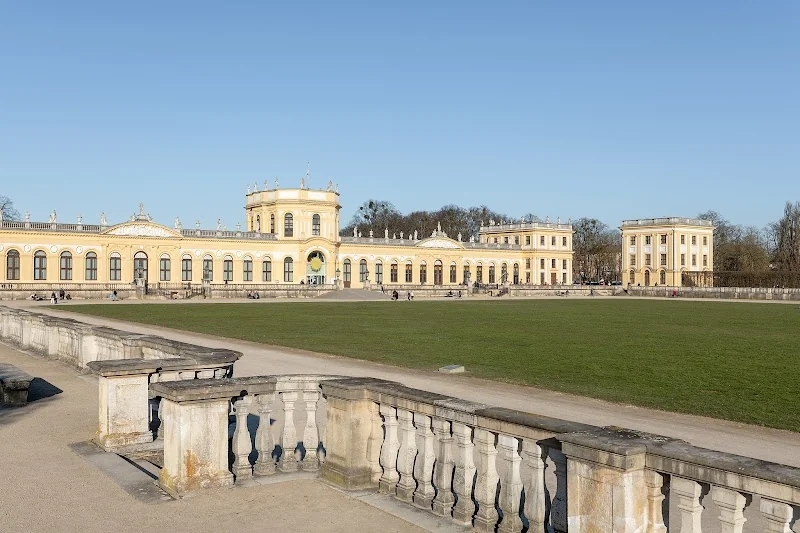
The Karlswiese in the Karlsaue is one of those places in Kassel where landscape, city history, and contemporary art overlap in a particularly natural way. When entering the meadow in front of the Orangerie, one stands not only on a large, open park area but in the middle of a historical ensemble that has shaped the city's image for centuries. This is precisely where the strong search intent behind terms like Karlswiese Kassel, Karlsaue, documenta fifteen, or Orangerie Kassel arises: visitors want to know not only where this place is located but also why it is important, how to reach it, and what makes it special as an exhibition and recreation site. The Karlsaue is a baroque landscape park in close proximity to downtown Kassel and at the same time a place for walks, art encounters, and quiet stays in nature. The Karlswiese forms the wide, open stage in front of the Orangerie, whose yellow facade shapes the view across the area. As a documenta location, the meadow became internationally visible because the idea of an open, non-enclosed art space works particularly well here. Thus, those searching for Karlswiese documenta today are usually looking for a space with history, orientation, and atmosphere rather than a classic hall with a ticket counter. The following description captures exactly this character: with historical facts, practical information, the most important sights in the vicinity, and its classification as part of one of the most significant garden art works in Kassel. ([heritage-kassel.de](https://www.heritage-kassel.de/standorte/karlsaue))
Why the Karlswiese is a central documenta location
The Karlswiese is not just any area in the park for the documenta, but a place with high symbolic power. The official documenta site describes the large Karlswiese in front of the Orangerie as the heart of the Staatspark Karlsaue and emphasizes that the baroque Aue park has been an important exhibition site for the documenta for many years. This classification is important because it explains why the meadow is so often associated with documenta fifteen in search queries: the area was not merely a backdrop but part of a curated outdoor space where art, leisure, and movement came together. For documenta fifteen, Cinema Caravan and Takashi Kuribayashi were showcased there, among others, working with tents, a herbal sauna, and an open-air cinema. This made the Karlswiese a place where exhibition and communal experience directly overlapped. The Nest Collective was also present with Return to Sender, an immersive installation that addressed the transport of waste, electronic waste, and textiles to countries in the Global South. This program was complemented by Cao Minghao & Chen Jianjun, who worked on-site with a tent. These projects illustrate why the Karlswiese is such a special event location: it is open enough for large installations while being sensitively embedded in the historical park landscape. The place thus tells a double story. On one hand, it stands for the present of documenta fifteen and the lumbung idea of communal work. On the other hand, it refers to the much longer history of documenta in Kassel, as the Federal Garden Show in 1955 was closely linked to Arnold Bode's first documenta. Understanding the place means also understanding a part of Kassel's art history. ([documenta-fifteen.de](https://documenta-fifteen.de/ausstellungsorte/karlswiese-karlsaue/))
The documented presence of documenta fifteen at the Karlswiese was strongly shaped by the openness of the site. The site explicitly describes the place as outdoors and refers to opening hours, access, accessibility, and events. This is an important note for anyone searching for Karlswiese kassel or karlsaue kassel: this is not a closed event hall but an outdoor space where the weather, the ground, and the park-like surroundings become part of the experience. This is precisely where the charm of the place lies. The meadow offers enough space for visitors to move freely, linger, or view the installations from different angles. At the same time, the backdrop of the Orangerie remains ever-present, anchoring the temporary art in the city's permanent memory. This combination of temporary artistic use and historical permanence makes the Karlswiese an ideal example of how documenta functions in Kassel: not only within museum spaces but as an urban intervention in the city, park, and everyday life. Therefore, anyone interested in documenta kassel will find one of the most significant outdoor locations of the exhibition here. And anyone asking about the special character of the site receives a simple answer: The Karlswiese is large, open, historically charged, and for that reason, so convincing as a place for outdoor art. ([documenta-fifteen.de](https://documenta-fifteen.de/ausstellungsorte/karlswiese-karlsaue/))
How do I get to the Karlswiese and where can I park?
The official address of the Karlswiese is An der Karlsaue, 34121 Kassel. This simple information is particularly helpful for orientation because the Karlswiese is very well known but does not function like a closed building as an open park area. Those arriving by car should best orient themselves to the street Am Auedamm, as the documenta site recommends parking there and refers to using the eastern park entrances of the Karlsaue section. This is practical because access to the meadow is through the park itself and not through a classic entrance with a ticket area. At the same time, the Kassel parking fee regulations show that the area around the Karlsaue is traffic-integrated: among other things, An der Karlsaue and Auedamm are mentioned as relevant streets in the urban park space. For visitors, this means that there are public parking options nearby, but no parking garage exclusively reserved for the Karlswiese. Especially during events or larger visitor flows, careful travel planning is advisable. The ground in the exhibition section consists, according to the documenta site, of coarse to fine gravel and grass, which is typical for a park but also means that sturdy footwear is usually more comfortable than fine city fashion. Those reaching the Karlswiese by bike or on foot benefit from the dense network of paths in the Karlsaue and from the proximity to downtown. The location is one of the great advantages: the park is not located on the outskirts of the city but in a very accessible inner-city green zone. This is precisely why the Karlswiese often appears together with An der Karlsaue, Auedamm, and Karlsaue Kassel in search queries. It is not only a place for art but also a well-accessible meeting point in southern Kassel. ([documenta-fifteen.de](https://documenta-fifteen.de/ausstellungsorte/karlswiese-karlsaue/))
For practical planning, it is also important to note that the documenta site does not indicate any toilets directly at this location. This may sound unremarkable at first, but it is a useful note for longer stays or for families. Therefore, anyone wishing to spend the day at the Karlswiese should consider the infrastructure of the wider park or the surrounding area. At the same time, Hessen Kassel Heritage generally states that the Karlsaue park has good accessibility and points out parking spaces for people with disabilities. This makes it clear that the park is overall designed for visitors, even if the individual meadow area does not have hall-like infrastructure. It is also particularly interesting that the Karlswiese is located in the Kassel Südstadt, a district where the Karlsaue is described as the green heart. This connects the journey not only with a practical question but with an urban experience: one moves from the urban space into a historical landscape park. Paying attention to the way, one already experiences the transformation from city to park before reaching the actual destination. Especially for SEO topics like parking, access, or seating plan, it is important to understand that the site itself does not have a classic seating plan. It is an open area that is used differently depending on the event. Therefore, questions about access, ground conditions, entrances, and nearby parking spaces are more relevant for the Karlswiese than questions about numbered seats or rows. ([documenta-fifteen.de](https://documenta-fifteen.de/ausstellungsorte/karlswiese-karlsaue/))
Karlsaue, Orangerie, and the baroque history surrounding the meadow
The Karlswiese gains its special effect primarily through the Karlsaue itself. Hessen Kassel Heritage describes the park as an outstanding work of garden art in close proximity to downtown and points out that Landgrave Carl had the baroque garden laid out over 300 years ago. Later, Landgrave Wilhelm IX transformed the site into an English landscape garden. These two historical layers are still visible today and make the Karlsaue more than just a green area. It is a consciously composed landscape space with water channels, axes, and sight relationships that shape the park-wide character. The city of Kassel speaks of a park of about 150 hectares in immediate proximity to downtown, located between Rosenhang and Fulda. Right in this ensemble is the Karlswiese in front of the Orangerie, and that is why it appears so generous and at the same time so orderly. The Orangerie itself forms the northern beginning of the Karlsaue and, with its yellow glowing structure, is one of the most prominent architectural monuments of the park. Today, it houses Hesse's largest planetarium, and from there the planetary hiking trail begins. This makes the Karlsaue not only historically interesting but also thematically rich: art, astronomy, garden architecture, and urban nature come together in close proximity. In addition to the Orangerie and Karlswiese, other highlights belong to the park, such as the flower island Siebenbergen, the Rosenhang, and the marble bath. Therefore, those searching for karlsaue kassel often look for exactly this mix of history, recreation, and sights. The Karlswiese is the wide, open center in this structure that focuses the view on the Orangerie and makes the baroque character of the entire ensemble particularly clear. ([heritage-kassel.de](https://www.heritage-kassel.de/standorte/karlsaue))
It is precisely the connection of historical park architecture and open event space that makes the Karlswiese so memorable for visitors. The Karlsaue was designed around 1700 as a symmetrical baroque garden with water basins and fan-shaped channels and later transformed into a landscape garden in the English style. However, the baroque sight and meaning axes are still perceptible today. When looking from the Karlswiese towards the Orangerie, one does not simply experience a beautiful meadow but a deliberately composed space. The area is part of a long urban planning and garden artistic tradition that manifests itself in Kassel differently than in many other cities. The city and Kassel Marketing emphasize that the Karlsaue is the second baroque landscape park next to the Bergpark Kassel. This is an important search term for anyone looking for karlsaue park or park karlsaue. Because it becomes clear: The Karlswiese is not to be understood in isolation but as a central building block of a large, historically grown park. Its open form allows for events, walks, and quiet moments alike. This is where the strength of the place lies. Standing on the Karlswiese, one does not feel like standing on any random lawn but on a meadow that makes city history visible. This connection also explains why the meadow is so strongly occupied in the documenta tradition. Art can engage in a dialogue with the historical space here without the surroundings being reduced to a mere backdrop. The landscape itself becomes part of the experience. ([heritage-kassel.de](https://www.heritage-kassel.de/standorte/karlsaue))
What walking paths, highlights, and neighboring places are nearby?
The Karlswiese is not only a destination but also a starting point for a walk through one of the most beautiful inner-city green spaces in Kassel. The Karlsaue is described by the city as a popular meeting point and is located in immediate proximity to the Fulda riverbank. This location makes the area particularly attractive for people who want to combine nature and city. In the Südstadt, art and greenery are closely intertwined: the Karlsaue is directly adjacent to the Kassel Art Academy, and numerous galleries and project spaces have settled in the vicinity. Therefore, those searching for südstadt kassel or ausstellungsort kassel will find a particularly dense cultural environment here. At the same time, the park is not only exciting for art enthusiasts. The city of Kassel recommends walks along the artistically designed still waters and points out that the Karlsaue is a place where the princely past of the city can be traced in an open landscape. In this way, the meadow becomes a starting point for discoveries in nature. Particularly popular are the path to the Orangerie, the flower island Siebenbergen with its changing floral splendor, and the Rosenhang. The planetary hiking trail is also a special attraction because it links the dimensions of the solar system with the elements of the park. Therefore, anyone planning a visit to the Karlswiese can very well combine the stay with a longer walk. The route from the meadow over the Orangerie to the other park areas is not a hectic museum visit but a slow experience of space, light, and perspective. This is precisely what distinguishes the place from many classic event spaces. The Karlswiese is open but not arbitrary; it is accessible but clearly anchored in a historical garden architecture. ([visit.kassel.de](https://visit.kassel.de/quartiere/quartier-suedstadt))
For visitors particularly interested in documenta, it is also worthwhile to take a look at the digital documenta tour through the Staatspark Karlsaue. The city of Kassel and Kassel Marketing refer to a circular route of 5.6 kilometers, where seven documenta outdoor artworks can be discovered. This shows that the Karlsaue functions as an art and experience space far beyond individual exhibition days. The Karlswiese fits excellently into this logic because it mediates as an open space between park architecture and temporary installations. Those taking the tour experience the park not as a background but as an active part of the documenta story. This is also relevant for search queries like documenta kassel, open air kassel, or karlsaue documenta, as the outdoor locations are closely connected to the urban space. Additionally, the Karlsaue is within walking distance to downtown, thus establishing an ideal connection between urban everyday life and recreational space. Kassel Marketing describes the facility as a special kind of artwork within the Südstadt. This formulation is fitting because the park indeed appears like a walkable overall composition. On the way from the Karlswiese to other areas of the park, visitors encounter old axes, water surfaces, viewpoints, and always new perspectives on the Orangerie. This is exactly what makes the place so attractive: it is not a single destination but the beginning of many possible paths. ([visit.kassel.de](https://visit.kassel.de/tour/digitaler-documenta-rundgang-durch-den-staatspark-karlsaue?utm_source=openai))
Accessibility, toilets, and the most important practical details
Those visiting the Karlswiese should be aware of the practical nature of the place. The documenta site explicitly states for this exhibition location that the ground throughout the park consists of coarse to fine gravel and grass. This is completely normal for a park meadow but has direct implications for visitor planning. For people with limited mobility, it means that part of the path may be uneven and that wheelchairs, strollers, or walking aids require special attention depending on the weather and usage. At the same time, Hessen Kassel Heritage makes it clear that the Karlsaue park is generally wheelchair accessible and provides parking spaces for people with disabilities. This combination is important because it shows: the park is open and accessible, but the specific path layout within the Karlswiese remains, by nature, an outdoor context. Assistance dogs are also allowed. For visitors, this results in a realistic picture: the Karlswiese is not a barrier-free indoor facility with smooth floors and standardized aisles, but a historical outdoor space with good but not completely standardized conditions. This is not a disadvantage but part of its character. At the same time, one should know that there are no toilets available in the documented part of the Karlswiese. This is a relevant point, especially for families, older visitors, or longer stays. Those wishing to plan their day well should also consider the infrastructure of the entire park and the surrounding area. Another practical note is that the documenta site recommends entrances near the street Am Auedamm on the eastern side of the park. This significantly facilitates orientation. For a relaxed tour, sturdy footwear, weather-appropriate clothing, and a realistic view of the open spaces are advisable. These notes are not spectacular SEO phrases but help with genuine visit planning. Therefore, the Karlswiese often appears with terms like accessibility, access, and parking: these topics are simply central for an open outdoor location. ([documenta-fifteen.de](https://documenta-fifteen.de/ausstellungsorte/karlswiese-karlsaue/))
At the same time, the Karlswiese is particularly attractive because of its openness. There is no fixed seating arrangement, no classic seating plan, and no entry situation like in a theater. This is important because some users searching for tickets or seating plans may orient themselves toward conventional event venues, but here a different logic applies. The Karlswiese is an open area in the park, whose use varies depending on the event. When documenta fifteen set up an open-air cinema, tents, or installations there, the order emerged only through the respective artistic setting. Outside of such occasions, the meadow remains an open place for strolling, lingering, and observing. This is also the reason why visitors often experience the Karlswiese as particularly pleasant: one can take their time, enjoy the view of the Orangerie, and perceive the place without museum pressure. In the combination of historical backdrop, open space, and urban proximity, a low-threshold visit situation arises that is still culturally rich. For SEO texts, this aspect is important because it accurately reflects the user intent behind the terms karlswiese kassel and karlsaue kassel. People want to know how the place works, how to reach it, and what awaits them on-site. The answer is clear: a historical park meadow with art history, open space, and a very special atmosphere. ([documenta-fifteen.de](https://documenta-fifteen.de/ausstellungsorte/karlswiese-karlsaue/))
Tickets, opening hours, and what visitors can expect today
Today, the Karlswiese primarily embodies the character of a public park space. The Karlsaue park is accessible free of charge all year round, distinguishing it from many classic event or museum locations. This is precisely why the Karlswiese remains relevant even outside of major exhibition years: it remains a place that can be visited at any time, regardless of ticket sales or a seasonal event program. During documenta fifteen, the exhibition site had daily opening hours from 10 am to 8 pm, but this information refers to the exhibition operation at that time and not to a permanent hall usage. This is an important distinction for anyone seeking current information. The Karlswiese is not a permanent stage hall with a fixed event calendar today but a historical meadow in the park that can be used for cultural formats as needed. The documenta site shows how flexibly the place functioned in an exhibition: outdoors, open, and with changing installations. The park itself remains a place for walks, relaxation, and urban experience throughout the year. Therefore, anyone searching for tickets, programs, or events should distinguish between the historical documenta context and the current park usage. For a normal visit, no admission is required. Different regulations may apply for special events, but the Karlswiese as a public space remains freely accessible. This gives the place a dual function: on one hand, it is a memorial site of documenta fifteen, and on the other hand, it is an everyday park space for the urban community. This connection makes it so valuable. One can read the Karlswiese as a cultural site without losing its function as an open meadow. It can be used as a recreational space without overlooking its historical and artistic significance. This balance is rare and explains why the place is perceived so strongly in Kassel. ([heritage-kassel.de](https://www.heritage-kassel.de/standorte/karlsaue))
Therefore, anyone visiting the Karlswiese today should not only see it as a name on a documenta list but as part of a vibrant urban space. The large open area in front of the Orangerie, the historical park structure, the proximity to the Fulda, and the accessibility from downtown make it a place that is interesting for very different visitor groups. Culture fans come for the documenta history, walkers for the landscape, families for the open green space, and visitors to Kassel for the combination of park, architecture, and art reference. This is precisely why the Karlswiese is so well-suited for SEO: it unites several search intents in a clear destination. The search terms karlswiese kassel, karlsaue, orangerie kassel, parking, and access each describe only a part of the actual usage experience. In reality, everything belongs together. The place is open, historical, cultural, and practical at the same time. When standing on the Karlswiese, one is not just looking at a meadow but at a piece of Kassel identity. And that is the strongest message for anyone searching for an extraordinary open-air location in Kassel: The Karlswiese in the Karlsaue is one of the few places where baroque garden art, documenta history, and free urban nature intertwine so seamlessly. ([heritage-kassel.de](https://www.heritage-kassel.de/standorte/karlsaue))
Sources:
- documenta fifteen – Karlswiese (Karlsaue) ([documenta-fifteen.de](https://documenta-fifteen.de/ausstellungsorte/karlswiese-karlsaue/))
- Hessen Kassel Heritage – Park Karlsaue ([heritage-kassel.de](https://www.heritage-kassel.de/standorte/karlsaue))
- City of Kassel – Südstadt and Karlsaue ([visit.kassel.de](https://visit.kassel.de/quartiere/quartier-suedstadt))
- City of Kassel – Park fee regulations and An der Karlsaue / Auedamm ([kassel.de](https://www.kassel.de/satzungen/3.18-parkgebuehrenordnung.php))
Mehr anzeigenWeniger anzeigen
Karlswiese (Karlsaue) | documenta fifteen & Karlsaue
The Karlswiese in the Karlsaue is one of those places in Kassel where landscape, city history, and contemporary art overlap in a particularly natural way. When entering the meadow in front of the Orangerie, one stands not only on a large, open park area but in the middle of a historical ensemble that has shaped the city's image for centuries. This is precisely where the strong search intent behind terms like Karlswiese Kassel, Karlsaue, documenta fifteen, or Orangerie Kassel arises: visitors want to know not only where this place is located but also why it is important, how to reach it, and what makes it special as an exhibition and recreation site. The Karlsaue is a baroque landscape park in close proximity to downtown Kassel and at the same time a place for walks, art encounters, and quiet stays in nature. The Karlswiese forms the wide, open stage in front of the Orangerie, whose yellow facade shapes the view across the area. As a documenta location, the meadow became internationally visible because the idea of an open, non-enclosed art space works particularly well here. Thus, those searching for Karlswiese documenta today are usually looking for a space with history, orientation, and atmosphere rather than a classic hall with a ticket counter. The following description captures exactly this character: with historical facts, practical information, the most important sights in the vicinity, and its classification as part of one of the most significant garden art works in Kassel. ([heritage-kassel.de](https://www.heritage-kassel.de/standorte/karlsaue))
Why the Karlswiese is a central documenta location
The Karlswiese is not just any area in the park for the documenta, but a place with high symbolic power. The official documenta site describes the large Karlswiese in front of the Orangerie as the heart of the Staatspark Karlsaue and emphasizes that the baroque Aue park has been an important exhibition site for the documenta for many years. This classification is important because it explains why the meadow is so often associated with documenta fifteen in search queries: the area was not merely a backdrop but part of a curated outdoor space where art, leisure, and movement came together. For documenta fifteen, Cinema Caravan and Takashi Kuribayashi were showcased there, among others, working with tents, a herbal sauna, and an open-air cinema. This made the Karlswiese a place where exhibition and communal experience directly overlapped. The Nest Collective was also present with Return to Sender, an immersive installation that addressed the transport of waste, electronic waste, and textiles to countries in the Global South. This program was complemented by Cao Minghao & Chen Jianjun, who worked on-site with a tent. These projects illustrate why the Karlswiese is such a special event location: it is open enough for large installations while being sensitively embedded in the historical park landscape. The place thus tells a double story. On one hand, it stands for the present of documenta fifteen and the lumbung idea of communal work. On the other hand, it refers to the much longer history of documenta in Kassel, as the Federal Garden Show in 1955 was closely linked to Arnold Bode's first documenta. Understanding the place means also understanding a part of Kassel's art history. ([documenta-fifteen.de](https://documenta-fifteen.de/ausstellungsorte/karlswiese-karlsaue/))
The documented presence of documenta fifteen at the Karlswiese was strongly shaped by the openness of the site. The site explicitly describes the place as outdoors and refers to opening hours, access, accessibility, and events. This is an important note for anyone searching for Karlswiese kassel or karlsaue kassel: this is not a closed event hall but an outdoor space where the weather, the ground, and the park-like surroundings become part of the experience. This is precisely where the charm of the place lies. The meadow offers enough space for visitors to move freely, linger, or view the installations from different angles. At the same time, the backdrop of the Orangerie remains ever-present, anchoring the temporary art in the city's permanent memory. This combination of temporary artistic use and historical permanence makes the Karlswiese an ideal example of how documenta functions in Kassel: not only within museum spaces but as an urban intervention in the city, park, and everyday life. Therefore, anyone interested in documenta kassel will find one of the most significant outdoor locations of the exhibition here. And anyone asking about the special character of the site receives a simple answer: The Karlswiese is large, open, historically charged, and for that reason, so convincing as a place for outdoor art. ([documenta-fifteen.de](https://documenta-fifteen.de/ausstellungsorte/karlswiese-karlsaue/))
How do I get to the Karlswiese and where can I park?
The official address of the Karlswiese is An der Karlsaue, 34121 Kassel. This simple information is particularly helpful for orientation because the Karlswiese is very well known but does not function like a closed building as an open park area. Those arriving by car should best orient themselves to the street Am Auedamm, as the documenta site recommends parking there and refers to using the eastern park entrances of the Karlsaue section. This is practical because access to the meadow is through the park itself and not through a classic entrance with a ticket area. At the same time, the Kassel parking fee regulations show that the area around the Karlsaue is traffic-integrated: among other things, An der Karlsaue and Auedamm are mentioned as relevant streets in the urban park space. For visitors, this means that there are public parking options nearby, but no parking garage exclusively reserved for the Karlswiese. Especially during events or larger visitor flows, careful travel planning is advisable. The ground in the exhibition section consists, according to the documenta site, of coarse to fine gravel and grass, which is typical for a park but also means that sturdy footwear is usually more comfortable than fine city fashion. Those reaching the Karlswiese by bike or on foot benefit from the dense network of paths in the Karlsaue and from the proximity to downtown. The location is one of the great advantages: the park is not located on the outskirts of the city but in a very accessible inner-city green zone. This is precisely why the Karlswiese often appears together with An der Karlsaue, Auedamm, and Karlsaue Kassel in search queries. It is not only a place for art but also a well-accessible meeting point in southern Kassel. ([documenta-fifteen.de](https://documenta-fifteen.de/ausstellungsorte/karlswiese-karlsaue/))
For practical planning, it is also important to note that the documenta site does not indicate any toilets directly at this location. This may sound unremarkable at first, but it is a useful note for longer stays or for families. Therefore, anyone wishing to spend the day at the Karlswiese should consider the infrastructure of the wider park or the surrounding area. At the same time, Hessen Kassel Heritage generally states that the Karlsaue park has good accessibility and points out parking spaces for people with disabilities. This makes it clear that the park is overall designed for visitors, even if the individual meadow area does not have hall-like infrastructure. It is also particularly interesting that the Karlswiese is located in the Kassel Südstadt, a district where the Karlsaue is described as the green heart. This connects the journey not only with a practical question but with an urban experience: one moves from the urban space into a historical landscape park. Paying attention to the way, one already experiences the transformation from city to park before reaching the actual destination. Especially for SEO topics like parking, access, or seating plan, it is important to understand that the site itself does not have a classic seating plan. It is an open area that is used differently depending on the event. Therefore, questions about access, ground conditions, entrances, and nearby parking spaces are more relevant for the Karlswiese than questions about numbered seats or rows. ([documenta-fifteen.de](https://documenta-fifteen.de/ausstellungsorte/karlswiese-karlsaue/))
Karlsaue, Orangerie, and the baroque history surrounding the meadow
The Karlswiese gains its special effect primarily through the Karlsaue itself. Hessen Kassel Heritage describes the park as an outstanding work of garden art in close proximity to downtown and points out that Landgrave Carl had the baroque garden laid out over 300 years ago. Later, Landgrave Wilhelm IX transformed the site into an English landscape garden. These two historical layers are still visible today and make the Karlsaue more than just a green area. It is a consciously composed landscape space with water channels, axes, and sight relationships that shape the park-wide character. The city of Kassel speaks of a park of about 150 hectares in immediate proximity to downtown, located between Rosenhang and Fulda. Right in this ensemble is the Karlswiese in front of the Orangerie, and that is why it appears so generous and at the same time so orderly. The Orangerie itself forms the northern beginning of the Karlsaue and, with its yellow glowing structure, is one of the most prominent architectural monuments of the park. Today, it houses Hesse's largest planetarium, and from there the planetary hiking trail begins. This makes the Karlsaue not only historically interesting but also thematically rich: art, astronomy, garden architecture, and urban nature come together in close proximity. In addition to the Orangerie and Karlswiese, other highlights belong to the park, such as the flower island Siebenbergen, the Rosenhang, and the marble bath. Therefore, those searching for karlsaue kassel often look for exactly this mix of history, recreation, and sights. The Karlswiese is the wide, open center in this structure that focuses the view on the Orangerie and makes the baroque character of the entire ensemble particularly clear. ([heritage-kassel.de](https://www.heritage-kassel.de/standorte/karlsaue))
It is precisely the connection of historical park architecture and open event space that makes the Karlswiese so memorable for visitors. The Karlsaue was designed around 1700 as a symmetrical baroque garden with water basins and fan-shaped channels and later transformed into a landscape garden in the English style. However, the baroque sight and meaning axes are still perceptible today. When looking from the Karlswiese towards the Orangerie, one does not simply experience a beautiful meadow but a deliberately composed space. The area is part of a long urban planning and garden artistic tradition that manifests itself in Kassel differently than in many other cities. The city and Kassel Marketing emphasize that the Karlsaue is the second baroque landscape park next to the Bergpark Kassel. This is an important search term for anyone looking for karlsaue park or park karlsaue. Because it becomes clear: The Karlswiese is not to be understood in isolation but as a central building block of a large, historically grown park. Its open form allows for events, walks, and quiet moments alike. This is where the strength of the place lies. Standing on the Karlswiese, one does not feel like standing on any random lawn but on a meadow that makes city history visible. This connection also explains why the meadow is so strongly occupied in the documenta tradition. Art can engage in a dialogue with the historical space here without the surroundings being reduced to a mere backdrop. The landscape itself becomes part of the experience. ([heritage-kassel.de](https://www.heritage-kassel.de/standorte/karlsaue))
What walking paths, highlights, and neighboring places are nearby?
The Karlswiese is not only a destination but also a starting point for a walk through one of the most beautiful inner-city green spaces in Kassel. The Karlsaue is described by the city as a popular meeting point and is located in immediate proximity to the Fulda riverbank. This location makes the area particularly attractive for people who want to combine nature and city. In the Südstadt, art and greenery are closely intertwined: the Karlsaue is directly adjacent to the Kassel Art Academy, and numerous galleries and project spaces have settled in the vicinity. Therefore, those searching for südstadt kassel or ausstellungsort kassel will find a particularly dense cultural environment here. At the same time, the park is not only exciting for art enthusiasts. The city of Kassel recommends walks along the artistically designed still waters and points out that the Karlsaue is a place where the princely past of the city can be traced in an open landscape. In this way, the meadow becomes a starting point for discoveries in nature. Particularly popular are the path to the Orangerie, the flower island Siebenbergen with its changing floral splendor, and the Rosenhang. The planetary hiking trail is also a special attraction because it links the dimensions of the solar system with the elements of the park. Therefore, anyone planning a visit to the Karlswiese can very well combine the stay with a longer walk. The route from the meadow over the Orangerie to the other park areas is not a hectic museum visit but a slow experience of space, light, and perspective. This is precisely what distinguishes the place from many classic event spaces. The Karlswiese is open but not arbitrary; it is accessible but clearly anchored in a historical garden architecture. ([visit.kassel.de](https://visit.kassel.de/quartiere/quartier-suedstadt))
For visitors particularly interested in documenta, it is also worthwhile to take a look at the digital documenta tour through the Staatspark Karlsaue. The city of Kassel and Kassel Marketing refer to a circular route of 5.6 kilometers, where seven documenta outdoor artworks can be discovered. This shows that the Karlsaue functions as an art and experience space far beyond individual exhibition days. The Karlswiese fits excellently into this logic because it mediates as an open space between park architecture and temporary installations. Those taking the tour experience the park not as a background but as an active part of the documenta story. This is also relevant for search queries like documenta kassel, open air kassel, or karlsaue documenta, as the outdoor locations are closely connected to the urban space. Additionally, the Karlsaue is within walking distance to downtown, thus establishing an ideal connection between urban everyday life and recreational space. Kassel Marketing describes the facility as a special kind of artwork within the Südstadt. This formulation is fitting because the park indeed appears like a walkable overall composition. On the way from the Karlswiese to other areas of the park, visitors encounter old axes, water surfaces, viewpoints, and always new perspectives on the Orangerie. This is exactly what makes the place so attractive: it is not a single destination but the beginning of many possible paths. ([visit.kassel.de](https://visit.kassel.de/tour/digitaler-documenta-rundgang-durch-den-staatspark-karlsaue?utm_source=openai))
Accessibility, toilets, and the most important practical details
Those visiting the Karlswiese should be aware of the practical nature of the place. The documenta site explicitly states for this exhibition location that the ground throughout the park consists of coarse to fine gravel and grass. This is completely normal for a park meadow but has direct implications for visitor planning. For people with limited mobility, it means that part of the path may be uneven and that wheelchairs, strollers, or walking aids require special attention depending on the weather and usage. At the same time, Hessen Kassel Heritage makes it clear that the Karlsaue park is generally wheelchair accessible and provides parking spaces for people with disabilities. This combination is important because it shows: the park is open and accessible, but the specific path layout within the Karlswiese remains, by nature, an outdoor context. Assistance dogs are also allowed. For visitors, this results in a realistic picture: the Karlswiese is not a barrier-free indoor facility with smooth floors and standardized aisles, but a historical outdoor space with good but not completely standardized conditions. This is not a disadvantage but part of its character. At the same time, one should know that there are no toilets available in the documented part of the Karlswiese. This is a relevant point, especially for families, older visitors, or longer stays. Those wishing to plan their day well should also consider the infrastructure of the entire park and the surrounding area. Another practical note is that the documenta site recommends entrances near the street Am Auedamm on the eastern side of the park. This significantly facilitates orientation. For a relaxed tour, sturdy footwear, weather-appropriate clothing, and a realistic view of the open spaces are advisable. These notes are not spectacular SEO phrases but help with genuine visit planning. Therefore, the Karlswiese often appears with terms like accessibility, access, and parking: these topics are simply central for an open outdoor location. ([documenta-fifteen.de](https://documenta-fifteen.de/ausstellungsorte/karlswiese-karlsaue/))
At the same time, the Karlswiese is particularly attractive because of its openness. There is no fixed seating arrangement, no classic seating plan, and no entry situation like in a theater. This is important because some users searching for tickets or seating plans may orient themselves toward conventional event venues, but here a different logic applies. The Karlswiese is an open area in the park, whose use varies depending on the event. When documenta fifteen set up an open-air cinema, tents, or installations there, the order emerged only through the respective artistic setting. Outside of such occasions, the meadow remains an open place for strolling, lingering, and observing. This is also the reason why visitors often experience the Karlswiese as particularly pleasant: one can take their time, enjoy the view of the Orangerie, and perceive the place without museum pressure. In the combination of historical backdrop, open space, and urban proximity, a low-threshold visit situation arises that is still culturally rich. For SEO texts, this aspect is important because it accurately reflects the user intent behind the terms karlswiese kassel and karlsaue kassel. People want to know how the place works, how to reach it, and what awaits them on-site. The answer is clear: a historical park meadow with art history, open space, and a very special atmosphere. ([documenta-fifteen.de](https://documenta-fifteen.de/ausstellungsorte/karlswiese-karlsaue/))
Tickets, opening hours, and what visitors can expect today
Today, the Karlswiese primarily embodies the character of a public park space. The Karlsaue park is accessible free of charge all year round, distinguishing it from many classic event or museum locations. This is precisely why the Karlswiese remains relevant even outside of major exhibition years: it remains a place that can be visited at any time, regardless of ticket sales or a seasonal event program. During documenta fifteen, the exhibition site had daily opening hours from 10 am to 8 pm, but this information refers to the exhibition operation at that time and not to a permanent hall usage. This is an important distinction for anyone seeking current information. The Karlswiese is not a permanent stage hall with a fixed event calendar today but a historical meadow in the park that can be used for cultural formats as needed. The documenta site shows how flexibly the place functioned in an exhibition: outdoors, open, and with changing installations. The park itself remains a place for walks, relaxation, and urban experience throughout the year. Therefore, anyone searching for tickets, programs, or events should distinguish between the historical documenta context and the current park usage. For a normal visit, no admission is required. Different regulations may apply for special events, but the Karlswiese as a public space remains freely accessible. This gives the place a dual function: on one hand, it is a memorial site of documenta fifteen, and on the other hand, it is an everyday park space for the urban community. This connection makes it so valuable. One can read the Karlswiese as a cultural site without losing its function as an open meadow. It can be used as a recreational space without overlooking its historical and artistic significance. This balance is rare and explains why the place is perceived so strongly in Kassel. ([heritage-kassel.de](https://www.heritage-kassel.de/standorte/karlsaue))
Therefore, anyone visiting the Karlswiese today should not only see it as a name on a documenta list but as part of a vibrant urban space. The large open area in front of the Orangerie, the historical park structure, the proximity to the Fulda, and the accessibility from downtown make it a place that is interesting for very different visitor groups. Culture fans come for the documenta history, walkers for the landscape, families for the open green space, and visitors to Kassel for the combination of park, architecture, and art reference. This is precisely why the Karlswiese is so well-suited for SEO: it unites several search intents in a clear destination. The search terms karlswiese kassel, karlsaue, orangerie kassel, parking, and access each describe only a part of the actual usage experience. In reality, everything belongs together. The place is open, historical, cultural, and practical at the same time. When standing on the Karlswiese, one is not just looking at a meadow but at a piece of Kassel identity. And that is the strongest message for anyone searching for an extraordinary open-air location in Kassel: The Karlswiese in the Karlsaue is one of the few places where baroque garden art, documenta history, and free urban nature intertwine so seamlessly. ([heritage-kassel.de](https://www.heritage-kassel.de/standorte/karlsaue))
Sources:
- documenta fifteen – Karlswiese (Karlsaue) ([documenta-fifteen.de](https://documenta-fifteen.de/ausstellungsorte/karlswiese-karlsaue/))
- Hessen Kassel Heritage – Park Karlsaue ([heritage-kassel.de](https://www.heritage-kassel.de/standorte/karlsaue))
- City of Kassel – Südstadt and Karlsaue ([visit.kassel.de](https://visit.kassel.de/quartiere/quartier-suedstadt))
- City of Kassel – Park fee regulations and An der Karlsaue / Auedamm ([kassel.de](https://www.kassel.de/satzungen/3.18-parkgebuehrenordnung.php))
Karlswiese (Karlsaue) | documenta fifteen & Karlsaue
The Karlswiese in the Karlsaue is one of those places in Kassel where landscape, city history, and contemporary art overlap in a particularly natural way. When entering the meadow in front of the Orangerie, one stands not only on a large, open park area but in the middle of a historical ensemble that has shaped the city's image for centuries. This is precisely where the strong search intent behind terms like Karlswiese Kassel, Karlsaue, documenta fifteen, or Orangerie Kassel arises: visitors want to know not only where this place is located but also why it is important, how to reach it, and what makes it special as an exhibition and recreation site. The Karlsaue is a baroque landscape park in close proximity to downtown Kassel and at the same time a place for walks, art encounters, and quiet stays in nature. The Karlswiese forms the wide, open stage in front of the Orangerie, whose yellow facade shapes the view across the area. As a documenta location, the meadow became internationally visible because the idea of an open, non-enclosed art space works particularly well here. Thus, those searching for Karlswiese documenta today are usually looking for a space with history, orientation, and atmosphere rather than a classic hall with a ticket counter. The following description captures exactly this character: with historical facts, practical information, the most important sights in the vicinity, and its classification as part of one of the most significant garden art works in Kassel. ([heritage-kassel.de](https://www.heritage-kassel.de/standorte/karlsaue))
Why the Karlswiese is a central documenta location
The Karlswiese is not just any area in the park for the documenta, but a place with high symbolic power. The official documenta site describes the large Karlswiese in front of the Orangerie as the heart of the Staatspark Karlsaue and emphasizes that the baroque Aue park has been an important exhibition site for the documenta for many years. This classification is important because it explains why the meadow is so often associated with documenta fifteen in search queries: the area was not merely a backdrop but part of a curated outdoor space where art, leisure, and movement came together. For documenta fifteen, Cinema Caravan and Takashi Kuribayashi were showcased there, among others, working with tents, a herbal sauna, and an open-air cinema. This made the Karlswiese a place where exhibition and communal experience directly overlapped. The Nest Collective was also present with Return to Sender, an immersive installation that addressed the transport of waste, electronic waste, and textiles to countries in the Global South. This program was complemented by Cao Minghao & Chen Jianjun, who worked on-site with a tent. These projects illustrate why the Karlswiese is such a special event location: it is open enough for large installations while being sensitively embedded in the historical park landscape. The place thus tells a double story. On one hand, it stands for the present of documenta fifteen and the lumbung idea of communal work. On the other hand, it refers to the much longer history of documenta in Kassel, as the Federal Garden Show in 1955 was closely linked to Arnold Bode's first documenta. Understanding the place means also understanding a part of Kassel's art history. ([documenta-fifteen.de](https://documenta-fifteen.de/ausstellungsorte/karlswiese-karlsaue/))
The documented presence of documenta fifteen at the Karlswiese was strongly shaped by the openness of the site. The site explicitly describes the place as outdoors and refers to opening hours, access, accessibility, and events. This is an important note for anyone searching for Karlswiese kassel or karlsaue kassel: this is not a closed event hall but an outdoor space where the weather, the ground, and the park-like surroundings become part of the experience. This is precisely where the charm of the place lies. The meadow offers enough space for visitors to move freely, linger, or view the installations from different angles. At the same time, the backdrop of the Orangerie remains ever-present, anchoring the temporary art in the city's permanent memory. This combination of temporary artistic use and historical permanence makes the Karlswiese an ideal example of how documenta functions in Kassel: not only within museum spaces but as an urban intervention in the city, park, and everyday life. Therefore, anyone interested in documenta kassel will find one of the most significant outdoor locations of the exhibition here. And anyone asking about the special character of the site receives a simple answer: The Karlswiese is large, open, historically charged, and for that reason, so convincing as a place for outdoor art. ([documenta-fifteen.de](https://documenta-fifteen.de/ausstellungsorte/karlswiese-karlsaue/))
How do I get to the Karlswiese and where can I park?
The official address of the Karlswiese is An der Karlsaue, 34121 Kassel. This simple information is particularly helpful for orientation because the Karlswiese is very well known but does not function like a closed building as an open park area. Those arriving by car should best orient themselves to the street Am Auedamm, as the documenta site recommends parking there and refers to using the eastern park entrances of the Karlsaue section. This is practical because access to the meadow is through the park itself and not through a classic entrance with a ticket area. At the same time, the Kassel parking fee regulations show that the area around the Karlsaue is traffic-integrated: among other things, An der Karlsaue and Auedamm are mentioned as relevant streets in the urban park space. For visitors, this means that there are public parking options nearby, but no parking garage exclusively reserved for the Karlswiese. Especially during events or larger visitor flows, careful travel planning is advisable. The ground in the exhibition section consists, according to the documenta site, of coarse to fine gravel and grass, which is typical for a park but also means that sturdy footwear is usually more comfortable than fine city fashion. Those reaching the Karlswiese by bike or on foot benefit from the dense network of paths in the Karlsaue and from the proximity to downtown. The location is one of the great advantages: the park is not located on the outskirts of the city but in a very accessible inner-city green zone. This is precisely why the Karlswiese often appears together with An der Karlsaue, Auedamm, and Karlsaue Kassel in search queries. It is not only a place for art but also a well-accessible meeting point in southern Kassel. ([documenta-fifteen.de](https://documenta-fifteen.de/ausstellungsorte/karlswiese-karlsaue/))
For practical planning, it is also important to note that the documenta site does not indicate any toilets directly at this location. This may sound unremarkable at first, but it is a useful note for longer stays or for families. Therefore, anyone wishing to spend the day at the Karlswiese should consider the infrastructure of the wider park or the surrounding area. At the same time, Hessen Kassel Heritage generally states that the Karlsaue park has good accessibility and points out parking spaces for people with disabilities. This makes it clear that the park is overall designed for visitors, even if the individual meadow area does not have hall-like infrastructure. It is also particularly interesting that the Karlswiese is located in the Kassel Südstadt, a district where the Karlsaue is described as the green heart. This connects the journey not only with a practical question but with an urban experience: one moves from the urban space into a historical landscape park. Paying attention to the way, one already experiences the transformation from city to park before reaching the actual destination. Especially for SEO topics like parking, access, or seating plan, it is important to understand that the site itself does not have a classic seating plan. It is an open area that is used differently depending on the event. Therefore, questions about access, ground conditions, entrances, and nearby parking spaces are more relevant for the Karlswiese than questions about numbered seats or rows. ([documenta-fifteen.de](https://documenta-fifteen.de/ausstellungsorte/karlswiese-karlsaue/))
Karlsaue, Orangerie, and the baroque history surrounding the meadow
The Karlswiese gains its special effect primarily through the Karlsaue itself. Hessen Kassel Heritage describes the park as an outstanding work of garden art in close proximity to downtown and points out that Landgrave Carl had the baroque garden laid out over 300 years ago. Later, Landgrave Wilhelm IX transformed the site into an English landscape garden. These two historical layers are still visible today and make the Karlsaue more than just a green area. It is a consciously composed landscape space with water channels, axes, and sight relationships that shape the park-wide character. The city of Kassel speaks of a park of about 150 hectares in immediate proximity to downtown, located between Rosenhang and Fulda. Right in this ensemble is the Karlswiese in front of the Orangerie, and that is why it appears so generous and at the same time so orderly. The Orangerie itself forms the northern beginning of the Karlsaue and, with its yellow glowing structure, is one of the most prominent architectural monuments of the park. Today, it houses Hesse's largest planetarium, and from there the planetary hiking trail begins. This makes the Karlsaue not only historically interesting but also thematically rich: art, astronomy, garden architecture, and urban nature come together in close proximity. In addition to the Orangerie and Karlswiese, other highlights belong to the park, such as the flower island Siebenbergen, the Rosenhang, and the marble bath. Therefore, those searching for karlsaue kassel often look for exactly this mix of history, recreation, and sights. The Karlswiese is the wide, open center in this structure that focuses the view on the Orangerie and makes the baroque character of the entire ensemble particularly clear. ([heritage-kassel.de](https://www.heritage-kassel.de/standorte/karlsaue))
It is precisely the connection of historical park architecture and open event space that makes the Karlswiese so memorable for visitors. The Karlsaue was designed around 1700 as a symmetrical baroque garden with water basins and fan-shaped channels and later transformed into a landscape garden in the English style. However, the baroque sight and meaning axes are still perceptible today. When looking from the Karlswiese towards the Orangerie, one does not simply experience a beautiful meadow but a deliberately composed space. The area is part of a long urban planning and garden artistic tradition that manifests itself in Kassel differently than in many other cities. The city and Kassel Marketing emphasize that the Karlsaue is the second baroque landscape park next to the Bergpark Kassel. This is an important search term for anyone looking for karlsaue park or park karlsaue. Because it becomes clear: The Karlswiese is not to be understood in isolation but as a central building block of a large, historically grown park. Its open form allows for events, walks, and quiet moments alike. This is where the strength of the place lies. Standing on the Karlswiese, one does not feel like standing on any random lawn but on a meadow that makes city history visible. This connection also explains why the meadow is so strongly occupied in the documenta tradition. Art can engage in a dialogue with the historical space here without the surroundings being reduced to a mere backdrop. The landscape itself becomes part of the experience. ([heritage-kassel.de](https://www.heritage-kassel.de/standorte/karlsaue))
What walking paths, highlights, and neighboring places are nearby?
The Karlswiese is not only a destination but also a starting point for a walk through one of the most beautiful inner-city green spaces in Kassel. The Karlsaue is described by the city as a popular meeting point and is located in immediate proximity to the Fulda riverbank. This location makes the area particularly attractive for people who want to combine nature and city. In the Südstadt, art and greenery are closely intertwined: the Karlsaue is directly adjacent to the Kassel Art Academy, and numerous galleries and project spaces have settled in the vicinity. Therefore, those searching for südstadt kassel or ausstellungsort kassel will find a particularly dense cultural environment here. At the same time, the park is not only exciting for art enthusiasts. The city of Kassel recommends walks along the artistically designed still waters and points out that the Karlsaue is a place where the princely past of the city can be traced in an open landscape. In this way, the meadow becomes a starting point for discoveries in nature. Particularly popular are the path to the Orangerie, the flower island Siebenbergen with its changing floral splendor, and the Rosenhang. The planetary hiking trail is also a special attraction because it links the dimensions of the solar system with the elements of the park. Therefore, anyone planning a visit to the Karlswiese can very well combine the stay with a longer walk. The route from the meadow over the Orangerie to the other park areas is not a hectic museum visit but a slow experience of space, light, and perspective. This is precisely what distinguishes the place from many classic event spaces. The Karlswiese is open but not arbitrary; it is accessible but clearly anchored in a historical garden architecture. ([visit.kassel.de](https://visit.kassel.de/quartiere/quartier-suedstadt))
For visitors particularly interested in documenta, it is also worthwhile to take a look at the digital documenta tour through the Staatspark Karlsaue. The city of Kassel and Kassel Marketing refer to a circular route of 5.6 kilometers, where seven documenta outdoor artworks can be discovered. This shows that the Karlsaue functions as an art and experience space far beyond individual exhibition days. The Karlswiese fits excellently into this logic because it mediates as an open space between park architecture and temporary installations. Those taking the tour experience the park not as a background but as an active part of the documenta story. This is also relevant for search queries like documenta kassel, open air kassel, or karlsaue documenta, as the outdoor locations are closely connected to the urban space. Additionally, the Karlsaue is within walking distance to downtown, thus establishing an ideal connection between urban everyday life and recreational space. Kassel Marketing describes the facility as a special kind of artwork within the Südstadt. This formulation is fitting because the park indeed appears like a walkable overall composition. On the way from the Karlswiese to other areas of the park, visitors encounter old axes, water surfaces, viewpoints, and always new perspectives on the Orangerie. This is exactly what makes the place so attractive: it is not a single destination but the beginning of many possible paths. ([visit.kassel.de](https://visit.kassel.de/tour/digitaler-documenta-rundgang-durch-den-staatspark-karlsaue?utm_source=openai))
Accessibility, toilets, and the most important practical details
Those visiting the Karlswiese should be aware of the practical nature of the place. The documenta site explicitly states for this exhibition location that the ground throughout the park consists of coarse to fine gravel and grass. This is completely normal for a park meadow but has direct implications for visitor planning. For people with limited mobility, it means that part of the path may be uneven and that wheelchairs, strollers, or walking aids require special attention depending on the weather and usage. At the same time, Hessen Kassel Heritage makes it clear that the Karlsaue park is generally wheelchair accessible and provides parking spaces for people with disabilities. This combination is important because it shows: the park is open and accessible, but the specific path layout within the Karlswiese remains, by nature, an outdoor context. Assistance dogs are also allowed. For visitors, this results in a realistic picture: the Karlswiese is not a barrier-free indoor facility with smooth floors and standardized aisles, but a historical outdoor space with good but not completely standardized conditions. This is not a disadvantage but part of its character. At the same time, one should know that there are no toilets available in the documented part of the Karlswiese. This is a relevant point, especially for families, older visitors, or longer stays. Those wishing to plan their day well should also consider the infrastructure of the entire park and the surrounding area. Another practical note is that the documenta site recommends entrances near the street Am Auedamm on the eastern side of the park. This significantly facilitates orientation. For a relaxed tour, sturdy footwear, weather-appropriate clothing, and a realistic view of the open spaces are advisable. These notes are not spectacular SEO phrases but help with genuine visit planning. Therefore, the Karlswiese often appears with terms like accessibility, access, and parking: these topics are simply central for an open outdoor location. ([documenta-fifteen.de](https://documenta-fifteen.de/ausstellungsorte/karlswiese-karlsaue/))
At the same time, the Karlswiese is particularly attractive because of its openness. There is no fixed seating arrangement, no classic seating plan, and no entry situation like in a theater. This is important because some users searching for tickets or seating plans may orient themselves toward conventional event venues, but here a different logic applies. The Karlswiese is an open area in the park, whose use varies depending on the event. When documenta fifteen set up an open-air cinema, tents, or installations there, the order emerged only through the respective artistic setting. Outside of such occasions, the meadow remains an open place for strolling, lingering, and observing. This is also the reason why visitors often experience the Karlswiese as particularly pleasant: one can take their time, enjoy the view of the Orangerie, and perceive the place without museum pressure. In the combination of historical backdrop, open space, and urban proximity, a low-threshold visit situation arises that is still culturally rich. For SEO texts, this aspect is important because it accurately reflects the user intent behind the terms karlswiese kassel and karlsaue kassel. People want to know how the place works, how to reach it, and what awaits them on-site. The answer is clear: a historical park meadow with art history, open space, and a very special atmosphere. ([documenta-fifteen.de](https://documenta-fifteen.de/ausstellungsorte/karlswiese-karlsaue/))
Tickets, opening hours, and what visitors can expect today
Today, the Karlswiese primarily embodies the character of a public park space. The Karlsaue park is accessible free of charge all year round, distinguishing it from many classic event or museum locations. This is precisely why the Karlswiese remains relevant even outside of major exhibition years: it remains a place that can be visited at any time, regardless of ticket sales or a seasonal event program. During documenta fifteen, the exhibition site had daily opening hours from 10 am to 8 pm, but this information refers to the exhibition operation at that time and not to a permanent hall usage. This is an important distinction for anyone seeking current information. The Karlswiese is not a permanent stage hall with a fixed event calendar today but a historical meadow in the park that can be used for cultural formats as needed. The documenta site shows how flexibly the place functioned in an exhibition: outdoors, open, and with changing installations. The park itself remains a place for walks, relaxation, and urban experience throughout the year. Therefore, anyone searching for tickets, programs, or events should distinguish between the historical documenta context and the current park usage. For a normal visit, no admission is required. Different regulations may apply for special events, but the Karlswiese as a public space remains freely accessible. This gives the place a dual function: on one hand, it is a memorial site of documenta fifteen, and on the other hand, it is an everyday park space for the urban community. This connection makes it so valuable. One can read the Karlswiese as a cultural site without losing its function as an open meadow. It can be used as a recreational space without overlooking its historical and artistic significance. This balance is rare and explains why the place is perceived so strongly in Kassel. ([heritage-kassel.de](https://www.heritage-kassel.de/standorte/karlsaue))
Therefore, anyone visiting the Karlswiese today should not only see it as a name on a documenta list but as part of a vibrant urban space. The large open area in front of the Orangerie, the historical park structure, the proximity to the Fulda, and the accessibility from downtown make it a place that is interesting for very different visitor groups. Culture fans come for the documenta history, walkers for the landscape, families for the open green space, and visitors to Kassel for the combination of park, architecture, and art reference. This is precisely why the Karlswiese is so well-suited for SEO: it unites several search intents in a clear destination. The search terms karlswiese kassel, karlsaue, orangerie kassel, parking, and access each describe only a part of the actual usage experience. In reality, everything belongs together. The place is open, historical, cultural, and practical at the same time. When standing on the Karlswiese, one is not just looking at a meadow but at a piece of Kassel identity. And that is the strongest message for anyone searching for an extraordinary open-air location in Kassel: The Karlswiese in the Karlsaue is one of the few places where baroque garden art, documenta history, and free urban nature intertwine so seamlessly. ([heritage-kassel.de](https://www.heritage-kassel.de/standorte/karlsaue))
Sources:
- documenta fifteen – Karlswiese (Karlsaue) ([documenta-fifteen.de](https://documenta-fifteen.de/ausstellungsorte/karlswiese-karlsaue/))
- Hessen Kassel Heritage – Park Karlsaue ([heritage-kassel.de](https://www.heritage-kassel.de/standorte/karlsaue))
- City of Kassel – Südstadt and Karlsaue ([visit.kassel.de](https://visit.kassel.de/quartiere/quartier-suedstadt))
- City of Kassel – Park fee regulations and An der Karlsaue / Auedamm ([kassel.de](https://www.kassel.de/satzungen/3.18-parkgebuehrenordnung.php))
Frequently Asked Questions
Reviews
No reviews found