
Kassel
Rainer-Dierichs-Platz 1, 34117 Kassel, Deutschland
KulturBahnhof Kassel | Events & Directions
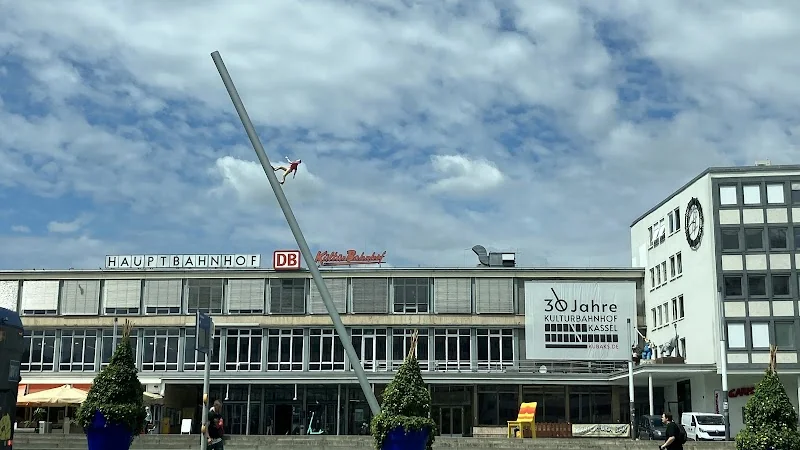
The KulturBahnhof Kassel at Rainer-Dierichs-Platz 1 is today much more than a former train station. The main train station has become a cultural quarter that regularly hosts exhibitions, concerts, theater performances, and film offerings. The official website describes the location as a successful conversion project that was part of EXPO 2000 and became the seed of a new cultural quarter. Visitors to the site experience not just a single hall, but an ensemble of culture, architecture, and public space in the heart of Kassel. ([kulturbahnhof-kassel.de](https://kulturbahnhof-kassel.de/))
Events, Exhibitions, and the Program at KulturBahnhof
The strength of the KulturBahnhof lies in its diversity. The homepage explicitly states that exhibitions, concerts, and theater performances take place regularly and that there are two cinemas. This very mix makes the location attractive to different target groups: art enthusiasts find changing exhibitions, film fans receive arthouse and program cinema offerings, and visitors looking for live formats encounter concerts, performances, and events in various rooms. Thus, the KulturBahnhof is not a monofunctional hall, but a cultural network with a clear urban identity. ([kulturbahnhof-kassel.de](https://kulturbahnhof-kassel.de/))
This is particularly visible in the individual spaces within the building. 387 is a light-filled exhibition space with 387 square meters on the first floor of the south wing and has been operating as a curator collective since 2012, featuring three thematic group exhibitions of professional artists from Kassel and the region each year. The Caricatura showcases several large exhibitions per year featuring cartoons, caricatures, and comic painting, complemented by a book shop and bar. Additionally, the BALi cinemas serve as arthouse cinemas of the new generation, along with other venues like Gleis1 or the TUBESTAGE. Therefore, those looking for the program find not only dates but a dense cultural ecosystem. ([kulturbahnhof-kassel.de](https://kulturbahnhof-kassel.de/orte/))
For SEO logic, the search intents are particularly clear here: users search for current programs, events, exhibitions, concerts, and theater, but also for the question of which individual places in the KulturBahnhof are actually used. That is precisely why the terms surrounding events and programs are the strongest topics. At the same time, the platform structure with the categories places, events, archive, and artworks shows that the location is relevant for both spontaneous visits and targeted cultural research. This combination of event orientation and location identity is the most significant added value of the KulturBahnhof. ([kulturbahnhof-kassel.de](https://kulturbahnhof-kassel.de/))
Directions to KulturBahnhof Kassel by Train, Bus, Bicycle, and Car
The directions are one of the most important information focuses because the KulturBahnhof is located directly at the main train station and is therefore very well connected to public transport. The NVV describes the location at Rainer-Dierichs-Platz, the former station square, and points out that the main train station has also been called KulturBahnhof or short KuBa since 1995. For bus travel, the NVV lists lines 10, 14, 16, 17, 30, 32, 37, 38, 52, 55, 100, 110, and 500. Those arriving by train reach Kassel via the Kassel-Wilhelmshöhe station and then continue to the main train station by RegionalExpress, RegionalBahn, or RegioTram. ([nvv.de](https://www.nvv.de/anreise))
There are also very specific instructions for bicycles and cars. Those arriving by bicycle can park their bike directly at the south exit; there is also a nextbike station right on Rainer-Dierichs-Platz. For drivers, the NVV recommends parking lot P1 on the south side of the main train station, to the left of the main portal, accessible via Franz-Ulrich-Straße. This parking lot is subject to fees. Thus, the accessibility is clear and practical, as the KulturBahnhof functions not only as a destination for culture fans but also as a mobility-strong hub in the city. ([nvv.de](https://www.nvv.de/anreise))
The combination of long-distance transport, local transport, bus, bicycle, and car also explains why users often search for directions and parking. The KulturBahnhof benefits from its location at the main train station and at the same time from its integration into the Kassel transport network. For visitors, this means: orientation is easy, the paths are short, and the entry into the cultural quarter begins right at the train station square. Especially for evening events, film screenings, or changing exhibitions, this accessibility is an essential part of the user experience. ([nvv.de](https://www.nvv.de/anreise))
Parking and Barrier-Free Access at Rainer-Dierichs-Platz
When it comes to parking, the KulturBahnhof is also precisely described. The most important regular parking lot is P1 on the south side of the main train station. According to NVV, it is located on the left side of the main portal, is accessible via Franz-Ulrich-Straße, and is subject to fees. This information is particularly useful for visitors because the location is central but does not function as a classic parking center. Therefore, those arriving by car should plan the parking question in advance and consider the main train station square and the signage to the south side. ([nvv.de](https://www.nvv.de/anreise))
Additionally, there are barrier-free pathways that are crucial for many visitor groups. Documenta fifteen describes access to Rainer-Dierichs-Platz as level and mentions barrier-free toilets in the public restrooms of the main train station. There are also three barrier-free parking spaces in front of the KulturBahnhof. These details show that the place is not only culturally but also infrastructurally open-minded. Especially for a building ensemble that originated from a historic train station, this is an important signal: the KulturBahnhof connects monument, present, and practical accessibility in a compact space. ([documenta-fifteen.de](https://documenta-fifteen.de/en/venues/rainer-dierichs-platz/))
For search queries related to parking, barrier-free access, and directions, this is particularly relevant because visitors often want to clarify these questions right before an event. The KulturBahnhof does not offer an abstract general text here, but concrete orientation: south side, P1, Franz-Ulrich-Straße, south exit, barrier-free parking spaces, and public toilets in the main train station. This makes planning a visit significantly easier, especially for people traveling with wheelchairs, strollers, or larger luggage. ([nvv.de](https://www.nvv.de/anreise))
387, KUBATUR, Gleis1, South Wing, and TUBESTAGE
The KulturBahnhof functions as an ensemble of very different spaces. 387 is a 387 square meter large, light-filled exhibition space on the first floor of the south wing. Gleis1 offers around 170 seats on 360 square meters, an eleven-meter-long bar, and a covered beer garden in summer. KUBATUR is prominently located in the entrance hall and regularly serves as a gallery, temporary studio, project forge, and showroom. The south wing is described as a listed conference center that has developed into one of the most extraordinary locations for conferences and events between Frankfurt and Hanover. The TUBESTAGE, in turn, is a stage for live performances on a historic, decommissioned platform opposite the active platforms. ([kulturbahnhof-kassel.de](https://kulturbahnhof-kassel.de/orte/))
This spatial structure explains why the KulturBahnhof functions not only as an event venue but also as a city quarter. Various uses lie closely together: exhibition, concert, bar, live stage, disco, conference, studio, temporary presentation, and open-air atmosphere under a roof. Additionally, MOK Kassel serves as a non-commercial community broadcaster and educational institution that enables media experience and media design. This creates a location that is as open to cultural production as it is to cultural consumption. Visitors can thus experience very different atmospheres depending on the occasion without having to leave the building. ([kulturbahnhof-kassel.de](https://kulturbahnhof-kassel.de/orte/))
This very diversity is a strong SEO signal for search terms like south wing, 387, KUBATUR, Gleis1, or TUBESTAGE. Users often want to know what space is behind the name and what type of event takes place there. The official website answers this very clearly through its location pages: the KulturBahnhof is a network of concrete places that together enable a wide cultural offering. This makes the location so attractive for events, conferences, exhibitions, and special formats. ([kulturbahnhof-kassel.de](https://kulturbahnhof-kassel.de/orte/))
From the Main Train Station to the Cultural Quarter: The History of the KulturBahnhof
The history of the KulturBahnhof is closely linked to the transformation of the city and the railway. The current main train station in Kassel was built between 1851 and 1856 according to the plans of the Kurhessian chief architect Gottlob Engelhard and was a significant railway project of late classicism. In 1943, the building was largely destroyed during World War II, and between 1952 and 1960, it underwent reconstruction and partial restoration. With the opening of the ICE train station Kassel-Wilhelmshöhe in the early 1990s, the main train station lost its former significance as a long-distance transport station. This later led to the idea of culturally repurposing the building. ([kulturbahnhof-kassel.de](https://kulturbahnhof-kassel.de/ueber-uns/))
In 1995, various cultural initiatives from Kassel, the municipal cultural office, and Deutsche Bahn formed the initiative to establish the KulturBahnhof and invested several million Deutsche Marks in the renovation. The opening took place at the end of 1995. As early as 1992, the media project center Offener Kanal had moved in, and among the first tenants were the restaurant Gleis 1, the Caricatura Gallery, the BALi cinemas, the Kassel Architecture Center KAZimKuBa, and the student-organized exhibition space Stellwerk. In 1997, the non-profit association KulturBahnhof Kassel e.V. was founded as a representative body, and in 2000, the location was recognized as an exemplary conversion project and became an official part of EXPO 2000. ([kulturbahnhof-kassel.de](https://kulturbahnhof-kassel.de/ueber-uns/))
Later developments also underscore the continuity of this cultural transformation. In 2009, the station square was renamed Rainer-Dierichs-Platz. The former publisher Rainer Dierichs is described as one of the greatest patrons of the region, who particularly promoted art and culture. In the same historical context, the Spohr Museum was located in the KulturBahnhof from 2009 to 2023. This timeline shows that the place has not accidentally transformed into a cultural quarter, but has been consciously shaped over decades. The connection of railway architecture, urban cultural policy, and private engagement is a core feature of the location. ([kulturbahnhof-kassel.de](https://kulturbahnhof-kassel.de/ueber-uns/))
For the description of the KulturBahnhof, this history is essential because it explains why classicist architecture, modern repurposing, and cultural public life meet so naturally here. The current character as a cultural quarter is therefore not just a marketing term, but the result of a long urban development process. Visitors to the site experience a historical layer that dates back to the 19th century, as well as a very vibrant contemporary culture. ([kulturbahnhof-kassel.de](https://kulturbahnhof-kassel.de/ueber-uns/))
Caricatura, BALi Kinos, Artworks, and Special Highlights
Among the most visible highlights are the freely accessible artworks in and around the building. The homepage emphasizes that art can be discovered everywhere. Particularly well-known is the 25-meter-high sculpture Man walking to the sky by Jonathan Borofsky on Rainer-Dierichs-Platz. It has been there since 1995, was originally shown for documenta IX, and continues to shape the appearance of the forecourt today. Other works include 7000 oaks, The over plants is one with them, PLIK, Resonance, Alter Bahnhof Video Walk, Denk-Stein-Sammlung, and Gleis 13/14. The location is thus not only a space for events but also an open art field. ([kulturbahnhof-kassel.de](https://kulturbahnhof-kassel.de/))
Equally important for the profile are the BALi cinemas and the Caricatura. The BALi cinemas present the spectrum between high-quality entertainment and film art, with demanding and artistic films, modern technology, high comfort, and good service. The Caricatura showcases several large exhibitions per year featuring works from cartoons, caricatures, and comic painting, complemented by a bar and a book shop. Together with Caricatura Bar, Gleis1, MOK Kassel, 387, KUBATUR, South Wing, and TUBESTAGE, a location emerges where art, film, gastronomy, stage, and education intertwine closely. ([kulturbahnhof-kassel.de](https://kulturbahnhof-kassel.de/locations/bali-kinos/?utm_source=openai))
This very mix makes KulturBahnhof Kassel so special for visitors and search engines alike. Those searching for artworks find a place with publicly visible art in the outdoor space. Those looking for cinema encounter arthouse offerings in the train station ensemble. Those searching for events receive concerts, exhibitions, theater, and live formats in changing rooms. And those simply wanting to experience a special address in Kassel discover a cultural quarter that has transformed a former main train station into a modern, urban stage. This transformation is the actual unique selling point of the location. ([kulturbahnhof-kassel.de](https://kulturbahnhof-kassel.de/))
For visitors, this means primarily one thing: the KulturBahnhof is not a single building with just one purpose, but an address with many levels. You can go to the cinema, visit an exhibition, experience a concert, stroll through art in the outdoor space, or use an event space for conferences and special formats. This is precisely what creates the special atmosphere that makes KulturBahnhof Kassel one of the most distinctive cultural places in the city. ([kulturbahnhof-kassel.de](https://kulturbahnhof-kassel.de/))
Sources:
- KulturBahnhof Kassel - Homepage
- KulturBahnhof Kassel - About Us
- KulturBahnhof Kassel - Places
- NVV - Directions to Kassel Main Train Station
- documenta fifteen - Rainer-Dierichs-Platz
- KulturBahnhof Kassel - TUBESTAGE
- KulturBahnhof Kassel - 387
- KulturBahnhof Kassel - KUBATUR
- KulturBahnhof Kassel - Gleis1
- KulturBahnhof Kassel - Caricatura
Mehr anzeigenWeniger anzeigen
KulturBahnhof Kassel | Events & Directions
The KulturBahnhof Kassel at Rainer-Dierichs-Platz 1 is today much more than a former train station. The main train station has become a cultural quarter that regularly hosts exhibitions, concerts, theater performances, and film offerings. The official website describes the location as a successful conversion project that was part of EXPO 2000 and became the seed of a new cultural quarter. Visitors to the site experience not just a single hall, but an ensemble of culture, architecture, and public space in the heart of Kassel. ([kulturbahnhof-kassel.de](https://kulturbahnhof-kassel.de/))
Events, Exhibitions, and the Program at KulturBahnhof
The strength of the KulturBahnhof lies in its diversity. The homepage explicitly states that exhibitions, concerts, and theater performances take place regularly and that there are two cinemas. This very mix makes the location attractive to different target groups: art enthusiasts find changing exhibitions, film fans receive arthouse and program cinema offerings, and visitors looking for live formats encounter concerts, performances, and events in various rooms. Thus, the KulturBahnhof is not a monofunctional hall, but a cultural network with a clear urban identity. ([kulturbahnhof-kassel.de](https://kulturbahnhof-kassel.de/))
This is particularly visible in the individual spaces within the building. 387 is a light-filled exhibition space with 387 square meters on the first floor of the south wing and has been operating as a curator collective since 2012, featuring three thematic group exhibitions of professional artists from Kassel and the region each year. The Caricatura showcases several large exhibitions per year featuring cartoons, caricatures, and comic painting, complemented by a book shop and bar. Additionally, the BALi cinemas serve as arthouse cinemas of the new generation, along with other venues like Gleis1 or the TUBESTAGE. Therefore, those looking for the program find not only dates but a dense cultural ecosystem. ([kulturbahnhof-kassel.de](https://kulturbahnhof-kassel.de/orte/))
For SEO logic, the search intents are particularly clear here: users search for current programs, events, exhibitions, concerts, and theater, but also for the question of which individual places in the KulturBahnhof are actually used. That is precisely why the terms surrounding events and programs are the strongest topics. At the same time, the platform structure with the categories places, events, archive, and artworks shows that the location is relevant for both spontaneous visits and targeted cultural research. This combination of event orientation and location identity is the most significant added value of the KulturBahnhof. ([kulturbahnhof-kassel.de](https://kulturbahnhof-kassel.de/))
Directions to KulturBahnhof Kassel by Train, Bus, Bicycle, and Car
The directions are one of the most important information focuses because the KulturBahnhof is located directly at the main train station and is therefore very well connected to public transport. The NVV describes the location at Rainer-Dierichs-Platz, the former station square, and points out that the main train station has also been called KulturBahnhof or short KuBa since 1995. For bus travel, the NVV lists lines 10, 14, 16, 17, 30, 32, 37, 38, 52, 55, 100, 110, and 500. Those arriving by train reach Kassel via the Kassel-Wilhelmshöhe station and then continue to the main train station by RegionalExpress, RegionalBahn, or RegioTram. ([nvv.de](https://www.nvv.de/anreise))
There are also very specific instructions for bicycles and cars. Those arriving by bicycle can park their bike directly at the south exit; there is also a nextbike station right on Rainer-Dierichs-Platz. For drivers, the NVV recommends parking lot P1 on the south side of the main train station, to the left of the main portal, accessible via Franz-Ulrich-Straße. This parking lot is subject to fees. Thus, the accessibility is clear and practical, as the KulturBahnhof functions not only as a destination for culture fans but also as a mobility-strong hub in the city. ([nvv.de](https://www.nvv.de/anreise))
The combination of long-distance transport, local transport, bus, bicycle, and car also explains why users often search for directions and parking. The KulturBahnhof benefits from its location at the main train station and at the same time from its integration into the Kassel transport network. For visitors, this means: orientation is easy, the paths are short, and the entry into the cultural quarter begins right at the train station square. Especially for evening events, film screenings, or changing exhibitions, this accessibility is an essential part of the user experience. ([nvv.de](https://www.nvv.de/anreise))
Parking and Barrier-Free Access at Rainer-Dierichs-Platz
When it comes to parking, the KulturBahnhof is also precisely described. The most important regular parking lot is P1 on the south side of the main train station. According to NVV, it is located on the left side of the main portal, is accessible via Franz-Ulrich-Straße, and is subject to fees. This information is particularly useful for visitors because the location is central but does not function as a classic parking center. Therefore, those arriving by car should plan the parking question in advance and consider the main train station square and the signage to the south side. ([nvv.de](https://www.nvv.de/anreise))
Additionally, there are barrier-free pathways that are crucial for many visitor groups. Documenta fifteen describes access to Rainer-Dierichs-Platz as level and mentions barrier-free toilets in the public restrooms of the main train station. There are also three barrier-free parking spaces in front of the KulturBahnhof. These details show that the place is not only culturally but also infrastructurally open-minded. Especially for a building ensemble that originated from a historic train station, this is an important signal: the KulturBahnhof connects monument, present, and practical accessibility in a compact space. ([documenta-fifteen.de](https://documenta-fifteen.de/en/venues/rainer-dierichs-platz/))
For search queries related to parking, barrier-free access, and directions, this is particularly relevant because visitors often want to clarify these questions right before an event. The KulturBahnhof does not offer an abstract general text here, but concrete orientation: south side, P1, Franz-Ulrich-Straße, south exit, barrier-free parking spaces, and public toilets in the main train station. This makes planning a visit significantly easier, especially for people traveling with wheelchairs, strollers, or larger luggage. ([nvv.de](https://www.nvv.de/anreise))
387, KUBATUR, Gleis1, South Wing, and TUBESTAGE
The KulturBahnhof functions as an ensemble of very different spaces. 387 is a 387 square meter large, light-filled exhibition space on the first floor of the south wing. Gleis1 offers around 170 seats on 360 square meters, an eleven-meter-long bar, and a covered beer garden in summer. KUBATUR is prominently located in the entrance hall and regularly serves as a gallery, temporary studio, project forge, and showroom. The south wing is described as a listed conference center that has developed into one of the most extraordinary locations for conferences and events between Frankfurt and Hanover. The TUBESTAGE, in turn, is a stage for live performances on a historic, decommissioned platform opposite the active platforms. ([kulturbahnhof-kassel.de](https://kulturbahnhof-kassel.de/orte/))
This spatial structure explains why the KulturBahnhof functions not only as an event venue but also as a city quarter. Various uses lie closely together: exhibition, concert, bar, live stage, disco, conference, studio, temporary presentation, and open-air atmosphere under a roof. Additionally, MOK Kassel serves as a non-commercial community broadcaster and educational institution that enables media experience and media design. This creates a location that is as open to cultural production as it is to cultural consumption. Visitors can thus experience very different atmospheres depending on the occasion without having to leave the building. ([kulturbahnhof-kassel.de](https://kulturbahnhof-kassel.de/orte/))
This very diversity is a strong SEO signal for search terms like south wing, 387, KUBATUR, Gleis1, or TUBESTAGE. Users often want to know what space is behind the name and what type of event takes place there. The official website answers this very clearly through its location pages: the KulturBahnhof is a network of concrete places that together enable a wide cultural offering. This makes the location so attractive for events, conferences, exhibitions, and special formats. ([kulturbahnhof-kassel.de](https://kulturbahnhof-kassel.de/orte/))
From the Main Train Station to the Cultural Quarter: The History of the KulturBahnhof
The history of the KulturBahnhof is closely linked to the transformation of the city and the railway. The current main train station in Kassel was built between 1851 and 1856 according to the plans of the Kurhessian chief architect Gottlob Engelhard and was a significant railway project of late classicism. In 1943, the building was largely destroyed during World War II, and between 1952 and 1960, it underwent reconstruction and partial restoration. With the opening of the ICE train station Kassel-Wilhelmshöhe in the early 1990s, the main train station lost its former significance as a long-distance transport station. This later led to the idea of culturally repurposing the building. ([kulturbahnhof-kassel.de](https://kulturbahnhof-kassel.de/ueber-uns/))
In 1995, various cultural initiatives from Kassel, the municipal cultural office, and Deutsche Bahn formed the initiative to establish the KulturBahnhof and invested several million Deutsche Marks in the renovation. The opening took place at the end of 1995. As early as 1992, the media project center Offener Kanal had moved in, and among the first tenants were the restaurant Gleis 1, the Caricatura Gallery, the BALi cinemas, the Kassel Architecture Center KAZimKuBa, and the student-organized exhibition space Stellwerk. In 1997, the non-profit association KulturBahnhof Kassel e.V. was founded as a representative body, and in 2000, the location was recognized as an exemplary conversion project and became an official part of EXPO 2000. ([kulturbahnhof-kassel.de](https://kulturbahnhof-kassel.de/ueber-uns/))
Later developments also underscore the continuity of this cultural transformation. In 2009, the station square was renamed Rainer-Dierichs-Platz. The former publisher Rainer Dierichs is described as one of the greatest patrons of the region, who particularly promoted art and culture. In the same historical context, the Spohr Museum was located in the KulturBahnhof from 2009 to 2023. This timeline shows that the place has not accidentally transformed into a cultural quarter, but has been consciously shaped over decades. The connection of railway architecture, urban cultural policy, and private engagement is a core feature of the location. ([kulturbahnhof-kassel.de](https://kulturbahnhof-kassel.de/ueber-uns/))
For the description of the KulturBahnhof, this history is essential because it explains why classicist architecture, modern repurposing, and cultural public life meet so naturally here. The current character as a cultural quarter is therefore not just a marketing term, but the result of a long urban development process. Visitors to the site experience a historical layer that dates back to the 19th century, as well as a very vibrant contemporary culture. ([kulturbahnhof-kassel.de](https://kulturbahnhof-kassel.de/ueber-uns/))
Caricatura, BALi Kinos, Artworks, and Special Highlights
Among the most visible highlights are the freely accessible artworks in and around the building. The homepage emphasizes that art can be discovered everywhere. Particularly well-known is the 25-meter-high sculpture Man walking to the sky by Jonathan Borofsky on Rainer-Dierichs-Platz. It has been there since 1995, was originally shown for documenta IX, and continues to shape the appearance of the forecourt today. Other works include 7000 oaks, The over plants is one with them, PLIK, Resonance, Alter Bahnhof Video Walk, Denk-Stein-Sammlung, and Gleis 13/14. The location is thus not only a space for events but also an open art field. ([kulturbahnhof-kassel.de](https://kulturbahnhof-kassel.de/))
Equally important for the profile are the BALi cinemas and the Caricatura. The BALi cinemas present the spectrum between high-quality entertainment and film art, with demanding and artistic films, modern technology, high comfort, and good service. The Caricatura showcases several large exhibitions per year featuring works from cartoons, caricatures, and comic painting, complemented by a bar and a book shop. Together with Caricatura Bar, Gleis1, MOK Kassel, 387, KUBATUR, South Wing, and TUBESTAGE, a location emerges where art, film, gastronomy, stage, and education intertwine closely. ([kulturbahnhof-kassel.de](https://kulturbahnhof-kassel.de/locations/bali-kinos/?utm_source=openai))
This very mix makes KulturBahnhof Kassel so special for visitors and search engines alike. Those searching for artworks find a place with publicly visible art in the outdoor space. Those looking for cinema encounter arthouse offerings in the train station ensemble. Those searching for events receive concerts, exhibitions, theater, and live formats in changing rooms. And those simply wanting to experience a special address in Kassel discover a cultural quarter that has transformed a former main train station into a modern, urban stage. This transformation is the actual unique selling point of the location. ([kulturbahnhof-kassel.de](https://kulturbahnhof-kassel.de/))
For visitors, this means primarily one thing: the KulturBahnhof is not a single building with just one purpose, but an address with many levels. You can go to the cinema, visit an exhibition, experience a concert, stroll through art in the outdoor space, or use an event space for conferences and special formats. This is precisely what creates the special atmosphere that makes KulturBahnhof Kassel one of the most distinctive cultural places in the city. ([kulturbahnhof-kassel.de](https://kulturbahnhof-kassel.de/))
Sources:
- KulturBahnhof Kassel - Homepage
- KulturBahnhof Kassel - About Us
- KulturBahnhof Kassel - Places
- NVV - Directions to Kassel Main Train Station
- documenta fifteen - Rainer-Dierichs-Platz
- KulturBahnhof Kassel - TUBESTAGE
- KulturBahnhof Kassel - 387
- KulturBahnhof Kassel - KUBATUR
- KulturBahnhof Kassel - Gleis1
- KulturBahnhof Kassel - Caricatura
KulturBahnhof Kassel | Events & Directions
The KulturBahnhof Kassel at Rainer-Dierichs-Platz 1 is today much more than a former train station. The main train station has become a cultural quarter that regularly hosts exhibitions, concerts, theater performances, and film offerings. The official website describes the location as a successful conversion project that was part of EXPO 2000 and became the seed of a new cultural quarter. Visitors to the site experience not just a single hall, but an ensemble of culture, architecture, and public space in the heart of Kassel. ([kulturbahnhof-kassel.de](https://kulturbahnhof-kassel.de/))
Events, Exhibitions, and the Program at KulturBahnhof
The strength of the KulturBahnhof lies in its diversity. The homepage explicitly states that exhibitions, concerts, and theater performances take place regularly and that there are two cinemas. This very mix makes the location attractive to different target groups: art enthusiasts find changing exhibitions, film fans receive arthouse and program cinema offerings, and visitors looking for live formats encounter concerts, performances, and events in various rooms. Thus, the KulturBahnhof is not a monofunctional hall, but a cultural network with a clear urban identity. ([kulturbahnhof-kassel.de](https://kulturbahnhof-kassel.de/))
This is particularly visible in the individual spaces within the building. 387 is a light-filled exhibition space with 387 square meters on the first floor of the south wing and has been operating as a curator collective since 2012, featuring three thematic group exhibitions of professional artists from Kassel and the region each year. The Caricatura showcases several large exhibitions per year featuring cartoons, caricatures, and comic painting, complemented by a book shop and bar. Additionally, the BALi cinemas serve as arthouse cinemas of the new generation, along with other venues like Gleis1 or the TUBESTAGE. Therefore, those looking for the program find not only dates but a dense cultural ecosystem. ([kulturbahnhof-kassel.de](https://kulturbahnhof-kassel.de/orte/))
For SEO logic, the search intents are particularly clear here: users search for current programs, events, exhibitions, concerts, and theater, but also for the question of which individual places in the KulturBahnhof are actually used. That is precisely why the terms surrounding events and programs are the strongest topics. At the same time, the platform structure with the categories places, events, archive, and artworks shows that the location is relevant for both spontaneous visits and targeted cultural research. This combination of event orientation and location identity is the most significant added value of the KulturBahnhof. ([kulturbahnhof-kassel.de](https://kulturbahnhof-kassel.de/))
Directions to KulturBahnhof Kassel by Train, Bus, Bicycle, and Car
The directions are one of the most important information focuses because the KulturBahnhof is located directly at the main train station and is therefore very well connected to public transport. The NVV describes the location at Rainer-Dierichs-Platz, the former station square, and points out that the main train station has also been called KulturBahnhof or short KuBa since 1995. For bus travel, the NVV lists lines 10, 14, 16, 17, 30, 32, 37, 38, 52, 55, 100, 110, and 500. Those arriving by train reach Kassel via the Kassel-Wilhelmshöhe station and then continue to the main train station by RegionalExpress, RegionalBahn, or RegioTram. ([nvv.de](https://www.nvv.de/anreise))
There are also very specific instructions for bicycles and cars. Those arriving by bicycle can park their bike directly at the south exit; there is also a nextbike station right on Rainer-Dierichs-Platz. For drivers, the NVV recommends parking lot P1 on the south side of the main train station, to the left of the main portal, accessible via Franz-Ulrich-Straße. This parking lot is subject to fees. Thus, the accessibility is clear and practical, as the KulturBahnhof functions not only as a destination for culture fans but also as a mobility-strong hub in the city. ([nvv.de](https://www.nvv.de/anreise))
The combination of long-distance transport, local transport, bus, bicycle, and car also explains why users often search for directions and parking. The KulturBahnhof benefits from its location at the main train station and at the same time from its integration into the Kassel transport network. For visitors, this means: orientation is easy, the paths are short, and the entry into the cultural quarter begins right at the train station square. Especially for evening events, film screenings, or changing exhibitions, this accessibility is an essential part of the user experience. ([nvv.de](https://www.nvv.de/anreise))
Parking and Barrier-Free Access at Rainer-Dierichs-Platz
When it comes to parking, the KulturBahnhof is also precisely described. The most important regular parking lot is P1 on the south side of the main train station. According to NVV, it is located on the left side of the main portal, is accessible via Franz-Ulrich-Straße, and is subject to fees. This information is particularly useful for visitors because the location is central but does not function as a classic parking center. Therefore, those arriving by car should plan the parking question in advance and consider the main train station square and the signage to the south side. ([nvv.de](https://www.nvv.de/anreise))
Additionally, there are barrier-free pathways that are crucial for many visitor groups. Documenta fifteen describes access to Rainer-Dierichs-Platz as level and mentions barrier-free toilets in the public restrooms of the main train station. There are also three barrier-free parking spaces in front of the KulturBahnhof. These details show that the place is not only culturally but also infrastructurally open-minded. Especially for a building ensemble that originated from a historic train station, this is an important signal: the KulturBahnhof connects monument, present, and practical accessibility in a compact space. ([documenta-fifteen.de](https://documenta-fifteen.de/en/venues/rainer-dierichs-platz/))
For search queries related to parking, barrier-free access, and directions, this is particularly relevant because visitors often want to clarify these questions right before an event. The KulturBahnhof does not offer an abstract general text here, but concrete orientation: south side, P1, Franz-Ulrich-Straße, south exit, barrier-free parking spaces, and public toilets in the main train station. This makes planning a visit significantly easier, especially for people traveling with wheelchairs, strollers, or larger luggage. ([nvv.de](https://www.nvv.de/anreise))
387, KUBATUR, Gleis1, South Wing, and TUBESTAGE
The KulturBahnhof functions as an ensemble of very different spaces. 387 is a 387 square meter large, light-filled exhibition space on the first floor of the south wing. Gleis1 offers around 170 seats on 360 square meters, an eleven-meter-long bar, and a covered beer garden in summer. KUBATUR is prominently located in the entrance hall and regularly serves as a gallery, temporary studio, project forge, and showroom. The south wing is described as a listed conference center that has developed into one of the most extraordinary locations for conferences and events between Frankfurt and Hanover. The TUBESTAGE, in turn, is a stage for live performances on a historic, decommissioned platform opposite the active platforms. ([kulturbahnhof-kassel.de](https://kulturbahnhof-kassel.de/orte/))
This spatial structure explains why the KulturBahnhof functions not only as an event venue but also as a city quarter. Various uses lie closely together: exhibition, concert, bar, live stage, disco, conference, studio, temporary presentation, and open-air atmosphere under a roof. Additionally, MOK Kassel serves as a non-commercial community broadcaster and educational institution that enables media experience and media design. This creates a location that is as open to cultural production as it is to cultural consumption. Visitors can thus experience very different atmospheres depending on the occasion without having to leave the building. ([kulturbahnhof-kassel.de](https://kulturbahnhof-kassel.de/orte/))
This very diversity is a strong SEO signal for search terms like south wing, 387, KUBATUR, Gleis1, or TUBESTAGE. Users often want to know what space is behind the name and what type of event takes place there. The official website answers this very clearly through its location pages: the KulturBahnhof is a network of concrete places that together enable a wide cultural offering. This makes the location so attractive for events, conferences, exhibitions, and special formats. ([kulturbahnhof-kassel.de](https://kulturbahnhof-kassel.de/orte/))
From the Main Train Station to the Cultural Quarter: The History of the KulturBahnhof
The history of the KulturBahnhof is closely linked to the transformation of the city and the railway. The current main train station in Kassel was built between 1851 and 1856 according to the plans of the Kurhessian chief architect Gottlob Engelhard and was a significant railway project of late classicism. In 1943, the building was largely destroyed during World War II, and between 1952 and 1960, it underwent reconstruction and partial restoration. With the opening of the ICE train station Kassel-Wilhelmshöhe in the early 1990s, the main train station lost its former significance as a long-distance transport station. This later led to the idea of culturally repurposing the building. ([kulturbahnhof-kassel.de](https://kulturbahnhof-kassel.de/ueber-uns/))
In 1995, various cultural initiatives from Kassel, the municipal cultural office, and Deutsche Bahn formed the initiative to establish the KulturBahnhof and invested several million Deutsche Marks in the renovation. The opening took place at the end of 1995. As early as 1992, the media project center Offener Kanal had moved in, and among the first tenants were the restaurant Gleis 1, the Caricatura Gallery, the BALi cinemas, the Kassel Architecture Center KAZimKuBa, and the student-organized exhibition space Stellwerk. In 1997, the non-profit association KulturBahnhof Kassel e.V. was founded as a representative body, and in 2000, the location was recognized as an exemplary conversion project and became an official part of EXPO 2000. ([kulturbahnhof-kassel.de](https://kulturbahnhof-kassel.de/ueber-uns/))
Later developments also underscore the continuity of this cultural transformation. In 2009, the station square was renamed Rainer-Dierichs-Platz. The former publisher Rainer Dierichs is described as one of the greatest patrons of the region, who particularly promoted art and culture. In the same historical context, the Spohr Museum was located in the KulturBahnhof from 2009 to 2023. This timeline shows that the place has not accidentally transformed into a cultural quarter, but has been consciously shaped over decades. The connection of railway architecture, urban cultural policy, and private engagement is a core feature of the location. ([kulturbahnhof-kassel.de](https://kulturbahnhof-kassel.de/ueber-uns/))
For the description of the KulturBahnhof, this history is essential because it explains why classicist architecture, modern repurposing, and cultural public life meet so naturally here. The current character as a cultural quarter is therefore not just a marketing term, but the result of a long urban development process. Visitors to the site experience a historical layer that dates back to the 19th century, as well as a very vibrant contemporary culture. ([kulturbahnhof-kassel.de](https://kulturbahnhof-kassel.de/ueber-uns/))
Caricatura, BALi Kinos, Artworks, and Special Highlights
Among the most visible highlights are the freely accessible artworks in and around the building. The homepage emphasizes that art can be discovered everywhere. Particularly well-known is the 25-meter-high sculpture Man walking to the sky by Jonathan Borofsky on Rainer-Dierichs-Platz. It has been there since 1995, was originally shown for documenta IX, and continues to shape the appearance of the forecourt today. Other works include 7000 oaks, The over plants is one with them, PLIK, Resonance, Alter Bahnhof Video Walk, Denk-Stein-Sammlung, and Gleis 13/14. The location is thus not only a space for events but also an open art field. ([kulturbahnhof-kassel.de](https://kulturbahnhof-kassel.de/))
Equally important for the profile are the BALi cinemas and the Caricatura. The BALi cinemas present the spectrum between high-quality entertainment and film art, with demanding and artistic films, modern technology, high comfort, and good service. The Caricatura showcases several large exhibitions per year featuring works from cartoons, caricatures, and comic painting, complemented by a bar and a book shop. Together with Caricatura Bar, Gleis1, MOK Kassel, 387, KUBATUR, South Wing, and TUBESTAGE, a location emerges where art, film, gastronomy, stage, and education intertwine closely. ([kulturbahnhof-kassel.de](https://kulturbahnhof-kassel.de/locations/bali-kinos/?utm_source=openai))
This very mix makes KulturBahnhof Kassel so special for visitors and search engines alike. Those searching for artworks find a place with publicly visible art in the outdoor space. Those looking for cinema encounter arthouse offerings in the train station ensemble. Those searching for events receive concerts, exhibitions, theater, and live formats in changing rooms. And those simply wanting to experience a special address in Kassel discover a cultural quarter that has transformed a former main train station into a modern, urban stage. This transformation is the actual unique selling point of the location. ([kulturbahnhof-kassel.de](https://kulturbahnhof-kassel.de/))
For visitors, this means primarily one thing: the KulturBahnhof is not a single building with just one purpose, but an address with many levels. You can go to the cinema, visit an exhibition, experience a concert, stroll through art in the outdoor space, or use an event space for conferences and special formats. This is precisely what creates the special atmosphere that makes KulturBahnhof Kassel one of the most distinctive cultural places in the city. ([kulturbahnhof-kassel.de](https://kulturbahnhof-kassel.de/))
Sources:
- KulturBahnhof Kassel - Homepage
- KulturBahnhof Kassel - About Us
- KulturBahnhof Kassel - Places
- NVV - Directions to Kassel Main Train Station
- documenta fifteen - Rainer-Dierichs-Platz
- KulturBahnhof Kassel - TUBESTAGE
- KulturBahnhof Kassel - 387
- KulturBahnhof Kassel - KUBATUR
- KulturBahnhof Kassel - Gleis1
- KulturBahnhof Kassel - Caricatura
Frequently Asked Questions
Reviews
Daniel Lee
6. March 2017
A good place for business meetings, a little bit off the beaten path because it's not so close to Kassel's actual main train station.
DORISSCHAEFFER
9. October 2019
Cultural station in Kassel, I always love going there for photography. There’s a bookstore, Woolworth department store, hairdresser, Moneygram, bakery, and Track 1 as an event location. Occasionally, there are art exhibitions in the south wing after announcements. The piano Handle with Care invites people to play the piano 🎹 again and again. I love our cultural station in Kassel 💖 Photos: doris_artphotography
Birgit Koch
30. May 2019
Caricatura is worth seeing. Spohr Museum. Often concerts or readings, highlight is the annual review by Gieseking. Café and Burger King, bookstore, Woolworth, cigarette shop, Track 1 (dining place and disco at night), currency exchange office, public toilets, consumer center, open channel, art studio, driving school, cinema....
Helmut Bieler-Wendt
10. September 2017
A nice place for culture - and everything related to it. Large, beautifully renovated spaces - available for rent for anything that needs space. We celebrated the opening of the 'Center for Intercultural Music' here and were very satisfied 😊
Nakia Sprotte
29. October 2018
Great location. We were there for a Doctor WHO convention with nearly 750 people. Plenty of space and very centrally located.