

Kassel
Mönchebergstraße 7, 34125 Kassel-Wesertor, Deutschland
Human-Machine System Engineering | Research & Teaching
The field of Human-Machine System Engineering at the University of Kassel is not a traditional event location, but a scientific institution with a strong practical focus. Those seeking information here are usually interested in research, teaching, contacts, location, directions, or the content orientation of the field. That is exactly why a closer look at the work at Mönchebergstraße 7 on the Holländischer Platz campus is worthwhile: There, humans and technology are not only thought together, but are brought together in concrete projects, courses, and application-oriented research work. The field is located in the Engineering Sciences III building, with the side entrance number 7 and the secretariat in room 1609. This location in the university-dominated environment makes the field equally interesting for students, researchers, and cooperation partners. ([uni-kassel.de](https://www.uni-kassel.de/maschinenbau/institute/arbeitswissenschaft-und-prozessmanagement/fachgebiete/mensch-maschine-systemtechnik/kontakt.html))
What Human-Machine System Engineering at the University of Kassel is About
At its core, the field deals with user-oriented design of effective and efficient human-machine systems. This sounds technical but describes a very human task: Technical devices, software, machines, and systems should be designed so that people can use them safely, understandably, and productively. The University of Kassel emphasizes an interdisciplinary approach that brings together cognitive and work science, ergonomics, systems engineering, as well as software and information technology. This connection makes the institution so exciting for many visitors, as it shows that modern technology is not developed in isolation but must be considered in conjunction with perception, behavior, load, and usage context. In the projects, engineers from various disciplines, computer scientists, psychologists, and designers work together as needed. This is a clear signal that here, not only a technical perspective dominates, but the human as user, decision-maker, and co-designer is at the center. Organizationally, the field is part of the Department of Mechanical Engineering, belongs to the Institute for Work Science and Process Management, and is part of the interdisciplinary Scientific Center for Information Technology Design at the University of Kassel. This embedding underscores that the topic of human-technology interaction at the University of Kassel is understood as a cross-cutting issue that extends beyond traditional disciplinary boundaries. For inquiries related to human-machine systems, usability, ergonomic design, or digital assistance systems, the field is thus a strong point of contact. ([uni-kassel.de](https://www.uni-kassel.de/maschinenbau/institute/arbeitswissenschaft-und-prozessmanagement/fachgebiete/mensch-maschine-systemtechnik/ueber-uns.html))
Research: Human Modeling, Interaction, and Assistance Systems
The research in the field is clearly divided into three major areas. First, it concerns human modeling and simulation. This includes perception, anthropometry, movement, and state recognition. This area is particularly important when technical systems need to understand how humans perceive information, how body measurements and movements must be considered in design, and how load or current state influences usage. Second, human-technology interaction is the focus. Here, the University of Kassel explicitly mentions mobile devices, virtual and augmented reality, robotics, and assistance systems. This addresses exactly those technologies that are becoming increasingly important in everyday life, industry, and digital work environments. Third, the field deals with work and learning, i.e., workplace, work process, and e-learning. This combination is particularly noteworthy for the academic location, as it shows that learning, working, and digital support are not viewed separately but as an interconnected design task. Methodologically, the field relies on usability engineering and system-technical analysis, design, and evaluation methods involving user participation. This includes user- and task-oriented requirement analyses, participatory development of solution concepts, and the prototypical realization of human-machine interfaces. This is complemented by empirical evaluation in field and laboratory studies, physiological measurement methods, observation, surveys, the investigation of performance, load, and strain, as well as system-ergonomic evaluation using simulation. For visitors and interested parties, this means: Those seeking research here will not find an abstract laboratory without practical relevance, but a field that closely connects methods and applications. ([uni-kassel.de](https://www.uni-kassel.de/maschinenbau/institute/arbeitswissenschaft-und-prozessmanagement/fachgebiete/mensch-maschine-systemtechnik/forschung.html))
Teaching, Degree Programs, and Application-Oriented Projects
The interdisciplinary character of the field is also very clearly evident in teaching. The University of Kassel describes that teaching covers all important areas of work design, human-machine systems, and systems engineering. The field is not only attended by students of mechanical engineering but also by students from mechatronics, computer science, electrical engineering, industrial engineering, psychology, and product design. This broad target group is a strong indication that it is a topic that brings together technical, organizational, and design perspectives. The content of the teaching offerings is also diverse. Among other things, Human-Machine Systems 1 with ergonomic and information technology design and Human-Machine Systems 2 with user-oriented development are mentioned. In addition, project and internship formats that address interaction design from analysis to realization to evaluation are included. The official description also mentions specific application areas such as driver assistance, assistance in aviation, process monitoring, teleoperation support, human-robot collaboration, help systems in PC applications, mobile assistance systems, augmented reality, ambient assisted living, and smart home. This enumeration shows how closely the field works on current technological developments. For SEO logic, this is important because search terms like teaching, research, assistance systems, robotics, or e-learning do not appear here by chance but reflect the real focus of the institution. So, those searching for Human-Machine System Engineering at the University of Kassel are often looking for a place where digital design, human centricity, and technical development are brought together. This is exactly what the field achieves in its teaching and projects. ([uni-kassel.de](https://www.uni-kassel.de/maschinenbau/institute/arbeitswissenschaft-und-prozessmanagement/fachgebiete/mensch-maschine-systemtechnik/ueber-uns.html))
Directions, Parking, and Location at Holländischer Platz
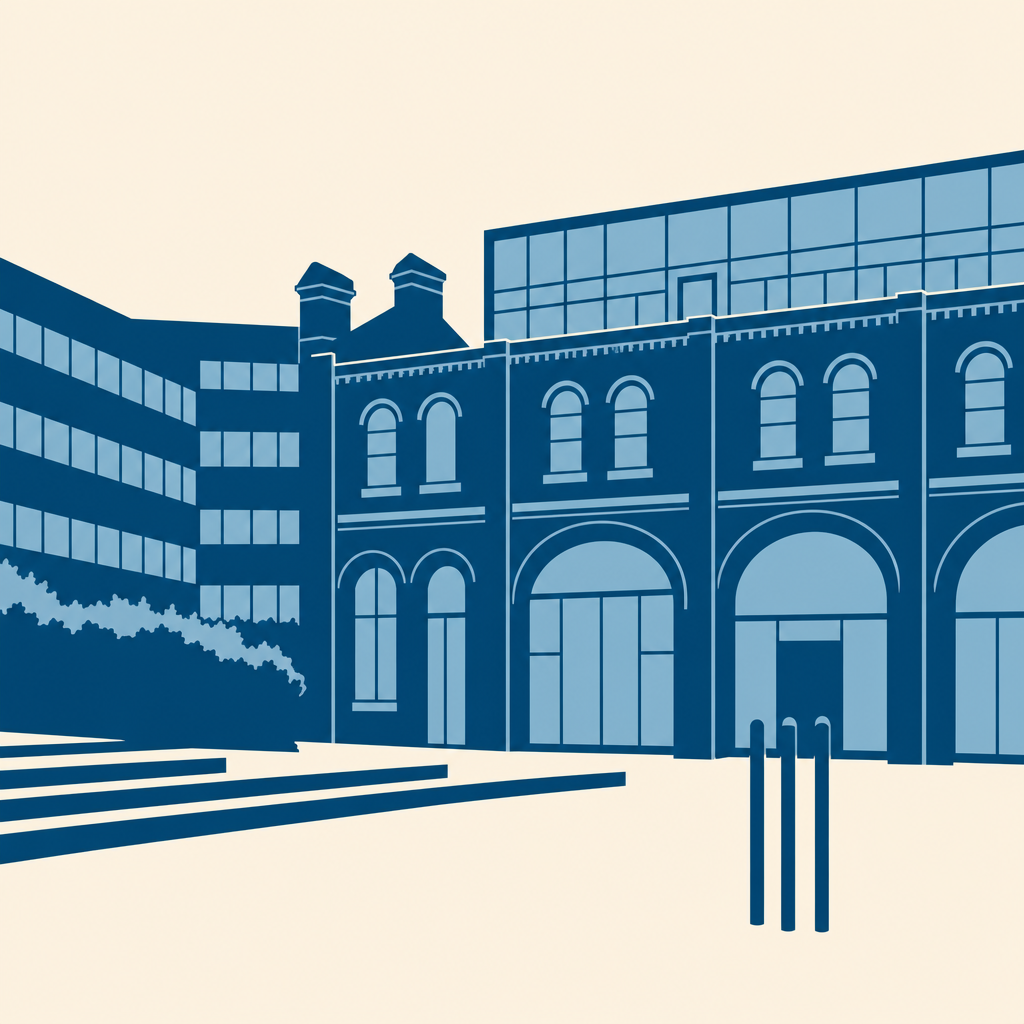
The practical location is an important part of user information. The field is located at the Holländischer Platz campus at Mönchebergstraße 7 in Kassel. The university describes the location very specifically: The elongated Engineering Sciences III building runs parallel to Mönchebergstraße, and the side entrance with house number 7 is located approximately in the middle of the building. Inside, the first corridor leads left, and after about 30 meters, you reach entrance 1600 through a glass door, leading to the rooms of the field. Those arriving by public transport have several options. From the ICE train station Kassel-Wilhelmshöhe, bus line 52 goes directly to the stop Mönchebergstraße/Universität, tram line 1 to Holländischer Platz/Universität, or tram lines 3 and 7 to Katzensprung/Universität. The travel time is approximately 20 minutes according to the university. For visitors arriving by car, it is important to know that there are very few parking spaces available in the surrounding streets around the Holländischer Platz campus and that these parking spaces are subject to fees. Specifically mentioned are Mönchebergstraße and Hentschelstraße. Thus, access is possible, but not designed for comfortable car infrastructure. For an academic institution located in a densely used campus environment, this is typical and speaks more for good public transport connections than for generous parking spaces. Therefore, anyone planning a visit should rely more on tram, bus, or a well-prepared arrival rather than hoping for spontaneous parking right in front of the door. ([uni-kassel.de](https://www.uni-kassel.de/maschinenbau/institute/arbeitswissenschaft-und-prozessmanagement/fachgebiete/mensch-maschine-systemtechnik/kontakt.html))
History, Leadership, and Scientific Embedding
A particularly striking point in the external presentation of the field is its history. The University of Kassel cites the year 1982 as the founding year and describes the field as the first university institution in Germany that focuses primarily on human-machine system research. This historical classification is enormously important for positioning, as it shows that the topic did not just emerge with current trends surrounding digitalization, AI, or assistance systems, but was systematically developed early on at the University of Kassel. The field was founded by Univ.-Prof. Dr.-Ing. Dr. h. c. Gunnar Johannsen. After his retirement, Univ.-Prof. Dr.-Ing. Ludger Schmidt took over the leadership in April 2008. This makes it clear that the field has a long institutional continuity, while at the same time being led in a time when digital systems, usability, and interdisciplinary development have come to the forefront even more. The embedding in the Institute for Work Science and Process Management, as well as in the Scientific Center for Information Technology Design, also makes it clear that the field does not work in isolation. It is part of a larger scientific structure where technical design, human centricity, and information technology development converge. For seekers, this combination of tradition, leadership, and institutional anchoring is a strong signal: This is not just any teaching position, but an established academic unit with a clear profile and a long research tradition in the field of human-technology systems. ([uni-kassel.de](https://www.uni-kassel.de/maschinenbau/institute/arbeitswissenschaft-und-prozessmanagement/fachgebiete/mensch-maschine-systemtechnik/ueber-uns.html))
Contact, Rooms, and Visitor Information
Those who wish to actually visit the field, call, or contact for a professional inquiry will find the most important data directly on the official contact page. The secretariat of the Human-Machine System Engineering field can be reached at the University of Kassel at Mönchebergstr. 7, 34125 Kassel, with room 1609 also mentioned. The phone number is +49 561 804-2700, and the office hours are stated as Monday to Friday from 8:30 AM to 12:30 PM. This is particularly helpful for students, project partners, or external interested parties who want to plan a conversation, a follow-up question, or an appointment. The orientation on-site is also described very concretely, which makes the visit significantly easier. The university refers to the Holländischer Platz campus as the location, to the Engineering Sciences III building with the orange window and door frames, and to the side entrance with house number 7. Such details may sound small, but they are enormously useful in practice because they significantly shorten the search on-site. For an institution that deals with user-oriented design, this clear information is almost programmatic: The own findability and accessibility are also presented in a comprehensible and precise manner. So, those searching for Human-Machine System Engineering in Kassel will not only find substantive research topics but also transparent contact and visitor information. This fits well with an academic unit that deals with the effective, efficient, and understandable design of systems. ([uni-kassel.de](https://www.uni-kassel.de/maschinenbau/institute/arbeitswissenschaft-und-prozessmanagement/fachgebiete/mensch-maschine-systemtechnik/kontakt.html))
Sources:
Mehr anzeigenWeniger anzeigen
Human-Machine System Engineering | Research & Teaching
The field of Human-Machine System Engineering at the University of Kassel is not a traditional event location, but a scientific institution with a strong practical focus. Those seeking information here are usually interested in research, teaching, contacts, location, directions, or the content orientation of the field. That is exactly why a closer look at the work at Mönchebergstraße 7 on the Holländischer Platz campus is worthwhile: There, humans and technology are not only thought together, but are brought together in concrete projects, courses, and application-oriented research work. The field is located in the Engineering Sciences III building, with the side entrance number 7 and the secretariat in room 1609. This location in the university-dominated environment makes the field equally interesting for students, researchers, and cooperation partners. ([uni-kassel.de](https://www.uni-kassel.de/maschinenbau/institute/arbeitswissenschaft-und-prozessmanagement/fachgebiete/mensch-maschine-systemtechnik/kontakt.html))
What Human-Machine System Engineering at the University of Kassel is About
At its core, the field deals with user-oriented design of effective and efficient human-machine systems. This sounds technical but describes a very human task: Technical devices, software, machines, and systems should be designed so that people can use them safely, understandably, and productively. The University of Kassel emphasizes an interdisciplinary approach that brings together cognitive and work science, ergonomics, systems engineering, as well as software and information technology. This connection makes the institution so exciting for many visitors, as it shows that modern technology is not developed in isolation but must be considered in conjunction with perception, behavior, load, and usage context. In the projects, engineers from various disciplines, computer scientists, psychologists, and designers work together as needed. This is a clear signal that here, not only a technical perspective dominates, but the human as user, decision-maker, and co-designer is at the center. Organizationally, the field is part of the Department of Mechanical Engineering, belongs to the Institute for Work Science and Process Management, and is part of the interdisciplinary Scientific Center for Information Technology Design at the University of Kassel. This embedding underscores that the topic of human-technology interaction at the University of Kassel is understood as a cross-cutting issue that extends beyond traditional disciplinary boundaries. For inquiries related to human-machine systems, usability, ergonomic design, or digital assistance systems, the field is thus a strong point of contact. ([uni-kassel.de](https://www.uni-kassel.de/maschinenbau/institute/arbeitswissenschaft-und-prozessmanagement/fachgebiete/mensch-maschine-systemtechnik/ueber-uns.html))
Research: Human Modeling, Interaction, and Assistance Systems
The research in the field is clearly divided into three major areas. First, it concerns human modeling and simulation. This includes perception, anthropometry, movement, and state recognition. This area is particularly important when technical systems need to understand how humans perceive information, how body measurements and movements must be considered in design, and how load or current state influences usage. Second, human-technology interaction is the focus. Here, the University of Kassel explicitly mentions mobile devices, virtual and augmented reality, robotics, and assistance systems. This addresses exactly those technologies that are becoming increasingly important in everyday life, industry, and digital work environments. Third, the field deals with work and learning, i.e., workplace, work process, and e-learning. This combination is particularly noteworthy for the academic location, as it shows that learning, working, and digital support are not viewed separately but as an interconnected design task. Methodologically, the field relies on usability engineering and system-technical analysis, design, and evaluation methods involving user participation. This includes user- and task-oriented requirement analyses, participatory development of solution concepts, and the prototypical realization of human-machine interfaces. This is complemented by empirical evaluation in field and laboratory studies, physiological measurement methods, observation, surveys, the investigation of performance, load, and strain, as well as system-ergonomic evaluation using simulation. For visitors and interested parties, this means: Those seeking research here will not find an abstract laboratory without practical relevance, but a field that closely connects methods and applications. ([uni-kassel.de](https://www.uni-kassel.de/maschinenbau/institute/arbeitswissenschaft-und-prozessmanagement/fachgebiete/mensch-maschine-systemtechnik/forschung.html))
Teaching, Degree Programs, and Application-Oriented Projects
The interdisciplinary character of the field is also very clearly evident in teaching. The University of Kassel describes that teaching covers all important areas of work design, human-machine systems, and systems engineering. The field is not only attended by students of mechanical engineering but also by students from mechatronics, computer science, electrical engineering, industrial engineering, psychology, and product design. This broad target group is a strong indication that it is a topic that brings together technical, organizational, and design perspectives. The content of the teaching offerings is also diverse. Among other things, Human-Machine Systems 1 with ergonomic and information technology design and Human-Machine Systems 2 with user-oriented development are mentioned. In addition, project and internship formats that address interaction design from analysis to realization to evaluation are included. The official description also mentions specific application areas such as driver assistance, assistance in aviation, process monitoring, teleoperation support, human-robot collaboration, help systems in PC applications, mobile assistance systems, augmented reality, ambient assisted living, and smart home. This enumeration shows how closely the field works on current technological developments. For SEO logic, this is important because search terms like teaching, research, assistance systems, robotics, or e-learning do not appear here by chance but reflect the real focus of the institution. So, those searching for Human-Machine System Engineering at the University of Kassel are often looking for a place where digital design, human centricity, and technical development are brought together. This is exactly what the field achieves in its teaching and projects. ([uni-kassel.de](https://www.uni-kassel.de/maschinenbau/institute/arbeitswissenschaft-und-prozessmanagement/fachgebiete/mensch-maschine-systemtechnik/ueber-uns.html))
Directions, Parking, and Location at Holländischer Platz
The practical location is an important part of user information. The field is located at the Holländischer Platz campus at Mönchebergstraße 7 in Kassel. The university describes the location very specifically: The elongated Engineering Sciences III building runs parallel to Mönchebergstraße, and the side entrance with house number 7 is located approximately in the middle of the building. Inside, the first corridor leads left, and after about 30 meters, you reach entrance 1600 through a glass door, leading to the rooms of the field. Those arriving by public transport have several options. From the ICE train station Kassel-Wilhelmshöhe, bus line 52 goes directly to the stop Mönchebergstraße/Universität, tram line 1 to Holländischer Platz/Universität, or tram lines 3 and 7 to Katzensprung/Universität. The travel time is approximately 20 minutes according to the university. For visitors arriving by car, it is important to know that there are very few parking spaces available in the surrounding streets around the Holländischer Platz campus and that these parking spaces are subject to fees. Specifically mentioned are Mönchebergstraße and Hentschelstraße. Thus, access is possible, but not designed for comfortable car infrastructure. For an academic institution located in a densely used campus environment, this is typical and speaks more for good public transport connections than for generous parking spaces. Therefore, anyone planning a visit should rely more on tram, bus, or a well-prepared arrival rather than hoping for spontaneous parking right in front of the door. ([uni-kassel.de](https://www.uni-kassel.de/maschinenbau/institute/arbeitswissenschaft-und-prozessmanagement/fachgebiete/mensch-maschine-systemtechnik/kontakt.html))
History, Leadership, and Scientific Embedding
A particularly striking point in the external presentation of the field is its history. The University of Kassel cites the year 1982 as the founding year and describes the field as the first university institution in Germany that focuses primarily on human-machine system research. This historical classification is enormously important for positioning, as it shows that the topic did not just emerge with current trends surrounding digitalization, AI, or assistance systems, but was systematically developed early on at the University of Kassel. The field was founded by Univ.-Prof. Dr.-Ing. Dr. h. c. Gunnar Johannsen. After his retirement, Univ.-Prof. Dr.-Ing. Ludger Schmidt took over the leadership in April 2008. This makes it clear that the field has a long institutional continuity, while at the same time being led in a time when digital systems, usability, and interdisciplinary development have come to the forefront even more. The embedding in the Institute for Work Science and Process Management, as well as in the Scientific Center for Information Technology Design, also makes it clear that the field does not work in isolation. It is part of a larger scientific structure where technical design, human centricity, and information technology development converge. For seekers, this combination of tradition, leadership, and institutional anchoring is a strong signal: This is not just any teaching position, but an established academic unit with a clear profile and a long research tradition in the field of human-technology systems. ([uni-kassel.de](https://www.uni-kassel.de/maschinenbau/institute/arbeitswissenschaft-und-prozessmanagement/fachgebiete/mensch-maschine-systemtechnik/ueber-uns.html))
Contact, Rooms, and Visitor Information
Those who wish to actually visit the field, call, or contact for a professional inquiry will find the most important data directly on the official contact page. The secretariat of the Human-Machine System Engineering field can be reached at the University of Kassel at Mönchebergstr. 7, 34125 Kassel, with room 1609 also mentioned. The phone number is +49 561 804-2700, and the office hours are stated as Monday to Friday from 8:30 AM to 12:30 PM. This is particularly helpful for students, project partners, or external interested parties who want to plan a conversation, a follow-up question, or an appointment. The orientation on-site is also described very concretely, which makes the visit significantly easier. The university refers to the Holländischer Platz campus as the location, to the Engineering Sciences III building with the orange window and door frames, and to the side entrance with house number 7. Such details may sound small, but they are enormously useful in practice because they significantly shorten the search on-site. For an institution that deals with user-oriented design, this clear information is almost programmatic: The own findability and accessibility are also presented in a comprehensible and precise manner. So, those searching for Human-Machine System Engineering in Kassel will not only find substantive research topics but also transparent contact and visitor information. This fits well with an academic unit that deals with the effective, efficient, and understandable design of systems. ([uni-kassel.de](https://www.uni-kassel.de/maschinenbau/institute/arbeitswissenschaft-und-prozessmanagement/fachgebiete/mensch-maschine-systemtechnik/kontakt.html))
Sources:
Human-Machine System Engineering | Research & Teaching
The field of Human-Machine System Engineering at the University of Kassel is not a traditional event location, but a scientific institution with a strong practical focus. Those seeking information here are usually interested in research, teaching, contacts, location, directions, or the content orientation of the field. That is exactly why a closer look at the work at Mönchebergstraße 7 on the Holländischer Platz campus is worthwhile: There, humans and technology are not only thought together, but are brought together in concrete projects, courses, and application-oriented research work. The field is located in the Engineering Sciences III building, with the side entrance number 7 and the secretariat in room 1609. This location in the university-dominated environment makes the field equally interesting for students, researchers, and cooperation partners. ([uni-kassel.de](https://www.uni-kassel.de/maschinenbau/institute/arbeitswissenschaft-und-prozessmanagement/fachgebiete/mensch-maschine-systemtechnik/kontakt.html))
What Human-Machine System Engineering at the University of Kassel is About
At its core, the field deals with user-oriented design of effective and efficient human-machine systems. This sounds technical but describes a very human task: Technical devices, software, machines, and systems should be designed so that people can use them safely, understandably, and productively. The University of Kassel emphasizes an interdisciplinary approach that brings together cognitive and work science, ergonomics, systems engineering, as well as software and information technology. This connection makes the institution so exciting for many visitors, as it shows that modern technology is not developed in isolation but must be considered in conjunction with perception, behavior, load, and usage context. In the projects, engineers from various disciplines, computer scientists, psychologists, and designers work together as needed. This is a clear signal that here, not only a technical perspective dominates, but the human as user, decision-maker, and co-designer is at the center. Organizationally, the field is part of the Department of Mechanical Engineering, belongs to the Institute for Work Science and Process Management, and is part of the interdisciplinary Scientific Center for Information Technology Design at the University of Kassel. This embedding underscores that the topic of human-technology interaction at the University of Kassel is understood as a cross-cutting issue that extends beyond traditional disciplinary boundaries. For inquiries related to human-machine systems, usability, ergonomic design, or digital assistance systems, the field is thus a strong point of contact. ([uni-kassel.de](https://www.uni-kassel.de/maschinenbau/institute/arbeitswissenschaft-und-prozessmanagement/fachgebiete/mensch-maschine-systemtechnik/ueber-uns.html))
Research: Human Modeling, Interaction, and Assistance Systems
The research in the field is clearly divided into three major areas. First, it concerns human modeling and simulation. This includes perception, anthropometry, movement, and state recognition. This area is particularly important when technical systems need to understand how humans perceive information, how body measurements and movements must be considered in design, and how load or current state influences usage. Second, human-technology interaction is the focus. Here, the University of Kassel explicitly mentions mobile devices, virtual and augmented reality, robotics, and assistance systems. This addresses exactly those technologies that are becoming increasingly important in everyday life, industry, and digital work environments. Third, the field deals with work and learning, i.e., workplace, work process, and e-learning. This combination is particularly noteworthy for the academic location, as it shows that learning, working, and digital support are not viewed separately but as an interconnected design task. Methodologically, the field relies on usability engineering and system-technical analysis, design, and evaluation methods involving user participation. This includes user- and task-oriented requirement analyses, participatory development of solution concepts, and the prototypical realization of human-machine interfaces. This is complemented by empirical evaluation in field and laboratory studies, physiological measurement methods, observation, surveys, the investigation of performance, load, and strain, as well as system-ergonomic evaluation using simulation. For visitors and interested parties, this means: Those seeking research here will not find an abstract laboratory without practical relevance, but a field that closely connects methods and applications. ([uni-kassel.de](https://www.uni-kassel.de/maschinenbau/institute/arbeitswissenschaft-und-prozessmanagement/fachgebiete/mensch-maschine-systemtechnik/forschung.html))
Teaching, Degree Programs, and Application-Oriented Projects
The interdisciplinary character of the field is also very clearly evident in teaching. The University of Kassel describes that teaching covers all important areas of work design, human-machine systems, and systems engineering. The field is not only attended by students of mechanical engineering but also by students from mechatronics, computer science, electrical engineering, industrial engineering, psychology, and product design. This broad target group is a strong indication that it is a topic that brings together technical, organizational, and design perspectives. The content of the teaching offerings is also diverse. Among other things, Human-Machine Systems 1 with ergonomic and information technology design and Human-Machine Systems 2 with user-oriented development are mentioned. In addition, project and internship formats that address interaction design from analysis to realization to evaluation are included. The official description also mentions specific application areas such as driver assistance, assistance in aviation, process monitoring, teleoperation support, human-robot collaboration, help systems in PC applications, mobile assistance systems, augmented reality, ambient assisted living, and smart home. This enumeration shows how closely the field works on current technological developments. For SEO logic, this is important because search terms like teaching, research, assistance systems, robotics, or e-learning do not appear here by chance but reflect the real focus of the institution. So, those searching for Human-Machine System Engineering at the University of Kassel are often looking for a place where digital design, human centricity, and technical development are brought together. This is exactly what the field achieves in its teaching and projects. ([uni-kassel.de](https://www.uni-kassel.de/maschinenbau/institute/arbeitswissenschaft-und-prozessmanagement/fachgebiete/mensch-maschine-systemtechnik/ueber-uns.html))
Directions, Parking, and Location at Holländischer Platz
The practical location is an important part of user information. The field is located at the Holländischer Platz campus at Mönchebergstraße 7 in Kassel. The university describes the location very specifically: The elongated Engineering Sciences III building runs parallel to Mönchebergstraße, and the side entrance with house number 7 is located approximately in the middle of the building. Inside, the first corridor leads left, and after about 30 meters, you reach entrance 1600 through a glass door, leading to the rooms of the field. Those arriving by public transport have several options. From the ICE train station Kassel-Wilhelmshöhe, bus line 52 goes directly to the stop Mönchebergstraße/Universität, tram line 1 to Holländischer Platz/Universität, or tram lines 3 and 7 to Katzensprung/Universität. The travel time is approximately 20 minutes according to the university. For visitors arriving by car, it is important to know that there are very few parking spaces available in the surrounding streets around the Holländischer Platz campus and that these parking spaces are subject to fees. Specifically mentioned are Mönchebergstraße and Hentschelstraße. Thus, access is possible, but not designed for comfortable car infrastructure. For an academic institution located in a densely used campus environment, this is typical and speaks more for good public transport connections than for generous parking spaces. Therefore, anyone planning a visit should rely more on tram, bus, or a well-prepared arrival rather than hoping for spontaneous parking right in front of the door. ([uni-kassel.de](https://www.uni-kassel.de/maschinenbau/institute/arbeitswissenschaft-und-prozessmanagement/fachgebiete/mensch-maschine-systemtechnik/kontakt.html))
History, Leadership, and Scientific Embedding
A particularly striking point in the external presentation of the field is its history. The University of Kassel cites the year 1982 as the founding year and describes the field as the first university institution in Germany that focuses primarily on human-machine system research. This historical classification is enormously important for positioning, as it shows that the topic did not just emerge with current trends surrounding digitalization, AI, or assistance systems, but was systematically developed early on at the University of Kassel. The field was founded by Univ.-Prof. Dr.-Ing. Dr. h. c. Gunnar Johannsen. After his retirement, Univ.-Prof. Dr.-Ing. Ludger Schmidt took over the leadership in April 2008. This makes it clear that the field has a long institutional continuity, while at the same time being led in a time when digital systems, usability, and interdisciplinary development have come to the forefront even more. The embedding in the Institute for Work Science and Process Management, as well as in the Scientific Center for Information Technology Design, also makes it clear that the field does not work in isolation. It is part of a larger scientific structure where technical design, human centricity, and information technology development converge. For seekers, this combination of tradition, leadership, and institutional anchoring is a strong signal: This is not just any teaching position, but an established academic unit with a clear profile and a long research tradition in the field of human-technology systems. ([uni-kassel.de](https://www.uni-kassel.de/maschinenbau/institute/arbeitswissenschaft-und-prozessmanagement/fachgebiete/mensch-maschine-systemtechnik/ueber-uns.html))
Contact, Rooms, and Visitor Information
Those who wish to actually visit the field, call, or contact for a professional inquiry will find the most important data directly on the official contact page. The secretariat of the Human-Machine System Engineering field can be reached at the University of Kassel at Mönchebergstr. 7, 34125 Kassel, with room 1609 also mentioned. The phone number is +49 561 804-2700, and the office hours are stated as Monday to Friday from 8:30 AM to 12:30 PM. This is particularly helpful for students, project partners, or external interested parties who want to plan a conversation, a follow-up question, or an appointment. The orientation on-site is also described very concretely, which makes the visit significantly easier. The university refers to the Holländischer Platz campus as the location, to the Engineering Sciences III building with the orange window and door frames, and to the side entrance with house number 7. Such details may sound small, but they are enormously useful in practice because they significantly shorten the search on-site. For an institution that deals with user-oriented design, this clear information is almost programmatic: The own findability and accessibility are also presented in a comprehensible and precise manner. So, those searching for Human-Machine System Engineering in Kassel will not only find substantive research topics but also transparent contact and visitor information. This fits well with an academic unit that deals with the effective, efficient, and understandable design of systems. ([uni-kassel.de](https://www.uni-kassel.de/maschinenbau/institute/arbeitswissenschaft-und-prozessmanagement/fachgebiete/mensch-maschine-systemtechnik/kontakt.html))
Sources:
Frequently Asked Questions
Reviews
No reviews found