
Kassel
Weinbergstraße 25-27, 34117 Kassel, Deutschland
Museum of Sepulchral Culture | Opening Hours & Exhibitions
The Museum of Sepulchral Culture in Kassel is not an ordinary museum, but a unique place in Germany for engaging with dying, death, burial, mourning, and remembrance. Those who visit this location experience not only exhibitions but also research, education, a culture of conversation, and an open perspective on a topic that is often repressed. This is precisely what creates the special attraction of the house: it is factual, calm, well-curated, and at the same time emotionally strong. The museum sees itself as an independent institution working culturally and scientifically, as well as a research center with a collection of around 25,000 objects from Christian-Western culture, spanning from the 1st century to the present. This connects the house's historical depth with current questions that touch people in many life situations. The location at Weinbergstraße 25-27 is situated on the edge of one of Kassel's most important cultural axes, neighboring other notable places in the city. This makes the visit interesting not only in terms of content but also urban planning. At the same time, the museum is remarkably accessible: barrier-free, with guided tours, a library, a shop, a cafeteria, and a program that takes different target groups seriously. Currently, the house is also undergoing a redesign and expansion, so the visitor experience is in transition. Therefore, anyone looking for opening hours, admission, directions, exhibitions, or events will find a location with an unusual stance and high content quality here. ([sepulkralmuseum.de](https://www.sepulkralmuseum.de/EN/museum/museum-for-sepulchral-culture/mission-statement?utm_source=openai))
Opening Hours, Admission, and Tickets at the Museum of Sepulchral Culture
Practical topics clearly dominate the search queries related to the Museum of Sepulchral Culture: opening hours, admission, tickets, and the desire for quick visitor information. This is understandable, as the house has clear and regular hours that can be well planned. The museum is closed on Mondays. It is open on Tuesdays, Thursdays, Fridays, Saturdays, and Sundays from 10:00 AM to 5:00 PM; on Wednesdays, the opening hours are extended until 8:00 PM. Those looking for a quiet visit in the evening will find the longest time window on Wednesday. The library has its own hours: it is open on Thursdays and Fridays from 10:00 AM to 12:00 PM and from 12:30 PM to 3:00 PM and can only be visited by appointment. This is an important note for researchers, students, or people with a special interest in sepulchral culture, as the library is not a casual additional offer but a specialized access to the topic. Regarding admission: the regular price is 8 euros, reduced is 5 euros. Additionally, there are family tickets, annual tickets, reduced group prices, and free admission rules for certain groups. Particularly attractive is the free admission on the first Wednesday of the month between 5 and 8 PM. So, anyone looking for a location that is culturally rich yet offers a transparent, well-planned pricing structure is in the right place. From an SEO perspective, these topics are central because they reflect immediate user intentions: When is the museum open? What does it cost to visit? Are there discounts? Can one drop by spontaneously without much preparation? The museum answers all of this very clearly, making the visit pleasantly planable. ([sepulkralmuseum.de](https://www.sepulkralmuseum.de/besuch))
The guided tours are also closely linked to the visit process and therefore belong to the most important keywords surrounding the location. The public tour takes place every Wednesday at 5 PM and lasts about an hour. It is free, but the museum admission fee applies, and prior registration is requested for the appointment. This is particularly convenient for individual visitors, as the tour can be easily integrated into an evening or day trip. Additionally, the museum offers individual tours for groups, including specially developed programs for children, schools, adults, and professionals. The special aspect of this is that the mediation is not limited to classical art observation but is designed for reflection, exchange, and a conscious approach to a socially relevant topic. So, anyone searching for “upcoming events” will find not only the regular tour format but a continuous mediation program. In practice, this means that a visit to the Museum of Sepulchral Culture is not a static walk through showcases but a schedule-able experience with a conversational character. For search engines, this is important because terms like opening hours, admission, tours, and library describe the specific visit intention very precisely. For people on-site, it is equally important because planning certainty at a location with a specific theme is particularly valuable. ([sepulkralmuseum.de](https://www.sepulkralmuseum.de/besuch))
Directions and Parking at Weinbergstraße 25-27
Getting there is one of the strongest search topics for any location, and the same is true for the Museum of Sepulchral Culture. The official address is Weinbergstraße 25-27 in 34117 Kassel. The house is easily accessible by public transport: From the ICE train station Kassel-Wilhelmshöhe, tram lines 1 and 3 go into the city to the Weigelstraße stop; from there, it is a short walk through the area at Brüder-Grimm-Platz and past the Murhard Library and Elisabeth Hospital to Weinbergstraße. From the main train station, the website recommends the RT5 towards the city center to Rathaus/Fünffensterstraße. After that, the route leads into Wilhelmshöher Allee and from there into Weinbergstraße. This information is particularly helpful for visitors who want to plan quickly and need precise orientation. By car, the approach is also described: Follow the signs towards the city center from the highway exits, turn from Frankfurter Straße into Fünffensterstraße, and reach Weinbergstraße via Wilhelmshöher Allee. The museum is located behind the Grimmwelt on the same side of the street, thus well-positioned in the cultural landscape of Kassel. It is important to know that there are no museum-owned parking spaces. The street is shared by residents, schools, nursing homes, hospitals, and neighboring museums, which is why only paid parking spaces are available along the street. Therefore, those arriving by car should plan for some buffer time. This mixture of urban location, limited parking space, and good public transport connections shapes the search intentions around getting there and parking. The museum is not an isolated site with a large forecourt but part of a vibrant inner-city context. Those who want to arrive relaxed often travel best by train, tram, or a short walk through the cultural district. This way, the visit can be planned without parking stress and with a clear route. ([sepulkralmuseum.de](https://www.sepulkralmuseum.de/besuch))
For practical purposes, it is also worth looking at the barrier-free accessibility and spatial integration. The museum describes itself as accessible to all and refers to an open architecture and a spacious elevator to all exhibition levels. The permanent exhibition and the changing special exhibitions are accessible for wheelchair users, and wheelchair-accessible restrooms are located in the basement. An accompanying person receives free admission, and special tours can be booked for blind, visually impaired, hearing impaired, or otherwise disabled visitors. This makes the location not only architecturally interesting but also very user-friendly in everyday life. This is particularly relevant for search queries regarding access, parking, and barrier-free access because visitors today want to know not only how to get there but also whether the stay is comfortable and accessible. In conjunction with the central location in Kassel, the proximity to other cultural sites, and the clear wayfinding, a visit profile emerges that is attractive for both day visitors and professionals. The city location is therefore not just a geographical detail but part of the identity of this place: culture, science, and visitor-friendliness meet directly here. ([sepulkralmuseum.de](https://www.sepulkralmuseum.de/besuch))
Permanent Exhibition, Special Exhibitions, and Current Topics
In terms of content, the Museum of Sepulchral Culture is particularly interesting because of its permanent exhibition and its changing special exhibitions. The collection comprises around 25,000 exhibits, primarily from Christian-Western culture. The chronological span ranges from the 1st century to today, and the collection continues to grow through purchases and donations. The permanent exhibition shows the development of burial culture from the Middle Ages to the present. In addition, there are areas with customary and folk-religious exhibits of burial, mourning, and remembrance culture. This is not only historically rich but also relevant to the present, as current developments and contemporary artistic positions are continually integrated. The comparison between cultural traditions is particularly strong: the museum presents burial customs of various religions and cultures in Germany and worldwide. This makes the exhibition not museum-like in the narrow sense but rather a lively contemplation of rituals, symbols, and the social handling of finitude. For search queries like “Kassel exhibitions” or “upcoming events,” this is significant because the museum does not only display a static collection but continuously reframes topics. At the same time, the website refers to a comprehensive redesign of the permanent exhibition, which is set to begin in 2027 with renovations and new design. This is a strong signal for all those interested in museum culture: here, mediation does not stand still but continues to evolve. Therefore, anyone visiting the house today experiences a content-rich, historically grounded, and at the same time future-oriented exhibition situation. ([sepulkralmuseum.de](https://www.sepulkralmuseum.de/ausstellungen/dauerpraesentation?utm_source=openai))
The special exhibitions also account for a large part of the attention. The website currently highlights the special exhibition “Where to Put the Dog? – in between 4.0” running from May 7 to November 1, 2026. Even the title shows how the museum brings difficult or unusual questions into a public form without trivializing them. Additionally, the website refers to a digital exploration of the exhibitions: several special exhibitions are accessible digitally in 3D, including previous topics like “Comfort,” “Suicide – Let’s talk about it!” or “Memento.” This is particularly relevant for users looking for photos, impressions, or initial orientation. Because a museum with such a sensitive subject area benefits from the fact that content can also be experienced virtually. At the same time, the current state of the special exhibition is associated with a renovation notice on the website; reduced admission is mentioned there. This indicates a phase of change in which the house is further developing its presentation. For SEO, these contents are interesting because search queries about exhibitions often come with concrete expectations: What is currently running? What topics are being discussed? Is there something special to see? The museum provides an answer that goes far beyond a classic exhibition calendar. It is a place where death and remembrance are not only presented but also discussed and recontextualized. ([sepulkralmuseum.de](https://www.sepulkralmuseum.de/ausstellungen))
Library, Museum Shop, Cafeteria, and Barrier-Free Access
A major advantage of this location is that the visit extends far beyond the exhibition rooms. The library is a particularly valuable component for a specialized museum because it enables research and deepening. It is open on Thursdays and Fridays from 10:00 AM to 12:00 PM and from 12:30 PM to 3:00 PM and can only be visited by appointment. Registration is done through the responsible librarian or the slide and photo archive. Therefore, anyone wanting to delve deeper into the topics of sepulchral culture, cemetery culture, or burial culture will find a specialized access that goes beyond the normal museum visit. The museum shop is also noteworthy: it is accessible during opening hours independently of a visit to the exhibition rooms. There, there are in-house publications and catalogs, specialist literature, children's books, postcards, posters, design objects, artistic gift items, editions, and condolence cards. This shows how consistently the house is conceived as a knowledge and cultural site. Even the shop is not just a side show but part of the content mediation. This is complemented by the cafeteria, which invites visitors to linger in the covered courtyard or on the terrace with a view over Kassel. It is freely accessible and not tied to the museum visit. This is unusual and pleasant: those who want to take a short break, have a drink, or simply absorb the atmosphere can do so without a ticket. Thus, the museum becomes an open place in the everyday life of the city. For search queries regarding the shop, library, or photos, this openness is an important signal as it strengthens the usability of the house for different target groups. ([sepulkralmuseum.de](https://www.sepulkralmuseum.de/besuch))
The barrier-free access is not a minor aspect but part of the self-understanding. The museum describes its architecture as open and refers to an elevator to all levels, wheelchair-accessible restrooms, and special tours for people with different disabilities. An accompanying person receives free admission. These are concrete, practical points that are decisive for many visitors before they decide on a location. Especially in a museum whose theme is emotionally and intellectually demanding, accessibility is particularly important. The house makes it clear that it wants to enable as many people as possible to engage with death, mourning, and remembrance. This openness also carries a social attitude: the museum does not only want to present but also to involve. Together with the library, shop, and cafeteria, a visiting framework emerges that is flexible, friendly, and content-rich. Whether visiting with family, a school class, as part of a training course, or as an individual guest, one finds not only an exhibition but a whole visiting system. This is one of the reasons why the location works so well in Kassel and regularly appears in search queries for a good museum visit. ([sepulkralmuseum.de](https://www.sepulkralmuseum.de/besuch))
History and Architecture of the House at the Vineyard
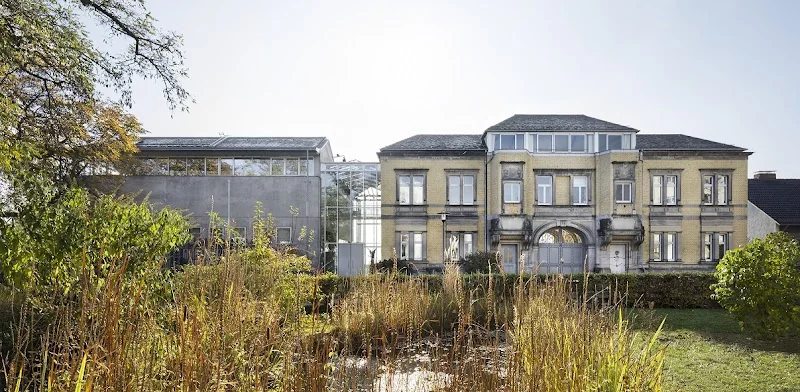
The history of the Museum of Sepulchral Culture is closely linked to the vineyard and the city history of Kassel. In the 19th century, the site was owned by the Henschel family, who built the Henschel Villa there in 1870. The current museum building stands on an area that has been repurposed, damaged, contested, and rethought multiple times. The stable and carriage house from 1903, part of the former Henschel ensemble, now houses the Central Institute and the Museum of Sepulchral Culture, as well as the Association for Cemetery and Monument e.V. This historical depth is important because it explains why the house is so strongly associated with memory, continuity, and change. The working group was founded in 1951, the Central Institute in 1979, and the Foundation Central Institute and Museum of Sepulchral Culture in 1984. The foundation stone was laid in 1989, and in an architectural competition in 1987, the design by Wilhelm Kücker was selected. The resulting glass and concrete building connects old and new and touches the listed remnants of the Henschel facility via the previously existing lizard path. This architectural combination embodies much of the character of the museum: preserving without freezing, thinking ahead without denying the origin. The building itself thus becomes part of the narrative. The fact that the museum was opened in 1992 fits into this chronology and explains why the place is now considered a cultural and scientific address in Germany. Those who know the history of the house also understand why objects are not simply displayed here but a topic is translated into a spatial and historical form. ([sepulkralmuseum.de](https://www.sepulkralmuseum.de/museum/museum-fuer-sepulkralkultur/geschichte))
The history also includes the special aura of the house at the vineyard. The location is in a district that is closely linked to the cultural development of Kassel, and the immediate proximity to other institutions makes the museum visit urbanistically exciting. The vineyard was a coveted area for decades, and the numerous unimplemented development plans show how contested this place was. After war damage and later uses, traces remained that are now part of the atmosphere. Thus, the building tells not only about sepulchral culture but also about urban transformation. A striking example is the graffiti by Harald Naegeli, which was created as part of an exhibition and is still visible on the front of the old building. It stands for the ability of the house to connect art, intervention, and memory. This connection makes the location particularly interesting for visitors looking for photos, history, and special features. The museum is not just a place of content but also a place with its own biography. Therefore, when walking through the rooms and outdoor areas, one also experiences a piece of Kassel's cultural history. For search intentions, this is enormously valuable because people rarely google just opening hours; they want to know what makes this place unique. The answer lies in the mix of historical building substance, contemporary use, and institutional development. ([sepulkralmuseum.de](https://www.sepulkralmuseum.de/museum/museum-fuer-sepulkralkultur/geschichte))
Guided Tours, Events, and Education as Part of the Visitor Experience
The Museum of Sepulchral Culture does not see itself as a silent storage depot but as an active learning and meeting place. This is particularly evident in the guided tours and educational offerings. The public Wednesday tour at 5 PM is a low-threshold format for private visitors who want to get to know the museum in a structured way. Since the tour lasts about an hour and is free, it is very suitable for first visits. In addition, there are individual group tours, offers for schools, children, adults, and professionals, as well as special formats that address topics such as Muslim burial fields or suicide. This is important because the museum does not limit its mediation to a target group. It addresses people of different ages, backgrounds, and professional backgrounds. It fits that the website also offers training and seminars, for example, for professionals around burial and care. Therefore, for keyword analysis, not only exhibitions and opening hours are relevant but also events, education, and mediation. The current website refers to a diverse event program with lectures, tours, and other formats. This makes the museum a lively platform for social and cultural debates. So, anyone searching for “upcoming events” will find a house that continuously engages with current questions while also providing long-term educational work. This combination of calm and activity, reflection and dialogue, makes the place so strong. ([sepulkralmuseum.de](https://www.sepulkralmuseum.de/besuch))
Particularly noteworthy is the museum's attitude towards the topic of death. The official self-presentation emphasizes that the house, as the only independent institution in Germany, is dedicated to the entire spectrum of the so-called last things and wants to encourage visitors to consider the often-taboo topic with expertise, research, and mediation. This attitude also shapes the experience on-site. The museum works not only with objects but with perspectives: it wants to inform, advise, mediate, and make the changes in sepulchral culture visible. This creates spaces for self-reflection, cultural learning, and even humor when used appropriately. At the same time, the institutional work is interdisciplinary and networked. The Central Institute conducts fundamental research on cemeteries, grave markers, monuments, mourning and burial customs, as well as developments in dealing with dying and death. For visitors, this means that behind the museum visit stands a scientifically founded, culturally relevant, and socially open framework. This is precisely what distinguishes this location from many other houses. Those who visit the Museum of Sepulchral Culture do not enter just any exhibition space but a place with attitude, history, and contemporary relevance. Therefore, it is interesting not only for classic museum fans but also for people who engage with culture, rituals, memory, architecture, or social change. ([sepulkralmuseum.de](https://www.sepulkralmuseum.de/EN/museum/museum-for-sepulchral-culture/mission-statement?utm_source=openai))
Sources:
https://www.sepulkralmuseum.de/besuch – Museum of Sepulchral Culture / Visithttps://www.sepulkralmuseum.de/ausstellungen/dauerpraesentation – Museum of Sepulchral Culture / Permanent Exhibitionhttps://www.sepulkralmuseum.de/museum/museum-fuer-sepulkralkultur/geschichte – Museum of Sepulchral Culture / Historyhttps://www.sepulkralmuseum.de/ausstellungen/sonderausstellungen – Museum of Sepulchral Culture / Special Exhibitionshttps://www.sepulkralmuseum.de/museum/museum-fuer-sepulkralkultur/leitbild – Museum of Sepulchral Culture / Mission Statement
Mehr anzeigenWeniger anzeigen
Museum of Sepulchral Culture | Opening Hours & Exhibitions
The Museum of Sepulchral Culture in Kassel is not an ordinary museum, but a unique place in Germany for engaging with dying, death, burial, mourning, and remembrance. Those who visit this location experience not only exhibitions but also research, education, a culture of conversation, and an open perspective on a topic that is often repressed. This is precisely what creates the special attraction of the house: it is factual, calm, well-curated, and at the same time emotionally strong. The museum sees itself as an independent institution working culturally and scientifically, as well as a research center with a collection of around 25,000 objects from Christian-Western culture, spanning from the 1st century to the present. This connects the house's historical depth with current questions that touch people in many life situations. The location at Weinbergstraße 25-27 is situated on the edge of one of Kassel's most important cultural axes, neighboring other notable places in the city. This makes the visit interesting not only in terms of content but also urban planning. At the same time, the museum is remarkably accessible: barrier-free, with guided tours, a library, a shop, a cafeteria, and a program that takes different target groups seriously. Currently, the house is also undergoing a redesign and expansion, so the visitor experience is in transition. Therefore, anyone looking for opening hours, admission, directions, exhibitions, or events will find a location with an unusual stance and high content quality here. ([sepulkralmuseum.de](https://www.sepulkralmuseum.de/EN/museum/museum-for-sepulchral-culture/mission-statement?utm_source=openai))
Opening Hours, Admission, and Tickets at the Museum of Sepulchral Culture
Practical topics clearly dominate the search queries related to the Museum of Sepulchral Culture: opening hours, admission, tickets, and the desire for quick visitor information. This is understandable, as the house has clear and regular hours that can be well planned. The museum is closed on Mondays. It is open on Tuesdays, Thursdays, Fridays, Saturdays, and Sundays from 10:00 AM to 5:00 PM; on Wednesdays, the opening hours are extended until 8:00 PM. Those looking for a quiet visit in the evening will find the longest time window on Wednesday. The library has its own hours: it is open on Thursdays and Fridays from 10:00 AM to 12:00 PM and from 12:30 PM to 3:00 PM and can only be visited by appointment. This is an important note for researchers, students, or people with a special interest in sepulchral culture, as the library is not a casual additional offer but a specialized access to the topic. Regarding admission: the regular price is 8 euros, reduced is 5 euros. Additionally, there are family tickets, annual tickets, reduced group prices, and free admission rules for certain groups. Particularly attractive is the free admission on the first Wednesday of the month between 5 and 8 PM. So, anyone looking for a location that is culturally rich yet offers a transparent, well-planned pricing structure is in the right place. From an SEO perspective, these topics are central because they reflect immediate user intentions: When is the museum open? What does it cost to visit? Are there discounts? Can one drop by spontaneously without much preparation? The museum answers all of this very clearly, making the visit pleasantly planable. ([sepulkralmuseum.de](https://www.sepulkralmuseum.de/besuch))
The guided tours are also closely linked to the visit process and therefore belong to the most important keywords surrounding the location. The public tour takes place every Wednesday at 5 PM and lasts about an hour. It is free, but the museum admission fee applies, and prior registration is requested for the appointment. This is particularly convenient for individual visitors, as the tour can be easily integrated into an evening or day trip. Additionally, the museum offers individual tours for groups, including specially developed programs for children, schools, adults, and professionals. The special aspect of this is that the mediation is not limited to classical art observation but is designed for reflection, exchange, and a conscious approach to a socially relevant topic. So, anyone searching for “upcoming events” will find not only the regular tour format but a continuous mediation program. In practice, this means that a visit to the Museum of Sepulchral Culture is not a static walk through showcases but a schedule-able experience with a conversational character. For search engines, this is important because terms like opening hours, admission, tours, and library describe the specific visit intention very precisely. For people on-site, it is equally important because planning certainty at a location with a specific theme is particularly valuable. ([sepulkralmuseum.de](https://www.sepulkralmuseum.de/besuch))
Directions and Parking at Weinbergstraße 25-27
Getting there is one of the strongest search topics for any location, and the same is true for the Museum of Sepulchral Culture. The official address is Weinbergstraße 25-27 in 34117 Kassel. The house is easily accessible by public transport: From the ICE train station Kassel-Wilhelmshöhe, tram lines 1 and 3 go into the city to the Weigelstraße stop; from there, it is a short walk through the area at Brüder-Grimm-Platz and past the Murhard Library and Elisabeth Hospital to Weinbergstraße. From the main train station, the website recommends the RT5 towards the city center to Rathaus/Fünffensterstraße. After that, the route leads into Wilhelmshöher Allee and from there into Weinbergstraße. This information is particularly helpful for visitors who want to plan quickly and need precise orientation. By car, the approach is also described: Follow the signs towards the city center from the highway exits, turn from Frankfurter Straße into Fünffensterstraße, and reach Weinbergstraße via Wilhelmshöher Allee. The museum is located behind the Grimmwelt on the same side of the street, thus well-positioned in the cultural landscape of Kassel. It is important to know that there are no museum-owned parking spaces. The street is shared by residents, schools, nursing homes, hospitals, and neighboring museums, which is why only paid parking spaces are available along the street. Therefore, those arriving by car should plan for some buffer time. This mixture of urban location, limited parking space, and good public transport connections shapes the search intentions around getting there and parking. The museum is not an isolated site with a large forecourt but part of a vibrant inner-city context. Those who want to arrive relaxed often travel best by train, tram, or a short walk through the cultural district. This way, the visit can be planned without parking stress and with a clear route. ([sepulkralmuseum.de](https://www.sepulkralmuseum.de/besuch))
For practical purposes, it is also worth looking at the barrier-free accessibility and spatial integration. The museum describes itself as accessible to all and refers to an open architecture and a spacious elevator to all exhibition levels. The permanent exhibition and the changing special exhibitions are accessible for wheelchair users, and wheelchair-accessible restrooms are located in the basement. An accompanying person receives free admission, and special tours can be booked for blind, visually impaired, hearing impaired, or otherwise disabled visitors. This makes the location not only architecturally interesting but also very user-friendly in everyday life. This is particularly relevant for search queries regarding access, parking, and barrier-free access because visitors today want to know not only how to get there but also whether the stay is comfortable and accessible. In conjunction with the central location in Kassel, the proximity to other cultural sites, and the clear wayfinding, a visit profile emerges that is attractive for both day visitors and professionals. The city location is therefore not just a geographical detail but part of the identity of this place: culture, science, and visitor-friendliness meet directly here. ([sepulkralmuseum.de](https://www.sepulkralmuseum.de/besuch))
Permanent Exhibition, Special Exhibitions, and Current Topics
In terms of content, the Museum of Sepulchral Culture is particularly interesting because of its permanent exhibition and its changing special exhibitions. The collection comprises around 25,000 exhibits, primarily from Christian-Western culture. The chronological span ranges from the 1st century to today, and the collection continues to grow through purchases and donations. The permanent exhibition shows the development of burial culture from the Middle Ages to the present. In addition, there are areas with customary and folk-religious exhibits of burial, mourning, and remembrance culture. This is not only historically rich but also relevant to the present, as current developments and contemporary artistic positions are continually integrated. The comparison between cultural traditions is particularly strong: the museum presents burial customs of various religions and cultures in Germany and worldwide. This makes the exhibition not museum-like in the narrow sense but rather a lively contemplation of rituals, symbols, and the social handling of finitude. For search queries like “Kassel exhibitions” or “upcoming events,” this is significant because the museum does not only display a static collection but continuously reframes topics. At the same time, the website refers to a comprehensive redesign of the permanent exhibition, which is set to begin in 2027 with renovations and new design. This is a strong signal for all those interested in museum culture: here, mediation does not stand still but continues to evolve. Therefore, anyone visiting the house today experiences a content-rich, historically grounded, and at the same time future-oriented exhibition situation. ([sepulkralmuseum.de](https://www.sepulkralmuseum.de/ausstellungen/dauerpraesentation?utm_source=openai))
The special exhibitions also account for a large part of the attention. The website currently highlights the special exhibition “Where to Put the Dog? – in between 4.0” running from May 7 to November 1, 2026. Even the title shows how the museum brings difficult or unusual questions into a public form without trivializing them. Additionally, the website refers to a digital exploration of the exhibitions: several special exhibitions are accessible digitally in 3D, including previous topics like “Comfort,” “Suicide – Let’s talk about it!” or “Memento.” This is particularly relevant for users looking for photos, impressions, or initial orientation. Because a museum with such a sensitive subject area benefits from the fact that content can also be experienced virtually. At the same time, the current state of the special exhibition is associated with a renovation notice on the website; reduced admission is mentioned there. This indicates a phase of change in which the house is further developing its presentation. For SEO, these contents are interesting because search queries about exhibitions often come with concrete expectations: What is currently running? What topics are being discussed? Is there something special to see? The museum provides an answer that goes far beyond a classic exhibition calendar. It is a place where death and remembrance are not only presented but also discussed and recontextualized. ([sepulkralmuseum.de](https://www.sepulkralmuseum.de/ausstellungen))
Library, Museum Shop, Cafeteria, and Barrier-Free Access
A major advantage of this location is that the visit extends far beyond the exhibition rooms. The library is a particularly valuable component for a specialized museum because it enables research and deepening. It is open on Thursdays and Fridays from 10:00 AM to 12:00 PM and from 12:30 PM to 3:00 PM and can only be visited by appointment. Registration is done through the responsible librarian or the slide and photo archive. Therefore, anyone wanting to delve deeper into the topics of sepulchral culture, cemetery culture, or burial culture will find a specialized access that goes beyond the normal museum visit. The museum shop is also noteworthy: it is accessible during opening hours independently of a visit to the exhibition rooms. There, there are in-house publications and catalogs, specialist literature, children's books, postcards, posters, design objects, artistic gift items, editions, and condolence cards. This shows how consistently the house is conceived as a knowledge and cultural site. Even the shop is not just a side show but part of the content mediation. This is complemented by the cafeteria, which invites visitors to linger in the covered courtyard or on the terrace with a view over Kassel. It is freely accessible and not tied to the museum visit. This is unusual and pleasant: those who want to take a short break, have a drink, or simply absorb the atmosphere can do so without a ticket. Thus, the museum becomes an open place in the everyday life of the city. For search queries regarding the shop, library, or photos, this openness is an important signal as it strengthens the usability of the house for different target groups. ([sepulkralmuseum.de](https://www.sepulkralmuseum.de/besuch))
The barrier-free access is not a minor aspect but part of the self-understanding. The museum describes its architecture as open and refers to an elevator to all levels, wheelchair-accessible restrooms, and special tours for people with different disabilities. An accompanying person receives free admission. These are concrete, practical points that are decisive for many visitors before they decide on a location. Especially in a museum whose theme is emotionally and intellectually demanding, accessibility is particularly important. The house makes it clear that it wants to enable as many people as possible to engage with death, mourning, and remembrance. This openness also carries a social attitude: the museum does not only want to present but also to involve. Together with the library, shop, and cafeteria, a visiting framework emerges that is flexible, friendly, and content-rich. Whether visiting with family, a school class, as part of a training course, or as an individual guest, one finds not only an exhibition but a whole visiting system. This is one of the reasons why the location works so well in Kassel and regularly appears in search queries for a good museum visit. ([sepulkralmuseum.de](https://www.sepulkralmuseum.de/besuch))
History and Architecture of the House at the Vineyard
The history of the Museum of Sepulchral Culture is closely linked to the vineyard and the city history of Kassel. In the 19th century, the site was owned by the Henschel family, who built the Henschel Villa there in 1870. The current museum building stands on an area that has been repurposed, damaged, contested, and rethought multiple times. The stable and carriage house from 1903, part of the former Henschel ensemble, now houses the Central Institute and the Museum of Sepulchral Culture, as well as the Association for Cemetery and Monument e.V. This historical depth is important because it explains why the house is so strongly associated with memory, continuity, and change. The working group was founded in 1951, the Central Institute in 1979, and the Foundation Central Institute and Museum of Sepulchral Culture in 1984. The foundation stone was laid in 1989, and in an architectural competition in 1987, the design by Wilhelm Kücker was selected. The resulting glass and concrete building connects old and new and touches the listed remnants of the Henschel facility via the previously existing lizard path. This architectural combination embodies much of the character of the museum: preserving without freezing, thinking ahead without denying the origin. The building itself thus becomes part of the narrative. The fact that the museum was opened in 1992 fits into this chronology and explains why the place is now considered a cultural and scientific address in Germany. Those who know the history of the house also understand why objects are not simply displayed here but a topic is translated into a spatial and historical form. ([sepulkralmuseum.de](https://www.sepulkralmuseum.de/museum/museum-fuer-sepulkralkultur/geschichte))
The history also includes the special aura of the house at the vineyard. The location is in a district that is closely linked to the cultural development of Kassel, and the immediate proximity to other institutions makes the museum visit urbanistically exciting. The vineyard was a coveted area for decades, and the numerous unimplemented development plans show how contested this place was. After war damage and later uses, traces remained that are now part of the atmosphere. Thus, the building tells not only about sepulchral culture but also about urban transformation. A striking example is the graffiti by Harald Naegeli, which was created as part of an exhibition and is still visible on the front of the old building. It stands for the ability of the house to connect art, intervention, and memory. This connection makes the location particularly interesting for visitors looking for photos, history, and special features. The museum is not just a place of content but also a place with its own biography. Therefore, when walking through the rooms and outdoor areas, one also experiences a piece of Kassel's cultural history. For search intentions, this is enormously valuable because people rarely google just opening hours; they want to know what makes this place unique. The answer lies in the mix of historical building substance, contemporary use, and institutional development. ([sepulkralmuseum.de](https://www.sepulkralmuseum.de/museum/museum-fuer-sepulkralkultur/geschichte))
Guided Tours, Events, and Education as Part of the Visitor Experience
The Museum of Sepulchral Culture does not see itself as a silent storage depot but as an active learning and meeting place. This is particularly evident in the guided tours and educational offerings. The public Wednesday tour at 5 PM is a low-threshold format for private visitors who want to get to know the museum in a structured way. Since the tour lasts about an hour and is free, it is very suitable for first visits. In addition, there are individual group tours, offers for schools, children, adults, and professionals, as well as special formats that address topics such as Muslim burial fields or suicide. This is important because the museum does not limit its mediation to a target group. It addresses people of different ages, backgrounds, and professional backgrounds. It fits that the website also offers training and seminars, for example, for professionals around burial and care. Therefore, for keyword analysis, not only exhibitions and opening hours are relevant but also events, education, and mediation. The current website refers to a diverse event program with lectures, tours, and other formats. This makes the museum a lively platform for social and cultural debates. So, anyone searching for “upcoming events” will find a house that continuously engages with current questions while also providing long-term educational work. This combination of calm and activity, reflection and dialogue, makes the place so strong. ([sepulkralmuseum.de](https://www.sepulkralmuseum.de/besuch))
Particularly noteworthy is the museum's attitude towards the topic of death. The official self-presentation emphasizes that the house, as the only independent institution in Germany, is dedicated to the entire spectrum of the so-called last things and wants to encourage visitors to consider the often-taboo topic with expertise, research, and mediation. This attitude also shapes the experience on-site. The museum works not only with objects but with perspectives: it wants to inform, advise, mediate, and make the changes in sepulchral culture visible. This creates spaces for self-reflection, cultural learning, and even humor when used appropriately. At the same time, the institutional work is interdisciplinary and networked. The Central Institute conducts fundamental research on cemeteries, grave markers, monuments, mourning and burial customs, as well as developments in dealing with dying and death. For visitors, this means that behind the museum visit stands a scientifically founded, culturally relevant, and socially open framework. This is precisely what distinguishes this location from many other houses. Those who visit the Museum of Sepulchral Culture do not enter just any exhibition space but a place with attitude, history, and contemporary relevance. Therefore, it is interesting not only for classic museum fans but also for people who engage with culture, rituals, memory, architecture, or social change. ([sepulkralmuseum.de](https://www.sepulkralmuseum.de/EN/museum/museum-for-sepulchral-culture/mission-statement?utm_source=openai))
Sources:
https://www.sepulkralmuseum.de/besuch– Museum of Sepulchral Culture / Visithttps://www.sepulkralmuseum.de/ausstellungen/dauerpraesentation– Museum of Sepulchral Culture / Permanent Exhibitionhttps://www.sepulkralmuseum.de/museum/museum-fuer-sepulkralkultur/geschichte– Museum of Sepulchral Culture / Historyhttps://www.sepulkralmuseum.de/ausstellungen/sonderausstellungen– Museum of Sepulchral Culture / Special Exhibitionshttps://www.sepulkralmuseum.de/museum/museum-fuer-sepulkralkultur/leitbild– Museum of Sepulchral Culture / Mission Statement
Museum of Sepulchral Culture | Opening Hours & Exhibitions
The Museum of Sepulchral Culture in Kassel is not an ordinary museum, but a unique place in Germany for engaging with dying, death, burial, mourning, and remembrance. Those who visit this location experience not only exhibitions but also research, education, a culture of conversation, and an open perspective on a topic that is often repressed. This is precisely what creates the special attraction of the house: it is factual, calm, well-curated, and at the same time emotionally strong. The museum sees itself as an independent institution working culturally and scientifically, as well as a research center with a collection of around 25,000 objects from Christian-Western culture, spanning from the 1st century to the present. This connects the house's historical depth with current questions that touch people in many life situations. The location at Weinbergstraße 25-27 is situated on the edge of one of Kassel's most important cultural axes, neighboring other notable places in the city. This makes the visit interesting not only in terms of content but also urban planning. At the same time, the museum is remarkably accessible: barrier-free, with guided tours, a library, a shop, a cafeteria, and a program that takes different target groups seriously. Currently, the house is also undergoing a redesign and expansion, so the visitor experience is in transition. Therefore, anyone looking for opening hours, admission, directions, exhibitions, or events will find a location with an unusual stance and high content quality here. ([sepulkralmuseum.de](https://www.sepulkralmuseum.de/EN/museum/museum-for-sepulchral-culture/mission-statement?utm_source=openai))
Opening Hours, Admission, and Tickets at the Museum of Sepulchral Culture
Practical topics clearly dominate the search queries related to the Museum of Sepulchral Culture: opening hours, admission, tickets, and the desire for quick visitor information. This is understandable, as the house has clear and regular hours that can be well planned. The museum is closed on Mondays. It is open on Tuesdays, Thursdays, Fridays, Saturdays, and Sundays from 10:00 AM to 5:00 PM; on Wednesdays, the opening hours are extended until 8:00 PM. Those looking for a quiet visit in the evening will find the longest time window on Wednesday. The library has its own hours: it is open on Thursdays and Fridays from 10:00 AM to 12:00 PM and from 12:30 PM to 3:00 PM and can only be visited by appointment. This is an important note for researchers, students, or people with a special interest in sepulchral culture, as the library is not a casual additional offer but a specialized access to the topic. Regarding admission: the regular price is 8 euros, reduced is 5 euros. Additionally, there are family tickets, annual tickets, reduced group prices, and free admission rules for certain groups. Particularly attractive is the free admission on the first Wednesday of the month between 5 and 8 PM. So, anyone looking for a location that is culturally rich yet offers a transparent, well-planned pricing structure is in the right place. From an SEO perspective, these topics are central because they reflect immediate user intentions: When is the museum open? What does it cost to visit? Are there discounts? Can one drop by spontaneously without much preparation? The museum answers all of this very clearly, making the visit pleasantly planable. ([sepulkralmuseum.de](https://www.sepulkralmuseum.de/besuch))
The guided tours are also closely linked to the visit process and therefore belong to the most important keywords surrounding the location. The public tour takes place every Wednesday at 5 PM and lasts about an hour. It is free, but the museum admission fee applies, and prior registration is requested for the appointment. This is particularly convenient for individual visitors, as the tour can be easily integrated into an evening or day trip. Additionally, the museum offers individual tours for groups, including specially developed programs for children, schools, adults, and professionals. The special aspect of this is that the mediation is not limited to classical art observation but is designed for reflection, exchange, and a conscious approach to a socially relevant topic. So, anyone searching for “upcoming events” will find not only the regular tour format but a continuous mediation program. In practice, this means that a visit to the Museum of Sepulchral Culture is not a static walk through showcases but a schedule-able experience with a conversational character. For search engines, this is important because terms like opening hours, admission, tours, and library describe the specific visit intention very precisely. For people on-site, it is equally important because planning certainty at a location with a specific theme is particularly valuable. ([sepulkralmuseum.de](https://www.sepulkralmuseum.de/besuch))
Directions and Parking at Weinbergstraße 25-27
Getting there is one of the strongest search topics for any location, and the same is true for the Museum of Sepulchral Culture. The official address is Weinbergstraße 25-27 in 34117 Kassel. The house is easily accessible by public transport: From the ICE train station Kassel-Wilhelmshöhe, tram lines 1 and 3 go into the city to the Weigelstraße stop; from there, it is a short walk through the area at Brüder-Grimm-Platz and past the Murhard Library and Elisabeth Hospital to Weinbergstraße. From the main train station, the website recommends the RT5 towards the city center to Rathaus/Fünffensterstraße. After that, the route leads into Wilhelmshöher Allee and from there into Weinbergstraße. This information is particularly helpful for visitors who want to plan quickly and need precise orientation. By car, the approach is also described: Follow the signs towards the city center from the highway exits, turn from Frankfurter Straße into Fünffensterstraße, and reach Weinbergstraße via Wilhelmshöher Allee. The museum is located behind the Grimmwelt on the same side of the street, thus well-positioned in the cultural landscape of Kassel. It is important to know that there are no museum-owned parking spaces. The street is shared by residents, schools, nursing homes, hospitals, and neighboring museums, which is why only paid parking spaces are available along the street. Therefore, those arriving by car should plan for some buffer time. This mixture of urban location, limited parking space, and good public transport connections shapes the search intentions around getting there and parking. The museum is not an isolated site with a large forecourt but part of a vibrant inner-city context. Those who want to arrive relaxed often travel best by train, tram, or a short walk through the cultural district. This way, the visit can be planned without parking stress and with a clear route. ([sepulkralmuseum.de](https://www.sepulkralmuseum.de/besuch))
For practical purposes, it is also worth looking at the barrier-free accessibility and spatial integration. The museum describes itself as accessible to all and refers to an open architecture and a spacious elevator to all exhibition levels. The permanent exhibition and the changing special exhibitions are accessible for wheelchair users, and wheelchair-accessible restrooms are located in the basement. An accompanying person receives free admission, and special tours can be booked for blind, visually impaired, hearing impaired, or otherwise disabled visitors. This makes the location not only architecturally interesting but also very user-friendly in everyday life. This is particularly relevant for search queries regarding access, parking, and barrier-free access because visitors today want to know not only how to get there but also whether the stay is comfortable and accessible. In conjunction with the central location in Kassel, the proximity to other cultural sites, and the clear wayfinding, a visit profile emerges that is attractive for both day visitors and professionals. The city location is therefore not just a geographical detail but part of the identity of this place: culture, science, and visitor-friendliness meet directly here. ([sepulkralmuseum.de](https://www.sepulkralmuseum.de/besuch))
Permanent Exhibition, Special Exhibitions, and Current Topics
In terms of content, the Museum of Sepulchral Culture is particularly interesting because of its permanent exhibition and its changing special exhibitions. The collection comprises around 25,000 exhibits, primarily from Christian-Western culture. The chronological span ranges from the 1st century to today, and the collection continues to grow through purchases and donations. The permanent exhibition shows the development of burial culture from the Middle Ages to the present. In addition, there are areas with customary and folk-religious exhibits of burial, mourning, and remembrance culture. This is not only historically rich but also relevant to the present, as current developments and contemporary artistic positions are continually integrated. The comparison between cultural traditions is particularly strong: the museum presents burial customs of various religions and cultures in Germany and worldwide. This makes the exhibition not museum-like in the narrow sense but rather a lively contemplation of rituals, symbols, and the social handling of finitude. For search queries like “Kassel exhibitions” or “upcoming events,” this is significant because the museum does not only display a static collection but continuously reframes topics. At the same time, the website refers to a comprehensive redesign of the permanent exhibition, which is set to begin in 2027 with renovations and new design. This is a strong signal for all those interested in museum culture: here, mediation does not stand still but continues to evolve. Therefore, anyone visiting the house today experiences a content-rich, historically grounded, and at the same time future-oriented exhibition situation. ([sepulkralmuseum.de](https://www.sepulkralmuseum.de/ausstellungen/dauerpraesentation?utm_source=openai))
The special exhibitions also account for a large part of the attention. The website currently highlights the special exhibition “Where to Put the Dog? – in between 4.0” running from May 7 to November 1, 2026. Even the title shows how the museum brings difficult or unusual questions into a public form without trivializing them. Additionally, the website refers to a digital exploration of the exhibitions: several special exhibitions are accessible digitally in 3D, including previous topics like “Comfort,” “Suicide – Let’s talk about it!” or “Memento.” This is particularly relevant for users looking for photos, impressions, or initial orientation. Because a museum with such a sensitive subject area benefits from the fact that content can also be experienced virtually. At the same time, the current state of the special exhibition is associated with a renovation notice on the website; reduced admission is mentioned there. This indicates a phase of change in which the house is further developing its presentation. For SEO, these contents are interesting because search queries about exhibitions often come with concrete expectations: What is currently running? What topics are being discussed? Is there something special to see? The museum provides an answer that goes far beyond a classic exhibition calendar. It is a place where death and remembrance are not only presented but also discussed and recontextualized. ([sepulkralmuseum.de](https://www.sepulkralmuseum.de/ausstellungen))
Library, Museum Shop, Cafeteria, and Barrier-Free Access
A major advantage of this location is that the visit extends far beyond the exhibition rooms. The library is a particularly valuable component for a specialized museum because it enables research and deepening. It is open on Thursdays and Fridays from 10:00 AM to 12:00 PM and from 12:30 PM to 3:00 PM and can only be visited by appointment. Registration is done through the responsible librarian or the slide and photo archive. Therefore, anyone wanting to delve deeper into the topics of sepulchral culture, cemetery culture, or burial culture will find a specialized access that goes beyond the normal museum visit. The museum shop is also noteworthy: it is accessible during opening hours independently of a visit to the exhibition rooms. There, there are in-house publications and catalogs, specialist literature, children's books, postcards, posters, design objects, artistic gift items, editions, and condolence cards. This shows how consistently the house is conceived as a knowledge and cultural site. Even the shop is not just a side show but part of the content mediation. This is complemented by the cafeteria, which invites visitors to linger in the covered courtyard or on the terrace with a view over Kassel. It is freely accessible and not tied to the museum visit. This is unusual and pleasant: those who want to take a short break, have a drink, or simply absorb the atmosphere can do so without a ticket. Thus, the museum becomes an open place in the everyday life of the city. For search queries regarding the shop, library, or photos, this openness is an important signal as it strengthens the usability of the house for different target groups. ([sepulkralmuseum.de](https://www.sepulkralmuseum.de/besuch))
The barrier-free access is not a minor aspect but part of the self-understanding. The museum describes its architecture as open and refers to an elevator to all levels, wheelchair-accessible restrooms, and special tours for people with different disabilities. An accompanying person receives free admission. These are concrete, practical points that are decisive for many visitors before they decide on a location. Especially in a museum whose theme is emotionally and intellectually demanding, accessibility is particularly important. The house makes it clear that it wants to enable as many people as possible to engage with death, mourning, and remembrance. This openness also carries a social attitude: the museum does not only want to present but also to involve. Together with the library, shop, and cafeteria, a visiting framework emerges that is flexible, friendly, and content-rich. Whether visiting with family, a school class, as part of a training course, or as an individual guest, one finds not only an exhibition but a whole visiting system. This is one of the reasons why the location works so well in Kassel and regularly appears in search queries for a good museum visit. ([sepulkralmuseum.de](https://www.sepulkralmuseum.de/besuch))
History and Architecture of the House at the Vineyard
The history of the Museum of Sepulchral Culture is closely linked to the vineyard and the city history of Kassel. In the 19th century, the site was owned by the Henschel family, who built the Henschel Villa there in 1870. The current museum building stands on an area that has been repurposed, damaged, contested, and rethought multiple times. The stable and carriage house from 1903, part of the former Henschel ensemble, now houses the Central Institute and the Museum of Sepulchral Culture, as well as the Association for Cemetery and Monument e.V. This historical depth is important because it explains why the house is so strongly associated with memory, continuity, and change. The working group was founded in 1951, the Central Institute in 1979, and the Foundation Central Institute and Museum of Sepulchral Culture in 1984. The foundation stone was laid in 1989, and in an architectural competition in 1987, the design by Wilhelm Kücker was selected. The resulting glass and concrete building connects old and new and touches the listed remnants of the Henschel facility via the previously existing lizard path. This architectural combination embodies much of the character of the museum: preserving without freezing, thinking ahead without denying the origin. The building itself thus becomes part of the narrative. The fact that the museum was opened in 1992 fits into this chronology and explains why the place is now considered a cultural and scientific address in Germany. Those who know the history of the house also understand why objects are not simply displayed here but a topic is translated into a spatial and historical form. ([sepulkralmuseum.de](https://www.sepulkralmuseum.de/museum/museum-fuer-sepulkralkultur/geschichte))
The history also includes the special aura of the house at the vineyard. The location is in a district that is closely linked to the cultural development of Kassel, and the immediate proximity to other institutions makes the museum visit urbanistically exciting. The vineyard was a coveted area for decades, and the numerous unimplemented development plans show how contested this place was. After war damage and later uses, traces remained that are now part of the atmosphere. Thus, the building tells not only about sepulchral culture but also about urban transformation. A striking example is the graffiti by Harald Naegeli, which was created as part of an exhibition and is still visible on the front of the old building. It stands for the ability of the house to connect art, intervention, and memory. This connection makes the location particularly interesting for visitors looking for photos, history, and special features. The museum is not just a place of content but also a place with its own biography. Therefore, when walking through the rooms and outdoor areas, one also experiences a piece of Kassel's cultural history. For search intentions, this is enormously valuable because people rarely google just opening hours; they want to know what makes this place unique. The answer lies in the mix of historical building substance, contemporary use, and institutional development. ([sepulkralmuseum.de](https://www.sepulkralmuseum.de/museum/museum-fuer-sepulkralkultur/geschichte))
Guided Tours, Events, and Education as Part of the Visitor Experience
The Museum of Sepulchral Culture does not see itself as a silent storage depot but as an active learning and meeting place. This is particularly evident in the guided tours and educational offerings. The public Wednesday tour at 5 PM is a low-threshold format for private visitors who want to get to know the museum in a structured way. Since the tour lasts about an hour and is free, it is very suitable for first visits. In addition, there are individual group tours, offers for schools, children, adults, and professionals, as well as special formats that address topics such as Muslim burial fields or suicide. This is important because the museum does not limit its mediation to a target group. It addresses people of different ages, backgrounds, and professional backgrounds. It fits that the website also offers training and seminars, for example, for professionals around burial and care. Therefore, for keyword analysis, not only exhibitions and opening hours are relevant but also events, education, and mediation. The current website refers to a diverse event program with lectures, tours, and other formats. This makes the museum a lively platform for social and cultural debates. So, anyone searching for “upcoming events” will find a house that continuously engages with current questions while also providing long-term educational work. This combination of calm and activity, reflection and dialogue, makes the place so strong. ([sepulkralmuseum.de](https://www.sepulkralmuseum.de/besuch))
Particularly noteworthy is the museum's attitude towards the topic of death. The official self-presentation emphasizes that the house, as the only independent institution in Germany, is dedicated to the entire spectrum of the so-called last things and wants to encourage visitors to consider the often-taboo topic with expertise, research, and mediation. This attitude also shapes the experience on-site. The museum works not only with objects but with perspectives: it wants to inform, advise, mediate, and make the changes in sepulchral culture visible. This creates spaces for self-reflection, cultural learning, and even humor when used appropriately. At the same time, the institutional work is interdisciplinary and networked. The Central Institute conducts fundamental research on cemeteries, grave markers, monuments, mourning and burial customs, as well as developments in dealing with dying and death. For visitors, this means that behind the museum visit stands a scientifically founded, culturally relevant, and socially open framework. This is precisely what distinguishes this location from many other houses. Those who visit the Museum of Sepulchral Culture do not enter just any exhibition space but a place with attitude, history, and contemporary relevance. Therefore, it is interesting not only for classic museum fans but also for people who engage with culture, rituals, memory, architecture, or social change. ([sepulkralmuseum.de](https://www.sepulkralmuseum.de/EN/museum/museum-for-sepulchral-culture/mission-statement?utm_source=openai))
Sources:
https://www.sepulkralmuseum.de/besuch– Museum of Sepulchral Culture / Visithttps://www.sepulkralmuseum.de/ausstellungen/dauerpraesentation– Museum of Sepulchral Culture / Permanent Exhibitionhttps://www.sepulkralmuseum.de/museum/museum-fuer-sepulkralkultur/geschichte– Museum of Sepulchral Culture / Historyhttps://www.sepulkralmuseum.de/ausstellungen/sonderausstellungen– Museum of Sepulchral Culture / Special Exhibitionshttps://www.sepulkralmuseum.de/museum/museum-fuer-sepulkralkultur/leitbild– Museum of Sepulchral Culture / Mission Statement
Frequently Asked Questions
Reviews
silvina tignani
9. November 2025
The museum itself is interesting, we went last year for the museum night and there were a few creepy things, interesting though. This year we went for the Dia de los Muertos fest and this changed completely the environment of the place, with colorful decorations, mariachis and typical Mexican food, colorful altars. Truly another vision of this moment to come, more acceptance and to see it with different eyes.
Heddi Ried
15. April 2025
A wonderful place with a very specific yet natural theme: death. Whether Christianity or Islam, many details and stories give you a truly wonderful insight. There's also a library and children's books on the subject. In terms of culture, I would have liked to see more diversity from the distant countries.
Aravind kamalesh
28. November 2021
Never expected such a museum exists for death and rituals. Very informative. English translation exists but not everywhere. Still worth a visit. Special exhibition on suicide was good too.
Henry Munroe
2. April 2022
Great museum / gallery. The suicide exhibition was very powerful. I'll be sure to return for other events. Thank you for the thoughtful display. Beautiful views, nice layout, quiet and comfortable. Discounts available for students for some events so be sure to look into that before going.
TreborMalaya KindGiraffe
25. August 2024
I honestly was a bit disappointed in this museum. I think they could do so much more with the topic. Besides a few interesting artifacts, much of it was what you can see in the various cathedrals and other religious sites around Germany. Also, the artifact descriptions were not in English, either (though general signs for each area were). The museum is slated to relocate in the coming years and they are asking for suggestions. I gave some! ;)