
Kassel
Am Hafen 15, 34125 Kassel-Unterneustadt, Deutschland
Museum Association Fuldaschifffahrt e.V. | Kassel & Opening Hours
The Museum Association Fuldaschifffahrt e.V. is a special place in Kassel for everyone who wants to discover the city not only through its classic sights but also through its water and transportation history. The museum is located in the historic harbor warehouse at Kassel Harbor and combines regional memory culture with illustrative exhibits, models, and interactive stations. Those interested in the Fulda as a waterway will find not only dry facts here but a vivid representation of centuries of shipping history. The association works on a voluntary basis, presents changing themes, and makes it clear how closely the development of Kassel is connected to the river. The location itself is particularly strong: a museum right by the harbor fits perfectly with the theme and ensures that the visit strikes the right tone from the moment of arrival. The combination of history, technology, everyday culture, and regional identity makes the house a destination that is exciting for both locals and visitors to the city. ([kassel.de](https://www.kassel.de/buerger/kunst_und_kultur/museen/museen/museum-fuldaschifffahrt.php?p=1096%2C53431%2C63365%2C25257%2C139263))
Opening Hours, Admission, and Current Season 2026
For planning a visit, the opening hours are particularly important, and here the museum is very clear: According to the city of Kassel, it is open on Sundays from 1 PM to 4 PM, regularly on the first and third Sunday of each month; in August and September, there are different dates. The official association page adds a specific schedule for the 2026 season with openings on April 12, several Sundays in spring and summer, and a season finale on November 1. Admission is free, donations are welcome, and special tours are also offered without regular admission. This clear, uncomplicated regulation makes the museum particularly attractive for spontaneous outings, family visits, and small cultural programs on weekends. Those wishing to combine their visit with a city stroll or a walk by the harbor will find a relaxed timeframe that fits well into a Kassel trip. ([kassel.de](https://www.kassel.de/buerger/kunst_und_kultur/museen/museen/museum-fuldaschifffahrt.php?p=1096%2C53431%2C63365%2C25257%2C139263))
Particularly interesting is that the association opens the 2026 season with a thematically appropriate exhibition: On April 12, 2026, '100 Years of Zissel in Kassel' will start. According to the association's page, the history of the Zissel from 1926 to the present will be vividly presented with display boards, a slideshow, films, and exhibits. This shows how the museum operates: it does not remain a static retrospective but connects historical themes with concrete experiences and local customs. Therefore, anyone planning a visit should not only keep an eye on the Sunday opening but also on the respective annual exhibition, as it adds an additional thematic focus to the tour. Especially for guests who visit Kassel regularly or come from the region, a repeated visit is worthwhile because the special themes continually reorganize and complement the view of the Fulda. The entry is low-threshold, the atmosphere is personal, and access is consciously kept open. ([fuldaschifffahrt.chayns.site](https://fuldaschifffahrt.chayns.site/unsere%C3%96ffnungszeiten))
The History of Fuldaschifffahrt in Kassel
The content strength of the museum lies in the breadth of its historical narrative. According to the official association page, the history of the Fulda as a waterway goes back a long way: Shipping on the Fulda began in 1601 under Landgrave Moritz, who made it navigable up to Hersfeld. During this time, weirs with passages were created, through which ships were driven downstream by the current and pulled upstream. Another important moment was in 1707 when Dennis Papin undertook the first trip with a steamship in the history of the Fulda from Kassel. Such dates show that the museum does not only tell a local shipping chapter but covers a period in which technology, trade, and river usage were closely intertwined in Central and Northern Hesse. For visitors, this creates a historical arc that ranges from the early waterway to modern memory culture. This is not only exciting for specialists but also for everyone who wants to better understand the development of Kassel. ([fuldaschifffahrt.chayns.site](https://fuldaschifffahrt.chayns.site/aboutus))
According to the association's page, freight shipping on the lower Fulda experienced a particular bloom after the opening of the Kassel Harbor in 1895. The museum connects to this tradition by bringing together the past, present, and future of Fuldaschifffahrt. The Museum Association Fuldaschifffahrt e.V. was founded on September 25, 2012, around 8 PM, to work on and present this history; the museum opened in autumn 2013. The fact that suitable spaces were made available to the association directly at Kassel Harbor underscores the special spatial fit of place and theme. This origin story is important for the profile of the institution: it is not an abstract exhibition house but a volunteer-driven project with a clear local anchoring and a significant educational mandate. For those searching for 'museum fuldaschifffahrt kassel' or 'museum association fuldaschifffahrt ev kassel', this connection of history, harbor location, and association engagement is the central added value. ([fuldaschifffahrt.chayns.site](https://fuldaschifffahrt.chayns.site/aboutus))
The Founding of the Museum Association and the Idea Behind the Museum
The Museum Association Fuldaschifffahrt e.V. was founded on September 25, 2012, because there was a clear goal: The shipping history of the Fulda should not remain hidden in archives but be made vivid and accessible to a broad audience. The official association page formulates the claim to consider the history, present, and future of Fuldaschifffahrt together. This is precisely where the strength of the concept lies: the museum does not see itself as a mere collection of old objects but as a place where regional identity, technical development, and social memory meet. The opening in autumn 2013 was therefore not a conclusion but the beginning of an ongoing project with changing exhibitions, dates, and association work. The association's website also reflects this attitude, as it not only informs about the museum but also about events and association activities. Those looking for an authentic, volunteer-driven cultural project will find here an example of how civic engagement can fill a niche and make a local topic permanently visible. ([fuldaschifffahrt.chayns.site](https://fuldaschifffahrt.chayns.site/dieGr%C3%BCndung))
The fact that the museum association accepts new members shows that the project is designed to be open and participatory. It is not only about showing exhibits but also about pooling knowledge, contacts, and engagement in the city society. Especially at a time when many cultural places are competing for attention, a museum with a clear regional specialization appears particularly credible. The Fulda is not just a river here but a historical transport artery, a living environment, and a space of remembrance. The association turns it into a place of storytelling, where old ships, locks, and harbor images are placed in a larger context. This is also relevant for visitors who come from a completely different motivation: families, school groups, technology enthusiasts, or people with ties to Kassel each find their own access. This creates a mix of local museum, club home, and learning place that shapes the character of the institution and distinguishes it from large, anonymous houses. ([fuldaschifffahrt.chayns.site](https://fuldaschifffahrt.chayns.site/aboutus))
Exhibitions, Models, and Interactive Stations
In the museum itself, the illustrative mediation is at the center. The city of Kassel describes many exhibits and display boards about the over 900-year history of Fuldaschifffahrt. Particularly striking are the models of the 'Fuldaböcke' and 'Weserböcke' from the Middle Ages as well as a true-to-life 'Lattenschiff'. Additionally, there is an impressive story about the mother of the Brothers Grimm, who is said to have moved from Hersfeld to Kassel with such a ship in 1805, along with her entire household. Such details make the visit tangible because they connect historical facts with vivid images. The visitor experiences not only a chronology but also concrete forms of transport, living conditions, and mobility on the river. For many guests, this combination of regional history and vivid representation is the reason why the tour works so well. The exhibition thus does not appear dry or museum-like in the narrow sense, but like an exciting stroll through everyday life along the Fulda. ([kassel.de](https://www.kassel.de/buerger/kunst_und_kultur/museen/museen/museum-fuldaschifffahrt.php?p=1096%2C53431%2C63365%2C25257%2C139263))
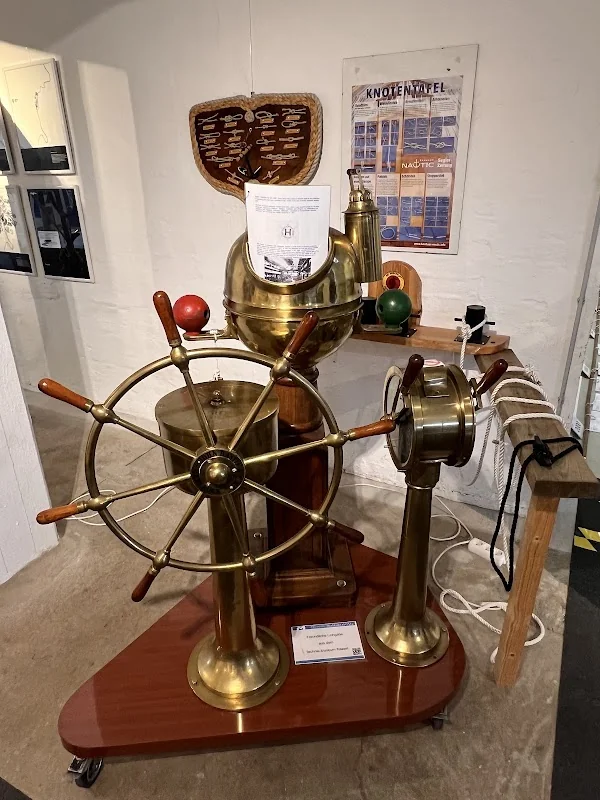
Another focus is on the interactive and understanding stations, which are particularly suitable for children. According to the city of Kassel, a part of the museum features the Fulda from the lock Neue Mühle to the Weserstein in Hann. Münden accurately represented on the floor; banners show the former and current weirs with the locks. The lock Wahnhausen appears as a large model that is animated and explains the locking process in fast motion. Additionally, there is a compass cart, a station for practicing sailor knots, the control stand of a cargo ship, and a projected journey from the Fuldabrücke to the Neue Mühle or from Kassel to Hann. Münden. The actual centerpiece of the museum is a large model of the legendary steamer Elsa, complemented by other passenger ships like Wilhelmshöhe, Eduard, and Hertha. This mix of technology, memory, and participation is a real plus because it engages different age groups and brings the topic of shipping to life. ([kassel.de](https://www.kassel.de/buerger/kunst_und_kultur/museen/museen/museum-fuldaschifffahrt.php?p=1096%2C53431%2C63365%2C25257%2C139263))
Guided Tours for Groups, Lectures, and Special Dates
Those who do not want to explore the museum on their own can rely on special tours for groups. The city of Kassel and the association's page provide a clear rule for this: Outside regular opening hours, the museum association offers such tours, and appointments can be arranged by phone at 0163 8875750. The official association page also states that special tours will be offered again starting in March, focusing particularly on the ongoing exhibition. This is very practical for groups, clubs, school classes, or private tours because the visit can be individually tailored. Especially in a specialized museum like this, a guided tour is often the best way to contextualize the many details and historical references. Instead of just seeing objects, visitors then get explanations of connections, backgrounds, and small stories that make the tour much denser. For search queries like 'fuldaschifffahrt tours' or 'museum fuldaschifffahrt group tour', this possibility is a central decision criterion. ([kassel.de](https://www.kassel.de/buerger/kunst_und_kultur/museen/museen/museum-fuldaschifffahrt.php?p=1096%2C53431%2C63365%2C25257%2C139263))
The current season 2026 also shows that the association does not reduce its program to mere opening days. On the official opening hours page, the association announces various lectures on the topic 'Zissel 100' between the exhibition opening and the end of August and refers to announcements in the HNA as well as on its own homepage. This makes it clear that the museum wants to be more than just a place with fixed visiting hours: it also serves as a platform for lectures, accompanying programs, and thematic deepening. Such additions are particularly valuable because they structure the annual cycle and expand a topic beyond the mere exhibition. Therefore, anyone looking for an appointment should not only pay attention to the opening hours but also check for special events. Especially in a volunteer-run museum, this mix of exhibition and program is often the key to continually attracting new audiences and encouraging regular guests to return. ([fuldaschifffahrt.chayns.site](https://www.kassel.de/buerger/kunst_und_kultur/museen/museen/museum-fuldaschifffahrt.php?p=1096%2C53431%2C63365%2C25257%2C139263))
Location at Kassel Harbor, Contact, and Arrival
The location is one of the most important reasons why the museum works so well. The address Am Hafen 15, 34125 Kassel points directly to the place where the shipping history of the city is most visible. The city of Kassel explicitly describes the museum as a shipping museum in the historic harbor warehouse of Kassel Harbor. Therefore, those searching for 'museum fuldaschifffahrt directions' or 'museum association fuldaschifffahrt ev at the harbor kassel' are dealing with a location that is supposed to fit both in content and geography. The city page also provides practical arrival options via map, route planner, walking, car, and public transport. This is helpful because it makes planning the visit uncomplicated without having to search long for the right spot. Especially for guests who do not know Kassel well, the direct harbor location is an orientation advantage. The museum is thus located exactly where the history of the Fulda as a waterway remains visible in the present. ([kassel.de](https://www.kassel.de/buerger/kunst_und_kultur/museen/museen/museum-fuldaschifffahrt.php?p=1096%2C53431%2C63365%2C25257%2C139263))
The contact information is also clearly stated: The city of Kassel provides the phone number 0163 8875750 as well as the email address kontakt@fuldaschifffahrt.de. Additionally, it refers to the official association website. This transparency facilitates the planning of group tours, special dates, or general inquiries. It is also interesting that the city classifies the museum as suitable for children of all ages. Together with free admission and interactive stations, this results in a very open visitor profile. The house is thus attractive not only for specialists but also for families, school classes, and tourists who want to immerse themselves in a piece of Kassel's river history for an hour. Those planning a trip to the harbor can easily combine the museum with other city destinations and receive an authentic, not overloaded cultural offer. This mix of good location, short visit duration, free admission, and content depth makes the Museum Association Fuldaschifffahrt e.V. a worthwhile destination in Kassel. ([kassel.de](https://www.kassel.de/buerger/kunst_und_kultur/museen/museen/museum-fuldaschifffahrt.php?p=1096%2C53431%2C63365%2C25257%2C139263))
Sources:
Mehr anzeigenWeniger anzeigen
Museum Association Fuldaschifffahrt e.V. | Kassel & Opening Hours
The Museum Association Fuldaschifffahrt e.V. is a special place in Kassel for everyone who wants to discover the city not only through its classic sights but also through its water and transportation history. The museum is located in the historic harbor warehouse at Kassel Harbor and combines regional memory culture with illustrative exhibits, models, and interactive stations. Those interested in the Fulda as a waterway will find not only dry facts here but a vivid representation of centuries of shipping history. The association works on a voluntary basis, presents changing themes, and makes it clear how closely the development of Kassel is connected to the river. The location itself is particularly strong: a museum right by the harbor fits perfectly with the theme and ensures that the visit strikes the right tone from the moment of arrival. The combination of history, technology, everyday culture, and regional identity makes the house a destination that is exciting for both locals and visitors to the city. ([kassel.de](https://www.kassel.de/buerger/kunst_und_kultur/museen/museen/museum-fuldaschifffahrt.php?p=1096%2C53431%2C63365%2C25257%2C139263))
Opening Hours, Admission, and Current Season 2026
For planning a visit, the opening hours are particularly important, and here the museum is very clear: According to the city of Kassel, it is open on Sundays from 1 PM to 4 PM, regularly on the first and third Sunday of each month; in August and September, there are different dates. The official association page adds a specific schedule for the 2026 season with openings on April 12, several Sundays in spring and summer, and a season finale on November 1. Admission is free, donations are welcome, and special tours are also offered without regular admission. This clear, uncomplicated regulation makes the museum particularly attractive for spontaneous outings, family visits, and small cultural programs on weekends. Those wishing to combine their visit with a city stroll or a walk by the harbor will find a relaxed timeframe that fits well into a Kassel trip. ([kassel.de](https://www.kassel.de/buerger/kunst_und_kultur/museen/museen/museum-fuldaschifffahrt.php?p=1096%2C53431%2C63365%2C25257%2C139263))
Particularly interesting is that the association opens the 2026 season with a thematically appropriate exhibition: On April 12, 2026, '100 Years of Zissel in Kassel' will start. According to the association's page, the history of the Zissel from 1926 to the present will be vividly presented with display boards, a slideshow, films, and exhibits. This shows how the museum operates: it does not remain a static retrospective but connects historical themes with concrete experiences and local customs. Therefore, anyone planning a visit should not only keep an eye on the Sunday opening but also on the respective annual exhibition, as it adds an additional thematic focus to the tour. Especially for guests who visit Kassel regularly or come from the region, a repeated visit is worthwhile because the special themes continually reorganize and complement the view of the Fulda. The entry is low-threshold, the atmosphere is personal, and access is consciously kept open. ([fuldaschifffahrt.chayns.site](https://fuldaschifffahrt.chayns.site/unsere%C3%96ffnungszeiten))
The History of Fuldaschifffahrt in Kassel
The content strength of the museum lies in the breadth of its historical narrative. According to the official association page, the history of the Fulda as a waterway goes back a long way: Shipping on the Fulda began in 1601 under Landgrave Moritz, who made it navigable up to Hersfeld. During this time, weirs with passages were created, through which ships were driven downstream by the current and pulled upstream. Another important moment was in 1707 when Dennis Papin undertook the first trip with a steamship in the history of the Fulda from Kassel. Such dates show that the museum does not only tell a local shipping chapter but covers a period in which technology, trade, and river usage were closely intertwined in Central and Northern Hesse. For visitors, this creates a historical arc that ranges from the early waterway to modern memory culture. This is not only exciting for specialists but also for everyone who wants to better understand the development of Kassel. ([fuldaschifffahrt.chayns.site](https://fuldaschifffahrt.chayns.site/aboutus))
According to the association's page, freight shipping on the lower Fulda experienced a particular bloom after the opening of the Kassel Harbor in 1895. The museum connects to this tradition by bringing together the past, present, and future of Fuldaschifffahrt. The Museum Association Fuldaschifffahrt e.V. was founded on September 25, 2012, around 8 PM, to work on and present this history; the museum opened in autumn 2013. The fact that suitable spaces were made available to the association directly at Kassel Harbor underscores the special spatial fit of place and theme. This origin story is important for the profile of the institution: it is not an abstract exhibition house but a volunteer-driven project with a clear local anchoring and a significant educational mandate. For those searching for 'museum fuldaschifffahrt kassel' or 'museum association fuldaschifffahrt ev kassel', this connection of history, harbor location, and association engagement is the central added value. ([fuldaschifffahrt.chayns.site](https://fuldaschifffahrt.chayns.site/aboutus))
The Founding of the Museum Association and the Idea Behind the Museum
The Museum Association Fuldaschifffahrt e.V. was founded on September 25, 2012, because there was a clear goal: The shipping history of the Fulda should not remain hidden in archives but be made vivid and accessible to a broad audience. The official association page formulates the claim to consider the history, present, and future of Fuldaschifffahrt together. This is precisely where the strength of the concept lies: the museum does not see itself as a mere collection of old objects but as a place where regional identity, technical development, and social memory meet. The opening in autumn 2013 was therefore not a conclusion but the beginning of an ongoing project with changing exhibitions, dates, and association work. The association's website also reflects this attitude, as it not only informs about the museum but also about events and association activities. Those looking for an authentic, volunteer-driven cultural project will find here an example of how civic engagement can fill a niche and make a local topic permanently visible. ([fuldaschifffahrt.chayns.site](https://fuldaschifffahrt.chayns.site/dieGr%C3%BCndung))
The fact that the museum association accepts new members shows that the project is designed to be open and participatory. It is not only about showing exhibits but also about pooling knowledge, contacts, and engagement in the city society. Especially at a time when many cultural places are competing for attention, a museum with a clear regional specialization appears particularly credible. The Fulda is not just a river here but a historical transport artery, a living environment, and a space of remembrance. The association turns it into a place of storytelling, where old ships, locks, and harbor images are placed in a larger context. This is also relevant for visitors who come from a completely different motivation: families, school groups, technology enthusiasts, or people with ties to Kassel each find their own access. This creates a mix of local museum, club home, and learning place that shapes the character of the institution and distinguishes it from large, anonymous houses. ([fuldaschifffahrt.chayns.site](https://fuldaschifffahrt.chayns.site/aboutus))
Exhibitions, Models, and Interactive Stations
In the museum itself, the illustrative mediation is at the center. The city of Kassel describes many exhibits and display boards about the over 900-year history of Fuldaschifffahrt. Particularly striking are the models of the 'Fuldaböcke' and 'Weserböcke' from the Middle Ages as well as a true-to-life 'Lattenschiff'. Additionally, there is an impressive story about the mother of the Brothers Grimm, who is said to have moved from Hersfeld to Kassel with such a ship in 1805, along with her entire household. Such details make the visit tangible because they connect historical facts with vivid images. The visitor experiences not only a chronology but also concrete forms of transport, living conditions, and mobility on the river. For many guests, this combination of regional history and vivid representation is the reason why the tour works so well. The exhibition thus does not appear dry or museum-like in the narrow sense, but like an exciting stroll through everyday life along the Fulda. ([kassel.de](https://www.kassel.de/buerger/kunst_und_kultur/museen/museen/museum-fuldaschifffahrt.php?p=1096%2C53431%2C63365%2C25257%2C139263))
Another focus is on the interactive and understanding stations, which are particularly suitable for children. According to the city of Kassel, a part of the museum features the Fulda from the lock Neue Mühle to the Weserstein in Hann. Münden accurately represented on the floor; banners show the former and current weirs with the locks. The lock Wahnhausen appears as a large model that is animated and explains the locking process in fast motion. Additionally, there is a compass cart, a station for practicing sailor knots, the control stand of a cargo ship, and a projected journey from the Fuldabrücke to the Neue Mühle or from Kassel to Hann. Münden. The actual centerpiece of the museum is a large model of the legendary steamer Elsa, complemented by other passenger ships like Wilhelmshöhe, Eduard, and Hertha. This mix of technology, memory, and participation is a real plus because it engages different age groups and brings the topic of shipping to life. ([kassel.de](https://www.kassel.de/buerger/kunst_und_kultur/museen/museen/museum-fuldaschifffahrt.php?p=1096%2C53431%2C63365%2C25257%2C139263))
Guided Tours for Groups, Lectures, and Special Dates
Those who do not want to explore the museum on their own can rely on special tours for groups. The city of Kassel and the association's page provide a clear rule for this: Outside regular opening hours, the museum association offers such tours, and appointments can be arranged by phone at 0163 8875750. The official association page also states that special tours will be offered again starting in March, focusing particularly on the ongoing exhibition. This is very practical for groups, clubs, school classes, or private tours because the visit can be individually tailored. Especially in a specialized museum like this, a guided tour is often the best way to contextualize the many details and historical references. Instead of just seeing objects, visitors then get explanations of connections, backgrounds, and small stories that make the tour much denser. For search queries like 'fuldaschifffahrt tours' or 'museum fuldaschifffahrt group tour', this possibility is a central decision criterion. ([kassel.de](https://www.kassel.de/buerger/kunst_und_kultur/museen/museen/museum-fuldaschifffahrt.php?p=1096%2C53431%2C63365%2C25257%2C139263))
The current season 2026 also shows that the association does not reduce its program to mere opening days. On the official opening hours page, the association announces various lectures on the topic 'Zissel 100' between the exhibition opening and the end of August and refers to announcements in the HNA as well as on its own homepage. This makes it clear that the museum wants to be more than just a place with fixed visiting hours: it also serves as a platform for lectures, accompanying programs, and thematic deepening. Such additions are particularly valuable because they structure the annual cycle and expand a topic beyond the mere exhibition. Therefore, anyone looking for an appointment should not only pay attention to the opening hours but also check for special events. Especially in a volunteer-run museum, this mix of exhibition and program is often the key to continually attracting new audiences and encouraging regular guests to return. ([fuldaschifffahrt.chayns.site](https://www.kassel.de/buerger/kunst_und_kultur/museen/museen/museum-fuldaschifffahrt.php?p=1096%2C53431%2C63365%2C25257%2C139263))
Location at Kassel Harbor, Contact, and Arrival
The location is one of the most important reasons why the museum works so well. The address Am Hafen 15, 34125 Kassel points directly to the place where the shipping history of the city is most visible. The city of Kassel explicitly describes the museum as a shipping museum in the historic harbor warehouse of Kassel Harbor. Therefore, those searching for 'museum fuldaschifffahrt directions' or 'museum association fuldaschifffahrt ev at the harbor kassel' are dealing with a location that is supposed to fit both in content and geography. The city page also provides practical arrival options via map, route planner, walking, car, and public transport. This is helpful because it makes planning the visit uncomplicated without having to search long for the right spot. Especially for guests who do not know Kassel well, the direct harbor location is an orientation advantage. The museum is thus located exactly where the history of the Fulda as a waterway remains visible in the present. ([kassel.de](https://www.kassel.de/buerger/kunst_und_kultur/museen/museen/museum-fuldaschifffahrt.php?p=1096%2C53431%2C63365%2C25257%2C139263))
The contact information is also clearly stated: The city of Kassel provides the phone number 0163 8875750 as well as the email address kontakt@fuldaschifffahrt.de. Additionally, it refers to the official association website. This transparency facilitates the planning of group tours, special dates, or general inquiries. It is also interesting that the city classifies the museum as suitable for children of all ages. Together with free admission and interactive stations, this results in a very open visitor profile. The house is thus attractive not only for specialists but also for families, school classes, and tourists who want to immerse themselves in a piece of Kassel's river history for an hour. Those planning a trip to the harbor can easily combine the museum with other city destinations and receive an authentic, not overloaded cultural offer. This mix of good location, short visit duration, free admission, and content depth makes the Museum Association Fuldaschifffahrt e.V. a worthwhile destination in Kassel. ([kassel.de](https://www.kassel.de/buerger/kunst_und_kultur/museen/museen/museum-fuldaschifffahrt.php?p=1096%2C53431%2C63365%2C25257%2C139263))
Sources:
Museum Association Fuldaschifffahrt e.V. | Kassel & Opening Hours
The Museum Association Fuldaschifffahrt e.V. is a special place in Kassel for everyone who wants to discover the city not only through its classic sights but also through its water and transportation history. The museum is located in the historic harbor warehouse at Kassel Harbor and combines regional memory culture with illustrative exhibits, models, and interactive stations. Those interested in the Fulda as a waterway will find not only dry facts here but a vivid representation of centuries of shipping history. The association works on a voluntary basis, presents changing themes, and makes it clear how closely the development of Kassel is connected to the river. The location itself is particularly strong: a museum right by the harbor fits perfectly with the theme and ensures that the visit strikes the right tone from the moment of arrival. The combination of history, technology, everyday culture, and regional identity makes the house a destination that is exciting for both locals and visitors to the city. ([kassel.de](https://www.kassel.de/buerger/kunst_und_kultur/museen/museen/museum-fuldaschifffahrt.php?p=1096%2C53431%2C63365%2C25257%2C139263))
Opening Hours, Admission, and Current Season 2026
For planning a visit, the opening hours are particularly important, and here the museum is very clear: According to the city of Kassel, it is open on Sundays from 1 PM to 4 PM, regularly on the first and third Sunday of each month; in August and September, there are different dates. The official association page adds a specific schedule for the 2026 season with openings on April 12, several Sundays in spring and summer, and a season finale on November 1. Admission is free, donations are welcome, and special tours are also offered without regular admission. This clear, uncomplicated regulation makes the museum particularly attractive for spontaneous outings, family visits, and small cultural programs on weekends. Those wishing to combine their visit with a city stroll or a walk by the harbor will find a relaxed timeframe that fits well into a Kassel trip. ([kassel.de](https://www.kassel.de/buerger/kunst_und_kultur/museen/museen/museum-fuldaschifffahrt.php?p=1096%2C53431%2C63365%2C25257%2C139263))
Particularly interesting is that the association opens the 2026 season with a thematically appropriate exhibition: On April 12, 2026, '100 Years of Zissel in Kassel' will start. According to the association's page, the history of the Zissel from 1926 to the present will be vividly presented with display boards, a slideshow, films, and exhibits. This shows how the museum operates: it does not remain a static retrospective but connects historical themes with concrete experiences and local customs. Therefore, anyone planning a visit should not only keep an eye on the Sunday opening but also on the respective annual exhibition, as it adds an additional thematic focus to the tour. Especially for guests who visit Kassel regularly or come from the region, a repeated visit is worthwhile because the special themes continually reorganize and complement the view of the Fulda. The entry is low-threshold, the atmosphere is personal, and access is consciously kept open. ([fuldaschifffahrt.chayns.site](https://fuldaschifffahrt.chayns.site/unsere%C3%96ffnungszeiten))
The History of Fuldaschifffahrt in Kassel
The content strength of the museum lies in the breadth of its historical narrative. According to the official association page, the history of the Fulda as a waterway goes back a long way: Shipping on the Fulda began in 1601 under Landgrave Moritz, who made it navigable up to Hersfeld. During this time, weirs with passages were created, through which ships were driven downstream by the current and pulled upstream. Another important moment was in 1707 when Dennis Papin undertook the first trip with a steamship in the history of the Fulda from Kassel. Such dates show that the museum does not only tell a local shipping chapter but covers a period in which technology, trade, and river usage were closely intertwined in Central and Northern Hesse. For visitors, this creates a historical arc that ranges from the early waterway to modern memory culture. This is not only exciting for specialists but also for everyone who wants to better understand the development of Kassel. ([fuldaschifffahrt.chayns.site](https://fuldaschifffahrt.chayns.site/aboutus))
According to the association's page, freight shipping on the lower Fulda experienced a particular bloom after the opening of the Kassel Harbor in 1895. The museum connects to this tradition by bringing together the past, present, and future of Fuldaschifffahrt. The Museum Association Fuldaschifffahrt e.V. was founded on September 25, 2012, around 8 PM, to work on and present this history; the museum opened in autumn 2013. The fact that suitable spaces were made available to the association directly at Kassel Harbor underscores the special spatial fit of place and theme. This origin story is important for the profile of the institution: it is not an abstract exhibition house but a volunteer-driven project with a clear local anchoring and a significant educational mandate. For those searching for 'museum fuldaschifffahrt kassel' or 'museum association fuldaschifffahrt ev kassel', this connection of history, harbor location, and association engagement is the central added value. ([fuldaschifffahrt.chayns.site](https://fuldaschifffahrt.chayns.site/aboutus))
The Founding of the Museum Association and the Idea Behind the Museum
The Museum Association Fuldaschifffahrt e.V. was founded on September 25, 2012, because there was a clear goal: The shipping history of the Fulda should not remain hidden in archives but be made vivid and accessible to a broad audience. The official association page formulates the claim to consider the history, present, and future of Fuldaschifffahrt together. This is precisely where the strength of the concept lies: the museum does not see itself as a mere collection of old objects but as a place where regional identity, technical development, and social memory meet. The opening in autumn 2013 was therefore not a conclusion but the beginning of an ongoing project with changing exhibitions, dates, and association work. The association's website also reflects this attitude, as it not only informs about the museum but also about events and association activities. Those looking for an authentic, volunteer-driven cultural project will find here an example of how civic engagement can fill a niche and make a local topic permanently visible. ([fuldaschifffahrt.chayns.site](https://fuldaschifffahrt.chayns.site/dieGr%C3%BCndung))
The fact that the museum association accepts new members shows that the project is designed to be open and participatory. It is not only about showing exhibits but also about pooling knowledge, contacts, and engagement in the city society. Especially at a time when many cultural places are competing for attention, a museum with a clear regional specialization appears particularly credible. The Fulda is not just a river here but a historical transport artery, a living environment, and a space of remembrance. The association turns it into a place of storytelling, where old ships, locks, and harbor images are placed in a larger context. This is also relevant for visitors who come from a completely different motivation: families, school groups, technology enthusiasts, or people with ties to Kassel each find their own access. This creates a mix of local museum, club home, and learning place that shapes the character of the institution and distinguishes it from large, anonymous houses. ([fuldaschifffahrt.chayns.site](https://fuldaschifffahrt.chayns.site/aboutus))
Exhibitions, Models, and Interactive Stations
In the museum itself, the illustrative mediation is at the center. The city of Kassel describes many exhibits and display boards about the over 900-year history of Fuldaschifffahrt. Particularly striking are the models of the 'Fuldaböcke' and 'Weserböcke' from the Middle Ages as well as a true-to-life 'Lattenschiff'. Additionally, there is an impressive story about the mother of the Brothers Grimm, who is said to have moved from Hersfeld to Kassel with such a ship in 1805, along with her entire household. Such details make the visit tangible because they connect historical facts with vivid images. The visitor experiences not only a chronology but also concrete forms of transport, living conditions, and mobility on the river. For many guests, this combination of regional history and vivid representation is the reason why the tour works so well. The exhibition thus does not appear dry or museum-like in the narrow sense, but like an exciting stroll through everyday life along the Fulda. ([kassel.de](https://www.kassel.de/buerger/kunst_und_kultur/museen/museen/museum-fuldaschifffahrt.php?p=1096%2C53431%2C63365%2C25257%2C139263))
Another focus is on the interactive and understanding stations, which are particularly suitable for children. According to the city of Kassel, a part of the museum features the Fulda from the lock Neue Mühle to the Weserstein in Hann. Münden accurately represented on the floor; banners show the former and current weirs with the locks. The lock Wahnhausen appears as a large model that is animated and explains the locking process in fast motion. Additionally, there is a compass cart, a station for practicing sailor knots, the control stand of a cargo ship, and a projected journey from the Fuldabrücke to the Neue Mühle or from Kassel to Hann. Münden. The actual centerpiece of the museum is a large model of the legendary steamer Elsa, complemented by other passenger ships like Wilhelmshöhe, Eduard, and Hertha. This mix of technology, memory, and participation is a real plus because it engages different age groups and brings the topic of shipping to life. ([kassel.de](https://www.kassel.de/buerger/kunst_und_kultur/museen/museen/museum-fuldaschifffahrt.php?p=1096%2C53431%2C63365%2C25257%2C139263))
Guided Tours for Groups, Lectures, and Special Dates
Those who do not want to explore the museum on their own can rely on special tours for groups. The city of Kassel and the association's page provide a clear rule for this: Outside regular opening hours, the museum association offers such tours, and appointments can be arranged by phone at 0163 8875750. The official association page also states that special tours will be offered again starting in March, focusing particularly on the ongoing exhibition. This is very practical for groups, clubs, school classes, or private tours because the visit can be individually tailored. Especially in a specialized museum like this, a guided tour is often the best way to contextualize the many details and historical references. Instead of just seeing objects, visitors then get explanations of connections, backgrounds, and small stories that make the tour much denser. For search queries like 'fuldaschifffahrt tours' or 'museum fuldaschifffahrt group tour', this possibility is a central decision criterion. ([kassel.de](https://www.kassel.de/buerger/kunst_und_kultur/museen/museen/museum-fuldaschifffahrt.php?p=1096%2C53431%2C63365%2C25257%2C139263))
The current season 2026 also shows that the association does not reduce its program to mere opening days. On the official opening hours page, the association announces various lectures on the topic 'Zissel 100' between the exhibition opening and the end of August and refers to announcements in the HNA as well as on its own homepage. This makes it clear that the museum wants to be more than just a place with fixed visiting hours: it also serves as a platform for lectures, accompanying programs, and thematic deepening. Such additions are particularly valuable because they structure the annual cycle and expand a topic beyond the mere exhibition. Therefore, anyone looking for an appointment should not only pay attention to the opening hours but also check for special events. Especially in a volunteer-run museum, this mix of exhibition and program is often the key to continually attracting new audiences and encouraging regular guests to return. ([fuldaschifffahrt.chayns.site](https://www.kassel.de/buerger/kunst_und_kultur/museen/museen/museum-fuldaschifffahrt.php?p=1096%2C53431%2C63365%2C25257%2C139263))
Location at Kassel Harbor, Contact, and Arrival
The location is one of the most important reasons why the museum works so well. The address Am Hafen 15, 34125 Kassel points directly to the place where the shipping history of the city is most visible. The city of Kassel explicitly describes the museum as a shipping museum in the historic harbor warehouse of Kassel Harbor. Therefore, those searching for 'museum fuldaschifffahrt directions' or 'museum association fuldaschifffahrt ev at the harbor kassel' are dealing with a location that is supposed to fit both in content and geography. The city page also provides practical arrival options via map, route planner, walking, car, and public transport. This is helpful because it makes planning the visit uncomplicated without having to search long for the right spot. Especially for guests who do not know Kassel well, the direct harbor location is an orientation advantage. The museum is thus located exactly where the history of the Fulda as a waterway remains visible in the present. ([kassel.de](https://www.kassel.de/buerger/kunst_und_kultur/museen/museen/museum-fuldaschifffahrt.php?p=1096%2C53431%2C63365%2C25257%2C139263))
The contact information is also clearly stated: The city of Kassel provides the phone number 0163 8875750 as well as the email address kontakt@fuldaschifffahrt.de. Additionally, it refers to the official association website. This transparency facilitates the planning of group tours, special dates, or general inquiries. It is also interesting that the city classifies the museum as suitable for children of all ages. Together with free admission and interactive stations, this results in a very open visitor profile. The house is thus attractive not only for specialists but also for families, school classes, and tourists who want to immerse themselves in a piece of Kassel's river history for an hour. Those planning a trip to the harbor can easily combine the museum with other city destinations and receive an authentic, not overloaded cultural offer. This mix of good location, short visit duration, free admission, and content depth makes the Museum Association Fuldaschifffahrt e.V. a worthwhile destination in Kassel. ([kassel.de](https://www.kassel.de/buerger/kunst_und_kultur/museen/museen/museum-fuldaschifffahrt.php?p=1096%2C53431%2C63365%2C25257%2C139263))
Sources:
Upcoming Events
No events found
Frequently Asked Questions
Reviews
No reviews found