
Kassel
Steinweg 2, 34117 Kassel, Deutschland
Naturkundemuseum Kassel im Ottoneum | Tickets & Opening Hours
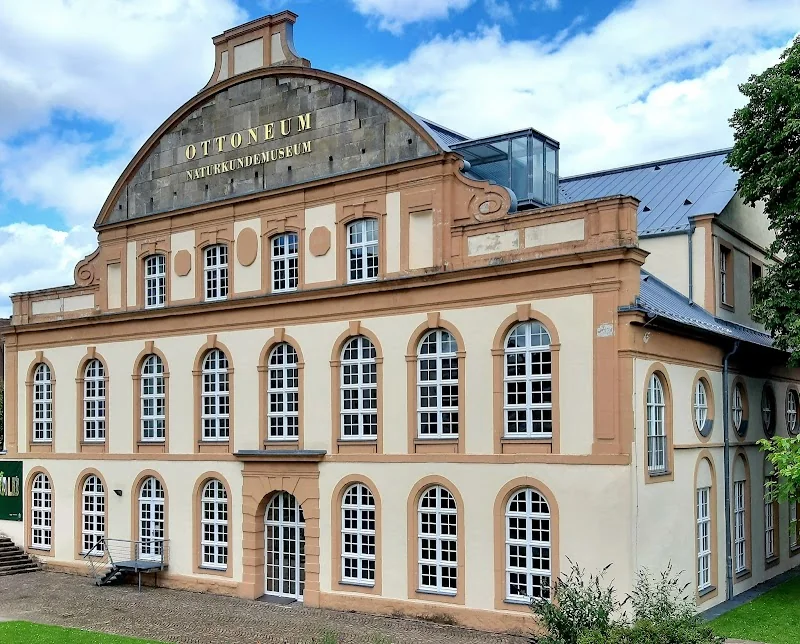
The Naturkundemuseum Kassel in the Ottoneum is much more than a classic city museum. It connects the natural history of North Hesse with one of the most distinctive buildings in downtown Kassel and tells an exceptionally long collection history. The Ottoneum was built in 1606 and is considered the first permanent building in Germany built exclusively for theater purposes. It was later remodeled several times, used for collections, heavily damaged in the war, and eventually rebuilt. Today, it serves as a stage for fossils, specimens, historical treasures, and modern communication. Anyone looking for a museum in Kassel that combines historical architecture, scientific depth, and family-friendly experiences will find a particularly strong destination here. In front of the house, an Iguanodon model welcomes guests, and this first impression shows: Here, natural history is not presented dryly, but impressively staged. ([kassel.de](https://www.kassel.de/einrichtungen/naturkundemuseum/museum/index.php?utm_source=openai))
Opening Hours, Tickets, and Admission Prices at the Naturkundemuseum Kassel
For planning a visit, the opening hours and admission prices are a central topic, as they are often searched for. The Naturkundemuseum in the Ottoneum is closed on Mondays. On Tuesdays, it opens from 10 AM to 5 PM, Wednesdays from 10 AM to 8 PM, Thursdays to Saturdays from 10 AM to 5 PM, and Sundays from 10 AM to 6 PM. The museum is closed on December 24 and 31, but is open on holidays even on Mondays. These times make the location particularly attractive for spontaneous visits, family outings, and city strolls. The house is also reachable by phone for registrations and information from Tuesday to Sunday between 10:30 AM and 4:30 PM. ([kassel.de](https://www.kassel.de/einrichtungen/naturkundemuseum/vermittlung/inhaltsseiten/schulen.php))
The admission prices are also clearly structured. Adults pay 5 euros, reduced admission costs 3 euros. Children under 6 years have free admission. For groups of 10 or more, a price of 3 euros per person applies, and school classes including teachers pay 1 euro per person. Reduced rates apply outside of special exhibitions. Thus, the Naturkundemuseum is not only a high-quality excursion destination but also a comparatively well-calculable goal for families, school groups, and travel groups. Additionally, it is important to note: Tours and events are booked via the information and registration phone, and the city also points out barrier-free access as well as restrooms and changing tables. This is particularly helpful for anyone planning a visit with children, groups, or with limited mobility. ([visit.kassel.de](https://visit.kassel.de/poi/naturkundemuseum-im-ottoneum))
Directions, Location, and Parking at the Ottoneum in Kassel
The location of the museum is one of its greatest advantages. The Naturkundemuseum in the Ottoneum is located at Steinweg 2 in downtown Kassel, in close proximity to Friedrichsplatz. This central position makes the house easily accessible on foot and integrates it directly into the cultural axis of the city center. Friedrichsplatz is one of the most well-known inner-city locations in Kassel, and around it are other important sights such as the State Theater, the Fridericianum, and several museums. So, if you are planning a whole cultural walk, you can easily incorporate the Naturkundemuseum into a route through the city center. For guests specifically searching for directions and address, the official information is clear and straightforward. ([kassel.de](https://www.kassel.de/buerger/kunst_und_kultur/sehenswertes/strassen-und-plaetze/friedrichsplatz.php?utm_source=openai))
For parking, the Friedrichsplatz underground garage is the convenient solution. The official parking facility lists the entrance and exit at the corner of Steinweg and Friedrichsplatz, as well as a second entrance on Du-Ry-Straße. Thus, the underground garage is directly in the vicinity of the museum and is a practical option for drivers in urban traffic. There is also a clear infrastructure for bus groups: In municipal documents, the bus parking lot at the Ottoneum or Papinplatz is described as a central parking option. This is particularly important for travel groups, school trips, or organized outings. So, anyone searching for keywords like parking, directions, or bus parking will find a surprisingly well-organized transportation connection at the Ottoneum. Additionally, the proximity to public transport around Friedrichsplatz makes the location even more flexible. ([visit.kassel.de](https://visit.kassel.de/en/poi/underground-car-park-friedrichsplatz?utm_source=openai))
Permanent Exhibition: Earth History, Dinosaurs, and Mammoths
The permanent exhibition is the core of the museum and explains why the Naturkundemuseum in the Ottoneum is a real favorite place for many visitors. The focus is on a journey through earth history, leading from fossil traces from regional finds to today’s nature in North Hesse. The city of Kassel describes the exhibition as a path through fascinating earth history, past dinosaurs, sea cows, and mammoths to today’s nature in North Hesse. This not only conveys knowledge but also tells a whole landscape and climate history. The area around Kassel has experienced many very different phases over millions of years: sea floor, mountains, desert climate, ice ages, and other habitats. The exhibition translates these geological changes into a tangible form that remains accessible even for children and families. ([kassel.de](https://www.kassel.de/einrichtungen/naturkundemuseum/ausstellungen/dauerausstellung.php))
Particularly strong is the regional connection. The exhibition shows fossils from local finds and connects them with lively reconstructions and landscape presentations. Visitors are confronted with once-native dinosaurs, sharks, sea cows, cave bears, hyenas, or mammoths. Additionally, there are areas that deal with the natural spaces of North Hesse, such as forests, meadows, calcareous dry grasslands, and other habitats. Hundreds of specimens, dioramas, and interactive elements make the nature of the region visible. A special highlight is the living honeybee colony, which is embedded in a small interactive section. The exhibition also showcases the diversity of native wild bee species, making a current topic of biodiversity understandable. Anyone interested in fossils, nature in North Hesse, or the question of how geological depth becomes a modern museum experience will find plenty of material here. ([kassel.de](https://www.kassel.de/einrichtungen/naturkundemuseum/ausstellungen/dauerausstellung.php))
History of the Ottoneum and the Collection Tradition
The history of the house is an essential part of its appeal. As early as 1568, Wilhelm IV began building an art chamber, which is considered the seed of the Kassel collection tradition. Between 1603 and 1606, Landgrave Moritz had the Ottoneum built as a theater building; it was named after his son Otto. In 1696, a fundamental renovation followed to accommodate the landgrave's collections. Later, the house also served as the seat of the Collegium Carolinum. Thus, the Ottoneum is not only a museum building but also a place where theater, science, and collection history are closely intertwined. This long history of use continues to shape the appearance and content depth of the house today. ([kassel.de](https://www.kassel.de/einrichtungen/naturkundemuseum/museum/inhaltsseiten/geschichte.php))
As an independent institution, the Naturkundemuseum in Kassel has existed since 1884. At that time, natural science and ethnological collections returned from the Fridericianum to the Ottoneum and were merged with the holdings of the Society for Natural History in Kassel. After the city of Kassel took over in 1928, the house was fundamentally renovated and reopened in 1929 as the Municipal Natural History Museum. During World War II, the Ottoneum suffered severe damage, likely losing more than half of its collections, and was essentially rebuilt after the war according to 17th-century plans. Another major renovation followed between 1993 and 1997. Today, the museum can look back on a collection tradition that has grown over centuries and appears unique in its combination of historical architecture and natural science research. ([kassel.de](https://www.kassel.de/einrichtungen/naturkundemuseum/museum/inhaltsseiten/geschichte.php))
Special Exhibitions, Tours, and Offers for Families and Groups
Another reason why the Naturkundemuseum in the Ottoneum is so frequently sought after is the changing special exhibitions and the wide-ranging educational program. The city of Kassel emphasizes that at least one special exhibition is elaborately staged each year on 400 square meters. This keeps the visit interesting even for return visitors, as there is always a new thematic incentive. This fits well with the open and lively orientation of the house, which not only shows exhibits but also repeatedly tells themes such as evolution, climate change, regional earth history, and wildlife in new ways. This is particularly important for families and children’s groups, as the exhibition never appears static but is perceived as a place of learning and experience. ([www1.kassel.de](https://www1.kassel.de/einrichtungen/naturkundemuseum/ausstellungen/index.php))
There are also very concrete offers for groups, school classes, and teachers. According to the official website, the tours last 60 minutes and cost 30 euros plus admission. Various themes are offered for school classes, such as dinosaurs, ice age, fossils, evolution, as well as the collection and building history of the Ottoneum. For kindergartens, elementary schools, and secondary level I, there are also workshops with practical components, and materials such as a fossil case are available for loan for teachers. Booking is done exclusively via the information and registration phone. Thus, the museum is not only an exhibition venue but also an educational institution with a very clear structure. Particularly pleasant: There is museum educational advice for educators, group leaders, and private individuals. So, anyone searching for tours, workshops, programs, or group offers will find a well-organized and professionally strong system at the Ottoneum. ([kassel.de](https://www.kassel.de/einrichtungen/naturkundemuseum/vermittlung/inhaltsseiten/schulen.php))
Collections, Research, and Legendary Exhibits
Behind the exhibition lies an impressive depth of collection. According to the city of Kassel, the Naturkundemuseum has about 785,000 collection pieces, a large part of which is digitally recorded and available for research. The collections trace back to the landgraves of Hesse-Cassel and have been supplemented over time by society holdings and private collections. Thus, the museum is not only a place of display but also a place of research. The geoscientific collections primarily contain fossils, minerals, and rocks; many particularly important pieces come from the Upper Permian, the Middle Triassic, and the Oligocene. The collection and exhibition focus on paleontological objects. This makes the Ottoneum a significant address for anyone interested in fossils, regional earth history, and scientific documentation. ([kassel.de](https://www.kassel.de/einrichtungen/naturkundemuseum/museum/index.php?utm_source=openai))
Among the outstanding exhibits are the Herbarium Ratzenberger, which is one of the oldest preserved herbaria in Europe, the skeleton of the Goethe elephant, and the Schildbach wooden library with its 530 artistically designed wooden books. The herbarium was created between 1556 and 1592, and the wooden library between 1771 and 1799. The Goethe elephant lived from 1773 to 1780 in the animal park of Landgrave Friedrich II.; Goethe later borrowed the skull for his studies. Such objects make the Naturkundemuseum a house where nature, cultural history, and science come together in close quarters. This is complemented by the scientific journal Philippia, which the museum still publishes today. So, anyone looking not just for photos, tickets, or opening hours, but who wants to understand the actual significance of the house, discovers in the Ottoneum a museum with extraordinary historical depth and a research tradition of European rank. ([kassel.de](https://www.kassel.de/einrichtungen/naturkundemuseum/ausstellungen/dauerausstellung.php))
Sources:
Mehr anzeigenWeniger anzeigen
Naturkundemuseum Kassel im Ottoneum | Tickets & Opening Hours
The Naturkundemuseum Kassel in the Ottoneum is much more than a classic city museum. It connects the natural history of North Hesse with one of the most distinctive buildings in downtown Kassel and tells an exceptionally long collection history. The Ottoneum was built in 1606 and is considered the first permanent building in Germany built exclusively for theater purposes. It was later remodeled several times, used for collections, heavily damaged in the war, and eventually rebuilt. Today, it serves as a stage for fossils, specimens, historical treasures, and modern communication. Anyone looking for a museum in Kassel that combines historical architecture, scientific depth, and family-friendly experiences will find a particularly strong destination here. In front of the house, an Iguanodon model welcomes guests, and this first impression shows: Here, natural history is not presented dryly, but impressively staged. ([kassel.de](https://www.kassel.de/einrichtungen/naturkundemuseum/museum/index.php?utm_source=openai))
Opening Hours, Tickets, and Admission Prices at the Naturkundemuseum Kassel
For planning a visit, the opening hours and admission prices are a central topic, as they are often searched for. The Naturkundemuseum in the Ottoneum is closed on Mondays. On Tuesdays, it opens from 10 AM to 5 PM, Wednesdays from 10 AM to 8 PM, Thursdays to Saturdays from 10 AM to 5 PM, and Sundays from 10 AM to 6 PM. The museum is closed on December 24 and 31, but is open on holidays even on Mondays. These times make the location particularly attractive for spontaneous visits, family outings, and city strolls. The house is also reachable by phone for registrations and information from Tuesday to Sunday between 10:30 AM and 4:30 PM. ([kassel.de](https://www.kassel.de/einrichtungen/naturkundemuseum/vermittlung/inhaltsseiten/schulen.php))
The admission prices are also clearly structured. Adults pay 5 euros, reduced admission costs 3 euros. Children under 6 years have free admission. For groups of 10 or more, a price of 3 euros per person applies, and school classes including teachers pay 1 euro per person. Reduced rates apply outside of special exhibitions. Thus, the Naturkundemuseum is not only a high-quality excursion destination but also a comparatively well-calculable goal for families, school groups, and travel groups. Additionally, it is important to note: Tours and events are booked via the information and registration phone, and the city also points out barrier-free access as well as restrooms and changing tables. This is particularly helpful for anyone planning a visit with children, groups, or with limited mobility. ([visit.kassel.de](https://visit.kassel.de/poi/naturkundemuseum-im-ottoneum))
Directions, Location, and Parking at the Ottoneum in Kassel
The location of the museum is one of its greatest advantages. The Naturkundemuseum in the Ottoneum is located at Steinweg 2 in downtown Kassel, in close proximity to Friedrichsplatz. This central position makes the house easily accessible on foot and integrates it directly into the cultural axis of the city center. Friedrichsplatz is one of the most well-known inner-city locations in Kassel, and around it are other important sights such as the State Theater, the Fridericianum, and several museums. So, if you are planning a whole cultural walk, you can easily incorporate the Naturkundemuseum into a route through the city center. For guests specifically searching for directions and address, the official information is clear and straightforward. ([kassel.de](https://www.kassel.de/buerger/kunst_und_kultur/sehenswertes/strassen-und-plaetze/friedrichsplatz.php?utm_source=openai))
For parking, the Friedrichsplatz underground garage is the convenient solution. The official parking facility lists the entrance and exit at the corner of Steinweg and Friedrichsplatz, as well as a second entrance on Du-Ry-Straße. Thus, the underground garage is directly in the vicinity of the museum and is a practical option for drivers in urban traffic. There is also a clear infrastructure for bus groups: In municipal documents, the bus parking lot at the Ottoneum or Papinplatz is described as a central parking option. This is particularly important for travel groups, school trips, or organized outings. So, anyone searching for keywords like parking, directions, or bus parking will find a surprisingly well-organized transportation connection at the Ottoneum. Additionally, the proximity to public transport around Friedrichsplatz makes the location even more flexible. ([visit.kassel.de](https://visit.kassel.de/en/poi/underground-car-park-friedrichsplatz?utm_source=openai))
Permanent Exhibition: Earth History, Dinosaurs, and Mammoths
The permanent exhibition is the core of the museum and explains why the Naturkundemuseum in the Ottoneum is a real favorite place for many visitors. The focus is on a journey through earth history, leading from fossil traces from regional finds to today’s nature in North Hesse. The city of Kassel describes the exhibition as a path through fascinating earth history, past dinosaurs, sea cows, and mammoths to today’s nature in North Hesse. This not only conveys knowledge but also tells a whole landscape and climate history. The area around Kassel has experienced many very different phases over millions of years: sea floor, mountains, desert climate, ice ages, and other habitats. The exhibition translates these geological changes into a tangible form that remains accessible even for children and families. ([kassel.de](https://www.kassel.de/einrichtungen/naturkundemuseum/ausstellungen/dauerausstellung.php))
Particularly strong is the regional connection. The exhibition shows fossils from local finds and connects them with lively reconstructions and landscape presentations. Visitors are confronted with once-native dinosaurs, sharks, sea cows, cave bears, hyenas, or mammoths. Additionally, there are areas that deal with the natural spaces of North Hesse, such as forests, meadows, calcareous dry grasslands, and other habitats. Hundreds of specimens, dioramas, and interactive elements make the nature of the region visible. A special highlight is the living honeybee colony, which is embedded in a small interactive section. The exhibition also showcases the diversity of native wild bee species, making a current topic of biodiversity understandable. Anyone interested in fossils, nature in North Hesse, or the question of how geological depth becomes a modern museum experience will find plenty of material here. ([kassel.de](https://www.kassel.de/einrichtungen/naturkundemuseum/ausstellungen/dauerausstellung.php))
History of the Ottoneum and the Collection Tradition
The history of the house is an essential part of its appeal. As early as 1568, Wilhelm IV began building an art chamber, which is considered the seed of the Kassel collection tradition. Between 1603 and 1606, Landgrave Moritz had the Ottoneum built as a theater building; it was named after his son Otto. In 1696, a fundamental renovation followed to accommodate the landgrave's collections. Later, the house also served as the seat of the Collegium Carolinum. Thus, the Ottoneum is not only a museum building but also a place where theater, science, and collection history are closely intertwined. This long history of use continues to shape the appearance and content depth of the house today. ([kassel.de](https://www.kassel.de/einrichtungen/naturkundemuseum/museum/inhaltsseiten/geschichte.php))
As an independent institution, the Naturkundemuseum in Kassel has existed since 1884. At that time, natural science and ethnological collections returned from the Fridericianum to the Ottoneum and were merged with the holdings of the Society for Natural History in Kassel. After the city of Kassel took over in 1928, the house was fundamentally renovated and reopened in 1929 as the Municipal Natural History Museum. During World War II, the Ottoneum suffered severe damage, likely losing more than half of its collections, and was essentially rebuilt after the war according to 17th-century plans. Another major renovation followed between 1993 and 1997. Today, the museum can look back on a collection tradition that has grown over centuries and appears unique in its combination of historical architecture and natural science research. ([kassel.de](https://www.kassel.de/einrichtungen/naturkundemuseum/museum/inhaltsseiten/geschichte.php))
Special Exhibitions, Tours, and Offers for Families and Groups
Another reason why the Naturkundemuseum in the Ottoneum is so frequently sought after is the changing special exhibitions and the wide-ranging educational program. The city of Kassel emphasizes that at least one special exhibition is elaborately staged each year on 400 square meters. This keeps the visit interesting even for return visitors, as there is always a new thematic incentive. This fits well with the open and lively orientation of the house, which not only shows exhibits but also repeatedly tells themes such as evolution, climate change, regional earth history, and wildlife in new ways. This is particularly important for families and children’s groups, as the exhibition never appears static but is perceived as a place of learning and experience. ([www1.kassel.de](https://www1.kassel.de/einrichtungen/naturkundemuseum/ausstellungen/index.php))
There are also very concrete offers for groups, school classes, and teachers. According to the official website, the tours last 60 minutes and cost 30 euros plus admission. Various themes are offered for school classes, such as dinosaurs, ice age, fossils, evolution, as well as the collection and building history of the Ottoneum. For kindergartens, elementary schools, and secondary level I, there are also workshops with practical components, and materials such as a fossil case are available for loan for teachers. Booking is done exclusively via the information and registration phone. Thus, the museum is not only an exhibition venue but also an educational institution with a very clear structure. Particularly pleasant: There is museum educational advice for educators, group leaders, and private individuals. So, anyone searching for tours, workshops, programs, or group offers will find a well-organized and professionally strong system at the Ottoneum. ([kassel.de](https://www.kassel.de/einrichtungen/naturkundemuseum/vermittlung/inhaltsseiten/schulen.php))
Collections, Research, and Legendary Exhibits
Behind the exhibition lies an impressive depth of collection. According to the city of Kassel, the Naturkundemuseum has about 785,000 collection pieces, a large part of which is digitally recorded and available for research. The collections trace back to the landgraves of Hesse-Cassel and have been supplemented over time by society holdings and private collections. Thus, the museum is not only a place of display but also a place of research. The geoscientific collections primarily contain fossils, minerals, and rocks; many particularly important pieces come from the Upper Permian, the Middle Triassic, and the Oligocene. The collection and exhibition focus on paleontological objects. This makes the Ottoneum a significant address for anyone interested in fossils, regional earth history, and scientific documentation. ([kassel.de](https://www.kassel.de/einrichtungen/naturkundemuseum/museum/index.php?utm_source=openai))
Among the outstanding exhibits are the Herbarium Ratzenberger, which is one of the oldest preserved herbaria in Europe, the skeleton of the Goethe elephant, and the Schildbach wooden library with its 530 artistically designed wooden books. The herbarium was created between 1556 and 1592, and the wooden library between 1771 and 1799. The Goethe elephant lived from 1773 to 1780 in the animal park of Landgrave Friedrich II.; Goethe later borrowed the skull for his studies. Such objects make the Naturkundemuseum a house where nature, cultural history, and science come together in close quarters. This is complemented by the scientific journal Philippia, which the museum still publishes today. So, anyone looking not just for photos, tickets, or opening hours, but who wants to understand the actual significance of the house, discovers in the Ottoneum a museum with extraordinary historical depth and a research tradition of European rank. ([kassel.de](https://www.kassel.de/einrichtungen/naturkundemuseum/ausstellungen/dauerausstellung.php))
Sources:
Naturkundemuseum Kassel im Ottoneum | Tickets & Opening Hours
The Naturkundemuseum Kassel in the Ottoneum is much more than a classic city museum. It connects the natural history of North Hesse with one of the most distinctive buildings in downtown Kassel and tells an exceptionally long collection history. The Ottoneum was built in 1606 and is considered the first permanent building in Germany built exclusively for theater purposes. It was later remodeled several times, used for collections, heavily damaged in the war, and eventually rebuilt. Today, it serves as a stage for fossils, specimens, historical treasures, and modern communication. Anyone looking for a museum in Kassel that combines historical architecture, scientific depth, and family-friendly experiences will find a particularly strong destination here. In front of the house, an Iguanodon model welcomes guests, and this first impression shows: Here, natural history is not presented dryly, but impressively staged. ([kassel.de](https://www.kassel.de/einrichtungen/naturkundemuseum/museum/index.php?utm_source=openai))
Opening Hours, Tickets, and Admission Prices at the Naturkundemuseum Kassel
For planning a visit, the opening hours and admission prices are a central topic, as they are often searched for. The Naturkundemuseum in the Ottoneum is closed on Mondays. On Tuesdays, it opens from 10 AM to 5 PM, Wednesdays from 10 AM to 8 PM, Thursdays to Saturdays from 10 AM to 5 PM, and Sundays from 10 AM to 6 PM. The museum is closed on December 24 and 31, but is open on holidays even on Mondays. These times make the location particularly attractive for spontaneous visits, family outings, and city strolls. The house is also reachable by phone for registrations and information from Tuesday to Sunday between 10:30 AM and 4:30 PM. ([kassel.de](https://www.kassel.de/einrichtungen/naturkundemuseum/vermittlung/inhaltsseiten/schulen.php))
The admission prices are also clearly structured. Adults pay 5 euros, reduced admission costs 3 euros. Children under 6 years have free admission. For groups of 10 or more, a price of 3 euros per person applies, and school classes including teachers pay 1 euro per person. Reduced rates apply outside of special exhibitions. Thus, the Naturkundemuseum is not only a high-quality excursion destination but also a comparatively well-calculable goal for families, school groups, and travel groups. Additionally, it is important to note: Tours and events are booked via the information and registration phone, and the city also points out barrier-free access as well as restrooms and changing tables. This is particularly helpful for anyone planning a visit with children, groups, or with limited mobility. ([visit.kassel.de](https://visit.kassel.de/poi/naturkundemuseum-im-ottoneum))
Directions, Location, and Parking at the Ottoneum in Kassel
The location of the museum is one of its greatest advantages. The Naturkundemuseum in the Ottoneum is located at Steinweg 2 in downtown Kassel, in close proximity to Friedrichsplatz. This central position makes the house easily accessible on foot and integrates it directly into the cultural axis of the city center. Friedrichsplatz is one of the most well-known inner-city locations in Kassel, and around it are other important sights such as the State Theater, the Fridericianum, and several museums. So, if you are planning a whole cultural walk, you can easily incorporate the Naturkundemuseum into a route through the city center. For guests specifically searching for directions and address, the official information is clear and straightforward. ([kassel.de](https://www.kassel.de/buerger/kunst_und_kultur/sehenswertes/strassen-und-plaetze/friedrichsplatz.php?utm_source=openai))
For parking, the Friedrichsplatz underground garage is the convenient solution. The official parking facility lists the entrance and exit at the corner of Steinweg and Friedrichsplatz, as well as a second entrance on Du-Ry-Straße. Thus, the underground garage is directly in the vicinity of the museum and is a practical option for drivers in urban traffic. There is also a clear infrastructure for bus groups: In municipal documents, the bus parking lot at the Ottoneum or Papinplatz is described as a central parking option. This is particularly important for travel groups, school trips, or organized outings. So, anyone searching for keywords like parking, directions, or bus parking will find a surprisingly well-organized transportation connection at the Ottoneum. Additionally, the proximity to public transport around Friedrichsplatz makes the location even more flexible. ([visit.kassel.de](https://visit.kassel.de/en/poi/underground-car-park-friedrichsplatz?utm_source=openai))
Permanent Exhibition: Earth History, Dinosaurs, and Mammoths
The permanent exhibition is the core of the museum and explains why the Naturkundemuseum in the Ottoneum is a real favorite place for many visitors. The focus is on a journey through earth history, leading from fossil traces from regional finds to today’s nature in North Hesse. The city of Kassel describes the exhibition as a path through fascinating earth history, past dinosaurs, sea cows, and mammoths to today’s nature in North Hesse. This not only conveys knowledge but also tells a whole landscape and climate history. The area around Kassel has experienced many very different phases over millions of years: sea floor, mountains, desert climate, ice ages, and other habitats. The exhibition translates these geological changes into a tangible form that remains accessible even for children and families. ([kassel.de](https://www.kassel.de/einrichtungen/naturkundemuseum/ausstellungen/dauerausstellung.php))
Particularly strong is the regional connection. The exhibition shows fossils from local finds and connects them with lively reconstructions and landscape presentations. Visitors are confronted with once-native dinosaurs, sharks, sea cows, cave bears, hyenas, or mammoths. Additionally, there are areas that deal with the natural spaces of North Hesse, such as forests, meadows, calcareous dry grasslands, and other habitats. Hundreds of specimens, dioramas, and interactive elements make the nature of the region visible. A special highlight is the living honeybee colony, which is embedded in a small interactive section. The exhibition also showcases the diversity of native wild bee species, making a current topic of biodiversity understandable. Anyone interested in fossils, nature in North Hesse, or the question of how geological depth becomes a modern museum experience will find plenty of material here. ([kassel.de](https://www.kassel.de/einrichtungen/naturkundemuseum/ausstellungen/dauerausstellung.php))
History of the Ottoneum and the Collection Tradition
The history of the house is an essential part of its appeal. As early as 1568, Wilhelm IV began building an art chamber, which is considered the seed of the Kassel collection tradition. Between 1603 and 1606, Landgrave Moritz had the Ottoneum built as a theater building; it was named after his son Otto. In 1696, a fundamental renovation followed to accommodate the landgrave's collections. Later, the house also served as the seat of the Collegium Carolinum. Thus, the Ottoneum is not only a museum building but also a place where theater, science, and collection history are closely intertwined. This long history of use continues to shape the appearance and content depth of the house today. ([kassel.de](https://www.kassel.de/einrichtungen/naturkundemuseum/museum/inhaltsseiten/geschichte.php))
As an independent institution, the Naturkundemuseum in Kassel has existed since 1884. At that time, natural science and ethnological collections returned from the Fridericianum to the Ottoneum and were merged with the holdings of the Society for Natural History in Kassel. After the city of Kassel took over in 1928, the house was fundamentally renovated and reopened in 1929 as the Municipal Natural History Museum. During World War II, the Ottoneum suffered severe damage, likely losing more than half of its collections, and was essentially rebuilt after the war according to 17th-century plans. Another major renovation followed between 1993 and 1997. Today, the museum can look back on a collection tradition that has grown over centuries and appears unique in its combination of historical architecture and natural science research. ([kassel.de](https://www.kassel.de/einrichtungen/naturkundemuseum/museum/inhaltsseiten/geschichte.php))
Special Exhibitions, Tours, and Offers for Families and Groups
Another reason why the Naturkundemuseum in the Ottoneum is so frequently sought after is the changing special exhibitions and the wide-ranging educational program. The city of Kassel emphasizes that at least one special exhibition is elaborately staged each year on 400 square meters. This keeps the visit interesting even for return visitors, as there is always a new thematic incentive. This fits well with the open and lively orientation of the house, which not only shows exhibits but also repeatedly tells themes such as evolution, climate change, regional earth history, and wildlife in new ways. This is particularly important for families and children’s groups, as the exhibition never appears static but is perceived as a place of learning and experience. ([www1.kassel.de](https://www1.kassel.de/einrichtungen/naturkundemuseum/ausstellungen/index.php))
There are also very concrete offers for groups, school classes, and teachers. According to the official website, the tours last 60 minutes and cost 30 euros plus admission. Various themes are offered for school classes, such as dinosaurs, ice age, fossils, evolution, as well as the collection and building history of the Ottoneum. For kindergartens, elementary schools, and secondary level I, there are also workshops with practical components, and materials such as a fossil case are available for loan for teachers. Booking is done exclusively via the information and registration phone. Thus, the museum is not only an exhibition venue but also an educational institution with a very clear structure. Particularly pleasant: There is museum educational advice for educators, group leaders, and private individuals. So, anyone searching for tours, workshops, programs, or group offers will find a well-organized and professionally strong system at the Ottoneum. ([kassel.de](https://www.kassel.de/einrichtungen/naturkundemuseum/vermittlung/inhaltsseiten/schulen.php))
Collections, Research, and Legendary Exhibits
Behind the exhibition lies an impressive depth of collection. According to the city of Kassel, the Naturkundemuseum has about 785,000 collection pieces, a large part of which is digitally recorded and available for research. The collections trace back to the landgraves of Hesse-Cassel and have been supplemented over time by society holdings and private collections. Thus, the museum is not only a place of display but also a place of research. The geoscientific collections primarily contain fossils, minerals, and rocks; many particularly important pieces come from the Upper Permian, the Middle Triassic, and the Oligocene. The collection and exhibition focus on paleontological objects. This makes the Ottoneum a significant address for anyone interested in fossils, regional earth history, and scientific documentation. ([kassel.de](https://www.kassel.de/einrichtungen/naturkundemuseum/museum/index.php?utm_source=openai))
Among the outstanding exhibits are the Herbarium Ratzenberger, which is one of the oldest preserved herbaria in Europe, the skeleton of the Goethe elephant, and the Schildbach wooden library with its 530 artistically designed wooden books. The herbarium was created between 1556 and 1592, and the wooden library between 1771 and 1799. The Goethe elephant lived from 1773 to 1780 in the animal park of Landgrave Friedrich II.; Goethe later borrowed the skull for his studies. Such objects make the Naturkundemuseum a house where nature, cultural history, and science come together in close quarters. This is complemented by the scientific journal Philippia, which the museum still publishes today. So, anyone looking not just for photos, tickets, or opening hours, but who wants to understand the actual significance of the house, discovers in the Ottoneum a museum with extraordinary historical depth and a research tradition of European rank. ([kassel.de](https://www.kassel.de/einrichtungen/naturkundemuseum/ausstellungen/dauerausstellung.php))
Sources:
Upcoming Events
Bother Creatures!? at the Natural History Museum in Ottoneum
Goosebumps, horror, and knowledge in Kassel: Bother Creatures!? brings unloved animals fascinatingly close. From 4.4.2026 at Ottoneum. #Kassel #NaturalHistory
Pests!?
Goosebumps, Wonder, and Knowledge in Kassel: Pests!? at the Natural History Museum in Ottoneum presents animals in a new light. Starting 07.04.2026 for 5 Euros. #NaturalHistory #Kassel
Creepy Creatures!? - Natural History Museum at Ottoneum Kassel
Terror, knowledge, and wonder at Ottoneum: Creepy Creatures!? shows animals that we often perceive incorrectly. From 08.04.2026 in Kassel. #NaturalHistory #Kassel
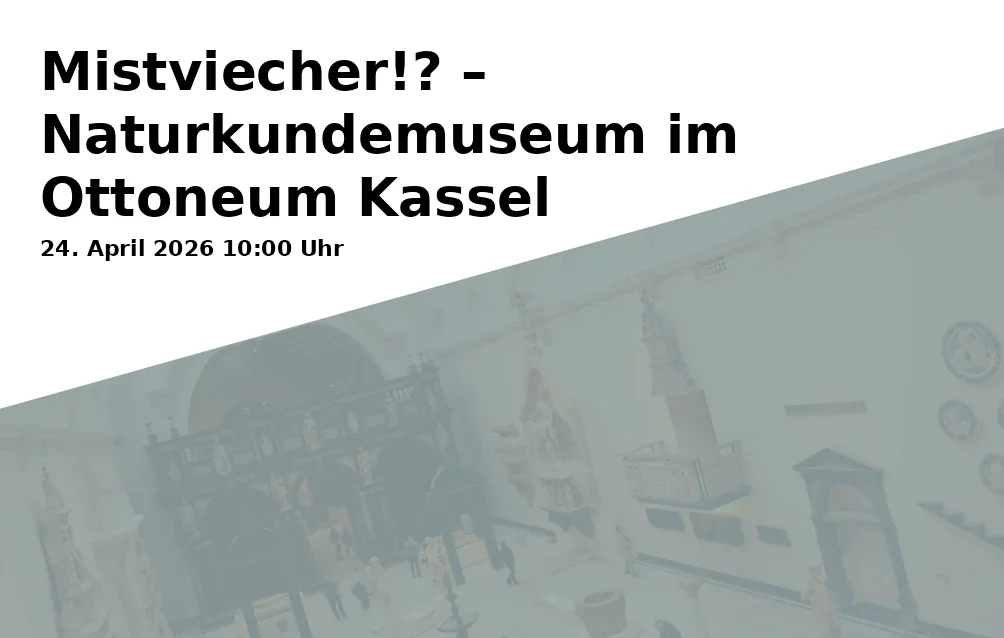
Mistviecher!? – Natural History Museum in Ottoneum Kassel
Kassel invites you to wonder: Mistviecher!? at the Natural History Museum in Ottoneum combines horror, knowledge, and environmental education. Starting 24.04.2026, Admission 5 Euro. #Kassel #Museum
Family Tours: Pests!?
Visit the playful exhibition about supposed pests at the Natural History Museum Kassel. For the whole family!
Vacation Games: Mammoths in Kassel?
Mammoths and more: A discovery journey for children aged 7 and older at the Natural History Museum Kassel. Join us!
Vacation Activities: Stone Age Workshop Whirligig
Children aged 8 experience the Stone Age at the Natural History Museum Kassel and craft a whirligig.
Guided Tour: Poop Creatures!?
Discover the fascinating world of often unloved "Poop Creatures" at the Kassel Natural History Museum. Admission is free!
Guided Cocktail Tour through the Exhibition “Mist Creatures!?”
Visit the exhibition “Mist Creatures!?” at the Kassel Natural History Museum during a refreshing guided tour with cocktail.
Frequently Asked Questions
Reviews
No reviews found