
Kassel
Universitätspl. 9, 34127 Kassel, Deutschland
New Building ASL | Directions & Building Plan
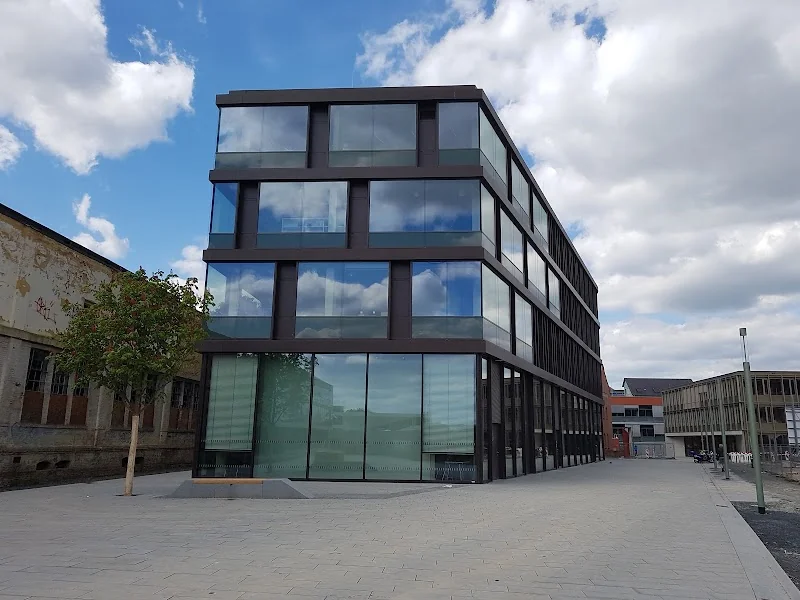
The new building ASL of the University of Kassel is more than just an address at the Holländischer Platz campus. It is the central house for the Department 06 Architecture - Urban Planning - Landscape Planning and thus a place where administration, teaching, project work, and student life come together very closely. Those looking for the new building ASL are often not just looking for an entrance, but for concrete orientation in everyday life: Where can I find the dean's office? In which room are seminars or introductory events? How do I get to the campus without detours, and where can I quickly recognize my target building? These questions are central to the search for the new building ASL, and that is exactly why a closer look at the location, rooms, accessibility, and the profile of the department is worthwhile. The location at Universitätsplatz 9 is firmly connected to the Holländischer Platz campus, and the building houses, among others, the dean's office, student and examination office, BPS department, student council, doku:lab, c:lab, International Office, subject areas, as well as project and pool rooms. ([uni-kassel.de](https://www.uni-kassel.de/fb06/kontakt-anfahrt))
Directions, Public Transport, and Parking at Holländischer Platz Campus
For many visitors, the journey to the new building ASL begins with the question of the best way to get there. The official contact page of the University of Kassel states the address for Department 06 as Universitätsplatz 9, D-34127 Kassel, and refers to the directions to the Holländischer Platz campus. The long-distance train station Kassel-Wilhelmshöhe and Kassel main station are mentioned as train stations; the latter is accessible via regional transport. This is relevant for anyone traveling from the region or further away who wishes to have reliable orientation in advance. For daily university operations, it is also important that the campus is located in a densely built urban environment, where one should realistically plan the walking distance from the stop to the building. Those coming to a lecture, a consultation appointment, or a project meeting should therefore consider not only the pure travel time but also the route across the campus. ([uni-kassel.de](https://www.uni-kassel.de/fb06/kontakt-anfahrt))
Parking is relatively challenging at this location. The university explicitly points out that there are very few parking spaces around the Holländischer Platz campus in the surrounding streets, especially in Hentschelstraße and Mönchebergstraße, and that these parking spaces are subject to fees. This is a typical concern for people visiting the new building ASL for the first time and not coming directly from Kassel. Therefore, those arriving by car should build in a buffer and not rely on finding a free parking space directly in front of the building. In practice, this means: it is better to think of a slightly longer walk than to search for a parking space just before the appointment. Especially during introductions, committee meetings, or large events, this planning is helpful because the campus is then more frequented. The official page also emphasizes that while there are parking spaces in the surrounding streets at other locations, the area around Holländischer Platz remains particularly tight. ([uni-kassel.de](https://www.uni-kassel.de/fb06/kontakt-anfahrt))
Traveling by public transport fits well with the location. In further official ASL contact pages, tram lines 1, 3, 4, and 7 are mentioned for the journey from the ICE train station Kassel-Wilhelmshöhe, with destinations such as Holländischer Platz or Am Stern. This shows that the campus is very well integrated into the Kassel public transport network. For visitors heading to the new building ASL for the first time, this is usually the least stressful option, as they do not have to worry about finding parking and parking fees. Especially in a department that relies on project-oriented work and frequent appointments, effective accessibility is a real advantage. Therefore, those with an appointment in the new building ASL often find it easiest to travel by train or tram, arrive with a clear time buffer, and then directly enter the department-specific working atmosphere at Holländischer Platz. ([uni-kassel.de](https://www.uni-kassel.de/fb06/institute/architektur/fachgebiete/architektur-stadt-oekonomie-bauwirtschaft-i-projektentwicklung/kontakt.html?utm_source=openai))
Building Plan of the New Building ASL: Rooms, Floors, and Use
The greatest search benefit for visitors often lies in the specific building plan. Here, the new building ASL is particularly clearly structured, as the University of Kassel publicly documents the rooms. On the ground floor, there are seminar rooms 0105 and 0106 as well as the foyer. This is especially important for courses, introductions, and larger meetings, as this level quickly becomes the first point of contact. Those entering the building for the first time immediately recognize that the new building ASL not only houses administrative rooms but also teaching and meeting areas. This spatial mixture makes the location so important for students: One enters a building where organizational, academic, and social functions converge. The room structure is thus a good example of the interdisciplinary character of the department, which does not speak abstractly about collaboration but makes it spatially visible. ([uni-kassel.de](https://www.uni-kassel.de/fb06/index.php?eID=dumpFile&f=2891&t=f&token=e9a67bc847e109aa8daa027c5d5107dfe79faec1))
On the 1st floor, the plan shows a particularly dense use: Here, among other things, the study coordinator, several c:lab rooms, the student office, the social room, and the Gray Room are located. For everyday life in the department, this is an important hub because not only administration is carried out here, but also part of the infrastructural support for study and project work takes place. The c:lab symbolically represents the connection between digital and subject-specific work, while the student office plays a central role, especially regarding questions about organization, documents, or deadlines. On the 2nd floor, the dean's office, BPS department, ASL International, the student council, the secretariat area, a seminar room, a meeting room, LarsLab, and other subject units are concentrated. Those with an appointment with the management or a department-related consultation will find the administrative center of the building here. The spatial proximity of these functions is practical because students and teachers do not have to switch between widely spaced locations. ([uni-kassel.de](https://www.uni-kassel.de/fb06/index.php?eID=dumpFile&f=2891&t=f&token=e9a67bc847e109aa8daa027c5d5107dfe79faec1))
Particularly interesting is the 3rd floor, where numerous subject areas are located, including construction economics, landscape development, environmental and planning law, architectural theory, aquatic ecology, design and building theory, as well as design and construction. In addition, there are meeting and seminar rooms. This makes the new building ASL also content-wise readable: The building does not simply represent offices but forms the scientific core of a department that researches and teaches in architecture, urban planning, and landscape planning. Therefore, those searching for the building plan of the new building ASL are often actually looking for the way to a specific discipline, a specific working group, or an appointment in a research context. The clear floor logic is helpful for this purpose. It connects orientation with subject diversity and makes the new building ASL a kind of compact working landscape where administration, teaching, and research lie closely together. ([uni-kassel.de](https://www.uni-kassel.de/fb06/index.php?eID=dumpFile&f=2891&t=f&token=e9a67bc847e109aa8daa027c5d5107dfe79faec1))
Accessibility and Orientation in the New Building ASL
A common search topic around the new building ASL is accessibility, and here too, the University of Kassel provides very concrete information. According to the official accessibility overview, the building entrance is step-free and threshold-free, access is via automatic sliding doors, and there are sufficiently wide corridors and an elevator inside. This is very relevant for visitors with mobility restrictions, for wheelchair users, but also for people with strollers or heavy luggage. The university also documents a tactile floor guidance system, tactile door signs, a step edge marking, and a safety marking on glass surfaces. This shows that the new building ASL understands accessibility not just as a technical detail but as part of building usage. Especially in a building with many seminar rooms, office areas, and changing visitor flows, this is a real plus. ([uni-kassel.de](https://www.uni-kassel.de/uni/files/Studium/Kontakt-Beratung-Termine/Studium_Behinderung/Barrierefreiheit/20_Neubau_ASL.pdf))
The interior design also supports use by different groups of people. The overview mentions wheelchair workstations in seminar rooms and the lecture hall, an inductive hearing system in the lecture hall on the ground floor, a quiet room in the basement, and accessible restrooms on several levels. In the new building ASL, there are also evacuation places for wheelchair users in the escape areas of the various floors. This is important not only for people with disabilities but also for a clear and safe building structure. Those entering the new building ASL for the first time quickly notice that the location is well thought out as a working and study place. The building planning takes into account accessibility, orientation, and safety. Even details like loose seating in seminar rooms and the lecture hall support flexible use. This mixture of functionality and openness fits the character of a department that works project-based and has very different teaching and research situations in everyday life. ([uni-kassel.de](https://www.uni-kassel.de/uni/files/Studium/Kontakt-Beratung-Termine/Studium_Behinderung/Barrierefreiheit/20_Neubau_ASL.pdf))
For everyday orientation, it is also important that the new building ASL does not function as an isolated single building but is part of a larger site network. Department 06 is spread across several ASL buildings at Holländischer Platz, but the new building ASL is the central point of orientation. In practice, this means: Upon arrival, one should first clearly identify the building, then check the floor, and only afterwards look for the actual target room. This may sound trivial, but it is crucial, especially during introductory weeks, committee meetings, or consultation appointments. The clearly numbered rooms in the new building ASL, combined with the barrier-free access, make the location particularly user-friendly. Thus, the new building ASL is not only formally barrier-free but also clear in its everyday use. For many visitors, this is exactly the difference between a building that one simply visits and a building where one can actually find their way around quickly. ([uni-kassel.de](https://www.uni-kassel.de/uni/files/Studium/Kontakt-Beratung-Termine/Studium_Behinderung/Barrierefreiheit/20_Neubau_ASL.pdf))
Department 06 ASL: History, Profile, and Significance
To properly classify the new building ASL, one must understand Department 06 itself. ASL stands for Architecture, Urban Planning, and Landscape Planning, and the University of Kassel has emphasized the interdisciplinary connection of these three fields for decades. The profile page of the department describes that the first comprehensive university in Germany was founded at the University of Kassel in 1971. In 1974, the departments 12 Architecture and 13 Urban and Landscape Planning were already connected through a common study and examination regulation. In 2001, the comprehensive university was renamed the University of Kassel, and in 2003, the two departments merged into the current Department 6 Architecture - Urban Planning - Landscape Planning. This development explains why the new building ASL is not just a modern building but an expression of a developed professional culture. Here, different disciplines do not randomly meet but have been structurally developed for collaboration. ([uni-kassel.de](https://www.uni-kassel.de/fb06/profil/interdisziplinaer-verbunden.html))
Today, according to the profile page, 33 subject areas work together in three institutes. Around 150 employees support about 1000 students in bachelor’s and master’s programs. This is crucial for the spatial perception of the new building ASL because the building is not just an administrative seat but part of a larger teaching and research landscape. The department describes itself as a place where spatial design in architecture, urban planning, and landscape planning is taught and researched in mutual connection. The goal of sustainably developing space and society connects the three disciplines. Thus, questions of urban development, landscape transformation, built environment, and social justice are not treated in isolation but within a common framework of thought. The number of employees and students also shows why a central location like the new building ASL is so important organizationally: It bundles communication, pathways, and daily coordination. ([uni-kassel.de](https://www.uni-kassel.de/fb06/profil.html))
The University of Kassel also places value on sustainability, small groups, and direct exchange. According to the department profile, the department is committed to actively contributing to sustainable development, particularly of cities, landscapes, and buildings, in teaching and research. Project-oriented work, networked thinking, and research-based learning are guiding ideas. This is why the new building ASL fits content-wise with the profile: It is a workplace for workshops, meetings, subject areas, and project-based learning forms. Therefore, those interested in the new building ASL are usually also interested in the attitude of the department itself. The building is not just a shell but part of an academic culture that brings together practice, theory, and social responsibility. This connection is one of the reasons why the location in Kassel holds a special position and why the search term new building ASL is so strongly linked to the entire department. ([uni-kassel.de](https://www.uni-kassel.de/fb06/profil.html))
Study Everyday Life, Events, and Use in the New Building ASL
In everyday life, the new building ASL is a place where very different uses intersect. The university describes the department as project-oriented, small-grouped, and strongly networked. Teachers and students work directly together, and through projects, workshops, empirical analyses, excursions, and practical semesters, the view of professional reality is opened. This is why the new building ASL is often not just an administrative building for visitors but a kind of starting point for concrete learning and working in the department. Especially the combination of seminar spaces, laboratories, secretariats, subject areas, and meeting rooms shows that work is not done in rigid structures here. Instead, a flexible university everyday life emerges, where conversations, designs, presentations, and organizational processes share the same space. This makes the new building ASL so important for students because it almost seamlessly organizes the transition between courses, consultations, and project work. ([uni-kassel.de](https://www.uni-kassel.de/fb06/))
The new building ASL also plays a key role in the start of studies. In the official information for the architecture master's program, the welcome and information event is announced in room 0105/6 in the new building ASL. At the same time, the department page points out that regular courses begin with the semester and participation in the introductory events is explicitly recommended. This is a good example of how central the building is in the organizational life of the department. Those arriving new find here not only doors and rooms but also the first connection to the professional network. In addition, the semester exhibition Rundgang is described as the highlight and conclusion of each semester. Such formats make the new building ASL a place of public within the university, where results become visible and discussable. ([uni-kassel.de](https://www.uni-kassel.de/uni/studium/architektur-master/einfuehrung-und-studienstart.html))
Thus, the new building ASL is not just a useful location but an active part of the university culture. It bundles the addresses where daily organization happens and the spaces where designs, research, and teaching come together. Those who come here experience a department defined by exchange, critical ability, and sustainable thinking. For SEO seekers, this is exactly what is important: new building ASL does not just stand for a building but for an entire academic cosmos at the University of Kassel. Those searching for programs, rooms, directions, parking, or accessibility are actually looking for a reliable entry into this cosmos. The new building ASL is therefore the functional and symbolic center of Department 06, and therein lies its high recognition value. ([uni-kassel.de](https://www.uni-kassel.de/fb06/profil.html))
Sources:
Mehr anzeigenWeniger anzeigen
New Building ASL | Directions & Building Plan
The new building ASL of the University of Kassel is more than just an address at the Holländischer Platz campus. It is the central house for the Department 06 Architecture - Urban Planning - Landscape Planning and thus a place where administration, teaching, project work, and student life come together very closely. Those looking for the new building ASL are often not just looking for an entrance, but for concrete orientation in everyday life: Where can I find the dean's office? In which room are seminars or introductory events? How do I get to the campus without detours, and where can I quickly recognize my target building? These questions are central to the search for the new building ASL, and that is exactly why a closer look at the location, rooms, accessibility, and the profile of the department is worthwhile. The location at Universitätsplatz 9 is firmly connected to the Holländischer Platz campus, and the building houses, among others, the dean's office, student and examination office, BPS department, student council, doku:lab, c:lab, International Office, subject areas, as well as project and pool rooms. ([uni-kassel.de](https://www.uni-kassel.de/fb06/kontakt-anfahrt))
Directions, Public Transport, and Parking at Holländischer Platz Campus
For many visitors, the journey to the new building ASL begins with the question of the best way to get there. The official contact page of the University of Kassel states the address for Department 06 as Universitätsplatz 9, D-34127 Kassel, and refers to the directions to the Holländischer Platz campus. The long-distance train station Kassel-Wilhelmshöhe and Kassel main station are mentioned as train stations; the latter is accessible via regional transport. This is relevant for anyone traveling from the region or further away who wishes to have reliable orientation in advance. For daily university operations, it is also important that the campus is located in a densely built urban environment, where one should realistically plan the walking distance from the stop to the building. Those coming to a lecture, a consultation appointment, or a project meeting should therefore consider not only the pure travel time but also the route across the campus. ([uni-kassel.de](https://www.uni-kassel.de/fb06/kontakt-anfahrt))
Parking is relatively challenging at this location. The university explicitly points out that there are very few parking spaces around the Holländischer Platz campus in the surrounding streets, especially in Hentschelstraße and Mönchebergstraße, and that these parking spaces are subject to fees. This is a typical concern for people visiting the new building ASL for the first time and not coming directly from Kassel. Therefore, those arriving by car should build in a buffer and not rely on finding a free parking space directly in front of the building. In practice, this means: it is better to think of a slightly longer walk than to search for a parking space just before the appointment. Especially during introductions, committee meetings, or large events, this planning is helpful because the campus is then more frequented. The official page also emphasizes that while there are parking spaces in the surrounding streets at other locations, the area around Holländischer Platz remains particularly tight. ([uni-kassel.de](https://www.uni-kassel.de/fb06/kontakt-anfahrt))
Traveling by public transport fits well with the location. In further official ASL contact pages, tram lines 1, 3, 4, and 7 are mentioned for the journey from the ICE train station Kassel-Wilhelmshöhe, with destinations such as Holländischer Platz or Am Stern. This shows that the campus is very well integrated into the Kassel public transport network. For visitors heading to the new building ASL for the first time, this is usually the least stressful option, as they do not have to worry about finding parking and parking fees. Especially in a department that relies on project-oriented work and frequent appointments, effective accessibility is a real advantage. Therefore, those with an appointment in the new building ASL often find it easiest to travel by train or tram, arrive with a clear time buffer, and then directly enter the department-specific working atmosphere at Holländischer Platz. ([uni-kassel.de](https://www.uni-kassel.de/fb06/institute/architektur/fachgebiete/architektur-stadt-oekonomie-bauwirtschaft-i-projektentwicklung/kontakt.html?utm_source=openai))
Building Plan of the New Building ASL: Rooms, Floors, and Use
The greatest search benefit for visitors often lies in the specific building plan. Here, the new building ASL is particularly clearly structured, as the University of Kassel publicly documents the rooms. On the ground floor, there are seminar rooms 0105 and 0106 as well as the foyer. This is especially important for courses, introductions, and larger meetings, as this level quickly becomes the first point of contact. Those entering the building for the first time immediately recognize that the new building ASL not only houses administrative rooms but also teaching and meeting areas. This spatial mixture makes the location so important for students: One enters a building where organizational, academic, and social functions converge. The room structure is thus a good example of the interdisciplinary character of the department, which does not speak abstractly about collaboration but makes it spatially visible. ([uni-kassel.de](https://www.uni-kassel.de/fb06/index.php?eID=dumpFile&f=2891&t=f&token=e9a67bc847e109aa8daa027c5d5107dfe79faec1))
On the 1st floor, the plan shows a particularly dense use: Here, among other things, the study coordinator, several c:lab rooms, the student office, the social room, and the Gray Room are located. For everyday life in the department, this is an important hub because not only administration is carried out here, but also part of the infrastructural support for study and project work takes place. The c:lab symbolically represents the connection between digital and subject-specific work, while the student office plays a central role, especially regarding questions about organization, documents, or deadlines. On the 2nd floor, the dean's office, BPS department, ASL International, the student council, the secretariat area, a seminar room, a meeting room, LarsLab, and other subject units are concentrated. Those with an appointment with the management or a department-related consultation will find the administrative center of the building here. The spatial proximity of these functions is practical because students and teachers do not have to switch between widely spaced locations. ([uni-kassel.de](https://www.uni-kassel.de/fb06/index.php?eID=dumpFile&f=2891&t=f&token=e9a67bc847e109aa8daa027c5d5107dfe79faec1))
Particularly interesting is the 3rd floor, where numerous subject areas are located, including construction economics, landscape development, environmental and planning law, architectural theory, aquatic ecology, design and building theory, as well as design and construction. In addition, there are meeting and seminar rooms. This makes the new building ASL also content-wise readable: The building does not simply represent offices but forms the scientific core of a department that researches and teaches in architecture, urban planning, and landscape planning. Therefore, those searching for the building plan of the new building ASL are often actually looking for the way to a specific discipline, a specific working group, or an appointment in a research context. The clear floor logic is helpful for this purpose. It connects orientation with subject diversity and makes the new building ASL a kind of compact working landscape where administration, teaching, and research lie closely together. ([uni-kassel.de](https://www.uni-kassel.de/fb06/index.php?eID=dumpFile&f=2891&t=f&token=e9a67bc847e109aa8daa027c5d5107dfe79faec1))
Accessibility and Orientation in the New Building ASL
A common search topic around the new building ASL is accessibility, and here too, the University of Kassel provides very concrete information. According to the official accessibility overview, the building entrance is step-free and threshold-free, access is via automatic sliding doors, and there are sufficiently wide corridors and an elevator inside. This is very relevant for visitors with mobility restrictions, for wheelchair users, but also for people with strollers or heavy luggage. The university also documents a tactile floor guidance system, tactile door signs, a step edge marking, and a safety marking on glass surfaces. This shows that the new building ASL understands accessibility not just as a technical detail but as part of building usage. Especially in a building with many seminar rooms, office areas, and changing visitor flows, this is a real plus. ([uni-kassel.de](https://www.uni-kassel.de/uni/files/Studium/Kontakt-Beratung-Termine/Studium_Behinderung/Barrierefreiheit/20_Neubau_ASL.pdf))
The interior design also supports use by different groups of people. The overview mentions wheelchair workstations in seminar rooms and the lecture hall, an inductive hearing system in the lecture hall on the ground floor, a quiet room in the basement, and accessible restrooms on several levels. In the new building ASL, there are also evacuation places for wheelchair users in the escape areas of the various floors. This is important not only for people with disabilities but also for a clear and safe building structure. Those entering the new building ASL for the first time quickly notice that the location is well thought out as a working and study place. The building planning takes into account accessibility, orientation, and safety. Even details like loose seating in seminar rooms and the lecture hall support flexible use. This mixture of functionality and openness fits the character of a department that works project-based and has very different teaching and research situations in everyday life. ([uni-kassel.de](https://www.uni-kassel.de/uni/files/Studium/Kontakt-Beratung-Termine/Studium_Behinderung/Barrierefreiheit/20_Neubau_ASL.pdf))
For everyday orientation, it is also important that the new building ASL does not function as an isolated single building but is part of a larger site network. Department 06 is spread across several ASL buildings at Holländischer Platz, but the new building ASL is the central point of orientation. In practice, this means: Upon arrival, one should first clearly identify the building, then check the floor, and only afterwards look for the actual target room. This may sound trivial, but it is crucial, especially during introductory weeks, committee meetings, or consultation appointments. The clearly numbered rooms in the new building ASL, combined with the barrier-free access, make the location particularly user-friendly. Thus, the new building ASL is not only formally barrier-free but also clear in its everyday use. For many visitors, this is exactly the difference between a building that one simply visits and a building where one can actually find their way around quickly. ([uni-kassel.de](https://www.uni-kassel.de/uni/files/Studium/Kontakt-Beratung-Termine/Studium_Behinderung/Barrierefreiheit/20_Neubau_ASL.pdf))
Department 06 ASL: History, Profile, and Significance
To properly classify the new building ASL, one must understand Department 06 itself. ASL stands for Architecture, Urban Planning, and Landscape Planning, and the University of Kassel has emphasized the interdisciplinary connection of these three fields for decades. The profile page of the department describes that the first comprehensive university in Germany was founded at the University of Kassel in 1971. In 1974, the departments 12 Architecture and 13 Urban and Landscape Planning were already connected through a common study and examination regulation. In 2001, the comprehensive university was renamed the University of Kassel, and in 2003, the two departments merged into the current Department 6 Architecture - Urban Planning - Landscape Planning. This development explains why the new building ASL is not just a modern building but an expression of a developed professional culture. Here, different disciplines do not randomly meet but have been structurally developed for collaboration. ([uni-kassel.de](https://www.uni-kassel.de/fb06/profil/interdisziplinaer-verbunden.html))
Today, according to the profile page, 33 subject areas work together in three institutes. Around 150 employees support about 1000 students in bachelor’s and master’s programs. This is crucial for the spatial perception of the new building ASL because the building is not just an administrative seat but part of a larger teaching and research landscape. The department describes itself as a place where spatial design in architecture, urban planning, and landscape planning is taught and researched in mutual connection. The goal of sustainably developing space and society connects the three disciplines. Thus, questions of urban development, landscape transformation, built environment, and social justice are not treated in isolation but within a common framework of thought. The number of employees and students also shows why a central location like the new building ASL is so important organizationally: It bundles communication, pathways, and daily coordination. ([uni-kassel.de](https://www.uni-kassel.de/fb06/profil.html))
The University of Kassel also places value on sustainability, small groups, and direct exchange. According to the department profile, the department is committed to actively contributing to sustainable development, particularly of cities, landscapes, and buildings, in teaching and research. Project-oriented work, networked thinking, and research-based learning are guiding ideas. This is why the new building ASL fits content-wise with the profile: It is a workplace for workshops, meetings, subject areas, and project-based learning forms. Therefore, those interested in the new building ASL are usually also interested in the attitude of the department itself. The building is not just a shell but part of an academic culture that brings together practice, theory, and social responsibility. This connection is one of the reasons why the location in Kassel holds a special position and why the search term new building ASL is so strongly linked to the entire department. ([uni-kassel.de](https://www.uni-kassel.de/fb06/profil.html))
Study Everyday Life, Events, and Use in the New Building ASL
In everyday life, the new building ASL is a place where very different uses intersect. The university describes the department as project-oriented, small-grouped, and strongly networked. Teachers and students work directly together, and through projects, workshops, empirical analyses, excursions, and practical semesters, the view of professional reality is opened. This is why the new building ASL is often not just an administrative building for visitors but a kind of starting point for concrete learning and working in the department. Especially the combination of seminar spaces, laboratories, secretariats, subject areas, and meeting rooms shows that work is not done in rigid structures here. Instead, a flexible university everyday life emerges, where conversations, designs, presentations, and organizational processes share the same space. This makes the new building ASL so important for students because it almost seamlessly organizes the transition between courses, consultations, and project work. ([uni-kassel.de](https://www.uni-kassel.de/fb06/))
The new building ASL also plays a key role in the start of studies. In the official information for the architecture master's program, the welcome and information event is announced in room 0105/6 in the new building ASL. At the same time, the department page points out that regular courses begin with the semester and participation in the introductory events is explicitly recommended. This is a good example of how central the building is in the organizational life of the department. Those arriving new find here not only doors and rooms but also the first connection to the professional network. In addition, the semester exhibition Rundgang is described as the highlight and conclusion of each semester. Such formats make the new building ASL a place of public within the university, where results become visible and discussable. ([uni-kassel.de](https://www.uni-kassel.de/uni/studium/architektur-master/einfuehrung-und-studienstart.html))
Thus, the new building ASL is not just a useful location but an active part of the university culture. It bundles the addresses where daily organization happens and the spaces where designs, research, and teaching come together. Those who come here experience a department defined by exchange, critical ability, and sustainable thinking. For SEO seekers, this is exactly what is important: new building ASL does not just stand for a building but for an entire academic cosmos at the University of Kassel. Those searching for programs, rooms, directions, parking, or accessibility are actually looking for a reliable entry into this cosmos. The new building ASL is therefore the functional and symbolic center of Department 06, and therein lies its high recognition value. ([uni-kassel.de](https://www.uni-kassel.de/fb06/profil.html))
Sources:
New Building ASL | Directions & Building Plan
The new building ASL of the University of Kassel is more than just an address at the Holländischer Platz campus. It is the central house for the Department 06 Architecture - Urban Planning - Landscape Planning and thus a place where administration, teaching, project work, and student life come together very closely. Those looking for the new building ASL are often not just looking for an entrance, but for concrete orientation in everyday life: Where can I find the dean's office? In which room are seminars or introductory events? How do I get to the campus without detours, and where can I quickly recognize my target building? These questions are central to the search for the new building ASL, and that is exactly why a closer look at the location, rooms, accessibility, and the profile of the department is worthwhile. The location at Universitätsplatz 9 is firmly connected to the Holländischer Platz campus, and the building houses, among others, the dean's office, student and examination office, BPS department, student council, doku:lab, c:lab, International Office, subject areas, as well as project and pool rooms. ([uni-kassel.de](https://www.uni-kassel.de/fb06/kontakt-anfahrt))
Directions, Public Transport, and Parking at Holländischer Platz Campus
For many visitors, the journey to the new building ASL begins with the question of the best way to get there. The official contact page of the University of Kassel states the address for Department 06 as Universitätsplatz 9, D-34127 Kassel, and refers to the directions to the Holländischer Platz campus. The long-distance train station Kassel-Wilhelmshöhe and Kassel main station are mentioned as train stations; the latter is accessible via regional transport. This is relevant for anyone traveling from the region or further away who wishes to have reliable orientation in advance. For daily university operations, it is also important that the campus is located in a densely built urban environment, where one should realistically plan the walking distance from the stop to the building. Those coming to a lecture, a consultation appointment, or a project meeting should therefore consider not only the pure travel time but also the route across the campus. ([uni-kassel.de](https://www.uni-kassel.de/fb06/kontakt-anfahrt))
Parking is relatively challenging at this location. The university explicitly points out that there are very few parking spaces around the Holländischer Platz campus in the surrounding streets, especially in Hentschelstraße and Mönchebergstraße, and that these parking spaces are subject to fees. This is a typical concern for people visiting the new building ASL for the first time and not coming directly from Kassel. Therefore, those arriving by car should build in a buffer and not rely on finding a free parking space directly in front of the building. In practice, this means: it is better to think of a slightly longer walk than to search for a parking space just before the appointment. Especially during introductions, committee meetings, or large events, this planning is helpful because the campus is then more frequented. The official page also emphasizes that while there are parking spaces in the surrounding streets at other locations, the area around Holländischer Platz remains particularly tight. ([uni-kassel.de](https://www.uni-kassel.de/fb06/kontakt-anfahrt))
Traveling by public transport fits well with the location. In further official ASL contact pages, tram lines 1, 3, 4, and 7 are mentioned for the journey from the ICE train station Kassel-Wilhelmshöhe, with destinations such as Holländischer Platz or Am Stern. This shows that the campus is very well integrated into the Kassel public transport network. For visitors heading to the new building ASL for the first time, this is usually the least stressful option, as they do not have to worry about finding parking and parking fees. Especially in a department that relies on project-oriented work and frequent appointments, effective accessibility is a real advantage. Therefore, those with an appointment in the new building ASL often find it easiest to travel by train or tram, arrive with a clear time buffer, and then directly enter the department-specific working atmosphere at Holländischer Platz. ([uni-kassel.de](https://www.uni-kassel.de/fb06/institute/architektur/fachgebiete/architektur-stadt-oekonomie-bauwirtschaft-i-projektentwicklung/kontakt.html?utm_source=openai))
Building Plan of the New Building ASL: Rooms, Floors, and Use
The greatest search benefit for visitors often lies in the specific building plan. Here, the new building ASL is particularly clearly structured, as the University of Kassel publicly documents the rooms. On the ground floor, there are seminar rooms 0105 and 0106 as well as the foyer. This is especially important for courses, introductions, and larger meetings, as this level quickly becomes the first point of contact. Those entering the building for the first time immediately recognize that the new building ASL not only houses administrative rooms but also teaching and meeting areas. This spatial mixture makes the location so important for students: One enters a building where organizational, academic, and social functions converge. The room structure is thus a good example of the interdisciplinary character of the department, which does not speak abstractly about collaboration but makes it spatially visible. ([uni-kassel.de](https://www.uni-kassel.de/fb06/index.php?eID=dumpFile&f=2891&t=f&token=e9a67bc847e109aa8daa027c5d5107dfe79faec1))
On the 1st floor, the plan shows a particularly dense use: Here, among other things, the study coordinator, several c:lab rooms, the student office, the social room, and the Gray Room are located. For everyday life in the department, this is an important hub because not only administration is carried out here, but also part of the infrastructural support for study and project work takes place. The c:lab symbolically represents the connection between digital and subject-specific work, while the student office plays a central role, especially regarding questions about organization, documents, or deadlines. On the 2nd floor, the dean's office, BPS department, ASL International, the student council, the secretariat area, a seminar room, a meeting room, LarsLab, and other subject units are concentrated. Those with an appointment with the management or a department-related consultation will find the administrative center of the building here. The spatial proximity of these functions is practical because students and teachers do not have to switch between widely spaced locations. ([uni-kassel.de](https://www.uni-kassel.de/fb06/index.php?eID=dumpFile&f=2891&t=f&token=e9a67bc847e109aa8daa027c5d5107dfe79faec1))
Particularly interesting is the 3rd floor, where numerous subject areas are located, including construction economics, landscape development, environmental and planning law, architectural theory, aquatic ecology, design and building theory, as well as design and construction. In addition, there are meeting and seminar rooms. This makes the new building ASL also content-wise readable: The building does not simply represent offices but forms the scientific core of a department that researches and teaches in architecture, urban planning, and landscape planning. Therefore, those searching for the building plan of the new building ASL are often actually looking for the way to a specific discipline, a specific working group, or an appointment in a research context. The clear floor logic is helpful for this purpose. It connects orientation with subject diversity and makes the new building ASL a kind of compact working landscape where administration, teaching, and research lie closely together. ([uni-kassel.de](https://www.uni-kassel.de/fb06/index.php?eID=dumpFile&f=2891&t=f&token=e9a67bc847e109aa8daa027c5d5107dfe79faec1))
Accessibility and Orientation in the New Building ASL
A common search topic around the new building ASL is accessibility, and here too, the University of Kassel provides very concrete information. According to the official accessibility overview, the building entrance is step-free and threshold-free, access is via automatic sliding doors, and there are sufficiently wide corridors and an elevator inside. This is very relevant for visitors with mobility restrictions, for wheelchair users, but also for people with strollers or heavy luggage. The university also documents a tactile floor guidance system, tactile door signs, a step edge marking, and a safety marking on glass surfaces. This shows that the new building ASL understands accessibility not just as a technical detail but as part of building usage. Especially in a building with many seminar rooms, office areas, and changing visitor flows, this is a real plus. ([uni-kassel.de](https://www.uni-kassel.de/uni/files/Studium/Kontakt-Beratung-Termine/Studium_Behinderung/Barrierefreiheit/20_Neubau_ASL.pdf))
The interior design also supports use by different groups of people. The overview mentions wheelchair workstations in seminar rooms and the lecture hall, an inductive hearing system in the lecture hall on the ground floor, a quiet room in the basement, and accessible restrooms on several levels. In the new building ASL, there are also evacuation places for wheelchair users in the escape areas of the various floors. This is important not only for people with disabilities but also for a clear and safe building structure. Those entering the new building ASL for the first time quickly notice that the location is well thought out as a working and study place. The building planning takes into account accessibility, orientation, and safety. Even details like loose seating in seminar rooms and the lecture hall support flexible use. This mixture of functionality and openness fits the character of a department that works project-based and has very different teaching and research situations in everyday life. ([uni-kassel.de](https://www.uni-kassel.de/uni/files/Studium/Kontakt-Beratung-Termine/Studium_Behinderung/Barrierefreiheit/20_Neubau_ASL.pdf))
For everyday orientation, it is also important that the new building ASL does not function as an isolated single building but is part of a larger site network. Department 06 is spread across several ASL buildings at Holländischer Platz, but the new building ASL is the central point of orientation. In practice, this means: Upon arrival, one should first clearly identify the building, then check the floor, and only afterwards look for the actual target room. This may sound trivial, but it is crucial, especially during introductory weeks, committee meetings, or consultation appointments. The clearly numbered rooms in the new building ASL, combined with the barrier-free access, make the location particularly user-friendly. Thus, the new building ASL is not only formally barrier-free but also clear in its everyday use. For many visitors, this is exactly the difference between a building that one simply visits and a building where one can actually find their way around quickly. ([uni-kassel.de](https://www.uni-kassel.de/uni/files/Studium/Kontakt-Beratung-Termine/Studium_Behinderung/Barrierefreiheit/20_Neubau_ASL.pdf))
Department 06 ASL: History, Profile, and Significance
To properly classify the new building ASL, one must understand Department 06 itself. ASL stands for Architecture, Urban Planning, and Landscape Planning, and the University of Kassel has emphasized the interdisciplinary connection of these three fields for decades. The profile page of the department describes that the first comprehensive university in Germany was founded at the University of Kassel in 1971. In 1974, the departments 12 Architecture and 13 Urban and Landscape Planning were already connected through a common study and examination regulation. In 2001, the comprehensive university was renamed the University of Kassel, and in 2003, the two departments merged into the current Department 6 Architecture - Urban Planning - Landscape Planning. This development explains why the new building ASL is not just a modern building but an expression of a developed professional culture. Here, different disciplines do not randomly meet but have been structurally developed for collaboration. ([uni-kassel.de](https://www.uni-kassel.de/fb06/profil/interdisziplinaer-verbunden.html))
Today, according to the profile page, 33 subject areas work together in three institutes. Around 150 employees support about 1000 students in bachelor’s and master’s programs. This is crucial for the spatial perception of the new building ASL because the building is not just an administrative seat but part of a larger teaching and research landscape. The department describes itself as a place where spatial design in architecture, urban planning, and landscape planning is taught and researched in mutual connection. The goal of sustainably developing space and society connects the three disciplines. Thus, questions of urban development, landscape transformation, built environment, and social justice are not treated in isolation but within a common framework of thought. The number of employees and students also shows why a central location like the new building ASL is so important organizationally: It bundles communication, pathways, and daily coordination. ([uni-kassel.de](https://www.uni-kassel.de/fb06/profil.html))
The University of Kassel also places value on sustainability, small groups, and direct exchange. According to the department profile, the department is committed to actively contributing to sustainable development, particularly of cities, landscapes, and buildings, in teaching and research. Project-oriented work, networked thinking, and research-based learning are guiding ideas. This is why the new building ASL fits content-wise with the profile: It is a workplace for workshops, meetings, subject areas, and project-based learning forms. Therefore, those interested in the new building ASL are usually also interested in the attitude of the department itself. The building is not just a shell but part of an academic culture that brings together practice, theory, and social responsibility. This connection is one of the reasons why the location in Kassel holds a special position and why the search term new building ASL is so strongly linked to the entire department. ([uni-kassel.de](https://www.uni-kassel.de/fb06/profil.html))
Study Everyday Life, Events, and Use in the New Building ASL
In everyday life, the new building ASL is a place where very different uses intersect. The university describes the department as project-oriented, small-grouped, and strongly networked. Teachers and students work directly together, and through projects, workshops, empirical analyses, excursions, and practical semesters, the view of professional reality is opened. This is why the new building ASL is often not just an administrative building for visitors but a kind of starting point for concrete learning and working in the department. Especially the combination of seminar spaces, laboratories, secretariats, subject areas, and meeting rooms shows that work is not done in rigid structures here. Instead, a flexible university everyday life emerges, where conversations, designs, presentations, and organizational processes share the same space. This makes the new building ASL so important for students because it almost seamlessly organizes the transition between courses, consultations, and project work. ([uni-kassel.de](https://www.uni-kassel.de/fb06/))
The new building ASL also plays a key role in the start of studies. In the official information for the architecture master's program, the welcome and information event is announced in room 0105/6 in the new building ASL. At the same time, the department page points out that regular courses begin with the semester and participation in the introductory events is explicitly recommended. This is a good example of how central the building is in the organizational life of the department. Those arriving new find here not only doors and rooms but also the first connection to the professional network. In addition, the semester exhibition Rundgang is described as the highlight and conclusion of each semester. Such formats make the new building ASL a place of public within the university, where results become visible and discussable. ([uni-kassel.de](https://www.uni-kassel.de/uni/studium/architektur-master/einfuehrung-und-studienstart.html))
Thus, the new building ASL is not just a useful location but an active part of the university culture. It bundles the addresses where daily organization happens and the spaces where designs, research, and teaching come together. Those who come here experience a department defined by exchange, critical ability, and sustainable thinking. For SEO seekers, this is exactly what is important: new building ASL does not just stand for a building but for an entire academic cosmos at the University of Kassel. Those searching for programs, rooms, directions, parking, or accessibility are actually looking for a reliable entry into this cosmos. The new building ASL is therefore the functional and symbolic center of Department 06, and therein lies its high recognition value. ([uni-kassel.de](https://www.uni-kassel.de/fb06/profil.html))
Sources:
Upcoming Events
No events found
Frequently Asked Questions
Reviews
Cajetan Okehie
18. April 2023
Nice
Adrian Rabicki
17. May 2017
The building is very beautiful, really well placed as a solitaire. The interior is dominated by the concrete walls, which leaves a somewhat oppressive feeling, and the signal is also relatively poor in the building. Overall, a successful construction.
anneliese fried
13. December 2022
My grandson goes to this university, we were there, proud and really impressed by this building - Thank you for allowing my grandson to study here, I think he really likes it here.
Simon Junklewitz
11. August 2022
I had to transfer almost 300 euros to be allowed to be there.
Jonas Baumann
15. July 2021
Where is the beer tap?