
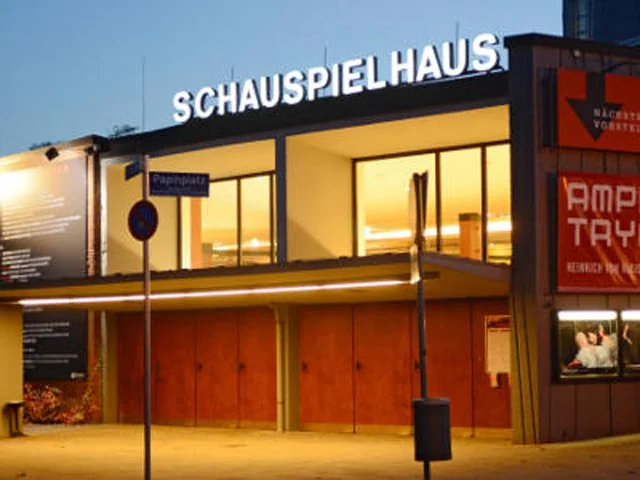
Kassel
Friedrichspl. 15, 34117 Kassel, Deutschland
Schauspielhaus Kassel | Program & Tickets
The Schauspielhaus Kassel is more than just a venue within the State Theatre: It is a central cultural location at Friedrichsplatz, where modern theatre architecture, city history, and current stage experiences meet. Those searching for Schauspielhaus Kassel are usually looking for more than just an address; they seek orientation: Where is the program? How do I get there? Where can I park? How many seats are there in the hall? These questions make the Schauspielhaus particularly relevant for visitors, as the house combines artistic diversity with an exceptionally central location in Kassel. The State Theatre Kassel has been working with the opera and Schauspielhaus at Friedrichsplatz since 1959, and the Schauspielhaus remains an integral part of this ensemble to this day. The stage belongs to a three-branch house with opera, concert, drama, dance, and young state theatre, representing a mix of tradition and present, repertoire and experiment, urban identity and open artistic exploration. At the same time, the Schauspielhaus is a place that functions practically: good accessibility, clearly communicated visitor information, a box office, and a hall with 517 seats make visits manageable and relaxed. For people looking for a culturally rich address in downtown Kassel, the Schauspielhaus is therefore an ideal point of contact. It unites the atmosphere of a traditional theatre house with the demands of a modern event venue while remaining approachable, urban, and versatile. ([kassel.de](https://www.kassel.de/buerger/kunst_und_kultur/musik/theater-und-tanz/staatstheater-kassel.php))
Program, Tickets, and Schedule at Schauspielhaus Kassel
The Schauspielhaus Kassel is part of a broadly structured state theatre that, according to the official description, includes the branches of opera, concert, drama, dance, and young state theatre. For visitors, this means: The stage is not limited to a single genre but is embedded in a house with a diverse program and many points of contact between the arts. The schedule page of the State Theatre regularly features drama evenings, musical theatre, dance formats, children's and youth theatre, as well as special events. Because the opera house is currently being renovated, individual evenings are also shown at the newly built interim venue INTERIM, while the Schauspielhaus and TiF remain open. This ensures that the Schauspielhaus remains a stable anchor in the Kassel cultural calendar. For ticket planning, it is important that ticket sales in the house are clearly organized: Advance sales usually start two months before the performance on the same date, ordered tickets must be paid for within 10 days, and the theatre box office in the opera foyer is staffed at fixed times on weekdays and Saturdays. Those who want to go to the theatre spontaneously can use the evening box office, which opens in the Schauspielhaus, opera house, and INTERIM one hour before the performance begins. This makes the visit both manageable and flexible. Additionally, the house offers various price groups and discounts, appealing to different target groups. Therefore, the terms program, tickets, schedule, and evening box office are particularly relevant for SEO searches, as they best reflect the real user intention. The Schauspielhaus is not just an address but a clearly structured entry point into the theatre evening. ([kassel.de](https://www.kassel.de/buerger/kunst_und_kultur/musik/theater-und-tanz/staatstheater-kassel.php))
Those searching for “Schauspielhaus Kassel Tickets” usually want to quickly know what the path from the first click to the seat looks like. This is where the infrastructure of the house shows its strengths. Ticket purchases are possible online via the webshop, advance sales start early enough, and at the same time, the classic theatre box office remains an important contact point for visitors who want advice or wish to buy tickets at short notice. This is particularly relevant for premieres, weekend evenings, and frequently requested productions. The State Theatre Kassel also regularly publishes season documents and program booklets that bundle dates, price groups, and service information. This creates a transparent process that provides orientation for both regular guests and first-time visitors. For the search for the “schedule,” it is also important that the Schauspielhaus should not be viewed in isolation: It is part of a theatre network where artistic production, ticket service, and visitor information are closely interconnected. Therefore, those who want to follow the current program will find in the Schauspielhaus Kassel a house with reliable organization and clear responsibilities. This is a real advantage for a location in the heart of the city, as theatre visits should inspire and not become complicated. The name Schauspielhaus Kassel thus stands not only for a stage but for a smoothly designed theatre visit with clear service pathways, understandable price categories, and a program that regularly sets new incentives. ([cdn.staatstheater-kassel.de](https://cdn.staatstheater-kassel.de/Serviceheft_25_26_02_mit_NVV_Ticket_web_b1403d07b0.pdf))
Directions, Parking, and Address at Friedrichsplatz
The address of the Schauspielhaus is Friedrichsplatz 15, 34117 Kassel. At the same time, the State Theatre mentions the entrance to the Schauspielhaus on Du-Ry-Straße, which is particularly helpful for visitors in everyday life as it clarifies orientation on-site. For public transport access, a whole range of tram lines are mentioned in the visitor information: With lines 1, 3, 4, 5, 6, or 8, you can travel to the Friedrichsplatz stop and walk from there across the square. Those coming from the ICE train station Kassel-Wilhelmshöhe can use lines 1, 3, or 4 to Friedrichsplatz. From the main train station Kassel, it is about a 10-minute walk to the stages. This connection is a great advantage, as the Schauspielhaus remains easily accessible for both local guests and visitors from outside. The location at Friedrichsplatz is also iconic: Here, the theatre is situated in one of the most significant inner-city areas of Kassel, surrounded by other cultural locations and short distances through the city center. This is a real plus for visitors who want to have a meal before the theatre or linger in the city afterward. The official visitor information and the Kassel city pages consistently confirm that access does not involve complicated detours but follows a clearly marked city center location with direct tram connections. ([kassel.de](https://www.kassel.de/buerger/kunst_und_kultur/musik/theater-und-tanz/staatstheater-kassel.php))
When it comes to parking around the Schauspielhaus Kassel, it is especially important to realistically plan for the central city conditions. The State Theatre officially mentions the paid parking garage at Friedrichsplatz and the paid parking lot in front of the Regierungspräsidium at Steinweg 6. A program document also recommends the parking lot at Entenanger behind Königsplatz, from which you can walk to the Schauspielhaus in a few minutes. The city of Kassel also designates the parking lot Theaterplatz as a location between the Kassel State Theatre and the Regierungspräsidium, with an entrance via Steinweg or Am Alten Stadtschloss. This is valuable for many guests, as it is rarely about “right in front of the door” in the city center, but rather about short walks and a clean route choice. The official information provides a good basis for this. Those who want to arrive relaxed should therefore plan a little more time for parking search depending on the time of day and event and consider the logic of the city center. The audience benefits from the fact that the Schauspielhaus is very centrally located and thus not dependent on a single parking solution. The theatre taxi is also mentioned in the service booklet as an option, which can be useful for later evening appointments or less mobile guests. In summary, access to the Schauspielhaus Kassel is well planned if one considers the combined use of tram, walking, and nearby parking spaces. ([cdn.staatstheater-kassel.de](https://cdn.staatstheater-kassel.de/Materialmappe_Schwanensee_be275a4af3.pdf))
Seating Plan, Seats, and the Special Hall Architecture
With 517 seats, the Schauspielhaus Kassel is not a small format, but neither is it an oversized large space. This size makes the stage particularly interesting for drama: large enough for powerful images and changing productions, compact enough for intimacy and visibility. The theatre statistics 2023/2024 from the German Stage Association lists the Schauspielhaus with 517 seats, while the foyer is additionally managed separately. Additionally, a venue description of the house states a stage width of 18 meters and a stage depth of 15 meters. This explains why the Schauspielhaus works for both classical texts and larger scenic spaces. The stage offers enough area for complex arrangements without losing contact between the audience and the performance. For SEO searches for “seating plan” or “seats,” this information is particularly important as it not only provides a number but also describes the spatial quality of the house. Those sitting in the hall experience the theatre in a structure designed for good sightlines and a clear stage relationship. This is a real added value, especially in dramatic productions where facial expressions, timing, and presence count. The capacity of 517 seats also indicates that the Schauspielhaus remains a venue for an intense yet still personal theatre evening. ([buehnenverein.de](https://www.buehnenverein.de/media/filer_public/da/dd/daddfe7c-bff2-43db-92be-98771aa2e7b3/260316_theaterstatistik_2023_2024.pdf))
The seating plan itself is also practically designed: The State Theatre provides its own hall plan for the Schauspielhaus as a PDF, which facilitates ticket purchases and orientation in advance. This is a typical detail that many visitors only appreciate when they are faced with a concrete booking, as a well-readable seating plan can significantly simplify the decision for certain price groups or rows. The content shows that the Schauspielhaus stands in the tradition of a modern theatre building that features separate audience rooms and stages for opera and drama. This clear separation is a result of the new building realized from 1956 to 1959 based on plans by Paul Bode. It makes the house functional and acoustically precise. For visitors, this means: The space was not created by chance but intentionally designed as a theatre space with good long-range effects, good visibility, and clear usage. Especially in a Schauspielhaus where language, body, and atmosphere work together, this is not a trivial matter. The combination of a defined number of seats, a good hall plan, and modern stage architecture explains why the house has remained a fixed venue for Kassel's theatre audience for decades. Therefore, those wondering which area in the Schauspielhaus makes sense should first use the official seating plan and then match the desired price group with the date preferences. ([cdn.staatstheater-kassel.de](https://cdn.staatstheater-kassel.de/Saalplan_SH_Din_A4_dd9457b2bb.pdf))
History and Architecture of Schauspielhaus Kassel
The history of the Schauspielhaus Kassel is closely linked to the theatre history of the city as a whole. Kassel is considered one of the most traditional theatre cities in Germany; from 1603 to 1605, under Landgrave Moritz, the Ottoneum was built as the first permanent theatre building in Germany. Later, stages followed in other parts of the city, including the theatre on Königsstraße or at the opera square. A representative new building of the court theatre was constructed at Friedrichsplatz from 1906 to 1909, but the war inflicted heavy damage on the ensemble: The bombing raid on October 22, 1943, destroyed technical building parts, the stage house, the painters' room, and administrative offices. After the war, the old theatre was demolished in 1953 despite fierce protests from the population. The current building was then constructed from 1956 to 1959 based on plans by Paul Bode. Thus, the Schauspielhaus Kassel is not only a venue but also a visible chapter of post-war modernism in Germany. It represents the decision to continue cultural continuity not in the style of the pre-war period but to carry it forward in a new architectural language. This is what makes the place so exciting for visitors: Those who see a performance here experience a building that has emerged from history, loss, renewal, and cultural self-understanding. ([kassel.de](https://www.kassel.de/buerger/stadtgeschichte/erinnerungskultur/theatergeschichte.php))
Architecturally, the State Theatre Kassel is an example of the late modernism of the 1950s. The city of Kassel describes the building as a shining example of modern architecture, and theatre history points out that the new building received two separate audience rooms and stages for opera and drama. This functional clarity continues to shape the Schauspielhaus today. Here, a space was not simply created for multiple purposes, but a deliberately planned theatre location with its own identity. This explains why the Schauspielhaus works so well for formats related to spoken theatre: it offers space for different staging forms while remaining clear and focused in its impact. At the same time, the house is part of a larger cultural context, as the State Theatre Kassel still sees itself as a place of artistic experimentation, ensemble theatre, and connection to the social reality of the city. This results in an exciting contrast: externally a building of post-war modernism, internally a lively theatre house with changing styles, new productions, and a program that does not limit itself to nostalgia. Therefore, those searching for the history and uniqueness of the Schauspielhaus will find not only dates and years but an architecture that makes the theatre culture of Kassel visible. ([kassel.de](https://www.kassel.de/buerger/stadtgeschichte/erinnerungskultur/theatergeschichte.php))
Barrier-Free Visit, Evening Box Office, and On-Site Service
A convincing theatre visit today depends not only on the program but also on how easily the visit can be organized. The State Theatre Kassel provides a number of clear service information for this purpose. For guests with limited mobility, it is important that the opera house, Schauspielhaus, and TiF have elevators and that all performance venues have accessible toilets. Additionally, assistance and guide dogs are allowed in the public areas of the State Theatre, including the auditorium. For selected dates, there are also simultaneous translations into German sign language and content notes on the website. The description of a barrier-free path between the opera house and Schauspielhaus along Du-Ry-Straße is also practical: It leads from Friedrichsplatz along the right side of the building. These notes show that accessibility is not just understood as a buzzword but as concrete visitor guidance. Especially in a centrally located house that appeals to many different visitor groups, this is an important quality feature. Therefore, those searching for “schauspielhaus kassel barrier-free” receive not only a yes or no but a number of concrete orientation points for a self-determined theatre evening. ([cdn.staatstheater-kassel.de](https://cdn.staatstheater-kassel.de/Serviceheft_25_26_02_mit_NVV_Ticket_web_b1403d07b0.pdf))
The on-site service at the Schauspielhaus Kassel is also well organized. The theatre box office in the opera foyer is open from Monday to Friday between 10 AM and 5 PM and Saturdays from 10 AM to 3 PM; the subscription office has its own service hours, and there are also separate contacts for group bookings and schools. For spontaneous theatre visits, the evening box offices in the opera house, Schauspielhaus, and INTERIM open one hour before the performance begins. This is particularly useful when a visit is decided at short notice or when one wants to wait for the occupancy and schedule. The service booklet also points out that tickets can be booked around the clock via the webshop and that advance sales usually start two months before the date. This connects the house's digital availability with personal consultation. For many visitors, this combination is ideal: plan online, inquire on-site, and remain flexible in the evening. The Schauspielhaus Kassel thus becomes not only a stage but a well-managed cultural location where organizational hurdles are kept small. Therefore, those planning an evening here can focus on the artistic experience rather than navigating long paths through service processes. ([cdn.staatstheater-kassel.de](https://cdn.staatstheater-kassel.de/Serviceheft_25_26_02_mit_NVV_Ticket_web_b1403d07b0.pdf))
Why the Schauspielhaus Kassel is Such a Strong Cultural Venue
The Schauspielhaus Kassel is particularly strong because it bundles the city in many ways. It stands right at Friedrichsplatz, a location that is one of the most prominent inner-city areas of Kassel and has a high cultural recognition value. The city of Kassel describes Friedrichsplatz as one of the largest inner-city squares in Germany and as a central location of documenta. In immediate proximity are other cultural locations and sights such as the Fridericianum, the Neue Galerie, and the Natural History Museum in the Ottoneum. For the Schauspielhaus, this means: It is not an isolated special space but part of a dense cultural urban space. This is precisely where its special effect arises. Visitors can combine the theatre evening with a city stroll, the location makes spontaneous decisions easier, and the surroundings enhance the feeling that theatre here is truly city life. Those interested in theatre architecture also get a building of post-war modernism with clear form and strong presence. Those interested in theatre programs find a house with a diverse range and reliable service. Those interested in Kassel experience at this location the connection of history, present, and urban culture. ([visit.kassel.de](https://visit.kassel.de/en/poi/friedrichsplatz?utm_source=openai))
For the search for “Schauspielhaus Kassel Program,” “Schauspielhaus Kassel Tickets,” “Schauspielhaus Kassel Directions,” or “Schauspielhaus Kassel Seating Plan,” one thing is therefore crucial: The house answers these questions in a way that is both practical and cultural. The capacity of 517 seats ensures a manageable, non-anonymous atmosphere. The seating plan aids in orientation. The access is clearly described with trams and walking paths. Parking is covered by several nearby options. The evening box office offers flexibility. The barrier-free paths and service hours ensure that the visit does not begin only at the entrance. And the history of the house gives depth to it all. In this combination lies the real added value of the Schauspielhaus Kassel: It is a place where urban experience and theatre visit cannot be separated. This is what makes it so interesting for locals, cultural travelers, and guests from the surrounding area. Those who buy a ticket here are not just buying a seat in the auditorium but access to a place where Kassel's theatre tradition remains alive to this day. ([buehnenverein.de](https://www.buehnenverein.de/media/filer_public/da/dd/daddfe7c-bff2-43db-92be-98771aa2e7b3/260316_theaterstatistik_2023_2024.pdf))
Sources:
- City of Kassel - State Theatre Kassel ([kassel.de](https://www.kassel.de/buerger/kunst_und_kultur/musik/theater-und-tanz/staatstheater-kassel.php))
- City of Kassel - Brief Theatre History of Kassel ([kassel.de](https://www.kassel.de/buerger/stadtgeschichte/erinnerungskultur/theatergeschichte.php))
- German Stage Association - Theatre Statistics 2023/2024 ([buehnenverein.de](https://www.buehnenverein.de/media/filer_public/da/dd/daddfe7c-bff2-43db-92be-98771aa2e7b3/260316_theaterstatistik_2023_2024.pdf))
- State Theatre Kassel - Service Booklet 2025/26 ([cdn.staatstheater-kassel.de](https://cdn.staatstheater-kassel.de/Serviceheft_25_26_02_mit_NVV_Ticket_web_b1403d07b0.pdf))
- State Theatre Kassel - Seating Plan Schauspielhaus ([cdn.staatstheater-kassel.de](https://cdn.staatstheater-kassel.de/Saalplan_SH_Din_A4_dd9457b2bb.pdf))
- Visit Kassel - State Theatre Kassel ([visit.kassel.de](https://visit.kassel.de/poi/staatstheater-kassel))
- City of Kassel - Parking Lot Theaterplatz ([kassel.de](https://www.kassel.de/buerger/verkehr_und_mobilitaet/mit-dem-auto/inhaltsseiten/parken/parkplatz-Theaterplatz.php?utm_source=openai))
Mehr anzeigenWeniger anzeigen
Schauspielhaus Kassel | Program & Tickets
The Schauspielhaus Kassel is more than just a venue within the State Theatre: It is a central cultural location at Friedrichsplatz, where modern theatre architecture, city history, and current stage experiences meet. Those searching for Schauspielhaus Kassel are usually looking for more than just an address; they seek orientation: Where is the program? How do I get there? Where can I park? How many seats are there in the hall? These questions make the Schauspielhaus particularly relevant for visitors, as the house combines artistic diversity with an exceptionally central location in Kassel. The State Theatre Kassel has been working with the opera and Schauspielhaus at Friedrichsplatz since 1959, and the Schauspielhaus remains an integral part of this ensemble to this day. The stage belongs to a three-branch house with opera, concert, drama, dance, and young state theatre, representing a mix of tradition and present, repertoire and experiment, urban identity and open artistic exploration. At the same time, the Schauspielhaus is a place that functions practically: good accessibility, clearly communicated visitor information, a box office, and a hall with 517 seats make visits manageable and relaxed. For people looking for a culturally rich address in downtown Kassel, the Schauspielhaus is therefore an ideal point of contact. It unites the atmosphere of a traditional theatre house with the demands of a modern event venue while remaining approachable, urban, and versatile. ([kassel.de](https://www.kassel.de/buerger/kunst_und_kultur/musik/theater-und-tanz/staatstheater-kassel.php))
Program, Tickets, and Schedule at Schauspielhaus Kassel
The Schauspielhaus Kassel is part of a broadly structured state theatre that, according to the official description, includes the branches of opera, concert, drama, dance, and young state theatre. For visitors, this means: The stage is not limited to a single genre but is embedded in a house with a diverse program and many points of contact between the arts. The schedule page of the State Theatre regularly features drama evenings, musical theatre, dance formats, children's and youth theatre, as well as special events. Because the opera house is currently being renovated, individual evenings are also shown at the newly built interim venue INTERIM, while the Schauspielhaus and TiF remain open. This ensures that the Schauspielhaus remains a stable anchor in the Kassel cultural calendar. For ticket planning, it is important that ticket sales in the house are clearly organized: Advance sales usually start two months before the performance on the same date, ordered tickets must be paid for within 10 days, and the theatre box office in the opera foyer is staffed at fixed times on weekdays and Saturdays. Those who want to go to the theatre spontaneously can use the evening box office, which opens in the Schauspielhaus, opera house, and INTERIM one hour before the performance begins. This makes the visit both manageable and flexible. Additionally, the house offers various price groups and discounts, appealing to different target groups. Therefore, the terms program, tickets, schedule, and evening box office are particularly relevant for SEO searches, as they best reflect the real user intention. The Schauspielhaus is not just an address but a clearly structured entry point into the theatre evening. ([kassel.de](https://www.kassel.de/buerger/kunst_und_kultur/musik/theater-und-tanz/staatstheater-kassel.php))
Those searching for “Schauspielhaus Kassel Tickets” usually want to quickly know what the path from the first click to the seat looks like. This is where the infrastructure of the house shows its strengths. Ticket purchases are possible online via the webshop, advance sales start early enough, and at the same time, the classic theatre box office remains an important contact point for visitors who want advice or wish to buy tickets at short notice. This is particularly relevant for premieres, weekend evenings, and frequently requested productions. The State Theatre Kassel also regularly publishes season documents and program booklets that bundle dates, price groups, and service information. This creates a transparent process that provides orientation for both regular guests and first-time visitors. For the search for the “schedule,” it is also important that the Schauspielhaus should not be viewed in isolation: It is part of a theatre network where artistic production, ticket service, and visitor information are closely interconnected. Therefore, those who want to follow the current program will find in the Schauspielhaus Kassel a house with reliable organization and clear responsibilities. This is a real advantage for a location in the heart of the city, as theatre visits should inspire and not become complicated. The name Schauspielhaus Kassel thus stands not only for a stage but for a smoothly designed theatre visit with clear service pathways, understandable price categories, and a program that regularly sets new incentives. ([cdn.staatstheater-kassel.de](https://cdn.staatstheater-kassel.de/Serviceheft_25_26_02_mit_NVV_Ticket_web_b1403d07b0.pdf))
Directions, Parking, and Address at Friedrichsplatz
The address of the Schauspielhaus is Friedrichsplatz 15, 34117 Kassel. At the same time, the State Theatre mentions the entrance to the Schauspielhaus on Du-Ry-Straße, which is particularly helpful for visitors in everyday life as it clarifies orientation on-site. For public transport access, a whole range of tram lines are mentioned in the visitor information: With lines 1, 3, 4, 5, 6, or 8, you can travel to the Friedrichsplatz stop and walk from there across the square. Those coming from the ICE train station Kassel-Wilhelmshöhe can use lines 1, 3, or 4 to Friedrichsplatz. From the main train station Kassel, it is about a 10-minute walk to the stages. This connection is a great advantage, as the Schauspielhaus remains easily accessible for both local guests and visitors from outside. The location at Friedrichsplatz is also iconic: Here, the theatre is situated in one of the most significant inner-city areas of Kassel, surrounded by other cultural locations and short distances through the city center. This is a real plus for visitors who want to have a meal before the theatre or linger in the city afterward. The official visitor information and the Kassel city pages consistently confirm that access does not involve complicated detours but follows a clearly marked city center location with direct tram connections. ([kassel.de](https://www.kassel.de/buerger/kunst_und_kultur/musik/theater-und-tanz/staatstheater-kassel.php))
When it comes to parking around the Schauspielhaus Kassel, it is especially important to realistically plan for the central city conditions. The State Theatre officially mentions the paid parking garage at Friedrichsplatz and the paid parking lot in front of the Regierungspräsidium at Steinweg 6. A program document also recommends the parking lot at Entenanger behind Königsplatz, from which you can walk to the Schauspielhaus in a few minutes. The city of Kassel also designates the parking lot Theaterplatz as a location between the Kassel State Theatre and the Regierungspräsidium, with an entrance via Steinweg or Am Alten Stadtschloss. This is valuable for many guests, as it is rarely about “right in front of the door” in the city center, but rather about short walks and a clean route choice. The official information provides a good basis for this. Those who want to arrive relaxed should therefore plan a little more time for parking search depending on the time of day and event and consider the logic of the city center. The audience benefits from the fact that the Schauspielhaus is very centrally located and thus not dependent on a single parking solution. The theatre taxi is also mentioned in the service booklet as an option, which can be useful for later evening appointments or less mobile guests. In summary, access to the Schauspielhaus Kassel is well planned if one considers the combined use of tram, walking, and nearby parking spaces. ([cdn.staatstheater-kassel.de](https://cdn.staatstheater-kassel.de/Materialmappe_Schwanensee_be275a4af3.pdf))
Seating Plan, Seats, and the Special Hall Architecture
With 517 seats, the Schauspielhaus Kassel is not a small format, but neither is it an oversized large space. This size makes the stage particularly interesting for drama: large enough for powerful images and changing productions, compact enough for intimacy and visibility. The theatre statistics 2023/2024 from the German Stage Association lists the Schauspielhaus with 517 seats, while the foyer is additionally managed separately. Additionally, a venue description of the house states a stage width of 18 meters and a stage depth of 15 meters. This explains why the Schauspielhaus works for both classical texts and larger scenic spaces. The stage offers enough area for complex arrangements without losing contact between the audience and the performance. For SEO searches for “seating plan” or “seats,” this information is particularly important as it not only provides a number but also describes the spatial quality of the house. Those sitting in the hall experience the theatre in a structure designed for good sightlines and a clear stage relationship. This is a real added value, especially in dramatic productions where facial expressions, timing, and presence count. The capacity of 517 seats also indicates that the Schauspielhaus remains a venue for an intense yet still personal theatre evening. ([buehnenverein.de](https://www.buehnenverein.de/media/filer_public/da/dd/daddfe7c-bff2-43db-92be-98771aa2e7b3/260316_theaterstatistik_2023_2024.pdf))
The seating plan itself is also practically designed: The State Theatre provides its own hall plan for the Schauspielhaus as a PDF, which facilitates ticket purchases and orientation in advance. This is a typical detail that many visitors only appreciate when they are faced with a concrete booking, as a well-readable seating plan can significantly simplify the decision for certain price groups or rows. The content shows that the Schauspielhaus stands in the tradition of a modern theatre building that features separate audience rooms and stages for opera and drama. This clear separation is a result of the new building realized from 1956 to 1959 based on plans by Paul Bode. It makes the house functional and acoustically precise. For visitors, this means: The space was not created by chance but intentionally designed as a theatre space with good long-range effects, good visibility, and clear usage. Especially in a Schauspielhaus where language, body, and atmosphere work together, this is not a trivial matter. The combination of a defined number of seats, a good hall plan, and modern stage architecture explains why the house has remained a fixed venue for Kassel's theatre audience for decades. Therefore, those wondering which area in the Schauspielhaus makes sense should first use the official seating plan and then match the desired price group with the date preferences. ([cdn.staatstheater-kassel.de](https://cdn.staatstheater-kassel.de/Saalplan_SH_Din_A4_dd9457b2bb.pdf))
History and Architecture of Schauspielhaus Kassel
The history of the Schauspielhaus Kassel is closely linked to the theatre history of the city as a whole. Kassel is considered one of the most traditional theatre cities in Germany; from 1603 to 1605, under Landgrave Moritz, the Ottoneum was built as the first permanent theatre building in Germany. Later, stages followed in other parts of the city, including the theatre on Königsstraße or at the opera square. A representative new building of the court theatre was constructed at Friedrichsplatz from 1906 to 1909, but the war inflicted heavy damage on the ensemble: The bombing raid on October 22, 1943, destroyed technical building parts, the stage house, the painters' room, and administrative offices. After the war, the old theatre was demolished in 1953 despite fierce protests from the population. The current building was then constructed from 1956 to 1959 based on plans by Paul Bode. Thus, the Schauspielhaus Kassel is not only a venue but also a visible chapter of post-war modernism in Germany. It represents the decision to continue cultural continuity not in the style of the pre-war period but to carry it forward in a new architectural language. This is what makes the place so exciting for visitors: Those who see a performance here experience a building that has emerged from history, loss, renewal, and cultural self-understanding. ([kassel.de](https://www.kassel.de/buerger/stadtgeschichte/erinnerungskultur/theatergeschichte.php))
Architecturally, the State Theatre Kassel is an example of the late modernism of the 1950s. The city of Kassel describes the building as a shining example of modern architecture, and theatre history points out that the new building received two separate audience rooms and stages for opera and drama. This functional clarity continues to shape the Schauspielhaus today. Here, a space was not simply created for multiple purposes, but a deliberately planned theatre location with its own identity. This explains why the Schauspielhaus works so well for formats related to spoken theatre: it offers space for different staging forms while remaining clear and focused in its impact. At the same time, the house is part of a larger cultural context, as the State Theatre Kassel still sees itself as a place of artistic experimentation, ensemble theatre, and connection to the social reality of the city. This results in an exciting contrast: externally a building of post-war modernism, internally a lively theatre house with changing styles, new productions, and a program that does not limit itself to nostalgia. Therefore, those searching for the history and uniqueness of the Schauspielhaus will find not only dates and years but an architecture that makes the theatre culture of Kassel visible. ([kassel.de](https://www.kassel.de/buerger/stadtgeschichte/erinnerungskultur/theatergeschichte.php))
Barrier-Free Visit, Evening Box Office, and On-Site Service
A convincing theatre visit today depends not only on the program but also on how easily the visit can be organized. The State Theatre Kassel provides a number of clear service information for this purpose. For guests with limited mobility, it is important that the opera house, Schauspielhaus, and TiF have elevators and that all performance venues have accessible toilets. Additionally, assistance and guide dogs are allowed in the public areas of the State Theatre, including the auditorium. For selected dates, there are also simultaneous translations into German sign language and content notes on the website. The description of a barrier-free path between the opera house and Schauspielhaus along Du-Ry-Straße is also practical: It leads from Friedrichsplatz along the right side of the building. These notes show that accessibility is not just understood as a buzzword but as concrete visitor guidance. Especially in a centrally located house that appeals to many different visitor groups, this is an important quality feature. Therefore, those searching for “schauspielhaus kassel barrier-free” receive not only a yes or no but a number of concrete orientation points for a self-determined theatre evening. ([cdn.staatstheater-kassel.de](https://cdn.staatstheater-kassel.de/Serviceheft_25_26_02_mit_NVV_Ticket_web_b1403d07b0.pdf))
The on-site service at the Schauspielhaus Kassel is also well organized. The theatre box office in the opera foyer is open from Monday to Friday between 10 AM and 5 PM and Saturdays from 10 AM to 3 PM; the subscription office has its own service hours, and there are also separate contacts for group bookings and schools. For spontaneous theatre visits, the evening box offices in the opera house, Schauspielhaus, and INTERIM open one hour before the performance begins. This is particularly useful when a visit is decided at short notice or when one wants to wait for the occupancy and schedule. The service booklet also points out that tickets can be booked around the clock via the webshop and that advance sales usually start two months before the date. This connects the house's digital availability with personal consultation. For many visitors, this combination is ideal: plan online, inquire on-site, and remain flexible in the evening. The Schauspielhaus Kassel thus becomes not only a stage but a well-managed cultural location where organizational hurdles are kept small. Therefore, those planning an evening here can focus on the artistic experience rather than navigating long paths through service processes. ([cdn.staatstheater-kassel.de](https://cdn.staatstheater-kassel.de/Serviceheft_25_26_02_mit_NVV_Ticket_web_b1403d07b0.pdf))
Why the Schauspielhaus Kassel is Such a Strong Cultural Venue
The Schauspielhaus Kassel is particularly strong because it bundles the city in many ways. It stands right at Friedrichsplatz, a location that is one of the most prominent inner-city areas of Kassel and has a high cultural recognition value. The city of Kassel describes Friedrichsplatz as one of the largest inner-city squares in Germany and as a central location of documenta. In immediate proximity are other cultural locations and sights such as the Fridericianum, the Neue Galerie, and the Natural History Museum in the Ottoneum. For the Schauspielhaus, this means: It is not an isolated special space but part of a dense cultural urban space. This is precisely where its special effect arises. Visitors can combine the theatre evening with a city stroll, the location makes spontaneous decisions easier, and the surroundings enhance the feeling that theatre here is truly city life. Those interested in theatre architecture also get a building of post-war modernism with clear form and strong presence. Those interested in theatre programs find a house with a diverse range and reliable service. Those interested in Kassel experience at this location the connection of history, present, and urban culture. ([visit.kassel.de](https://visit.kassel.de/en/poi/friedrichsplatz?utm_source=openai))
For the search for “Schauspielhaus Kassel Program,” “Schauspielhaus Kassel Tickets,” “Schauspielhaus Kassel Directions,” or “Schauspielhaus Kassel Seating Plan,” one thing is therefore crucial: The house answers these questions in a way that is both practical and cultural. The capacity of 517 seats ensures a manageable, non-anonymous atmosphere. The seating plan aids in orientation. The access is clearly described with trams and walking paths. Parking is covered by several nearby options. The evening box office offers flexibility. The barrier-free paths and service hours ensure that the visit does not begin only at the entrance. And the history of the house gives depth to it all. In this combination lies the real added value of the Schauspielhaus Kassel: It is a place where urban experience and theatre visit cannot be separated. This is what makes it so interesting for locals, cultural travelers, and guests from the surrounding area. Those who buy a ticket here are not just buying a seat in the auditorium but access to a place where Kassel's theatre tradition remains alive to this day. ([buehnenverein.de](https://www.buehnenverein.de/media/filer_public/da/dd/daddfe7c-bff2-43db-92be-98771aa2e7b3/260316_theaterstatistik_2023_2024.pdf))
Sources:
- City of Kassel - State Theatre Kassel ([kassel.de](https://www.kassel.de/buerger/kunst_und_kultur/musik/theater-und-tanz/staatstheater-kassel.php))
- City of Kassel - Brief Theatre History of Kassel ([kassel.de](https://www.kassel.de/buerger/stadtgeschichte/erinnerungskultur/theatergeschichte.php))
- German Stage Association - Theatre Statistics 2023/2024 ([buehnenverein.de](https://www.buehnenverein.de/media/filer_public/da/dd/daddfe7c-bff2-43db-92be-98771aa2e7b3/260316_theaterstatistik_2023_2024.pdf))
- State Theatre Kassel - Service Booklet 2025/26 ([cdn.staatstheater-kassel.de](https://cdn.staatstheater-kassel.de/Serviceheft_25_26_02_mit_NVV_Ticket_web_b1403d07b0.pdf))
- State Theatre Kassel - Seating Plan Schauspielhaus ([cdn.staatstheater-kassel.de](https://cdn.staatstheater-kassel.de/Saalplan_SH_Din_A4_dd9457b2bb.pdf))
- Visit Kassel - State Theatre Kassel ([visit.kassel.de](https://visit.kassel.de/poi/staatstheater-kassel))
- City of Kassel - Parking Lot Theaterplatz ([kassel.de](https://www.kassel.de/buerger/verkehr_und_mobilitaet/mit-dem-auto/inhaltsseiten/parken/parkplatz-Theaterplatz.php?utm_source=openai))
Schauspielhaus Kassel | Program & Tickets
The Schauspielhaus Kassel is more than just a venue within the State Theatre: It is a central cultural location at Friedrichsplatz, where modern theatre architecture, city history, and current stage experiences meet. Those searching for Schauspielhaus Kassel are usually looking for more than just an address; they seek orientation: Where is the program? How do I get there? Where can I park? How many seats are there in the hall? These questions make the Schauspielhaus particularly relevant for visitors, as the house combines artistic diversity with an exceptionally central location in Kassel. The State Theatre Kassel has been working with the opera and Schauspielhaus at Friedrichsplatz since 1959, and the Schauspielhaus remains an integral part of this ensemble to this day. The stage belongs to a three-branch house with opera, concert, drama, dance, and young state theatre, representing a mix of tradition and present, repertoire and experiment, urban identity and open artistic exploration. At the same time, the Schauspielhaus is a place that functions practically: good accessibility, clearly communicated visitor information, a box office, and a hall with 517 seats make visits manageable and relaxed. For people looking for a culturally rich address in downtown Kassel, the Schauspielhaus is therefore an ideal point of contact. It unites the atmosphere of a traditional theatre house with the demands of a modern event venue while remaining approachable, urban, and versatile. ([kassel.de](https://www.kassel.de/buerger/kunst_und_kultur/musik/theater-und-tanz/staatstheater-kassel.php))
Program, Tickets, and Schedule at Schauspielhaus Kassel
The Schauspielhaus Kassel is part of a broadly structured state theatre that, according to the official description, includes the branches of opera, concert, drama, dance, and young state theatre. For visitors, this means: The stage is not limited to a single genre but is embedded in a house with a diverse program and many points of contact between the arts. The schedule page of the State Theatre regularly features drama evenings, musical theatre, dance formats, children's and youth theatre, as well as special events. Because the opera house is currently being renovated, individual evenings are also shown at the newly built interim venue INTERIM, while the Schauspielhaus and TiF remain open. This ensures that the Schauspielhaus remains a stable anchor in the Kassel cultural calendar. For ticket planning, it is important that ticket sales in the house are clearly organized: Advance sales usually start two months before the performance on the same date, ordered tickets must be paid for within 10 days, and the theatre box office in the opera foyer is staffed at fixed times on weekdays and Saturdays. Those who want to go to the theatre spontaneously can use the evening box office, which opens in the Schauspielhaus, opera house, and INTERIM one hour before the performance begins. This makes the visit both manageable and flexible. Additionally, the house offers various price groups and discounts, appealing to different target groups. Therefore, the terms program, tickets, schedule, and evening box office are particularly relevant for SEO searches, as they best reflect the real user intention. The Schauspielhaus is not just an address but a clearly structured entry point into the theatre evening. ([kassel.de](https://www.kassel.de/buerger/kunst_und_kultur/musik/theater-und-tanz/staatstheater-kassel.php))
Those searching for “Schauspielhaus Kassel Tickets” usually want to quickly know what the path from the first click to the seat looks like. This is where the infrastructure of the house shows its strengths. Ticket purchases are possible online via the webshop, advance sales start early enough, and at the same time, the classic theatre box office remains an important contact point for visitors who want advice or wish to buy tickets at short notice. This is particularly relevant for premieres, weekend evenings, and frequently requested productions. The State Theatre Kassel also regularly publishes season documents and program booklets that bundle dates, price groups, and service information. This creates a transparent process that provides orientation for both regular guests and first-time visitors. For the search for the “schedule,” it is also important that the Schauspielhaus should not be viewed in isolation: It is part of a theatre network where artistic production, ticket service, and visitor information are closely interconnected. Therefore, those who want to follow the current program will find in the Schauspielhaus Kassel a house with reliable organization and clear responsibilities. This is a real advantage for a location in the heart of the city, as theatre visits should inspire and not become complicated. The name Schauspielhaus Kassel thus stands not only for a stage but for a smoothly designed theatre visit with clear service pathways, understandable price categories, and a program that regularly sets new incentives. ([cdn.staatstheater-kassel.de](https://cdn.staatstheater-kassel.de/Serviceheft_25_26_02_mit_NVV_Ticket_web_b1403d07b0.pdf))
Directions, Parking, and Address at Friedrichsplatz
The address of the Schauspielhaus is Friedrichsplatz 15, 34117 Kassel. At the same time, the State Theatre mentions the entrance to the Schauspielhaus on Du-Ry-Straße, which is particularly helpful for visitors in everyday life as it clarifies orientation on-site. For public transport access, a whole range of tram lines are mentioned in the visitor information: With lines 1, 3, 4, 5, 6, or 8, you can travel to the Friedrichsplatz stop and walk from there across the square. Those coming from the ICE train station Kassel-Wilhelmshöhe can use lines 1, 3, or 4 to Friedrichsplatz. From the main train station Kassel, it is about a 10-minute walk to the stages. This connection is a great advantage, as the Schauspielhaus remains easily accessible for both local guests and visitors from outside. The location at Friedrichsplatz is also iconic: Here, the theatre is situated in one of the most significant inner-city areas of Kassel, surrounded by other cultural locations and short distances through the city center. This is a real plus for visitors who want to have a meal before the theatre or linger in the city afterward. The official visitor information and the Kassel city pages consistently confirm that access does not involve complicated detours but follows a clearly marked city center location with direct tram connections. ([kassel.de](https://www.kassel.de/buerger/kunst_und_kultur/musik/theater-und-tanz/staatstheater-kassel.php))
When it comes to parking around the Schauspielhaus Kassel, it is especially important to realistically plan for the central city conditions. The State Theatre officially mentions the paid parking garage at Friedrichsplatz and the paid parking lot in front of the Regierungspräsidium at Steinweg 6. A program document also recommends the parking lot at Entenanger behind Königsplatz, from which you can walk to the Schauspielhaus in a few minutes. The city of Kassel also designates the parking lot Theaterplatz as a location between the Kassel State Theatre and the Regierungspräsidium, with an entrance via Steinweg or Am Alten Stadtschloss. This is valuable for many guests, as it is rarely about “right in front of the door” in the city center, but rather about short walks and a clean route choice. The official information provides a good basis for this. Those who want to arrive relaxed should therefore plan a little more time for parking search depending on the time of day and event and consider the logic of the city center. The audience benefits from the fact that the Schauspielhaus is very centrally located and thus not dependent on a single parking solution. The theatre taxi is also mentioned in the service booklet as an option, which can be useful for later evening appointments or less mobile guests. In summary, access to the Schauspielhaus Kassel is well planned if one considers the combined use of tram, walking, and nearby parking spaces. ([cdn.staatstheater-kassel.de](https://cdn.staatstheater-kassel.de/Materialmappe_Schwanensee_be275a4af3.pdf))
Seating Plan, Seats, and the Special Hall Architecture
With 517 seats, the Schauspielhaus Kassel is not a small format, but neither is it an oversized large space. This size makes the stage particularly interesting for drama: large enough for powerful images and changing productions, compact enough for intimacy and visibility. The theatre statistics 2023/2024 from the German Stage Association lists the Schauspielhaus with 517 seats, while the foyer is additionally managed separately. Additionally, a venue description of the house states a stage width of 18 meters and a stage depth of 15 meters. This explains why the Schauspielhaus works for both classical texts and larger scenic spaces. The stage offers enough area for complex arrangements without losing contact between the audience and the performance. For SEO searches for “seating plan” or “seats,” this information is particularly important as it not only provides a number but also describes the spatial quality of the house. Those sitting in the hall experience the theatre in a structure designed for good sightlines and a clear stage relationship. This is a real added value, especially in dramatic productions where facial expressions, timing, and presence count. The capacity of 517 seats also indicates that the Schauspielhaus remains a venue for an intense yet still personal theatre evening. ([buehnenverein.de](https://www.buehnenverein.de/media/filer_public/da/dd/daddfe7c-bff2-43db-92be-98771aa2e7b3/260316_theaterstatistik_2023_2024.pdf))
The seating plan itself is also practically designed: The State Theatre provides its own hall plan for the Schauspielhaus as a PDF, which facilitates ticket purchases and orientation in advance. This is a typical detail that many visitors only appreciate when they are faced with a concrete booking, as a well-readable seating plan can significantly simplify the decision for certain price groups or rows. The content shows that the Schauspielhaus stands in the tradition of a modern theatre building that features separate audience rooms and stages for opera and drama. This clear separation is a result of the new building realized from 1956 to 1959 based on plans by Paul Bode. It makes the house functional and acoustically precise. For visitors, this means: The space was not created by chance but intentionally designed as a theatre space with good long-range effects, good visibility, and clear usage. Especially in a Schauspielhaus where language, body, and atmosphere work together, this is not a trivial matter. The combination of a defined number of seats, a good hall plan, and modern stage architecture explains why the house has remained a fixed venue for Kassel's theatre audience for decades. Therefore, those wondering which area in the Schauspielhaus makes sense should first use the official seating plan and then match the desired price group with the date preferences. ([cdn.staatstheater-kassel.de](https://cdn.staatstheater-kassel.de/Saalplan_SH_Din_A4_dd9457b2bb.pdf))
History and Architecture of Schauspielhaus Kassel
The history of the Schauspielhaus Kassel is closely linked to the theatre history of the city as a whole. Kassel is considered one of the most traditional theatre cities in Germany; from 1603 to 1605, under Landgrave Moritz, the Ottoneum was built as the first permanent theatre building in Germany. Later, stages followed in other parts of the city, including the theatre on Königsstraße or at the opera square. A representative new building of the court theatre was constructed at Friedrichsplatz from 1906 to 1909, but the war inflicted heavy damage on the ensemble: The bombing raid on October 22, 1943, destroyed technical building parts, the stage house, the painters' room, and administrative offices. After the war, the old theatre was demolished in 1953 despite fierce protests from the population. The current building was then constructed from 1956 to 1959 based on plans by Paul Bode. Thus, the Schauspielhaus Kassel is not only a venue but also a visible chapter of post-war modernism in Germany. It represents the decision to continue cultural continuity not in the style of the pre-war period but to carry it forward in a new architectural language. This is what makes the place so exciting for visitors: Those who see a performance here experience a building that has emerged from history, loss, renewal, and cultural self-understanding. ([kassel.de](https://www.kassel.de/buerger/stadtgeschichte/erinnerungskultur/theatergeschichte.php))
Architecturally, the State Theatre Kassel is an example of the late modernism of the 1950s. The city of Kassel describes the building as a shining example of modern architecture, and theatre history points out that the new building received two separate audience rooms and stages for opera and drama. This functional clarity continues to shape the Schauspielhaus today. Here, a space was not simply created for multiple purposes, but a deliberately planned theatre location with its own identity. This explains why the Schauspielhaus works so well for formats related to spoken theatre: it offers space for different staging forms while remaining clear and focused in its impact. At the same time, the house is part of a larger cultural context, as the State Theatre Kassel still sees itself as a place of artistic experimentation, ensemble theatre, and connection to the social reality of the city. This results in an exciting contrast: externally a building of post-war modernism, internally a lively theatre house with changing styles, new productions, and a program that does not limit itself to nostalgia. Therefore, those searching for the history and uniqueness of the Schauspielhaus will find not only dates and years but an architecture that makes the theatre culture of Kassel visible. ([kassel.de](https://www.kassel.de/buerger/stadtgeschichte/erinnerungskultur/theatergeschichte.php))
Barrier-Free Visit, Evening Box Office, and On-Site Service
A convincing theatre visit today depends not only on the program but also on how easily the visit can be organized. The State Theatre Kassel provides a number of clear service information for this purpose. For guests with limited mobility, it is important that the opera house, Schauspielhaus, and TiF have elevators and that all performance venues have accessible toilets. Additionally, assistance and guide dogs are allowed in the public areas of the State Theatre, including the auditorium. For selected dates, there are also simultaneous translations into German sign language and content notes on the website. The description of a barrier-free path between the opera house and Schauspielhaus along Du-Ry-Straße is also practical: It leads from Friedrichsplatz along the right side of the building. These notes show that accessibility is not just understood as a buzzword but as concrete visitor guidance. Especially in a centrally located house that appeals to many different visitor groups, this is an important quality feature. Therefore, those searching for “schauspielhaus kassel barrier-free” receive not only a yes or no but a number of concrete orientation points for a self-determined theatre evening. ([cdn.staatstheater-kassel.de](https://cdn.staatstheater-kassel.de/Serviceheft_25_26_02_mit_NVV_Ticket_web_b1403d07b0.pdf))
The on-site service at the Schauspielhaus Kassel is also well organized. The theatre box office in the opera foyer is open from Monday to Friday between 10 AM and 5 PM and Saturdays from 10 AM to 3 PM; the subscription office has its own service hours, and there are also separate contacts for group bookings and schools. For spontaneous theatre visits, the evening box offices in the opera house, Schauspielhaus, and INTERIM open one hour before the performance begins. This is particularly useful when a visit is decided at short notice or when one wants to wait for the occupancy and schedule. The service booklet also points out that tickets can be booked around the clock via the webshop and that advance sales usually start two months before the date. This connects the house's digital availability with personal consultation. For many visitors, this combination is ideal: plan online, inquire on-site, and remain flexible in the evening. The Schauspielhaus Kassel thus becomes not only a stage but a well-managed cultural location where organizational hurdles are kept small. Therefore, those planning an evening here can focus on the artistic experience rather than navigating long paths through service processes. ([cdn.staatstheater-kassel.de](https://cdn.staatstheater-kassel.de/Serviceheft_25_26_02_mit_NVV_Ticket_web_b1403d07b0.pdf))
Why the Schauspielhaus Kassel is Such a Strong Cultural Venue
The Schauspielhaus Kassel is particularly strong because it bundles the city in many ways. It stands right at Friedrichsplatz, a location that is one of the most prominent inner-city areas of Kassel and has a high cultural recognition value. The city of Kassel describes Friedrichsplatz as one of the largest inner-city squares in Germany and as a central location of documenta. In immediate proximity are other cultural locations and sights such as the Fridericianum, the Neue Galerie, and the Natural History Museum in the Ottoneum. For the Schauspielhaus, this means: It is not an isolated special space but part of a dense cultural urban space. This is precisely where its special effect arises. Visitors can combine the theatre evening with a city stroll, the location makes spontaneous decisions easier, and the surroundings enhance the feeling that theatre here is truly city life. Those interested in theatre architecture also get a building of post-war modernism with clear form and strong presence. Those interested in theatre programs find a house with a diverse range and reliable service. Those interested in Kassel experience at this location the connection of history, present, and urban culture. ([visit.kassel.de](https://visit.kassel.de/en/poi/friedrichsplatz?utm_source=openai))
For the search for “Schauspielhaus Kassel Program,” “Schauspielhaus Kassel Tickets,” “Schauspielhaus Kassel Directions,” or “Schauspielhaus Kassel Seating Plan,” one thing is therefore crucial: The house answers these questions in a way that is both practical and cultural. The capacity of 517 seats ensures a manageable, non-anonymous atmosphere. The seating plan aids in orientation. The access is clearly described with trams and walking paths. Parking is covered by several nearby options. The evening box office offers flexibility. The barrier-free paths and service hours ensure that the visit does not begin only at the entrance. And the history of the house gives depth to it all. In this combination lies the real added value of the Schauspielhaus Kassel: It is a place where urban experience and theatre visit cannot be separated. This is what makes it so interesting for locals, cultural travelers, and guests from the surrounding area. Those who buy a ticket here are not just buying a seat in the auditorium but access to a place where Kassel's theatre tradition remains alive to this day. ([buehnenverein.de](https://www.buehnenverein.de/media/filer_public/da/dd/daddfe7c-bff2-43db-92be-98771aa2e7b3/260316_theaterstatistik_2023_2024.pdf))
Sources:
- City of Kassel - State Theatre Kassel ([kassel.de](https://www.kassel.de/buerger/kunst_und_kultur/musik/theater-und-tanz/staatstheater-kassel.php))
- City of Kassel - Brief Theatre History of Kassel ([kassel.de](https://www.kassel.de/buerger/stadtgeschichte/erinnerungskultur/theatergeschichte.php))
- German Stage Association - Theatre Statistics 2023/2024 ([buehnenverein.de](https://www.buehnenverein.de/media/filer_public/da/dd/daddfe7c-bff2-43db-92be-98771aa2e7b3/260316_theaterstatistik_2023_2024.pdf))
- State Theatre Kassel - Service Booklet 2025/26 ([cdn.staatstheater-kassel.de](https://cdn.staatstheater-kassel.de/Serviceheft_25_26_02_mit_NVV_Ticket_web_b1403d07b0.pdf))
- State Theatre Kassel - Seating Plan Schauspielhaus ([cdn.staatstheater-kassel.de](https://cdn.staatstheater-kassel.de/Saalplan_SH_Din_A4_dd9457b2bb.pdf))
- Visit Kassel - State Theatre Kassel ([visit.kassel.de](https://visit.kassel.de/poi/staatstheater-kassel))
- City of Kassel - Parking Lot Theaterplatz ([kassel.de](https://www.kassel.de/buerger/verkehr_und_mobilitaet/mit-dem-auto/inhaltsseiten/parken/parkplatz-Theaterplatz.php?utm_source=openai))
Upcoming Events
No events found
Frequently Asked Questions
Reviews
Boris Rewald
30. December 2022
Excellent show for kids (Peterchens Mondfahrt), nice theater in general
Reza Afisina
23. October 2022
Good atmosphere. Absolutely stunning program's.
Wolfram Misselwitz
26. January 2026
Great that we have the Schauspielhaus in Kassel and that the Israeli dance ensemble performed as part of the dance festival. Very high-quality event, top organization.
Achim S
10. October 2025
Performance of Cosi fan tutte at the Schauspielhaus and not at the opera, unfortunately very poorly attended, but a great performance, aside from the unbearable gender nonsense during the introduction, it was a long successful evening. Fortunately, the performance was largely kept in the original and not damaged by woke nonsense like in Otello or The Imaginary Invalid with a female lead.
Peter Oppermann
30. December 2025
As always, a pleasure to see performances here. It's definitely smaller than the big stage but always nice and cozy. The performances are also wonderful.