
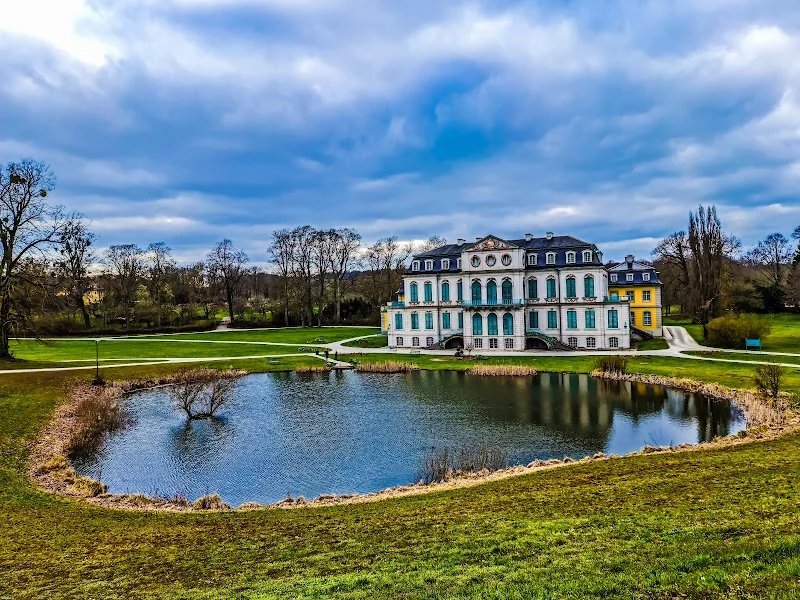
Schloss Wilhelmsthal, Rasenallee, Calden
Schloss Wilhelmsthal, Rasenallee, 34379 Calden, Germany
Schloss Wilhelmsthal | Tours & Opening Hours
Schloss Wilhelmsthal in Calden near Kassel is not an ordinary excursion destination, but a historical castle and park complex where Rococo, landscape gardening, and court culture come together in a small space. The park is freely accessible year-round, while the castle itself is typically experienced through guided tours. This combination of freely accessible park, controlled access to interiors, and an exceptionally strong culture of remembrance makes Wilhelmsthal attractive for walks, culture enthusiasts, wedding guests, and visitors interested in garden art and architecture. As a backdrop for large open-air events, a venue for weddings, and a destination for thematic tours, the site connects vibrant present-day life with a long historical depth. Therefore, those searching for Schloss Wilhelmsthal will find not only a beautiful photo opportunity but an ensemble with its own identity: lake, tower, grotto, castle, and wide meadows together create a picture that clearly differs from classical residence castles. ([heritage-kassel.de](https://www.heritage-kassel.de/de/museen-schloesser-parks/schlosspark-wilhelmsthal?utm_source=openai))
Opening Hours, Tours, and Tickets at Schloss Wilhelmsthal
For practical planning, the opening hours are the most important starting point. The castle park is freely accessible to visitors year-round, while the castle museum opens seasonally: from April to October, it is open Tuesday to Sunday from 10 AM to 5 PM, and from November to March, Friday to Sunday from 10 AM to 4 PM; it is closed on Mondays. Visiting the castle is only possible as part of a guided tour, which is offered hourly, with the last tour starting one hour before the end of opening hours. Additionally, at 2 PM, there is a thematic tour through the attic, kitchen, and church wing. According to the city of Kassel, the admission including the tour is 4 euros for adults, 3 euros reduced, and free for children up to 18 years. Thus, Schloss Wilhelmsthal is not only a historical destination but also a well-planned outing for families, couples, and groups looking to combine a manageable budget with a high-quality cultural experience. ([kassel.de](https://www.kassel.de/buerger/kunst_und_kultur/parks_und_gaerten/schlosspark-wilhelmsthal.php?utm_source=openai))
In everyday visits, a clear rhythm is evident: the park is suitable for spontaneous walks, while the castle is for planned cultural appointments. Therefore, it is worthwhile to check in advance whether one wants to attend a regular tour, a thematic tour, or a special format. The current offerings in Wilhelmsthal often showcase special rooms and perspectives that are not visible or only limited in the normal tour. For inquiries such as Schloss Wilhelmsthal interior or Schloss Wilhelmsthal tours, this is crucial because one should not experience the house like a classical museum with permanently open halls, but as a listed castle complex, whose charm lies precisely in the guided exploration. Those who plan their time well can combine the free park visit with a paid, but comparatively inexpensive tour, thus transforming a simple outing into a complete cultural morning or afternoon. ([kassel.de](https://www.kassel.de/buerger/kunst_und_kultur/parks_und_gaerten/schlosspark-wilhelmsthal.php?utm_source=openai))
For those wanting more than the standard view, the special formats regularly offered around Wilhelmsthal are beneficial. Hessen Kassel Heritage repeatedly leads visitors on tours where otherwise closed areas such as the Landgrave's apartment, castle kitchen, attics, or chapel are opened; such programs show how multifaceted the site is used and conveyed today. The published tours range from classical tours to thematic walks through the castle and park, and the spectrum fits well with inquiries about tours, interiors, and special rooms. For visitors, this means: Wilhelmsthal is not just a place to pass by, but a site that becomes truly understandable through moderated insights. Because the rooms are not open in continuous operation, it is worthwhile to check the current calendar before the visit and to take advantage of the offered dates if one desires a more intensive tour. ([heritage-kassel.de](https://www.heritage-kassel.de/fuhrung/leben-am-hof-die-landgrafin-und-ihr-gefolge/800/28182?utm_source=openai))
Access and Parking in Calden
The address of the castle is located in 34379 Calden, and the official pages refer to Google Maps, the route planner, and public transport connections for arrival. For those arriving by car, the city of Kassel mentions a parking lot at the park; there are also designated parking spaces for persons with reduced mobility. This is practical because the historical character of the site does not rely on a large, modern parking garage, but on a careful visitor traffic flow in the park's surroundings. Those arriving by public transport can also find the connection via the linked route planners of the operator pages. It is also important to note: the park itself is accessible with few barriers, while the castle remains a historical building with stairs and is therefore not fully barrier-free. For guests with reduced mobility, the park area is the easier part of the visit; for the interiors, one should prepare for stairs and the guided tour situation. This mix of historical preservation and contemporary visitor organization makes Wilhelmsthal so special: one experiences a cultural site that has not been smoothly modernized but visibly preserves its historical structure. ([kassel.de](https://www.kassel.de/buerger/kunst_und_kultur/parks_und_gaerten/schlosspark-wilhelmsthal.php?utm_source=openai))
Orientation on site also follows this principle of restrained development. Visitor information points to the parking lot at the park and the parking regulations, which fits well with a site that is to be protected as a monument and garden scenery. Those traveling with strollers, wheelchairs, or in small groups should therefore consciously plan their visit and allow enough time for the walk from the parking lot to the castle, for the park stroll, and for any tour times. The advantage is equally clear: instead of a hectic urban situation, guests are greeted with a calm, almost rural arrival with plenty of space between the parking lot, meadows, and castle structure. For the search terms Schloss Wilhelmsthal access and Schloss Wilhelmsthal parking, this is the most important message: the destination is reachable, the infrastructure is available, but the historical site remains clearly perceptible in the foreground. ([kassel.de](https://www.kassel.de/buerger/kunst_und_kultur/parks_und_gaerten/schlosspark-wilhelmsthal.php?utm_source=openai))
History, Rococo, and Architecture of the Castle Complex
Architecturally, Schloss Wilhelmsthal is particularly exciting because multiple construction phases and styles have not been played against each other but have been visibly layered. According to the city of Kassel, Landgrave Wilhelm VIII commissioned the complex as a loose three-wing structure; the overall planning goes back to François de Cuvilliés, who is among the great names of southern German Rococo architecture. In 1756, Simon Louis du Ry took over the construction management and added the forecourt guardhouses. For the interiors, Johann August Nahl created precious wall paneling and numerous stuccos, while Johann Heinrich Tischbein the Elder is represented with paintings. This resulted in no austere residence castle but a courtly ensemble in which architecture, decor, and painting interact. It is also particularly noteworthy that, according to the city of Kassel, the interior furnishings, in addition to art treasures such as the beauty gallery and collections of Chinese and Japanese porcelain, have a rich collection character. The castle also historically occupies a significant place: nearby, a major battle of the Seven Years' War took place in 1762, the traces of which are still remembered in the vicinity of the complex today. This connection between courtly representation, war history, and ongoing use gives Wilhelmsthal a depth that goes far beyond a mere excursion destination. ([kassel.de](https://www.kassel.de/buerger/sport_und_freizeit/wiederkehrende-veranstaltungen/gartenfest-kassel-schloss-wilhelmsthal.php?utm_source=openai))
The location of the site is also part of its uniqueness. The tower and the park concept make it clear that the castle does not sit atop a hill, contrary to most residence rules, but lies almost hidden in the valley floor. This unusual position contributes to the experience: from the park, the scenery unfolds slowly, and the castle facades appear less as a dominant symbol of power but as part of a carefully composed garden landscape. Together with the baroque and neoclassical pavilions, the open axis, and the lake basin, a spatial effect is created that thrives on the interplay between proximity and distant views. Visitors searching for Schloss Wilhelmsthal interior or Schloss Wilhelmsthal tower will therefore find not only individual buildings but a complete dramaturgy of sightlines, facades, and landscape. ([kassel.de](https://www.kassel.de/buerger/kunst_und_kultur/parks_und_gaerten/schlosspark-wilhelmsthal.php?utm_source=openai))
Particularly noteworthy is the interior decoration, which features carved wall paneling, stuccos, and paintings, creating a distinctly high-quality Rococo impression. According to the city of Kassel, these elements trace back to Johann August Nahl, Johann Michael Brühl, and Johann Heinrich Tischbein the Elder. At the same time, the complex remains readable as a loose three-wing structure with pavilions, thus as a courtly ensemble that does not rely on monumentality but on elegance and finely dosed perspectives. For this reason, Schloss Wilhelmsthal is often described as one of the most important Rococo ensembles in the region: it presents representation not as overwhelming but as a cultivated staging. Those wishing to connect interiors, architecture, and historical furnishings in one place will find here a rare dense mixture of architecture, painting, and courtly everyday life. ([kassel.de](https://www.kassel.de/buerger/kunst_und_kultur/parks_und_gaerten/schlosspark-wilhelmsthal.php?utm_source=openai))
Park, Water Features, and Watchtower
The Wilhelmsthal Park is more than a frame for the castle; it is the actual stage of the site. The complex is located away from the hustle and bustle of the city in the municipality of Calden and is freely accessible year-round, allowing one to experience it independently of the castle's opening hours. Visitors encounter the unusual basic idea of the complex here: the castle is not elevated but located at the lowest point of the park, making the view of the ensemble particularly exciting. Between flower beds, old tree groups, and open sightlines, a calm, almost fairy-tale atmosphere unfolds, significantly slowing down the walk. The park also serves as a backdrop for popular open-air events such as the Gartenfest Kassel and other cultural formats that connect the historical site with contemporary life. Therefore, those searching for Schloss Wilhelmsthal park or Schloss Wilhelmsthal garden festival are essentially looking for two sides of the same experience: a garden space for spontaneous walks and an event area for grand summer moments. ([heritage-kassel.de](https://www.heritage-kassel.de/de/museen-schloesser-parks/schlosspark-wilhelmsthal?utm_source=openai))
Among the most striking image motifs are the Wilhelmsthal Lake, the watchtower, and the preserved grotto with water features. The complex was begun in the Rococo style and later transformed into a landscape garden; this change makes the park particularly readable because one can still sense the different design intentions in many places. The lake, the gentle terrain edges, and the tower placed on a hill create exactly the contrast of proximity and distant views that many visitors appreciate today. The watchtower itself resembles an artificial ruin and rewards the short ascent with a beautiful view over the surroundings. Together with the water features, it creates an ensemble that is neither solely historical nor solely decorative but vividly conveys the idea of a courtly landscape park. Those who wish to stroll quietly will find their place here, as will those seeking photo motifs, a romantic backdrop, or a scenic moment in nature. ([heritage-kassel.de](https://www.heritage-kassel.de/de/museen-schloesser-parks/schlosspark-wilhelmsthal?utm_source=openai))
The relationship between nature and use is also remarkable. The park is not a closed museum landscape but a lively public space where recreation, culture, and celebration coexist. On one day, one encounters walkers and families, on another, exhibitors, music, or a festive framework. This openness is an essential part of the attraction because it does not keep the historical site at a distance but brings it back into everyday life. This is particularly important for the search terms Schloss Wilhelmsthal kassel, Schloss Wilhelmsthal park, and Schloss Wilhelmsthal garden festival: the site is located near a large city but consciously maintains a quieter, almost rural atmosphere. Visitors can therefore choose between short and long stays without the site losing its impact. ([heritage-kassel.de](https://www.heritage-kassel.de/de/museen-schloesser-parks/schlosspark-wilhelmsthal?utm_source=openai))
Weddings, Registry Office, and Events at Schloss Wilhelmsthal
For weddings, Wilhelmsthal is a particularly sought-after location because it combines representative architecture with a natural atmosphere. The municipality of Calden explicitly states that civil marriages can take place in the Schlosskapelle Wilhelmsthal; appointments are assigned by the registry office of Calden. Hessen Kassel Heritage complements this offer with historical rental spaces for church and civil ceremonies, mentioning both the chapel of Schloss Wilhelmsthal and outdoor areas in the park, such as under the chestnuts. This makes the site suitable not only for classic civil celebrations but also for more individualized formats with a familial or festive character. Therefore, those searching for Schloss Wilhelmsthal wedding or Schloss Wilhelmsthal registry office will find a real, recognized, and organizationally clearly assigned framework instead of mere event romance. ([calden.de](https://www.calden.de/rathaus/standesamt/?utm_source=openai))
Wilhelmsthal also plays an important role in the event calendar. The Gartenfest Kassel regularly uses the castle and park as an impressive backdrop, combining plant markets, handicrafts, and entertainment with music, walking acts, comedy, and theater. The city of Kassel describes the ensemble as having a particularly strong Rococo ambiance, and that is precisely why the site functions so well: it provides a historically credible stage without reducing itself to mere backdrop effects. Additionally, the calendar of Hessen Kassel Heritage repeatedly features special tours and thematic walks that guide visitors through otherwise closed areas or show the park from new perspectives. For practical purposes, this means: those who want to experience Wilhelmsthal not just photograph it should not only search for opening hours but also for tours, special dates, and festival dates. Then it becomes evident how versatile the site is between quiet monument landscape and vibrant cultural platform. ([kassel.de](https://www.kassel.de/buerger/sport_und_freizeit/wiederkehrende-veranstaltungen/gartenfest-kassel-schloss-wilhelmsthal.php?utm_source=openai))
Sources:
Mehr anzeigenWeniger anzeigen
Schloss Wilhelmsthal | Tours & Opening Hours
Schloss Wilhelmsthal in Calden near Kassel is not an ordinary excursion destination, but a historical castle and park complex where Rococo, landscape gardening, and court culture come together in a small space. The park is freely accessible year-round, while the castle itself is typically experienced through guided tours. This combination of freely accessible park, controlled access to interiors, and an exceptionally strong culture of remembrance makes Wilhelmsthal attractive for walks, culture enthusiasts, wedding guests, and visitors interested in garden art and architecture. As a backdrop for large open-air events, a venue for weddings, and a destination for thematic tours, the site connects vibrant present-day life with a long historical depth. Therefore, those searching for Schloss Wilhelmsthal will find not only a beautiful photo opportunity but an ensemble with its own identity: lake, tower, grotto, castle, and wide meadows together create a picture that clearly differs from classical residence castles. ([heritage-kassel.de](https://www.heritage-kassel.de/de/museen-schloesser-parks/schlosspark-wilhelmsthal?utm_source=openai))
Opening Hours, Tours, and Tickets at Schloss Wilhelmsthal
For practical planning, the opening hours are the most important starting point. The castle park is freely accessible to visitors year-round, while the castle museum opens seasonally: from April to October, it is open Tuesday to Sunday from 10 AM to 5 PM, and from November to March, Friday to Sunday from 10 AM to 4 PM; it is closed on Mondays. Visiting the castle is only possible as part of a guided tour, which is offered hourly, with the last tour starting one hour before the end of opening hours. Additionally, at 2 PM, there is a thematic tour through the attic, kitchen, and church wing. According to the city of Kassel, the admission including the tour is 4 euros for adults, 3 euros reduced, and free for children up to 18 years. Thus, Schloss Wilhelmsthal is not only a historical destination but also a well-planned outing for families, couples, and groups looking to combine a manageable budget with a high-quality cultural experience. ([kassel.de](https://www.kassel.de/buerger/kunst_und_kultur/parks_und_gaerten/schlosspark-wilhelmsthal.php?utm_source=openai))
In everyday visits, a clear rhythm is evident: the park is suitable for spontaneous walks, while the castle is for planned cultural appointments. Therefore, it is worthwhile to check in advance whether one wants to attend a regular tour, a thematic tour, or a special format. The current offerings in Wilhelmsthal often showcase special rooms and perspectives that are not visible or only limited in the normal tour. For inquiries such as Schloss Wilhelmsthal interior or Schloss Wilhelmsthal tours, this is crucial because one should not experience the house like a classical museum with permanently open halls, but as a listed castle complex, whose charm lies precisely in the guided exploration. Those who plan their time well can combine the free park visit with a paid, but comparatively inexpensive tour, thus transforming a simple outing into a complete cultural morning or afternoon. ([kassel.de](https://www.kassel.de/buerger/kunst_und_kultur/parks_und_gaerten/schlosspark-wilhelmsthal.php?utm_source=openai))
For those wanting more than the standard view, the special formats regularly offered around Wilhelmsthal are beneficial. Hessen Kassel Heritage repeatedly leads visitors on tours where otherwise closed areas such as the Landgrave's apartment, castle kitchen, attics, or chapel are opened; such programs show how multifaceted the site is used and conveyed today. The published tours range from classical tours to thematic walks through the castle and park, and the spectrum fits well with inquiries about tours, interiors, and special rooms. For visitors, this means: Wilhelmsthal is not just a place to pass by, but a site that becomes truly understandable through moderated insights. Because the rooms are not open in continuous operation, it is worthwhile to check the current calendar before the visit and to take advantage of the offered dates if one desires a more intensive tour. ([heritage-kassel.de](https://www.heritage-kassel.de/fuhrung/leben-am-hof-die-landgrafin-und-ihr-gefolge/800/28182?utm_source=openai))
Access and Parking in Calden
The address of the castle is located in 34379 Calden, and the official pages refer to Google Maps, the route planner, and public transport connections for arrival. For those arriving by car, the city of Kassel mentions a parking lot at the park; there are also designated parking spaces for persons with reduced mobility. This is practical because the historical character of the site does not rely on a large, modern parking garage, but on a careful visitor traffic flow in the park's surroundings. Those arriving by public transport can also find the connection via the linked route planners of the operator pages. It is also important to note: the park itself is accessible with few barriers, while the castle remains a historical building with stairs and is therefore not fully barrier-free. For guests with reduced mobility, the park area is the easier part of the visit; for the interiors, one should prepare for stairs and the guided tour situation. This mix of historical preservation and contemporary visitor organization makes Wilhelmsthal so special: one experiences a cultural site that has not been smoothly modernized but visibly preserves its historical structure. ([kassel.de](https://www.kassel.de/buerger/kunst_und_kultur/parks_und_gaerten/schlosspark-wilhelmsthal.php?utm_source=openai))
Orientation on site also follows this principle of restrained development. Visitor information points to the parking lot at the park and the parking regulations, which fits well with a site that is to be protected as a monument and garden scenery. Those traveling with strollers, wheelchairs, or in small groups should therefore consciously plan their visit and allow enough time for the walk from the parking lot to the castle, for the park stroll, and for any tour times. The advantage is equally clear: instead of a hectic urban situation, guests are greeted with a calm, almost rural arrival with plenty of space between the parking lot, meadows, and castle structure. For the search terms Schloss Wilhelmsthal access and Schloss Wilhelmsthal parking, this is the most important message: the destination is reachable, the infrastructure is available, but the historical site remains clearly perceptible in the foreground. ([kassel.de](https://www.kassel.de/buerger/kunst_und_kultur/parks_und_gaerten/schlosspark-wilhelmsthal.php?utm_source=openai))
History, Rococo, and Architecture of the Castle Complex
Architecturally, Schloss Wilhelmsthal is particularly exciting because multiple construction phases and styles have not been played against each other but have been visibly layered. According to the city of Kassel, Landgrave Wilhelm VIII commissioned the complex as a loose three-wing structure; the overall planning goes back to François de Cuvilliés, who is among the great names of southern German Rococo architecture. In 1756, Simon Louis du Ry took over the construction management and added the forecourt guardhouses. For the interiors, Johann August Nahl created precious wall paneling and numerous stuccos, while Johann Heinrich Tischbein the Elder is represented with paintings. This resulted in no austere residence castle but a courtly ensemble in which architecture, decor, and painting interact. It is also particularly noteworthy that, according to the city of Kassel, the interior furnishings, in addition to art treasures such as the beauty gallery and collections of Chinese and Japanese porcelain, have a rich collection character. The castle also historically occupies a significant place: nearby, a major battle of the Seven Years' War took place in 1762, the traces of which are still remembered in the vicinity of the complex today. This connection between courtly representation, war history, and ongoing use gives Wilhelmsthal a depth that goes far beyond a mere excursion destination. ([kassel.de](https://www.kassel.de/buerger/sport_und_freizeit/wiederkehrende-veranstaltungen/gartenfest-kassel-schloss-wilhelmsthal.php?utm_source=openai))
The location of the site is also part of its uniqueness. The tower and the park concept make it clear that the castle does not sit atop a hill, contrary to most residence rules, but lies almost hidden in the valley floor. This unusual position contributes to the experience: from the park, the scenery unfolds slowly, and the castle facades appear less as a dominant symbol of power but as part of a carefully composed garden landscape. Together with the baroque and neoclassical pavilions, the open axis, and the lake basin, a spatial effect is created that thrives on the interplay between proximity and distant views. Visitors searching for Schloss Wilhelmsthal interior or Schloss Wilhelmsthal tower will therefore find not only individual buildings but a complete dramaturgy of sightlines, facades, and landscape. ([kassel.de](https://www.kassel.de/buerger/kunst_und_kultur/parks_und_gaerten/schlosspark-wilhelmsthal.php?utm_source=openai))
Particularly noteworthy is the interior decoration, which features carved wall paneling, stuccos, and paintings, creating a distinctly high-quality Rococo impression. According to the city of Kassel, these elements trace back to Johann August Nahl, Johann Michael Brühl, and Johann Heinrich Tischbein the Elder. At the same time, the complex remains readable as a loose three-wing structure with pavilions, thus as a courtly ensemble that does not rely on monumentality but on elegance and finely dosed perspectives. For this reason, Schloss Wilhelmsthal is often described as one of the most important Rococo ensembles in the region: it presents representation not as overwhelming but as a cultivated staging. Those wishing to connect interiors, architecture, and historical furnishings in one place will find here a rare dense mixture of architecture, painting, and courtly everyday life. ([kassel.de](https://www.kassel.de/buerger/kunst_und_kultur/parks_und_gaerten/schlosspark-wilhelmsthal.php?utm_source=openai))
Park, Water Features, and Watchtower
The Wilhelmsthal Park is more than a frame for the castle; it is the actual stage of the site. The complex is located away from the hustle and bustle of the city in the municipality of Calden and is freely accessible year-round, allowing one to experience it independently of the castle's opening hours. Visitors encounter the unusual basic idea of the complex here: the castle is not elevated but located at the lowest point of the park, making the view of the ensemble particularly exciting. Between flower beds, old tree groups, and open sightlines, a calm, almost fairy-tale atmosphere unfolds, significantly slowing down the walk. The park also serves as a backdrop for popular open-air events such as the Gartenfest Kassel and other cultural formats that connect the historical site with contemporary life. Therefore, those searching for Schloss Wilhelmsthal park or Schloss Wilhelmsthal garden festival are essentially looking for two sides of the same experience: a garden space for spontaneous walks and an event area for grand summer moments. ([heritage-kassel.de](https://www.heritage-kassel.de/de/museen-schloesser-parks/schlosspark-wilhelmsthal?utm_source=openai))
Among the most striking image motifs are the Wilhelmsthal Lake, the watchtower, and the preserved grotto with water features. The complex was begun in the Rococo style and later transformed into a landscape garden; this change makes the park particularly readable because one can still sense the different design intentions in many places. The lake, the gentle terrain edges, and the tower placed on a hill create exactly the contrast of proximity and distant views that many visitors appreciate today. The watchtower itself resembles an artificial ruin and rewards the short ascent with a beautiful view over the surroundings. Together with the water features, it creates an ensemble that is neither solely historical nor solely decorative but vividly conveys the idea of a courtly landscape park. Those who wish to stroll quietly will find their place here, as will those seeking photo motifs, a romantic backdrop, or a scenic moment in nature. ([heritage-kassel.de](https://www.heritage-kassel.de/de/museen-schloesser-parks/schlosspark-wilhelmsthal?utm_source=openai))
The relationship between nature and use is also remarkable. The park is not a closed museum landscape but a lively public space where recreation, culture, and celebration coexist. On one day, one encounters walkers and families, on another, exhibitors, music, or a festive framework. This openness is an essential part of the attraction because it does not keep the historical site at a distance but brings it back into everyday life. This is particularly important for the search terms Schloss Wilhelmsthal kassel, Schloss Wilhelmsthal park, and Schloss Wilhelmsthal garden festival: the site is located near a large city but consciously maintains a quieter, almost rural atmosphere. Visitors can therefore choose between short and long stays without the site losing its impact. ([heritage-kassel.de](https://www.heritage-kassel.de/de/museen-schloesser-parks/schlosspark-wilhelmsthal?utm_source=openai))
Weddings, Registry Office, and Events at Schloss Wilhelmsthal
For weddings, Wilhelmsthal is a particularly sought-after location because it combines representative architecture with a natural atmosphere. The municipality of Calden explicitly states that civil marriages can take place in the Schlosskapelle Wilhelmsthal; appointments are assigned by the registry office of Calden. Hessen Kassel Heritage complements this offer with historical rental spaces for church and civil ceremonies, mentioning both the chapel of Schloss Wilhelmsthal and outdoor areas in the park, such as under the chestnuts. This makes the site suitable not only for classic civil celebrations but also for more individualized formats with a familial or festive character. Therefore, those searching for Schloss Wilhelmsthal wedding or Schloss Wilhelmsthal registry office will find a real, recognized, and organizationally clearly assigned framework instead of mere event romance. ([calden.de](https://www.calden.de/rathaus/standesamt/?utm_source=openai))
Wilhelmsthal also plays an important role in the event calendar. The Gartenfest Kassel regularly uses the castle and park as an impressive backdrop, combining plant markets, handicrafts, and entertainment with music, walking acts, comedy, and theater. The city of Kassel describes the ensemble as having a particularly strong Rococo ambiance, and that is precisely why the site functions so well: it provides a historically credible stage without reducing itself to mere backdrop effects. Additionally, the calendar of Hessen Kassel Heritage repeatedly features special tours and thematic walks that guide visitors through otherwise closed areas or show the park from new perspectives. For practical purposes, this means: those who want to experience Wilhelmsthal not just photograph it should not only search for opening hours but also for tours, special dates, and festival dates. Then it becomes evident how versatile the site is between quiet monument landscape and vibrant cultural platform. ([kassel.de](https://www.kassel.de/buerger/sport_und_freizeit/wiederkehrende-veranstaltungen/gartenfest-kassel-schloss-wilhelmsthal.php?utm_source=openai))
Sources:
Schloss Wilhelmsthal | Tours & Opening Hours
Schloss Wilhelmsthal in Calden near Kassel is not an ordinary excursion destination, but a historical castle and park complex where Rococo, landscape gardening, and court culture come together in a small space. The park is freely accessible year-round, while the castle itself is typically experienced through guided tours. This combination of freely accessible park, controlled access to interiors, and an exceptionally strong culture of remembrance makes Wilhelmsthal attractive for walks, culture enthusiasts, wedding guests, and visitors interested in garden art and architecture. As a backdrop for large open-air events, a venue for weddings, and a destination for thematic tours, the site connects vibrant present-day life with a long historical depth. Therefore, those searching for Schloss Wilhelmsthal will find not only a beautiful photo opportunity but an ensemble with its own identity: lake, tower, grotto, castle, and wide meadows together create a picture that clearly differs from classical residence castles. ([heritage-kassel.de](https://www.heritage-kassel.de/de/museen-schloesser-parks/schlosspark-wilhelmsthal?utm_source=openai))
Opening Hours, Tours, and Tickets at Schloss Wilhelmsthal
For practical planning, the opening hours are the most important starting point. The castle park is freely accessible to visitors year-round, while the castle museum opens seasonally: from April to October, it is open Tuesday to Sunday from 10 AM to 5 PM, and from November to March, Friday to Sunday from 10 AM to 4 PM; it is closed on Mondays. Visiting the castle is only possible as part of a guided tour, which is offered hourly, with the last tour starting one hour before the end of opening hours. Additionally, at 2 PM, there is a thematic tour through the attic, kitchen, and church wing. According to the city of Kassel, the admission including the tour is 4 euros for adults, 3 euros reduced, and free for children up to 18 years. Thus, Schloss Wilhelmsthal is not only a historical destination but also a well-planned outing for families, couples, and groups looking to combine a manageable budget with a high-quality cultural experience. ([kassel.de](https://www.kassel.de/buerger/kunst_und_kultur/parks_und_gaerten/schlosspark-wilhelmsthal.php?utm_source=openai))
In everyday visits, a clear rhythm is evident: the park is suitable for spontaneous walks, while the castle is for planned cultural appointments. Therefore, it is worthwhile to check in advance whether one wants to attend a regular tour, a thematic tour, or a special format. The current offerings in Wilhelmsthal often showcase special rooms and perspectives that are not visible or only limited in the normal tour. For inquiries such as Schloss Wilhelmsthal interior or Schloss Wilhelmsthal tours, this is crucial because one should not experience the house like a classical museum with permanently open halls, but as a listed castle complex, whose charm lies precisely in the guided exploration. Those who plan their time well can combine the free park visit with a paid, but comparatively inexpensive tour, thus transforming a simple outing into a complete cultural morning or afternoon. ([kassel.de](https://www.kassel.de/buerger/kunst_und_kultur/parks_und_gaerten/schlosspark-wilhelmsthal.php?utm_source=openai))
For those wanting more than the standard view, the special formats regularly offered around Wilhelmsthal are beneficial. Hessen Kassel Heritage repeatedly leads visitors on tours where otherwise closed areas such as the Landgrave's apartment, castle kitchen, attics, or chapel are opened; such programs show how multifaceted the site is used and conveyed today. The published tours range from classical tours to thematic walks through the castle and park, and the spectrum fits well with inquiries about tours, interiors, and special rooms. For visitors, this means: Wilhelmsthal is not just a place to pass by, but a site that becomes truly understandable through moderated insights. Because the rooms are not open in continuous operation, it is worthwhile to check the current calendar before the visit and to take advantage of the offered dates if one desires a more intensive tour. ([heritage-kassel.de](https://www.heritage-kassel.de/fuhrung/leben-am-hof-die-landgrafin-und-ihr-gefolge/800/28182?utm_source=openai))
Access and Parking in Calden
The address of the castle is located in 34379 Calden, and the official pages refer to Google Maps, the route planner, and public transport connections for arrival. For those arriving by car, the city of Kassel mentions a parking lot at the park; there are also designated parking spaces for persons with reduced mobility. This is practical because the historical character of the site does not rely on a large, modern parking garage, but on a careful visitor traffic flow in the park's surroundings. Those arriving by public transport can also find the connection via the linked route planners of the operator pages. It is also important to note: the park itself is accessible with few barriers, while the castle remains a historical building with stairs and is therefore not fully barrier-free. For guests with reduced mobility, the park area is the easier part of the visit; for the interiors, one should prepare for stairs and the guided tour situation. This mix of historical preservation and contemporary visitor organization makes Wilhelmsthal so special: one experiences a cultural site that has not been smoothly modernized but visibly preserves its historical structure. ([kassel.de](https://www.kassel.de/buerger/kunst_und_kultur/parks_und_gaerten/schlosspark-wilhelmsthal.php?utm_source=openai))
Orientation on site also follows this principle of restrained development. Visitor information points to the parking lot at the park and the parking regulations, which fits well with a site that is to be protected as a monument and garden scenery. Those traveling with strollers, wheelchairs, or in small groups should therefore consciously plan their visit and allow enough time for the walk from the parking lot to the castle, for the park stroll, and for any tour times. The advantage is equally clear: instead of a hectic urban situation, guests are greeted with a calm, almost rural arrival with plenty of space between the parking lot, meadows, and castle structure. For the search terms Schloss Wilhelmsthal access and Schloss Wilhelmsthal parking, this is the most important message: the destination is reachable, the infrastructure is available, but the historical site remains clearly perceptible in the foreground. ([kassel.de](https://www.kassel.de/buerger/kunst_und_kultur/parks_und_gaerten/schlosspark-wilhelmsthal.php?utm_source=openai))
History, Rococo, and Architecture of the Castle Complex
Architecturally, Schloss Wilhelmsthal is particularly exciting because multiple construction phases and styles have not been played against each other but have been visibly layered. According to the city of Kassel, Landgrave Wilhelm VIII commissioned the complex as a loose three-wing structure; the overall planning goes back to François de Cuvilliés, who is among the great names of southern German Rococo architecture. In 1756, Simon Louis du Ry took over the construction management and added the forecourt guardhouses. For the interiors, Johann August Nahl created precious wall paneling and numerous stuccos, while Johann Heinrich Tischbein the Elder is represented with paintings. This resulted in no austere residence castle but a courtly ensemble in which architecture, decor, and painting interact. It is also particularly noteworthy that, according to the city of Kassel, the interior furnishings, in addition to art treasures such as the beauty gallery and collections of Chinese and Japanese porcelain, have a rich collection character. The castle also historically occupies a significant place: nearby, a major battle of the Seven Years' War took place in 1762, the traces of which are still remembered in the vicinity of the complex today. This connection between courtly representation, war history, and ongoing use gives Wilhelmsthal a depth that goes far beyond a mere excursion destination. ([kassel.de](https://www.kassel.de/buerger/sport_und_freizeit/wiederkehrende-veranstaltungen/gartenfest-kassel-schloss-wilhelmsthal.php?utm_source=openai))
The location of the site is also part of its uniqueness. The tower and the park concept make it clear that the castle does not sit atop a hill, contrary to most residence rules, but lies almost hidden in the valley floor. This unusual position contributes to the experience: from the park, the scenery unfolds slowly, and the castle facades appear less as a dominant symbol of power but as part of a carefully composed garden landscape. Together with the baroque and neoclassical pavilions, the open axis, and the lake basin, a spatial effect is created that thrives on the interplay between proximity and distant views. Visitors searching for Schloss Wilhelmsthal interior or Schloss Wilhelmsthal tower will therefore find not only individual buildings but a complete dramaturgy of sightlines, facades, and landscape. ([kassel.de](https://www.kassel.de/buerger/kunst_und_kultur/parks_und_gaerten/schlosspark-wilhelmsthal.php?utm_source=openai))
Particularly noteworthy is the interior decoration, which features carved wall paneling, stuccos, and paintings, creating a distinctly high-quality Rococo impression. According to the city of Kassel, these elements trace back to Johann August Nahl, Johann Michael Brühl, and Johann Heinrich Tischbein the Elder. At the same time, the complex remains readable as a loose three-wing structure with pavilions, thus as a courtly ensemble that does not rely on monumentality but on elegance and finely dosed perspectives. For this reason, Schloss Wilhelmsthal is often described as one of the most important Rococo ensembles in the region: it presents representation not as overwhelming but as a cultivated staging. Those wishing to connect interiors, architecture, and historical furnishings in one place will find here a rare dense mixture of architecture, painting, and courtly everyday life. ([kassel.de](https://www.kassel.de/buerger/kunst_und_kultur/parks_und_gaerten/schlosspark-wilhelmsthal.php?utm_source=openai))
Park, Water Features, and Watchtower
The Wilhelmsthal Park is more than a frame for the castle; it is the actual stage of the site. The complex is located away from the hustle and bustle of the city in the municipality of Calden and is freely accessible year-round, allowing one to experience it independently of the castle's opening hours. Visitors encounter the unusual basic idea of the complex here: the castle is not elevated but located at the lowest point of the park, making the view of the ensemble particularly exciting. Between flower beds, old tree groups, and open sightlines, a calm, almost fairy-tale atmosphere unfolds, significantly slowing down the walk. The park also serves as a backdrop for popular open-air events such as the Gartenfest Kassel and other cultural formats that connect the historical site with contemporary life. Therefore, those searching for Schloss Wilhelmsthal park or Schloss Wilhelmsthal garden festival are essentially looking for two sides of the same experience: a garden space for spontaneous walks and an event area for grand summer moments. ([heritage-kassel.de](https://www.heritage-kassel.de/de/museen-schloesser-parks/schlosspark-wilhelmsthal?utm_source=openai))
Among the most striking image motifs are the Wilhelmsthal Lake, the watchtower, and the preserved grotto with water features. The complex was begun in the Rococo style and later transformed into a landscape garden; this change makes the park particularly readable because one can still sense the different design intentions in many places. The lake, the gentle terrain edges, and the tower placed on a hill create exactly the contrast of proximity and distant views that many visitors appreciate today. The watchtower itself resembles an artificial ruin and rewards the short ascent with a beautiful view over the surroundings. Together with the water features, it creates an ensemble that is neither solely historical nor solely decorative but vividly conveys the idea of a courtly landscape park. Those who wish to stroll quietly will find their place here, as will those seeking photo motifs, a romantic backdrop, or a scenic moment in nature. ([heritage-kassel.de](https://www.heritage-kassel.de/de/museen-schloesser-parks/schlosspark-wilhelmsthal?utm_source=openai))
The relationship between nature and use is also remarkable. The park is not a closed museum landscape but a lively public space where recreation, culture, and celebration coexist. On one day, one encounters walkers and families, on another, exhibitors, music, or a festive framework. This openness is an essential part of the attraction because it does not keep the historical site at a distance but brings it back into everyday life. This is particularly important for the search terms Schloss Wilhelmsthal kassel, Schloss Wilhelmsthal park, and Schloss Wilhelmsthal garden festival: the site is located near a large city but consciously maintains a quieter, almost rural atmosphere. Visitors can therefore choose between short and long stays without the site losing its impact. ([heritage-kassel.de](https://www.heritage-kassel.de/de/museen-schloesser-parks/schlosspark-wilhelmsthal?utm_source=openai))
Weddings, Registry Office, and Events at Schloss Wilhelmsthal
For weddings, Wilhelmsthal is a particularly sought-after location because it combines representative architecture with a natural atmosphere. The municipality of Calden explicitly states that civil marriages can take place in the Schlosskapelle Wilhelmsthal; appointments are assigned by the registry office of Calden. Hessen Kassel Heritage complements this offer with historical rental spaces for church and civil ceremonies, mentioning both the chapel of Schloss Wilhelmsthal and outdoor areas in the park, such as under the chestnuts. This makes the site suitable not only for classic civil celebrations but also for more individualized formats with a familial or festive character. Therefore, those searching for Schloss Wilhelmsthal wedding or Schloss Wilhelmsthal registry office will find a real, recognized, and organizationally clearly assigned framework instead of mere event romance. ([calden.de](https://www.calden.de/rathaus/standesamt/?utm_source=openai))
Wilhelmsthal also plays an important role in the event calendar. The Gartenfest Kassel regularly uses the castle and park as an impressive backdrop, combining plant markets, handicrafts, and entertainment with music, walking acts, comedy, and theater. The city of Kassel describes the ensemble as having a particularly strong Rococo ambiance, and that is precisely why the site functions so well: it provides a historically credible stage without reducing itself to mere backdrop effects. Additionally, the calendar of Hessen Kassel Heritage repeatedly features special tours and thematic walks that guide visitors through otherwise closed areas or show the park from new perspectives. For practical purposes, this means: those who want to experience Wilhelmsthal not just photograph it should not only search for opening hours but also for tours, special dates, and festival dates. Then it becomes evident how versatile the site is between quiet monument landscape and vibrant cultural platform. ([kassel.de](https://www.kassel.de/buerger/sport_und_freizeit/wiederkehrende-veranstaltungen/gartenfest-kassel-schloss-wilhelmsthal.php?utm_source=openai))
Sources:
Upcoming Events
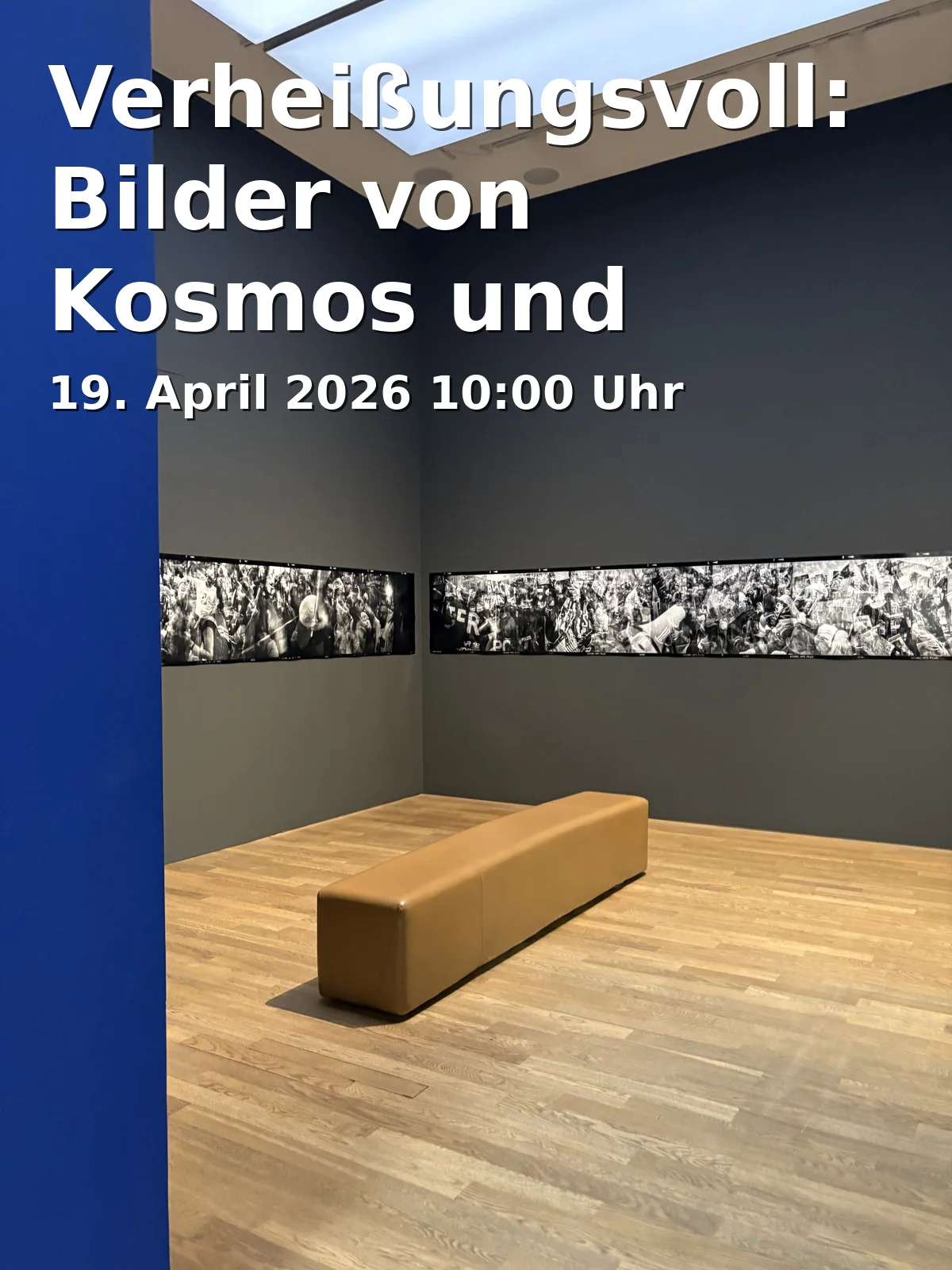
Promising: Images of Cosmos and Hope
A rare art experience at Schloss Wilhelmshöhe: Promising connects painting, cosmos, and hope into a quiet, insightful exhibition. 19.04.–06.09.2026, 8 euros. #Kassel #Art
Guided Tour
Appointment on 21.06.2026Experience Schloss Wilhelmsthal on an exciting hour-long tour through the castle rooms.
Frequently Asked Questions
Reviews
René Micallef
11. November 2023
Wonderful Rococo gem near Kassel, considered the second most elegant Rococo summer palace in Germany after the Sanssouci in Potsdam. I was glad it was open in November (though we could only visit the main building and the gardens). Every major room we saw was magnificently decorated... even some of the concealed passageways and rooms for children or butler/ladies in waiting were pretty. Tickets were very affordable and included a guided tour (in German... well, I visited with a German friend and understood most of the explanation, so didn't ask about the possibility of an English tour or translation...). The guide was extremely knowledgeable, yet humble and honest enough to answer a visitor who was especially interested in a specific furnishing: "I don't know the cabinet maker or manufactury that built that particular piece of furniture or decoration, but will inquire for you or check the inventory if you wish". I find that kind of attitude wonderful.
Shuaib Froogh
20. November 2025
It was an amazing place and especially the weather on the day that I visited.
Sebastian
7. August 2022
Very nice for taking a beautiful walk!
Mia McDonald
17. November 2023
Had a great tour of the interior from a very knowledgeable tour guide, really enjoyed walking around the property.
Dusan Milanov
15. October 2016
Very nice place, with beautiful garden and small pond. Really great for relaxed visit.