
Kassel
Ständepl. 16, 34117 Kassel, Deutschland
Kassel City Museum | Opening Hours & Special Exhibition
The Kassel City Museum is much more than a classic local museum: It tells the story of a city that has continually reinvented itself after destruction, change, and reconstruction. The building at Ständeplatz 16 arose from the desire of the Kassel population for an exhibition space for the city's history, was decided in 1978, organizationally prepared in 1979 with Karl-Hermann Wegner, and finally became the permanent home of the museum in 1986. The historic building, originally constructed from 1869 to 1871 according to plans by Albert Scholtz, today combines historical substance with modern museum architecture. Between 2010 and 2016, it was extensively renovated and expanded with the History Tower; since its reopening, the building has offered not only a permanent exhibition but also a library, KasselKino, KasselWerkstatt, event space, and a foyer with a museum shop. This very mix of memory, education, and encounter makes the City Museum a place where not only history is presented but also the present is made understandable. ([kassel.de](https://www.kassel.de/einrichtungen/stadtmuseum/museum/inhaltsseiten/geschichte-des-museums.php?utm_source=openai))
Opening Hours, Admission Prices, and Visit Planning at the Kassel City Museum
Those planning a visit will find clear and easily memorable times. The museum is closed on Mondays, open on Tuesdays from 10 AM to 5 PM, Wednesdays from 10 AM to 8 PM, and from Thursday to Sunday from 10 AM to 5 PM. On Christmas Eve and New Year's Eve, the building remains closed; on all other holidays, it is open from 10 AM to 5 PM, even if a holiday falls on a Monday. This arrangement is particularly convenient for those who want to combine their outing with an extended weekend or a day off. Also important for planning: For groups of ten or more, registration is recommended to ensure that tours, visits, and processes can be well prepared. This is especially helpful for school classes, clubs, and family groups who want to experience the visit not just spontaneously but with deeper content. ([kassel.de](https://www.kassel.de/einrichtungen/stadtmuseum/))
The admission prices are also transparent and family-friendly. Adults pay 4 euros, and reduced admission costs 3 euros. Children and teenagers up to 18 years have free admission, as do certain members and ticket holders, including friends of the Kassel City Museum, ICOM, Museumsbund, Kulturticket, MeineCard+, and AuszeitCard+. For groups of ten or more, a group price of 3 euros per person applies, and severely disabled persons pay 2 euros per person; for groups of four or more, this price also applies to accompanying persons of severely disabled visitors. Those traveling with children or looking for a spontaneous cultural stop in the city center can plan their museum visit particularly easily. This makes the museum attractive not only for adults but also for families, school groups, and anyone who wants to experience city history without a high admission barrier. ([kassel.de](https://www.kassel.de/einrichtungen/stadtmuseum/))
Additionally, the connection to public transport is practical. The stop Wilhelmsstraße/Stadtmuseum is served by Tram 7, RT 1, RT 4, RT 5, and Bus 500; at the Ständeplatz stop, Tram 4, 7, and 8 stop. For visitors who do not want to search for parking in the center, this is a clear advantage, as the museum is directly embedded in the city center. The building also provides free Wi-Fi; the network is called FreeWiFi - Stadt Kassel and works without a password. This allows digital offers, research, or a spontaneous look at the event calendar to be utilized right on site. Together with the barrier-free access and the available restrooms, a visit framework is created that is designed for quick orientation and comfortable use. ([kassel.de](https://www.kassel.de/einrichtungen/stadtmuseum/besuch/index.php))
Kids' Stuff for Everyone! How Playing Connects Us - the Current Special Exhibition
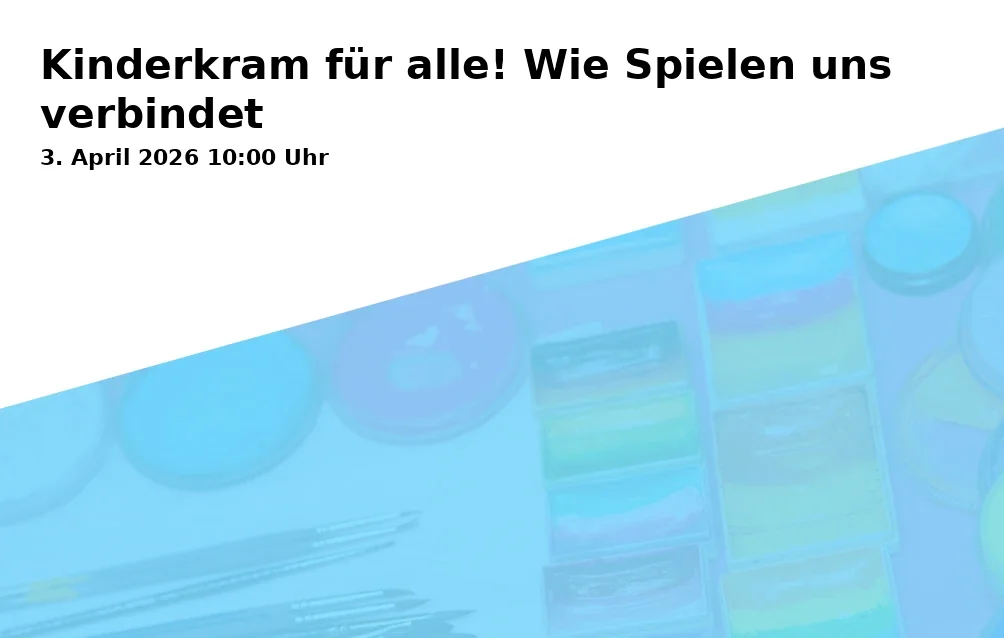
The current special exhibition bears the fitting title Kids' Stuff for Everyone! How Playing Connects Us and can be seen until September 6, 2026. Thematically, it revolves around play as a cultural, social, and personal fundamental theme: Playing fosters imagination, strengthens togetherness, and connects generations, cultures, and ways of life. The exhibition shows that toys and games are much more than mere entertainment. They tell of technological developments, social changes, and personal memories. From handmade toys to sophisticated strategy games to digital games, the presentation spans a bridge from the past to the present. For families, children, and anyone interested in play culture, this is an exhibition that works with curiosity, humor, and many points of connection. ([kassel.de](https://www.kassel.de/einrichtungen/stadtmuseum/ausstellungen/sonderausstellung.php))
Particularly exciting is the form of mediation. The special exhibition invites not only to look but explicitly to participate. Visitors can create their own play worlds from building blocks, puzzle through the history of playing, try out computer games, or think about what rules a good game needs. This is complemented by mementos and favorite games of other people, which open surprising, touching, and sometimes humorous perspectives. Exactly this is the charm of Kids' Stuff: The exhibition does not stop at a historical retrospective but asks why play is still so important today. It appeals to children without excluding adults, and it appeals to adults without losing the childlike perspective. This is a clever and contemporary form of thematic mediation for a city museum. ([kassel.de](https://www.kassel.de/einrichtungen/stadtmuseum/ausstellungen/sonderausstellung.php))
Around the special exhibition, there is also a supporting program that significantly deepens the visit. The museum's event calendar currently includes workshops, tours, and lectures, including a creative offer for building one's own game for children aged six to ten, as well as guided tours in the exhibition. This shows that Kids' Stuff is not only intended as an exhibition space but as a lively occasion for exchange and shared experiences. Especially with an exhibition on the theme of play, this approach fits particularly well: Those who try out, build, puzzle, or discuss understand the content more immediately than through mere text panels. For families, school classes, and children's birthdays, an offer is created that is entertaining yet substantial. ([kassel.de](https://www.kassel.de/einrichtungen/stadtmuseum/besuch/kalender.php))
Permanent Exhibition and Kassel's Over 1,100-Year History
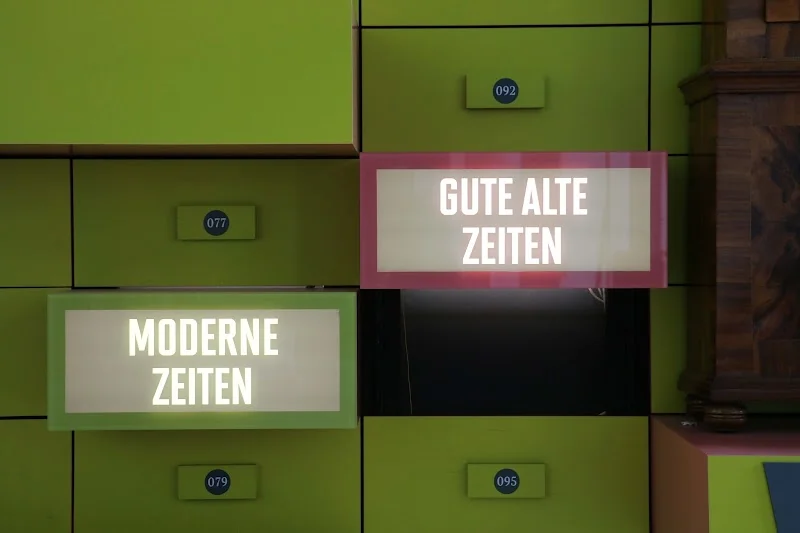
The heart of the building is the permanent exhibition, which tells the history of Kassel in a vivid way. The tour leads through more than 1,100 years of city history and begins with the first mention of Kassel in 913. Even the entrance is exceptionally staged: In the KasselFoyer, visitors encounter the historical memory of the city in the form of objects that, in a sense, introduce themselves. This idea of the memory storage gives the museum its own voice and makes it clear that city history consists not only of data and dates but also of things, memories, and perspectives. About 700 objects are integrated into the presentation. These include paintings, sculptures, city and house models, everyday objects, and media elements that make both well-known and unknown sides of Kassel visible. Particularly appealing is the oldest surviving city map from 1547, which is brought to life media-wise and vividly illustrates the development of the city. ([kassel.de](https://www.kassel.de/einrichtungen/stadtmuseum/ausstellungen/dauerausstellung.php))
Thematically, the permanent exhibition leads from medieval Kassel through the city's expansion in the 18th century into political modernity. A focus is on the 19th century with the struggle for civil rights and participation, the constitutional struggle, and the Prussian annexation. Equally important is the representation of Jewish life in Kassel, which is made visible with impressive objects and historical references. The exhibition also showcases influential personalities of the city's society and documents political and social developments with an oversized wall newspaper. Thus, a smooth city portrait does not emerge, but a multifaceted image of a community that has repeatedly struggled for participation, identity, and future. This is a strong thematic core for all those looking for city history, exhibitions, history, or a museum with a serious historical profile. ([kassel.de](https://www.kassel.de/einrichtungen/stadtmuseum/ausstellungen/dauerausstellung.php))
The further narrative leads into the first third of the 20th century, during the time of World War I, the Weimar Republic, the New Building movement, and the Nazi persecution. Here, the dark history of the city is also not omitted but clearly named: Anti-Semitism, disenfranchisement, and the consequences for Jews are just as much part of the narrative as the almost complete destruction of Kassel in World War II. A model of the war-destroyed city in May 1945 makes the dimension visible before the exhibition addresses the reconstruction, the economic miracle years, the fall of the Berlin Wall in 1989, and the reunified Germany in 1990. Kassel thus appears as a city between loss and new beginnings, between memory and renewal. This is complemented by the KasselKino, where diverse films about the city's history are shown during opening hours. So, for those looking for a well-founded permanent exhibition, there is a very dense and accessible approach to the city's history here. ([kassel.de](https://www.kassel.de/einrichtungen/stadtmuseum/ausstellungen/dauerausstellung.php))
Tours, Workshops, Children's Birthdays, and Offers for Groups
A major advantage of the Kassel City Museum is the wide range of educational and event programs. In addition to the exhibitions, the building offers tours, workshops, lectures, readings, children's birthdays, and the storytelling group for older visitors. Thus, the museum explicitly addresses different age groups and interests. Those who want to delve deeper can participate in public tours or arrange individual tours with a group. The museum team designs these according to the respective interests upon request. For schools and daycare centers, there is the possibility to assemble individual programs, and city walks or digital discovery tours are also part of the repertoire. Particularly interesting is that the building makes history tangible not only in the building but also in the urban space with formats such as Actionbound, audio walks, and hybrid city tours. This fits very well with a museum that does not present city history in isolation but understands it as a living movement through spaces and times. ([kassel.de](https://www.kassel.de/einrichtungen/stadtmuseum/vermittlung/index.php))
For families, especially the children's and youth offers are exciting. The City Museum explicitly describes its mediation as age-appropriate and playful; children's birthdays are celebrated with a tour, quiz, or treasure hunt and craft activity, thus not just as a pure visit but as a small experience program. Children and teenagers can discover history and culture in tours and interactive city walks in a way that is fun and also imparts knowledge. The tours in different languages are also a remarkable plus: The museum offers guided tours in Bulgarian, Turkish, Ukrainian, and Russian. Additionally, there is an English-language guide for the permanent exhibition. This multilingualism makes the building open to very different visitor groups and underscores its claim to be a place for all people. For families, school groups, and international guests, this is a real quality feature. ([kassel.de](https://www.kassel.de/einrichtungen/stadtmuseum/vermittlung/index.php))
Moreover, there is thematic breadth: Workshops invite experimentation with techniques and materials, the storytelling group creates space for personal memories, and in the programs on city history, enlightenment, absolutism, or memory culture, it becomes clear that the museum does not want to be a one-way street of information. It is a place where speaking, questioning, trying out, and learning together takes place. Especially in connection with the current special exhibition on the theme of play, this approach becomes particularly visible. A workshop on building one's own game, a tour for children, and further dates show that the City Museum understands the term exhibition very broadly. It is not just about exhibits behind glass but about participation, dialogue, and personal experience. This makes the educational offerings so valuable for all those who want to take away something meaningful in Kassel, not just look at something. ([kassel.de](https://www.kassel.de/einrichtungen/stadtmuseum/besuch/kalender.php))
Accessibility, Wi-Fi, and Practical Tips for Visiting the Museum
Anyone wishing to visit the Kassel City Museum will find a building that is pleasantly clearly structured for practical orientation. This begins with the building itself: The historic structure at Ständeplatz is a listed building, was rebuilt after war damage, and later adapted to the needs of a modern museum. Today, the building has barrier-free access and restrooms, making the visit significantly easier for many people. The official description of the museum also emphasizes that it should be a place of discovery, learning, and exchange for all people. The available image motifs on the website also provide a good visual impression of the permanent exhibition, special exhibition, and mediation. Those who want to get an idea in advance will find many illustrative impressions from the rooms, objects, and current offers there. This is particularly helpful for all those who like to plan their visit in advance or want to get to know the atmosphere of the building online. ([kassel.de](https://www.kassel.de/einrichtungen/stadtmuseum/))
The location at Ständeplatz 16 is very practical for a museum visit in Kassel because it is central, easily accessible, and easy to reach by public transport. Those coming from the city center can easily combine their visit with a city stroll, a café, or other cultural stops. The combination of historic architecture, modern exhibition technology, and open educational work also ensures that the museum is convincing not only in content but also spatially. The KasselKino, the History Tower, the library, and the KasselWerkstatt expand the classic museum visit with additional forms of use. On the fourth floor of the History Tower, there is even the KasselBlick, a place to linger with a view over the city. So, for anyone looking for a museum that combines history, present, and quality of stay, this is the right place. The Kassel City Museum is thus not only a place for knowledge seekers but also for families, school classes, groups, and anyone who wants to discover the city from a new perspective. ([kassel.de](https://www.kassel.de/einrichtungen/stadtmuseum/museum/inhaltsseiten/geschichte-des-museums.php?utm_source=openai))
Sources:
Mehr anzeigenWeniger anzeigen
Kassel City Museum | Opening Hours & Special Exhibition
The Kassel City Museum is much more than a classic local museum: It tells the story of a city that has continually reinvented itself after destruction, change, and reconstruction. The building at Ständeplatz 16 arose from the desire of the Kassel population for an exhibition space for the city's history, was decided in 1978, organizationally prepared in 1979 with Karl-Hermann Wegner, and finally became the permanent home of the museum in 1986. The historic building, originally constructed from 1869 to 1871 according to plans by Albert Scholtz, today combines historical substance with modern museum architecture. Between 2010 and 2016, it was extensively renovated and expanded with the History Tower; since its reopening, the building has offered not only a permanent exhibition but also a library, KasselKino, KasselWerkstatt, event space, and a foyer with a museum shop. This very mix of memory, education, and encounter makes the City Museum a place where not only history is presented but also the present is made understandable. ([kassel.de](https://www.kassel.de/einrichtungen/stadtmuseum/museum/inhaltsseiten/geschichte-des-museums.php?utm_source=openai))
Opening Hours, Admission Prices, and Visit Planning at the Kassel City Museum
Those planning a visit will find clear and easily memorable times. The museum is closed on Mondays, open on Tuesdays from 10 AM to 5 PM, Wednesdays from 10 AM to 8 PM, and from Thursday to Sunday from 10 AM to 5 PM. On Christmas Eve and New Year's Eve, the building remains closed; on all other holidays, it is open from 10 AM to 5 PM, even if a holiday falls on a Monday. This arrangement is particularly convenient for those who want to combine their outing with an extended weekend or a day off. Also important for planning: For groups of ten or more, registration is recommended to ensure that tours, visits, and processes can be well prepared. This is especially helpful for school classes, clubs, and family groups who want to experience the visit not just spontaneously but with deeper content. ([kassel.de](https://www.kassel.de/einrichtungen/stadtmuseum/))
The admission prices are also transparent and family-friendly. Adults pay 4 euros, and reduced admission costs 3 euros. Children and teenagers up to 18 years have free admission, as do certain members and ticket holders, including friends of the Kassel City Museum, ICOM, Museumsbund, Kulturticket, MeineCard+, and AuszeitCard+. For groups of ten or more, a group price of 3 euros per person applies, and severely disabled persons pay 2 euros per person; for groups of four or more, this price also applies to accompanying persons of severely disabled visitors. Those traveling with children or looking for a spontaneous cultural stop in the city center can plan their museum visit particularly easily. This makes the museum attractive not only for adults but also for families, school groups, and anyone who wants to experience city history without a high admission barrier. ([kassel.de](https://www.kassel.de/einrichtungen/stadtmuseum/))
Additionally, the connection to public transport is practical. The stop Wilhelmsstraße/Stadtmuseum is served by Tram 7, RT 1, RT 4, RT 5, and Bus 500; at the Ständeplatz stop, Tram 4, 7, and 8 stop. For visitors who do not want to search for parking in the center, this is a clear advantage, as the museum is directly embedded in the city center. The building also provides free Wi-Fi; the network is called FreeWiFi - Stadt Kassel and works without a password. This allows digital offers, research, or a spontaneous look at the event calendar to be utilized right on site. Together with the barrier-free access and the available restrooms, a visit framework is created that is designed for quick orientation and comfortable use. ([kassel.de](https://www.kassel.de/einrichtungen/stadtmuseum/besuch/index.php))
Kids' Stuff for Everyone! How Playing Connects Us - the Current Special Exhibition
The current special exhibition bears the fitting title Kids' Stuff for Everyone! How Playing Connects Us and can be seen until September 6, 2026. Thematically, it revolves around play as a cultural, social, and personal fundamental theme: Playing fosters imagination, strengthens togetherness, and connects generations, cultures, and ways of life. The exhibition shows that toys and games are much more than mere entertainment. They tell of technological developments, social changes, and personal memories. From handmade toys to sophisticated strategy games to digital games, the presentation spans a bridge from the past to the present. For families, children, and anyone interested in play culture, this is an exhibition that works with curiosity, humor, and many points of connection. ([kassel.de](https://www.kassel.de/einrichtungen/stadtmuseum/ausstellungen/sonderausstellung.php))
Particularly exciting is the form of mediation. The special exhibition invites not only to look but explicitly to participate. Visitors can create their own play worlds from building blocks, puzzle through the history of playing, try out computer games, or think about what rules a good game needs. This is complemented by mementos and favorite games of other people, which open surprising, touching, and sometimes humorous perspectives. Exactly this is the charm of Kids' Stuff: The exhibition does not stop at a historical retrospective but asks why play is still so important today. It appeals to children without excluding adults, and it appeals to adults without losing the childlike perspective. This is a clever and contemporary form of thematic mediation for a city museum. ([kassel.de](https://www.kassel.de/einrichtungen/stadtmuseum/ausstellungen/sonderausstellung.php))
Around the special exhibition, there is also a supporting program that significantly deepens the visit. The museum's event calendar currently includes workshops, tours, and lectures, including a creative offer for building one's own game for children aged six to ten, as well as guided tours in the exhibition. This shows that Kids' Stuff is not only intended as an exhibition space but as a lively occasion for exchange and shared experiences. Especially with an exhibition on the theme of play, this approach fits particularly well: Those who try out, build, puzzle, or discuss understand the content more immediately than through mere text panels. For families, school classes, and children's birthdays, an offer is created that is entertaining yet substantial. ([kassel.de](https://www.kassel.de/einrichtungen/stadtmuseum/besuch/kalender.php))
Permanent Exhibition and Kassel's Over 1,100-Year History
The heart of the building is the permanent exhibition, which tells the history of Kassel in a vivid way. The tour leads through more than 1,100 years of city history and begins with the first mention of Kassel in 913. Even the entrance is exceptionally staged: In the KasselFoyer, visitors encounter the historical memory of the city in the form of objects that, in a sense, introduce themselves. This idea of the memory storage gives the museum its own voice and makes it clear that city history consists not only of data and dates but also of things, memories, and perspectives. About 700 objects are integrated into the presentation. These include paintings, sculptures, city and house models, everyday objects, and media elements that make both well-known and unknown sides of Kassel visible. Particularly appealing is the oldest surviving city map from 1547, which is brought to life media-wise and vividly illustrates the development of the city. ([kassel.de](https://www.kassel.de/einrichtungen/stadtmuseum/ausstellungen/dauerausstellung.php))
Thematically, the permanent exhibition leads from medieval Kassel through the city's expansion in the 18th century into political modernity. A focus is on the 19th century with the struggle for civil rights and participation, the constitutional struggle, and the Prussian annexation. Equally important is the representation of Jewish life in Kassel, which is made visible with impressive objects and historical references. The exhibition also showcases influential personalities of the city's society and documents political and social developments with an oversized wall newspaper. Thus, a smooth city portrait does not emerge, but a multifaceted image of a community that has repeatedly struggled for participation, identity, and future. This is a strong thematic core for all those looking for city history, exhibitions, history, or a museum with a serious historical profile. ([kassel.de](https://www.kassel.de/einrichtungen/stadtmuseum/ausstellungen/dauerausstellung.php))
The further narrative leads into the first third of the 20th century, during the time of World War I, the Weimar Republic, the New Building movement, and the Nazi persecution. Here, the dark history of the city is also not omitted but clearly named: Anti-Semitism, disenfranchisement, and the consequences for Jews are just as much part of the narrative as the almost complete destruction of Kassel in World War II. A model of the war-destroyed city in May 1945 makes the dimension visible before the exhibition addresses the reconstruction, the economic miracle years, the fall of the Berlin Wall in 1989, and the reunified Germany in 1990. Kassel thus appears as a city between loss and new beginnings, between memory and renewal. This is complemented by the KasselKino, where diverse films about the city's history are shown during opening hours. So, for those looking for a well-founded permanent exhibition, there is a very dense and accessible approach to the city's history here. ([kassel.de](https://www.kassel.de/einrichtungen/stadtmuseum/ausstellungen/dauerausstellung.php))
Tours, Workshops, Children's Birthdays, and Offers for Groups
A major advantage of the Kassel City Museum is the wide range of educational and event programs. In addition to the exhibitions, the building offers tours, workshops, lectures, readings, children's birthdays, and the storytelling group for older visitors. Thus, the museum explicitly addresses different age groups and interests. Those who want to delve deeper can participate in public tours or arrange individual tours with a group. The museum team designs these according to the respective interests upon request. For schools and daycare centers, there is the possibility to assemble individual programs, and city walks or digital discovery tours are also part of the repertoire. Particularly interesting is that the building makes history tangible not only in the building but also in the urban space with formats such as Actionbound, audio walks, and hybrid city tours. This fits very well with a museum that does not present city history in isolation but understands it as a living movement through spaces and times. ([kassel.de](https://www.kassel.de/einrichtungen/stadtmuseum/vermittlung/index.php))
For families, especially the children's and youth offers are exciting. The City Museum explicitly describes its mediation as age-appropriate and playful; children's birthdays are celebrated with a tour, quiz, or treasure hunt and craft activity, thus not just as a pure visit but as a small experience program. Children and teenagers can discover history and culture in tours and interactive city walks in a way that is fun and also imparts knowledge. The tours in different languages are also a remarkable plus: The museum offers guided tours in Bulgarian, Turkish, Ukrainian, and Russian. Additionally, there is an English-language guide for the permanent exhibition. This multilingualism makes the building open to very different visitor groups and underscores its claim to be a place for all people. For families, school groups, and international guests, this is a real quality feature. ([kassel.de](https://www.kassel.de/einrichtungen/stadtmuseum/vermittlung/index.php))
Moreover, there is thematic breadth: Workshops invite experimentation with techniques and materials, the storytelling group creates space for personal memories, and in the programs on city history, enlightenment, absolutism, or memory culture, it becomes clear that the museum does not want to be a one-way street of information. It is a place where speaking, questioning, trying out, and learning together takes place. Especially in connection with the current special exhibition on the theme of play, this approach becomes particularly visible. A workshop on building one's own game, a tour for children, and further dates show that the City Museum understands the term exhibition very broadly. It is not just about exhibits behind glass but about participation, dialogue, and personal experience. This makes the educational offerings so valuable for all those who want to take away something meaningful in Kassel, not just look at something. ([kassel.de](https://www.kassel.de/einrichtungen/stadtmuseum/besuch/kalender.php))
Accessibility, Wi-Fi, and Practical Tips for Visiting the Museum
Anyone wishing to visit the Kassel City Museum will find a building that is pleasantly clearly structured for practical orientation. This begins with the building itself: The historic structure at Ständeplatz is a listed building, was rebuilt after war damage, and later adapted to the needs of a modern museum. Today, the building has barrier-free access and restrooms, making the visit significantly easier for many people. The official description of the museum also emphasizes that it should be a place of discovery, learning, and exchange for all people. The available image motifs on the website also provide a good visual impression of the permanent exhibition, special exhibition, and mediation. Those who want to get an idea in advance will find many illustrative impressions from the rooms, objects, and current offers there. This is particularly helpful for all those who like to plan their visit in advance or want to get to know the atmosphere of the building online. ([kassel.de](https://www.kassel.de/einrichtungen/stadtmuseum/))
The location at Ständeplatz 16 is very practical for a museum visit in Kassel because it is central, easily accessible, and easy to reach by public transport. Those coming from the city center can easily combine their visit with a city stroll, a café, or other cultural stops. The combination of historic architecture, modern exhibition technology, and open educational work also ensures that the museum is convincing not only in content but also spatially. The KasselKino, the History Tower, the library, and the KasselWerkstatt expand the classic museum visit with additional forms of use. On the fourth floor of the History Tower, there is even the KasselBlick, a place to linger with a view over the city. So, for anyone looking for a museum that combines history, present, and quality of stay, this is the right place. The Kassel City Museum is thus not only a place for knowledge seekers but also for families, school classes, groups, and anyone who wants to discover the city from a new perspective. ([kassel.de](https://www.kassel.de/einrichtungen/stadtmuseum/museum/inhaltsseiten/geschichte-des-museums.php?utm_source=openai))
Sources:
Kassel City Museum | Opening Hours & Special Exhibition
The Kassel City Museum is much more than a classic local museum: It tells the story of a city that has continually reinvented itself after destruction, change, and reconstruction. The building at Ständeplatz 16 arose from the desire of the Kassel population for an exhibition space for the city's history, was decided in 1978, organizationally prepared in 1979 with Karl-Hermann Wegner, and finally became the permanent home of the museum in 1986. The historic building, originally constructed from 1869 to 1871 according to plans by Albert Scholtz, today combines historical substance with modern museum architecture. Between 2010 and 2016, it was extensively renovated and expanded with the History Tower; since its reopening, the building has offered not only a permanent exhibition but also a library, KasselKino, KasselWerkstatt, event space, and a foyer with a museum shop. This very mix of memory, education, and encounter makes the City Museum a place where not only history is presented but also the present is made understandable. ([kassel.de](https://www.kassel.de/einrichtungen/stadtmuseum/museum/inhaltsseiten/geschichte-des-museums.php?utm_source=openai))
Opening Hours, Admission Prices, and Visit Planning at the Kassel City Museum
Those planning a visit will find clear and easily memorable times. The museum is closed on Mondays, open on Tuesdays from 10 AM to 5 PM, Wednesdays from 10 AM to 8 PM, and from Thursday to Sunday from 10 AM to 5 PM. On Christmas Eve and New Year's Eve, the building remains closed; on all other holidays, it is open from 10 AM to 5 PM, even if a holiday falls on a Monday. This arrangement is particularly convenient for those who want to combine their outing with an extended weekend or a day off. Also important for planning: For groups of ten or more, registration is recommended to ensure that tours, visits, and processes can be well prepared. This is especially helpful for school classes, clubs, and family groups who want to experience the visit not just spontaneously but with deeper content. ([kassel.de](https://www.kassel.de/einrichtungen/stadtmuseum/))
The admission prices are also transparent and family-friendly. Adults pay 4 euros, and reduced admission costs 3 euros. Children and teenagers up to 18 years have free admission, as do certain members and ticket holders, including friends of the Kassel City Museum, ICOM, Museumsbund, Kulturticket, MeineCard+, and AuszeitCard+. For groups of ten or more, a group price of 3 euros per person applies, and severely disabled persons pay 2 euros per person; for groups of four or more, this price also applies to accompanying persons of severely disabled visitors. Those traveling with children or looking for a spontaneous cultural stop in the city center can plan their museum visit particularly easily. This makes the museum attractive not only for adults but also for families, school groups, and anyone who wants to experience city history without a high admission barrier. ([kassel.de](https://www.kassel.de/einrichtungen/stadtmuseum/))
Additionally, the connection to public transport is practical. The stop Wilhelmsstraße/Stadtmuseum is served by Tram 7, RT 1, RT 4, RT 5, and Bus 500; at the Ständeplatz stop, Tram 4, 7, and 8 stop. For visitors who do not want to search for parking in the center, this is a clear advantage, as the museum is directly embedded in the city center. The building also provides free Wi-Fi; the network is called FreeWiFi - Stadt Kassel and works without a password. This allows digital offers, research, or a spontaneous look at the event calendar to be utilized right on site. Together with the barrier-free access and the available restrooms, a visit framework is created that is designed for quick orientation and comfortable use. ([kassel.de](https://www.kassel.de/einrichtungen/stadtmuseum/besuch/index.php))
Kids' Stuff for Everyone! How Playing Connects Us - the Current Special Exhibition
The current special exhibition bears the fitting title Kids' Stuff for Everyone! How Playing Connects Us and can be seen until September 6, 2026. Thematically, it revolves around play as a cultural, social, and personal fundamental theme: Playing fosters imagination, strengthens togetherness, and connects generations, cultures, and ways of life. The exhibition shows that toys and games are much more than mere entertainment. They tell of technological developments, social changes, and personal memories. From handmade toys to sophisticated strategy games to digital games, the presentation spans a bridge from the past to the present. For families, children, and anyone interested in play culture, this is an exhibition that works with curiosity, humor, and many points of connection. ([kassel.de](https://www.kassel.de/einrichtungen/stadtmuseum/ausstellungen/sonderausstellung.php))
Particularly exciting is the form of mediation. The special exhibition invites not only to look but explicitly to participate. Visitors can create their own play worlds from building blocks, puzzle through the history of playing, try out computer games, or think about what rules a good game needs. This is complemented by mementos and favorite games of other people, which open surprising, touching, and sometimes humorous perspectives. Exactly this is the charm of Kids' Stuff: The exhibition does not stop at a historical retrospective but asks why play is still so important today. It appeals to children without excluding adults, and it appeals to adults without losing the childlike perspective. This is a clever and contemporary form of thematic mediation for a city museum. ([kassel.de](https://www.kassel.de/einrichtungen/stadtmuseum/ausstellungen/sonderausstellung.php))
Around the special exhibition, there is also a supporting program that significantly deepens the visit. The museum's event calendar currently includes workshops, tours, and lectures, including a creative offer for building one's own game for children aged six to ten, as well as guided tours in the exhibition. This shows that Kids' Stuff is not only intended as an exhibition space but as a lively occasion for exchange and shared experiences. Especially with an exhibition on the theme of play, this approach fits particularly well: Those who try out, build, puzzle, or discuss understand the content more immediately than through mere text panels. For families, school classes, and children's birthdays, an offer is created that is entertaining yet substantial. ([kassel.de](https://www.kassel.de/einrichtungen/stadtmuseum/besuch/kalender.php))
Permanent Exhibition and Kassel's Over 1,100-Year History
The heart of the building is the permanent exhibition, which tells the history of Kassel in a vivid way. The tour leads through more than 1,100 years of city history and begins with the first mention of Kassel in 913. Even the entrance is exceptionally staged: In the KasselFoyer, visitors encounter the historical memory of the city in the form of objects that, in a sense, introduce themselves. This idea of the memory storage gives the museum its own voice and makes it clear that city history consists not only of data and dates but also of things, memories, and perspectives. About 700 objects are integrated into the presentation. These include paintings, sculptures, city and house models, everyday objects, and media elements that make both well-known and unknown sides of Kassel visible. Particularly appealing is the oldest surviving city map from 1547, which is brought to life media-wise and vividly illustrates the development of the city. ([kassel.de](https://www.kassel.de/einrichtungen/stadtmuseum/ausstellungen/dauerausstellung.php))
Thematically, the permanent exhibition leads from medieval Kassel through the city's expansion in the 18th century into political modernity. A focus is on the 19th century with the struggle for civil rights and participation, the constitutional struggle, and the Prussian annexation. Equally important is the representation of Jewish life in Kassel, which is made visible with impressive objects and historical references. The exhibition also showcases influential personalities of the city's society and documents political and social developments with an oversized wall newspaper. Thus, a smooth city portrait does not emerge, but a multifaceted image of a community that has repeatedly struggled for participation, identity, and future. This is a strong thematic core for all those looking for city history, exhibitions, history, or a museum with a serious historical profile. ([kassel.de](https://www.kassel.de/einrichtungen/stadtmuseum/ausstellungen/dauerausstellung.php))
The further narrative leads into the first third of the 20th century, during the time of World War I, the Weimar Republic, the New Building movement, and the Nazi persecution. Here, the dark history of the city is also not omitted but clearly named: Anti-Semitism, disenfranchisement, and the consequences for Jews are just as much part of the narrative as the almost complete destruction of Kassel in World War II. A model of the war-destroyed city in May 1945 makes the dimension visible before the exhibition addresses the reconstruction, the economic miracle years, the fall of the Berlin Wall in 1989, and the reunified Germany in 1990. Kassel thus appears as a city between loss and new beginnings, between memory and renewal. This is complemented by the KasselKino, where diverse films about the city's history are shown during opening hours. So, for those looking for a well-founded permanent exhibition, there is a very dense and accessible approach to the city's history here. ([kassel.de](https://www.kassel.de/einrichtungen/stadtmuseum/ausstellungen/dauerausstellung.php))
Tours, Workshops, Children's Birthdays, and Offers for Groups
A major advantage of the Kassel City Museum is the wide range of educational and event programs. In addition to the exhibitions, the building offers tours, workshops, lectures, readings, children's birthdays, and the storytelling group for older visitors. Thus, the museum explicitly addresses different age groups and interests. Those who want to delve deeper can participate in public tours or arrange individual tours with a group. The museum team designs these according to the respective interests upon request. For schools and daycare centers, there is the possibility to assemble individual programs, and city walks or digital discovery tours are also part of the repertoire. Particularly interesting is that the building makes history tangible not only in the building but also in the urban space with formats such as Actionbound, audio walks, and hybrid city tours. This fits very well with a museum that does not present city history in isolation but understands it as a living movement through spaces and times. ([kassel.de](https://www.kassel.de/einrichtungen/stadtmuseum/vermittlung/index.php))
For families, especially the children's and youth offers are exciting. The City Museum explicitly describes its mediation as age-appropriate and playful; children's birthdays are celebrated with a tour, quiz, or treasure hunt and craft activity, thus not just as a pure visit but as a small experience program. Children and teenagers can discover history and culture in tours and interactive city walks in a way that is fun and also imparts knowledge. The tours in different languages are also a remarkable plus: The museum offers guided tours in Bulgarian, Turkish, Ukrainian, and Russian. Additionally, there is an English-language guide for the permanent exhibition. This multilingualism makes the building open to very different visitor groups and underscores its claim to be a place for all people. For families, school groups, and international guests, this is a real quality feature. ([kassel.de](https://www.kassel.de/einrichtungen/stadtmuseum/vermittlung/index.php))
Moreover, there is thematic breadth: Workshops invite experimentation with techniques and materials, the storytelling group creates space for personal memories, and in the programs on city history, enlightenment, absolutism, or memory culture, it becomes clear that the museum does not want to be a one-way street of information. It is a place where speaking, questioning, trying out, and learning together takes place. Especially in connection with the current special exhibition on the theme of play, this approach becomes particularly visible. A workshop on building one's own game, a tour for children, and further dates show that the City Museum understands the term exhibition very broadly. It is not just about exhibits behind glass but about participation, dialogue, and personal experience. This makes the educational offerings so valuable for all those who want to take away something meaningful in Kassel, not just look at something. ([kassel.de](https://www.kassel.de/einrichtungen/stadtmuseum/besuch/kalender.php))
Accessibility, Wi-Fi, and Practical Tips for Visiting the Museum
Anyone wishing to visit the Kassel City Museum will find a building that is pleasantly clearly structured for practical orientation. This begins with the building itself: The historic structure at Ständeplatz is a listed building, was rebuilt after war damage, and later adapted to the needs of a modern museum. Today, the building has barrier-free access and restrooms, making the visit significantly easier for many people. The official description of the museum also emphasizes that it should be a place of discovery, learning, and exchange for all people. The available image motifs on the website also provide a good visual impression of the permanent exhibition, special exhibition, and mediation. Those who want to get an idea in advance will find many illustrative impressions from the rooms, objects, and current offers there. This is particularly helpful for all those who like to plan their visit in advance or want to get to know the atmosphere of the building online. ([kassel.de](https://www.kassel.de/einrichtungen/stadtmuseum/))
The location at Ständeplatz 16 is very practical for a museum visit in Kassel because it is central, easily accessible, and easy to reach by public transport. Those coming from the city center can easily combine their visit with a city stroll, a café, or other cultural stops. The combination of historic architecture, modern exhibition technology, and open educational work also ensures that the museum is convincing not only in content but also spatially. The KasselKino, the History Tower, the library, and the KasselWerkstatt expand the classic museum visit with additional forms of use. On the fourth floor of the History Tower, there is even the KasselBlick, a place to linger with a view over the city. So, for anyone looking for a museum that combines history, present, and quality of stay, this is the right place. The Kassel City Museum is thus not only a place for knowledge seekers but also for families, school classes, groups, and anyone who wants to discover the city from a new perspective. ([kassel.de](https://www.kassel.de/einrichtungen/stadtmuseum/museum/inhaltsseiten/geschichte-des-museums.php?utm_source=openai))
Sources:
Frequently Asked Questions
Reviews
Audrey Taber
20. July 2025
Never enough time… Maybe better to start upstairs and go back in time. I had to leave at 16:45. "closing"
Artur Malheiros
14. December 2023
Very nice place. Super well built and complete expositions, with good content and interactive parts. The only remark is that the English part is a bit harder to reach or inexistent. Very friendly staff and good structure for bathroom and coat hangers.
Jannatul Ferdoush
20. July 2022
It was really a nice place.
Marques
14. August 2022
Great building, and nice exhibits. However do note that everything is written in German, with no translations offered.
steeven caupenne
6. July 2022
There is a lot of really old piece in good state it was not something I liked but it was interesting.