
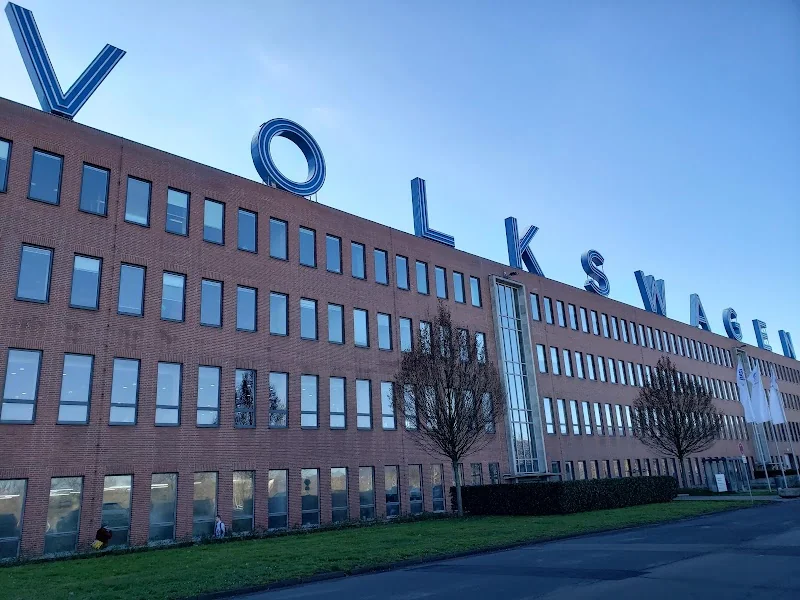
Baunatal
Dr, Rudolf-Leiding-Platz 1, 34225 Baunatal, Deutschland
Volkswagen AG Baunatal, Main Entrance | Address & Directions
The main entrance of Volkswagen AG in Baunatal is not only a functional access point to the factory premises but also the visible starting point for one of the most significant industrial locations in Northern Hesse. Those heading to the visitor center at Dr. Rudolf-Leiding-Platz 1 reach the Volkswagen plant in Kassel, which Volkswagen describes as a production and logistics center of high relevance to the group. Baunatal is located south of Kassel and has been closely associated with Volkswagen for decades. For visitors, residents, and interested parties, this place is therefore much more than an address: it represents industrial competence, economic significance, and the historical development of a location that continues to shape the region today. ([volkswagen.de](https://www.volkswagen.de/de/marke-und-erlebnis/werkbesichtigung.html))
Address, Main Entrance, and Directions to the Volkswagen Plant Kassel
The official visitor address of the location is Volkswagen AG Kassel, Visitor Center, Dr. Rudolf-Leiding-Platz 1, 34225 Baunatal. This is the exact address that Volkswagen mentions for the plant tour in Kassel. For finding the main entrance, the visitor center, or the location in navigation systems, this is the most important reference point. The city of Baunatal also clearly categorizes the location as one of the central economic pillars of the region. So, anyone searching for the address, the location, or the main entrance will end up in the right place with this information. The location is not an abstract company name but a clearly defined factory entrance with a visitor center and official contact point. ([volkswagen.de](https://www.volkswagen.de/de/marke-und-erlebnis/werkbesichtigung.html))
When approaching, it is important to note that the plant, according to official safety information, is located within the district of Baunatal in a designated industrial area. The nearest residential development is about 100 meters away from the plant, and the location is also close to the state road 3311 and near the highways A 7, A 49, and A 44. This explains why access for cars, coaches, and public transport is generally good, but access to the premises remains clearly regulated. Volkswagen links to a route planner on the plant's page and recommends a precise, pre-planned arrival instead of spontaneous orientation at the factory premises. ([volkswagen.de](https://www.volkswagen.de/idhub/content/dam/onehub_pkw/importers/de/besitzer-und-service/ueber-ihr-auto/kundeninformationen/rechtliches/stoerfallrecht/Stoerfallverordnung_Kassel.pdf))
In practice, this means: Anyone looking for the main entrance of Volkswagen AG Baunatal should not only enter the address correctly but also know the reason for their visit. The visitor center serves as the official contact point for factory tours and inquiries. A separate publicly advertised visitor parking lot is not prominently displayed on the main page; therefore, it is advisable to coordinate the arrival in advance with the visitor service and use the route planner. This caution is a reasonable conclusion from the publicly visible information provided by Volkswagen. This is particularly helpful for groups, school classes, or suppliers because the premises are large, safety-relevant, and clearly organized. ([volkswagen.de](https://www.volkswagen.de/de/marke-und-erlebnis/werkbesichtigung.html))
Factory Tour, Visitor Center, and Registration
Volkswagen offers factory tours at the Kassel-Baunatal location by appointment. According to the official website, the tours take place on production days from Monday to Friday at 10:30 AM and last about two hours. This makes the visitor center a concrete destination for all those who want to see the location not just from the outside but also understand the production and logistics of the plant. For inquiries, the completed form should be sent to Besucher.Kassel@Volkswagen.de. This makes it clear: Anyone wishing to visit the visitor center should plan in advance and reserve the tour in good time. For search queries like factory tour Kassel, factory tour Kassel, or visitor center Kassel, this is the most important practical information. ([volkswagen.de](https://www.volkswagen.de/de/marke-und-erlebnis/werkbesichtigung.html))
The rules for a factory tour are clear. A tour includes a minimum of 8 and a maximum of 25 people; individuals or larger groups are planned individually. Children under 10 years old cannot participate, and sturdy footwear is required because the tour is conducted on foot through the production areas. Volkswagen also explicitly points out that photography and filming are prohibited throughout the factory premises, as are audio recordings and camera phones. These notices are not just formalities but part of a production environment where occupational safety, operational processes, and confidentiality are particularly important. Anyone planning to visit the main entrance should be aware of these rules in advance. ([volkswagen.de](https://www.volkswagen.de/de/marke-und-erlebnis/werkbesichtigung.html))
Also interesting is the thematic diversity of the tours. The registration document mentions, among other things, a tour through the production of electric drives, a tour of the corporate after-sales, and a lecture on the academy. This shows that the location is not just a traditional plant for transmissions and components but also makes current future topics like electromobility and training visible. Visitors can thus connect the impression of a classic industrial location with the dynamics of modern transformation. This contrast makes the main entrance in Baunatal exciting for many visitors: behind it lies not a museum-like place but an active, future-oriented production site. ([volkswagen.de](https://www.volkswagen.de/idhub/content/dam/onehub_pkw/importers/de/marke-und-erlebnis/volkswagen-entdecken/werksbesichtigung/Anmeldung_VW_Kassel_Schule_2025-05-26.pdf))
Production, Transmissions, and Logistics Center
Volkswagen describes the Kassel plant in Baunatal as a location where transmissions and body parts for many brands of the group have been produced for around 60 years. Additionally, the location has the largest and most modern logistics center in Europe. This combination of manufacturing and logistics makes the location particularly significant because not only is production carried out there, but the supply of other corporate areas is also organized. The official plant description also refers to it as the second-largest domestic Volkswagen plant. For search queries like transmissions, body parts, or logistics center, Baunatal is therefore a central term in the Volkswagen universe. ([volkswagen.de](https://www.volkswagen.de/de/marke-und-erlebnis/werkbesichtigung.html))
The safety information of the plant further specifies the production. The location is described as a components plant that manufactures individual vehicle parts and delivers them to other locations in the VW group, where they are assembled into vehicles. Among other things, transmissions, electric drives, exhaust systems, stamped parts, and crankcases are mentioned. This is important for the character of the main entrance because the location cannot be reduced to a single product. It bundles different technological and industrial tasks, ranging from classic metal processing to electromobility. This diversity explains why the location is so economically important. ([volkswagen.de](https://www.volkswagen.de/idhub/content/dam/onehub_pkw/importers/de/besitzer-und-service/ueber-ihr-auto/kundeninformationen/rechtliches/stoerfallrecht/Stoerfallverordnung_Kassel.pdf))
In addition, the scale of the location is significant. Volkswagen states that the plant in Kassel has more than 16,500 employees in the production of various transmissions and diverse body parts. The city of Baunatal describes Volkswagen AG, Kassel, as the largest employer in Northern Hesse with around 17,000 employees. Both underline that the main entrance does not just lead to a factory premises but to one of the most influential working and economic places in the region. For visitors, this dimension is often only tangible on-site: the entrance marks the threshold to a location with enormous industrial depth, a high number of employees, and a strong anchoring in the city and region. ([volkswagen.de](https://www.volkswagen.de/de/marke-und-erlebnis/werkbesichtigung.html))
E-Mobility, Transformation, and the Future of the Location
The Kassel-Baunatal location is not only industrially established but also a central building block of the Volkswagen transformation. Volkswagen Group Components announced in 2022 that the Kassel location would be developed into the group-wide center for the electric drive train. The plant had already initiated the transformation in 2015 and focused its product portfolio intensively on tech components for electric cars. At that time, 18 production lines for electric motors and other electric components were mentioned, which were to double in the following years. For visitors who associate the main entrance with the topic of electric drives, this is a strong indication of the strategic importance of the location. ([volkswagen-group.com](https://www.volkswagen-group.com/de/pressemitteilungen/volkswagen-kassel-wird-e-motoren-zentrum-der-zukunft-16831?utm_source=openai))
Particularly significant is the investment perspective. Volkswagen announced that it would invest around 1.2 billion euros in the location by 2026, with more than two-thirds of the amount allocated to the development and production of electric components. At the same time, the goal was set to develop Kassel into a pure electric plant and a system provider for electromobility in the long term. This statement shows that the factory address in Baunatal stands not only for the present but also for the future. Thus, the main entrance marks not just the access to an existing factory but to the transformation of a large corporate location towards electrified drive systems. ([volkswagen-group.com](https://www.volkswagen-group.com/de/pressemitteilungen/volkswagen-kassel-wird-e-motoren-zentrum-der-zukunft-16831?utm_source=openai))
The thematic breadth of the location also fits this. In addition to electric drives, the official materials continue to mention transmissions, body parts, and after-sales topics. This makes the location an example of how Volkswagen connects traditional manufacturing with new technologies. Those searching for electric motors, power electronics, or transformation will find in Kassel-Baunatal a location where industrial continuity and technical renewal coexist. This is precisely why the main entrance is for many visitors more than just a gatehouse: it is the entry point to a plant that is visibly realigning itself without losing its traditional role as a components location. ([volkswagen-group.com](https://www.volkswagen-group.com/de/pressemitteilungen/volkswagen-kassel-wird-e-motoren-zentrum-der-zukunft-16831?utm_source=openai))
History of the Location and Its Role for Baunatal
The historical development of the location began in the late 1950s. The official Volkswagen chronicle states that in 1957, the engine repair was relocated from Wolfsburg to Altenbauna near Kassel. The city of Baunatal adds that during this period, Volkswagen acquired the site of the former Henschel aircraft engine works to establish a branch plant there. And on the Volkswagen website, it states that the VW supervisory board decided in 1957 to establish the center for spare parts service and spare parts production in Kassel, which went into operation in 1958. These three pieces of information clearly show how early and strategically the location was established. ([volkswagen-group.com](https://www.volkswagen-group.com/en/volkswagen-chronicle-17351/1950-to-1960-internationalisation-and-mass-production-in-the-era-of-germanys-economic-miracle-17356?utm_source=openai))
The connection with Baunatal became so strong that Volkswagen left a lasting industrial footprint in the region in 1958. The city of Baunatal has listed Volkswagen AG, Kassel, as being based there since 1958 and identifies the location as the largest employer in Northern Hesse. At the same time, the city makes it clear that Baunatal is economically closely intertwined with Volkswagen and that the location has significantly shaped urban development. The history of the city itself is also closely linked to this development: Baunatal emerged in 1966 from the merger of several districts, right in the midst of a phase of intense regional upheaval. Thus, the main entrance of the plant is also a symbol of how industry and urban history have grown together. ([baunatal.de](https://www.baunatal.de/de/wirtschaft/wirtschaft/wirtschaftsregion/?utm_source=openai))
For the present, this history is important because it explains the location. The plant did not grow large by chance but as a result of a long-term decision to consolidate spare parts supply, production, and later also logistics in one place. Volkswagen also repeatedly connects the location with regional identity, for example, in the portrayal of the long relationship between Baunatal and the group. Therefore, anyone standing at the main entrance today sees not only modern building structures and security areas but the result of decades of industrial development. The history makes it understandable why the plant in Baunatal is still so strongly anchored in the region today. ([volkswagen.de](https://www.volkswagen.de/de/marke-und-erlebnis/wedrivefootball/vereine.html?utm_source=openai))
Safety, Neighborhood, and Practical Visitor Information
For visitors and residents, the location is also interesting for safety reasons. The official information on the Major Accident Ordinance describes the Kassel-Baunatal plant as an operational area in a designated industrial zone. Various facilities are operated there, in which substances are used that fall under the Major Accident Ordinance. Volkswagen informs that an operational control system, trained personnel, technical safety precautions, and regular drills are employed to identify and reduce risks early. This shows: The main entrance is access to a highly organized industrial area with clear safety structures. ([volkswagen.de](https://www.volkswagen.de/idhub/content/dam/onehub_pkw/importers/de/besitzer-und-service/ueber-ihr-auto/kundeninformationen/rechtliches/stoerfallrecht/Stoerfallverordnung_Kassel.pdf))
The safety information also mentions the neighborhood of the plant. The nearest residential development is about 100 meters away, and Rengershausen and Kirchbauna are in close proximity. The location is also situated along important north-south and east-west connections, including proximity to A 7, A 49, and A 44. This is relevant for visitors because it explains the good accessibility but also the necessity of a clearly regulated access. Anyone visiting the plant moves in an environment where industry, traffic, neighborhood, and protective measures are closely intertwined. This is typical for a large components location of this scale. ([volkswagen.de](https://www.volkswagen.de/idhub/content/dam/onehub_pkw/importers/de/besitzer-und-service/ueber-ihr-auto/kundeninformationen/rechtliches/stoerfallrecht/Stoerfallverordnung_Kassel.pdf))
Practically important remains: Photography and filming are prohibited throughout the factory premises, and factory tours only take place under clearly defined conditions. These include advance registration, limited group size, sturdy footwear rules, and the age limit of 10 years. For visitors, this means that the main entrance does not function like a public excursion destination but as access to an active production facility. Therefore, anyone planning a factory tour or simply searching for the address should read the official information carefully and organize their arrival in good time. This is how the visit becomes safe, transparent, and organizationally uncomplicated. ([volkswagen.de](https://www.volkswagen.de/de/marke-und-erlebnis/werkbesichtigung.html))
Sources:
- Volkswagen Germany - Factory Tour Kassel ([volkswagen.de](https://www.volkswagen.de/de/marke-und-erlebnis/werkbesichtigung.html))
- City of Baunatal - Economic Region ([baunatal.de](https://www.baunatal.de/de/wirtschaft/wirtschaft/wirtschaftsregion/?utm_source=openai))
- Volkswagen Germany - Information for Residents of Volkswagen Plants ([volkswagen.de](https://www.volkswagen.de/de/besitzer-und-service/ueber-ihr-auto/kundeninformationen/rechtliches/stoerfallrecht.html?utm_source=openai))
- Volkswagen AG - Safety for the Neighborhood, Plant Kassel ([volkswagen.de](https://www.volkswagen.de/idhub/content/dam/onehub_pkw/importers/de/besitzer-und-service/ueber-ihr-auto/kundeninformationen/rechtliches/stoerfallrecht/Stoerfallverordnung_Kassel.pdf))
- Volkswagen Group - Volkswagen Kassel Becomes the E-Motor Center of the Future ([volkswagen-group.com](https://www.volkswagen-group.com/de/pressemitteilungen/volkswagen-kassel-wird-e-motoren-zentrum-der-zukunft-16831?utm_source=openai))
- Volkswagen Germany - Baunatal and Volkswagen ([volkswagen.de](https://www.volkswagen.de/de/marke-und-erlebnis/wedrivefootball/vereine.html?utm_source=openai))
Show moreShow less
Volkswagen AG Baunatal, Main Entrance | Address & Directions
The main entrance of Volkswagen AG in Baunatal is not only a functional access point to the factory premises but also the visible starting point for one of the most significant industrial locations in Northern Hesse. Those heading to the visitor center at Dr. Rudolf-Leiding-Platz 1 reach the Volkswagen plant in Kassel, which Volkswagen describes as a production and logistics center of high relevance to the group. Baunatal is located south of Kassel and has been closely associated with Volkswagen for decades. For visitors, residents, and interested parties, this place is therefore much more than an address: it represents industrial competence, economic significance, and the historical development of a location that continues to shape the region today. ([volkswagen.de](https://www.volkswagen.de/de/marke-und-erlebnis/werkbesichtigung.html))
Address, Main Entrance, and Directions to the Volkswagen Plant Kassel
The official visitor address of the location is Volkswagen AG Kassel, Visitor Center, Dr. Rudolf-Leiding-Platz 1, 34225 Baunatal. This is the exact address that Volkswagen mentions for the plant tour in Kassel. For finding the main entrance, the visitor center, or the location in navigation systems, this is the most important reference point. The city of Baunatal also clearly categorizes the location as one of the central economic pillars of the region. So, anyone searching for the address, the location, or the main entrance will end up in the right place with this information. The location is not an abstract company name but a clearly defined factory entrance with a visitor center and official contact point. ([volkswagen.de](https://www.volkswagen.de/de/marke-und-erlebnis/werkbesichtigung.html))
When approaching, it is important to note that the plant, according to official safety information, is located within the district of Baunatal in a designated industrial area. The nearest residential development is about 100 meters away from the plant, and the location is also close to the state road 3311 and near the highways A 7, A 49, and A 44. This explains why access for cars, coaches, and public transport is generally good, but access to the premises remains clearly regulated. Volkswagen links to a route planner on the plant's page and recommends a precise, pre-planned arrival instead of spontaneous orientation at the factory premises. ([volkswagen.de](https://www.volkswagen.de/idhub/content/dam/onehub_pkw/importers/de/besitzer-und-service/ueber-ihr-auto/kundeninformationen/rechtliches/stoerfallrecht/Stoerfallverordnung_Kassel.pdf))
In practice, this means: Anyone looking for the main entrance of Volkswagen AG Baunatal should not only enter the address correctly but also know the reason for their visit. The visitor center serves as the official contact point for factory tours and inquiries. A separate publicly advertised visitor parking lot is not prominently displayed on the main page; therefore, it is advisable to coordinate the arrival in advance with the visitor service and use the route planner. This caution is a reasonable conclusion from the publicly visible information provided by Volkswagen. This is particularly helpful for groups, school classes, or suppliers because the premises are large, safety-relevant, and clearly organized. ([volkswagen.de](https://www.volkswagen.de/de/marke-und-erlebnis/werkbesichtigung.html))
Factory Tour, Visitor Center, and Registration
Volkswagen offers factory tours at the Kassel-Baunatal location by appointment. According to the official website, the tours take place on production days from Monday to Friday at 10:30 AM and last about two hours. This makes the visitor center a concrete destination for all those who want to see the location not just from the outside but also understand the production and logistics of the plant. For inquiries, the completed form should be sent to Besucher.Kassel@Volkswagen.de. This makes it clear: Anyone wishing to visit the visitor center should plan in advance and reserve the tour in good time. For search queries like factory tour Kassel, factory tour Kassel, or visitor center Kassel, this is the most important practical information. ([volkswagen.de](https://www.volkswagen.de/de/marke-und-erlebnis/werkbesichtigung.html))
The rules for a factory tour are clear. A tour includes a minimum of 8 and a maximum of 25 people; individuals or larger groups are planned individually. Children under 10 years old cannot participate, and sturdy footwear is required because the tour is conducted on foot through the production areas. Volkswagen also explicitly points out that photography and filming are prohibited throughout the factory premises, as are audio recordings and camera phones. These notices are not just formalities but part of a production environment where occupational safety, operational processes, and confidentiality are particularly important. Anyone planning to visit the main entrance should be aware of these rules in advance. ([volkswagen.de](https://www.volkswagen.de/de/marke-und-erlebnis/werkbesichtigung.html))
Also interesting is the thematic diversity of the tours. The registration document mentions, among other things, a tour through the production of electric drives, a tour of the corporate after-sales, and a lecture on the academy. This shows that the location is not just a traditional plant for transmissions and components but also makes current future topics like electromobility and training visible. Visitors can thus connect the impression of a classic industrial location with the dynamics of modern transformation. This contrast makes the main entrance in Baunatal exciting for many visitors: behind it lies not a museum-like place but an active, future-oriented production site. ([volkswagen.de](https://www.volkswagen.de/idhub/content/dam/onehub_pkw/importers/de/marke-und-erlebnis/volkswagen-entdecken/werksbesichtigung/Anmeldung_VW_Kassel_Schule_2025-05-26.pdf))
Production, Transmissions, and Logistics Center
Volkswagen describes the Kassel plant in Baunatal as a location where transmissions and body parts for many brands of the group have been produced for around 60 years. Additionally, the location has the largest and most modern logistics center in Europe. This combination of manufacturing and logistics makes the location particularly significant because not only is production carried out there, but the supply of other corporate areas is also organized. The official plant description also refers to it as the second-largest domestic Volkswagen plant. For search queries like transmissions, body parts, or logistics center, Baunatal is therefore a central term in the Volkswagen universe. ([volkswagen.de](https://www.volkswagen.de/de/marke-und-erlebnis/werkbesichtigung.html))
The safety information of the plant further specifies the production. The location is described as a components plant that manufactures individual vehicle parts and delivers them to other locations in the VW group, where they are assembled into vehicles. Among other things, transmissions, electric drives, exhaust systems, stamped parts, and crankcases are mentioned. This is important for the character of the main entrance because the location cannot be reduced to a single product. It bundles different technological and industrial tasks, ranging from classic metal processing to electromobility. This diversity explains why the location is so economically important. ([volkswagen.de](https://www.volkswagen.de/idhub/content/dam/onehub_pkw/importers/de/besitzer-und-service/ueber-ihr-auto/kundeninformationen/rechtliches/stoerfallrecht/Stoerfallverordnung_Kassel.pdf))
In addition, the scale of the location is significant. Volkswagen states that the plant in Kassel has more than 16,500 employees in the production of various transmissions and diverse body parts. The city of Baunatal describes Volkswagen AG, Kassel, as the largest employer in Northern Hesse with around 17,000 employees. Both underline that the main entrance does not just lead to a factory premises but to one of the most influential working and economic places in the region. For visitors, this dimension is often only tangible on-site: the entrance marks the threshold to a location with enormous industrial depth, a high number of employees, and a strong anchoring in the city and region. ([volkswagen.de](https://www.volkswagen.de/de/marke-und-erlebnis/werkbesichtigung.html))
E-Mobility, Transformation, and the Future of the Location
The Kassel-Baunatal location is not only industrially established but also a central building block of the Volkswagen transformation. Volkswagen Group Components announced in 2022 that the Kassel location would be developed into the group-wide center for the electric drive train. The plant had already initiated the transformation in 2015 and focused its product portfolio intensively on tech components for electric cars. At that time, 18 production lines for electric motors and other electric components were mentioned, which were to double in the following years. For visitors who associate the main entrance with the topic of electric drives, this is a strong indication of the strategic importance of the location. ([volkswagen-group.com](https://www.volkswagen-group.com/de/pressemitteilungen/volkswagen-kassel-wird-e-motoren-zentrum-der-zukunft-16831?utm_source=openai))
Particularly significant is the investment perspective. Volkswagen announced that it would invest around 1.2 billion euros in the location by 2026, with more than two-thirds of the amount allocated to the development and production of electric components. At the same time, the goal was set to develop Kassel into a pure electric plant and a system provider for electromobility in the long term. This statement shows that the factory address in Baunatal stands not only for the present but also for the future. Thus, the main entrance marks not just the access to an existing factory but to the transformation of a large corporate location towards electrified drive systems. ([volkswagen-group.com](https://www.volkswagen-group.com/de/pressemitteilungen/volkswagen-kassel-wird-e-motoren-zentrum-der-zukunft-16831?utm_source=openai))
The thematic breadth of the location also fits this. In addition to electric drives, the official materials continue to mention transmissions, body parts, and after-sales topics. This makes the location an example of how Volkswagen connects traditional manufacturing with new technologies. Those searching for electric motors, power electronics, or transformation will find in Kassel-Baunatal a location where industrial continuity and technical renewal coexist. This is precisely why the main entrance is for many visitors more than just a gatehouse: it is the entry point to a plant that is visibly realigning itself without losing its traditional role as a components location. ([volkswagen-group.com](https://www.volkswagen-group.com/de/pressemitteilungen/volkswagen-kassel-wird-e-motoren-zentrum-der-zukunft-16831?utm_source=openai))
History of the Location and Its Role for Baunatal
The historical development of the location began in the late 1950s. The official Volkswagen chronicle states that in 1957, the engine repair was relocated from Wolfsburg to Altenbauna near Kassel. The city of Baunatal adds that during this period, Volkswagen acquired the site of the former Henschel aircraft engine works to establish a branch plant there. And on the Volkswagen website, it states that the VW supervisory board decided in 1957 to establish the center for spare parts service and spare parts production in Kassel, which went into operation in 1958. These three pieces of information clearly show how early and strategically the location was established. ([volkswagen-group.com](https://www.volkswagen-group.com/en/volkswagen-chronicle-17351/1950-to-1960-internationalisation-and-mass-production-in-the-era-of-germanys-economic-miracle-17356?utm_source=openai))
The connection with Baunatal became so strong that Volkswagen left a lasting industrial footprint in the region in 1958. The city of Baunatal has listed Volkswagen AG, Kassel, as being based there since 1958 and identifies the location as the largest employer in Northern Hesse. At the same time, the city makes it clear that Baunatal is economically closely intertwined with Volkswagen and that the location has significantly shaped urban development. The history of the city itself is also closely linked to this development: Baunatal emerged in 1966 from the merger of several districts, right in the midst of a phase of intense regional upheaval. Thus, the main entrance of the plant is also a symbol of how industry and urban history have grown together. ([baunatal.de](https://www.baunatal.de/de/wirtschaft/wirtschaft/wirtschaftsregion/?utm_source=openai))
For the present, this history is important because it explains the location. The plant did not grow large by chance but as a result of a long-term decision to consolidate spare parts supply, production, and later also logistics in one place. Volkswagen also repeatedly connects the location with regional identity, for example, in the portrayal of the long relationship between Baunatal and the group. Therefore, anyone standing at the main entrance today sees not only modern building structures and security areas but the result of decades of industrial development. The history makes it understandable why the plant in Baunatal is still so strongly anchored in the region today. ([volkswagen.de](https://www.volkswagen.de/de/marke-und-erlebnis/wedrivefootball/vereine.html?utm_source=openai))
Safety, Neighborhood, and Practical Visitor Information
For visitors and residents, the location is also interesting for safety reasons. The official information on the Major Accident Ordinance describes the Kassel-Baunatal plant as an operational area in a designated industrial zone. Various facilities are operated there, in which substances are used that fall under the Major Accident Ordinance. Volkswagen informs that an operational control system, trained personnel, technical safety precautions, and regular drills are employed to identify and reduce risks early. This shows: The main entrance is access to a highly organized industrial area with clear safety structures. ([volkswagen.de](https://www.volkswagen.de/idhub/content/dam/onehub_pkw/importers/de/besitzer-und-service/ueber-ihr-auto/kundeninformationen/rechtliches/stoerfallrecht/Stoerfallverordnung_Kassel.pdf))
The safety information also mentions the neighborhood of the plant. The nearest residential development is about 100 meters away, and Rengershausen and Kirchbauna are in close proximity. The location is also situated along important north-south and east-west connections, including proximity to A 7, A 49, and A 44. This is relevant for visitors because it explains the good accessibility but also the necessity of a clearly regulated access. Anyone visiting the plant moves in an environment where industry, traffic, neighborhood, and protective measures are closely intertwined. This is typical for a large components location of this scale. ([volkswagen.de](https://www.volkswagen.de/idhub/content/dam/onehub_pkw/importers/de/besitzer-und-service/ueber-ihr-auto/kundeninformationen/rechtliches/stoerfallrecht/Stoerfallverordnung_Kassel.pdf))
Practically important remains: Photography and filming are prohibited throughout the factory premises, and factory tours only take place under clearly defined conditions. These include advance registration, limited group size, sturdy footwear rules, and the age limit of 10 years. For visitors, this means that the main entrance does not function like a public excursion destination but as access to an active production facility. Therefore, anyone planning a factory tour or simply searching for the address should read the official information carefully and organize their arrival in good time. This is how the visit becomes safe, transparent, and organizationally uncomplicated. ([volkswagen.de](https://www.volkswagen.de/de/marke-und-erlebnis/werkbesichtigung.html))
Sources:
- Volkswagen Germany - Factory Tour Kassel ([volkswagen.de](https://www.volkswagen.de/de/marke-und-erlebnis/werkbesichtigung.html))
- City of Baunatal - Economic Region ([baunatal.de](https://www.baunatal.de/de/wirtschaft/wirtschaft/wirtschaftsregion/?utm_source=openai))
- Volkswagen Germany - Information for Residents of Volkswagen Plants ([volkswagen.de](https://www.volkswagen.de/de/besitzer-und-service/ueber-ihr-auto/kundeninformationen/rechtliches/stoerfallrecht.html?utm_source=openai))
- Volkswagen AG - Safety for the Neighborhood, Plant Kassel ([volkswagen.de](https://www.volkswagen.de/idhub/content/dam/onehub_pkw/importers/de/besitzer-und-service/ueber-ihr-auto/kundeninformationen/rechtliches/stoerfallrecht/Stoerfallverordnung_Kassel.pdf))
- Volkswagen Group - Volkswagen Kassel Becomes the E-Motor Center of the Future ([volkswagen-group.com](https://www.volkswagen-group.com/de/pressemitteilungen/volkswagen-kassel-wird-e-motoren-zentrum-der-zukunft-16831?utm_source=openai))
- Volkswagen Germany - Baunatal and Volkswagen ([volkswagen.de](https://www.volkswagen.de/de/marke-und-erlebnis/wedrivefootball/vereine.html?utm_source=openai))
Volkswagen AG Baunatal, Main Entrance | Address & Directions
The main entrance of Volkswagen AG in Baunatal is not only a functional access point to the factory premises but also the visible starting point for one of the most significant industrial locations in Northern Hesse. Those heading to the visitor center at Dr. Rudolf-Leiding-Platz 1 reach the Volkswagen plant in Kassel, which Volkswagen describes as a production and logistics center of high relevance to the group. Baunatal is located south of Kassel and has been closely associated with Volkswagen for decades. For visitors, residents, and interested parties, this place is therefore much more than an address: it represents industrial competence, economic significance, and the historical development of a location that continues to shape the region today. ([volkswagen.de](https://www.volkswagen.de/de/marke-und-erlebnis/werkbesichtigung.html))
Address, Main Entrance, and Directions to the Volkswagen Plant Kassel
The official visitor address of the location is Volkswagen AG Kassel, Visitor Center, Dr. Rudolf-Leiding-Platz 1, 34225 Baunatal. This is the exact address that Volkswagen mentions for the plant tour in Kassel. For finding the main entrance, the visitor center, or the location in navigation systems, this is the most important reference point. The city of Baunatal also clearly categorizes the location as one of the central economic pillars of the region. So, anyone searching for the address, the location, or the main entrance will end up in the right place with this information. The location is not an abstract company name but a clearly defined factory entrance with a visitor center and official contact point. ([volkswagen.de](https://www.volkswagen.de/de/marke-und-erlebnis/werkbesichtigung.html))
When approaching, it is important to note that the plant, according to official safety information, is located within the district of Baunatal in a designated industrial area. The nearest residential development is about 100 meters away from the plant, and the location is also close to the state road 3311 and near the highways A 7, A 49, and A 44. This explains why access for cars, coaches, and public transport is generally good, but access to the premises remains clearly regulated. Volkswagen links to a route planner on the plant's page and recommends a precise, pre-planned arrival instead of spontaneous orientation at the factory premises. ([volkswagen.de](https://www.volkswagen.de/idhub/content/dam/onehub_pkw/importers/de/besitzer-und-service/ueber-ihr-auto/kundeninformationen/rechtliches/stoerfallrecht/Stoerfallverordnung_Kassel.pdf))
In practice, this means: Anyone looking for the main entrance of Volkswagen AG Baunatal should not only enter the address correctly but also know the reason for their visit. The visitor center serves as the official contact point for factory tours and inquiries. A separate publicly advertised visitor parking lot is not prominently displayed on the main page; therefore, it is advisable to coordinate the arrival in advance with the visitor service and use the route planner. This caution is a reasonable conclusion from the publicly visible information provided by Volkswagen. This is particularly helpful for groups, school classes, or suppliers because the premises are large, safety-relevant, and clearly organized. ([volkswagen.de](https://www.volkswagen.de/de/marke-und-erlebnis/werkbesichtigung.html))
Factory Tour, Visitor Center, and Registration
Volkswagen offers factory tours at the Kassel-Baunatal location by appointment. According to the official website, the tours take place on production days from Monday to Friday at 10:30 AM and last about two hours. This makes the visitor center a concrete destination for all those who want to see the location not just from the outside but also understand the production and logistics of the plant. For inquiries, the completed form should be sent to Besucher.Kassel@Volkswagen.de. This makes it clear: Anyone wishing to visit the visitor center should plan in advance and reserve the tour in good time. For search queries like factory tour Kassel, factory tour Kassel, or visitor center Kassel, this is the most important practical information. ([volkswagen.de](https://www.volkswagen.de/de/marke-und-erlebnis/werkbesichtigung.html))
The rules for a factory tour are clear. A tour includes a minimum of 8 and a maximum of 25 people; individuals or larger groups are planned individually. Children under 10 years old cannot participate, and sturdy footwear is required because the tour is conducted on foot through the production areas. Volkswagen also explicitly points out that photography and filming are prohibited throughout the factory premises, as are audio recordings and camera phones. These notices are not just formalities but part of a production environment where occupational safety, operational processes, and confidentiality are particularly important. Anyone planning to visit the main entrance should be aware of these rules in advance. ([volkswagen.de](https://www.volkswagen.de/de/marke-und-erlebnis/werkbesichtigung.html))
Also interesting is the thematic diversity of the tours. The registration document mentions, among other things, a tour through the production of electric drives, a tour of the corporate after-sales, and a lecture on the academy. This shows that the location is not just a traditional plant for transmissions and components but also makes current future topics like electromobility and training visible. Visitors can thus connect the impression of a classic industrial location with the dynamics of modern transformation. This contrast makes the main entrance in Baunatal exciting for many visitors: behind it lies not a museum-like place but an active, future-oriented production site. ([volkswagen.de](https://www.volkswagen.de/idhub/content/dam/onehub_pkw/importers/de/marke-und-erlebnis/volkswagen-entdecken/werksbesichtigung/Anmeldung_VW_Kassel_Schule_2025-05-26.pdf))
Production, Transmissions, and Logistics Center
Volkswagen describes the Kassel plant in Baunatal as a location where transmissions and body parts for many brands of the group have been produced for around 60 years. Additionally, the location has the largest and most modern logistics center in Europe. This combination of manufacturing and logistics makes the location particularly significant because not only is production carried out there, but the supply of other corporate areas is also organized. The official plant description also refers to it as the second-largest domestic Volkswagen plant. For search queries like transmissions, body parts, or logistics center, Baunatal is therefore a central term in the Volkswagen universe. ([volkswagen.de](https://www.volkswagen.de/de/marke-und-erlebnis/werkbesichtigung.html))
The safety information of the plant further specifies the production. The location is described as a components plant that manufactures individual vehicle parts and delivers them to other locations in the VW group, where they are assembled into vehicles. Among other things, transmissions, electric drives, exhaust systems, stamped parts, and crankcases are mentioned. This is important for the character of the main entrance because the location cannot be reduced to a single product. It bundles different technological and industrial tasks, ranging from classic metal processing to electromobility. This diversity explains why the location is so economically important. ([volkswagen.de](https://www.volkswagen.de/idhub/content/dam/onehub_pkw/importers/de/besitzer-und-service/ueber-ihr-auto/kundeninformationen/rechtliches/stoerfallrecht/Stoerfallverordnung_Kassel.pdf))
In addition, the scale of the location is significant. Volkswagen states that the plant in Kassel has more than 16,500 employees in the production of various transmissions and diverse body parts. The city of Baunatal describes Volkswagen AG, Kassel, as the largest employer in Northern Hesse with around 17,000 employees. Both underline that the main entrance does not just lead to a factory premises but to one of the most influential working and economic places in the region. For visitors, this dimension is often only tangible on-site: the entrance marks the threshold to a location with enormous industrial depth, a high number of employees, and a strong anchoring in the city and region. ([volkswagen.de](https://www.volkswagen.de/de/marke-und-erlebnis/werkbesichtigung.html))
E-Mobility, Transformation, and the Future of the Location
The Kassel-Baunatal location is not only industrially established but also a central building block of the Volkswagen transformation. Volkswagen Group Components announced in 2022 that the Kassel location would be developed into the group-wide center for the electric drive train. The plant had already initiated the transformation in 2015 and focused its product portfolio intensively on tech components for electric cars. At that time, 18 production lines for electric motors and other electric components were mentioned, which were to double in the following years. For visitors who associate the main entrance with the topic of electric drives, this is a strong indication of the strategic importance of the location. ([volkswagen-group.com](https://www.volkswagen-group.com/de/pressemitteilungen/volkswagen-kassel-wird-e-motoren-zentrum-der-zukunft-16831?utm_source=openai))
Particularly significant is the investment perspective. Volkswagen announced that it would invest around 1.2 billion euros in the location by 2026, with more than two-thirds of the amount allocated to the development and production of electric components. At the same time, the goal was set to develop Kassel into a pure electric plant and a system provider for electromobility in the long term. This statement shows that the factory address in Baunatal stands not only for the present but also for the future. Thus, the main entrance marks not just the access to an existing factory but to the transformation of a large corporate location towards electrified drive systems. ([volkswagen-group.com](https://www.volkswagen-group.com/de/pressemitteilungen/volkswagen-kassel-wird-e-motoren-zentrum-der-zukunft-16831?utm_source=openai))
The thematic breadth of the location also fits this. In addition to electric drives, the official materials continue to mention transmissions, body parts, and after-sales topics. This makes the location an example of how Volkswagen connects traditional manufacturing with new technologies. Those searching for electric motors, power electronics, or transformation will find in Kassel-Baunatal a location where industrial continuity and technical renewal coexist. This is precisely why the main entrance is for many visitors more than just a gatehouse: it is the entry point to a plant that is visibly realigning itself without losing its traditional role as a components location. ([volkswagen-group.com](https://www.volkswagen-group.com/de/pressemitteilungen/volkswagen-kassel-wird-e-motoren-zentrum-der-zukunft-16831?utm_source=openai))
History of the Location and Its Role for Baunatal
The historical development of the location began in the late 1950s. The official Volkswagen chronicle states that in 1957, the engine repair was relocated from Wolfsburg to Altenbauna near Kassel. The city of Baunatal adds that during this period, Volkswagen acquired the site of the former Henschel aircraft engine works to establish a branch plant there. And on the Volkswagen website, it states that the VW supervisory board decided in 1957 to establish the center for spare parts service and spare parts production in Kassel, which went into operation in 1958. These three pieces of information clearly show how early and strategically the location was established. ([volkswagen-group.com](https://www.volkswagen-group.com/en/volkswagen-chronicle-17351/1950-to-1960-internationalisation-and-mass-production-in-the-era-of-germanys-economic-miracle-17356?utm_source=openai))
The connection with Baunatal became so strong that Volkswagen left a lasting industrial footprint in the region in 1958. The city of Baunatal has listed Volkswagen AG, Kassel, as being based there since 1958 and identifies the location as the largest employer in Northern Hesse. At the same time, the city makes it clear that Baunatal is economically closely intertwined with Volkswagen and that the location has significantly shaped urban development. The history of the city itself is also closely linked to this development: Baunatal emerged in 1966 from the merger of several districts, right in the midst of a phase of intense regional upheaval. Thus, the main entrance of the plant is also a symbol of how industry and urban history have grown together. ([baunatal.de](https://www.baunatal.de/de/wirtschaft/wirtschaft/wirtschaftsregion/?utm_source=openai))
For the present, this history is important because it explains the location. The plant did not grow large by chance but as a result of a long-term decision to consolidate spare parts supply, production, and later also logistics in one place. Volkswagen also repeatedly connects the location with regional identity, for example, in the portrayal of the long relationship between Baunatal and the group. Therefore, anyone standing at the main entrance today sees not only modern building structures and security areas but the result of decades of industrial development. The history makes it understandable why the plant in Baunatal is still so strongly anchored in the region today. ([volkswagen.de](https://www.volkswagen.de/de/marke-und-erlebnis/wedrivefootball/vereine.html?utm_source=openai))
Safety, Neighborhood, and Practical Visitor Information
For visitors and residents, the location is also interesting for safety reasons. The official information on the Major Accident Ordinance describes the Kassel-Baunatal plant as an operational area in a designated industrial zone. Various facilities are operated there, in which substances are used that fall under the Major Accident Ordinance. Volkswagen informs that an operational control system, trained personnel, technical safety precautions, and regular drills are employed to identify and reduce risks early. This shows: The main entrance is access to a highly organized industrial area with clear safety structures. ([volkswagen.de](https://www.volkswagen.de/idhub/content/dam/onehub_pkw/importers/de/besitzer-und-service/ueber-ihr-auto/kundeninformationen/rechtliches/stoerfallrecht/Stoerfallverordnung_Kassel.pdf))
The safety information also mentions the neighborhood of the plant. The nearest residential development is about 100 meters away, and Rengershausen and Kirchbauna are in close proximity. The location is also situated along important north-south and east-west connections, including proximity to A 7, A 49, and A 44. This is relevant for visitors because it explains the good accessibility but also the necessity of a clearly regulated access. Anyone visiting the plant moves in an environment where industry, traffic, neighborhood, and protective measures are closely intertwined. This is typical for a large components location of this scale. ([volkswagen.de](https://www.volkswagen.de/idhub/content/dam/onehub_pkw/importers/de/besitzer-und-service/ueber-ihr-auto/kundeninformationen/rechtliches/stoerfallrecht/Stoerfallverordnung_Kassel.pdf))
Practically important remains: Photography and filming are prohibited throughout the factory premises, and factory tours only take place under clearly defined conditions. These include advance registration, limited group size, sturdy footwear rules, and the age limit of 10 years. For visitors, this means that the main entrance does not function like a public excursion destination but as access to an active production facility. Therefore, anyone planning a factory tour or simply searching for the address should read the official information carefully and organize their arrival in good time. This is how the visit becomes safe, transparent, and organizationally uncomplicated. ([volkswagen.de](https://www.volkswagen.de/de/marke-und-erlebnis/werkbesichtigung.html))
Sources:
- Volkswagen Germany - Factory Tour Kassel ([volkswagen.de](https://www.volkswagen.de/de/marke-und-erlebnis/werkbesichtigung.html))
- City of Baunatal - Economic Region ([baunatal.de](https://www.baunatal.de/de/wirtschaft/wirtschaft/wirtschaftsregion/?utm_source=openai))
- Volkswagen Germany - Information for Residents of Volkswagen Plants ([volkswagen.de](https://www.volkswagen.de/de/besitzer-und-service/ueber-ihr-auto/kundeninformationen/rechtliches/stoerfallrecht.html?utm_source=openai))
- Volkswagen AG - Safety for the Neighborhood, Plant Kassel ([volkswagen.de](https://www.volkswagen.de/idhub/content/dam/onehub_pkw/importers/de/besitzer-und-service/ueber-ihr-auto/kundeninformationen/rechtliches/stoerfallrecht/Stoerfallverordnung_Kassel.pdf))
- Volkswagen Group - Volkswagen Kassel Becomes the E-Motor Center of the Future ([volkswagen-group.com](https://www.volkswagen-group.com/de/pressemitteilungen/volkswagen-kassel-wird-e-motoren-zentrum-der-zukunft-16831?utm_source=openai))
- Volkswagen Germany - Baunatal and Volkswagen ([volkswagen.de](https://www.volkswagen.de/de/marke-und-erlebnis/wedrivefootball/vereine.html?utm_source=openai))
Upcoming Events
No events found
Frequently Asked Questions
Reviews
Prajwal Padalale
5. August 2025
❤️⚡👍
Marcel Kirchenbauer
8. August 2024
They have bunnies!!! 🐰
Jack Russel
21. May 2017
The biggest factory with 17,000 employees in Kassel where gearboxes are manufactured. VW has one of the greatest spare parts centers in Baunatal.
Dan.Z.
19. March 2018
A very interesting view into the production of one of the biggest names in the auto industry.
Jozef Malejčík
25. June 2025
Top 😁