
Kassel
Frankfurter Str., 34117 Kassel, Deutschland
Weinbergbunker Kassel | Tour & Visit
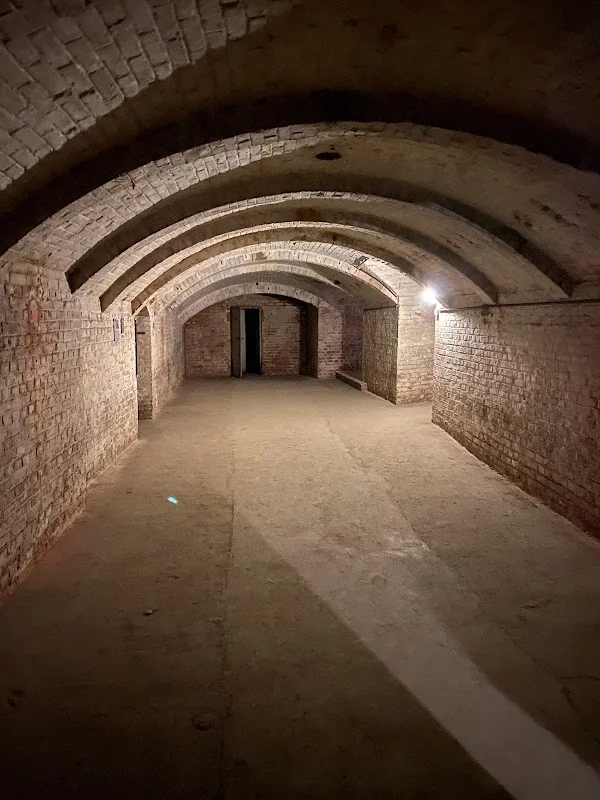
The Weinbergbunker in Kassel is not an ordinary place, but a piece of city history hidden beneath the vineyard that fascinates many people to this day. The official pages of the city of Kassel and Visit Kassel describe the facility as a tunnel and passage system in the limestone rock, which was initially used for the storage of beer and later became an air raid shelter during World War II. This combination of underground, history, and guided tours makes the Weinbergbunker one of the most distinctive attractions in the area of Frankfurter Straße, Weinberg, and Südstadt. Those looking for tours, visits, entrances, temperature, or photos will find not only an exciting search topic here but a real monument with clear visitor information, regular dates, and a very special historical core. ([visit.kassel.de](https://visit.kassel.de/poi/fuehrungen-im-weinbergbunker))
History of the Weinbergbunker in Kassel
The history of the Weinbergbunker dates back a long way. According to the city of Kassel, the name Weinberg has been mentioned in connection with viticulture at this location since the 13th century. From 1825, tunnels were driven into the limestone rock, with a total length now stated to be 2.6 kilometers. Initially, the brewers of Kassel used the facility for ice storage: in winter, ice harvested from the Fulda was collected and used to cool the beer during the warm months. Later, the tunnel system was also used for wine storage. Thus, the underground of the vineyard was already a functional, cool, and extensively branched space long before World War II, shaped by the brewing and storage culture of the time. The HNA additionally describes that the tunnels developed into a real labyrinth with connecting passages and other rooms, which could easily become confusing without guidance. ([kassel.de](https://www.kassel.de/buerger/kunst_und_kultur/sehenswertes/bunkerfuehrung-im-weinberg.php))
With the war, the function of the facility fundamentally changed. According to the city of Kassel, the beer cellars were converted into an air raid shelter in 1942. A city leaflet on the air raid on Kassel adds that forced laborers expanded this largest underground bunker facility in Kassel, which was put into operation as a shelter in 1942. Particularly striking is the historical reference to October 22, 1943: on that day, over 10,000 people from Kassel found shelter there. The official description from Visit Kassel also mentions this number and explains that the bunker provided shelter for up to 10,000 people during World War II. The facility is thus not only a technical relic but an authentic place of remembrance that makes the war and city history of Kassel immediately tangible. Additionally, the HNA reports that the facility served as a civil protection facility for the city of Kassel until the late 1990s. ([kassel.de](https://www.kassel.de/einrichtungen/stadtmuseum/smk_1943_faltblatt/Faltblatt_Luftangriff-1943_DRUCK-komprimiert.pdf))
Tour in the Weinbergbunker: Visit, Registration, and Dates
Those who want to experience the Weinbergbunker do not simply visit it freely, but as part of a guided tour. The city of Kassel and Visit Kassel explicitly mention monthly tours through the tunnels organized by the Kassel Fire Brigade Association. The city website also emphasizes that even for the specified individual tours, prior registration is necessary. This is an important point for visitors because the Weinbergbunker is not an open-access walking route, but a protected, historically sensitive facility with limited access. For those searching for tours, trips, or visits, this is helpful: the place works best as a guided experience with professional context, not as a spontaneous walk. Thus, the Weinbergbunker meets the expectations of many history enthusiasts who seek an informed visit rather than just a superficial view. ([visit.kassel.de](https://visit.kassel.de/poi/fuehrungen-im-weinbergbunker))
The official visitor information is also very clear. The city of Kassel recommends visiting from the age of at least 10 years and points out that participants should be able to handle narrow, dark, and low spaces, must be stable in circulation, and be in good physical condition. It is also explicitly noted that the tours take place at one's own risk. For groups, school classes, or other larger occasions, individual tours are possible, and the costs for this are provided upon request. This shows that while the Weinbergbunker is a very special place, the organization remains pragmatic and visitor-oriented. So, for those searching for Weinbergbunker Kassel tours or Weinbergbunker guided tours, there is a clear answer: the visit is planable, but it is consciously guided and requires some preparation. ([kassel.de](https://www.kassel.de/buerger/kunst_und_kultur/sehenswertes/bunkerfuehrung-im-weinberg.php))
Temperature, Tunnels, and Entrances: What Visitors Can Expect
A significant reason why the Weinbergbunker is so often sought after is its extraordinary indoor climate. According to the city of Kassel, the temperature in the tunnels is around 12 degrees year-round, and the humidity is nearly 100 percent. This also explains why visitors are advised to come with a jacket or sweater even on hot summer days. The bunker is thus not only historically interesting but also atmospherically very unique: cool, damp, and distinctly different from the surface above. These climatic conditions originally made the place suitable for the storage of ice, beer, and later wine. For today's guests, this means an intense spatial experience that goes far beyond a normal city tour and immediately makes it clear why the Weinbergbunker leaves such a lasting impression as an underground labyrinth. ([kassel.de](https://www.kassel.de/buerger/kunst_und_kultur/sehenswertes/bunkerfuehrung-im-weinberg.php))
The special structure of the facility also includes ten entrances and nine tunnels that form the basis of the labyrinth. The city of Kassel emphasizes that the tunnel system can be visited thanks to the commitment of the Kassel Fire Brigade Association. This number of entrances and passages is important for visitors because it makes the dimensions of the historical facility understandable: this is not a small shelter but an extensively branched system that extends deep into the mountain. The HNA additionally describes the facility as a real labyrinth with connecting passages and other rooms, where one could easily get lost without guidance. This is precisely why the search terms temperature, entrance, and visit work so well together here: the Weinbergbunker is not a smooth exhibition space but a spatially and historically complex place. ([kassel.de](https://www.kassel.de/buerger/kunst_und_kultur/sehenswertes/bunkerfuehrung-im-weinberg.php))
Access, Entrance, and Location on Frankfurter Straße
The Weinbergbunker is located at Frankfurter Straße / Weinberg in 34117 Kassel. Visit Kassel mentions both car and public transport for getting there, and the city of Kassel's page also refers to the visit in the urban context around the vineyard. For search queries like Weinbergbunker Frankfurter Straße Kassel or Weinbergbunker Kassel entrance, this address is the most important orientation. A separately designated long-term parking solution is not prominently described on the consulted official pages, so it is most sensible to plan the journey in advance using the official information. Those arriving by public transport also have the advantage that the location is in the middle of Kassel, and the routes from the city center remain manageable. The Weinbergbunker is thus easily accessible but, like many historical places, requires a somewhat more conscious visit planning than a normal leisure spot. ([visit.kassel.de](https://visit.kassel.de/poi/fuehrungen-im-weinbergbunker))
The location is also exciting because it is embedded in a historically and culturally dense environment. The Weinberg terraces lie directly next to it, and the official Kassel page names the entrance via Frankfurter Straße or below the GRIMMWELT Kassel. Thus, the Weinbergbunker is in close proximity to two well-known attractions in Kassel: the GRIMMWELT and the Museum of Sepulchral Culture. For visitors, this means that a bunker tour can be easily combined with a walk over the vineyard or a museum visit. The central location further enhances the contrast of the place: above ground, one is in the middle of the city, underground, one enters an extensively branched, historically shaped system of limestone, tunnels, and shelters. ([kassel.de](https://www.kassel.de/buerger/kunst_und_kultur/parks_und_gaerten/weinbergterrassen.php))
Weinbergterrassen, GRIMMWELT, and the Surroundings of the Bunker
Those who visit the Weinbergbunker experience not only the underground but also its above-ground surroundings. The Weinberg terraces are described by the city of Kassel as a historical site and another landmark of the city. There are large supporting walls on which lush vegetation, roses, perennials, shrubs, and fruit plantings shape the picture. The area has a long development history: between the 13th and 18th centuries, it was used for viticulture, from 1825 beer gardens and rock cellars were added, and in 1869 the manufacturer family Henschel built a representative residence with a private garden there. Later, after demolition and war, only ruins remained, which passed into the possession of the city. This history makes the place particularly rich in layers that one can almost think about while walking over the terraces. ([kassel.de](https://www.kassel.de/buerger/kunst_und_kultur/parks_und_gaerten/weinbergterrassen.php))
The surrounding area is also practically attractive for visitors. According to the city of Kassel, the Weinberg terraces are open daily from April 1 to October 31 from 8 a.m. to 7:30 p.m., admission is free, and dogs are allowed on a leash. Additionally, the city mentions a barrier-free connection from Frankfurter Straße to the middle terrace level, which facilitates access to the centrally located greenhouse ruins. In the summer months, the terraces become an open-air museum as part of LichtWege. The GRIMMWELT and the Museum of Sepulchral Culture are also located nearby, making the vineyard a compact cultural site in the middle of Kassel. For those searching for photos, tours, and experiences, this combination of garden, history, museum, and bunker is a significant advantage. ([kassel.de](https://www.kassel.de/buerger/kunst_und_kultur/parks_und_gaerten/weinbergterrassen.php))
Photos, Reviews, and Why the Weinbergbunker Fascinates So Many People
Many search queries about the Weinbergbunker revolve around photos, reviews, or general impressions. This is understandable, as the facility is unusually photogenic and historically charged. On the official pages of Visit Kassel, photos and maps are directly embedded, and travel information, contact, and surroundings are also clearly presented. The HNA describes the place as a prominent part of the Kassel city landscape, which many people already know from driving down the vineyard. This is precisely where the fascination lies: the Weinbergbunker is not a remote insider tip, but a place located in the middle of Kassel that still opens up a closed underground world. The official material also shows that the focus is not on entertainment but on history, tours, and understanding. So, for those searching for Weinbergbunker photos, they usually want not just to see pictures but to get a better sense of the space, atmosphere, and dimensions of the facility. ([visit.kassel.de](https://visit.kassel.de/poi/fuehrungen-im-weinbergbunker))
The search motives Weinberg bunker photos, weinbergbunker reviews, or weinbergbunker kassel wikipedia also indicate a strong need for information. The official sources meet this need with reliable data: 2.6 kilometers of tunnels, ten entrances, nine tunnels, around 12 degrees, monthly tours, prior registration, and an age recommendation from 10 years. Additionally, there is the special historical significance as a shelter that provided protection to thousands of people during the war and was later used for a long time as a civil protection facility. From an SEO perspective, this mix is particularly strong because it covers many search intentions simultaneously: history, visit, entrance, temperature, access, photos, and background knowledge. From a visitor's perspective, the Weinbergbunker is therefore so interesting because it is not just a place to look at but a place to understand. Those who have been there usually take away more than just a picture - namely a very concrete feeling of how Kassel's underground functioned and continues to serve as a space of remembrance. ([kassel.de](https://www.kassel.de/buerger/kunst_und_kultur/sehenswertes/bunkerfuehrung-im-weinberg.php))
Sources:
Show moreShow less
Weinbergbunker Kassel | Tour & Visit
The Weinbergbunker in Kassel is not an ordinary place, but a piece of city history hidden beneath the vineyard that fascinates many people to this day. The official pages of the city of Kassel and Visit Kassel describe the facility as a tunnel and passage system in the limestone rock, which was initially used for the storage of beer and later became an air raid shelter during World War II. This combination of underground, history, and guided tours makes the Weinbergbunker one of the most distinctive attractions in the area of Frankfurter Straße, Weinberg, and Südstadt. Those looking for tours, visits, entrances, temperature, or photos will find not only an exciting search topic here but a real monument with clear visitor information, regular dates, and a very special historical core. ([visit.kassel.de](https://visit.kassel.de/poi/fuehrungen-im-weinbergbunker))
History of the Weinbergbunker in Kassel
The history of the Weinbergbunker dates back a long way. According to the city of Kassel, the name Weinberg has been mentioned in connection with viticulture at this location since the 13th century. From 1825, tunnels were driven into the limestone rock, with a total length now stated to be 2.6 kilometers. Initially, the brewers of Kassel used the facility for ice storage: in winter, ice harvested from the Fulda was collected and used to cool the beer during the warm months. Later, the tunnel system was also used for wine storage. Thus, the underground of the vineyard was already a functional, cool, and extensively branched space long before World War II, shaped by the brewing and storage culture of the time. The HNA additionally describes that the tunnels developed into a real labyrinth with connecting passages and other rooms, which could easily become confusing without guidance. ([kassel.de](https://www.kassel.de/buerger/kunst_und_kultur/sehenswertes/bunkerfuehrung-im-weinberg.php))
With the war, the function of the facility fundamentally changed. According to the city of Kassel, the beer cellars were converted into an air raid shelter in 1942. A city leaflet on the air raid on Kassel adds that forced laborers expanded this largest underground bunker facility in Kassel, which was put into operation as a shelter in 1942. Particularly striking is the historical reference to October 22, 1943: on that day, over 10,000 people from Kassel found shelter there. The official description from Visit Kassel also mentions this number and explains that the bunker provided shelter for up to 10,000 people during World War II. The facility is thus not only a technical relic but an authentic place of remembrance that makes the war and city history of Kassel immediately tangible. Additionally, the HNA reports that the facility served as a civil protection facility for the city of Kassel until the late 1990s. ([kassel.de](https://www.kassel.de/einrichtungen/stadtmuseum/smk_1943_faltblatt/Faltblatt_Luftangriff-1943_DRUCK-komprimiert.pdf))
Tour in the Weinbergbunker: Visit, Registration, and Dates
Those who want to experience the Weinbergbunker do not simply visit it freely, but as part of a guided tour. The city of Kassel and Visit Kassel explicitly mention monthly tours through the tunnels organized by the Kassel Fire Brigade Association. The city website also emphasizes that even for the specified individual tours, prior registration is necessary. This is an important point for visitors because the Weinbergbunker is not an open-access walking route, but a protected, historically sensitive facility with limited access. For those searching for tours, trips, or visits, this is helpful: the place works best as a guided experience with professional context, not as a spontaneous walk. Thus, the Weinbergbunker meets the expectations of many history enthusiasts who seek an informed visit rather than just a superficial view. ([visit.kassel.de](https://visit.kassel.de/poi/fuehrungen-im-weinbergbunker))
The official visitor information is also very clear. The city of Kassel recommends visiting from the age of at least 10 years and points out that participants should be able to handle narrow, dark, and low spaces, must be stable in circulation, and be in good physical condition. It is also explicitly noted that the tours take place at one's own risk. For groups, school classes, or other larger occasions, individual tours are possible, and the costs for this are provided upon request. This shows that while the Weinbergbunker is a very special place, the organization remains pragmatic and visitor-oriented. So, for those searching for Weinbergbunker Kassel tours or Weinbergbunker guided tours, there is a clear answer: the visit is planable, but it is consciously guided and requires some preparation. ([kassel.de](https://www.kassel.de/buerger/kunst_und_kultur/sehenswertes/bunkerfuehrung-im-weinberg.php))
Temperature, Tunnels, and Entrances: What Visitors Can Expect
A significant reason why the Weinbergbunker is so often sought after is its extraordinary indoor climate. According to the city of Kassel, the temperature in the tunnels is around 12 degrees year-round, and the humidity is nearly 100 percent. This also explains why visitors are advised to come with a jacket or sweater even on hot summer days. The bunker is thus not only historically interesting but also atmospherically very unique: cool, damp, and distinctly different from the surface above. These climatic conditions originally made the place suitable for the storage of ice, beer, and later wine. For today's guests, this means an intense spatial experience that goes far beyond a normal city tour and immediately makes it clear why the Weinbergbunker leaves such a lasting impression as an underground labyrinth. ([kassel.de](https://www.kassel.de/buerger/kunst_und_kultur/sehenswertes/bunkerfuehrung-im-weinberg.php))
The special structure of the facility also includes ten entrances and nine tunnels that form the basis of the labyrinth. The city of Kassel emphasizes that the tunnel system can be visited thanks to the commitment of the Kassel Fire Brigade Association. This number of entrances and passages is important for visitors because it makes the dimensions of the historical facility understandable: this is not a small shelter but an extensively branched system that extends deep into the mountain. The HNA additionally describes the facility as a real labyrinth with connecting passages and other rooms, where one could easily get lost without guidance. This is precisely why the search terms temperature, entrance, and visit work so well together here: the Weinbergbunker is not a smooth exhibition space but a spatially and historically complex place. ([kassel.de](https://www.kassel.de/buerger/kunst_und_kultur/sehenswertes/bunkerfuehrung-im-weinberg.php))
Access, Entrance, and Location on Frankfurter Straße
The Weinbergbunker is located at Frankfurter Straße / Weinberg in 34117 Kassel. Visit Kassel mentions both car and public transport for getting there, and the city of Kassel's page also refers to the visit in the urban context around the vineyard. For search queries like Weinbergbunker Frankfurter Straße Kassel or Weinbergbunker Kassel entrance, this address is the most important orientation. A separately designated long-term parking solution is not prominently described on the consulted official pages, so it is most sensible to plan the journey in advance using the official information. Those arriving by public transport also have the advantage that the location is in the middle of Kassel, and the routes from the city center remain manageable. The Weinbergbunker is thus easily accessible but, like many historical places, requires a somewhat more conscious visit planning than a normal leisure spot. ([visit.kassel.de](https://visit.kassel.de/poi/fuehrungen-im-weinbergbunker))
The location is also exciting because it is embedded in a historically and culturally dense environment. The Weinberg terraces lie directly next to it, and the official Kassel page names the entrance via Frankfurter Straße or below the GRIMMWELT Kassel. Thus, the Weinbergbunker is in close proximity to two well-known attractions in Kassel: the GRIMMWELT and the Museum of Sepulchral Culture. For visitors, this means that a bunker tour can be easily combined with a walk over the vineyard or a museum visit. The central location further enhances the contrast of the place: above ground, one is in the middle of the city, underground, one enters an extensively branched, historically shaped system of limestone, tunnels, and shelters. ([kassel.de](https://www.kassel.de/buerger/kunst_und_kultur/parks_und_gaerten/weinbergterrassen.php))
Weinbergterrassen, GRIMMWELT, and the Surroundings of the Bunker
Those who visit the Weinbergbunker experience not only the underground but also its above-ground surroundings. The Weinberg terraces are described by the city of Kassel as a historical site and another landmark of the city. There are large supporting walls on which lush vegetation, roses, perennials, shrubs, and fruit plantings shape the picture. The area has a long development history: between the 13th and 18th centuries, it was used for viticulture, from 1825 beer gardens and rock cellars were added, and in 1869 the manufacturer family Henschel built a representative residence with a private garden there. Later, after demolition and war, only ruins remained, which passed into the possession of the city. This history makes the place particularly rich in layers that one can almost think about while walking over the terraces. ([kassel.de](https://www.kassel.de/buerger/kunst_und_kultur/parks_und_gaerten/weinbergterrassen.php))
The surrounding area is also practically attractive for visitors. According to the city of Kassel, the Weinberg terraces are open daily from April 1 to October 31 from 8 a.m. to 7:30 p.m., admission is free, and dogs are allowed on a leash. Additionally, the city mentions a barrier-free connection from Frankfurter Straße to the middle terrace level, which facilitates access to the centrally located greenhouse ruins. In the summer months, the terraces become an open-air museum as part of LichtWege. The GRIMMWELT and the Museum of Sepulchral Culture are also located nearby, making the vineyard a compact cultural site in the middle of Kassel. For those searching for photos, tours, and experiences, this combination of garden, history, museum, and bunker is a significant advantage. ([kassel.de](https://www.kassel.de/buerger/kunst_und_kultur/parks_und_gaerten/weinbergterrassen.php))
Photos, Reviews, and Why the Weinbergbunker Fascinates So Many People
Many search queries about the Weinbergbunker revolve around photos, reviews, or general impressions. This is understandable, as the facility is unusually photogenic and historically charged. On the official pages of Visit Kassel, photos and maps are directly embedded, and travel information, contact, and surroundings are also clearly presented. The HNA describes the place as a prominent part of the Kassel city landscape, which many people already know from driving down the vineyard. This is precisely where the fascination lies: the Weinbergbunker is not a remote insider tip, but a place located in the middle of Kassel that still opens up a closed underground world. The official material also shows that the focus is not on entertainment but on history, tours, and understanding. So, for those searching for Weinbergbunker photos, they usually want not just to see pictures but to get a better sense of the space, atmosphere, and dimensions of the facility. ([visit.kassel.de](https://visit.kassel.de/poi/fuehrungen-im-weinbergbunker))
The search motives Weinberg bunker photos, weinbergbunker reviews, or weinbergbunker kassel wikipedia also indicate a strong need for information. The official sources meet this need with reliable data: 2.6 kilometers of tunnels, ten entrances, nine tunnels, around 12 degrees, monthly tours, prior registration, and an age recommendation from 10 years. Additionally, there is the special historical significance as a shelter that provided protection to thousands of people during the war and was later used for a long time as a civil protection facility. From an SEO perspective, this mix is particularly strong because it covers many search intentions simultaneously: history, visit, entrance, temperature, access, photos, and background knowledge. From a visitor's perspective, the Weinbergbunker is therefore so interesting because it is not just a place to look at but a place to understand. Those who have been there usually take away more than just a picture - namely a very concrete feeling of how Kassel's underground functioned and continues to serve as a space of remembrance. ([kassel.de](https://www.kassel.de/buerger/kunst_und_kultur/sehenswertes/bunkerfuehrung-im-weinberg.php))
Sources:
Weinbergbunker Kassel | Tour & Visit
The Weinbergbunker in Kassel is not an ordinary place, but a piece of city history hidden beneath the vineyard that fascinates many people to this day. The official pages of the city of Kassel and Visit Kassel describe the facility as a tunnel and passage system in the limestone rock, which was initially used for the storage of beer and later became an air raid shelter during World War II. This combination of underground, history, and guided tours makes the Weinbergbunker one of the most distinctive attractions in the area of Frankfurter Straße, Weinberg, and Südstadt. Those looking for tours, visits, entrances, temperature, or photos will find not only an exciting search topic here but a real monument with clear visitor information, regular dates, and a very special historical core. ([visit.kassel.de](https://visit.kassel.de/poi/fuehrungen-im-weinbergbunker))
History of the Weinbergbunker in Kassel
The history of the Weinbergbunker dates back a long way. According to the city of Kassel, the name Weinberg has been mentioned in connection with viticulture at this location since the 13th century. From 1825, tunnels were driven into the limestone rock, with a total length now stated to be 2.6 kilometers. Initially, the brewers of Kassel used the facility for ice storage: in winter, ice harvested from the Fulda was collected and used to cool the beer during the warm months. Later, the tunnel system was also used for wine storage. Thus, the underground of the vineyard was already a functional, cool, and extensively branched space long before World War II, shaped by the brewing and storage culture of the time. The HNA additionally describes that the tunnels developed into a real labyrinth with connecting passages and other rooms, which could easily become confusing without guidance. ([kassel.de](https://www.kassel.de/buerger/kunst_und_kultur/sehenswertes/bunkerfuehrung-im-weinberg.php))
With the war, the function of the facility fundamentally changed. According to the city of Kassel, the beer cellars were converted into an air raid shelter in 1942. A city leaflet on the air raid on Kassel adds that forced laborers expanded this largest underground bunker facility in Kassel, which was put into operation as a shelter in 1942. Particularly striking is the historical reference to October 22, 1943: on that day, over 10,000 people from Kassel found shelter there. The official description from Visit Kassel also mentions this number and explains that the bunker provided shelter for up to 10,000 people during World War II. The facility is thus not only a technical relic but an authentic place of remembrance that makes the war and city history of Kassel immediately tangible. Additionally, the HNA reports that the facility served as a civil protection facility for the city of Kassel until the late 1990s. ([kassel.de](https://www.kassel.de/einrichtungen/stadtmuseum/smk_1943_faltblatt/Faltblatt_Luftangriff-1943_DRUCK-komprimiert.pdf))
Tour in the Weinbergbunker: Visit, Registration, and Dates
Those who want to experience the Weinbergbunker do not simply visit it freely, but as part of a guided tour. The city of Kassel and Visit Kassel explicitly mention monthly tours through the tunnels organized by the Kassel Fire Brigade Association. The city website also emphasizes that even for the specified individual tours, prior registration is necessary. This is an important point for visitors because the Weinbergbunker is not an open-access walking route, but a protected, historically sensitive facility with limited access. For those searching for tours, trips, or visits, this is helpful: the place works best as a guided experience with professional context, not as a spontaneous walk. Thus, the Weinbergbunker meets the expectations of many history enthusiasts who seek an informed visit rather than just a superficial view. ([visit.kassel.de](https://visit.kassel.de/poi/fuehrungen-im-weinbergbunker))
The official visitor information is also very clear. The city of Kassel recommends visiting from the age of at least 10 years and points out that participants should be able to handle narrow, dark, and low spaces, must be stable in circulation, and be in good physical condition. It is also explicitly noted that the tours take place at one's own risk. For groups, school classes, or other larger occasions, individual tours are possible, and the costs for this are provided upon request. This shows that while the Weinbergbunker is a very special place, the organization remains pragmatic and visitor-oriented. So, for those searching for Weinbergbunker Kassel tours or Weinbergbunker guided tours, there is a clear answer: the visit is planable, but it is consciously guided and requires some preparation. ([kassel.de](https://www.kassel.de/buerger/kunst_und_kultur/sehenswertes/bunkerfuehrung-im-weinberg.php))
Temperature, Tunnels, and Entrances: What Visitors Can Expect
A significant reason why the Weinbergbunker is so often sought after is its extraordinary indoor climate. According to the city of Kassel, the temperature in the tunnels is around 12 degrees year-round, and the humidity is nearly 100 percent. This also explains why visitors are advised to come with a jacket or sweater even on hot summer days. The bunker is thus not only historically interesting but also atmospherically very unique: cool, damp, and distinctly different from the surface above. These climatic conditions originally made the place suitable for the storage of ice, beer, and later wine. For today's guests, this means an intense spatial experience that goes far beyond a normal city tour and immediately makes it clear why the Weinbergbunker leaves such a lasting impression as an underground labyrinth. ([kassel.de](https://www.kassel.de/buerger/kunst_und_kultur/sehenswertes/bunkerfuehrung-im-weinberg.php))
The special structure of the facility also includes ten entrances and nine tunnels that form the basis of the labyrinth. The city of Kassel emphasizes that the tunnel system can be visited thanks to the commitment of the Kassel Fire Brigade Association. This number of entrances and passages is important for visitors because it makes the dimensions of the historical facility understandable: this is not a small shelter but an extensively branched system that extends deep into the mountain. The HNA additionally describes the facility as a real labyrinth with connecting passages and other rooms, where one could easily get lost without guidance. This is precisely why the search terms temperature, entrance, and visit work so well together here: the Weinbergbunker is not a smooth exhibition space but a spatially and historically complex place. ([kassel.de](https://www.kassel.de/buerger/kunst_und_kultur/sehenswertes/bunkerfuehrung-im-weinberg.php))
Access, Entrance, and Location on Frankfurter Straße
The Weinbergbunker is located at Frankfurter Straße / Weinberg in 34117 Kassel. Visit Kassel mentions both car and public transport for getting there, and the city of Kassel's page also refers to the visit in the urban context around the vineyard. For search queries like Weinbergbunker Frankfurter Straße Kassel or Weinbergbunker Kassel entrance, this address is the most important orientation. A separately designated long-term parking solution is not prominently described on the consulted official pages, so it is most sensible to plan the journey in advance using the official information. Those arriving by public transport also have the advantage that the location is in the middle of Kassel, and the routes from the city center remain manageable. The Weinbergbunker is thus easily accessible but, like many historical places, requires a somewhat more conscious visit planning than a normal leisure spot. ([visit.kassel.de](https://visit.kassel.de/poi/fuehrungen-im-weinbergbunker))
The location is also exciting because it is embedded in a historically and culturally dense environment. The Weinberg terraces lie directly next to it, and the official Kassel page names the entrance via Frankfurter Straße or below the GRIMMWELT Kassel. Thus, the Weinbergbunker is in close proximity to two well-known attractions in Kassel: the GRIMMWELT and the Museum of Sepulchral Culture. For visitors, this means that a bunker tour can be easily combined with a walk over the vineyard or a museum visit. The central location further enhances the contrast of the place: above ground, one is in the middle of the city, underground, one enters an extensively branched, historically shaped system of limestone, tunnels, and shelters. ([kassel.de](https://www.kassel.de/buerger/kunst_und_kultur/parks_und_gaerten/weinbergterrassen.php))
Weinbergterrassen, GRIMMWELT, and the Surroundings of the Bunker
Those who visit the Weinbergbunker experience not only the underground but also its above-ground surroundings. The Weinberg terraces are described by the city of Kassel as a historical site and another landmark of the city. There are large supporting walls on which lush vegetation, roses, perennials, shrubs, and fruit plantings shape the picture. The area has a long development history: between the 13th and 18th centuries, it was used for viticulture, from 1825 beer gardens and rock cellars were added, and in 1869 the manufacturer family Henschel built a representative residence with a private garden there. Later, after demolition and war, only ruins remained, which passed into the possession of the city. This history makes the place particularly rich in layers that one can almost think about while walking over the terraces. ([kassel.de](https://www.kassel.de/buerger/kunst_und_kultur/parks_und_gaerten/weinbergterrassen.php))
The surrounding area is also practically attractive for visitors. According to the city of Kassel, the Weinberg terraces are open daily from April 1 to October 31 from 8 a.m. to 7:30 p.m., admission is free, and dogs are allowed on a leash. Additionally, the city mentions a barrier-free connection from Frankfurter Straße to the middle terrace level, which facilitates access to the centrally located greenhouse ruins. In the summer months, the terraces become an open-air museum as part of LichtWege. The GRIMMWELT and the Museum of Sepulchral Culture are also located nearby, making the vineyard a compact cultural site in the middle of Kassel. For those searching for photos, tours, and experiences, this combination of garden, history, museum, and bunker is a significant advantage. ([kassel.de](https://www.kassel.de/buerger/kunst_und_kultur/parks_und_gaerten/weinbergterrassen.php))
Photos, Reviews, and Why the Weinbergbunker Fascinates So Many People
Many search queries about the Weinbergbunker revolve around photos, reviews, or general impressions. This is understandable, as the facility is unusually photogenic and historically charged. On the official pages of Visit Kassel, photos and maps are directly embedded, and travel information, contact, and surroundings are also clearly presented. The HNA describes the place as a prominent part of the Kassel city landscape, which many people already know from driving down the vineyard. This is precisely where the fascination lies: the Weinbergbunker is not a remote insider tip, but a place located in the middle of Kassel that still opens up a closed underground world. The official material also shows that the focus is not on entertainment but on history, tours, and understanding. So, for those searching for Weinbergbunker photos, they usually want not just to see pictures but to get a better sense of the space, atmosphere, and dimensions of the facility. ([visit.kassel.de](https://visit.kassel.de/poi/fuehrungen-im-weinbergbunker))
The search motives Weinberg bunker photos, weinbergbunker reviews, or weinbergbunker kassel wikipedia also indicate a strong need for information. The official sources meet this need with reliable data: 2.6 kilometers of tunnels, ten entrances, nine tunnels, around 12 degrees, monthly tours, prior registration, and an age recommendation from 10 years. Additionally, there is the special historical significance as a shelter that provided protection to thousands of people during the war and was later used for a long time as a civil protection facility. From an SEO perspective, this mix is particularly strong because it covers many search intentions simultaneously: history, visit, entrance, temperature, access, photos, and background knowledge. From a visitor's perspective, the Weinbergbunker is therefore so interesting because it is not just a place to look at but a place to understand. Those who have been there usually take away more than just a picture - namely a very concrete feeling of how Kassel's underground functioned and continues to serve as a space of remembrance. ([kassel.de](https://www.kassel.de/buerger/kunst_und_kultur/sehenswertes/bunkerfuehrung-im-weinberg.php))
Sources:
Upcoming Events
No events found
Frequently Asked Questions
Reviews
PUNEETH GAURAV
24. October 2019
What an awesome and clean park
34Bier
8. November 2019
Ok
bewar sheran
23. August 2017
Good
Corinna Oertel
24. February 2026
We were there with a group of 25 people. The preparations and booking were absolutely hassle-free. The tour itself was very well organized and presented - the impression conveyed was breathtaking at times! Thank you!
katy
22. July 2025
Olaf guided us through the halls... the tour was impressive and memorable. You can't imagine how huge the facility is and how terrible the time there must have been. Absolutely recommended for Kassel residents and non-residents interested in history, also suitable for children from 11! PS. Olaf likes hugs :)