
Clemens Brentano
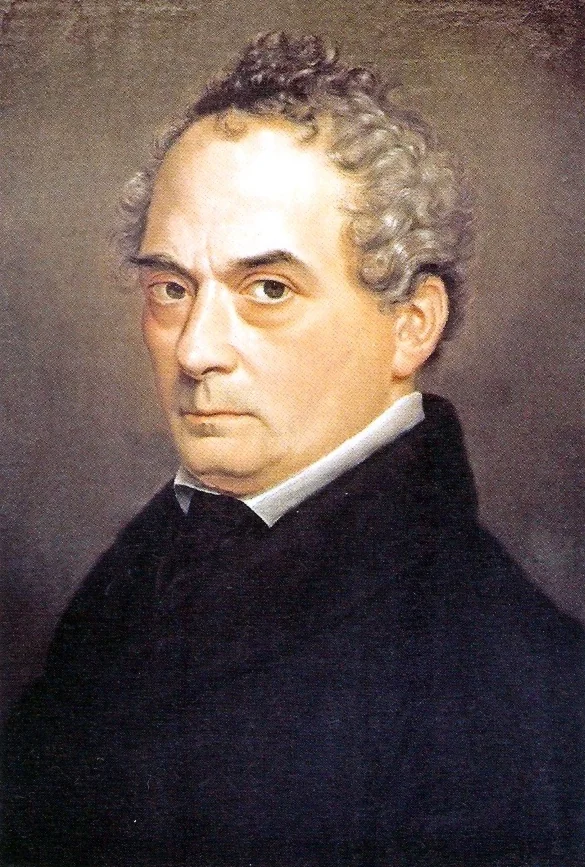
Image from Wikipedia
Image from Wikipedia
Clemens Brentano – the great Romantic between poetry, folk song, and inner radicalism
Clemens Brentano: A literary extraordinary artist of German Romanticism
Clemens Brentano is one of the most colorful voices of German Romanticism. As a poet, novelist, and playwright, he played a crucial role in shaping the Heidelberg Romantic movement and formed a language that oscillates between popular melody, religious innerness, and formal boldness. His work combines poetic imagination, cultural memory, and an extraordinarily musical linguistic power into a literary cosmos of great impact. ([britannica.com](https://www.britannica.com/biography/Clemens-Brentano))
Biographical Origin: Between merchant family and poetic vocation
Clemens Wenzeslaus Brentano was born on September 9, 1778, in Ehrenbreitstein near Koblenz as the son of a wealthy Frankfurt merchant family. The early loss of both parents profoundly marked his biography, while the inheritance granted him the freedom to dedicate himself entirely to literature. This starting point explains much of Brentano's independence: he did not write out of professional necessity but out of creative urge and inner conviction. ([britannica.com](https://www.britannica.com/biography/Clemens-Brentano))
Brentano's intellectual formation took place in Jena, where he came into contact with Friedrich von Schlegel and Ludwig Tieck. These encounters introduced him to the circle of Early Romanticism and opened up the aesthetic world in which literature was understood as an expression of feeling, myth, memory, and folk culture. From this environment, he early on developed his distinctive tone, which would shape his entire musical career in the broader sense: rhythmic, sensual, rich in imagery, and often characterized by surprising tonal fullness. ([britannica.com](https://www.britannica.com/biography/Clemens-Brentano))
The Breakthrough: Early Romanticism, Godwi, and the discovery of folk song
Around the turn of the century, Brentano published the novel Godwi oder das steinerne Bild der Mutter, which is considered an important connecting point between older and newer Romanticism. The work already shows that typical mix of irony, lyricism, and poetic experimental spirit that distinguishes Brentano from many of his contemporaries. Particularly the embedded poems quickly made his name known and demonstrate how closely narrative art and lyrical condensation were connected in his work. ([britannica.com](https://www.britannica.com/biography/Clemens-Brentano))
Brentano achieved significant cultural breakthrough together with Achim von Arnim through Des Knaben Wunderhorn. The collection of romanticized folk songs, published in several volumes, became a key moment in German literary history and had effects far beyond Romanticism. It renewed interest in folk poetry, shaped the perception of German song heritage, and became a lasting reference in later literary and musical history. ([britannica.com](https://www.britannica.com/biography/Clemens-Brentano))
Works and Development: Between secular literature and religious turning point
Brentano's creative output does not proceed linearly but rather in intense phases, breaks, and new beginnings. In addition to the novel Godwi, he wrote dramas such as Ponce de Leon and Die Gründung Prags, as well as prose pieces, satires, and lyrical miniatures of lasting brilliance. His literature thrives on a high level of formal awareness, a keen sense of rhythm, and a figurative language that often revolves around musical motifs, varying and modulating. ([britannica.com](https://www.britannica.com/biography/Clemens-Brentano))
A significant turning point came in 1817 when Brentano, after a severe depression, turned to Catholic mysticism and spent several years in a monastery. This religious turn fundamentally changed his thematic world: instead of romantic literature on worldliness and love, visions, piety, and spiritual experiential spaces took center stage. During this phase, he worked on texts about Anna Katharina Emmerick and on religiously influenced prose works that would significantly shape his later work. ([britannica.com](https://www.britannica.com/biography/Clemens-Brentano))
The Late Phase: Poetry, visions, and return to literary work
Starting in the 1830s, Brentano became more engaged with his literary productivity again. In Munich, he revised and completed earlier works and wrote new poems, including in connection with his late love for the Swiss painter Emilie Linder. These years showcase an author who does not simply conclude his artistic past but transforms it and infuses it with new spiritual depth. ([freies-deutsches-hochstift.de](https://freies-deutsches-hochstift.de/forschung/romantik-forschung/frankfurter-brentano-ausgabe-2/biographie/))
Among his late works, which gained particular attention posthumously, are the writings related to Emmerick, including Das bittere Leiden unsers Herrn Jesu Christi, Leben der heiligen Jungfrau Maria, and the unfinished biography of Anna Katharina Emmerick. These texts are culturally significant because they document Brentano's transition from a romantic word artist to a religiously influenced narrator. At the same time, they illustrate how deeply he intertwined perception, memory, and poetic expression. ([de.wikipedia.org](https://de.wikipedia.org/wiki/Clemens_Brentano))
Discography in a broader sense: Works, poetry, and enduring reception
Although Brentano was not a musician in the strict sense, his work has an almost discographic order of key texts, motifs, and republications. Particularly important are Godwi, Des Knaben Wunderhorn, Geschichte vom braven Kasperl und dem schönen Annerl, Gockel, Hinkel und Gackeleia, as well as his lyrical pieces like Der Spinnerin Nachtlied or Abendständchen. These texts mark stations in an artistic development that ranges from Early Romanticism through folk song aesthetics to religious prose. ([britannica.com](https://www.britannica.com/biography/Clemens-Brentano))
His literary reception has remained remarkably stable. Since 1975, the Complete Works and Letters have been published in historically-critical editions, making Brentano's texts newly accessible in their original wording. Furthermore, the Clemens Brentano Prize in Heidelberg, numerous memorials, and ongoing research remind us of his enduring significance in German literary history. ([de.wikipedia.org](https://de.wikipedia.org/wiki/Clemens_Brentano))
Style, Sound, and Cultural Influence
Brentano's style is characterized by great mobility. His language loves the lyrical, the visual, and the immediate; at the same time, it works with irony, breaks, and surprising shifts in tone. This tension makes him one of the most original figures of Romanticism: he combines emotional intensity with formal experimentation and creates texts that still feel alive, vibrant, and sonorous today. ([britannica.com](https://www.britannica.com/biography/Clemens-Brentano))
His cultural influence reaches far beyond literature. Des Knaben Wunderhorn influenced German song and music culture and became a central source of inspiration for later composers and poets. Brentano's interest in folk tradition, legend, and religious narrative shaped a romantic sound image that left traces in music history as well. Thus, he remains a figure at the intersection of poetry, cultural history, and musical imagination. ([britannica.com](https://www.britannica.com/biography/Clemens-Brentano))
Critical Assessment: Genius, Breaks, and Problematic Aspects
An authoritative description of the artist must not only celebrate Brentano but also address his darker sides. Some of his works contain anti-Jewish motifs and formulations that must be critically read today. Modern Brentano research, therefore, works not only with admiration but also with historical precision and ethical assessment. ([de.wikipedia.org](https://de.wikipedia.org/wiki/Clemens_Brentano))
This ambivalence does not diminish his literary significance but makes it more complex and honest. Brentano was not a smooth classicist; rather, he was an author full of tensions: between piety and sensuousness, imagination and rigor, musical language and ideological entanglements. It is precisely from this that his work derives its relevance to this day. ([britannica.com](https://www.britannica.com/biography/Clemens-Brentano))
Conclusion: Why Clemens Brentano continues to fascinate today
Clemens Brentano remains intriguing because he not only represents Romanticism but embodies its entire contradictions. His texts resonate, sing, break apart, and at the same time condense into a literature of extraordinary atmosphere. Those who read Brentano experience an author who connects folk song, myth, religion, and psychological movement into an unmistakable artistic signature. ([britannica.com](https://www.britannica.com/biography/Clemens-Brentano))
Anyone who wants to understand German Romanticism in its depth cannot overlook Brentano. His poems, narratives, and collections are among the most impactful texts of their era and retain an astonishing emotional presence. A live experience in the true sense is no longer possible today, but his works continue to exert the power that makes great art timeless on the stage of reading. ([britannica.com](https://www.britannica.com/biography/Clemens-Brentano))
Official Channels of Clemens Brentano:
- Instagram: No official profile found
- Facebook: No official profile found
- YouTube: No official profile found
- Spotify: No official profile found
- TikTok: No official profile found
Sources:
Upcoming Events
Pentecost Reading at Brentano