
Dan Diner
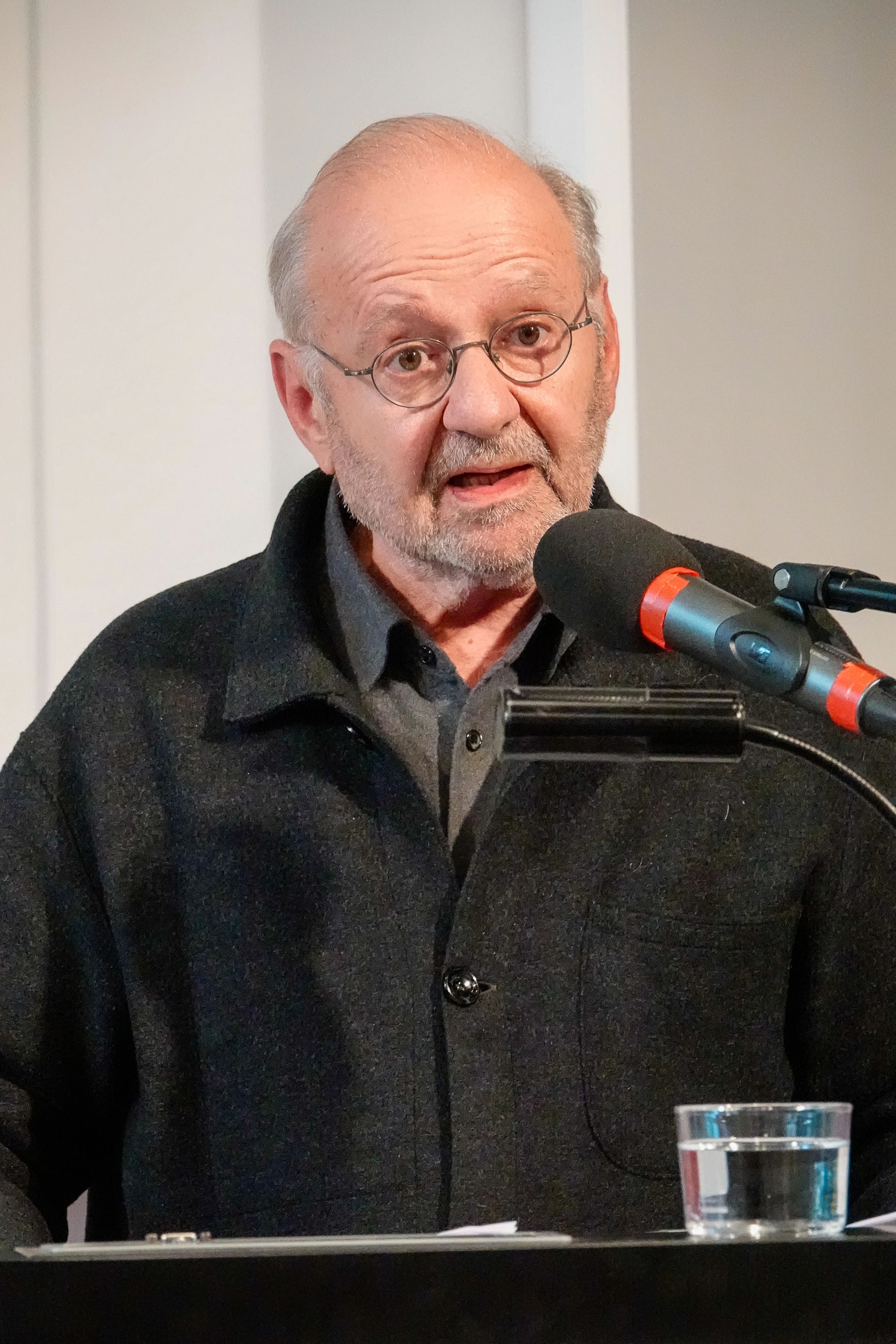
Image from Wikipedia
Image from Wikipedia
Dan Diner – The Historian of Jewish Memory and European Catastrophes
An Intellectual Portrait between Munich, Jerusalem, and Leipzig
Dan Diner, whose real name is Donald Diner, is one of the defining historians of the German-Israeli intellectual tradition. Born on May 20, 1946, in Munich, he has evolved into an internationally recognized researcher, political writer, and academic bridge-builder between Israel, Germany, and European memory culture. His scholarly career connects modern history, Jewish history, Holocaust studies, and the analysis of the Middle East into a work of extraordinary thematic breadth.
As an emeritus professor of Modern History at the Hebrew University of Jerusalem and former director of the Leibniz Institute for Jewish History and Culture – Simon Dubnow in Leipzig, Diner embodies historical precision and conceptual clarity. His work revolves around the conception of modern Jewish history and the perspective on World War II "from the periphery." This particular viewpoint contributes to his intellectual stature: he thinks of history not merely as a sequence of dates but as a struggle for interpretation regarding memory, identity, and political consequences.
Biographical Roots and Academic Influence
Diner's academic development is rooted in a biography that directly touches on post-war German history and Jewish self-identification. After completing school and entering academia, he received his doctorate in 1973 and habilitation in 1980. Early on, he navigated an international academic environment that profoundly influenced his later research, with positions at the University of Essen, Tel Aviv University, and later at the Hebrew University of Jerusalem.
From 1985 to 1999, Diner served as a professor at the Historical Seminar at the University of Essen, while also working at Tel Aviv University starting in 1987. Between 1994 and 1999, he led the Institute for German History there and held the Benyamin and Chaya Schapelski Chair of Holocaust Studies. This dual affiliation in Germany and Israel became a hallmark of his career: Diner has always worked within a tension between scholarly distance, historical responsibility, and political sensitivity.
Career Highlights between Leipzig and Jerusalem
A pivotal phase of his career began in 1999 when Diner became the director of the Simon Dubnow Institute for Jewish History and Culture in Leipzig. He simultaneously took up a professorship at the Historical Seminar there. This role made him a key figure in Jewish-German historical research in the Federal Republic. His work in Leipzig stood for institutional development, international networking, and the establishment of a research hub that understands Jewish history as part of European and global modernity.
Since 2001, he has taught as a professor of Modern History or Modern European History at the Hebrew University of Jerusalem. He is now emeritus and also serves as Chair of the Alfred Landecker Foundation and its Governing Council. Additionally, he is a member of the philological-historical class of the Saxon Academy of Sciences. These roles demonstrate that Diner's influence extends far beyond mere university teaching: he shapes research, promotion, and public debate alike.
Research Focus: Holocaust, Modernity, and Historical Perspectives
Diner's work concentrates on two major lines: the conceptual framing of modern Jewish history and an interpretation of World War II from a peripheral perspective. His publications address the 20th century, National Socialism, the Holocaust, German history, Jewish history, and the history of the Middle East. This thematic concentration makes him a historian with a clearly identifiable intellectual profile.
In his scholarly approach, Diner combines analysis, conceptual history, and political reflection. This is evident in titles such as Beyond the Conceivable: Studies on Germany, Nazism, and the Holocaust and The Future of the Holocaust – Timely Reflections. His research strives not only for historical reconstruction but also for understanding structures: How is history narrated? What categories shape memory? How can the annihilation of European Jews be historically conceived without losing its singularity?
Awards, Recognition, and Academic Authority
Diner's scholarly authority is reflected in a series of prestigious awards and honors. In 2013, he received the Leipzig Science Prize, and in 2015, he was awarded an honorary doctorate from Freie Universität Berlin. In 2025, he was awarded the Ludwig Börne Prize and also the Sigmund Freud Prize. These accolades underscore not only his significance for historical science but also his impact as a public intellectual.
His academic career is also marked by fellowships and visiting professorships at international institutions, including Kassel, Munich, Oxford, Princeton, Stanford, and Chapel Hill. This presence at central research locations demonstrates the international reach of his work. Diner embodies a scholar who mediates between national memory cultures while upholding the standards of historical research.
Current Projects and Recent Publications
Among Diner's recent works is the 2025 contribution The Future of the Holocaust – Timely Reflections as part of the Cambridge History of the Holocaust. He also published the book Beyond the Conceivable: Studies on Germany, Nazism, and the Holocaust with University of California Press in 2023. These publications indicate that his research is far from complete, continuing to address central questions of Holocaust and contemporary historical research.
Diner also remains institutionally active. As Chair of the Alfred Landecker Foundation and its Governing Council, he is involved in a foundation that deals with historical responsibility and democratic education. This connects his academic work with current cultural-political relevance. Diner's presence is thus not that of a completed body of work, but of a researcher whose historical questions continue to resonate in the present.
Discography in a Metaphorical Sense: Works, Writings, and Impact
As Dan Diner is not a musician but a historian, there is no discography in the musical sense. However, his work can be seen as an intellectual repertoire where books, essays, and contributions assume the role of a significant artistic production. Particularly noteworthy are his works on Holocaust studies, the history of Judaism in modernity, and the history of Germany in the 20th century.
The reception of his writings is closely linked to academic debates about memory, narratives, and historical concepts. Diner is regarded as an author who has significantly shaped the term "narrative" in the German-speaking discourse in a uniquely meaningful way; he is also credited with the introduction of the concept of "civilizational break." Thus, he has not only conducted research but also fundamentally transformed the language of historiography.
Style, Method, and Cultural Influence
Diner's style is analytical, conceptually precise, and theoretically informed. He does not work with pathos-laden intensification but rather with historical depth and sharpness. His research favors structural questions: What political, cultural, and semantic prerequisites define modern Jewish history? What narratives organize the experience of the 20th century? Such questions not only open new perspectives on the past but also on the present.
His cultural influence extends far beyond historiography. Diner stands for a science that does not manage memory in a museal way but critically interrogates it. As a teacher, institute director, and public thinker, he has shaped generations of students and researchers. His work connects academic authority with an attitude grounded in intellectual integrity, international perspective, and historical responsibility.
Conclusion: Why Dan Diner Remains Important Today
Dan Diner is fascinating because he does not treat history as a closed archive but as a living interpretive space. His works on Judaism, the Holocaust, National Socialism, and modern history are among the important reference points of contemporary historiography. Anyone seeking to understand how memory, politics, and historical terminology intertwine will find in Diner one of the clearest and most consistent thinkers of his generation.
Particularly his connection between German and Israeli perspectives makes him unique. Dan Diner demonstrates how science opens international horizons and shapes societal debates. Those interested in historical depth, intellectual authority, and the great questions of modernity should closely follow his writings and public appearances.
Official Channels of Dan Diner:
- Instagram: no official profile found
- Facebook: no official profile found
- YouTube: no official profile found
- Spotify: no official profile found
- TikTok: no official profile found