
Michal Kosakowski
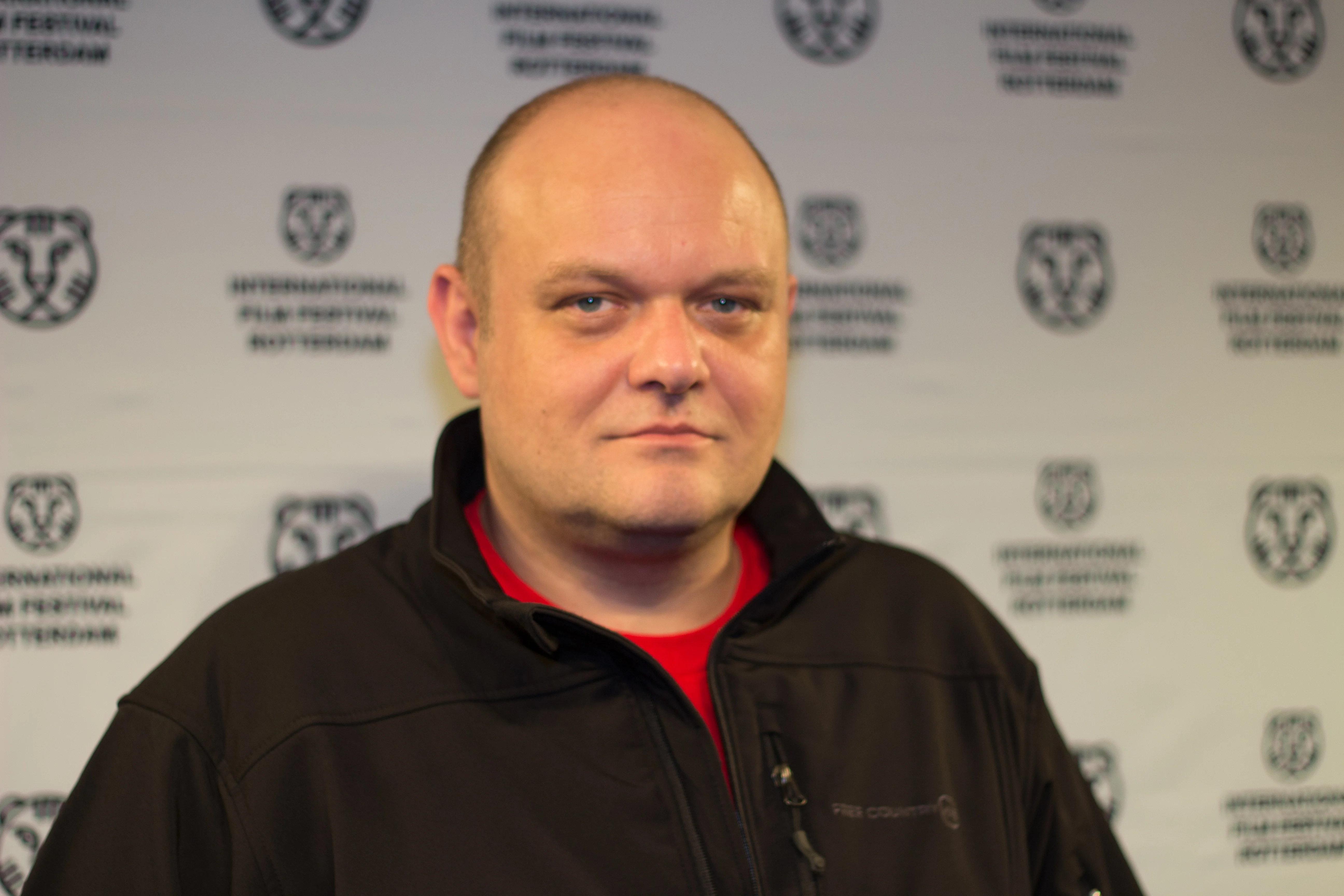
Image from Wikipedia
Image from Wikipedia
Michal Kosakowski: The Filmmaker and Media Artist Between Trauma, Genre, and Radical Imagery
An Artist Who Redefines the Limits of Vision
Michal Kosakowski, born in 1975 in Szczecin, is a Polish-German film director, media artist, and lecturer whose work consistently navigates between experimental film, documentary, fiction, and video art. His projects revolve around memory, violence, collective imagery, and the question of how media shapes historical and emotional realities. Those who engage with Kosakowski do not encounter smoothly narrated auteur cinema but rather a precisely composed, often disturbing lens on the dark zones of the present and film history.
The biographical foundation already points to an artistic development shaped by multilingualism, migration, and cultural boundary experiences. Kosakowski grew up in Austria from the age of ten and has lived in Germany for a long time, which lends his work a European perspective blending East and West. His films and installations combine aesthetic rigor with a pronounced sensitivity to traumas, taboos, and the power of media presentation.
Biography: Origins, Influence, and Early Artistic Stance
The early life story of Michal Kosakowski is closely tied to biographical shifts. From a child born in Poland, he became an artist who was confronted early on with language loss, adaptation, and the experience of being an outsider, and it is precisely this experience that reflects in his work on identity and belonging. Growing up in Austria and later working in the German cultural sphere sharpened his awareness of cultural frictions and societal fault lines.
In interviews, Kosakowski has emphasized that facing Holocaust imagery on Polish television had a lasting impact on him. This early, overwhelming encounter with historical images of violence creates an important resonance for his later works. Instead of treating history as a closed archive, he examines how memory circulates in media, overlaps, and is translated into new forms of perception.
Career: From Experimental Image to International Festival and Exhibition Context
Kosakowski's career developed not along conventional genre borders but in an open field between cinema, installation, and museum. His works have been shown at renowned venues, including Kunsthalle Vienna, Centre Pompidou Paris, Lentos Art Museum Linz, ZKM Karlsruhe, C/O Berlin, and various international festivals and institutions. This presence in exhibitions and festivals underscores the stature of an artist working at the intersection of film art and contemporary media practice.
An early key work is Fortynine, a video installation that, according to ZKM, confronts the taboo of death and the media staging of violence. Here, a central motif of his music career, in the broader sense of his artistic path, emerges: the composition of perception through editing, rhythm, and repetition. Kosakowski works with images as a musician works with motifs, varying them, shifting meanings, and compelling the audience to engage actively.
Works like Holy War and later projects such as Just Like the Movies made it clear that his work does not settle for mere provocation. Rather, it is about deconstructing media patterns, analyzing images of violence, and exploring how film makes historical fears visible. Therefore, his international visibility is grounded not in mere productivity but in a distinctive artistic signature.
Breakthrough and Recognition: Genre, Trauma, and the Power of Montage
A particularly notable point in Kosakowski's career was the attention garnered by Just Like the Movies, an experimental documentary that compiles film scenes seemingly anticipating the events of September 11. The work received international recognition for examining the very mechanisms of cinema: images appear not only as representations but as premonitions, patterns, and cultural memory. This radical practice of montage grants Kosakowski an authority that extends far beyond auteur cinema.
With Zero Killed and later German Angst, the relationship between genre and societal experience came more sharply into focus. In an interview, Kosakowski stated that for him, genre is never the primary focus, but rather idea and content. His strength lies precisely in this: horror, documentary, and essay film are not separated but used as tools to reveal political and social tensions.
His collaboration on German Angst brought his aesthetics to a broader audience and simultaneously demonstrated how consistently he works with fear as a cultural category. His episode illuminates experiences of exclusion and violence, linking personal memory with a European perspective on strangeness and threat. Kosakowski thus proves that radical themes need not be staged loudly to resonate intensely.
Current Projects: Holofiction, Dark Tourism, and the Present of Memory
Current works include Holofiction from 2025, a 102-minute experimental montage piece and part of the ten-part multimedia art project Dark Tourism. The project addresses contemporary forms of memory culture, particularly the question of how the Shoah and World War II are remembered, presented, and communicated today. The work premiered in Venice in 2025 and was discussed as part of a broader art-based engagement with history.
In interviews about Holofiction, Kosakowski describes the film as part of a long engagement with Holocaust imagery and its impact on the present. It is this connection of personal formation, political reflection, and formal innovation that makes his work so relevant today. He conceives of memory not as a museum-like resting place but as a conflictual field where images actively contend for meaning.
Filmography and Cinematic Key Moments
A glance at Kosakowski's body of work reveals a remarkable consistency in theme choice. Fortynine, Holy War, Just Like the Movies, Zero Killed, German Angst, The Inquisitive Museum, and Ephemera – Uli Aigner mark stations in an oeuvre that repeatedly engages with images of violence, memory, archive, and staging. These works do not form a conventional repertoire but a cohesive field of aesthetic research.
Particularly noteworthy is the versatility of presentation forms. Kosakowski works for cinema, festivals, museums, and installations, without blurring the inherent logic of these spaces. This creates a filmography that relies more on intellectual recognition than on commercial recognizability: once an image, cut, or thematic access appears, the signature becomes palpable.
Style and Artistic Development: Montage as a Form of Thought
Kosakowski's style is characterized by montage, fragmentation, and a precise sensibility for media tension. His works rely on the coexistence of document and fiction, focusing on friction rather than resolution and on images that remain ambiguous. This artistic development recalls the structure of musical composition: motifs recur, are alienated, accelerated, or placed in new contexts.
On the level of imagery, he connects sober analysis with emotional force. The result is cinema that does not soothe but disturbs, does not explain but questions. This is precisely where his expertise as a media artist lies: he relies on the intellectual and sensitive activity of the audience and demands a reception that does not settle for simple answers.
Cultural Influence: Between European Memory and Contemporary Art
Michal Kosakowski is an artist whose cultural influence primarily becomes visible in the intersection of film, art, and memory politics. His works have found their place in international art and film contexts because they engage with current debates on violence, historical images, and the ethics of seeing. In doing so, he stands within a tradition of European auteur and essay cinema, but expands it through installation art and multimedia processes.
His significance also lies in the consistency with which he does not release the viewer. Kosakowski demands attention, contextual knowledge, and a willingness to think about aesthetic beauty and moral challenge together. This is what makes him an important voice in contemporary media art: he demonstrates that cinema can do more than just tell stories; it can also remember, analyze, and provoke.
Conclusion: An Artist Who Makes Images Non-Consumable
Michal Kosakowski is compelling because he sees the language of film as an instrument of insight. His works connect personal experience, historical responsibility, and formal radicality into a body of work that resonates long after viewing. Engaging with his films and installations offers a cinema of condensation, open wounds, and intellectual precision.
Especially in live exhibitions or festival contexts does this art reveal its full power. Kosakowski is among those artists who must not only be seen but also seriously contemplated. His work challenges, broadens perspectives, and remains in memory like a strongly composed total work of art that exposes uncomfortable truths.
Official Channels of Michal Kosakowski:
- Instagram: No official profile found
- Facebook: No official profile found
- YouTube: No official profile found
- Spotify: No official profile found
- TikTok: No official profile found
Sources:
- Wikipedia - Michal Kosakowski
- IMDb - Michal Kosakowski
- ZKM Karlsruhe - Michael Kosakowski: Fortynine Inside
- Videonale 14 - Michal Kosakowski
- International Documentary Association - How to Decode Fascist Systems Today: Michal Kosakowski on His Venice-Premiering 'Holofiction'
- NW.de - Interview with Horror Film Director Michal Kosakowski