
Mithu Sanyal
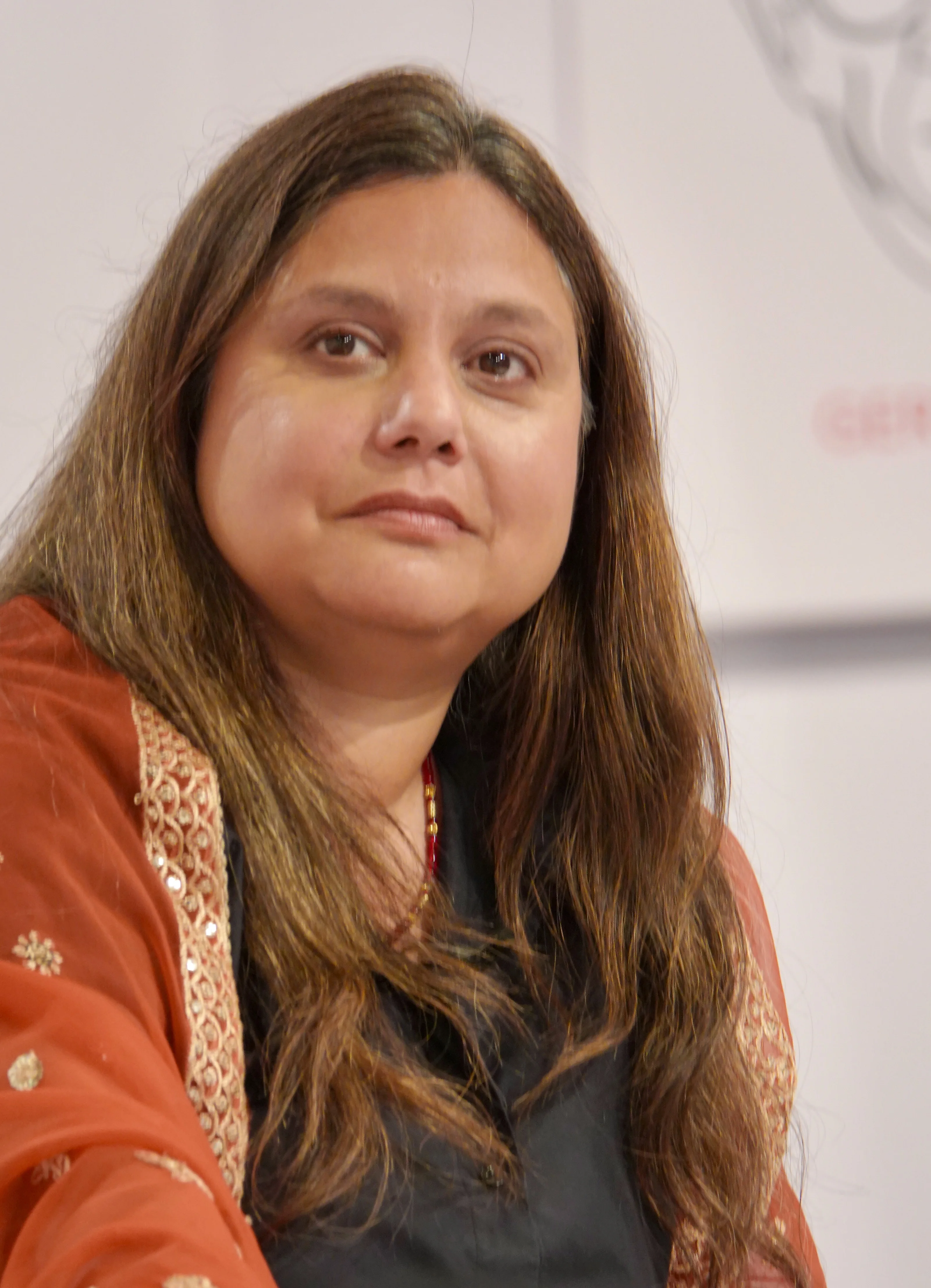
Image from Wikipedia
Image from Wikipedia
Mithu Sanyal: The Sharp-Witted Voice Between Cultural Criticism, Feminism, and Contemporary Literature
An author who shapes debates and pushes literary boundaries
Mithu Sanyal, born in 1971 in Düsseldorf, is one of the most prominent intellectual voices in contemporary German-speaking culture. As a cultural scientist, journalist, and author, she combines academic precision with journalistic clarity and a remarkably accessible language. Her work revolves around feminism, racism, pop culture, and post-colonialism; this is precisely where her literary and cultural critical impact lies. ([goethe.de](https://www.goethe.de/ins/nl/de/bib/uak/per.cfm?personId=7660))
Biography: Düsseldorf, Studies, and Academic Influence
Sanyal studied German and English literature in Düsseldorf and earned her doctorate in cultural studies. This academic background shapes her entire body of work: she writes not from an ivory tower but from a position where theory, social experience, and political reality intersect. Her heritage from a Polish-German and Indian-influenced family history serves as an important resonance space for her later engagement with identity, belonging, and representation. ([goethe.de](https://www.goethe.de/ins/nl/de/bib/uak/per.cfm?personId=7660))
From an early age, she showed interest in language criticism and the power dynamics embedded in terms, narratives, and media images. She worked for WDR as a writer of features and radio plays; in addition, she wrote for print and audio media, including major national publications and cultural-political formats. This versatility explains why she is present both in the arts section of newspapers and in academic and feminist discourses. ([goethe.de](https://www.goethe.de/ins/nl/de/bib/uak/per.cfm?personId=7660))
Career: From Non-Fiction to Novelist with Debating Power
Her literary breakthrough as a widely recognized author began with her non-fiction books. In 2009, she published “Vulva – The Revelation of the Invisible Gender,” followed in 2016 by “Rape: Aspects of a Crime.” Both books make visible what defines Sanyal's writing: she deconstructs societal taboos without falling into didactic rigidity, connecting cultural-historical research with political sharpness. For “Rape,” she received the “Geisteswissenschaften international” award. ([goethe.de](https://www.goethe.de/ins/nl/de/bib/uak/per.cfm?personId=7660))
With her debut novel “Identitti,” she reached a new literary level in 2021. The novel won the Ruhr Literature Prize and was shortlisted for the German Book Prize. It was critically acclaimed, particularly for the way Sanyal merges identity-political questions, academic environments, and digital publics into a sharp, humorous, and theoretically dense narrative. With this, she has established herself as an author who not only reacts but actively shapes discourses. ([goethe.de](https://www.goethe.de/ins/nl/de/bib/uak/per.cfm?personId=7660))
The Current Work: Antichristie and the Return of the Great Historical Narrative
Her novel “Antichristie” was published in 2024 by Hanser and expands her thematic spectrum to include colonial historical and pop cultural perspectives. The story follows Durga, a screenwriter working on a remake of an Agatha Christie film, who finds herself on a time travel journey to the year 1906. There, Sanyal intertwines the Indian independence movement with British colonial history and feminist contemporary perspectives. The novel was heavily discussed in 2024 and appeared frequently in the literary public sphere. ([goethe.de](https://www.goethe.de/ins/dk/de/m/kul/kuf/uak/bue.cfm?publicationId=21331))
Even in 2025, Sanyal remains visible: readings, discussion formats, and panels accompany the ongoing reception of “Antichristie.” Event announcements in Augsburg, Mainz, Bielefeld, Potsdam, and other locations demonstrate that the book is not only being read but is carried forward in debates about identity, resistance, and cultural memory. Sanyal continues to be an author whose literary work has an immediate impact on public discourse. ([literaturhaus-augsburg.de](https://www.literaturhaus-augsburg.de/veranstaltungen/mithu?utm_source=openai))
Work and Reception: Criticism, Awards, and Public Impact
The reception of Sanyal's work is remarkably diverse. The Goethe-Institut describes her as an author, cultural scientist, and journalist with contributions in media such as WDR, SWR, Deutschlandfunk, Spiegel, taz, and The Guardian. FFT Düsseldorf highlights her work on gender, race, and sexualities, noting her three-time win of the Dietrich-Oppenberg Media Prize for radio plays and features. This recognition underscores her authority as a public intellectual. ([goethe.de](https://www.goethe.de/prj/zei/de/exp/22186196.html))
Her influence is particularly evident in the literary arts section. “Identitti” was praised for its blend of campus novel, identity satire, and theoretical reflection, while “Antichristie” is perceived as a multifaceted narrative bridging history, politics, and pop culture. The Goethe-Institut also plays a central role in international dissemination: translations and literary references show that Sanyal's work is highly relevant beyond the German-speaking space. ([de.wikipedia.org](https://de.wikipedia.org/wiki/Mithu_Sanyal))
Style: Theory, Humor, and Narrative Tension
Sanyal's style thrives on the connection between analytical sharpness and narrative fluidity. Her texts work with theoretical density while remaining surprisingly light in tone and rhythm. This balance makes her writing so effective: she discusses racism, sexual violence, colonial history, and identity politics not as abstract theses, but as literary conflicts with characters, dialogues, and emotional friction. ([de.wikipedia.org](https://de.wikipedia.org/wiki/Mithu_Sanyal))
Additionally, she has a keen sense of pop cultural and media codes. Sanyal employs debate formats, essays, columns, and novels as complementary tools of comprehensive cultural criticism. Her themes are clearly defined: power relations in language, body politics, colonial continuities, and the question of how societies narrate themselves. This is precisely where her sustainable relevance lies for readers who perceive contemporary literature as an intellectual event. ([goethe.de](https://www.goethe.de/prj/zei/de/exp/22186196.html))
Context: Why Mithu Sanyal Remains Important
Mithu Sanyal represents literature that does not shy away but confronts. She combines scholarly expertise with journalistic relevance and literary power. Her presence in debate spaces, at readings, and in cultural-political formats further enhances her authority as a public thinker. Those who read her books do not receive easy answers but precise questions that linger long after. ([goethe.de](https://www.goethe.de/ins/nl/de/bib/uak/per.cfm?personId=7660))
It is precisely this aspect that makes her captivating: Sanyal writes with conviction, humor, and historical depth. She makes visible how closely personal biography, social order, and cultural narrative are interwoven. Anyone wanting to experience contemporary German-language literature in its intellectual consequence should read Mithu Sanyal and follow her public engagements. ([de.wikipedia.org](https://de.wikipedia.org/wiki/Mithu_Sanyal))
Official Channels of Mithu Sanyal:
- Instagram: no official profile found
- Facebook: no official profile found
- YouTube: no official profile found
- Spotify: no official profile found
- TikTok: no official profile found