
Münchener Bach-Chor
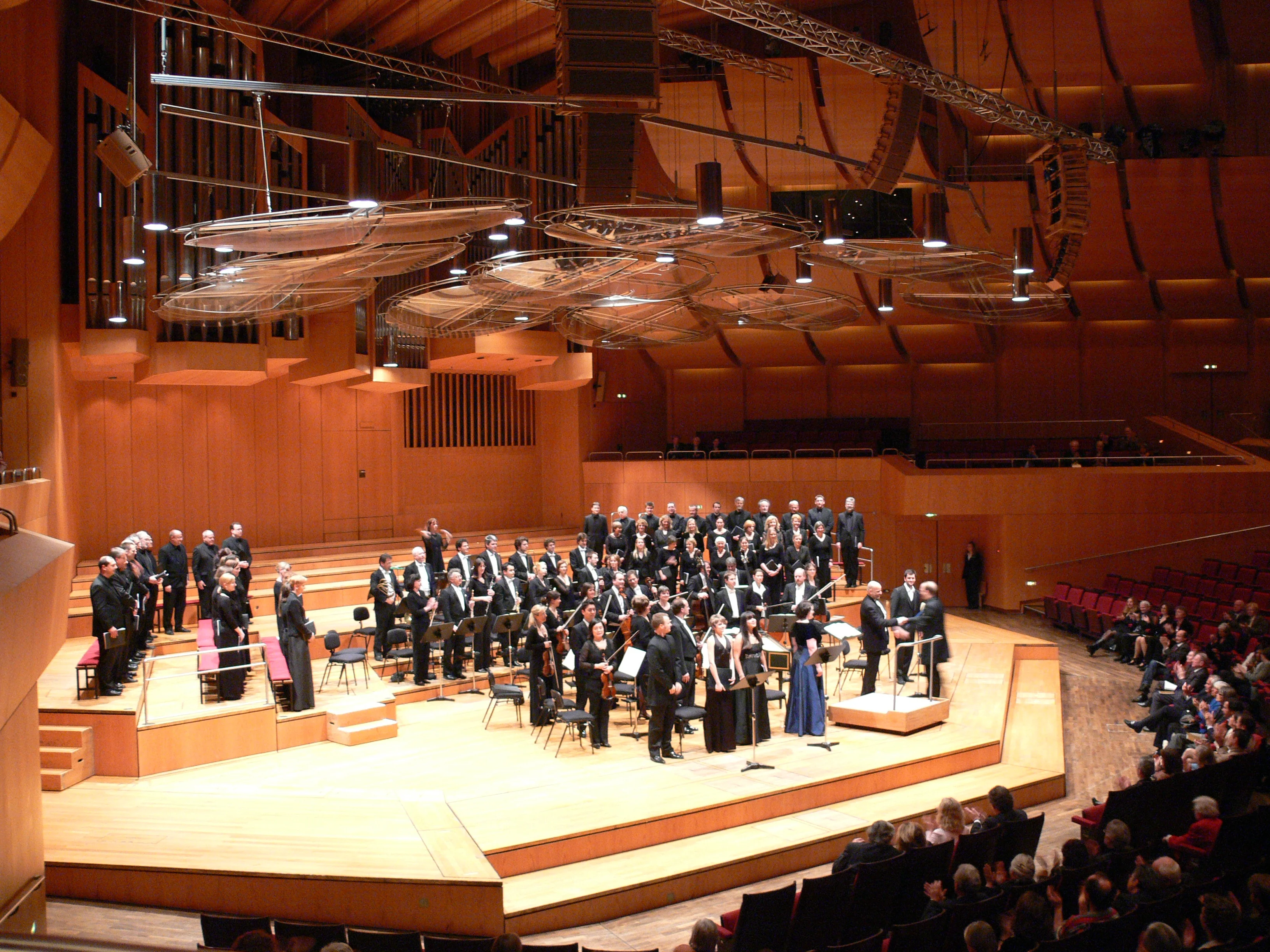
Image from Wikipedia
Image from Wikipedia
München Bach Choir: Munich's Great Bach Voice Between Tradition, International Reputation, and New Artistic Energy
An Ensemble with International Radiance
The München Bach Choir is one of Germany's most prominent concert and oratorio choirs. Since its founding in 1954, it has represented a musical career that has had an impact far beyond Munich. Originating from the vocal music of Johann Sebastian Bach, the ensemble has developed into a firmly established force in sacred vocal music, oratorio literature, and choral symphonic music.
Its profile combines historical depth with vibrant presence. The artistic development of the choir shows how a Bach ensemble transformed into a versatile vocal body that consciously expands repertoire boundaries while maintaining Bach interpretation as the core of its identity. This balance makes the choir exciting for both music lovers and cultural audiences.
The History: From Karl Richter to International Fame
The emergence of the München Bach Choir is closely linked to Karl Richter, who moved to Munich after World War II and shaped the choir and orchestra there. From early on, the Bach cosmos was at the center: cantatas, motets, and oratorios became the key areas of an ensemble culture that focused on precision, spiritual tension, and tonal authority.
The breakthrough did not come as a local event but as an international movement. Major tours brought the choir to Paris, Moscow, Tokyo, and New York, as well as important recordings of works by Bach and Handel. The ensemble thus gained international fame as a musical ambassador of a Bach tradition that developed its own unique character in Munich.
The memorial concert following Richter's death in May 1981, conducted by Leonard Bernstein, marked a significant moment in the choir's history. Such milestones demonstrate the exceptional standing of the ensemble in the musical life: here, repertoire preservation, cultural relevance, and artistic continuity meet in a rare way.
Repertoire and Musical Development
The München Bach Choir is by no means limited to the historical Bach field. In addition to the central works of the Baroque period, its repertoire includes sacred vocal music, oratorios, and large choral symphonic literature from several epochs. This expansion follows a clear musical logic: the choir nurtures tradition without turning it into a museum piece.
Under Hanns-Martin Schneidt, the ensemble opened up further to works by Verdi, Rossini, Bruckner, and Orff starting in 1984. This broadened the choir's stylistic range and interpretative depth. The musical development led from a strictly profiled Bach ensemble to a versatile concert choir that can convincingly present both romantic monumentality and modern sound spaces.
Hansjörg Albrecht set new accents starting in 2005. During his tenure, lively structured Bach interpretations and unusual program ideas emerged, including the series “Bach Modern.” Such formats connect classical works with compositions by Bernstein, Pärt, or Poulenc and enrich the listening experience with surprising dramatic perspectives.
Concert Practices, Stage Presence, and International Presence
The stage presence of the München Bach Choir is nourished by discipline and collective consciousness. As a large concert and oratorio choir, it works closely with the München Bach Orchestra, which also has a long tradition. This collaboration shapes the overall sound: transparent, powerful, and stylistically differentiated.
Recent guest performances also demonstrate how present the choir remains in the international music scene. In September 2021, the choir and orchestra performed Bach's St. John Passion at the George Enescu Festival in Bucharest and a Schubert program at the Anima Mundi Festival in Pisa. Additionally, concerts were held at the Isar Philharmonie, in Bayreuth, and at the Basilica Concerts in Ottobeuren.
With the start of the 2023/24 season, Johanna Soller took over the artistic direction of the choir. The official communication also emphasizes a shift in the orchestra's working methods towards historical performance practice. This indicates that the artistic leadership does not view tradition as mere repetition but as ongoing renewal from historical performance practices.
Discography and Critical Reception
A classic hit discography in the pop sense does not define the München Bach Choir; its significance lies rather in documented reference recordings and a long history of high-profile concert and recording projects. Even the early works with Bach and Handel established a reputation that continues to resonate today among professionals and choral audiences. The choir has thus become a reference ensemble for sacred music from the Baroque and Classical periods.
The critical reception is closely linked to the claim of stylistic authority. Especially Bach interpretations are considered the artistic core of the ensemble, while later programs and projects enhance the impression of a choir that does not reduce itself to the role of a tradition bearer. This is precisely where its cultural strength lies: repertoire expansion without losing the identity-forming core.
Noteworthy milestones at the label and concert levels also underline the standing of the ensemble. Orchestral work, CD projects, and collaborations with renowned soloists demonstrate that the München Bach Choir is perceived as an authority in the German and international choral scene. In this combination of performance practice, program thinking, and historical depth lies its sustainable influence.
Cultural Influence and Music Education
The München Bach Choir sees itself not only as a concert ensemble but also as a cultural institution. With the München Bach Academy, a platform for music education has been created, offering lectures, academies for young musicians, thematic tours, and discussion concerts. This way, Bach is not only performed but embedded in music-theoretical, theological, and societal contexts.
This educational work makes the choir particularly relevant for today’s audiences. Experiencing the München Bach Choir means encountering not just a cultivated choral tradition but a reflective cultural practice that brings together knowledge, sound, and historical sensitivity. The work of the ensemble thus possesses EEAT quality in the best sense: experience, expertise, authority, and trustworthiness interlink.
Institutionally, the choir is also well-established. The support association “Friends of the München Bach Choir” supports the artistic work, and the official communication refers to numerous active members from many countries. This creates a vibrant, cross-generational ensemble that doesn’t just manage but carries forward sacred music into the 21st century.
Why This Choir Remains Particularly Exciting Today
The München Bach Choir combines historical authority with current relevance. Its musical development tells a story of great conductors, international tours, repertoire expansion, and a consistently nurtured concert culture. Those interested in Bach, the art of the oratorio, and German choral history will find here an ensemble of exceptional character.
The choir remains exciting also because it continually repositions itself: with historical instruments in the orchestra, with music-educational formats, with international guest performances, and with new artistic leadership. This blend of tradition and movement makes the München Bach Choir an ensemble that should not just be known but experienced live.
Official Channels of Münchener Bach-Chor:
- Instagram: No official profile found
- Facebook: No official profile found
- YouTube: No official profile found
- Spotify: No official profile found
- TikTok: No official profile found
Sources:
- Münchener Bachchor - Official Website
- Short Profile of Münchener Bach-Chor - Official Website
- Münchener Bach Tradition - Official Website
- Münchener Bach-Orchester - Official Website
- Münchener Bach Akademie - Official Website
- Wikipedia: Münchener Bach-Chor
- Münchener Bach-Chor e.V. - Job Advertisement 2026
- Bach in Space – Voices - Concert Announcement